
交通物流

Search documents
交通运输部:把握“十五五”新要求,加快建设现代化交通物流体系
2 1 Shi Ji Jing Ji Bao Dao· 2025-11-12 13:47
Core Viewpoint - The Ministry of Transport held a national conference to summarize progress in reducing costs and improving efficiency in transportation logistics, and to outline future priorities [1][3]. Group 1: Progress and Achievements - Since last year, the Ministry of Transport has implemented the "Transportation Logistics Cost Reduction and Quality Improvement Action Plan," achieving significant progress in reducing logistics costs and supporting the construction of a modern industrial system [3]. - The focus has been on adjusting the transportation structure, promoting multimodal transport, and enhancing the safety and resilience of international logistics supply chains [3]. Group 2: Future Directions - The Ministry emphasizes the need to adapt to new requirements during the 14th Five-Year Plan period, aiming to better serve the modern industrial system and strengthen the foundation of the real economy [4]. - Key transformations include shifting from focusing solely on logistics integration to actively integrating with the modern industrial system, transitioning from traditional resource-driven methods to smart and green empowerment, and enhancing urban and rural logistics delivery systems [4]. Group 3: Modernization Goals - The Ministry aims to accelerate the construction of a modern transportation logistics system, focusing on infrastructure networks, logistics services, technology application, and data governance [4]. - The development plan for transportation logistics during the 14th Five-Year Plan will be prepared to promote deep integration with industries and foster innovation in multimodal transport [4].

绿色发展蓝图路径清晰 268.93亿签约项目驱动石河子向“新”前行
Shang Hai Zheng Quan Bao· 2025-11-07 10:53
Core Viewpoint - The Xinjiang Shihezi City held an industrial innovation conference focusing on "low-carbon transformation and new quality-driven" initiatives, showcasing its commitment to green development through significant project signings totaling 26.893 billion yuan [1][6]. Group 1: Industrial Development - Shihezi has established six major industrial clusters centered around carbon-based, silicon-based, aluminum-based materials, energy, textiles, and deep processing of agricultural products, leveraging three national-level parks to drive industrial transformation and upgrade [3]. - The city has initiated a dual-line green transformation in energy and industry since 2023, promoting collaborative development across various sectors including energy, new materials, transportation logistics, green agriculture, and modern services [3]. Group 2: Technological Advancements - The independent power grid in Shihezi has achieved a fully integrated "source-network-load-storage" system, with photovoltaic installations increasing fourfold over three years to exceed 4.3 GW, and renewable energy generation now accounts for over 10% of total energy production [3]. - The government’s industrial guidance fund has effectively supported 130 technology companies, enhancing their operational efficiency [3]. Group 3: Strategic Collaborations - The conference highlighted the signing of 18 strategic cooperation agreements with well-known domestic and international companies, amounting to approximately 26.893 billion yuan, focusing on multi-modal transport corridor construction, energy ecological chain development, and collaborative innovation in industries [6]. - Shihezi is actively promoting the development of a low-carbon industrial chain and attracting high-quality projects in new energy equipment manufacturing to enhance its green industrial ecosystem [4].

石河子在沪发布绿色发展蓝图 268.93亿签约项目激活新质生产力
Xin Hua Cai Jing· 2025-11-07 05:37
Core Viewpoint - The eighth China International Import Expo showcased the "Low Carbon Transformation · New Quality Driven" industrial innovation conference, highlighting the achievements of Shihezi City in promoting green development through new productive forces, resulting in project signings worth 26.893 billion yuan [1][2]. Group 1: Industrial Foundation and Development - Shihezi City accounts for one-fifth of the Xinjiang Production and Construction Corps' population, with its economic total and industrial output representing one-fourth and one-half of the Corps, respectively [2]. - The city has established six major industrial clusters focusing on carbon-based, silicon-based, aluminum-based materials, energy, textile and apparel, and deep processing of agricultural products, supported by three national-level parks [2]. - Since initiating a dual-line green transformation in 2023, Shihezi has promoted collaborative development across various sectors, including energy, new materials, logistics, green agriculture, and modern services [2]. Group 2: Key Achievements and Innovations - The conference highlighted seven key areas of development, including high-value utilization of coal and cotton stalks, new power systems, low-altitude economy, AI+ computing electricity collaboration, and low-carbon parks [3]. - Significant advancements were made in renewable energy, with photovoltaic installations quadrupling over three years to exceed 4.3 GW, and new energy generation accounting for over 10% of total energy production [2]. - The city has also seen substantial growth in technology, with Tianyu Aviation's "Hongyan" drones achieving over 1 billion yuan in overseas orders and agricultural robots servicing over 700,000 acres [2]. Group 3: Strategic Collaborations and Future Plans - The conference resulted in 18 strategic cooperation agreements with well-known domestic and international companies, totaling approximately 26.893 billion yuan, focusing on multi-modal transport, energy ecological chain construction, and industrial collaborative innovation [3]. - Shihezi aims to strengthen its chemical new materials industry, enhance modern logistics and aviation, and deepen agricultural sectors, while also focusing on tourism and commerce as part of its strategic economic development [4]. - The city is positioning itself as a strategic support point in the Silk Road Economic Belt, leveraging technological innovation and energy development to drive growth [2][4].
中新互联互通项目10年累计签约合作项目347个
Xin Hua Wang· 2025-11-07 02:03
Core Insights - The China-Singapore (Chongqing) Strategic Connectivity Demonstration Project marks its 10th anniversary, with a total of 347 government and commercial cooperation projects signed, amounting to $26 billion, enhancing high-level connectivity between Western China and ASEAN countries [1][2] Group 1: Project Overview - The project is the third government-to-government cooperation initiative between China and Singapore, following the Suzhou Industrial Park and Tianjin Eco-City [1] - It operates from Chongqing, focusing on four key areas: financial services, aviation industry, transportation logistics, and information communication, while continuously expanding into other sectors [1] Group 2: Achievements and Innovations - In financial services, the project has launched Asia's first outlet real estate investment trust, green cross-border bonds, and a digital RMB cross-border settlement pilot, facilitating cross-border financing [2] - In the aviation sector, it has established a convenient air corridor and a customs supervision model for bonded aviation materials [2] - The project has successfully opened the new land-sea passage and established a regular "China-Singapore border cooperation" mechanism in transportation logistics [2] - In information communication, it has created a dedicated international internet data channel and set up a joint innovation development fund for media [2]
上海:到2027年本市社会物流总费用与国内生产总值的比率力争降至12%以下
Zheng Quan Shi Bao Wang· 2025-11-05 03:55
Core Insights - The Shanghai Municipal Government has issued the "Action Plan for Reducing Costs and Improving Quality and Efficiency in Transportation and Logistics" aiming to lower the ratio of total social logistics costs to GDP to below 12% by 2027 [1] Group 1: Logistics Cost Reduction - The plan targets a reduction in the ratio of social logistics costs to GDP to below 12% by 2027 [1] - The internationalization of shipping and competitiveness in international logistics are expected to improve significantly [1] Group 2: Port and Freight Growth - The port's container throughput is projected to exceed 52 million standard containers [1] - Waterway freight turnover is anticipated to grow by approximately 8% compared to 2023 [1] - The volume of rail-water intermodal transport is expected to maintain rapid growth [1] Group 3: Infrastructure and Service Enhancement - The capacity and service level of transportation logistics are continuously improving [1] - The integration of transportation infrastructure is being advanced to enhance connectivity and strengthen supply chains [1] - The levels of urban production, living, and material distribution have significantly improved [1] Group 4: Multimodal Transport Development - The service capabilities of sea-rail, river-sea, and rail-road intermodal transport are being strengthened [1] - The digitalization, intelligence, and greening of multimodal transport are accelerating [1] - A number of transportation and logistics companies with international competitiveness are gradually emerging [1]
交通运输部:实施一批重大标志性工程项目,提升综合实力
Di Yi Cai Jing· 2025-10-25 05:54
Core Viewpoint - The Ministry of Transport aims to accelerate the construction of a modern transportation system in China, focusing on high-quality development and the implementation of significant engineering projects to enhance infrastructure and service quality [1][2]. Group 1: Strategic Goals - The Ministry of Transport is committed to implementing the "14th Five-Year" transportation development plan, emphasizing the construction of a modern transportation infrastructure system, service system, equipment technology system, and governance system [1]. - The focus will be on promoting the national comprehensive transportation network, improving service quality, and enhancing the capacity to support economic and social development [1]. Group 2: Investment and Market Development - The Ministry plans to expand effective investment in transportation and continue efforts to reduce costs and improve quality in transportation logistics [2]. - Significant progress has been made in creating a unified and open transportation market, including infrastructure upgrades and service rule integration [2]. Group 3: Case Studies and Achievements - The "Nanchang-Ningbo Zhoushan Port" container rail-water intermodal line has seen its business volume exceed 100,000 standard containers for the first time in 2023, serving over 340 foreign trade enterprises [4][5]. - The line has cumulatively handled nearly 350,000 standard containers over four years, saving over 42.87 million liters of fuel, equating to approximately 300 million yuan in energy costs [5]. - The "Wari Railway-Jinghang Grand Canal" intermodal line has reduced transportation costs significantly, saving about 63 yuan per ton in railway freight, with annual savings estimated between 800 million to 1 billion yuan [5][6]. Group 4: Logistics and Infrastructure Development - The "Jiangsu Northern Region-Shanghai Port" intermodal line has optimized transit times from 34 hours to 14 hours, significantly improving efficiency [6]. - The government emphasizes the importance of reducing overall logistics costs to enhance economic efficiency and support the development of a high-level socialist market economy [6]. - The Ministry of Transport is promoting the integration of logistics infrastructure and the development of smart logistics, encouraging innovation in new business models [6].
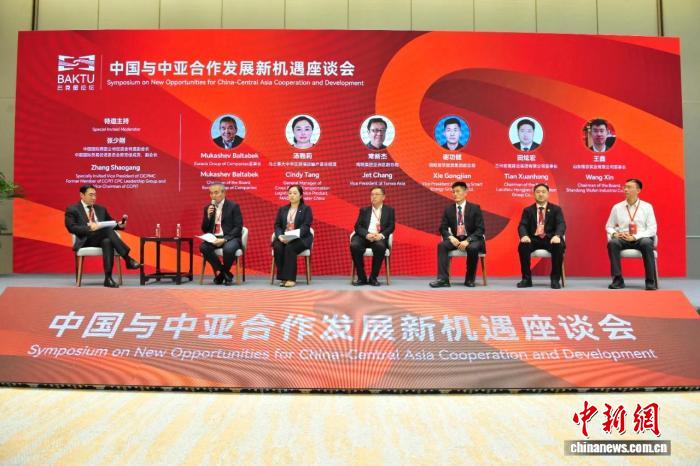
中外代表新疆塔城共话中亚合作新机遇
Zhong Guo Xin Wen Wang· 2025-10-22 07:29
Core Viewpoint - The "Belt and Road" initiative is creating new development opportunities in Central Asia, as highlighted by the Kazakhstani representative at a recent conference in Xinjiang [1]. Group 1: Economic Cooperation - China is the largest trading partner and the most significant foreign investor in Kazakhstan, with substantial achievements in trade, investment, and cultural exchanges [3]. - There is a commitment to optimize the cooperation model among Russia, China, and Central Asia, focusing on transportation, logistics, infrastructure, and energy sectors [3]. - The economic cooperation between China and Central Asian countries has shown steady growth, with thousands of Chinese enterprises investing across various sectors including energy, mining, agriculture, manufacturing, and logistics [4]. Group 2: Future Prospects - The cooperation between China and Central Asia is characterized as open and full of potential, with an emphasis on bilateral and multilateral relationships to enhance infrastructure and industrial upgrades in the region [3]. - The conference served as a platform for representatives from various sectors to discuss specific paths and innovative models for cooperation [2].
“2小时重庆”交通圈基本建成 农村公路总里程达16.8万公里
Xin Hua She· 2025-10-15 12:38
Core Insights - Chongqing is actively implementing a five-year action plan for building a strong transportation city during the "14th Five-Year Plan" period, with annual transportation investment exceeding 100 billion yuan and an average growth of approximately 6% [1][2] - The city has made significant progress in its transportation infrastructure, with 22 out of 28 key indicators already completed ahead of schedule, and the remaining six expected to be fully achieved by the end of this year [1] Transportation Infrastructure Development - The comprehensive transportation network in Chongqing has reached a scale of 194,000 kilometers, adding approximately 14,000 kilometers since the end of the "13th Five-Year Plan" [1][2] - The railway network has expanded to 3,130 kilometers, with high-speed rail reaching 1,356 kilometers, marking a 62% increase since the end of the previous plan [1][2] - The highway network has grown to 4,702 kilometers, a 38% increase from the end of the "13th Five-Year Plan," achieving full highway access for all counties [2] Multi-Modal Transport System - Chongqing is constructing a multi-modal transport system centered on water transport, with navigable waterways for vessels over 1,000 tons reaching 1,140 kilometers and port cargo throughput capacity increasing by 10% to 230 million tons [2][3] - The city has established itself as a national comprehensive freight hub, with 60% of industrial parks handling over 1.5 million tons of freight annually equipped with railway transport capabilities [3] Logistics and Efficiency Improvements - The city aims to reduce logistics costs and improve efficiency, targeting a 10% share of rail-water intermodal freight by 2024 and lowering the ratio of total logistics costs to GDP to 13.4%, outperforming the national average by 0.7 percentage points [3] - Initiatives include launching eight "light boat" freight routes and developing a "Postal Transport" brand to enhance rural logistics, achieving a 20% reduction in logistics costs for agricultural products [3][5] Smart Infrastructure and Postal Services - Chongqing has built smart infrastructure, improving highway toll station efficiency by 20% and enhancing shipping efficiency on key rivers by over 30% [4] - The postal industry in Chongqing has seen significant growth, with the volume of express delivery increasing from 730 million to 2.06 billion pieces, an annual growth rate of 29.5% from 2020 to 2024 [4]
长三角迈向形神兼备现代化都市圈
Jing Ji Ri Bao· 2025-10-13 00:57
Core Viewpoint - The "Action Plan" aims to enhance the integration and development of the Yangtze River Delta urban agglomeration through 30 specific tasks, focusing on key areas and institutional frameworks to overcome existing challenges and promote coordinated growth [2][4]. Group 1: Action Plan Overview - The "Action Plan" was officially issued by the Yangtze River Delta Regional Cooperation Office in collaboration with the development and reform commissions of Shanghai, Jiangsu, Zhejiang, and Anhui, outlining strategies for urban integration from 2018 to 2024 [2]. - The region's GDP is projected to grow at an average annual rate of 5.58% from 2018 to 2024, indicating the potential for significant economic development despite existing challenges in urban integration [2]. Group 2: Three Focus Areas - Focus on key regions and fields to enhance cooperation and integration among urban areas, creating a layout of "central cities—important nodes—strategic supports" [3]. - Emphasize institutional development by improving planning, policy, and legislative coordination to support urban integration [3]. - Implement multiple measures that balance innovation and tradition, promoting both common practices and differentiated explorations within the urban agglomeration [3]. Group 3: Seven Key Initiatives - Establish a coordinated development "group" across regions led by central cities to enhance collaboration [3]. - Create an interconnected infrastructure "network" to improve commuting systems and logistics efficiency [3]. - Develop a collaborative innovation "chain" for technology and industry to enhance regional innovation capabilities [3]. - Optimize the market environment through a unified access and regulatory system to facilitate market integration [3]. - Promote high-level open cooperation as a "chess game" to enhance institutional openness and shared platforms [3]. - Ensure ecological protection through a unified approach to environmental management [3]. - Share public service resources conveniently through a "shared card" system [3]. Group 4: Strategic Importance - The construction of a modern urban agglomeration in the Yangtze River Delta is a priority for the 14th Five-Year Plan, aiming to unlock regional growth potential and enhance global competitiveness [4].
图说金融:新型政策性金融工具资金开始投放
Zhong Xin Qi Huo· 2025-10-09 11:34
Report Summary 1. Report Industry Investment Rating - No information provided 2. Core View of the Report - On September 29, 2025, three new policy-based financial instrument companies were registered, and funds started to be disbursed on the same day. The funds have been disbursed in provinces and cities such as Jiangsu, Zhejiang, Guangdong, Hainan, Guangxi, Fujian, Anhui, Shandong, Sichuan, Chongqing, and Inner Mongolia [2]. 3. Summary by Relevant Catalog Features of the Instruments - Long - term: Some project financing terms are 20 years or 15 - 20 years [2]. - Low - interest rate: The capital interest rate of a project is lower than the current LPR, setting a new record for the lowest financing cost among all financing channels since the group's establishment [2]. Investment Fields - The disclosed project fields include infrastructure areas such as transportation and logistics, green - low - carbon transformation, municipal and industrial parks, as well as scientific and technological innovation fields such as artificial intelligence [3]. Proportion in Total Investment - In some projects, the amount obtained accounts for less than or equal to 10% of the total project investment (less than or equal to 50% of the project capital) [4]. Project Approval Rate - The project approval rate in some areas may be low. For example, in a certain place in Zhejiang, the approval rate from the city to the province is 40%, and from the province to the state is 13% [5]. Disbursement Situation as of October 8 - Multiple projects in various provinces and cities have received new policy - based financial instrument funds, with specific amounts and project details as shown in the table. For example, the Wuxi - Yixing Intercity Rail Transit Project in Wuxi, Jiangsu received 31.99 billion yuan; the Taicang Water Supply Co., Ltd. Expansion and Booster Station Project in Taicang, Jiangsu received 0.2076 billion yuan, accounting for 10% of the total project investment of 2.0766 billion yuan [6].