
化学原料

Search documents
2025年中国汽车等高技术制造业领域投资活跃
Zhong Guo Xin Wen Wang· 2026-01-29 12:27
从行业分布看,涉及制造业的集中最多,为247件,约占36.0%,投资最为活跃;水电气热生产供应次 之,为74件,约占10.8%;其他交易数量较多的行业包括金融、交通运输、批发零售、信息技术服务、 房地产、租赁商务服务等。 2025年中国汽车等高技术制造业领域投资活跃 中新社北京1月29日电 (记者 刘亮)中国国家市场监管总局29日公布,2025年,该局共审结经营者集中 706件,比上年增长9.8%,其中无条件批准687件。从行业看,2025年,汽车、化学原料、通用设备、 医药等高技术制造业领域投资活跃,软件信息技术领域投资持续发力。 从交易金额看,无条件批准的经营者集中交易金额合计超3万亿元(人民币,下同),其中交易金额1亿元 至10亿元的集中213件,约占31.0%;10亿元至100亿元的集中187件,约占27.2%;100亿元至1000亿元 的集中59件,约占8.6%;1000亿元以上的集中3件,交易金额最高为3735.5亿元。 编辑:张澍楠 广告等商务合作,请点击这里 本文为转载内容,授权事宜请联系原著作权人 中新经纬版权所有,未经书面授权,任何单位及个人不得转载、摘编或以其它方式使用。 关注中新经纬微 ...
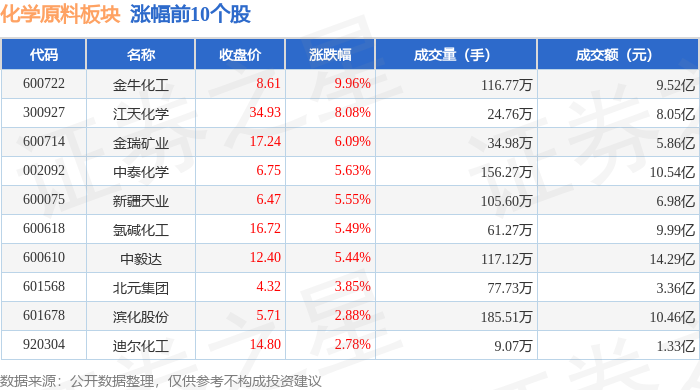
化学原料板块1月29日跌0.25%,新金路领跌,主力资金净流出2.67亿元
Zheng Xing Xing Ye Ri Bao· 2026-01-29 08:58
Market Overview - The chemical raw materials sector experienced a decline of 0.25% on January 29, with New Jinlu leading the drop [1] - The Shanghai Composite Index closed at 4157.98, up 0.16%, while the Shenzhen Component Index closed at 14300.08, down 0.3% [1] Top Performers - Jin Niu Chemical (600722) saw a closing price of 8.61, with a significant increase of 9.96% and a trading volume of 1.1677 million shares, totaling a transaction value of 9.52 billion [1] - Jiang Tian Chemical (300927) closed at 34.93, up 8.08%, with a trading volume of 247,600 shares and a transaction value of 8.05 billion [1] - Mei Rui Ya (600714) closed at 17.24, up 6.09%, with a trading volume of 349,800 shares [1] Underperformers - New Jinlu (000510) closed at 16.63, down 10.01%, with a trading volume of 1.0948 million shares and a transaction value of 1.864 billion [2] - Sanxiang New Materials (603663) closed at 42.18, down 4.79%, with a trading volume of 238,800 shares [2] - Sanqi Co. (603938) closed at 25.69, down 4.36%, with a trading volume of 147,900 shares [2] Capital Flow - The chemical raw materials sector saw a net outflow of 267 million from institutional investors and 172 million from retail investors, while retail investors had a net inflow of 439 million [2] - The capital flow for specific stocks indicates varying trends, with some stocks experiencing significant net inflows from retail investors [3] Notable Stock Movements - Bin Hua Co. (601678) had a net inflow of 1.07 billion from institutional investors, while it faced a net outflow of 31.52 million from retail investors [3] - Bao Feng Energy (600989) recorded a net inflow of 94.19 million from institutional investors, with a net outflow of 53.11 million from retail investors [3] - San You Chemical (600409) had a net inflow of 70.55 million from institutional investors, while retail investors experienced a net outflow of 46.44 million [3]




策略专题研究:2026年牛市展望系列3:哪些领域反内卷更值得期待?
Guoxin Securities· 2026-01-29 07:58
证券研究报告 | 2026年01月29日 哪些领域"反内卷"更值得期待?——2026 年牛市展望系列 3 策略专题研究 证券分析师:吴信坤 021-61761046 wuxinkun@guosen.com.cn S0980525120001 核心结论:①本次反内卷较 16 年供改背景更复杂,需求端内弱外强,供给 端受制造实力与地方非经济决策驱动。②26 年反内卷仍是经济工作重点,参 考 25 年及 16 年行情经验,反内卷行情或仍有可观上行空间。③政策干预角 度看,关注企业配合度高、地方、落地动力强的行业(如钢铁、油服工程、 水泥等)。④从行业自身周期看,关注供需两旺的景气行业(贵金属、化学 原料等),以及供需格局优化领域(养殖业、能源金属等)。 本轮反内卷背景更复杂,行情节奏相对波折。相较于供改,本轮反内卷再供 需背景上更复杂:需求端看,不同于供给侧结构性改革时期,棚改货币化等 强政策刺激快速拉动总需求,本次内需不足的特征更为突出,但外需支撑或 相对有韧性;供给端看,本次供给扩张与我国制造业实力提升有关,地方政 府"非经济"决策进一步加剧产能过剩。在此背景下,从行业结构看,本轮 呈"涉及面广、新兴行业多、民 ...
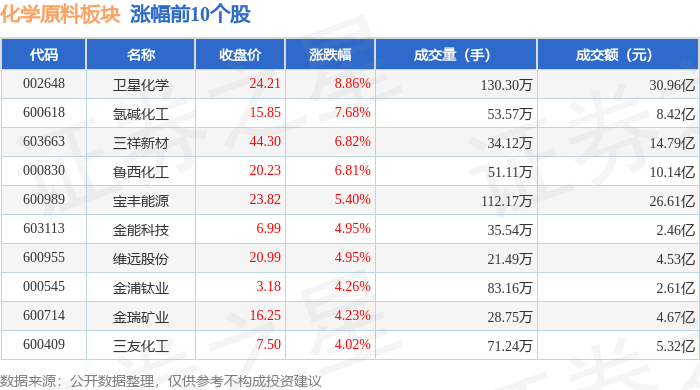
化学原料板块1月28日涨3.58%,卫星化学领涨,主力资金净流入8.7亿元
Zheng Xing Xing Ye Ri Bao· 2026-01-28 08:56
Group 1 - The chemical raw materials sector increased by 3.58% on January 28, with Satellite Chemical leading the gains [1] - The Shanghai Composite Index closed at 4151.24, up 0.27%, while the Shenzhen Component Index closed at 14342.9, up 0.09% [1] - Key stocks in the chemical raw materials sector showed significant price increases, with Satellite Chemical rising by 8.86% to a closing price of 24.21 [1] Group 2 - The chemical raw materials sector experienced a net inflow of 870 million yuan from main funds, while retail investors saw a net outflow of 673 million yuan [2] - Major stocks like Baofeng Energy and Satellite Chemical had notable net inflows from main funds, with Baofeng Energy receiving 223 million yuan [3] - Retail investors showed significant outflows in several stocks, including Baofeng Energy and Satellite Chemical, indicating a shift in investor sentiment [3]


数据点评 | 12月工企利润:8月故事再现(申万宏观·赵伟团队)
赵伟宏观探索· 2026-01-27 23:20
文 | 赵伟、屠强 联系人 | 屠强 耿佩璇 摘要 事件:1月27日统计局公布2025年12月工业企业效益数据,营业收入累计同比1.1%、前值1.6%;利润累计同比0.6%、前值0.1%。12月末,产成品存货同比 3.9%、前值4.6%。 核心观点:12月利润明显回升,更多源自其他损益项的拉动,与8月利润表现相近。 总体:12月利润同比有所回升,主因并非营收和成本率的贡献,反弹较大的是其他损益,与8月走势较为相近。 12月工业企业利润当月同比回升18.5个百分点 至5.1%。从影响因素看,利润率对利润增速的拉动上行21.7个百分点至8.6%;其中成本率贡献较小,而其他损益项等短期指标对利润的拉动较大,较前月上 行23.4个百分点至18.3%。与8月情况相似,彼时其他损益等对利润同比的拉动也较前月大幅上行24.8个百分点至18.3%。 行业:12月个别行业利润走强对本月利润的拉动较大,背后或与其他收益等短期指标改善有关,也与8月行业层面的利润表现相似。 12月,有色加工、煤炭 采选等行业利润大幅回升,单个行业利润拉动整体利润回升5.7、4个百分点至5.4%、1.8%。从影响因素看,上述行业的营业收入、成本压力并 ...
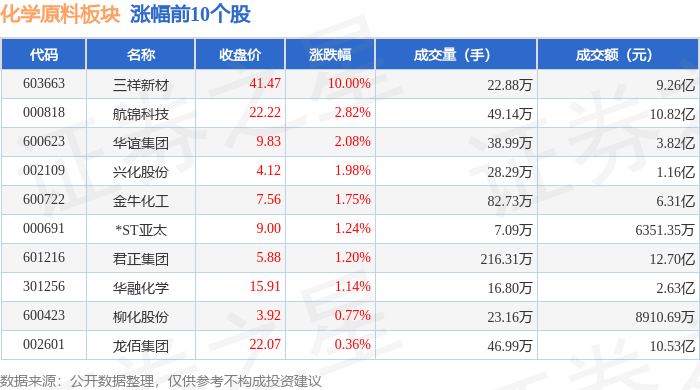
化学原料板块1月27日跌1%,江天化学领跌,主力资金净流出6.16亿元
Zheng Xing Xing Ye Ri Bao· 2026-01-27 08:49
Market Overview - The chemical raw materials sector experienced a decline of 1.0% on January 27, with Jiangtian Chemical leading the drop [1] - The Shanghai Composite Index closed at 4139.9, up 0.18%, while the Shenzhen Component Index closed at 14329.91, up 0.09% [1] Stock Performance - Notable gainers in the chemical raw materials sector included: - Sanxiang New Materials (603663) with a closing price of 41.47, up 10.00% and a trading volume of 228,800 shares, totaling 926 million yuan [1] - Hangjin Technology (000818) closed at 22.22, up 2.82% with a trading volume of 491,400 shares, totaling 1.082 billion yuan [1] - Major decliners included: - Jiangtian Chemical (300927) which closed at 31.91, down 9.91% with a trading volume of 189,000 shares, totaling 610 million yuan [2] - Aok Shares (300082) closed at 10.19, down 6.77% with a trading volume of 438,900 shares, totaling 444 million yuan [2] Capital Flow - The chemical raw materials sector saw a net outflow of 616 million yuan from institutional investors, while retail investors contributed a net inflow of 770 million yuan [2] - The capital flow for specific stocks showed: - Baofeng Energy (600988) had a net inflow of 140 million yuan from institutional investors [3] - Sanxiang New Materials (603663) experienced a net inflow of 95 million yuan from institutional investors [3]
聚仁新材、万华化学签约聚己内酯供应战略合作
Zhong Guo Hua Gong Bao· 2026-01-27 02:44
中化新网讯 近日,聚仁新材与万华化学战略合作协议签约仪式在烟台举行。本次签订的战略合作协 议,明确了双方在聚己内酯等方面的供需合作宗旨、品质标准、交付时效及履约保障机制,为双方合作 规划了更清晰的路径。 本次合作内容聚焦聚己内酯核心原料供应主线,涵盖优质原料研发适配、规模化稳定供应、品质全程管 控、供应链协同优化等关键领域。万华化学视聚仁新材为战略供应商,现有工厂与新规划工厂(全球) 对聚己内酯的需求优先选择从聚仁新材采购;聚仁新材视万华化学为战略用户,对于万华化学的需求予 以最优先保障。双方将充分发挥各自核心优势,实现产业链上下游原料供应与生产需求的高效衔接,共 同应对原料市场波动、品质管控等挑战,筑牢双方在各自领域的核心竞争力。 聚仁新材董事长王函宇表示,聚仁深耕己内酯行业多年,在原料品质把控、规模化供应、定制化适配等 方面具备核心优势。此次与万华化学持续携手,旨在通过精准对接需求、优化供应体系,为万华化学提 供稳定、优质的原料支撑,同时依托万华化学的市场布局实现自身业务的稳步拓展,实现供需双赢、协 同发展。 签约仪式上,万华化学采购事业部总经理刘明忠表示,目前聚仁新材已成为万华化学原料聚己内酯的核 心供 ...

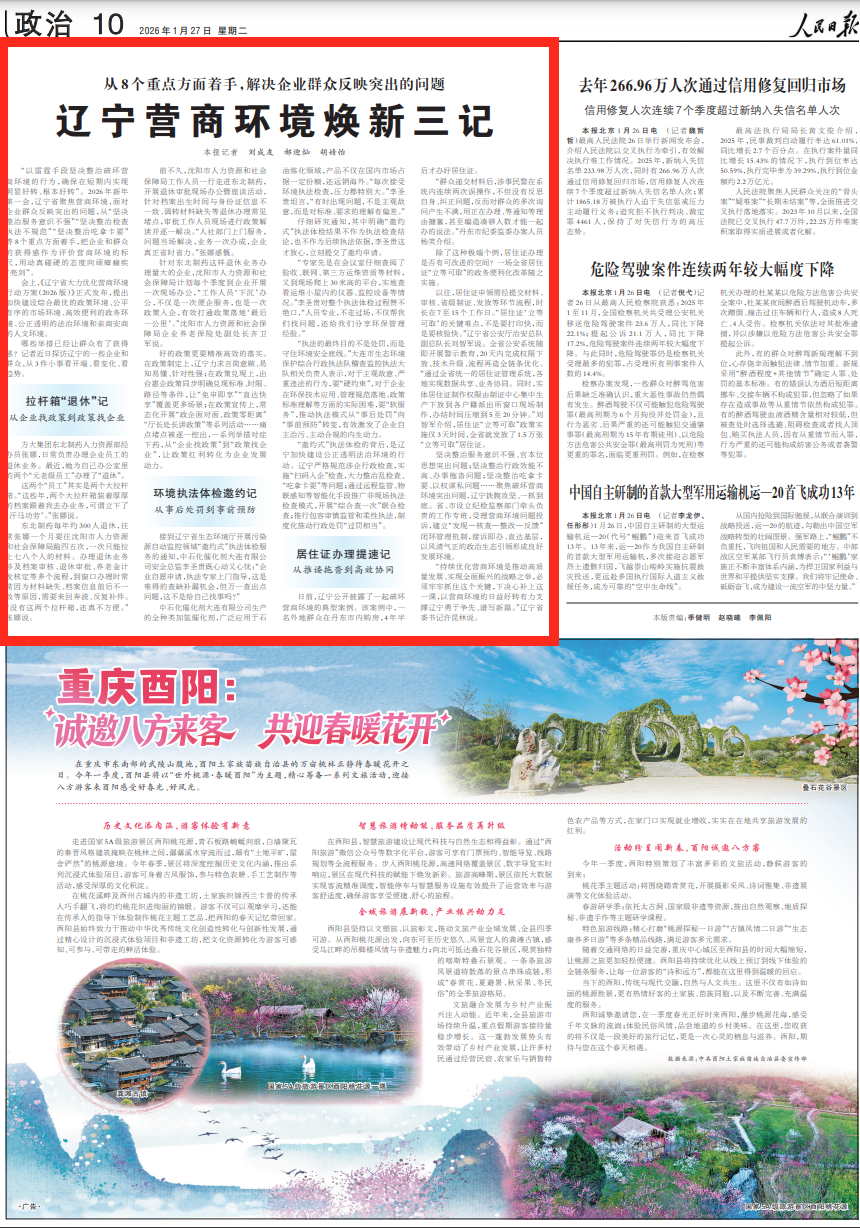
人民日报点赞辽宁:辽宁营商环境焕新三记
Ren Min Ri Bao· 2026-01-27 02:21
Core Viewpoint - The article emphasizes the commitment of Liaoning Province to improve the business environment by addressing key issues raised by enterprises and the public, implementing a series of measures to enhance service efficiency and regulatory compliance [13][21]. Group 1: Business Environment Improvement - Liaoning Province has launched the "2026 Action Plan for Optimizing the Business Environment," focusing on creating a favorable policy environment, a fair market environment, an efficient administrative environment, a transparent legal environment, and a supportive cultural environment for businesses [13][21]. - The province aims to tackle issues such as weak service awareness, inefficient administrative processes, and corruption, with a strong commitment to improving the overall business climate [5][19]. Group 2: Policy Implementation and Effectiveness - The local government has initiated on-site services for enterprises, such as the retirement approval process at Northeast Pharmaceutical, which has significantly reduced the time and effort required for businesses to navigate bureaucratic procedures [15][16]. - Policies are being designed to be straightforward and easy to understand, with clear standards and timelines for implementation, allowing for immediate benefits to businesses [16][20]. Group 3: Environmental Compliance and Regulation - Liaoning's ecological environment department has introduced a proactive "invitation-style" enforcement inspection to help companies identify and rectify compliance issues before they lead to penalties, shifting the focus from post-incident punishment to preemptive guidance [17][18]. - The province is also enhancing regulatory practices by utilizing technology for remote monitoring and non-intrusive inspections, aiming to streamline compliance processes and reduce unnecessary burdens on businesses [18]. Group 4: Administrative Efficiency in Public Services - A significant reform in the residence permit issuance process has been implemented, reducing the processing time from several days to as little as 5 to 20 minutes, thereby improving service efficiency for residents [19][20]. - The establishment of a closed-loop management mechanism for handling complaints related to the business environment ensures that issues are addressed promptly and effectively, fostering a more transparent and responsive administrative system [20][21].
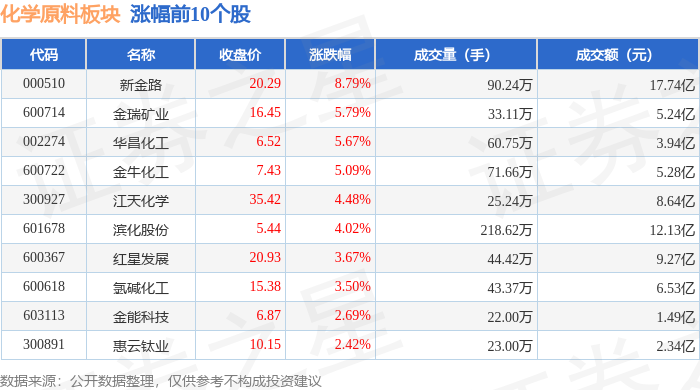
化学原料板块1月26日涨0.4%,新金路领涨,主力资金净流出2.02亿元
Zheng Xing Xing Ye Ri Bao· 2026-01-26 09:37
证券之星消息,1月26日化学原料板块较上一交易日上涨0.4%,新金路领涨。当日上证指数报收于 4132.61,下跌0.09%。深证成指报收于14316.64,下跌0.85%。化学原料板块个股涨跌见下表: 从资金流向上来看,当日化学原料板块主力资金净流出2.02亿元,游资资金净流入3.35亿元,散户资金净 流出1.33亿元。化学原料板块个股资金流向见下表: 以上内容为证券之星据公开信息整理,由AI算法生成(网信算备310104345710301240019号),不构成投资建议。 | 代码 | 名称 | 收盘价 | 涨跌幅 | 成交量(手) | 成交额(元) | | --- | --- | --- | --- | --- | --- | | 301256 | 华融化学 | 15.73 | -8.23% | 26.40万 | 4.25 Z | | 920489 | 佳先股份 | 18.54 | -6.32% | 6.84万 | 1.30亿 | | 301069 | 凯盛新材 | 26.27 | -4.78% | 23.96万 | 6.41 亿 | | 000830 | 鲁西化工 | 19.66 | -3.86% | ...
化工龙头ETF(516220)涨超1.3%,行业供需重构引关注
Sou Hu Cai Jing· 2026-01-26 09:17
Group 1 - The core viewpoint of the article highlights the significant price increases in refrigerant R125 and dispersed dyes, driven by supply constraints and strong cost support, indicating a potential upward trend in the chemical industry [1] - The chemical leader ETF (516220) has risen over 1.3%, reflecting the ongoing restructuring of supply and demand in the industry [1] - The ETF tracks a specialized chemical index (000813) that encompasses listed companies in chemical raw materials, fertilizers, agricultural chemicals, and specialty chemicals, showcasing the overall performance and trends within the chemical sector [1] Group 2 - The price of international oil has increased, facing short-term pressures from tariff policies and OPEC+ production increases, but geopolitical risk premiums and global demand resilience are expected to support oil price stability [1] - The dye market is anticipated to have upward expectations despite a lack of improvement in textile market orders, indicating a complex interplay between cost support and demand dynamics [1] - The macroeconomic uncertainties may increase the volatility of oil prices, suggesting a cautious outlook for the energy sector [1]