
咖啡种植

Search documents
海南产经新观察:“咖啡产业目前处于风口期”
Zhong Guo Xin Wen Wang· 2025-11-16 09:45
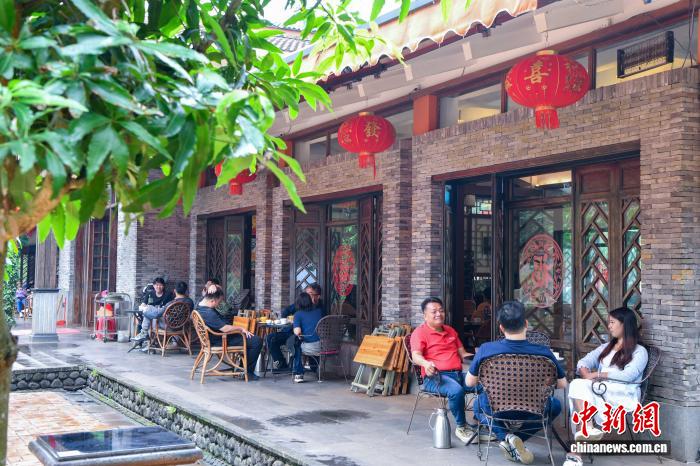
Core Viewpoint - The coffee industry in Hainan is currently at a pivotal moment, driven by the local culture and tourism, with significant growth potential and challenges ahead [6][10]. Group 1: Historical Context and Cultural Significance - The history of Fushan coffee began in 1935 when overseas Chinese brought coffee seeds to the region, leading to the establishment of the first coffee processing factory in the 1970s [3]. - Fushan coffee is deeply integrated into local life, with 80% of visitors coming to experience the coffee culture and "slow life" of Hainan [3][4]. - The traditional roasting technique of Fushan coffee has been recognized as a provincial intangible cultural heritage [3]. Group 2: Current Opportunities and Challenges - The coffee industry in Hainan is experiencing a boom due to the Free Trade Port policy, increasing tourist numbers, and the growth of brands like Luckin and Kudi [6]. - Challenges include small coffee planting areas, vulnerability to natural disasters, and competition from established brands in Europe and America [6]. - The market is facing oversupply, with the number of coffee shops in Fushan increasing from a few to around sixty or seventy since 2005 [6]. Group 3: Development Strategies - Fushan coffee is exploring standardization in production and has established a vocational school to train over 200 coffee professionals annually [6]. - The integration of coffee with rural tourism is being pursued, creating immersive experiences that enhance customer engagement [10]. - The Fushan Coffee Cultural Town has transformed from merely selling coffee to offering cultural and experiential products, generating over 100 million yuan in annual revenue [10]. Group 4: Policy and Economic Impact - Companies are leveraging the Free Trade Port policies to extend their industrial chains and focus on deep processing, which allows for tax savings and market expansion [8]. - The introduction of international coffee competitions in Hainan is expected to enhance brand recognition and improve the quality perception of Hainan coffee [10].

“广阔的中国市场是我们的新机遇”(零关税·促共赢)
Ren Min Ri Bao· 2025-11-11 22:40
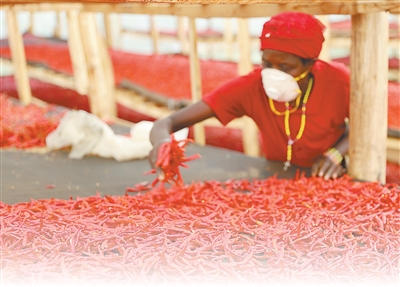
Core Insights - The article highlights the positive impact of China's zero-tariff policy on agricultural exports from Uganda and Rwanda, particularly focusing on coffee and chili peppers, which are gaining access to the Chinese market and benefiting local farmers [9][11][14]. Uganda - Coffee Industry - Coffee is a major export product for Uganda, with approximately 12 million people involved in the coffee sector, contributing about 20% to the country's foreign exchange earnings [11]. - The export of Ugandan coffee to China has significantly increased, with a reported 139.8 tons exported in the first half of the year, marking a nearly 160% year-on-year growth [11]. - The zero-tariff policy implemented by China for 98% of Ugandan products since December 2022 has facilitated easier access for Ugandan coffee in the Chinese market [11]. - The Robusta coffee bean, particularly the 18-screen size, is favored by Chinese consumers due to its large size, high density, and rich oil content [11]. - Ugandan coffee organizations are actively participating in trade exhibitions in China to enhance product quality and meet consumer preferences [11]. Rwanda - Chili Pepper Industry - Rwanda's dry chili peppers have gained zero-tariff treatment for exports to China, leading to increased confidence among local farmers and expansion of cultivation [14]. - The first batch of Rwandan dry chili peppers was exported to China in August 2021, making Rwanda the first African country to export this product to China [14]. - The collaboration between Rwandan farms and Chinese partners aims to modernize the chili pepper industry, with a project covering 100 hectares and utilizing an order-based agricultural model [14]. - The expected export volume of dry chili peppers from Rwanda to China is projected to reach 200 tons in the first planting season of the new project [14]. - The increase in chili pepper exports is improving the livelihoods of local farmers, with reports of enhanced income and living conditions [14].
商业秘密|咖啡豆涨价了咖啡店却不敢涨
Xin Lang Cai Jing· 2025-11-08 13:09
Core Insights - Coffee futures prices have surged significantly, with a peak of 437.95 cents per pound on October 23, marking a historical high and a year-on-year increase of 118.57% [1][2] - The rise in coffee prices is attributed to both market dynamics and unexpected weather impacts due to climate change, affecting global production [2] - The competitive landscape in the coffee retail sector is intense, with local brands outpacing international ones in store count and revenue, leading to pricing pressures [2][3] Price Trends - Coffee futures reached 336.4 cents per pound on December 10, 2022, up from 188.5 cents per pound on January 2, 2022, reflecting a cumulative increase of over 70% [1] - As of November 8, 2023, coffee futures were reported at 388.38 cents per pound, with a recent increase of 2.46% [1] - The ICE Arabica coffee futures saw a cumulative increase of 4.94% in the week ending November 7, 2023, contrasting with declines in sugar futures [1] Retail Challenges - Coffee retailers face a dilemma as rising raw material costs do not translate into higher retail prices due to fierce competition and consumer price sensitivity [3] - Many coffee shops are resorting to cost-cutting measures, such as reducing staff and store sizes, while increasing online sales to cope with high coffee bean prices [3] - The competitive pressure has led to a focus on new product offerings and lower prices, complicating the ability of retailers to pass on costs to consumers [3]
台青云南创业记:咖啡、鲜花、旅居中的两岸发展协奏曲
Zhong Guo Xin Wen Wang· 2025-11-07 12:36
Core Insights - The article highlights the increasing presence of Taiwanese youth in Yunnan, China, engaging in various entrepreneurial activities such as coffee cultivation, flower breeding, and tourism, contributing to cross-strait development [1][2]. Group 1: Investment and Economic Development - By the end of 2024, Yunnan has approved 1,247 Taiwanese-funded enterprises, with actual Taiwanese investment reaching $2.176 billion [1]. - Notable Taiwanese companies like Tianfu Tea, Anyou Group, and Yuanyuan Fruits and Vegetables are significantly increasing their investments in Yunnan, showcasing the vibrant cooperation between Taiwan and Yunnan [1]. Group 2: Individual Entrepreneurial Stories - Su Yunkai, a Taiwanese entrepreneur, faced initial challenges in business but found success after winning a government-supported entrepreneurial competition in 2017, leading to the establishment of a coffee brand that sells "Yun Coffee" in Taiwan [2][5]. - Chen Yufan took over his father's orchid business, expanding its sales network to Southeast Asia and Europe, and developed a butterfly orchid gene bank with over a hundred varieties [6]. - Zheng Weiren, originally involved in early childhood education, diversified his business ventures to include animation, coffee processing, and wellness tourism, winning an award for his innovative rural revitalization project [10][11]. Group 3: Cultural Exchange and Community Engagement - Su Yunkai has been actively promoting cultural and technological exchanges between Taiwan and Yunnan through various initiatives, including summer camps and art exhibitions [5]. - Zheng Weiren is involved in cultural activities, such as participating in the filming of a cross-strait floral tourism micro-drama and hosting music sharing events, aiming to connect the cultures of Taiwan and Yunnan [13].


巴西如何成为「咖啡帝国」:从一束鲜花到全球最大产区 | 声动早咖啡
声动活泼· 2025-11-05 09:05
Core Viewpoint - The article explores the historical journey of coffee from its origins in Ethiopia to becoming a global commodity, particularly focusing on Brazil's rise as the largest coffee producer and exporter in the world. Group 1: Historical Context - Coffee's origins trace back to Ethiopia, where a shepherd discovered its energizing effects after observing his goats [4] - The spread of coffee began with Arab traders bringing it to Turkey and then to Europe, where it was cultivated in colonies [4] - Brazil's introduction to coffee occurred in the 18th century when a Brazilian official smuggled coffee seeds from French Guiana, leading to its eventual dominance in coffee production [4] Group 2: Economic Development - Initially, Brazil's economy was driven by sugarcane, which was a low-cost, high-profit crop until the sugar market collapsed in the early 19th century [5] - The decline in sugar prices led to a significant shift of capital and labor towards coffee cultivation, marking the beginning of Brazil's coffee boom [5] Group 3: Agricultural Practices - Early coffee cultivation in Brazil was characterized by aggressive land clearing and poor agricultural practices, leading to soil degradation [6] - The introduction of coffee farming in Brazil involved clearing vast areas of rainforest, which raised environmental concerns that persist today [6][8] Group 4: Labor Dynamics - The coffee industry in Brazil relied heavily on slave labor, with the number of imported slaves increasing significantly during the coffee boom [8] - After the abolition of slavery in 1888, Brazil began to attract European immigrants to fill labor shortages in coffee plantations, resulting in a fivefold increase in coffee exports in the following two decades [8] Group 5: Market Strategies - In 1906, Brazilian states implemented a "coffee valorization" policy to stabilize prices by controlling supply, but this strategy failed during the Great Depression [9] - The coffee industry has since transitioned to a more market-oriented approach, with industry associations focusing on quality standards and market information to enhance competitiveness [9]

记者Vlog丨除了石油,委内瑞拉还有别具特色的咖啡
Yang Shi Xin Wen Ke Hu Duan· 2025-11-03 23:21
费2 新闻 责编:张青津、卢思宇 0:00 委内瑞拉曾经是全球主要的咖啡出口国,不过上世纪七八十年代石油经济的突然繁荣,让该国的咖啡产 业一度被忽视。 如今,越来越多的委内瑞拉农民重返土地,种植咖啡。他们希望复苏咖啡产业,为国内外消费者提供独 具特色的咖啡豆。(总台记者 雷湘平) ...
咖啡豆价格暴涨:普洱咖农皮卡换奔驰
2 1 Shi Ji Jing Ji Bao Dao· 2025-11-01 01:33
咖啡豆价格暴涨:普洱咖农皮卡换奔驰 云南咖农的心情正变得跟当地天气一样晴朗。 "过去,冬天来的时候,他们基本上有统一装束。就是开着一辆开了不知道多少年的皮卡,脚底穿一双 露趾的凉鞋。现在,咖农们开着奔驰、宝马,开着(丰田)霸道,穿锃亮的大皮鞋来了。"当谈到咖农收 入变化时,有在云南普洱的相关企业负责人说。 在南北纬25°之间的热带亚热带是世界咖啡黄金种植带,拉丁美洲咖啡产区、亚洲咖啡产区、非洲咖啡 产区均处于这一咖啡带内。云南省是中国唯一位于咖啡黄金种植带内的区域,拥有适宜咖啡生长的自然 资源条件,是产出高品质咖啡最适宜的优势区域。 其中,普洱市是云南产量最大、种植面积最广的核心区域。云南省咖啡业协会数据显示,普洱市咖啡种 植面积和产量约占全省的60%以上,是名副其实的"中国咖啡之都"。 咖农富裕起来的故事,在这里最为明显。 暴涨周期 鑫瑞农场的负责人普凤辉谈起当下生活,就笑得合不拢嘴。 他种植咖啡已达14年,最早是从收购咖啡豆开始入行。 普凤辉经历了市场行情的多轮起伏。创业时,家人对他投资种植咖啡是有反对意见的。"卖咖啡赔钱的 时候,心里就最不好受,家里生活开支很大,小孩还要上学,各方面都有压力。用现在话来 ...
咖啡豆价格狂飙,中国咖啡总消费量20年暴增33倍,咖农皮卡换宝马
21世纪经济报道· 2025-10-31 13:17
Core Insights - The article highlights the significant transformation in the coffee farming industry in Yunnan, China, particularly in Pu'er City, where coffee farmers have seen substantial increases in income due to rising coffee prices and demand [1][4][5]. Group 1: Market Dynamics - Yunnan is the only region in China located within the coffee "golden growing belt," making it ideal for high-quality coffee production [1]. - The average purchase price of Yunnan coffee beans rose from 23.94 yuan/kg in 2021 to 31.6 yuan/kg in 2022, marking a 32% increase [5]. - By 2024, coffee bean prices continued to surge, with Arabica coffee futures exceeding 430 cents per pound, a 118.57% increase over the previous year [6]. Group 2: Farmer Experiences - Farmers like Pu Fenghui have transitioned from struggling with low prices to thriving, with some reporting annual incomes of over 200,000 yuan [4][6]. - The rise in coffee prices has led many farmers to upgrade their lifestyles, purchasing luxury vehicles and expanding their coffee plantations [4][7]. - The introduction of brands like Xin Coffee by farmers indicates a shift towards direct consumer engagement [6]. Group 3: Quality and Production Challenges - Despite the price increases, Yunnan's coffee production remains a small fraction of the global market, accounting for less than 1.5% of total coffee production [9]. - Issues such as poor management practices and inadequate quality control have historically hindered Yunnan's coffee industry [9][10]. - The region's coffee planting area has decreased by 37% from its peak in 2014, influenced by fluctuating international prices and environmental factors [9]. Group 4: Support and Growth Potential - Major companies like Nestlé and Starbucks have played a crucial role in supporting Yunnan's coffee industry through technology and market access [10][12]. - China's coffee consumption has skyrocketed from 16,700 bags in 2003/2004 to an estimated 576,500 bags in 2023/2024, indicating a massive growth potential [12]. - The per capita coffee consumption in China is only about 0.24 kg, compared to 5.3 kg in the EU and 4.2 kg in the US, suggesting significant room for growth [12][13]. Group 5: Market Position and Future Outlook - China's coffee imports reached 329,100 tons in 2023/2024, with domestic production unable to meet demand, leading to over 80% dependency on imports [13]. - The pricing dynamics have shifted towards a competitive market where local coffee beans are increasingly valued, with prices surpassing those offered by international traders [13]. - Despite the growth, Yunnan coffee still faces challenges in achieving global market prominence due to quality and production scale issues [14].

普洱咖农富了:皮卡换奔驰宝马
2 1 Shi Ji Jing Ji Bao Dao· 2025-10-31 11:03
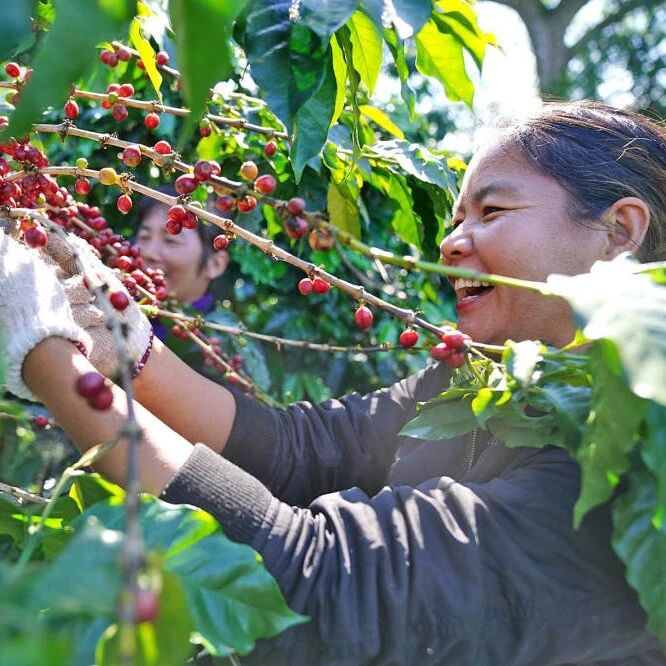
Core Insights - The coffee farmers in Yunnan are experiencing significant improvements in their livelihoods, with many upgrading their vehicles and living standards due to rising coffee prices [1][2][6] - Yunnan is the only region in China located within the coffee "golden growing belt," making it a prime area for high-quality coffee production [1] - The average purchase price of Yunnan coffee beans increased from 23.94 yuan/kg in 2021 to 31.6 yuan/kg in 2022, marking a 32% year-on-year growth [5] Market Dynamics - The coffee market in Yunnan faced challenges from 2019 to early 2021 due to oversupply and low international prices, leading to decreased production and even tree removal by farmers [4] - A turnaround began in October 2021, driven by global coffee supply shortages and increased demand, resulting in a surge in coffee prices to historical highs [5] - By 2024, Arabica coffee futures prices exceeded 430 cents per pound, a 118.57% increase over the previous year, reflecting strong demand from emerging markets like China [5] Production and Quality Challenges - Despite the rising prices, Yunnan's coffee production remains low in the global context, accounting for less than 1.5% of the world's coffee supply [10] - The area under coffee cultivation in Yunnan has decreased by 37% from its peak in 2014, influenced by international price fluctuations and local climatic conditions [10] - Quality issues persist, with Yunnan coffee historically suffering from inconsistent quality, although partnerships with companies like Starbucks have helped improve standards [12][13] Government and Corporate Support - The Yunnan provincial government has implemented various policies to support the coffee industry, including funding for quality improvement and processing [14] - Major companies like Nestlé and Starbucks have played a crucial role in supporting Yunnan's coffee sector through technology transfer and premium pricing strategies [11][12] Domestic Demand and Market Potential - China's coffee consumption has skyrocketed from 16,700 bags in 2003/2004 to an estimated 576,500 bags in 2023/2024, indicating a growth of over 33 times [15] - The per capita coffee consumption in China is approximately 0.24 kg, significantly lower than the EU and US, suggesting substantial growth potential in the domestic market [16] - In 2023/2024, China is expected to import 329,100 tons of coffee beans, with over 80% of its coffee consumption reliant on imports [17] Competitive Landscape - Domestic coffee brands are gaining traction, with companies like Starbucks and Luckin Coffee promoting Yunnan coffee products, leading to higher local prices [19] - The competitive landscape is shifting, with local farmers now engaging in bidding wars for high-quality beans, reducing the influence of traditional buyers like Nestlé and Starbucks [20] Global Market Position - Despite the growth in domestic consumption, China's coffee market remains a minor player globally, with an expected consumption share of only 3.45% by 2025/2026 [21] - Yunnan coffee still faces challenges in terms of quality and market positioning compared to global standards, indicating a need for further development [21][22]
普洱咖农富了:皮卡换奔驰宝马丨咖啡变局
2 1 Shi Ji Jing Ji Bao Dao· 2025-10-31 10:25
Core Insights - The coffee farmers in Yunnan are experiencing significant improvements in their livelihoods, with many upgrading their vehicles and living standards due to rising coffee prices [1][2][10] - Yunnan is the only region in China located within the coffee "golden growing belt," making it a prime area for high-quality coffee production [1][12] - The average purchase price of Yunnan coffee beans increased from 23.94 yuan/kg in 2021 to 31.6 yuan/kg in 2022, marking a 32% year-on-year growth [6][12] Industry Overview - Yunnan's coffee production area and output account for over 60% of the province's total, with Pu'er City being the largest production area [1][12] - The global coffee market faced a downturn from 2019 to early 2021 due to oversupply and low international prices, leading to a decline in local farmers' production enthusiasm [5][12] - A market turnaround began in October 2021, driven by global coffee supply shortages and increased demand, resulting in a surge in coffee prices [6][12] Market Dynamics - By 2024, coffee prices are expected to continue rising, with Arabica coffee futures prices surpassing 430 cents per pound, a 118.57% increase over the past year [6][12] - China's coffee consumption has skyrocketed from 16,700 bags in 2003/2004 to an estimated 576,500 bags in 2023/2024, indicating a growth of over 33 times [18][20] - Despite the growth in domestic consumption, China remains heavily reliant on coffee imports, with over 80% of its coffee consumption being imported [20][21] Quality and Support - The quality of Yunnan coffee has historically been inconsistent, but companies like Nestlé and Starbucks have played a crucial role in improving production techniques and stabilizing quality through support programs [13][15][16] - Government policies have been implemented to enhance the coffee industry's development, including financial support for quality improvement and processing [17][20] Future Prospects - The domestic market for coffee in China presents significant growth potential, with per capita consumption still low compared to mature markets like the EU and the US [19][24] - The competitive landscape is shifting, with local coffee becoming more valuable and sought after, as evidenced by the rising prices and market dynamics [22][23] - However, Yunnan coffee still faces challenges in achieving a dominant position in the global market due to its low production share and quality gaps compared to international standards [24][25]