太空探索

Search documents
马斯克重磅!合并
Zhong Guo Ji Jin Bao· 2026-02-03 00:13
【导读】马斯克旗下太空探索技术公司SpaceX正式确认与人工智能初创企业xAI完成合并 美东时间2月2日,当日公布的经济数据较为乐观,美股三大指数低开高走,集体收涨,标普500指数接 近创历史新高。 截至收盘,道指涨1.05%,报49407.66点;纳指涨0.56%,报23592.11点;标普500指数涨0.54%,报 6976.44点。 宏观数据方面,美国1月ISM制造业PMI为52.6,创2022年8月以来新高,明显强于预期的48.5,前值为 47.9。这表明美国制造业出现了实质性扩张迹象。 美联储官员博斯蒂克发声表示,预计2026年不会降息,现在就断言通胀目标已达成还为时过早。需将政 策利率维持在适度紧缩的水平;需要保持耐心,现阶段向任何一个方向调整(政策)都不明智。 此外,投资者正聚焦美股大公司财报。本周将是美股财报季最繁忙的一周,期间会有多项重要经济指标 公布,且包括谷歌母公司Alphabet、亚马逊、超威半导体在内的128家标普500指数成份股公司将陆续发 布财报。 特朗普:莫迪同意不买俄罗斯石油 美国将降低对印关税 据央视新闻,当地时间2月2日,美国总统特朗普在社交媒体平台"真实社交"上发文称, ...

马斯克的SpaceX与Xai合并估值1.25万亿美元 合并交易为全股票形式
Xin Lang Cai Jing· 2026-02-02 23:35
埃隆・马斯克旗下的太空探索技术公司(SpaceX)收购人工智能公司 xAI ,这笔交易承载着这位亿万 富翁在人工智能和太空探索领域谋求主导地位、且成本日益攀升的雄心。该交易由马斯克署名,在太空 探索技术公司官网发布的一份声明中正式公布,同时也印证了媒体此前的相关报道。知情人士透露,此 次交易让太空探索技术公司的估值达到 1 万亿美元,xAI 的估值则为 2500 亿美元。另有部分知情人士 早前表示,公司已于周一在一份内部备忘录中向员工公布,合并后企业的整体估值为 1.25 万亿美元。 责任编辑:王永生 埃隆・马斯克旗下的太空探索技术公司(SpaceX)收购人工智能公司 xAI ,这笔交易承载着这位亿万 富翁在人工智能和太空探索领域谋求主导地位、且成本日益攀升的雄心。该交易由马斯克署名,在太空 探索技术公司官网发布的一份声明中正式公布,同时也印证了媒体此前的相关报道。知情人士透露,此 次交易让太空探索技术公司的估值达到 1 万亿美元,xAI 的估值则为 2500 亿美元。另有部分知情人士 早前表示,公司已于周一在一份内部备忘录中向员工公布,合并后企业的整体估值为 1.25 万亿美元。 责任编辑:王永生 ...
SpaceX宣布收购xAI 合并后总估值1.25万亿美元
Feng Huang Wang· 2026-02-02 22:43
凤凰网科技讯北京时间2月3日,马斯克旗下的太空探索技术公司(SpaceX)发表声明,宣布已收购同属于 马斯克旗下的人工智能企业xAI公司。xAI公司同时也发表声明,证明已"加入SpaceX"。 消息称,合并后的公司预计将以每股约527美元的价格定价,整体估值或高达1.25万亿美元。SpaceX与 xAI方面暂未回应置评请求。 ...
蓝色起源暂停新谢波德号火箭任务,加速推进载人登月布局
Jin Rong Jie· 2026-01-31 16:17
贝索斯旗下太空公司蓝色起源宣布,将暂停新谢波德号(New Shepard)火箭的飞行任务,加速其载人登 月计划的开发,以配合与美国国家航空暨太空总署的合作方向。 ...
马斯克,被曝大动作!打造“科技巨无霸”
证券时报· 2026-01-31 05:06
Core Viewpoint - Elon Musk is exploring the integration of his companies Tesla, SpaceX, and xAI to create a "super ecosystem" in the technology sector, potentially merging rocket launches, satellite networks, electric vehicles, social media, and generative AI technology [1]. Group 1: SpaceX and Tesla Integration - SpaceX is considering a merger with Tesla and a strategic partnership with xAI, which could lead to a comprehensive technological ecosystem [1]. - Musk is also contemplating using SpaceX's next-generation Starship to transport Tesla's humanoid robots to the Moon and Mars [3]. - SpaceX is expected to conduct an IPO in June 2026, aiming to raise approximately $50 billion, which would value the company at around $1.5 trillion, making it the largest IPO in history [3]. Group 2: SpaceX's Launch and Cost Efficiency - By the end of 2025, SpaceX plans to complete over 300 Falcon 9 rocket launches and has already launched more than 10,000 Starlink satellites [4]. - The cost of launching Falcon 9 rockets has been reduced to below $1,500 per kilogram, with projections to drop to $200 per kilogram post-2030, facilitating the commercialization of space computing [4]. Group 3: Tesla's Financial Performance - In 2025, Tesla reported annual revenue of $94.827 billion, a 3% decline year-over-year, marking the first annual revenue drop in the company's history [7]. - Tesla's global electric vehicle production reached approximately 1.655 million units in 2025, with deliveries totaling 1.636 million units, achieving record high deliveries in the Asia-Pacific market [7]. - Tesla's energy storage capacity reached 46.7 GWh in 2025, a 48.7% increase year-over-year, with the fourth quarter alone contributing 14.2 GWh, marking historical highs [7]. Group 4: Humanoid Robot Development - Tesla plans to release the third generation of its humanoid robot in Q1 2026, featuring significant upgrades and a design that closely resembles a human [8]. - The production line for Tesla's humanoid robots will be established at the Fremont factory, with plans to start mass production by the end of 2026, targeting an annual capacity of 1 million units [8].


SpaceX六月IPO?1.5万亿美元星际赌注如何搅动全球
Sou Hu Cai Jing· 2026-01-30 04:35
Core Insights - SpaceX is planning an IPO in mid-June 2026, aiming to raise up to $50 billion with a target valuation of $1.5 trillion, potentially making it the largest IPO in history, surpassing Saudi Aramco's $29 billion IPO in 2019 [1][3][15] Group 1: IPO Details - The IPO is being actively prepared, with CFO Brett Johnson having multiple discussions with existing private investors since December 2025 [3] - The timing of the IPO coincides with a rare planetary alignment and Elon Musk's birthday on June 28, which adds significance to the event [3] Group 2: Business Valuation - The $1.5 trillion valuation has sparked discussions in the market, reflecting SpaceX's unique business structure of "existing cash flow and future imagination" [5] - The Starlink business is projected to contribute approximately $12.3 billion in revenue by 2025, accounting for nearly 80% of the company's total revenue [5] - Revenue is expected to rise further to between $22 billion and $24 billion in 2026, nearing NASA's annual budget [5] Group 3: Strategic Shift - Elon Musk has historically been cautious about going public due to concerns over short-term performance pressures affecting long-term goals for Mars colonization [7] - The shift towards an IPO is driven by increasing company valuation, the success of Starlink, and the need for substantial funding for projects like Starship development and Mars base construction [7] - The intensifying AI competition is also a factor, as Musk aims for SpaceX to go public before competitors like OpenAI and Anthropic [7] Group 4: Space Data Centers - The concept of space data centers, once considered science fiction, is becoming a key narrative supporting SpaceX's high valuation [9] - SpaceX has over 9,000 Starlink satellites in orbit, which could potentially be modified to host AI chips, creating a space-based computing network [9] Group 5: Market Impact - The IPO announcement has already caused ripples in the capital markets, with EchoStar's stock rising by 12% and Rocket Lab's stock increasing by 3.6% [11] - If successful, SpaceX's valuation would place it among the top global companies, alongside tech giants like Apple and Microsoft, marking a significant entry for the "space economy" into major indices [11] Group 6: Challenges Ahead - The path to IPO is not without challenges, as the timeline is considered tight, and the company must complete key processes like filing the S-1 registration statement with the SEC [13] - The scale of the fundraising effort, exceeding $50 billion, will test market capacity, as it surpasses the total IPO financing of the past eight years for U.S. exchanges [13] - Increased competition from companies like Blue Origin and Rocket Lab in the low Earth orbit satellite sector adds to the challenges [13]
港股早报| SpaceX被曝拟合并xAI剑指超级IPO 2025年全球黄金总需求创历史新高
Xin Lang Cai Jing· 2026-01-29 23:13
Group 1: Company News - Guoquan (02517.HK) expects revenue for 2025 to be approximately 7.75 billion to 7.85 billion RMB, representing a year-on-year increase of about 19.8% to 21.3%. Net profit is projected to be between 443 million to 463 million RMB, up approximately 83.7% to 92.0% due to ongoing market expansion in rural areas and growth in per-store revenue [6] - Sunny Optical Technology (02382.HK) anticipates a net profit of 4.5886 billion to 4.7235 billion RMB for 2025, reflecting a year-on-year increase of about 70.0% to 75.0%. This growth is attributed to the high-end specifications of smartphone cameras and improved product mix, leading to higher gross margins [6] - Baidu (02315.HK) expects to achieve operating revenue of 1.369 billion to 1.389 billion RMB in 2025, with a year-on-year increase of 39.61% to 41.65%. Net profit is projected to be between 162 million to 182 million RMB, marking a significant increase of 384.26% to 443.88% due to continued expansion in overseas markets [6] - Nocare (09969.HK) forecasts total operating revenue of approximately 2.365 billion RMB for 2025, representing a year-on-year growth of around 134%. The company also expects to achieve profitability for the first time, with a net profit of about 633 million RMB [7] - Yujian Xiaomian (02408.HK) anticipates a net profit ranging from 100 million to 115 million RMB in 2025, reflecting a year-on-year increase of approximately 64.7% to 89.5% [7] - Heng Rui Pharmaceutical (01276.HK) has received acceptance for the listing application of a new indication for its innovative drug, which is expected to become a new clinical treatment option for patients with unresectable liver cancer [7] - Dazhong Public Utilities (01635.HK) expects a net profit attributable to shareholders for 2025 to be between 350 million to 500 million RMB, representing a year-on-year increase of 50.12% to 114.46% [7] - Tigermed (03347.HK) projects a net profit of approximately 830 million to 1.23 billion RMB for 2025, indicating a year-on-year growth of 105% to 204% [7]
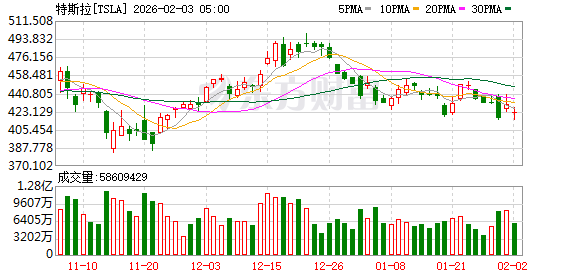
特斯拉Q4利润大降61%,马斯克用“科技宏图”撑起信仰:20亿美元押注xAI,太空算力与机器人掀起赛博狂欢
Sou Hu Cai Jing· 2026-01-29 01:01
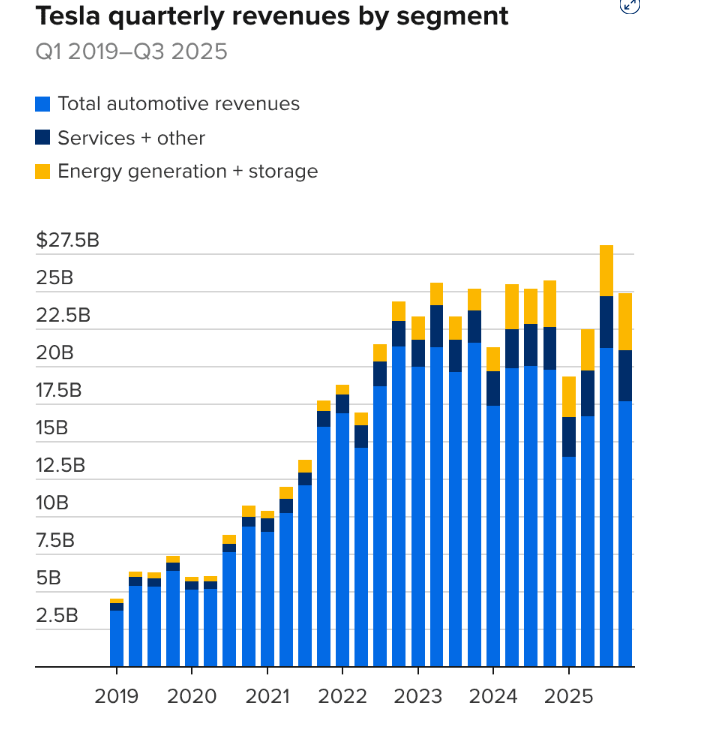
Core Viewpoint - Tesla reported better-than-expected Q4 earnings, with record energy deployment, but faced a 3% decline in annual revenue for the first time in its history, alongside a significant 61% drop in Q4 net profit [1][5][10]. Financial Performance - Tesla's total revenue for Q4 was approximately $24.9 billion, slightly above Wall Street's expectation of $24.79 billion, despite a year-over-year decline of about 3% [2][5]. - The automotive business, which is Tesla's core revenue source, saw a significant year-over-year decline of 11%, dropping from approximately $19.8 billion to $17.7 billion [5]. - Adjusted earnings per share for Q4 were about $0.50, exceeding analysts' expectations of $0.45 [2]. Market Response - Despite the disappointing annual revenue and Q4 profit, Tesla's stock price rose in after-hours trading, reflecting investor confidence in CEO Elon Musk's vision for a "Tesla super technology empire" [1][2]. - The stock has seen a significant increase of 50% since the second half of 2025, indicating strong market sentiment despite ongoing performance challenges [1]. Strategic Investments - Tesla announced a $2 billion investment in xAI, a competitor to OpenAI, aiming to enhance its capabilities in AI applications [1][15]. - The investment aligns with Tesla's broader strategy to integrate AI into its products and services, as outlined in its Master Plan Part IV [16]. Future Growth Initiatives - Tesla is focusing on advancements in AI, autonomous driving, Robotaxi services, and the Optimus humanoid robot, which are seen as key drivers for future growth [12][14]. - The company plans to convert its Fremont factory production line to mass-produce the Optimus robot, with a target to start production by the end of 2026 [14]. Competitive Landscape - Tesla faces increasing competition, particularly from BYD in the Chinese market, which has impacted its vehicle sales in recent quarters [2][10]. - The company reported a 16% decline in electric vehicle deliveries for Q4 and an 8.6% drop in annual deliveries [8]. Energy and Storage Business - Tesla's energy generation and storage business reported revenue of approximately $3.84 billion, reflecting a year-over-year growth of 25%, which partially offsets the decline in automotive revenue [12][14]. - The company emphasized the importance of its energy business as a "hard support" against the downturn in automotive sales [5]. SpaceX and Broader Ecosystem - Tesla's long-term growth narrative is closely tied to SpaceX, with investors viewing Tesla stock as a proxy for exposure to SpaceX's potential IPO and its ambitious projects [2][18]. - SpaceX's plans for solar energy production and AI capabilities are expected to synergize with Tesla's goals, enhancing the overall valuation narrative for both companies [19][21].

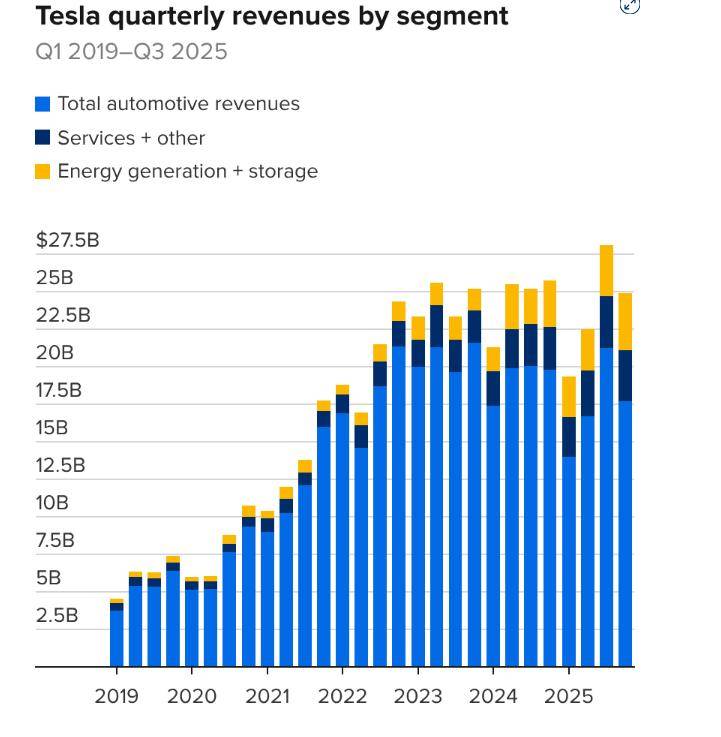
特斯拉(TSLA.US)Q4利润大降61% 马斯克用“科技宏图”撑起信仰:20亿美元押注xAI 太空算力与机器人掀起赛博狂欢
智通财经网· 2026-01-29 00:36
Core Insights - Tesla reported better-than-expected Q4 earnings, with record energy deployment, but faced a 3% decline in annual revenue for the first time in its history, and a significant 61% drop in Q4 net profit [1][5][12] - Despite the disappointing financials, CEO Elon Musk's optimistic outlook on AI, autonomous driving, and robotics has led to a post-earnings stock price increase of over 4% [2][13] - The company's automotive revenue fell by 11% year-over-year, while energy and storage revenue grew by 25%, indicating a shift in focus [5][15] Financial Performance - Q4 total revenue was approximately $24.9 billion, slightly above Wall Street's expectation of $24.79 billion, but down 3% year-over-year [2][5] - Adjusted earnings per share for Q4 were about $0.50, exceeding the expected $0.45 [2] - Tesla's gross margin for Q4 was approximately 20.1%, higher than the anticipated 17.1%, but net profit under GAAP standards saw a 61% year-over-year decline due to a 39% increase in operating expenses [5][12] Business Segments - The automotive segment, which has historically been the largest revenue contributor, saw a significant decline, dropping from approximately $19.8 billion to $17.7 billion year-over-year [5][12] - Energy generation and storage revenue reached about $3.84 billion, growing 25% year-over-year, which helped mitigate the decline in automotive revenue [15][18] - Tesla plans to invest $20 billion in xAI, a competitor to OpenAI, to enhance its AI capabilities [16][17] Strategic Initiatives - Tesla is transitioning its production lines to focus on the upcoming Optimus humanoid robot and plans to scale production significantly by 2026 [15][18] - The company is also expanding its Robotaxi service, with plans to roll out in several major U.S. cities [14][15] - Tesla's collaboration with SpaceX is expected to bolster its long-term growth narrative, as both companies are intertwined in Musk's broader vision for technology and infrastructure [19][20] Market Dynamics - Tesla faces increasing competition, particularly from BYD in the Chinese market, which has impacted its vehicle sales [2][9] - The decline in vehicle deliveries by 16% in Q4 and 8.6% for the year highlights ongoing challenges in the automotive sector [9][11] - Investors are increasingly viewing Tesla not just as an automotive company but as part of a larger ecosystem that includes SpaceX and AI technologies, which may support its valuation despite current struggles [2][19]
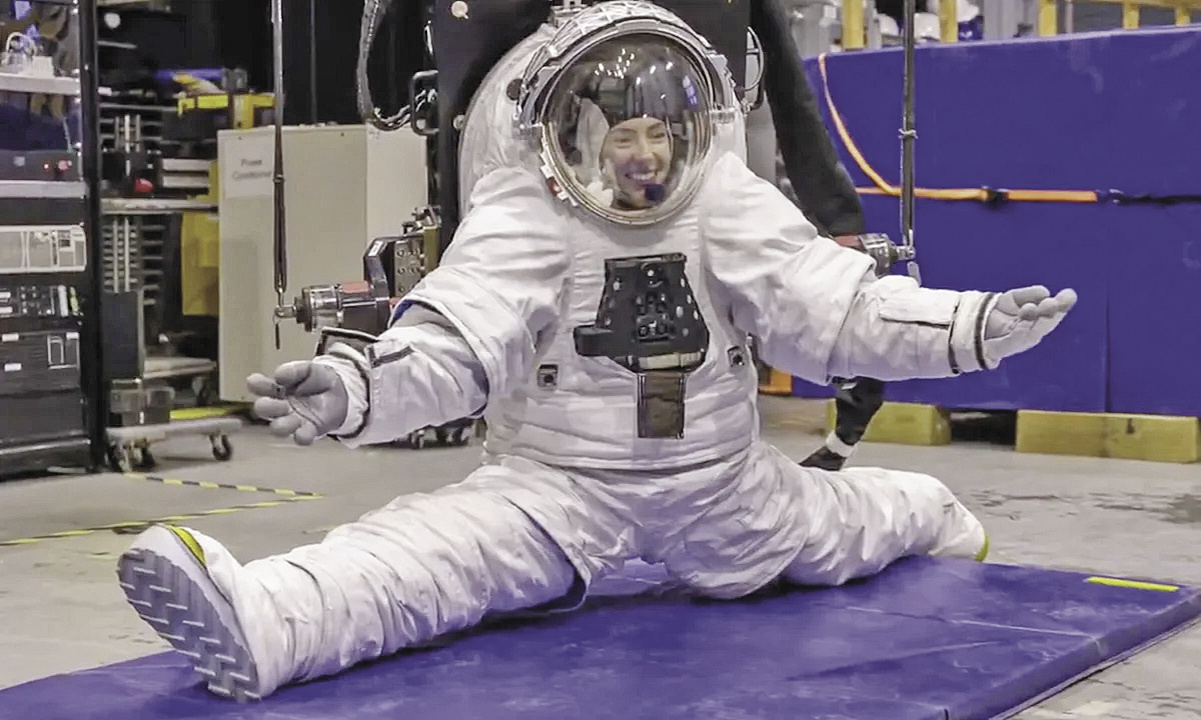
“机动性前所未有”,美国新一代登月宇航服“能劈叉”
Huan Qiu Shi Bao· 2026-01-27 22:50
Group 1 - NASA is preparing for the "Artemis 2" lunar mission, with successful testing of the Space Launch System (SLS) rocket and Orion spacecraft, and a key "wet dress rehearsal" possibly scheduled for January 31, with the mission launch planned for February 6 [1] - Axiom Space is developing the next-generation lunar spacesuit, AxEMU, for the "Artemis 3" mission, which aims to land astronauts on the Moon for the first time in over 50 years, with a target launch date as early as 2027 [3] - The AxEMU spacesuit features significant improvements over the Apollo A7L suit, including enhanced mobility, allowing astronauts to perform actions like squatting and picking up rocks, which were difficult in the older suits [3] Group 2 - The new AxEMU spacesuit is approximately 9 kilograms lighter than the Apollo suits, making it easier for astronauts to operate in the Moon's lower gravity [4] - The AxEMU suit supports up to 8 hours of lunar surface activity, exceeding the 4-7 hour duration of the Apollo suits, due to an improved life support system [4] - Axiom Space emphasizes that the development of these next-generation spacesuits is a significant milestone in reinforcing the United States' leadership in space exploration and enhancing understanding of the Moon and beyond [4]