
证券及期货

Search documents
香港证监会、港交所回应施政报告将推动资本市场长期稳健发展
Zheng Quan Shi Bao· 2025-09-17 18:08
Group 1 - The core viewpoint of the news is that the Hong Kong government’s 2025 policy address aims to enhance the financial and capital markets, with measures expected to solidify Hong Kong's position as a leading global listing venue [1][2] - The Hong Kong Securities and Futures Commission (SFC) believes that the proposed measures to strengthen the stock market and optimize the listing system will reinforce Hong Kong's status as a preferred listing location globally [1] - Suggestions to include Renminbi counters and Real Estate Investment Trusts (REITs) in the Stock Connect program are expected to deepen the connection between Hong Kong and mainland markets [1] Group 2 - The policy address emphasizes the development of fixed income and money markets through initiatives such as promoting bond issuance, establishing a commercial repurchase market, and launching government bond futures [1] - The SFC views these measures as a significant boost for the diversification of Hong Kong's market and its attractiveness to global investors [1] - The SFC Chairman, Huang Tianyou, stated the commitment to consolidating Hong Kong's traditional advantages in financing and connectivity, while pursuing innovation and diversification for future success [2]

香港交易所前8个月成交数据表现亮眼
Qi Huo Ri Bao Wang· 2025-09-04 16:21
Core Insights - The Hong Kong Stock Exchange reported a significant increase in average daily trading volume for the first eight months of the year, reaching HKD 248.3 billion, which is a 132% increase compared to the same period last year [1] Trading Volume Summary - The average daily trading volume in the Hong Kong securities market was HKD 248.3 billion, up from HKD 106.8 billion year-on-year [1] - In the derivatives market, the average daily trading volume for futures and options was 1,660,900 contracts, reflecting a 13% increase from the previous year [1] - The average daily trading volume for stock options was 863,627 contracts, which is a 29% increase year-on-year [1] - The average daily trading volume for stock futures was 8,550 contracts, showing a 10% increase compared to last year [1] - The average daily trading volume for RMB currency futures reached 112,121 contracts, marking a 30% increase from the same period last year [1]
据报港交所和香港证监会员工涉外泄私有化公告被调查
Xin Lang Cai Jing· 2025-09-03 06:36
Core Viewpoint - The Hong Kong government is investigating insider trading allegations involving at least two employees from the Hong Kong Stock Exchange (HKEX) and the Securities and Futures Commission (SFC), as well as brokers and influencers [1] Group 1: Investigation Details - The investigation is focused on whether employees from HKEX and SFC disclosed upcoming announcements to traders and others over the past few years, involving dozens of listed companies [1] - Some of the leaked announcements reportedly pertain to privatizations [1] - The investigation has been ongoing for several months, but such inquiries may take years and may not necessarily lead to charges [1]
陈茂波:香港与中东深化交流合作 正处有利的历史时机
智通财经网· 2025-08-24 06:37
Group 1 - Hong Kong is positioned to enhance its role as a "super connector" and "super value creator" under the "One Country, Two Systems" framework, facilitating cooperation with Middle Eastern countries for mutual development [1] - The Hong Kong stock market has seen increased interest from Middle Eastern investors, with investments exceeding $1 billion in several newly listed companies, reflecting a trend of diversification in asset allocation [2] - The compound annual growth rate of investments from Saudi Arabia, Kuwait, and Bahrain in Hong Kong securities has reached approximately 17% over the past five years, with total investments increasing to $6.3 billion in 2023 [2] Group 2 - Middle Eastern countries are accelerating infrastructure development and seeking innovative technologies, creating significant opportunities for Hong Kong's startups and professional services, particularly in green technology and smart city initiatives [3] - The number of visitors from Gulf countries to Hong Kong increased by 70% last year, with a further increase of over 50% in the first seven months of this year, indicating growing bilateral trade and cultural exchanges [4] - Hong Kong's bilateral trade with the Gulf region reached HKD 150 billion last year, with an average annual growth rate of about 11% over the past five years [4] Group 3 - The Hong Kong government is actively deepening cooperation with the Middle East, having signed 59 cooperation memorandums and statements during recent trade missions [5] - The establishment of exchange-traded funds (ETFs) tracking both Saudi and Hong Kong markets signifies enhanced financial connectivity between the two regions, with combined market values exceeding HKD 16 billion [5] - A Kazakhstani natural resources company is set to list in Hong Kong, marking the first simultaneous listing on both the Hong Kong Stock Exchange and the Astana International Exchange, highlighting financial collaboration with Central Asia [5] Group 4 - The Hong Kong government plans to continue promoting its advantages and opportunities globally, focusing on multi-layered and multi-field exchanges with emerging markets to create more development opportunities for local enterprises [6]
港交所半年业绩创新高 日均成交额超2400亿港元
Sou Hu Cai Jing· 2025-08-22 08:47
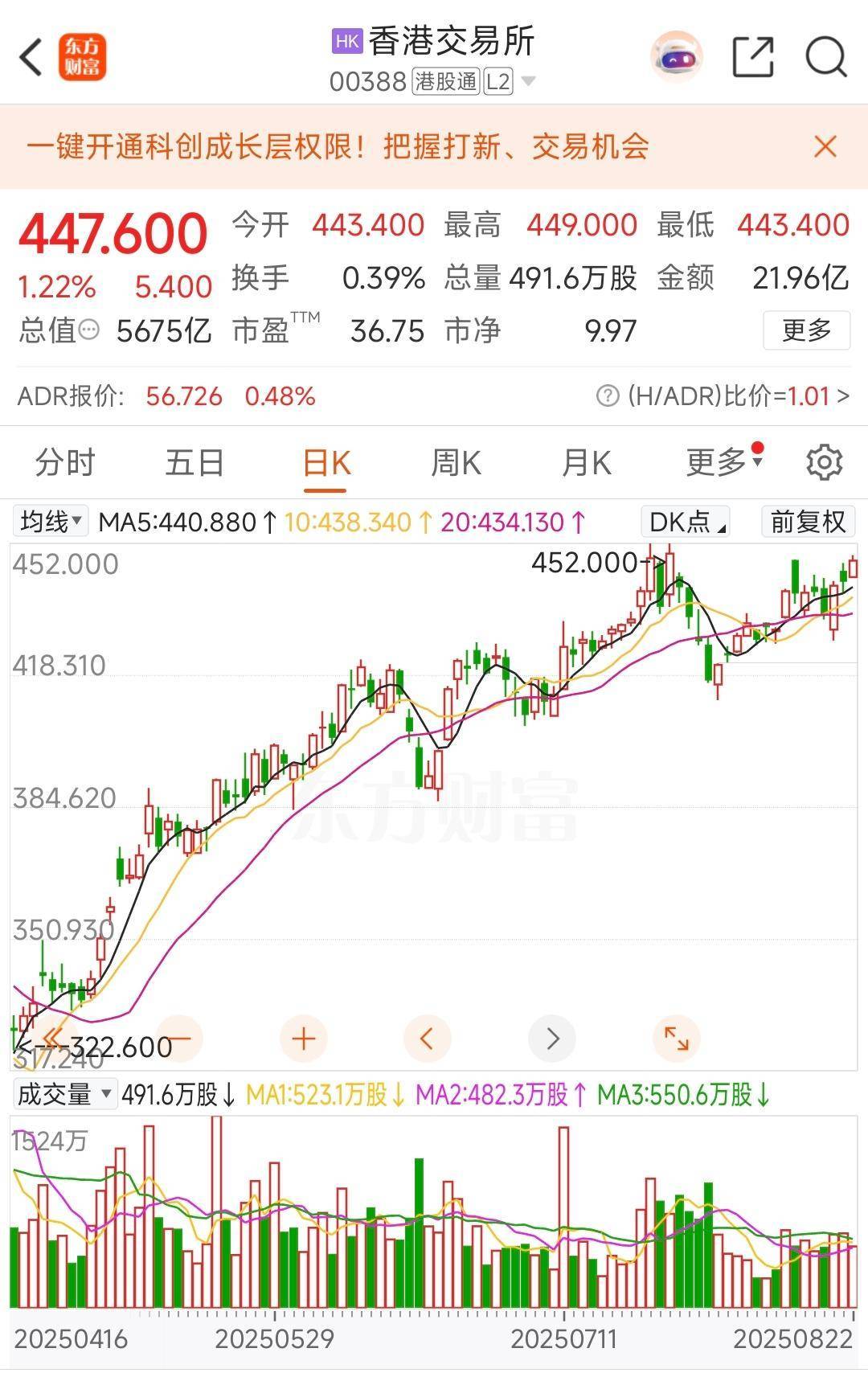
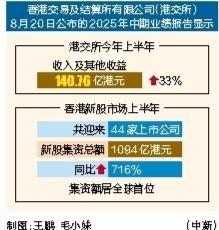
Core Insights - Hong Kong Stock Exchange (HKEX) reported a record high for its mid-year performance in 2025, with revenue and other income reaching HKD 14.076 billion, a year-on-year increase of 33%, and shareholder profit amounting to HKD 8.519 billion, up 39% [1][2] Financial Performance - HKEX's net profit for the first half of 2025 was HKD 8.519 billion, with the second quarter net profit at HKD 4.442 billion, reflecting a 41% increase compared to the second quarter of 2024 [2] - The average daily trading volume in the Hong Kong stock market was HKD 240.2 billion, a significant year-on-year growth of 118% [2] - The daily trading volume for ETFs reached HKD 33.8 billion, marking a 184% increase year-on-year [2] IPO Market Activity - In the first half of 2025, HKEX welcomed 44 new companies, raising a total of HKD 109.4 billion through IPOs, which is a remarkable year-on-year increase of 716% [5] - As of June 30, 2025, HKEX was processing 207 listing applications, indicating a robust IPO market [5] - The strong performance in the IPO market is attributed to policy benefits, market recovery, and the demand for companies to expand internationally [5] Future Outlook - HKEX's CEO, Charles Li, expressed confidence in the exchange's strong performance and plans to enhance platforms, infrastructure, and product offerings to provide diverse products and liquidity for investors [2] - JPMorgan has raised its profit forecasts for HKEX, anticipating an increase in trading volumes, with average daily trading volume predictions for fiscal years 2025 to 2027 adjusted to HKD 235 billion, HKD 250 billion, and HKD 252 billion respectively [6]

【港股观潮】 南向资金助力港股生态重塑
Zheng Quan Shi Bao· 2025-08-21 18:32
Core Insights - Hong Kong Stock Exchange (HKEX) reported record high revenue and net profit for the first half of 2025, with revenue reaching HKD 14.076 billion, a year-on-year increase of 32.53% [1] - The average daily trading volume in the Hong Kong stock market surged to HKD 240.2 billion, up 118% from the previous year [1][2] - Southbound trading saw an average daily turnover of HKD 111.04 billion, a remarkable increase of 196% compared to the same period last year [1][2] Financial Performance - Main business revenue was HKD 12.954 billion, reflecting a 33.68% year-on-year growth [1] - EBITDA margin improved to 79%, up 6% year-on-year [1] - Net profit attributable to shareholders was HKD 8.519 billion, a 39.09% increase year-on-year, with basic earnings per share at HKD 6.74 [1] Market Dynamics - Southbound funds have significantly influenced the Hong Kong stock market, with cumulative net purchases exceeding HKD 4.6 trillion as of August 2025 [2] - The demand for diversified investment and the relatively low valuation of Hong Kong stocks have attracted substantial southbound capital [2] - Northbound trading also saw growth, with average daily turnover for stocks reaching RMB 173.14 billion, a 32% increase year-on-year [2] IPO Activity - IPO financing in the Hong Kong market reached HKD 106.713 billion, a staggering increase of 688% year-on-year, reclaiming the top position among global exchanges [3] - The number of new IPO applications surged to 207, more than double the 84 applications in 2024 [3] - HKEX plans to implement reforms to enhance market competitiveness, including shortening settlement cycles and optimizing IPO pricing regulations [3] Market Outlook - The explosive growth of southbound trading indicates a restructuring of the Hong Kong stock market, with southbound funds becoming a crucial force [4] - A stable macroeconomic environment could further support the Hong Kong stock market through increased southbound capital inflows [4]
港交所上半年新股集资额1094亿港元
Shen Zhen Shang Bao· 2025-08-20 16:57
Core Viewpoint - The article discusses the recent financial performance and strategic developments of a specific company, highlighting its growth trajectory and market positioning [2] Financial Performance - The company reported a revenue increase of 15% year-over-year, reaching a total of 1.5 billion in the last quarter [2] - Net profit rose by 10%, amounting to 300 million, indicating strong operational efficiency [2] Strategic Developments - The company has announced plans to expand its market presence in Asia, targeting a 20% increase in market share over the next two years [2] - A new product line is set to launch in Q3, expected to contribute an additional 200 million in revenue [2] Market Positioning - The company currently holds a 25% market share in its primary sector, positioning it as a leader among competitors [2] - Recent partnerships with key industry players are anticipated to enhance distribution channels and customer reach [2]
8月19日【中銀做客】恆指、小米、港交所、中芯、華虹、泡泡瑪特、寧德時代
Ge Long Hui· 2025-08-19 18:23
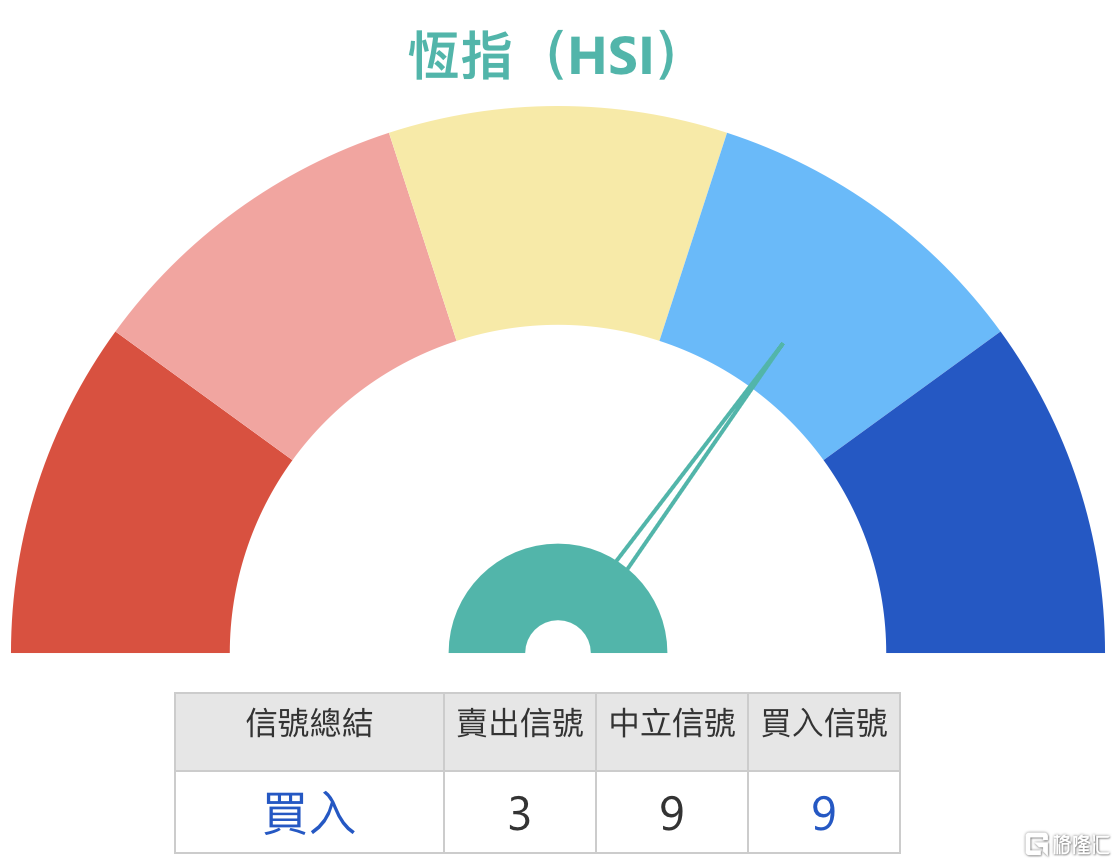
Market Overview - The Hang Seng Index recently peaked at 25,700 points but has since declined, with a current support level around 25,000 points, indicating potential downward adjustment risks [1][2] - The distribution of bull and bear certificates shows 69% are bullish and 31% bearish, suggesting a prevailing bullish sentiment despite the recent market pullback [1][3] Investment Products - For investors considering bull certificates, it is advised to select products with a recovery price not too close to the current market price to mitigate risks [1] - Specific products mentioned include: - Bull certificate 65915 with a recovery price of 24,818 points and a leverage of 50-60 times [1] - Bear certificate 65929 with a recovery price of 25,688 points and a leverage of 40 times [2] - Call warrant 18057 with an exercise price of 25,627 points and a leverage of 10 times, expiring in December [1] - Put warrant 19402 with an exercise price of 24,477 points and a leverage of 8 times, expiring in January [1] Individual Stock Analysis - Xiaomi (01810) is experiencing volatility ahead of its earnings announcement, with a current price around 51-52 HKD after a recent drop to 50.1 HKD [5][6] - Investors are favoring call warrants for Xiaomi, such as warrant 17257 with an exercise price of 61 HKD and a leverage of 5 times, expiring in April [5] - Hong Kong Exchanges and Clearing (00388) is benefiting from high trading volumes and new IPOs, with a suggested call warrant 17568 at an exercise price of 530.5 HKD and a leverage of 7 times [8][9] Sector Focus - The semiconductor sector is currently in focus, with companies like SMIC (00981) and Hua Hong Semiconductor (01347) facing price adjustments [12][13] - Investment products for SMIC include call warrant 18978 with an exercise price of 62.88 HKD and a leverage of 3 times, and put warrant 13689 with an exercise price of 42.5 HKD, also with a leverage of 3 times [12] - For Hua Hong, call warrant 19312 with an exercise price of 55 HKD and a leverage of 2 times is available [12] Risk Management - Investors are advised to monitor support and resistance levels closely when selecting products, particularly for high-leverage options [18][19] - The current support level for Xiaomi is around 49.2 HKD, while the resistance level is at 57.5 HKD [6][9]




港交所IPO新规生效,散户打新时代终结?
2 1 Shi Ji Jing Ji Bao Dao· 2025-08-15 09:15
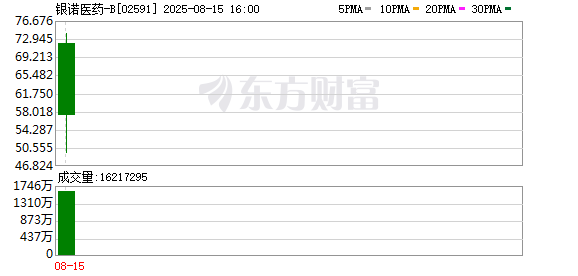
Core Viewpoint - The recent IPO reform by the Hong Kong Stock Exchange (HKEX) aims to shift the balance of benefits from retail investors to institutional investors, enhancing the efficiency of new stock pricing and distribution mechanisms [2][4][5]. Summary by Sections IPO Reform Overview - On August 4, HKEX implemented a comprehensive reform of the IPO pricing mechanism, marking the most significant adjustment in 27 years [2]. - The new allocation system reduces the minimum allocation to retail investors from 50% to 40% and introduces a dual-track distribution mechanism [2][7]. Mechanism Details - Mechanism A retains a similar structure to the previous rules but lowers the allocation for retail investors, while Mechanism B allows issuers to lock in a minimum of 10% for public offerings without a reallocation mechanism [2][4]. - The first company to utilize this new mechanism, Guangzhou Yinuo Pharmaceutical Group, saw its stock price surge over 280% on its debut [1]. Institutional Investor Focus - The reform is designed to attract more institutional investors by ensuring they receive a larger share of new stock offerings, addressing previous issues where they struggled to secure adequate allocations [6][7]. - Notable IPOs like CATL and Hengrui Medicine have already shown a trend of favoring institutional investors in their allocations [3]. Market Performance and Reactions - The Hong Kong IPO market has seen a significant increase in activity, with 53 new listings and a total fundraising amount of approximately HKD 127 billion in the first seven months of the year, a sixfold increase year-on-year [6]. - Institutional investors, including sovereign and pension funds, are increasingly participating in the IPO market, with about two-thirds of recent investors being foreign [6]. Retail Investor Concerns - Retail investors are expressing concerns over their reduced chances of securing shares in IPOs, particularly with the new mechanism B locking in lower public offering percentages [8][9]. - The HKEX has acknowledged these concerns and made some adjustments to the proposed rules, but many retail investors still feel disadvantaged [10][11]. Future Implications - The reform aims to stabilize post-IPO stock performance and reduce the risk of price volatility, potentially benefiting all investors in the long run [10]. - However, the transition period may lead to fluctuations in the market as participants adjust to the new rules [5][10].
香港证券市场最低上落价位调整正式生效 第一阶段至少涉及265只股票
Zheng Quan Ri Bao Wang· 2025-08-04 14:01
Core Viewpoint - The Hong Kong stock market is undergoing a liquidity reform with the implementation of the first phase of lowering the minimum price fluctuation limits, effective from August 4, aimed at enhancing market liquidity and international competitiveness [1][2][3] Group 1: Implementation Details - The Hong Kong Stock Exchange (HKEX) announced the first phase of lowering the minimum price fluctuation limits on July 21, with successful pre-launch testing completed on August 2 [1] - The minimum price fluctuation for stocks priced between HKD 10 and HKD 50 will be reduced, with specific changes such as from HKD 0.02 to HKD 0.01 for stocks priced between HKD 10 and HKD 20, and from HKD 0.05 to HKD 0.02 for stocks priced between HKD 20 and HKD 50 [1][2] Group 2: Market Impact - As of August 4, there are 265 stocks priced between HKD 10 and HKD 50, accounting for approximately 10% of the total market stocks, with their trading volume representing nearly 29% of the total market turnover on that day [2] - The adjustment applies to stocks, real estate investment trusts, and equity warrants, but excludes exchange-traded products (ETPs), options, bonds, and structured products [2] Group 3: Future Outlook - The HKEX has indicated that the second phase of adjustments will be based on the outcomes of the first phase, expected to be implemented by mid-2026, targeting the minimum price fluctuation limits for stocks priced between HKD 0.5 and HKD 10 [3] - The average daily trading volume in the Hong Kong stock market has significantly improved, rising by 118% year-on-year to HKD 240.2 billion in the first half of 2023 [3] - The adjustment of minimum price fluctuation limits is anticipated to lower trading costs for investors, potentially attracting more institutional investors to participate in the Hong Kong stock market [3]