银发经济

Search documents
“数智+银发”,苏州相城打造产业集聚新高地!
Yang Zi Wan Bao Wang· 2025-12-03 10:46
近年来,相城区坚持"银发产业+银发事业"双轮驱动,以"数智+银发"为重点发展方向,积极打造长三角 银发经济产业发展新高地、技术创新策源地、高品质养老服务集聚地。 在银发产业方面,相城区以银发经济产业园为核心,集聚了蔚路科技、三三科技、博博科技、海熙智能 等银发经济相关企业超300家。现有相关基金8只,总规模近170亿元,成功招引落户帝迈生物、金域医 学(603882)、星悦智慧医疗等一系列重点项目。 在银发事业方面,截至2024年末,区内60周岁以上户籍老年人口12.86万人,占户籍总人口24.74%,拥 有较多活力老人。全区现有运营养老机构8家,创建3家全国示范性老年友好型社区。构建了"15分钟健 康服务圈",23家机构获评省级老年友善医疗机构。 科技赋能,银发经济产业规模持续扩大。截至目前,相城区已成功招引苏州市健康医疗数智创新实验 室、传跃科技等多个项目,形成较完整的银发经济产业生态体系。银发经济创新体验馆作为全市对外展 示平台,对全市乃至全国的展品进行展示销售,有效提升了相城区银发经济的知名度和影响力。 在平台建设方面,相城区持续深化与中康养集团等重点平台合作,中康养研究院相城银发经济研究中 心、中国 ...
北新商务社区这场会议为银龄产业建立四大共识
Mei Ri Shang Bao· 2025-12-01 22:19
九州大药房相关负责人指出,要加强政策支持与行业监督,推动银发经济产业链上下游企业深度协同, 搭建一体化服务平台,为产业赛道发展奠定坚实基础。 "让银发服务嵌入生活场景,能更好激活'家门口经济'"。杭州望潮社会服务中心负责人陈海龙建议,聚 焦银发新生,重点关注老年群体再就业与社会参与,开展针对性职业技能培训,创造再就业机会,激发 社区场景活力。 针对信息碎片化问题,范懿心提出构建区域性服务对接平台,推动信息资源从碎片化向整合化转变,实 现老年群体需求与服务供给的精准匹配,加快银发产业集群化发展。 关于"分散服务"瓶颈的突破,拱墅区侨创联盟代表认为要强化牵头抓落实机制,梳理并明确服务清单, 通过打造"银发服务驿站"等枢纽节点,构建可持续发展生态。 商报讯(记者潘婷婷通讯员邵翀江斌)当千年运河商脉遇见万亿银发经济,会迸发怎样的火花?近日,在 拱墅区大关街道北新商务社区"茶暖北新畅享银龄未来"红茶议事会上提出了这个新议题,共谋区域银发 经济高质量发展新路径。 "北新"二字,源自明清北新关,曾是南北货通、商脉汇聚之地。如今,这片土地正将历史积淀的开放基 因注入银发服务新领域。 现场,北新商务社区亮出今年成绩单:指导钱江 ...
李璐:精准施策发展银发经济
Jing Ji Ri Bao· 2025-12-01 00:57
Core Viewpoint - The silver economy is experiencing significant development across various regions in China, driven by policies, market dynamics, and demand, making its advancement over the next five years a logical necessity [1] Historical Logic - The silver economy originated from elderly welfare and care services, evolving into an upgraded version of the aging industry. Initially, China established a welfare system targeting vulnerable elderly groups. In 2000, the Ministry of Civil Affairs issued a notice to expand service areas for elderly care beyond just state-supported groups. Over the years, the elderly care service system has transitioned from a government-led "aging cause" to a multi-entity supplied "aging industry" [1] - With the deepening of population aging, the silver economy's scope is expanding, enriching various sectors such as elderly services, products, technology, and finance. In early 2024, the State Council issued 26 measures to promote the silver economy, indicating a shift towards a more integrated approach with macroeconomic objectives [1] Theoretical Logic - The silver economy is characterized by its dual attributes of market and welfare, making it a long-cycle, stable-return sector. It represents an innovative attempt to construct a welfare economics paradigm with Chinese characteristics, transforming the demographic challenge of aging into a development advantage [2] - As elderly individuals increasingly participate in economic activities, the silver economy is becoming a typical representation of a welfare economics model that is co-built and shared by the entire population [2] Practical Logic - Developing the silver economy is crucial for addressing population aging and achieving modernization in China. It aims to convert elderly consumption and investment into new momentum for modernization, thereby transforming the elderly from passive beneficiaries to active contributors [2] Challenges and Policy Recommendations - The silver economy in China is still in its early stages, facing challenges such as insufficient effective demand, suboptimal market supply, and lack of systematic policy support. To accelerate its development, three strategies are proposed: - Increase government public consumption support to enhance elderly income and consumption capabilities through targeted fiscal measures [3] - Promote "age-friendly" industrial policies to address the lack of commercial scenarios catering to elderly consumers, supporting diverse development across various sectors [3] - Establish a guiding statistical monitoring system for the silver economy to better track industry trends and developments [4]
存款暴增1.39万亿,产业投资增速37%,普通人翻身机会在哪里?
Sou Hu Cai Jing· 2025-11-30 12:20
10月贷款总额比9月少了3600多亿,十几年数据拉出来一看,确实是根扎眼的下行曲线。 有人立马甩锅美国贸易战,有人开始盘算要不要提前还房贷,还有中年朋友对着手机叹气——上有老下有小,房贷压肩,要是被裁员就真成"中年危机体验 卡"永久持有者了。 先把焦虑按一按,经济这盘棋没那么容易下崩,那些喊着"三驾马车全趴窝"的,多半是只看了局部没看全景。 今天的这篇文章,主要是分析当前中国经济的真实态势、消费与投资遇冷的核心原因及国家层面的破局策略,并为普通人指出在经济结构调整中的发展机 遇,这样的经济新局面前,你是否已经找准了自己的方向? 最近打开任何一个聊天群,都能刷到有人转发贷款数据图,配文清一色"断崖式下跌""经济要凉"。 拉动经济的消费、投资、出口这三兄弟里,消费和投资确实踩了刹车,但出口这位选手正在偷偷刷业绩。 去年上半年出口总额12.13万亿,今年直接冲过13万亿,逆势上涨的成绩单摆在这里。 对美出口是有点吃力,但东盟、非洲这些"新朋友"接盘接得稳,一带一路沿线国家的订单量噌噌涨,把美国那边的缺口填得严丝合缝。 真正让大家慌神的,是消费和投资这两位"老大哥"动力不足。 10月房贷数据最能说明问题,去年同期1. ...


消费提质扩容引领新供给
Jing Ji Ri Bao· 2025-11-27 21:43
Core Insights - Consumption is identified as the main engine for economic growth and a key indicator of public well-being, with significant policies implemented during the "14th Five-Year Plan" period to boost domestic demand [1][2] Group 1: Consumption Market Growth - The total retail sales of consumer goods in China increased from 39.1 trillion yuan in 2020 to 48.3 trillion yuan in 2024, solidifying its position as the world's second-largest consumer market [1] - The average contribution rate of final consumption to economic growth over the past four years reached 56.2%, an increase of 8.6 percentage points compared to the "13th Five-Year Plan" period [1] - By 2024, the per capita disposable income is projected to be 41,314 yuan, and per capita consumption expenditure is expected to reach 28,227 yuan, showing significant improvement since 2020 [1] Group 2: Policy Impact and Consumption Potential - The "old-for-new" policy has effectively driven sales, generating 2.9 trillion yuan in sales and benefiting approximately 400 million people with subsidies [2] - The number of new energy vehicles is expected to grow 5.4 times from 2020 to 2024, indicating a strong trend towards green consumption [2] - New consumption formats such as live streaming sales and virtual reality are rapidly emerging, with online retail sales maintaining the top position globally [2] Group 3: Consumption Structure and Quality - Service consumption is leading in growth, with an average annual increase of 9.6% in service expenditure from 2020 to 2024 [2] - There is a notable shift towards quality and personalized consumption, with smart health products, smart accessories, and educational toys showing annual compound growth rates of 115%, 131%, and 189% respectively [2] - Emerging sectors like the ice and snow economy are expected to exceed 1 trillion yuan this year, while the silver economy is projected to reach 12.3 trillion yuan in the future, highlighting new growth areas in consumption [2]
学术智慧助力养老 产学研用创新平台在京启动
Zhong Guo Xin Wen Wang· 2025-11-16 01:41
Core Insights - The academic conference organized by the Chinese Society of Gerontology and Geriatrics focused on aging policies, technological innovation, industry integration, and service practices to support high-quality development during the 14th Five-Year Plan period [1] - The conference aimed to gather insights from over 500 experts and industry professionals to promote collaborative innovation and resource sharing in addressing the challenges of an aging population [1][2] Group 1: Aging Population Statistics and Challenges - By the end of 2024, the elderly population aged 60 and above in China is projected to reach 310 million, accounting for 22.0% of the total population, while those aged 65 and above will reach 220 million, making up 15.6% [2] - The aging population is expected to increase by nearly 14 million annually during the 14th Five-Year Plan period, exacerbating challenges due to the dual pressures of an aging and declining birth rate [2] Group 2: Policy and Strategic Development - The Ministry of Civil Affairs outlined two strategic tasks for the development of the elderly care service system: to establish a suitable system by 2035 and ensure that all elderly individuals have access to basic services [2] - Experts emphasized the need for a localized approach to aging research, advocating for the integration of traditional Chinese values and community support systems in developing effective aging theories [2] Group 3: Silver Economy and Healthcare Innovations - The silver economy is anticipated to evolve, with a shift towards data-driven and intelligent services, moving away from labor-intensive models [3] - A multi-disciplinary approach is recommended to address health challenges faced by the elderly, including the establishment of integrated care teams and the development of smart elderly care products [4][5] Group 4: Integration of Traditional and Modern Medicine - The collaboration between traditional Chinese medicine and Western medicine is seen as crucial for creating a comprehensive elderly health service model [6] - The use of smart health and care robots is highlighted as a key strategy to meet the growing demands of the elderly population for assistance and rehabilitation [6][7]
李迅雷:关注“十五五”规划三大亮点——科技自立、消费提振与构建全国统一大市场
Zheng Quan Shi Bao Wang· 2025-11-14 11:00
Group 1 - The article highlights three major investment opportunities under the "14th Five-Year Plan": accelerating "technological self-reliance," promoting consumption, and constructing a unified national market [1] - The focus on "technological self-reliance" aims to build a modern industrial system centered on advanced manufacturing, with key investments in six areas: future manufacturing, future information, future materials, future energy, future space, and future health [1] - The promotion of consumption includes significant investments in people's livelihoods to address aging population issues, with new growth points identified in the silver economy, innovative pharmaceuticals, and service consumption [1] Group 2 - The construction of a unified national market seeks to break down regional and industry barriers through "anti-involution," reforming pricing mechanisms, and enhancing ROE via mergers and acquisitions to address the low profitability of listed companies [1]
下周关注丨10月宏观经济数据将公布,这些投资机会最靠谱
Di Yi Cai Jing· 2025-11-09 01:16
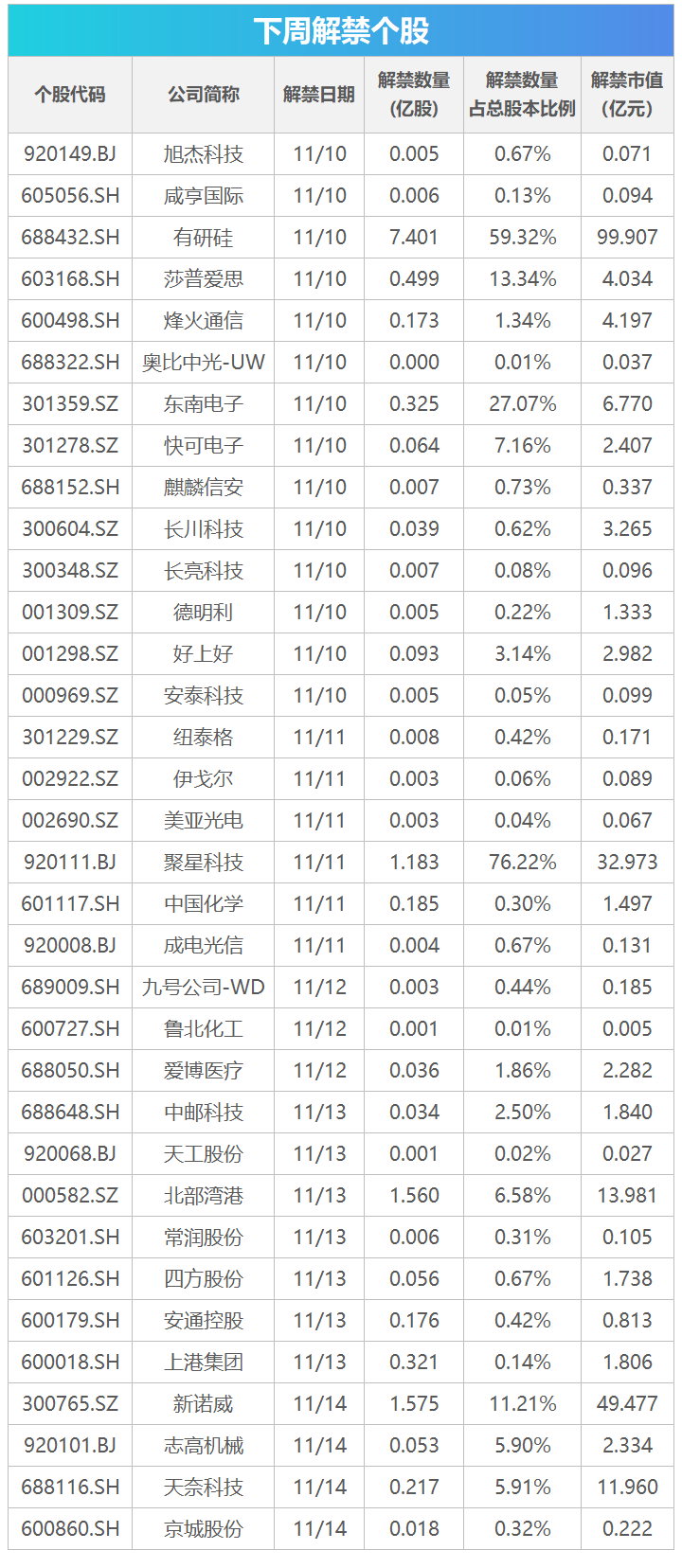
Economic Data Release - The National Bureau of Statistics will release October economic data on November 14, including industrial added value, fixed asset investment, and retail sales [2] - Financial data for October, such as M2, new loans, and social financing, is also expected to be released next week [3] Industry Conferences - A series of industry conferences will take place in November, including the 2025 China Robot Industry Development Conference from November 10 to 12, and the 12th China (Suzhou) Battery New Energy Industry International Summit Forum from November 11 to 13 [4] - Other notable events include the 2025 World Power Battery Conference, the 2025 Fourth China Nuclear Energy High-Quality Development Conference, and the 2025 6G Development Conference [4] Fuel Price Adjustment - A new round of domestic fuel price adjustments will begin on November 10 at 24:00, with an expected increase of 130 yuan per ton for gasoline and diesel based on the average crude oil price of 62.52 USD per barrel [5] Stock Unlocking - Over 24.7 billion yuan worth of restricted shares will be unlocked next week, with a peak unlocking date on November 10 [6] - The top three companies by unlocking market value are Youyan Silicon (99.91 million yuan), Xin Nuowei (49.48 million yuan), and Juxing Technology (32.97 million yuan) [6] New Stock Opportunities - Two new stocks will be issued next week: Nant Technology on November 11 and Hai'an Group on November 14 [9]



联合国人口基金驻华代表:中国银发市场潜力巨大
Yang Shi Xin Wen· 2025-11-08 14:24
Group 1 - The core issue of global aging population is highlighted, with the UN projecting that by 2035, the population aged 80 and above will reach 265 million, surpassing the number of infants [1] - The representative of the UN Population Fund in China emphasized the significant role of technological innovation in driving the development of the silver economy, showcasing China's substantial growth vitality and market potential in this sector [1]
“银发科技”助力服务场景向“智”向“新” 智慧赋能让“享老”更有温度
Yang Shi Wang· 2025-11-07 02:24
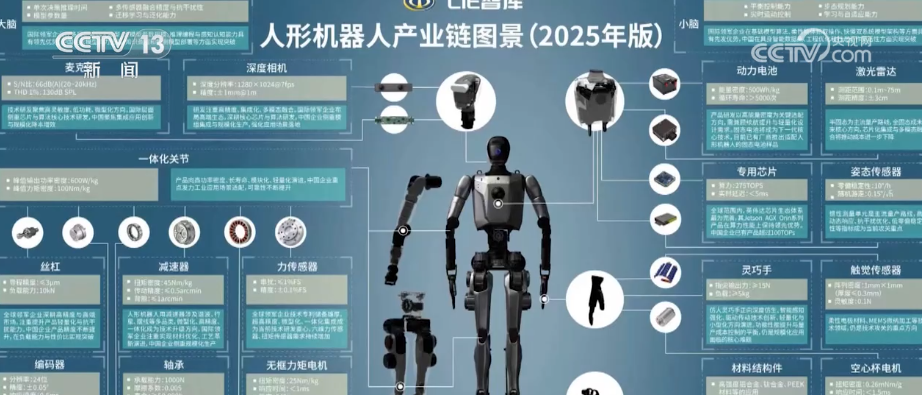
Group 1: Humanoid Robot Development - The "Humanoid Robot Innovation and Development Cooperation" forum discussed new trends and paths in humanoid robot development, featuring insights from various experts in the field [1] - The China Electronics Society released the "Humanoid Robot Industry Chain Landscape (2025 Edition)," outlining key technical indicators and development trends in the humanoid robot industry, providing clear guidance for collaborative efforts in production, education, research, and application [2] - The chairman of Leju Intelligent highlighted China's advantage in data, particularly in industrial and elderly care scenarios, which will support advancements in robotic intelligence [2] Group 2: Silver Economy and Technology - The "Accelerating the Development of the Silver Economy" forum released the first "Silver Technology Development Report," focusing on the changing needs of the elderly population and the integration of silver technology with industry [6] - Innovations showcased included real-time AI hearing aids and rehabilitation aids that automatically assess muscle strength, demonstrating the practical applications of technology in elderly care [8] - The United Nations Population Fund representative noted that China is at the forefront of addressing the challenges of an aging population through technological advancements that promote dignified and autonomous elderly care [10] Group 3: Challenges and Opportunities in Silver Technology - The "China Silver Technology Development Report (2025)" identified key areas of focus such as precision medicine, chronic disease management, cognitive impairment intervention, and digital elderly care, while also highlighting challenges like data collaboration and talent shortages [13] - Experts emphasized the need for social policies and volunteer services to bridge the gap between the development of silver technology products and their accessibility to the elderly population [13]