
纺织服装

Search documents
洪兴股份:第三届董事会第七次会议决议公告
Zheng Quan Ri Bao· 2025-12-23 12:44
证券日报网讯 12月23日,洪兴股份发布公告称,公司第三届董事会第七次会议审议通过《关于的议 案》。 (文章来源:证券日报) ...

天虹国际集团(02678)12月23日斥资25.71万港元回购5.7万股
智通财经网· 2025-12-23 10:04
智通财经APP讯,天虹国际集团(02678)发布公告,于2025年12月23日,该公司斥资25.71万港元回购5.7 万股股份,每股回购价格为4.51港元。 ...
南极电商轻资产“光环”褪色后的转型阵痛
Xin Lang Cai Jing· 2025-12-23 09:51
Core Viewpoint - The company is undergoing a challenging transformation from a "light asset" model to a "heavy asset" model, aiming to reshape its brand perception and move away from being seen merely as a "label king" [1][6][7] Group 1: Fundamental Challenges of the Business Model - The core concern for the company arises from long-standing issues within its successful business model, particularly the dilution of brand value and the difficulty in restoring it [2][8] - The previous broad licensing strategy has led to a blurred brand image associated with "low price" and "homogeneity," complicating the transition to a focus on "high quality" and "high cost-performance" [2][8] - The shift from "licensing management" to "product operation" presents another challenge, requiring the company to develop capabilities in product design, production control, inventory management, and offline retail operations [2][8] Group 2: Realities and Strategic Balance During Transformation - The company faces significant operational pressures, balancing short-term financial performance with long-term investments necessary for brand reshaping and new business development [3][9] - Increased spending on marketing, channel development, and product research is expected to pressure profitability in the short term, while new business growth will take time to mature [3][9] - Managing multiple brands and channels has become more complex, requiring clear positioning and synergy among different brands to avoid internal conflicts [3][9] Group 3: Nature of the Transformation - The essence of the transformation is shifting from being a brand leverager to a full-chain operator, which depends on solid construction in brand building, product innovation, and channel operations [4][10] - The success of this transformation will not only rely on the commitment to investment but also on the company's ability to adapt to new operational logics and cost structures [4][10]

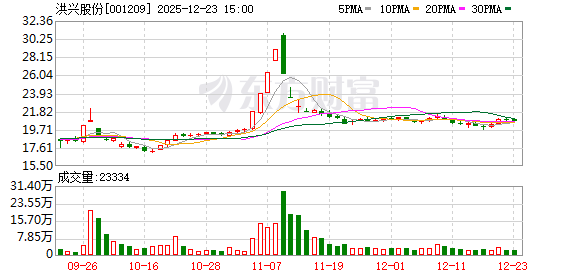
洪兴股份:12月23日召开董事会会议
Mei Ri Jing Ji Xin Wen· 2025-12-23 09:13
Group 1 - The core point of the article is that Hongxing Co., Ltd. announced the convening of its third board meeting on December 23, 2025, to review documents including the supplementary election of committee members [1] - For the first half of 2025, Hongxing Co., Ltd.'s revenue composition was 97.06% from textiles and apparel, with other business revenues accounting for 2.94% [1] - As of the report date, Hongxing Co., Ltd. has a market capitalization of 2.7 billion yuan [1] Group 2 - The real estate sector is facing challenges, with a notable company struggling with a 2 billion yuan maturing debt and ongoing negotiations for its first debt extension [1] - In the upcoming year, over 10 billion yuan of public debts are set to mature, indicating potential liquidity issues within the sector [1]
威海市总工会赋能高质量发展再添新成绩
Qi Lu Wan Bao· 2025-12-23 08:32
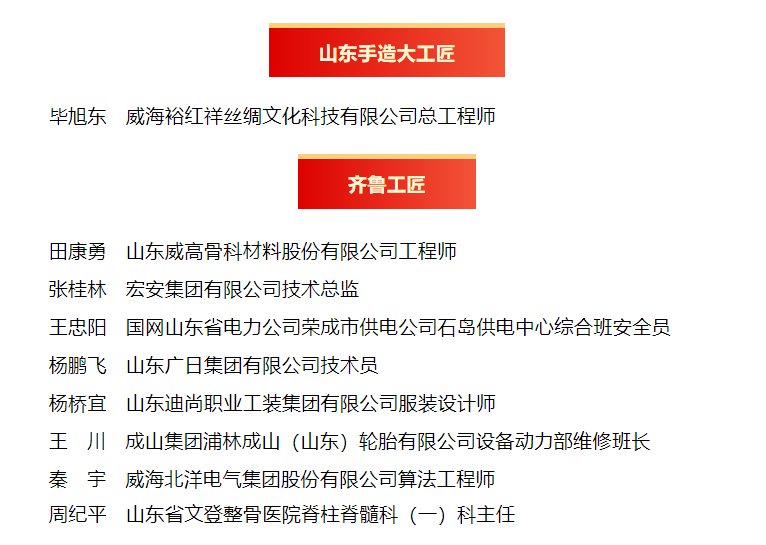
Group 1 - The core focus of Weihai City is on the reform of the industrial workforce, emphasizing skill enhancement and innovation to support high-quality development [1][3] - A series of breakthroughs have been achieved in the training of skilled workers, with significant participation in provincial competitions, resulting in 48 participants winning 5 gold, 8 silver, and 21 bronze medals [1] - Notable talents have been recognized as "Shandong Handcrafted Great Craftsmen" and "Qilu Craftsmen," showcasing the diversity and professionalism of Weihai's skilled workforce across various fields [1] Group 2 - The establishment of artisan training stations and innovation studios has strengthened the foundation for skill transmission, providing practical platforms for technical challenges and talent development [2] - Key training stations, such as Weihai Guantai Airport's artisan training station, have received provincial support, becoming crucial bases for employee growth and technological advancements [2] - The city encourages innovation through competitions, with significant achievements in key technology development in fields like information technology and biomedicine [2] Group 3 - The municipal labor union plans to continue promoting the inheritance of artisan spirit and the cultivation of high-skilled talent, aiming to align workforce skills with industrial demands [3] - The initiative is part of a broader strategy to contribute to the construction of a "delicate city and happy Weihai," supporting provincial and national development goals [3]


国内促消费政策再发力 国内棉价继续上涨
Xin Lang Cai Jing· 2025-12-22 15:52
Price Review - Domestic cotton prices continue to rise, with Zheng cotton reaching a peak of 14,100 yuan/ton, the highest since August 2025, and an increase of 163 yuan/ton or 1.2% from the previous week [2] - The average price of the national cotton price B index is 15,081 yuan/ton, up 121 yuan/ton or 0.8% from the previous week [2] - International cotton prices are under pressure, with the New York cotton futures settling at 63.55 cents/pound, down 0.34 cents/pound or 0.5% from the previous week [2] - The price difference between domestic and international cotton has widened to 2,738 yuan/ton, an increase of 162 yuan/ton from the previous week [2] Market Outlook - The U.S. inflation data is lower than expected, increasing the probability of future interest rate cuts by the Federal Reserve, which positively impacts financial markets [4] - The World Bank and the International Monetary Fund have raised China's economic growth forecasts for 2025 to 4.9% and 5.0%, respectively, indicating a stable economic outlook [4] - A joint announcement by three Chinese departments aims to boost consumption through enhanced collaboration between business and financial systems [4] Textile Sector - Domestic and international yarn prices have seen slight increases, with domestic C32S yarn averaging 20,845 yuan/ton, up 60 yuan/ton or 0.3% [3] - The overall textile industry is currently experiencing weak demand, but future expectations are improving, with 44% of surveyed respondents anticipating a more optimistic outlook in the next six months [5] Domestic Market Conditions - The sales rate of new cotton in China is at 47.3%, an increase of 25 percentage points year-on-year, indicating a steady growth in consumption [6][7] - Despite a slight decrease in operating rates, they remain above last year's levels, supporting strong cotton consumption [7] - The domestic textile and apparel sales reached 154.16 billion yuan in November, the highest this year, with a year-on-year growth of 3.5% [7]
南山智尚:截至2025年12月19日公司股东人数为29661户
Zheng Quan Ri Bao Wang· 2025-12-22 11:40
证券日报网讯12月22日,南山智尚(300918)在互动平台回答投资者提问时表示,截至2025年12月19 日,公司股东人数为29661户。 ...
申达股份:为全资子公司3950万美元贷款提供连带责任担保
Xin Lang Cai Jing· 2025-12-22 11:04
Group 1 - The company announced that its wholly-owned subsidiary, Auria, signed a credit agreement with China Merchants Bank's Shanghai branch for a loan of 60 million USD on April 18, 2025 [1] - On December 22, the company provided an irrevocable guarantee for a loan of 39.5 million USD, with a guarantee period extending until the loan maturity or three years from the date of advance [1] - As of the announcement date, the total amount guaranteed by the company for Auria reached 2.188 billion CNY, accounting for 68.64% of the audited net assets as of the end of 2024, with no overdue guarantees [1]

伟星股份(002003) - 2025年12月17日投资者关系活动记录表
2025-12-22 09:04
Group 1: Fast Response Capability - The current proportion of fast response orders is increasing due to rising consumer demand for personalized clothing and brand clients' need to reduce inventory risks [2] - The company enhances its fast response capability through intelligent and flexible manufacturing systems to ensure production efficiency [2] Group 2: Overseas Industrial Parks - The company's overseas factories in Bangladesh and Vietnam are developing positively, with the Bangladesh park operating steadily and the Vietnam park showing rapid growth in orders and revenue since its launch last year [2] - Future plans include technological upgrades and global production layout to enhance global manufacturing capabilities [2] Group 3: Product Characteristics - The company specializes in non-standardized products such as buttons, zippers, and other accessories, which are widely used in mid to high-end apparel [3] - The product range is rich in fashion design and functional innovation [3] Group 4: Market Share and Client Distribution - The market share of the company's zipper products remains relatively small due to the lack of comprehensive industry statistics [3] - The company's share among different brand clients varies, with generally low proportions across most clients [3] Group 5: Industry Outlook - The company has seen an improvement in orders due to winter clothing replenishment but remains cautious about the industry's recovery due to the current international trade environment and consumer sentiment [3] - In the long term, the company aims to become a global, innovative fashion accessory leader and a strategic partner for renowned apparel brands within five to ten years [3] Group 6: Overseas Marketing Strategy - The company focuses on the European and American markets and Southeast Asia for garment processing, establishing an international marketing and service system that covers over 50 countries and regions [3] Group 7: Compensation and Incentive Mechanisms - The company has a comprehensive performance evaluation and compensation management system, with salaries based on job responsibilities and performance [3] - It implements a differentiated reward distribution policy to motivate employee engagement and creativity [3]

NIKEFY26Q2北美保持领增、毛利率仍承压,9月美国服装零售库销比进一步降低
Haitong Securities International· 2025-12-22 07:39
Investment Rating - The report suggests a focus on three main lines of domestic demand: quality leaders with low valuations, affordable luxury brands, and low valuation high dividend companies [2][38]. Core Insights - NIKE's FY26Q2 performance exceeded expectations with revenue of USD 12.43 billion, a 0.6% year-on-year increase, surpassing Bloomberg's consensus of USD 12.24 billion. However, net profit attributable to shareholders fell by 31.9% to USD 790 million, exceeding expectations of USD 550 million [39]. - The North American market showed a neutral growth of 9%, leading global markets, while the Greater China region experienced a 16% decline in revenue, expected to continue adjusting throughout the fiscal year [39][40]. - The report highlights a positive outlook for the Spring/Summer 26 global orders, with a 40% increase in World Cup-related orders compared to 2022 [39]. Summary by Sections Market Performance - The A-share market saw a 2.18% increase in the textile and apparel sector, outperforming the Shanghai Composite Index by 2.46 percentage points [6]. - The textile manufacturing sector rose by 1.56%, while the apparel and home textile sector increased by 2.66% [6]. Industry Data Tracking - In November 2025, China's apparel retail sales grew by 3.5% year-on-year, while the textile and apparel export decreased by 5.2% [16][20]. - The report notes that the inventory-to-sales ratio in the U.S. apparel sector declined, indicating a potential improvement in demand [41]. Key Announcements and News - NIKE's stable support for distributors is noted, with mixed impacts on OEMs. The company anticipates a low single-digit decline in revenue for FY26Q3, with a projected gross profit margin decline of 1.75-2.25 percentage points year-on-year [40]. - The report mentions significant growth in the Asia-Pacific market for Birkenstock, with a 31% increase in revenue, highlighting the potential for structural growth opportunities in the affordable luxury segment [32].
