数据中心

Search documents
算电协同并非“简单的搬家”
Zhong Guo Dian Li Bao· 2026-01-09 03:28
Core Viewpoint - The article discusses the structural contradictions in China's computing power market, highlighting the imbalance between high-end computing demand and underutilized general computing resources, necessitating a systemic solution to optimize the synergy between computing power, electricity, and data flow [1][2]. Group 1: Structural Issues - There is a significant disparity in the utilization of computing power, with high-end GPUs like H100 being in high demand while some data centers in the west operate at only 20% to 30% capacity [1]. - The natural temporal and spatial characteristics of computing power and electricity create operational discrepancies, leading to inefficiencies in data transmission and processing [1][2]. - Infrastructure development has a mismatch in pace, with electricity grid construction taking 5 to 8 years while computing centers can be established in 1 to 2 years, resulting in idle data centers in the west [2]. Group 2: Economic Factors - The low electricity prices in the west mask hidden costs associated with auxiliary services and capacity compensation, leading to a situation where the effective cost of electricity approaches that of eastern regions [2]. - There is an imbalance in profit distribution, where the west bears the energy consumption and environmental pressures of data centers but receives limited financial benefits, primarily from rent and electricity fees [2]. Group 3: Proposed Solutions - The integration of "source-network-load-storage-computing" development is recommended, with the establishment of computing centers in resource-rich western areas to enhance energy utilization efficiency [3]. - A national "computing-electricity coordination project library" should be established to streamline the approval process for data centers and renewable energy projects, ensuring timely execution [3]. - Transparency in electricity pricing and the introduction of financial derivatives to stabilize long-term costs are essential for attracting investment in computing power [4]. - New profit-sharing models, such as the "computing power equity" model, are proposed to enhance local fiscal sustainability and create a more equitable distribution of benefits between eastern and western regions [5].
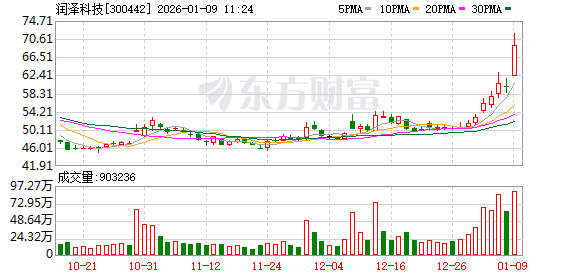
润泽科技成交额创2025年2月25日以来新高
Zheng Quan Shi Bao Wang· 2026-01-09 03:23
数据宝统计,截至10:56,润泽科技成交额53.84亿元,创2025年2月25日以来新高。最新股价上涨 16.69%,换手率4.97%。上一交易日该股全天成交额为37.07亿元。(数据宝) (文章来源:证券时报网) ...


万国数据-SW再涨超5% 旗下DayOne数据中心完成20亿美元C轮融资
Zhi Tong Cai Jing· 2026-01-09 03:06
万国数据-SW(09698)再涨超5%,截至发稿,涨4.73%,报39.88港元,成交额1.6亿港元。 DayOne明确表示,本轮融资将重点用于加速其在欧洲和亚太两大关键市场的扩张战略。在欧洲市场, 资金将主要用于推进芬兰拉赫蒂(Lahti)和科沃拉(Kouvola)两大超大规模园区的建设;在亚太地 区,资金将支持公司在"新柔廖"三角区的持续扩展,同时加速在泰国、日本和香港市场的布局,以快速 交付具备AI就绪能力的基础设施。 消息面上,1月5日,万国数据旗下国际业务平台DayOne数据中心宣布成功完成C轮融资,募资规模达20 亿美元,并已签署最终协议。本轮融资由现有投资者Coatue Management领投,印尼主权财富基金 (INA)以及来自美国、欧洲和亚太地区的多家机构跟投,融资定价较上一轮溢价100%。 ...
港股异动 | 万国数据-SW(09698)再涨超5% 旗下DayOne数据中心完成20亿美元C轮融资
智通财经网· 2026-01-09 03:05
DayOne明确表示,本轮融资将重点用于加速其在欧洲和亚太两大关键市场的扩张战略。在欧洲市场, 资金将主要用于推进芬兰拉赫蒂(Lahti)和科沃拉(Kouvola)两大超大规模园区的建设;在亚太地 区,资金将支持公司在"新柔廖"三角区的持续扩展,同时加速在泰国、日本和香港市场的布局,以快速 交付具备AI就绪能力的基础设施。 消息面上,1月5日,万国数据旗下国际业务平台DayOne数据中心宣布成功完成C轮融资,募资规模达20 亿美元,并已签署最终协议。本轮融资由现有投资者Coatue Management领投,印尼主权财富基金 (INA)以及来自美国、欧洲和亚太地区的多家机构跟投,融资定价较上一轮溢价100%。 智通财经APP获悉,万国数据-SW(09698)再涨超5%,截至发稿,涨4.73%,报39.88港元,成交额1.6亿 港元。 ...
润泽科技股价涨5.05%,兴合基金旗下1只基金重仓,持有3.5万股浮盈赚取10.57万元
Xin Lang Cai Jing· 2026-01-09 01:43
1月9日,润泽科技涨5.05%,截至发稿,报62.83元/股,成交3.17亿元,换手率0.31%,总市值1026.86亿 元。 兴合景气智选混合发起式A(024674)基金经理为梁辰星。 截至发稿,梁辰星累计任职时间2年156天,现任基金资产总规模1.66亿元,任职期间最佳基金回报 95.28%, 任职期间最差基金回报19.18%。 风险提示:市场有风险,投资需谨慎。本文为AI大模型自动发布,任何在本文出现的信息(包括但不 限于个股、评论、预测、图表、指标、理论、任何形式的表述等)均只作为参考,不构成个人投资建 议。 责任编辑:小浪快报 资料显示,润泽智算科技集团股份有限公司位于河北省廊坊经济技术开发区楼庄路9号,成立日期2007 年6月27日,上市日期2015年4月24日,公司主营业务涉及数据中心业务服务。主营业务收入构成为: IDC业务64.67%,AIDC业务35.33%。 从基金十大重仓股角度 数据显示,兴合基金旗下1只基金重仓润泽科技。兴合景气智选混合发起式A(024674)三季度持有股 数3.5万股,占基金净值比例为2.66%,位居第八大重仓股。根据测算,今日浮盈赚取约10.57万元。 兴合景气智 ...
【渭南】以项目建设激发区域经济新活力
Shan Xi Ri Bao· 2026-01-09 00:23
Group 1: Core Insights - The Huashan Cloud Data Center in Weinan officially commenced operations, serving as a key project for data storage, computing power support, and smart applications, marking a significant step in the city's digital economy development [1] - Weinan City has prioritized project construction as a core engine for high-quality development, focusing on improving approval efficiency, resource allocation, and platform establishment to enhance the business environment [1][2] Group 2: Approval Efficiency - Weinan City aims to transform its government services from "management" to "service," enhancing project approval processes through innovative measures such as the "Five Value-Added and One Improvement" service model [2] - The city has achieved a remarkable "Weinan Speed," with all 404 city-level key projects completing local procedures by March 31, 2025, supported by a model that includes "acceptance with deficiencies, commitment system, parallel approval, and full-service assistance" [3] Group 3: Element Assurance - The city’s relevant departments have shifted from a passive role to proactive engagement, providing comprehensive support for key projects, including land, environmental assessments, and surveying [4] - As of December 29, 2025, the Weinan Ecological Environment Bureau initiated environmental assessment work for key projects in 2026, ensuring timely project commencement [5] Group 4: Platform Development - Weinan City is building platforms for government-enterprise interaction and technology transfer, addressing challenges faced by enterprises in finding orders and expanding markets [7] - The city has organized 11 specialized promotional events for key industrial sectors, resulting in over 100 cooperation agreements and an intended signing amount of 3.26 billion [7][8] Group 5: Economic Performance - From January to November 2025, Weinan's industrial added value above designated size grew by 9.3% year-on-year, indicating a stable and improving industrial economy [8]
美股异动 | Q2营收暴增250% Applied Digital(APLD.US)盘前涨超5%
Xin Lang Cai Jing· 2026-01-08 14:41
Core Viewpoint - Applied Digital (APLD.US) reported significant financial growth, indicating strong potential in the AI infrastructure sector, which is experiencing rapid capital expenditure growth from large enterprises [1] Financial Performance - For the second quarter of fiscal year 2026, Applied Digital reported revenue of $126.6 million, a year-over-year increase of 250% [1] - The company reported a basic and diluted net loss per share of $0.11, which represents an 82% reduction compared to the previous year [1] - Adjusted net profit was $100,000 for the quarter [1] Market Position and Strategy - Management highlighted that AI infrastructure represents a once-in-a-generation investment opportunity, with capital expenditures from large enterprises exceeding $400 billion annually and growing rapidly [1] - Applied Digital has strategically invested early in customized next-generation data centers, positioning itself favorably in the market [1] - The company anticipates achieving over $1 billion in net operating income (NOI) within the next five years [1]

科士达联合申菱环境、投资机构 布局数据中心产业链
Zheng Quan Shi Bao Wang· 2026-01-08 14:13
Core Viewpoint - The company Keda (002518) has announced the establishment of a partnership with Shiling Environment (301018) and professional investment institutions to invest in sectors related to data centers, hard technology, AI, and renewable energy, including wind power, solar energy, and energy storage [1][2] Group 1: Investment Details - The partnership involves the creation of the Jiaxing Mutong Equity Investment Partnership (Limited Partnership) with a total investment amount of approximately 200 million yuan, with Keda contributing 50 million yuan, accounting for 24.99% of the total investment [1] - The partnership will have a duration of 7 years, with the first 4 years designated as the investment period and the remaining years as the management exit period [2] Group 2: Strategic Implications - Keda aims to strengthen its core business in data centers while expanding into the renewable energy sector, capitalizing on the current development cycle in these industries [2] - The investment is expected to enhance the company's competitive edge and create more value for shareholders by identifying high-quality targets with strong industry synergy [2] - Shiling Environment also emphasizes that this investment will not adversely affect its financial and operational status, and it is expected to have a positive impact on future financial conditions and business layout [2]

德银测算“天地算力”成本:太空数据中心部署成本追平地面,大约需要15年,目前高出约7倍
Zhi Tong Cai Jing· 2026-01-08 12:18
Core Insights - The cost of deploying space data centers is projected to be 6.7 times that of ground data centers in 2026, decreasing to 2.6 times by 2032, with cost parity expected around 2030 [1][6][13] Cost Comparison: Four Key Dimensions - **Launch Costs**: The primary economic barrier for space data centers is the cost of rocket launches. Current reusable Falcon 9 launch costs are approximately $1,600 per kilogram, while the Starship is expected to reduce this to $700 per kilogram initially, and potentially below $70 per kilogram in the future, representing a reduction of over 95% [3] - **Hardware Manufacturing Costs**: The cost of hardware for space data centers is primarily tied to satellite platforms. The cost per kilowatt for V3 satellites is $42,000, dropping to $24,000 for V4, and further to $14,500 for V5 satellites, marking a 65.5% reduction over five years [4] - **Full-Cycle Costs**: Space data centers will gradually show cost advantages over time, with energy costs approaching zero due to high solar exposure and low degradation rates, while ground data centers face ongoing operational expenses [5] - **Scale Effects**: The cost gap for a 1 GW data center is expected to narrow significantly, with space deployment costs projected at $107 billion in 2026 compared to $16 billion for ground centers, reducing to 1.4 times by the time costs stabilize [6] Technological Breakthroughs: Three Key Drivers - **Rocket Technology Innovation**: The reduction in launch costs is heavily reliant on the maturity of reusable technology, with predictions that Starship's launch costs will drop to $10 million per launch, significantly lowering deployment costs for space data centers [7] - **Satellite Platform Upgrades**: Advances in satellite technology focus on increasing power density and efficiency, with the latest satellites achieving a power increase from 50 kW to 150 kW while only increasing weight by 25% [8] - **Supply Chain Maturity**: The introduction of mini laser terminals has alleviated previous supply chain bottlenecks, enabling significant cost reductions in communication systems for space data centers [9] Strategic Premium: Decision Logic Beyond Costs - **Deployment Speed**: Space data centers can be deployed much faster than ground centers, which often take years to build due to regulatory and infrastructure challenges [10] - **Risk Mitigation**: Space data centers can avoid risks associated with natural disasters and regulatory changes that ground centers face, providing a strategic advantage [11] - **Long-Term Value**: Space data centers are essential for deep space exploration, enabling autonomous edge computing and supporting long-term missions [12] Future Outlook: Cost Parity in the 2030s - The cost parity between space and ground data centers is anticipated to occur in the 2030s, influenced by potential breakthroughs in ground center costs and accelerated technological advancements in space data centers [13][14]
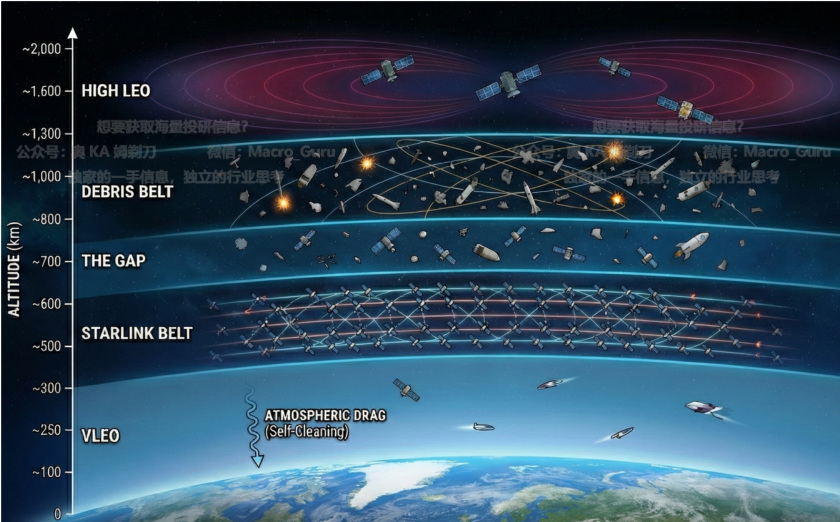
东吴证券:太空算力中心具备颠覆性优势 HJT或为能源系统最优解
智通财经网· 2026-01-08 08:19
Group 1 - The core viewpoint of the report emphasizes the disruptive advantages of space computing over traditional ground data centers, including high deployment efficiency, excellent energy efficiency, and low cooling costs [1][2] - The report highlights the emergence of "orbital data centers" driven by the imbalance in computing power supply and demand in the AI era, with examples such as the "Three-body Computing Constellation" launched by Zhijiang Laboratory and Guoxing Aerospace, which has already deployed 12 satellites and plans for a 1000 POPS computing scale [1][3] - The report recommends companies such as Maiwei Co., Ltd. (300751.SZ) and Gaomei Co., Ltd. (688556.SH) due to their involvement in the space computing and HJT battery sectors [1] Group 2 - The energy system weight significantly impacts the overall cost of satellites, with energy system costs accounting for 22% of the total, making lightweight and high-power quality ratio structures like rollable solar arrays critical for development [2] - The report notes that rollable solar arrays are gradually replacing traditional Z-type structures in LEO orbits, and they are best suited for flexible and thin-film batteries, with companies like NexWafe and Solestial accelerating their layouts in this area [2] - HJT batteries are identified as the optimal bottom cell for perovskite tandem cells, showcasing long-term evolution potential [2] Group 3 - The report discusses the current tightness of orbital resources, with LEO and SSO being the main orbits, and SSO providing stable sunlight year-round, making it the optimal choice for high-power data centers, with approximately 9617 available satellites remaining [3] - To address the shortage of orbital resources, space computing platforms are evolving along two paths: large-scale deployment, exemplified by Starcloud's construction of a 4km×4km photovoltaic mothership platform, and cluster deployment, as seen in Google's Suncatcher plan with 81 to 324 satellite formations [3] - The report estimates that a 10GW photovoltaic capacity can correspond to 448 Google Suncatcher satellite clusters or 2 Starcloud motherships [3]