数字货币

Search documents
美债变成“风险资产”!全球银行301亿血洗,最大债主中国撤退!
Sou Hu Cai Jing· 2025-07-02 22:51
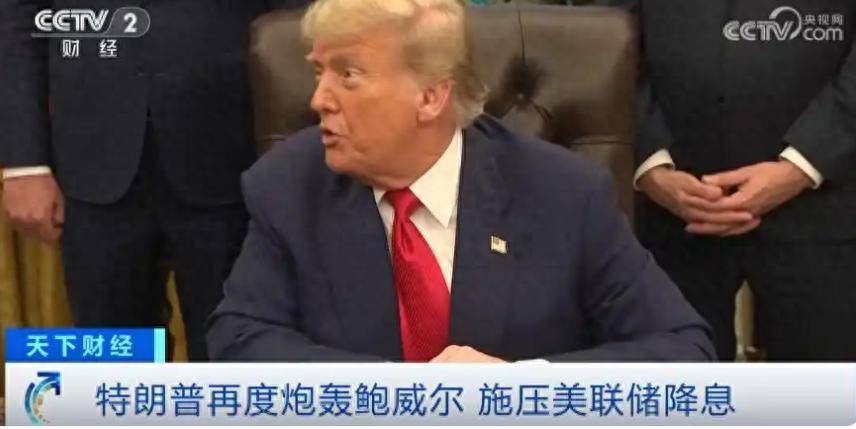
Group 1 - The ongoing battle for global financial order revolves around the dominance of the US dollar, particularly concerning the $37 trillion US national debt, which poses significant risks to the global financial system [1] - President Trump has been pressuring the Federal Reserve to lower interest rates to alleviate the burden of national debt, but Fed Chairman Powell remains resistant to such measures to maintain the Fed's independence [1][3] - In April, there was a notable sell-off of US Treasuries, with global central banks selling $30.1 billion and private investors offloading $20.5 billion, indicating a significant loss of confidence in US debt [3] Group 2 - The Trump administration is exploring a new regulatory framework for stablecoins, aiming to anchor them 100% to dollar assets and invest reserves in short-term US Treasuries, which could create new demand for US debt [4] - However, this strategy carries risks, as a loss of trust in stablecoins could lead to severe financial repercussions, potentially worse than the 2022 TerraUSD collapse [4] - China is responding with its own digital currency initiatives, including the digital yuan and stablecoin regulations in Hong Kong, which are designed to enhance cross-border payment efficiency [5][6] Group 3 - The efficiency of Hong Kong's stablecoin payments is significantly higher than traditional SWIFT payments, with transaction times reduced to seconds and costs nearly eliminated, indicating a shift in financial infrastructure [6] - The competition between the US and China in the digital currency space will ultimately depend on who can offer more equitable and efficient payment solutions, with China currently positioned as a leader in this area [6]

7月2日电,稳定币第一股Circle跌超6%,近7个交易日已回撤31%。
news flash· 2025-07-02 15:12
智通财经7月2日电,稳定币第一股Circle跌超6%,近7个交易日已回撤31%。 ...
英大证券晨会纪要-20250702
British Securities· 2025-07-02 06:16
Market Overview - The report indicates that the A-share market is expected to maintain a relatively strong trend in the short term, with a high likelihood of a fluctuating upward pattern for the index [2][9][10] - Recent trading volume has been around 1.5 trillion, reflecting active market participation and potential for individual stock profitability to expand [4][10] Investment Opportunities - Three main investment lines are highlighted: 1. Focus on companies with better-than-expected mid-year performance as the reporting window opens in July, suggesting a strategy of buying low [3][10] 2. Emphasis on technology sectors such as military industry, robotics, AI, semiconductors, and digital economy, with a caution to avoid overvalued stocks and speculative plays [3][10] 3. Look for rebound opportunities in sectors like new energy and brokerage firms during market pullbacks [3][10] Sector Analysis - The pharmaceutical sector saw a collective rise, driven by new measures from the National Healthcare Security Administration and the National Health Commission to support high-quality development of innovative drugs [6][10] - Bank stocks rebounded after a period of decline, supported by their low valuation and high dividend yield, although there are concerns about the impact of economic slowdown on credit demand and interest income [7][10] - The report notes a significant rise in brain-computer interface stocks, particularly following advancements from Neuralink, although it cautions that this may still be in the speculative phase [8][10]
为什么这几年感觉这么难?
Hu Xiu· 2025-07-02 05:17
本文来自微信公众号:局外人的视界,作者:卡夫卡不忙了,原文标题:《黄金啊,黄金坑》,题图来 自:视觉中国 涨了就无限看多,跌了就开始哆哆嗦嗦。市场不是这么玩的,继续这么玩是会被市场玩残的。 我一直跟大家说,投资要讲逻辑,涨跌都有它的内在逻辑。 纳斯达克能不断创新高,源自印钞机加持,现在有了稳定币这个赛博神器,就等于除了开美联储的印钞 机,还能再开一把赛博印钞机。 所谓稳定币对应的是美元美债,说起来发行人发行稳定币背后应该对应百分百的资产储备,笑死了,这 说法就跟开银行需要百分百准备金一样,可能吗? 如果不可能,有办法,你也就意味着口子一开,稳定币能用赛博技术放个十倍百倍甚至更高的杠杆,这 不就等于是钱来了吗? 要知道,资产价格是由市场流动性决定的。资本一看,好家伙,这杠杆又能继续大干特干,还能不赶紧 去价格给顶上去? 有人又要问了,既然赛博印钞机已开,为什么黄金价格反而跌了? 道理很简单,黄金最大的多头是谁?各国央行啊! 最近这段时间,美帝在中东吃了大瘪。有人说,这波胜利属于美以,吃亏的是波斯。 笑死了,波斯当然吃亏了。但问题是,一个如此不堪的波斯,都能把美帝军力的底给探出来了。美以导 弹技术不行,生产能力更 ...
一文带你了解数字人民币
Sou Hu Cai Jing· 2025-07-02 04:08
Core Insights - The digital yuan (e-CNY) represents a significant transformation in currency forms, moving from physical to electronic and then to digital, with strategic implications for internationalization, monetary policy, and financial inclusivity [2][12] - The digital yuan is a legal digital currency issued by the People's Bank of China, distinct from cryptocurrencies, and is backed by state sovereignty [2][5] - The digital yuan's development has been rapid, with pilot programs expanding geometrically since 2020, showcasing China's leadership in the central bank digital currency (CBDC) space [5][9] Digital Yuan Features - The digital yuan employs a centralized architecture with a "one currency, two libraries, three centers" model, ensuring state control over issuance while enhancing transaction transparency and user privacy [3][5] - Key features include anonymous small transactions, traceable large transactions, and offline payment capabilities, which enhance convenience and security [3][7] - The digital yuan has penetrated various sectors, including retail, transportation, and government services, significantly improving financial service efficiency [7][9] Development Timeline - The journey of the digital yuan began in 2014 with the establishment of a research group, leading to a structured exploration of digital currency frameworks and technologies [5][11] - Following the establishment of the Digital Currency Research Institute in 2017, the digital yuan entered the development phase, with internal trials starting in 2020 [5][11] - By 2024, the digital yuan had seen the opening of 180 million personal wallets and transaction amounts exceeding 7.3 trillion yuan, indicating a rapid adoption rate compared to other countries' CBDCs [5][9] Strategic Implications - The rise of the digital yuan is reshaping the international monetary system, providing alternatives to the US dollar for countries involved in the Belt and Road Initiative [9][12] - The digital yuan's design allows for more precise monetary policy implementation and enhances financial inclusivity while balancing privacy and regulatory needs [9][11] - The digital yuan is expected to drive a trillion-dollar fintech market, fostering innovation across the entire industry chain [9][12] Future Trends - Future developments of the digital yuan will likely involve deeper technological integration and broader ecosystem expansion, with projections indicating that cross-border settlement volumes could account for 15% of total RMB internationalization by 2030 [11][12] - The introduction of regulatory frameworks will clarify the responsibilities of market participants, supporting the sustainable development of the digital yuan [11][12]


多元金融概念股集体大跌 爱建集团一度跌停
news flash· 2025-07-02 01:46
Group 1 - The core viewpoint of the article highlights a significant decline in diversified financial and digital currency concept stocks, with multiple companies experiencing substantial drops in their stock prices [1] - Aijian Group (600643) saw its stock price hit the limit down, indicating a severe market reaction [1] - Other companies such as Chutianlong (003040), Hongye Futures (001236), Annie Co. (002235), Cuiwei Co. (603123), and Guosheng Jinkong (002670) also experienced declines exceeding 5% [1]



稳定币第一股申请银行牌照
Zheng Quan Shi Bao Wang· 2025-07-01 12:19
Group 1: Core Company Developments - Circle Internet Group is seeking to establish a national trust bank in the U.S., named "First National Digital Currency Bank," to enhance its dollar stablecoin infrastructure and provide digital asset custody services for institutional clients [2][3] - The application for the bank charter was submitted to the Office of the Comptroller of the Currency on June 30, with a typical feedback period of 30 days and a decision expected within 120 days [3] - If approved, Circle would become the second cryptocurrency operator to hold such a bank charter, following Anchorage Digital Bank's conditional approval in 2021 [3] Group 2: Market Reactions and Stock Performance - Since its listing on June 5, Circle's stock has experienced significant volatility, initially surging over 500% to a market cap exceeding $65 billion, before dropping 25% in the week of June 23-27 [4] - Factors contributing to the stock's rise included optimism around U.S. stablecoin legislation and Circle's first-mover advantage in a regulated market, although this enthusiasm may have outpaced the company's fundamentals [4] - Analysts are divided on Circle's stock; JPMorgan's Kenneth Worthington rated it "sell" due to high valuations, while Citigroup's Peter Christiansen rated it "buy," citing scarcity value and legislative momentum as key support for future growth [5]

数字货币概念下跌2.40%,主力资金净流出76股
Sou Hu Cai Jing· 2025-07-01 10:12
Group 1 - The digital currency sector experienced a decline of 2.40%, ranking among the top losers in the concept sector, with companies like Jida Zhengyuan, Cuiwei Co., and *ST Rindong hitting the daily limit down [1][2] - Major outflows of capital from the digital currency sector amounted to 7.702 billion yuan, with 76 stocks experiencing net outflows, and 22 stocks seeing outflows exceeding 100 million yuan [2][3] - The top three companies with the highest net outflows were Sifang Jingchuang (7.31 billion yuan), Hengsheng Electronics (6.59 billion yuan), and Cuiwei Co. (6.07 billion yuan) [2][3] Group 2 - Among the digital currency stocks, Sifang Jingchuang saw a significant drop of 9.55%, while Cuiwei Co. fell by 9.97% [3][4] - Conversely, stocks such as Sanwei Xinan, Xinghui Entertainment, and ST Zhengtong showed positive performance, with increases of 5.14%, 4.96%, and 4.24% respectively [1][4] - The overall market sentiment reflected a negative trend in the digital currency sector, with a majority of stocks experiencing declines [2][3]




收评:沪指涨0.39%再创年内收盘新高 医药股领涨 数字货币股领跌
Xin Hua Cai Jing· 2025-07-01 07:33
Market Performance - On July 1, the major stock indices in Shanghai and Shenzhen opened mixed, with the Shanghai Composite Index slightly higher and the Shenzhen Component and ChiNext Index also opening with minor gains. The Shanghai Composite Index showed a fluctuating upward trend throughout the day, closing at 3457.75 points, up 0.39%, marking a new year-to-date closing high [1] - The Shenzhen Component Index closed at 10476.29 points, up 0.11%, while the ChiNext Index closed at 2147.92 points, down 0.24%. The total trading volume for the Shanghai market was approximately 553.6 billion yuan, and for the Shenzhen market, it was about 912.5 billion yuan [1] Sector Performance - The pharmaceutical sector led the gains, with significant increases in various sub-sectors such as immunotherapy, innovative drugs, recombinant proteins, generic drugs, weight loss drugs, hepatitis concepts, and hair medical treatments. Other sectors that saw notable increases included shipbuilding, industrial gases, photolithography machines, banking, and superconducting concepts [1] - Conversely, digital currency stocks experienced significant declines, along with substantial adjustments in sectors like electronic identification, cross-border payments, and Web3 concepts [1] Institutional Insights - According to institutional views, the market is expected to experience fluctuations, with a historical 60% probability of the Shanghai Composite Index rising in July. Investors are advised to focus on defensive sectors in the early part of the month and shift attention to mid-year performance reports and policy movements later on. Key sectors to watch include technology (semiconductors, AI), military industry, and high-growth areas in mid-year reports [2] - Another institution emphasized the importance of focusing on performance-driven sectors and stable assets as the earnings season approaches, with expected growth in industries such as steel, computers, and defense [2] Policy Developments - The National Healthcare Security Administration announced that a draft for the commercial insurance innovative drug directory and the medical insurance directory will be released soon. This initiative aims to streamline the application process for companies and ensure that both directories are aligned in their adjustments [4] - The State-owned Assets Supervision and Administration Commission is accelerating the development of the new energy vehicle industry, focusing on enhancing the capabilities of young talents in intelligent development and digital marketing [5]
数字人民币:中国金融科技的革命性突破
Sou Hu Cai Jing· 2025-07-01 07:14
Core Concept - Digital Renminbi (DCEP) is a significant innovation in China's currency digitization, issued by the People's Bank of China, and holds the same legal status and economic value as cash [1] Group 1: Characteristics and Technology - Digital Renminbi features "payment and settlement" capabilities, allowing direct value transfer between users without third-party payment institutions, enhancing payment efficiency and reducing transaction costs [3] - It employs advanced blockchain and encryption technologies, achieving a "controllable anonymity" design for small transactions while adhering to regulatory requirements for larger ones [4] - The system can process over 300,000 transactions per second, significantly outperforming Bitcoin and Ethereum networks [4] - Security is ensured through national encryption standards and hardware encryption modules, capable of withstanding various cyber threats, including quantum computing attacks [6] - It supports "dual offline payment" functionality, enabling transactions without network access, which is crucial during emergencies [6] Group 2: Applications and Social Impact - Digital Renminbi is being tested in multiple pilot cities across China, covering retail, public transport, and government services, with over 750 million transactions and a total transaction amount exceeding 830 billion yuan as of June 2023 [7] - It is expected to enhance monetary policy transmission efficiency, reducing time lags by approximately 30% and improving macroeconomic control precision [9] - The initiative aims to increase financial inclusion, potentially raising China's financial inclusion index by 15-20 percentage points [9] Group 3: Global Implications - The launch of Digital Renminbi marks a milestone in China's fintech development and offers valuable insights for the global Central Bank Digital Currency (CBDC) evolution [10] - As the pilot scope expands and application scenarios diversify, Digital Renminbi is reshaping China's payment ecosystem and contributing to the digital transformation of the global monetary system [10]