
银行

Search documents
去年中国银行业金融机构发放知识产权质押贷款2979亿元
Zhong Guo Xin Wen Wang· 2026-03-23 11:40
Core Insights - In 2025, Chinese banking institutions issued a total of 297.9 billion yuan in intellectual property pledge loans, with the number of loan recipients reaching 28,700, representing a growth of 56% and 33% respectively compared to 2023 [1][3] Group 1: Intellectual Property Financing - The promotion of intellectual property financial support is significant for realizing the value application of intellectual property and facilitating patent conversion [1] - The National Financial Regulatory Administration and the National Intellectual Property Administration have jointly issued documents to promote a fully paperless registration process for patent pledge financing, significantly improving work efficiency [3] Group 2: Financial Products and Services - The National Financial Regulatory Administration is guiding commercial banks to expand the scope of intellectual property pledge financing and develop various financial products that promote the conversion and application of intellectual property [3] - The insurance industry is being encouraged to establish a comprehensive insurance product system covering the entire process of intellectual property creation, protection, and application [3] Group 3: Innovation and Pilot Programs - A comprehensive pilot work plan for intellectual property finance has been issued, with pilot programs starting in March 2025 across eight provinces and cities, focusing on key aspects such as registration, evaluation, disposal, and compensation [4]


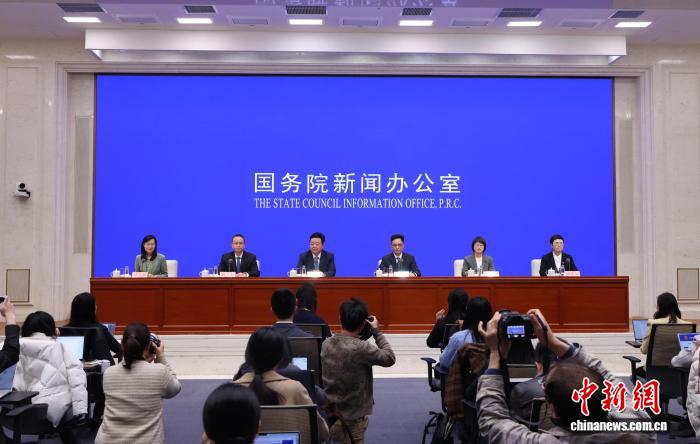
资金跟踪系列之三十七:两融转向净流出,北上仍明显净卖出
SINOLINK SECURITIES· 2026-03-23 11:14
Group 1 - The macro liquidity environment shows a slight tightening in offshore dollar liquidity, while domestic interbank funding remains balanced, with the yield curve steepening as the 10Y-1Y spread continues to widen [2][21]. - The market trading heat continues to decline, with sectors such as utilities, chemicals, and oil & petrochemicals maintaining trading heat above the 90th percentile [3][27]. - The volatility of major indices has increased, with sectors like non-ferrous metals, steel, and military industries experiencing volatility above the 90th historical percentile [3][32]. Group 2 - Research activity is concentrated in sectors such as banking, electronics, computing, electric new energy, and pharmaceuticals, with a rising trend in sectors like light industry and building materials [4][44]. - Analysts have raised net profit forecasts for the entire A-share market for 2026/2027, particularly in sectors like building materials, steel, electronics, real estate, and computing [4][19]. - The net profit forecasts for the CSI 300 and SSE 50 indices have been adjusted upwards, while the forecasts for the ChiNext Index and CSI 500 have been downgraded [4][23]. Group 3 - Northbound trading activity continues to decline, with significant net selling of A-shares, particularly in sectors like electric new energy, communications, and automobiles [5][31]. - Margin trading activity has slightly decreased, with net buying observed in sectors such as electronics, chemicals, and steel, while net selling occurred in non-ferrous metals and military industries [6][39]. - The trading heat on the "Dragon and Tiger List" has also decreased, with sectors like light industry, electricity, and public utilities showing relatively high trading volumes [6][41]. Group 4 - Active equity funds have reduced their positions, with notable increases in holdings in sectors like communications, non-ferrous metals, and electric new energy, while reducing positions in computing and media [7][45]. - The correlation of active equity funds with large/small growth and large value stocks has increased, indicating a shift in investment strategy [7][48]. - The newly established equity fund scale has slightly increased, with active funds experiencing a small decline while passive funds saw a slight rise [7][50].
多杀多 | 谈股论金
水皮More· 2026-03-23 10:34
Market Performance - The A-share market experienced a significant decline, with the Shanghai Composite Index falling 3.63% to close at 3813.28 points, while the Shenzhen Component Index dropped 3.76% to 13345.51 points, and the ChiNext Index decreased by 3.49% to 3235.22 points [2] - The total trading volume in the Shanghai and Shenzhen markets reached 2.45 trillion, an increase of 145.4 billion compared to the previous trading day [2] Sector Analysis - Most sectors faced severe losses, with only the oil service and coal sectors showing resilience. Less than 300 stocks rose, while nearly 5000 stocks declined, with a median drop of approximately 5.6%, significantly higher than the overall market decline [3] - The financial sector, including major banks and securities firms, saw substantial declines, with the banking sector down about 3.7%, securities down approximately 4.4%, and insurance down around 4.6% [5] Market Sentiment - The breach of the 3800-point level indicates that investors have been trapped since August 2025, posing a significant challenge for long-term value investors [4] - Despite the downturn, there is a perspective that the market should not be overly pessimistic, as the adjustments in major stocks have been substantial, and the selling pressure may have provided an opportunity for short-selling [5] External Factors - The market's decline is attributed to both internal and external pressures. Internally, the lack of sufficient adjustments during the previous rise from 3000 to 4200 points has led to a large accumulation of profit-taking, with only one-third of the 1600 stocks that doubled in value showing improved performance [6] - Externally, geopolitical tensions, particularly the Gulf conflict and recent statements from Trump, have heightened global market fears, further suppressing risk appetite [6] Future Outlook - The stabilization of the market will depend on the resolution of the crisis in the Hormuz Strait in the short term, and on improvements in domestic macroeconomic conditions for mid-term recovery [6]

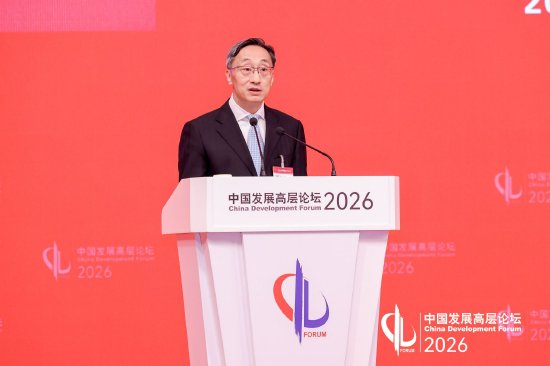
中国工商银行行长刘珺:AI时代需培育π型人才,以应对智能体带来的知识融合挑战
Xin Lang Cai Jing· 2026-03-23 10:10
Core Viewpoint - The need for a credible international cooperation system, termed "Globalization 2.0," to address global challenges such as climate change and AI governance, thereby reducing risk premiums and achieving mutual benefits among parties [3][7]. Group 1: Strategic Transformations for Financial Institutions - Financial institutions must fundamentally transform in three strategic dimensions: 1. Repricing non-economic and non-market risks, moving beyond traditional risk models that focus on credit, market, and liquidity risks to incorporate complex and dynamic variables using big data and technologies like AI and remote sensing [3][7]. 2. Cultivating π-type talents in the digital age, emphasizing the importance of deep vertical knowledge and interdisciplinary expertise to navigate the challenges posed by AI and knowledge integration [3][7]. 3. Transitioning to a multidimensional, systematic, and intelligent agency-based financial service model, integrating lifecycle support and industry chain services to create a comprehensive financial service framework for the real economy [4][9]. Group 2: Commitment to Risk Management and Digital Transformation - ICBC is dedicated to enhancing its comprehensive risk management system to ensure stable operations across cycles while advancing its digital and intelligent transformation to build a world-class financial institution [5][9].

A股收评:三大指数均跌超3% 北证50跌超5%
新浪财经· 2026-03-23 09:47
Market Overview - The market experienced a significant downturn on March 23, with all three major indices dropping over 3%, and the North Stock 50 index falling more than 5% [2] - The coal sector showed strong performance, with companies like Yunmei Energy and Liaoning Energy hitting the daily limit up [2] - Conversely, the tourism sector saw substantial declines, with multiple stocks such as Sanxia Tourism and Guilin Tourism hitting the daily limit down [2] - Overall, nearly 5200 stocks in the two markets declined, indicating a broad market sell-off [2] Sector Analysis Coal Sector - CITIC Securities reported that ongoing geopolitical conflicts in the Middle East have led to sustained increases in international oil and gas prices [3] - Despite short-term demand challenges for thermal coal, chemical coal demand is expected to continue, supporting a rebound in coal prices [3] - The outlook for coking coal prices remains positive due to improved short-term demand, and the sector is expected to perform well [3] Oil and Gas Sector - Goldman Sachs has raised its 2026 oil price forecast due to extended disruptions in transportation through the Strait of Hormuz and heightened concerns about global supply concentration [4] - The firm anticipates that persistent inflationary pressures will support commodity-related currencies and increase market concerns regarding central bank policies [4] Institutional Perspectives - Analysts from Industrial Securities noted that recent market adjustments stem from two main concerns: the risk of economic "stagflation" and the potential escalation of conflicts, both of which may not represent the final outcome of the current situation [8] - They suggest that an escalation in conflict could paradoxically create opportunities for market recovery, as the most pessimistic sentiments often precede market rebounds [8] - Galaxy Securities analysts believe that the duration and evolution of geopolitical conflicts remain uncertain, which will continue to disrupt global risk assets in the short term [9] - They expect the A-share market to have limited downside, likely experiencing oscillations and structural rotations to absorb external pressures [9]

量化观市:美伊开谈,聚焦低位资产修复
SINOLINK SECURITIES· 2026-03-23 09:44
Quantitative Models and Factors Summary Quantitative Factors and Construction Methods - **Factor Name**: Volatility Factor - **Construction Idea**: Measures the stock's price fluctuation to capture risk-adjusted returns in volatile markets[55] - **Construction Process**: - The factor is derived using the standard deviation of 60-day returns ($Volatility_{60D}$), CAPM residual volatility ($IV_{CAPM}$), and Fama-French three-factor residual volatility ($IV_{FF}$)[68] - Formula examples: $Volatility_{60D} = \sqrt{\frac{\sum_{i=1}^{60}(R_i - \bar{R})^2}{60}}$ Where $R_i$ is the daily return, and $\bar{R}$ is the average return over 60 days[68] - **Evaluation**: Demonstrated strong performance in turbulent markets, particularly under geopolitical tensions[55] - **Factor Name**: Quality Factor - **Construction Idea**: Focuses on financial health and operational efficiency of companies[55] - **Construction Process**: - Includes metrics like operating cash flow to current debt ratio ($OCF2CurrentDebt$), gross margin ($GrossMargin_{TTM}$), and revenue-to-asset ratio ($Revenues2Asset_{TTM}$)[68] - Example formula: $OCF2CurrentDebt = \frac{\text{Operating Cash Flow (TTM)}}{\text{Average Current Debt}}$[68] - **Evaluation**: Exhibited resilience and consistent returns, especially in quality-driven market environments[55] - **Factor Name**: Reversal Factor - **Construction Idea**: Captures short-term price reversals by identifying overbought or oversold conditions[55] - **Construction Process**: - Utilizes metrics like 40-day, 60-day, and 120-day price changes ($Price\_Chg_{40D}$, $Price\_Chg_{60D}$, $Price\_Chg_{120D}$)[68] - Example formula: $Price\_Chg_{40D} = \frac{P_{t} - P_{t-40}}{P_{t-40}}$ Where $P_t$ is the current price, and $P_{t-40}$ is the price 40 days ago[68] - **Evaluation**: Performed well in identifying short-term trading opportunities during market volatility[55] - **Factor Name**: Growth Factor - **Construction Idea**: Targets companies with high earnings and revenue growth potential[55] - **Construction Process**: - Includes metrics like single-quarter net income growth ($NetIncome\_SQ\_Chg1Y$) and single-quarter operating income growth ($OperatingIncome\_SQ\_Chg1Y$)[68] - Example formula: $NetIncome\_SQ\_Chg1Y = \frac{\text{Net Income}_{t} - \text{Net Income}_{t-4}}{\text{Net Income}_{t-4}}$ Where $t$ represents the current quarter[68] - **Evaluation**: Underperformed recently due to macroeconomic headwinds but has potential in growth-oriented markets[55] Factor Backtesting Results - **Volatility Factor**: - IC Mean (All A-shares): 9.88% - Multi-factor portfolio return (All A-shares): 2.66%[56][57] - **Quality Factor**: - IC Mean (All A-shares): 3.53% - Multi-factor portfolio return (All A-shares): -1.59%[56][57] - **Reversal Factor**: - IC Mean (All A-shares): 8.48% - Multi-factor portfolio return (All A-shares): -6.28%[56][57] - **Growth Factor**: - IC Mean (All A-shares): -0.81% - Multi-factor portfolio return (All A-shares): 3.83%[56][57] Convertible Bond Factors and Construction Methods - **Factor Name**: Convertible Bond Valuation Factor - **Construction Idea**: Evaluates the relative valuation of convertible bonds based on parity and premium metrics[64] - **Construction Process**: - Includes metrics like parity-to-floor premium ratio and fair value deviation[64] - **Evaluation**: Demonstrated strong IC values, particularly in capturing mispriced opportunities in the convertible bond market[64] - **Factor Name**: Equity Growth Factor (Convertible Bonds) - **Construction Idea**: Leverages equity growth metrics to predict convertible bond performance[64] - **Construction Process**: - Derived from single-quarter net income growth and operating income growth of the underlying equity[64] - **Evaluation**: Showed robust performance in identifying high-growth convertible bonds[64] Convertible Bond Factor Backtesting Results - **Convertible Bond Valuation Factor**: - IC Mean: High (specific value not provided)[64] - Multi-factor portfolio return: Positive[64] - **Equity Growth Factor (Convertible Bonds)**: - IC Mean: High (specific value not provided)[64] - Multi-factor portfolio return: Positive[64]
中国农业银行和林格尔县支行积极开展三农服务下乡活动 深耕乡土显担当
Xin Lang Cai Jing· 2026-03-23 09:42
Core Viewpoint - The Agricultural Bank of China and Linhe County Branch are focusing on the core needs of "Three Rural Issues" by implementing a special service initiative aimed at rural areas, emphasizing the integration of party leadership, financial services, and effective support for farmers [1] Group 1: Service Initiative - The initiative aims to extend financial services to the forefront of rural areas, enhancing service quality and effectiveness [1] - The Linhe Branch organizes team members to engage directly with farmers, addressing their actual needs and providing tailored financial solutions [1] Group 2: Financial Education and Support - Team members act as financial policy "promoters," educating farmers on credit products, payment security, and fraud prevention [1] - The branch offers convenient services such as on-site loan application processing and simplified procedures to facilitate farmers' access to financial services [1] Group 3: Commitment to Rural Development - The initiative highlights typical cases of team members serving farmers, showcasing the branch's commitment to rural revitalization and the responsibility to empower "Three Rural Issues" development [1] - The Linhe Branch plans to continuously optimize its rural service system and innovate service models to inject ongoing financial momentum into local agricultural development, farmer income growth, and rural prosperity [1]

农业银行基金代销惹官司,客户买基金亏了500多万
Xin Lang Cai Jing· 2026-03-23 09:41
Core Viewpoint - Agricultural Bank of China is facing legal issues due to allegations of mis-selling a high-risk fund, leading to significant losses for a customer [2][20]. Group 1: Fund Mis-selling Incident - A customer, Ms. Li, claims that in July 2021, she was persuaded by a bank employee to deposit 10 million yuan into the bank under the pretense of a safe investment, which was later used to purchase a high-risk fund named "Oriental Quality Consumption One-Year Holding Period Mixed A" [2][20]. - As of November 2024, this fund has incurred losses exceeding 5.79 million yuan, and Ms. Li alleges that the bank failed to fulfill its risk disclosure obligations [20]. - The court dismissed Ms. Li's lawsuit, stating that she had signed multiple risk disclosure documents and had sufficient investment experience to understand the risks involved [20]. Group 2: Fund Performance and Fees - The "Oriental Quality Consumption One-Year Holding Period Mixed A" fund, established on July 8, 2021, has seen its net asset size decline from 3.5 billion yuan at inception to 630 million yuan by the end of 2025, with a cumulative loss of over 63% since its establishment [3][22]. - Agricultural Bank has collected a total of 1.526 million yuan in custody fees for this fund over four years, with an annual custody fee rate of 0.20% [21][25]. - The fund's management fees are set at 1.20% per year, and it has not distributed any dividends since its inception [22][23]. Group 3: Agricultural Bank's Wealth Management and Fund Custody - As of the end of 2025, Agricultural Bank's public fund custody scale has surpassed 2 trillion yuan, ranking it among the top ten fund sales institutions in China [11][30]. - The bank's net income from fees and commissions reached 51.441 billion yuan in the first half of 2025, marking a year-on-year increase of 10.1%, with a significant rise in agency business income by 62.3% [33][34]. - The bank emphasizes the importance of compliance in fund custody and sales to ensure sustainable development amid ongoing wealth management business transformation [35].

中国银行:合理控制贵金属仓位,通过长期投资降低阶段性价格波动影响
Bei Jing Shang Bao· 2026-03-23 09:40
Core Viewpoint - The Bank of China has issued a warning regarding the increased volatility in precious metal prices due to escalating global geopolitical risks and multiple influencing factors [1] Group 1: Market Conditions - Recent geopolitical tensions have intensified, leading to greater fluctuations in both domestic and international precious metal prices [1] - The Bank of China emphasizes the need for clients to be aware of market risks and to take preventive measures [1] Group 2: Client Advisory - Clients are advised to conduct rational investments based on their financial status and risk tolerance [1] - It is recommended to manage precious metal positions wisely and consider long-term investments to mitigate the impact of short-term price volatility [1] - The bank aims to protect the interests of clients involved in precious metal-related businesses, such as accumulated gold and account precious metals [1]
工商银行今日大宗交易平价成交240万股,成交额1740万元
Xin Lang Cai Jing· 2026-03-23 09:33
Core Viewpoint - On March 23, the Industrial and Commercial Bank of China (ICBC) executed a block trade involving 2.4 million shares, with a total transaction value of 17.4 million yuan, representing 0.47% of the total trading volume for the day, at a price of 7.25 yuan per share, which was consistent with the market closing price [1]. Group 1 - The block trade involved 2.4 million shares of ICBC [1] - The total transaction amount was 17.4 million yuan [1] - The transaction price was 7.25 yuan, unchanged from the market closing price [1]
