咖啡

Search documents
一场以“燃喵”为名的光影盛宴正式启动 咖啡香里说濮阳
He Nan Ri Bao· 2025-11-09 23:17
11月9日,2025"燃喵杯"河南省短视频(短剧)大会暨中非(濮阳)咖啡产销推广活动启动仪式在濮阳县举 行。来自全国各地的近200名学界及业界专家、短视频创作者齐聚一堂,将镜头聚焦咖啡主题、定格"龙都"风 采,开启了一场属于咖啡短视频的盛会。 "与去年相比,今年参加'燃喵杯'大赛的高校从20余所增至近40所。这一活动对高校而言是一次大规模的产教 融合实践,师生们从课堂走向实战,极大促进了教学水平的提升。同时,学生的镜头与作品,也将助力'濮阳 咖啡'这一IP传播得更远。"河南省高校影视教育协会秘书长张永强告诉记者。 据悉,在去年的大赛中,众多参赛团队通过3分钟的短视频作品,成功助推"燃喵"IP破圈传播,相关作品全网 传播量超5000万次,并获得海外关注。本届大赛将继续邀请业界专家与企业代表,以视频质量与传播效果为 双重衡量标准,评选出一批兼具艺术价值与市场影响力的高水平作品,旨在为濮阳城市形象增色,赋能咖啡 产业推广。(记者 蒋晓芳 张晓静) 濮阳与咖啡的深度结缘始于2020年。随着共建"一带一路"倡议的推进,濮阳县与埃塞俄比亚签约合作,中国 (濮阳)埃塞咖啡加工产业示范园项目应运而生。作为濮阳绿色食品产业的重 ...


爱马仕投资Lanificio Colombo;海伦司拟回购股份
Sou Hu Cai Jing· 2025-11-09 13:51
Investment Dynamics - Hermès has acquired a 15% stake in Italian fabric manufacturer Lanificio Colombo, which specializes in cashmere and rare animal fibers [3] - In Q3 of the current fiscal year, Hermès reported a 5% increase in sales, reaching €3.9 billion, with the leather goods sector performing particularly well [3] - Hermès plans to invest over €1 billion in the next three years to build three new leather workshops in France to meet the growing demand for handbags [3] Brand Dynamics - Lianhua Supermarket announced the sale of its entire stake in Yangpu Century Lianhua to a subsidiary of Bailian Group, while continuing to manage and support the brand post-sale [8] - Lavazza has opened its first coffee shop in Hong Kong, expanding its presence in major Chinese cities since establishing a joint venture in 2020 [14] Financial Performance - E.l.f. Beauty reported a 14% increase in net sales for Q2 2026, reaching $343.9 million, with adjusted net income of $40.7 million, slightly below the previous year [17] - Coty reported a 6% decline in net revenue for Q1 2026, totaling $1.577 billion, with a 19% drop in net profit compared to the previous year [19] Personnel Changes - Tory Burch appointed Joëlle Grunberg as North America President, who has extensive experience in the fashion and luxury goods sector [21] - Carlsberg Group welcomed Torsten Steenholt as the new Executive Vice President and member of the Executive Committee, focusing on supply chain integration [27]

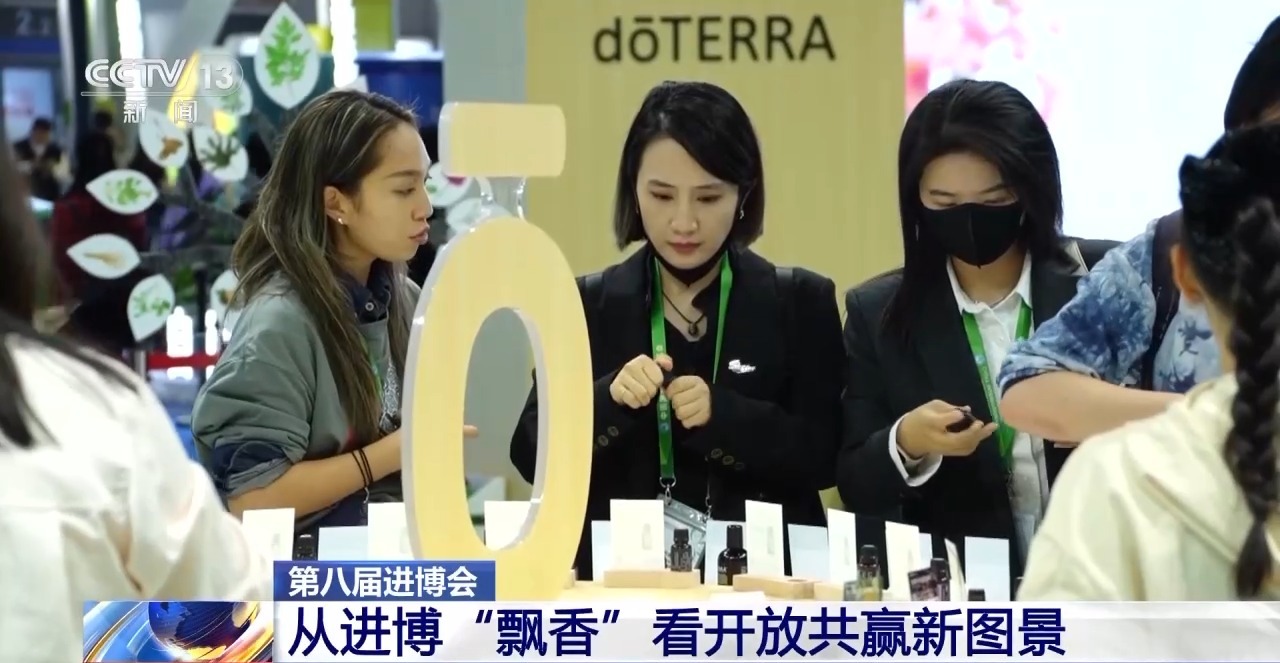
中药香+咖啡香 从进博“飘香”看开放共赢新图景
Yang Shi Xin Wen Ke Hu Duan· 2025-11-09 12:16
Core Insights - The eighth China International Import Expo (CIIE) showcases a diverse range of products from various countries, emphasizing a new trade ecosystem characterized by cooperation and mutual benefit [1][7] - Brazilian coffee has gained significant attention, with a Chinese coffee company planning to purchase 240,000 tons of Arabica coffee beans from Brazil over five years, valued at 10 billion RMB [1] - An American essential oil company has participated in the CIIE for eight consecutive years, launching a new product made from Chinese raw materials, highlighting the collaboration between China and the U.S. [3][5] Company Highlights - A Chinese coffee company has established a substantial procurement plan with Brazil, indicating strong bilateral trade relations [1] - An American essential oil company has signed contracts worth 700 million RMB at the expo, showcasing the financial benefits of participation [5] - A Hong Kong-based company is promoting traditional Chinese medicine through modern dietary supplements, enhancing cultural exchange and international understanding [5] Industry Trends - The CIIE serves as a platform for cross-border collaboration, with companies reporting significant increases in transaction volumes, such as a Hong Kong company expecting to reach 900 million RMB in sales, a threefold increase [9] - The "China raw materials + international craftsmanship" model is gaining traction, as seen in the essential oil products that combine local ingredients with global techniques [3] - The "World Open Report 2025" indicates that while global openness is slightly tightening, China's efforts to expand its openness are yielding positive results, fostering tighter cross-industry cooperation [7]
40亿美元出让60%股权 星巴克中国联手博裕冲刺2万家门店
Sou Hu Cai Jing· 2025-11-09 11:10
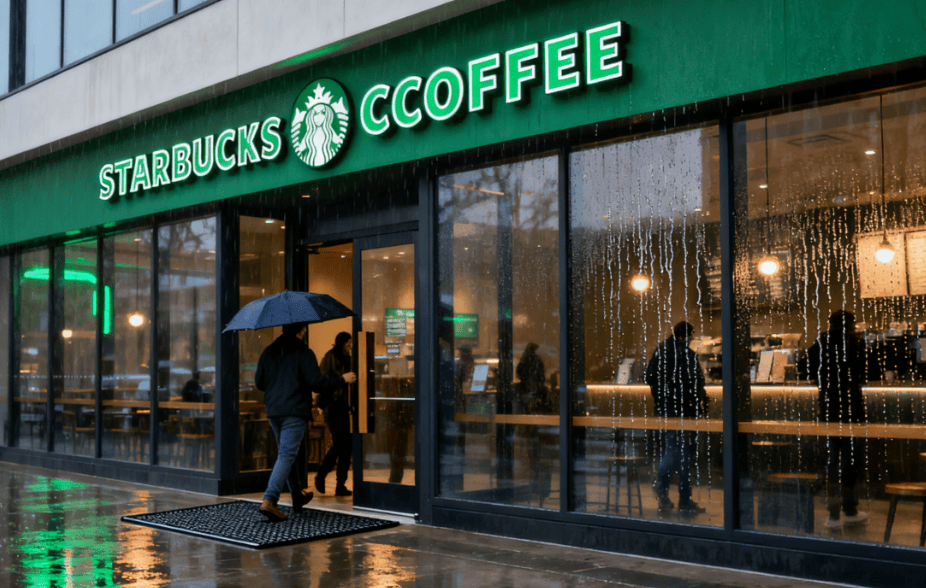
Core Insights - Starbucks announced the sale of a 60% stake in its China business to Boyu Capital for $4 billion, marking the first time the company has relinquished control in its 26 years in China [1] - The joint venture aims to accelerate Starbucks' expansion plan to reach 20,000 stores in China, leveraging local resources from Boyu Capital [1][3] - Starbucks will retain a 40% stake in the joint venture and continue to authorize the use of its brand and intellectual property [1] Group 1: Market Context - Starbucks' market share in China's fresh coffee segment has dropped to 14% in 2024, down from a peak of 42% in 2017, indicating significant competitive pressure from local brands [3] - The current size of China's fresh coffee market has surpassed 280 billion yuan, with the affordable segment growing at 42% [4] - Products priced under 10 yuan account for 58% of consumer spending, highlighting a shift in consumer preferences towards value [4] Group 2: Strategic Response - The joint venture's goal of expanding to 20,000 stores exceeds the total number of stores opened by Starbucks in the past 26 years, reflecting a need to compete with local rivals like Luckin Coffee and Kudi [3] - The expansion strategy may draw from experiences in the South Korean market, where price promotions and operational efficiencies were implemented post-equity sale [3][4] - The restructuring is seen as a critical move to adapt to market changes and bind local resources, transitioning from a wholly-owned model to a joint venture [4]

咖啡豆涨价创历史新高:咖农欢呼,咖啡店苦撑降成
Sou Hu Cai Jing· 2025-11-09 06:06
Core Insights - Starbucks has formed a strategic partnership with Boyu Capital to jointly operate its retail business in China, highlighting the competitive pressure from local brands like Luckin and Manner in the coffee market [1] - The coffee futures market has seen significant price increases, with prices reaching historical highs, impacting both coffee producers and retailers [2][3] Coffee Market Dynamics - Coffee futures prices have surged, with a notable increase from 188.5 cents per pound at the beginning of last year to a peak of 437.95 cents per pound in October, reflecting a rise of over 70% [2] - The USDA projects a decline in global Arabica coffee production, estimating a drop of 47,000 tons (-7.5%) from the historical peak of 6.3 million tons in the 2018/2019 season [3] - Weather events in major coffee-producing countries, particularly Brazil, have contributed to reduced production and increased futures prices [3] Impact on Coffee Farmers - Farmers like Cai Qing have experienced significant income growth due to rising coffee prices and partnerships with large companies like Starbucks, with annual sales reaching approximately 800,000 yuan [5] - The price of fresh coffee fruit in Yunnan has increased from 3.5-4.3 yuan to around 7 yuan per kilogram, driven by high futures prices [7] - The area planted with coffee in Yunnan is projected to grow by 4% in 2024, reversing a previous decline due to low prices [7] Retail Sector Challenges - The intense competition in the coffee market has led to a price war, with many retailers unable to raise prices despite rising costs from coffee futures [8][9] - Retailers are adopting cost-cutting measures, such as reducing staff and store sizes, to cope with increased raw material costs while maintaining competitive pricing [10] - The ongoing price increases in coffee futures pose operational challenges for coffee retailers, who must balance cost pressures with consumer demand for lower prices [10]
星巴克卖出中国业务60%股权;SHEIN首店落地巴黎遭抗议;金佰利并购科赴丨品牌周报
36氪未来消费· 2025-11-09 02:06
Group 1: Starbucks China Business Sale - Starbucks announced the sale of 60% of its China business to private equity firm Boyu Capital for an estimated valuation of $4 billion, bringing the overall valuation of Starbucks China to over $13 billion [2][3] - The partnership with Boyu Capital will focus on expanding the number of stores in China from nearly 8,000 to 20,000, targeting smaller cities and emerging regions [3] - Starbucks will retain its brand and intellectual property while Boyu Capital will lead local operations, digital transformation, and market expansion [4] Group 2: Kimberly-Clark Acquisition of Kenvue - Kimberly-Clark announced the acquisition of Kenvue for a total valuation of $48.7 billion, combining two companies with similar revenue sizes [5][6] - The merger is expected to reshape the global beauty and personal care market, creating a company with a comprehensive product line across various consumer health segments [6] - Kenvue has faced challenges since its spin-off from Johnson & Johnson, with a significant decline in net profit and sales [6] Group 3: SHEIN's Paris Store Opening - SHEIN opened its first physical store in Paris, attracting both shoppers and protesters, highlighting the brand's controversial presence in the market [7][8] - The French government has called for an investigation into SHEIN due to concerns over illegal products being sold on its platform [9][10] Group 4: Financial Performance of Brands - Coach reported a 22% increase in sales, solidifying its position in the high-end market, while Kate Spade experienced an 8% decline [23] - Estée Lauder's sales rebounded with a 3% organic growth, driven by recovery in the Chinese market and tourism retail [25] - Ralph Lauren's revenue reached $2.01 billion, with a notable 30% increase in the Chinese market despite price hikes [29]



一粒咖啡豆见证进博会大舞台
Jing Ji Ri Bao· 2025-11-08 22:22
Group 1 - The China International Import Expo (CIIE) serves as a platform for global companies to launch new products and technologies, influencing consumer trends and brand development [1][2] - The event showcased 461 new products, technologies, and services, expanding into future industries such as low-altitude economy and humanoid robots, highlighting the opportunities within the Chinese market [2] Group 2 - The "Ubean Panama Black Label Geisha Coffee Bean" was introduced at the expo, emphasizing its rarity and the high standards required for its cultivation, with global production being less than 1% of total coffee output [1] - A partnership was formed between Zhenggu (Beijing) Agricultural Development Co., Ltd. and Siemens to track the carbon footprint of the coffee bean throughout its lifecycle, promoting sustainability and transparency [1] - The expo is viewed as a significant opportunity for international brands like Burberry and Colombian chocolate brand Lok to connect with Chinese consumers and expand their market presence [1]
城数Lab. | 咖啡“双雄”城市版图:星巴克的未来在哪里
Sou Hu Cai Jing· 2025-11-08 19:06
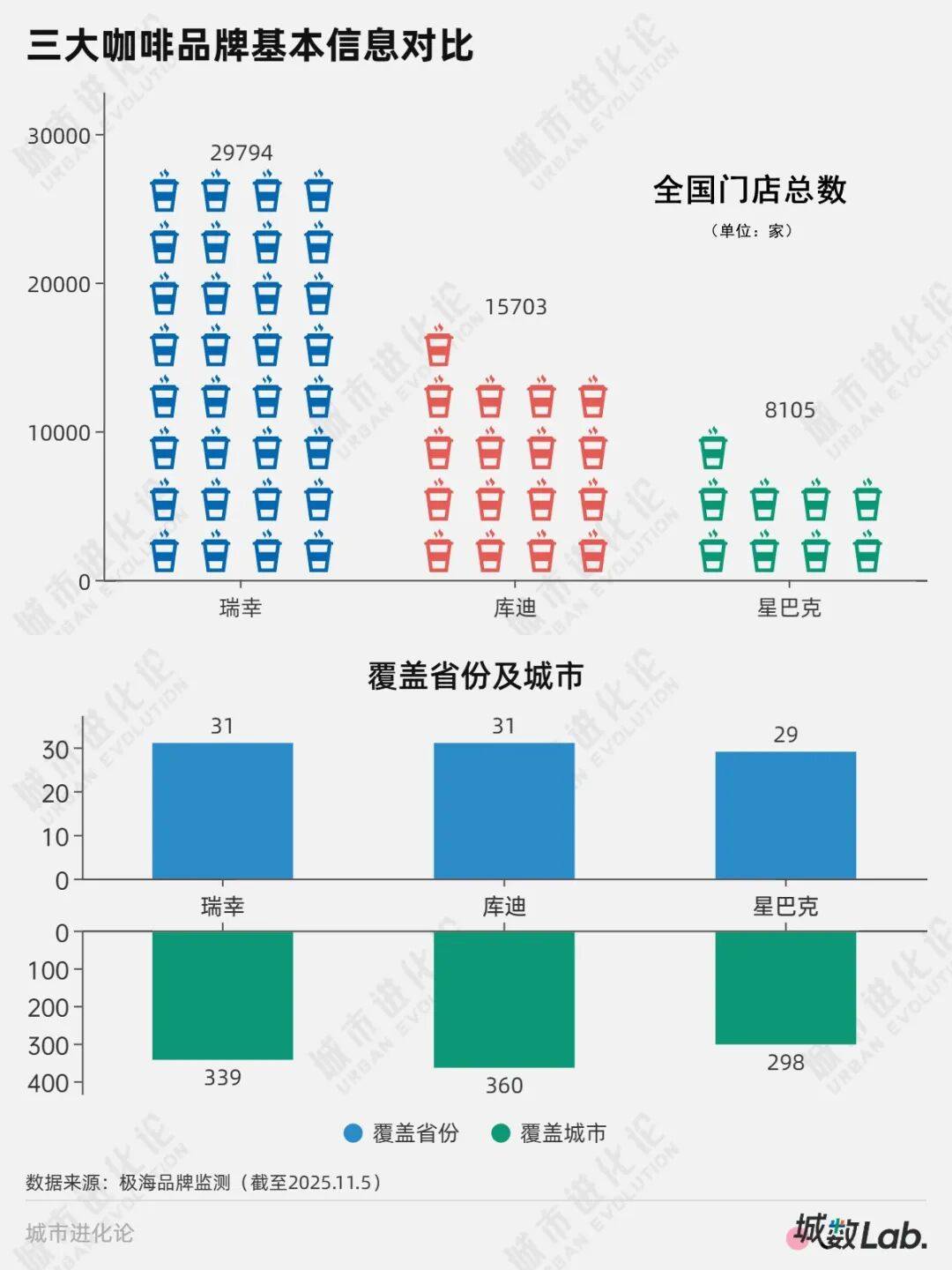
Core Insights - Starbucks has sold a 60% stake to Boyu Capital for a valuation of $13 billion, marking a significant strategic shift since its entry into the Chinese market in 1999 [1] - The competitive landscape in China's coffee market has changed, with Starbucks facing challenges from local brands like Luckin Coffee, which has surpassed Starbucks in store count and annual sales [3] Market Positioning - As of now, Starbucks operates 8,105 stores in China, while Luckin Coffee has 29,794 stores and another local brand, Koolearn, has 15,703 stores, indicating that Starbucks has less than one-third of Luckin's store count [1] - Starbucks' store distribution is heavily concentrated in first-tier and new first-tier cities, with 64% of its stores located in these areas, while Luckin has a more balanced presence across second, third, and fourth-tier cities [12] Regional Strategy - Starbucks has the highest number of stores in Zhejiang province (1,205), while Luckin leads in Guangdong with 4,320 stores [6] - The top three cities for Starbucks are Shanghai, Beijing, and Hangzhou, whereas Luckin's top cities are Shanghai, Shenzhen, and Guangzhou [9] Future Expansion Plans - The partnership with Boyu Capital aims to expand Starbucks' store count in China to 20,000, focusing on smaller cities and emerging regions [15][16] - The CEO of Starbucks emphasized that Boyu's local market expertise will accelerate Starbucks' growth in China, particularly in lower-tier markets [16]

太疯狂,涨幅一度超黄金!咖农欢呼,咖啡店却不敢涨价
Di Yi Cai Jing Zi Xun· 2025-11-08 13:09
Core Insights - Starbucks has formed a strategic partnership with Boyu Capital to jointly operate its retail business in China, highlighting the competitive pressure from local brands like Luckin Coffee and Manner [2] - The coffee market is experiencing significant price pressures due to rising costs and aggressive pricing strategies from competitors, with the price of U.S. C-type coffee futures remaining high at around 400 cents per pound [2] Coffee Futures Market - Coffee futures have seen a price increase exceeding 70% since January 2022, with prices reaching a historical high of 437.95 cents per pound on October 23, 2023 [3][4] - The price of Arabica coffee futures is projected to exceed 430 cents per pound by February 2025, reflecting a 118.57% increase over the past year [4] - Factors contributing to the price surge include climate change affecting global production and speculative trading, particularly due to adverse weather conditions in Brazil [4][5] Impact on Coffee Farmers - Coffee farmers in Yunnan have benefited from rising coffee prices, with some reporting annual sales of around 800,000 yuan due to partnerships with large companies like Starbucks and the increase in coffee futures prices [8][10] - The price of fresh coffee fruit in Yunnan has risen from 3.5 to 7 yuan per kilogram, reaching historical highs, which has improved the economic viability of coffee farming [10] Retail Market Dynamics - The Chinese coffee market is projected to exceed 1.5 trillion yuan by 2030, but competition is intensifying with local brands outpacing international ones in terms of store count and revenue [12] - The aggressive pricing strategies, such as 9 yuan coffee, are forcing retailers to keep prices low despite rising costs, leading to operational challenges [12][14] - Retailers are adapting by reducing labor costs and store sizes, with many opting for takeaway models to maintain profitability amid rising raw material costs [13][14]
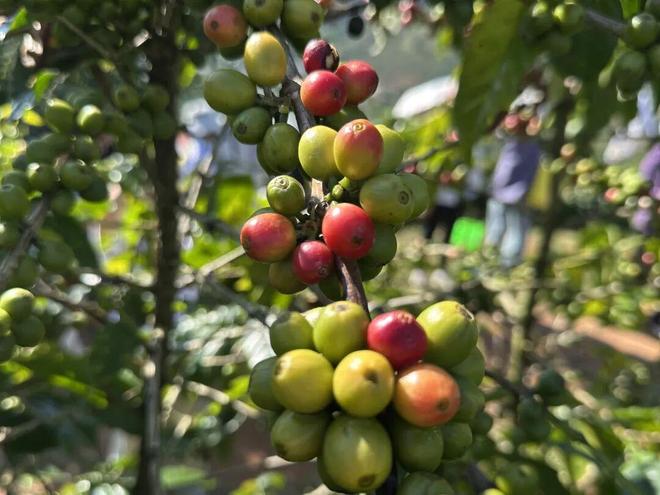
太疯狂,涨幅一度超黄金!咖农欢呼,咖啡店却不敢涨价
第一财经· 2025-11-08 12:43
Core Viewpoint - Starbucks has formed a strategic partnership with Boyu Capital to jointly operate its retail business in China, amidst increasing competition and price wars in the coffee market [3][4]. Coffee Market Dynamics - The coffee futures prices have surged significantly, with prices reaching historical highs, impacting both producers and retailers. As of November 8, 2023, the price of U.S. coffee futures was reported at 388.38 cents per pound, reflecting a 2.46% increase [4][5]. - Coffee futures prices have outpaced gold, with a notable increase from 188.5 cents per pound at the beginning of 2022 to a peak of 437.95 cents per pound in October 2023, marking a rise of over 70% [4][5]. - The USDA projects a decline in global Arabica coffee production, estimating a drop of 47,000 tons (-7.5%) from the historical peak of 6.3 million tons in the 2018/2019 season [5]. Supply and Demand Factors - The increase in coffee prices is attributed to both market dynamics and unexpected weather conditions affecting production, particularly in Brazil, a major coffee producer [5][6]. - The demand for freshly brewed coffee has been rising, creating a structural imbalance in the Arabica coffee market, where production is declining while demand is increasing [5][6]. Impact on Coffee Farmers - Coffee farmers in Yunnan have seen significant income growth due to rising coffee prices and partnerships with large companies like Starbucks. For instance, one farmer reported an annual sales increase to 800,000 yuan, attributed to both rising futures prices and corporate partnerships [9][11]. - The price of fresh coffee fruit in Yunnan has surged from 3.5 to 7 yuan per kilogram, reaching historical highs, which has revitalized local coffee cultivation [11]. Retail Sector Challenges - The intense competition in the coffee market, with brands like Luckin Coffee and Manner expanding rapidly, has led to a price war, making it difficult for retailers to raise prices despite rising costs from coffee futures [14][15]. - Retailers are adopting cost-cutting measures, such as reducing staff and store sizes, to cope with increased raw material costs while trying to maintain competitive pricing [15][16]. - The ongoing price increases in coffee futures pose operational challenges for coffee retailers, who must balance the need to offer low prices to attract customers with the rising costs of high-quality coffee beans [16].