
核电

Search documents
新项目密集投产投运 央企能源保供火力全开
Zhong Guo Zheng Quan Bao· 2025-12-18 20:23
Core Viewpoint - The energy supply situation in China is stable, with sufficient resources to meet the demands of winter heating and power generation, supported by both traditional and clean energy sources [1][2][3] Traditional Energy Supply - Coal remains a critical component of China's energy security, with daily coal production reaching 75,000 tons and a maximum coal stockpile exceeding 350,000 tons, ensuring supply stability during extreme winter weather [1] - The National Energy Group has implemented an emergency supply mechanism, delivering over 11 million tons of coal and generating over 21 billion kilowatt-hours of electricity since December [2] Clean Energy Projects - Significant clean energy projects are being launched, including the 800 MW offshore wind project in Jiangsu, which is expected to power 1.4 million households and reduce carbon emissions by approximately 2.37 million tons [2] - The successful grid connection of the second unit of the Zhangzhou Nuclear Power Plant marks a milestone in nuclear energy development, contributing to the overall energy supply [3] Power Grid Enhancements - The completion of the ±800 kV UHVDC transmission project in Hubei will enable the transmission of approximately 40 billion kilowatt-hours of clean electricity annually, equivalent to replacing 12 million tons of standard coal and reducing carbon emissions by 30 million tons [3] - The State Grid has 82 key projects aimed at enhancing power supply capacity by over 30 million kilowatts, ensuring reliable electricity supply during peak winter demand [4] Resilience in Power Supply - To improve the resilience of the power supply system, it is essential to enhance the accuracy of renewable energy forecasting, apply digital technologies across various sectors, and optimize the efficiency of UHV transmission channels [5]
谱写新时代中国高水平对外开放崭新篇章
Sou Hu Cai Jing· 2025-12-18 19:54
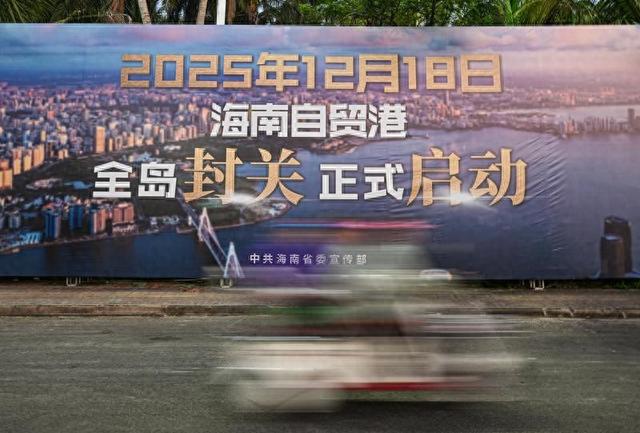
Core Viewpoint - The official launch of the Hainan Free Trade Port's full island closure marks a significant milestone in China's commitment to opening up its economy, enhancing its role in global economic integration and cooperation [2][23][25]. Group 1: Policy and Economic Impact - The full closure of the Hainan Free Trade Port introduces a new regulatory framework, transforming the entire island into a customs supervision special area, which allows for "first-line" liberalization and "second-line" regulation [3][10]. - The "zero tariff" policy has significantly increased the proportion of zero-tariff goods to 74%, covering most production equipment and raw materials, which is expected to provide substantial financial benefits to enterprises [6][22]. - The new policies are designed to lower production costs for companies, facilitating the transformation and upgrading of the processing and manufacturing industries in Hainan [8][9]. Group 2: Development Opportunities - The Hainan Free Trade Port is positioned as a key player in promoting high-quality development and contributing to the national development framework, with a focus on innovative industries such as deep-sea, aerospace, and seed industries [18][19]. - The port's policies are expected to attract high-end manufacturing, biomedicine, and digital economy sectors, enhancing the region's economic vitality and production capabilities [19][27]. - Hainan has already seen significant foreign investment, with actual foreign capital utilization reaching 102.5 billion yuan over the past five years, indicating a growing interest from global investors [27]. Group 3: Regional and Global Integration - The Hainan Free Trade Port serves as a crucial hub for regional cooperation, facilitating cross-province industrial parks and enhancing collaboration with major economic regions such as the Guangdong-Hong Kong-Macao Greater Bay Area [20][26]. - The port's strategic location and improved logistics are expected to strengthen trade links with ASEAN, South Asia, and the Pacific regions, positioning Hainan as a vital platform for regional cooperation [26][27]. - The launch of the "Coconut Express" from Indonesia to Hainan is set to significantly reduce shipping times, further integrating Hainan into global supply chains [26].

写在海南自由贸易港正式启动全岛封关之际
Bei Jing Ri Bao Ke Hu Duan· 2025-12-18 13:46
Core Points - The official launch of the Hainan Free Trade Port marks a significant milestone in China's commitment to high-level opening-up and economic globalization [3][17] - The Hainan Free Trade Port is expected to provide historical opportunities for rapid development and serve as a model for national reform and opening-up [6][12] Group 1: Policy and Economic Impact - The Hainan Free Trade Port has implemented a "zero tariff" policy, with the proportion of zero-tariff goods rising to 74%, benefiting various industries [7] - The new customs policies are designed to lower production costs for companies, as evidenced by the successful import of zero-tariff components valued at over 23 million yuan [7][11] - The port's opening is anticipated to enhance the efficiency of trade and investment, with simplified customs processes and expanded policy benefits for enterprises [11][16] Group 2: Development Opportunities - The Hainan Free Trade Port is positioned as a hub for innovation, attracting talent and technology to drive high-quality development in sectors like robotics and digital economy [9][13] - The port's policies are expected to foster the growth of future industries, including aerospace and deep-sea exploration, leveraging Hainan's unique geographical advantages [13] - The establishment of cross-provincial industrial parks demonstrates the port's role in regional collaboration and economic integration [14] Group 3: Global Engagement - Hainan's strategic location and policies are set to enhance its role as a key player in international trade, particularly with ASEAN and other regions [18] - The port has attracted significant foreign investment, with actual foreign capital utilization reaching 102.5 billion yuan over the past five years, reflecting a 14.6% annual growth rate [19] - Global companies from various sectors are increasingly establishing a presence in Hainan, indicating its potential as a vital node in global capital allocation [19]
新华全媒头条|谱写新时代中国高水平对外开放的崭新篇章——写在海南自由贸易港正式启动全岛封关之际
Xin Hua She· 2025-12-18 13:38
Core Points - The Hainan Free Trade Port officially launched its full island closure on December 18, 2025, marking a significant milestone in China's opening-up strategy [2][4] - The closure is not a restriction but an expansion of openness, aimed at countering unilateralism and protectionism while promoting global economic integration [2][17] - The policies implemented will provide substantial benefits to enterprises, including a significant increase in the proportion of "zero tariff" goods to 74%, covering most production equipment and raw materials [7][16] Group 1: Economic Opportunities - The full closure of the free trade port presents a historic opportunity for Hainan's leapfrog development [6] - The "zero tariff" policy will significantly reduce production costs for companies, as evidenced by the successful import of "zero tariff" components valued at over 23 million yuan from Russia [7][11] - The simplified customs processes and expanded policy benefits are expected to enhance the competitiveness of local enterprises [11][12] Group 2: Policy and Institutional Innovation - Hainan's policy framework encompasses various aspects such as trade, investment, transportation, and cross-border capital flow, which will continue to evolve post-closure [9][12] - The region has developed 173 institutional innovation cases that serve as models for nationwide reform and opening-up [12] - The free trade port is positioned as a testing ground for institutional reforms and integrated development strategies [12][13] Group 3: Regional and Global Integration - Hainan is becoming a hub for regional cooperation, with cross-provincial industrial parks emerging as successful examples of collaborative development [14][15] - The port's strategic location and policies are expected to enhance Hainan's role in the Belt and Road Initiative and deepen ties with major economic regions [15][18] - The free trade port is anticipated to attract global investors, with significant foreign capital inflow and a growing number of foreign enterprises establishing operations in Hainan [18][19]
上海电气与中核集团深化战略合作
Zheng Quan Shi Bao Wang· 2025-12-18 09:00
Core Viewpoint - Shanghai Electric and China National Nuclear Corporation (CNNC) are deepening their strategic cooperation to enhance capabilities in nuclear power technology and achieve mutual benefits [1] Group 1: Strategic Cooperation - The meeting between Shanghai Electric's Chairman Wu Lei and CNNC's Chairman Shen Yanfeng focused on strengthening their collaboration in energy technology [1] - Both parties expressed a strong desire to leverage this meeting as an opportunity to further deepen their partnership [1] Group 2: Areas of Collaboration - Future cooperation will focus on nuclear power equipment R&D, fusion industry collaboration, renewable energy development, engineering construction, and international market expansion [1] - The aim is to solidify the foundation for mutual benefits and promote high-quality development of central and local enterprises [1]

院士作序《美丽中国看核电》纪实呈现清洁能源与生态人文融合实践
Yang Shi Wang· 2025-12-18 04:24
本书的编纂,植根于中国核电深厚的一线实践。自秦山核电站并网发电实现我国大陆核电"零的突破"以来,中国核电事业走过了从引进、消化、吸收到再创 新,直至拥有自主知识产权的三代核电技术"华龙一号"成功商运并走向世界的不凡历程。《美丽中国看核电》正是以核电发展史为背景,将视角投向核电站 作为重大工程与地方社会经济文化生态深度互融的现场。 作者许佳,核电从业者,在书中通过"秦山古韵""三门核光""田湾胜境""福清风貌"等多个地域篇章,系统梳理了不同核电基地在规划、建设、运营过程中, 与所在地的历史文脉传承、自然生态保护、区域协调发展协同共进的探索与实践。这些内容呈现重大工程项目作为"社会细胞",与所在地共生共荣的真实状 态。 近日,由中国核能电力股份有限公司组织编写、中国原子能出版社出版的《美丽中国看核电》一书正式与读者见面。该书立足于中国核电三十余年从起步、 自主发展到规模化、国际化发展的实践历程,以纪实视角呈现我国核能事业在安全高效发展、服务国家战略、融入地方生态与文化等方面的新时代图景。 (作品名称:光影;作者:刘哲) 从秦山起步到"华龙"出海,一部扎根实践的纪实之书 责任编辑:王艳胜 装帧设计: 邢 锐 《"核 ...
国家发展改革委:积极支持民营企业参与具有一定收益的铁路、核电、水电等重点领域项目建设
Jing Ji Guan Cha Wang· 2025-12-18 03:15
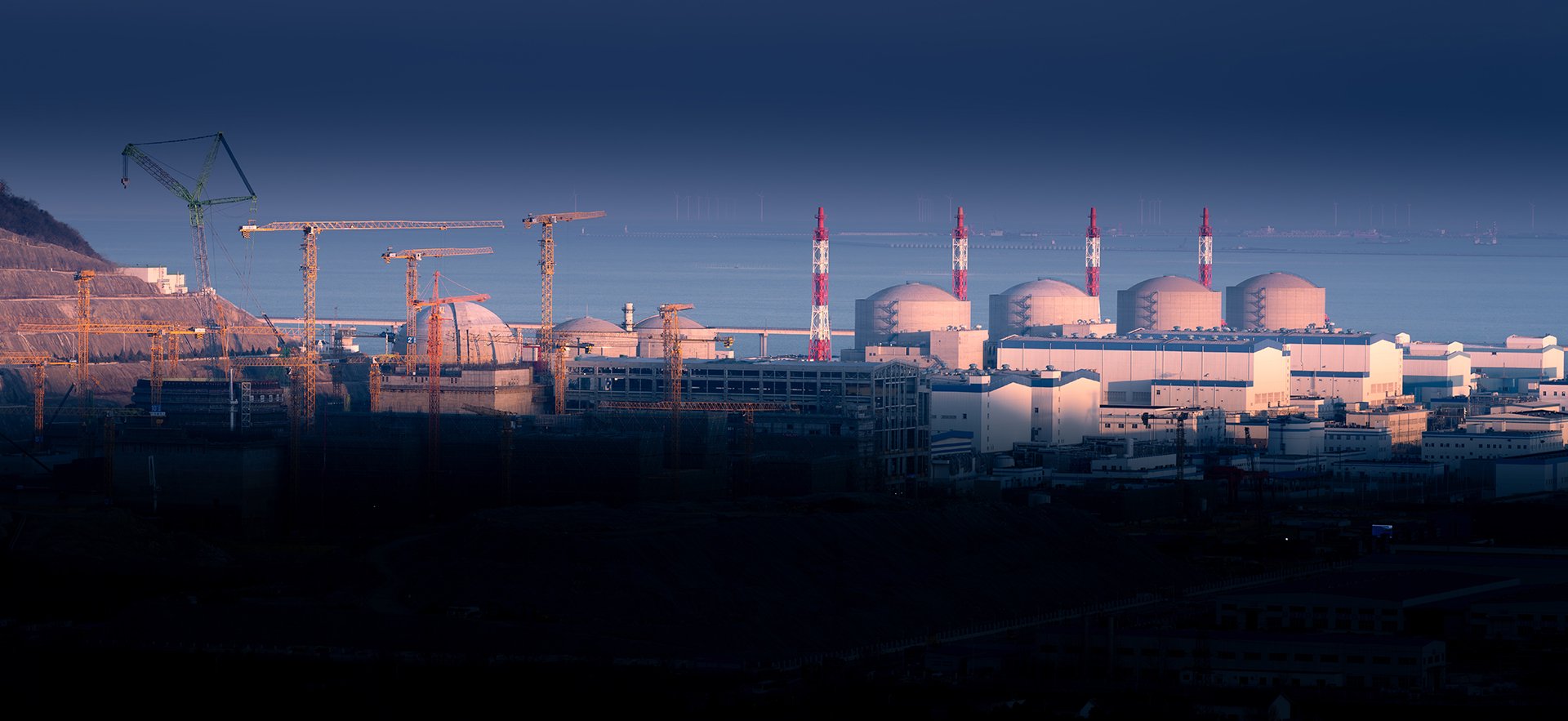
Core Viewpoint - The article emphasizes the need to promote the development of private investment by addressing challenges through expanded access, removing bottlenecks, and strengthening support mechanisms [1] Group 1: Promotion of Private Investment - The article suggests enhancing the participation of private enterprises in significant project construction by establishing a long-term mechanism [1] - It encourages private enterprises to engage in key sectors such as railways, nuclear power, and hydropower, which are expected to yield certain returns [1] - There is a call for continuous promotion of high-quality development in private investment [1] Group 2: Support Mechanisms - The article highlights the importance of rolling out quality projects to private capital and strengthening support for project elements and financing [1] - It advocates for the involvement of private enterprises in the implementation of new Public-Private Partnership (PPP) projects [1] - The expansion and enhancement of Real Estate Investment Trusts (REITs) in the infrastructure sector are encouraged to support more eligible private investment projects [1] Group 3: Government Investment - The article mentions increasing support from the central budget for eligible private investment projects to better leverage government investment funds [1] - It emphasizes the role of government investment funds in guiding and stimulating private investment [1]
中国广核年内三核电机组全面开建 总容量3669兆瓦采用华龙一号技术
Chang Jiang Shang Bao· 2025-12-18 01:20
Core Viewpoint - The acceleration of China's green and low-carbon energy transition is highlighted by the commencement of full construction of the Ningde Unit 6 nuclear power plant by China General Nuclear Power Corporation (CGN) [1][2]. Group 1: Nuclear Power Plant Developments - The Ningde Unit 6 has entered the civil construction phase as of December 16, 2025, marking the start of its full construction [2]. - Since 2025, CGN has announced the full construction of three nuclear power units with a total installed capacity of 3669 MW, all utilizing the Hualong One nuclear technology [1][3]. - The Ningde nuclear project is planned to have six million-kilowatt nuclear units, implemented in two phases, with Units 5 and 6 approved for construction on July 31, 2023 [3]. Group 2: Hualong One Technology - The Hualong One technology is a third-generation nuclear power technology with independent intellectual property rights, developed based on over 30 years of experience in nuclear power station design, construction, and operation in China [5]. - Each Hualong One unit has an annual electricity generation capacity of nearly 10 billion kilowatt-hours, equivalent to reducing coal consumption by over 3.05 million tons and cutting CO2 emissions by over 9.24 million tons [5]. Group 3: Industry Growth and Regulatory Approvals - The National Energy Administration announced that 10 new nuclear power units have been approved for construction, with a total of 112 units in operation or under construction, and a total installed capacity of 125 million kilowatts [4]. - CGN is actively preparing for the construction of the newly approved units, which also utilize Hualong One technology, with capacities ranging from 1200 MW to 1208 MW for different units [4]. Group 4: Financial Performance - In the first three quarters of 2025, CGN reported a revenue of 59.723 billion yuan, a decrease of 4.09% year-on-year, and a net profit attributable to shareholders of 8.576 billion yuan, down 14.14% year-on-year [6]. - Despite the decline in revenue and profit, the total electricity generated by CGN's operational nuclear units increased by 3.17% year-on-year, indicating growth in operational efficiency [6]. Group 5: Leadership Changes - High Li Gang, the former president of CGN, has retired, and Pang Songtao has been appointed as the new president, bringing over 30 years of experience in the nuclear power industry [9].

全岛封关:海南开放启新程
Zhong Guo Zheng Quan Bao· 2025-12-17 20:17
Core Insights - The official launch of the Hainan Free Trade Port's full island closure operation marks a new phase in its development, indicating China's commitment to expanding openness and creating a more favorable investment environment [1][2][3] Policy Implementation - The full island closure operation is characterized by a "special regulatory system" that allows for a "one line" open and "two lines" controlled approach, facilitating a liberalized and convenient policy environment [1][2] - The number of goods eligible for the "zero tariff" policy will increase from over 1,900 to 6,637 items, covering approximately 74% of all goods, representing a 53% increase from before the closure [2][3] Industry Development - The implementation of "zero tariff" and "low tax rate" policies is expected to significantly boost Hainan's industrial upgrade and trade development, attracting various industries to the region [3][4] - The establishment of a tax system characterized by "zero tariffs to facilitate trade" and "low tax rates to drive growth" is anticipated to promote the rapid development of strategic emerging industries such as biomedicine and digital content processing [3][4] Business Attraction - The closure operation has attracted various enterprises to invest in Hainan, such as the establishment of a green intelligent production base by Swire Coca-Cola, which plans to invest 300 million yuan and implement data-driven production models [4][5] - Companies are viewing Hainan as a strategic "outbound window" for international resource integration and logistics cost reduction, with plans to establish project companies in the region [5]
电投产融:公司打造了“海阳核电核能综合利用”创新品牌,建成投运了包括“暖核一号”在内的一批核能综合利用创新示范项目
Zheng Quan Ri Bao Zhi Sheng· 2025-12-17 12:11
Core Viewpoint - The company is advancing its nuclear technology with the "Guohe No. 1" (CAP1400), which is a large advanced pressurized water reactor with a single unit power of 1.5 million kilowatts, representing China's largest self-designed nuclear power technology [1] Group 1: Technology and Innovation - The "Guohe No. 1" technology is based on the introduction and absorption of third-generation passive pressurized water reactor technology, featuring independent intellectual property rights [1] - The company emphasizes a "passive" safety design concept in its nuclear technology [1] Group 2: Comprehensive Utilization of Nuclear Energy - The Shandong Nuclear Power, part of the assets to be injected, is pioneering large pressurized water reactor heat and power generation research and practice, focusing on the utilization of residual heat from nuclear power plants and local clean heating needs [1] - The company has established an innovative brand for comprehensive nuclear energy utilization, including projects like "Warm Nuclear No. 1" [1] Group 3: Future Plans and Compliance - The company will conduct careful research and demonstration regarding the specific implementation plans and timelines for comprehensive utilization based on strategic development, technical economic feasibility, and local demand [1] - The company commits to advancing related work in compliance with laws and regulations, ensuring proper information disclosure [1]
