
保健品

Search documents
汤臣倍健:2025年上半年归属于上市公司股东的净利润736513235.60元
Zheng Quan Ri Bao Zhi Sheng· 2025-08-08 16:12
Core Viewpoint - Tongrentang Baijian announced a significant decline in both revenue and net profit for the first half of 2025, indicating potential challenges in its financial performance [1] Financial Performance - The company reported a revenue of 3,532,312,427.79 yuan for the first half of 2025, representing a year-on-year decrease of 23.43% [1] - The net profit attributable to shareholders was 736,513,235.60 yuan, which is a year-on-year decline of 17.34% [1]

汤臣倍健:关于子公司为子公司提供连带责任担保的公告
Zheng Quan Ri Bao Zhi Sheng· 2025-08-08 16:12
Group 1 - The core announcement is that the company,汤臣倍健, has signed a commitment letter through its wholly-owned subsidiary, 珠海健进, to take joint responsibility for the cross-border e-commerce business of the "lifespace" brand on the Pinduoduo platform [1] - Evolution Health, which is a wholly-owned subsidiary of the company, is involved in this agreement [1]
汤臣倍健2025年上半年实现净利润7.37亿元
Bei Jing Shang Bao· 2025-08-08 10:46
Core Insights - The core viewpoint of the article is the financial performance of Tongchen Beijian in the first half of 2025, highlighting significant revenue and profit figures [1] Financial Performance - In the first half of 2025, Tongchen Beijian achieved a revenue of approximately 3.532 billion yuan and a net profit attributable to the parent company of about 737 million yuan [1] - The net cash flow generated from operating activities was around 642 million yuan [1] Brand Performance - The main brand "Tongchen Beijian" generated a revenue of 1.888 billion yuan [1] - The brand "Jianliduo" achieved a revenue of 411 million yuan [1] - The domestic products of "Lifespace" contributed 138 million yuan in revenue, while the overseas LSG brand generated 534 million yuan [1] Channel Performance - Offline channels accounted for a revenue of 1.798 billion yuan [1] - Online channels generated a revenue of 1.684 billion yuan [1]
食品饮料周报:市场规模超1500亿元 酒企争喝光瓶酒
Zheng Quan Zhi Xing· 2025-08-08 07:17
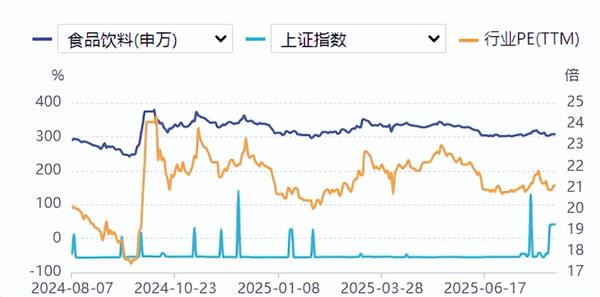
Market Performance - The Shanghai and Shenzhen 300 Index increased by 1.23%, while the Shenwan Food and Beverage Index rose by 0.68% during the period from August 4 to August 8, 2025 [1]. Institutional Insights - Guohai Securities maintains a "recommended" rating for the food and beverage sector, citing recent policy measures that are expected to improve macroeconomic expectations and enhance both valuation and performance in the sector [2]. - Zhongyuan Securities suggests focusing on investment opportunities in the white liquor, soft drinks, health products, baking, and snacks sectors, with a recommended stock portfolio including brands like Yingjia Gongjiu and Luzhou Laojiao [3]. Regulatory Developments - The State Administration for Market Regulation has drafted a regulation concerning food safety responsibilities for food sales chain enterprises, emphasizing risk prevention and management responsibilities at various levels [4]. - A joint reminder from the State Administration for Market Regulation and the China Consumers Association warns consumers against believing health claims made by ordinary food products [5]. Industry Trends - The market for light bottle liquor is projected to exceed 150 billion yuan in 2024 and is expected to surpass 200 billion yuan in 2025, with increased competition in lower-tier markets [8]. - The export value of Zunyi liquor (excluding Moutai Group) reached 39.81 million yuan, showing a year-on-year increase of 870.82%, driven by policies supporting international market expansion [9]. Company News - Moutai Group has announced the cessation of production for Taiyuan liquor to optimize its product structure and enhance market competitiveness [11]. - Tianyoude Liquor plans to invest 160 million yuan in building a winery in Tibet as part of its strategy to overcome current financial challenges [12]. - Yingjia Gongjiu has established a new biotechnology company with an investment of 8 million yuan, focusing on technology promotion and application services [13].






筑牢防诈堤坝 保健品市场需正本清源
Hua Xia Shi Bao· 2025-08-07 11:39
小作坊出品的"三无"保健品,纵使无害,也绝无保健之功。可靠的产品,必有市监部门"蓝帽子"认证, 或有权威科研背书、公众人物担责——国家代言法规如悬顶之剑,令责任无可推诿。越是骗子吹嘘得天 花乱坠的产品,越需警惕其"孤品"属性。各大平台搜索验证,实为消费者自保的必备功课。 特征三:流动的"庙宇"与消失的"和尚" 历经市场数十年沉浮,中国保健品行业本已沉淀出一批可信赖的中外资"老字号"。但总有阴影在阳光下 滋生。今天,我们抽丝剥茧,揭示保健品消费骗局的四大显性特征: 特征一:那些查无此"健"的谜之产品 若某品牌闻所未闻,媒体鲜有踪迹,平台资质难寻——这已是危险的红灯信号。真正的健康守护者,必 在市场长河中留下可追溯的航迹。历经时间淬炼的头部企业,其公信力本身便是护城河。 特征二:"无人敢碰"的保健孤品 近日,"湖北宜昌3万多名老人被骗超10亿元"的新闻再度灼痛公众神经。这并非孤例,在如今老龄化浪 潮与健康焦虑交织的时代,保健品欺诈如同幽灵,在城市的街巷间游荡,将老人毕生积蓄化为乌有。 租个小门脸,以鸡蛋、家政为饵,待老人重金投入后却人去楼空——此谓"游击式"诈骗。而正规企业深 谙健康事业需扎根土壤:遍布全国的实体 ...
银发经济,步步是坑
首席商业评论· 2025-08-07 04:23
Core Viewpoint - The "silver economy" in China, while significant in terms of population size and potential market value, is fundamentally limited by the low consumption capacity and economic power of the elderly population, leading to a market characterized by low-end products and services rather than high-quality offerings [6][10][24]. Group 1: Overview of the Silver Economy - Since the millennium, China's aging population has increased, with the elderly population expected to reach 310 million by 2024, accounting for 22.1% of the total population [7]. - The annual output value of China's silver economy is approximately 7 trillion yuan, representing only 5% of GDP and 12.5% of total consumption, indicating a low consumption capacity compared to other age groups [7][10]. - The consumption focus of the elderly is primarily on basic needs such as healthcare and social leisure, with limited options compared to younger demographics [7][8]. Group 2: Economic Conditions of the Elderly - The average annual income for elderly individuals in China was 32,027.4 yuan in 2021, with significant disparities between urban (47,270.8 yuan) and rural (14,105.4 yuan) populations [12][14]. - The income distribution among urban elderly is highly unequal, with a small percentage of wealthy individuals and a majority living below the average income level, limiting their consumption potential [14]. - The average savings for individuals over 50 is 186,000 yuan, but these savings are often reserved for emergencies rather than discretionary spending [14]. Group 3: Consumption Behavior and Market Dynamics - Many elderly individuals exhibit high price sensitivity, leading them to favor low-cost travel packages and products, often at the expense of quality [18][19]. - The prevalence of low-priced travel groups highlights a market that caters to the elderly's limited economic power and consumption habits, resulting in a cycle of low-quality offerings [16][21]. - Elderly consumers often rationalize their spending on low-quality products due to ingrained consumption habits from times of scarcity, leading to a disconnect between their economic reality and market offerings [22][24]. Group 4: Implications for the Silver Economy - The structural issues within the silver economy, including low-quality services and products, suggest that it cannot effectively address broader economic challenges related to domestic demand [24]. - The focus should shift from high-income elderly individuals to addressing the needs of low-income seniors who lack the economic knowledge and resources to navigate the market effectively [24].

仙乐健康全新汕头智慧物流中心正式启用
Zheng Quan Shi Bao Wang· 2025-08-06 13:52
人民财讯8月6日电,8月6日,仙乐健康(300791)在汕头产业园举行全新智慧物流中心启用仪式。新升 级的物流中心主体高度40米,是目前国内最高的单体立库之一,采用前沿的物流自动化设备和智能管理 系统,打造"黑灯仓库"高效运营模式。 ...

香港跑出超级隐形冠军:80后大哥卖保健美容品,全港第七
3 6 Ke· 2025-08-06 11:59
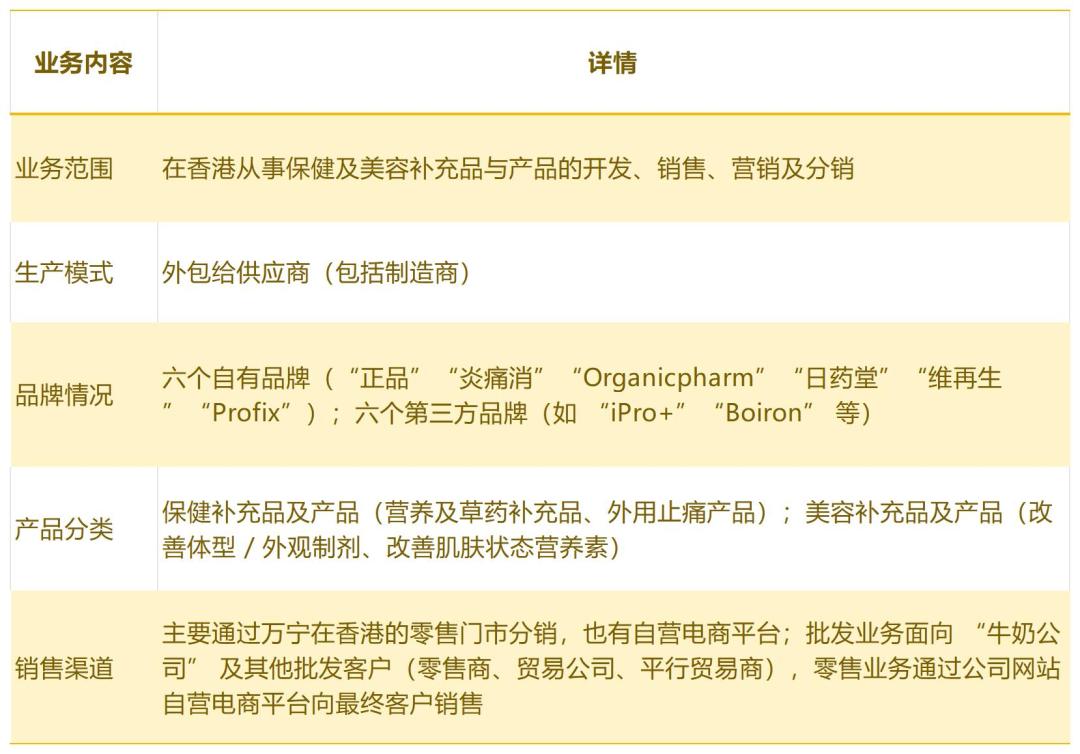
Core Insights - The Hong Kong health and beauty supplement market is undergoing a transformation, driven by joint health, immune regulation, and beauty antioxidants as the main growth drivers [1][10] - The company Zhengpin Holdings is preparing for an IPO, positioning itself as a leading player in this evolving market [1] Company Overview - Zhengpin Holdings operates in the development, sales, marketing, and distribution of health and beauty supplements in Hong Kong [2] - The company has six proprietary brands and several third-party brands, focusing on various health and beauty needs [2][6] - As of 2024, Zhengpin Holdings holds a 1.6% market share in the local health and beauty supplement retail market, ranking seventh, while it leads with a 29.4% share in the retail value of deer-related health products [2][4] Financial Performance - For the fiscal year 2025, Zhengpin Holdings is projected to generate revenue of HKD 130 million and a net profit of approximately HKD 36.26 million [4] - The company's revenue is highly concentrated, with over 98% coming from health and beauty supplement sales, primarily through wholesale channels [8] Market Trends - The Hong Kong health and beauty supplement market is expected to grow from HKD 27 billion in 2024 to HKD 35.4 billion by 2029, with a compound annual growth rate (CAGR) of about 5.5% [9] - The aging population in Hong Kong is driving demand for joint health products, with the number of individuals aged 65 and above increasing from 1.4 million in 2019 to 1.7 million in 2023, reflecting a CAGR of 5.4% [10] Emerging Opportunities - Functional beauty products are gaining traction, shifting from topical applications to ingestible solutions, with younger consumers favoring antioxidant and whitening products [13] - The male health supplement segment is identified as an underdeveloped market, with plans for Zhengpin Holdings to introduce male-specific formulations [15] - There is a growing demand for fast-acting products that provide immediate effects, such as instant NMN and convenient single-dose formats [16] - Local brands are increasingly looking to expand into Southeast Asia, with Zhengpin Holdings establishing a subsidiary in Taiwan and planning further regional expansion [18]
碧生源2025上半年收入2.589亿元,同比增长1.8%,减肥药品收入增长15.0%,全面收益增长45.9%
Jin Rong Jie· 2025-08-06 01:25
Core Viewpoint - Biyuan's performance in the first half of 2025 shows steady progress, with revenue reaching 258.9 million RMB, a year-on-year increase of 1.8% [1]. Financial Performance - Total comprehensive income reached 12.4 million RMB, up 45.9% from 8.5 million RMB in the same period last year [1]. - The company's profitability is recovering, with a net profit attributable to shareholders of 14.8 million RMB in 2024, compared to a loss of 299 million RMB in 2023 [3]. - Gross margin improved significantly from 46.91% in 2023 to 67.28% in 2024, indicating effective product structure optimization and cost control measures [3]. Product Performance - The traditional "Four Teas" business generated revenue of 129.1 million RMB, a decline of 4.7% year-on-year, reflecting increased competition and changing consumer demand in the health tea market [4]. - The weight loss drug segment saw revenue of 94.4 million RMB, a growth of 15.0%, primarily due to the ongoing promotion of the Orlistat product [4]. Business Transformation - Biyuan is implementing a profit-centered business improvement strategy, transitioning its offline OTC business through joint ventures, which has led to improved operational quality [3]. - The company has made significant progress in channel development, covering nearly 290,000 OTC pharmacies and medical third terminals across 31 provinces and cities in China [3]. Future Development Strategy - The company plans to leverage the "Weight Management Year" initiative promoted by the National Health Commission, focusing on the core health tea business while deepening reforms and optimizing mechanisms [6]. - Biyuan aims to enhance its brand building and youth-oriented marketing strategies through diversified media channels, targeting younger consumer demographics [4][6]. - Financial health indicators show improvement, with the current ratio rising from 1.58 in 2021 to 2.96 in 2024, and the debt-to-asset ratio decreasing from 35.73% to 15.22% [6].

碧生源上半年净利润同比增加58.74%
Zheng Quan Shi Bao Wang· 2025-08-06 00:27
Core Insights - The company's revenue for the first half of 2025 reached 259 million RMB, representing a year-on-year growth of 1.82% [1] - The net profit of the company was 12.402 million RMB, showing a significant year-on-year increase of 58.74% [1] - Basic earnings per share were reported at 10.14 cents [1] Revenue Growth - The primary driver for revenue growth was the strong performance of online e-commerce channels [1]