铁路建设

Search documents
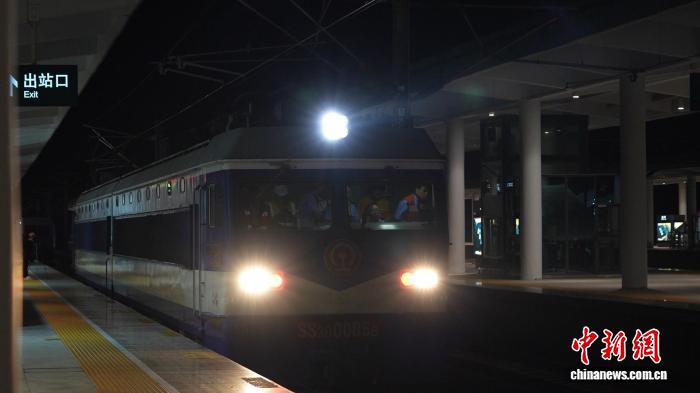
盘兴高铁热滑试验顺利完成
Zhong Guo Xin Wen Wang· 2025-09-05 07:19
Core Viewpoint - The successful completion of the contact network hot sliding test for the Pan-Xing High-Speed Railway marks a significant step towards the railway's commissioning and operational readiness [1][2]. Group 1: Test Completion - The hot sliding test was successfully completed on September 5, 2023, with the test train arriving at the Xinyi South Station [1]. - The contact network was energized successfully on September 5, 2023, at 0:30 AM, allowing the hot sliding test to proceed [1]. Group 2: Importance of the Test - The hot sliding test is a critical step before the joint debugging and testing of electrified railways, ensuring the stability and reliability of the power supply system [2]. - The test involved precise measurements of the contact network voltage and the relationship between the contact wire and the pantograph, confirming that the equipment meets the conditions for joint debugging and testing [2]. Group 3: Project Significance - The Pan-Xing High-Speed Railway, approximately 98 kilometers long with a design speed of 250 km/h, is the last project needed for Guizhou Province to achieve its goal of "high-speed rail connectivity for every city" [4]. - Upon completion, the railway will enable travel from Guiyang to Xinyi in 2 hours, creating a high-speed rail traffic circle within 1 to 2 hours to eight central cities in the province, significantly enhancing regional connectivity and economic development [4].

盘兴高铁完成热滑试验
Xin Hua Wang· 2025-09-05 06:15
Core Viewpoint - The successful completion of the hot sliding test for the Panxiong High-speed Railway marks a significant milestone, indicating that the line is ready for further testing and eventual operation, which will enhance regional connectivity and economic development in Guizhou Province [1] Group 1: Project Details - The hot sliding test was conducted on September 5, with the test train arriving at Guizhou Xingyi South Station, confirming that the railway line meets basic operational conditions [1] - The test involved the train operating at low, medium, and high speeds, with all parameters and performance indicators meeting expected standards, and the traction power supply system passing inspection [1] Group 2: Economic and Regional Impact - The Panxiong High-speed Railway is the final project needed for Guizhou Province to achieve its goal of "high-speed rail access to every city," significantly reducing travel time from Guiyang to Xingyi to 2 hours [1] - The completion of this railway will create a high-speed rail traffic circle of 1 to 2 hours connecting Guiyang to eight central cities in the province, which is crucial for improving the regional railway network and promoting local economic development [1]
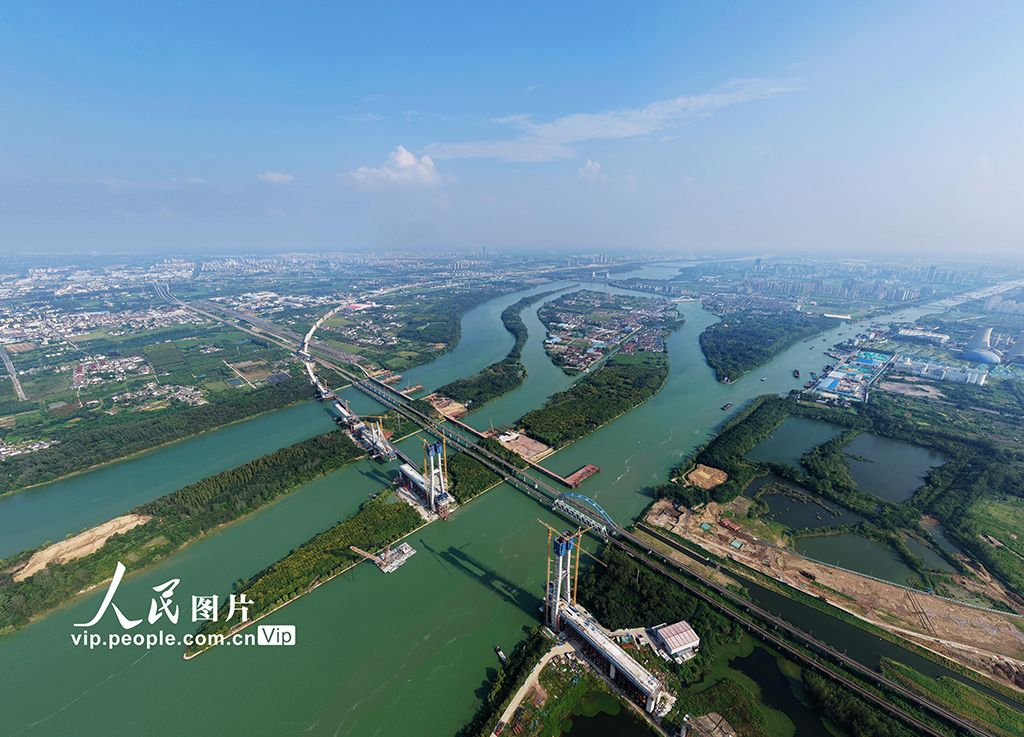
江苏扬州:沪渝蓉高铁跨京杭运河斜拉桥施工正酣
Ren Min Wang· 2025-09-05 02:09
Core Viewpoint - The construction of the Xuanhuan Bridge for the Shanghai-Chongqing-Chengdu High-Speed Railway over the Beijing-Hangzhou Grand Canal in Yangzhou, Jiangsu, is currently in full swing [1][2][3][4]. Group 1 - The Xuanhuan Bridge is a significant infrastructure project aimed at enhancing connectivity along the high-speed railway network [1][2]. - The construction progress is reported to be robust, indicating a strong commitment to completing the project on schedule [3][4].
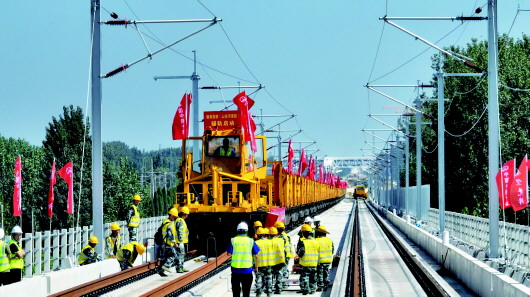
西延高铁全线接触网实现贯通
Zhong Guo Xin Wen Wang· 2025-09-05 00:41
Core Viewpoint - The completion of the contact network installation for the Xi'an to Yan'an high-speed railway marks a significant milestone, facilitating future power supply and testing for the entire line [1] Group 1: Project Overview - The Xi'an to Yan'an high-speed railway is the first high-speed rail in the revolutionary old area of northern Shaanxi and is a crucial part of the national high-speed railway network [1] - The railway, with a total length of 299.8 kilometers, is designed for a double-track high-speed railway with a maximum speed of 350 kilometers per hour [1] Group 2: Economic and Social Impact - Once operational, the travel time from Xi'an to Yan'an will be reduced from 2.5 hours to approximately 1 hour, enhancing the regional advantages of Shaanxi province and its position in the national railway network [1] - The project is significant for the revitalization of rural areas in revolutionary old regions and contributes to the optimization of the national high-speed railway layout [1]
雄商高铁全线开始铺轨
Qi Lu Wan Bao· 2025-09-04 16:06
Core Points - The Xiong'an to Shangqiu High-Speed Railway (referred to as Xiongshang High-Speed Railway) has officially entered the track-laying phase as of September 1 [2] - The total length of the main line is 552 kilometers, with a design speed of 350 kilometers per hour [2] - The railway consists of three segments: 258 kilometers in Hebei, 269 kilometers in Shandong, and 25 kilometers in Henan [2] - Track-laying operations have commenced simultaneously from the Hebei section's Hejian track-laying base and the Shandong section's Yuncheng track-laying base [2]
未来之城新画卷
Jing Ji Ri Bao· 2025-09-04 01:01
Core Insights - The news highlights the ongoing development and construction in Xiong'an New Area, showcasing its potential as a future city and a key driver for regional integration and high-quality development [1][3]. Group 1: Infrastructure Development - The Xiong'an Intercity Railway is a crucial part of the national "Eight Vertical and Eight Horizontal" railway network, aimed at enhancing transportation services and promoting the integration of the Beijing-Tianjin-Hebei region [1]. - The construction sites in Xiong'an are bustling with activity, featuring numerous cranes and workers, indicating significant progress in infrastructure development [1]. Group 2: Technological Integration - The "Xiong'an Impression" exhibition utilizes advanced digital technologies such as AR and 3D displays to create immersive experiences that showcase the area's past, present, and future [2]. - The Xiong'an New Area Zhongguancun Science Park is designed to alleviate non-capital functions from Beijing while fostering new productive forces, demonstrating a commitment to innovation and efficiency [2]. Group 3: Regional Collaboration - The collaboration among Beijing, Tianjin, and Hebei has evolved from basic infrastructure connectivity to deeper institutional innovation, indicating a shift towards more integrated industrial cooperation [3]. - Since its establishment, Xiong'an New Area has transformed from a blank slate to a developing hub, becoming a new engine for regional high-quality development [3].
我国西部,正在悄悄推进两个超级“国家工程”
Hu Xiu· 2025-09-03 13:10
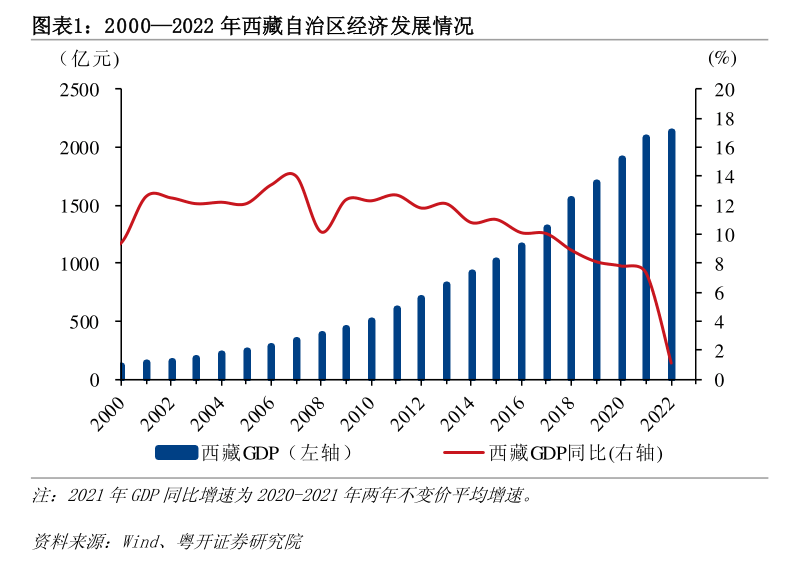
Group 1 - The article highlights the simultaneous launch of two major national projects in China's western region, indicating a strategic shift in development focus and geopolitical strategy [3][8][9] - The total investment for the two projects, the Yarlung Tsangpo River Hydropower Project and the Xinjiang-Tibet Railway, exceeds 1.6 trillion yuan, representing over 1% of China's GDP in 2024 [6][10] - The Yarlung Tsangpo River Hydropower Project is set to become the world's largest hydropower project, with an annual generation capacity of approximately 300 billion kilowatt-hours, equivalent to three Three Gorges dams [12][13][45] Group 2 - The Xinjiang-Tibet Railway, spanning about 2,000 kilometers, will connect Xinjiang and Tibet, traversing some of the highest mountain ranges in the world, making it the highest and most challenging railway to construct [14][15][20] - Both projects face significant challenges, including high altitude, complex geological conditions, and extreme weather, which complicate construction efforts [20][22][28][30] - The construction periods for both projects exceed 10 years, requiring continuous substantial funding, with the Xinjiang-Tibet Railway needing 30-40 billion yuan annually [35][36] Group 3 - The Yarlung Tsangpo River Hydropower Project addresses energy security concerns, as China is the world's largest energy consumer, heavily reliant on coal and oil imports [39][40][41] - The Xinjiang-Tibet Railway will enhance connectivity between two of China's largest provinces, facilitating trade and economic growth in the region [48][50] - The development of these projects is expected to transform the economic landscape of western China, enabling the region to develop its own industries and attract investment [62][86][89] Group 4 - The article discusses the geopolitical implications of these infrastructure projects, positioning China to establish a land-based transportation network that enhances its influence across Eurasia [68][78] - The Xinjiang-Tibet Railway will connect to key trade routes, including the China-Kyrgyzstan-Uzbekistan Railway, facilitating access to Central Asian resources [70][71] - The development of these projects is seen as a significant step in China's "Western Development 2.0" initiative, aiming to create sustainable economic growth in the western region [91][92]
中国,正在西部悄悄推进两个超级“国家工程”
3 6 Ke· 2025-09-03 10:00
Group 1 - The article highlights the significance of two major national projects in China's western region: the Yarlung Tsangpo River hydropower project and the Xinjiang-Tibet railway, with a total investment exceeding 1.6 trillion yuan, which is over 1% of China's GDP in 2024 [4][5][7] - The Yarlung Tsangpo River hydropower project will consist of five hydropower stations with a total installed capacity of 60-81 million kilowatts, generating approximately 300 billion kilowatt-hours annually, equivalent to three Three Gorges dams [5][7] - The Xinjiang-Tibet railway, spanning about 2,000 kilometers, will connect Xinjiang and Tibet, making it the highest and most challenging railway in the world, with an average elevation exceeding 4,500 meters [5][7] Group 2 - The construction of these projects is seen as a strategic move to reshape China's development focus and geopolitical strategy, indicating a shift towards the western region [4][25] - The Yarlung Tsangpo River project aims to enhance energy security, addressing China's reliance on imported oil and the need for cleaner energy sources [25][29] - The Xinjiang-Tibet railway will facilitate trade and economic growth in the western region, potentially transforming Tibet's economy and improving connectivity with the rest of China [32][36] Group 3 - The projects face significant challenges, including high altitude, complex geological conditions, and extreme weather, which complicate construction efforts [8][20][21] - The construction periods for both projects are extensive, with the Xinjiang-Tibet railway expected to take 12-15 years and the hydropower project 15-20 years, requiring continuous funding of 30-40 billion yuan annually for the railway [22][23] - The successful completion of these projects is anticipated to create numerous job opportunities and stimulate sustainable economic development in the western region [50]

广东首个时速350公里高铁“隔音隧道”完工
Zhong Guo Xin Wen Wang· 2025-09-03 01:03
Core Points - The completion of Guangdong's first 350 km/h high-speed rail "soundproof tunnel" marks a significant milestone in infrastructure development [1] - The Guangzhan high-speed rail project includes a total length of approximately 10.38 kilometers, featuring two major bridges [1] - The project aims to reduce noise pollution from high-speed trains, particularly in residential areas, by installing a 2.5 km circular sound barrier [1] - The high-speed rail is a crucial part of China's "eight vertical and eight horizontal" high-speed rail network, enhancing connectivity between the Guangdong-Hong Kong-Macao Greater Bay Area and other regions [1] - Once operational, the rail line will significantly shorten travel time, allowing for a 90-minute journey between Guangzhou and Zhanjiang [1]
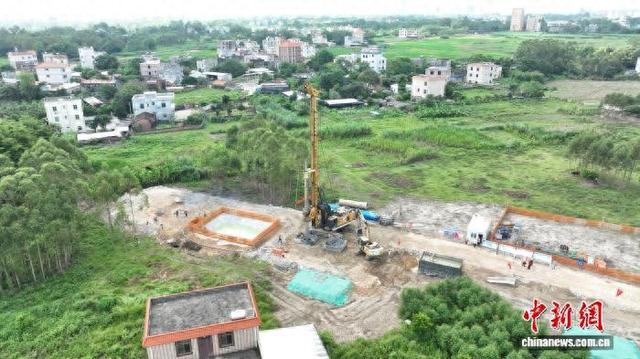
合湛高铁广西段建设提速 先开段工程实现全部开工
Zhong Guo Xin Wen Wang· 2025-09-02 15:11
Group 1 - The construction of the Niu Pi River Grand Bridge, a key component of the Huzhan High-Speed Railway in Guangxi, officially commenced, marking the full start of the preliminary construction phase of the railway project [1][3] - The preliminary construction phase includes critical engineering points to accelerate project progress, with eight bridges, including the Niu Pi River Grand Bridge, being part of this phase [3][4] - The Niu Pi River Grand Bridge spans 1,605.4 meters and is designed with 340 pile foundations and 48 piers, making it essential for connecting the Guangxi and Guangdong sections of the railway [3][4] Group 2 - Advanced detection technologies, such as seismic wave cross-hole CT detection, are being utilized to ensure the quality and safety of the bridge's pile foundation construction [4] - As of now, 1,135 pile foundations and 7 piers have been completed for the Guangxi section of the Huzhan High-Speed Railway, with plans to expedite land approval and other necessary processes [4] - The Huzhan High-Speed Railway, approximately 139 kilometers long with a design speed of 350 km/h, is a significant part of China's high-speed rail network, expected to be completed by the end of 2028, enhancing regional transportation and economic development [5]