
人工智能AI

Search documents
拓普集团(601689):业务拓展助力营收增长,智能制造铸就“科技拓普”
CMS· 2026-03-25 08:34
Investment Rating - The report maintains a "Strong Buy" investment rating for the company [2][6] Core Views - The company achieved a total revenue of 29.58 billion yuan in 2025, representing a year-on-year increase of 11.2%, although the growth rate has slowed compared to the previous year [5][6] - The net profit attributable to shareholders was 2.78 billion yuan, down 7.4% year-on-year, while the net profit excluding non-recurring items was 2.61 billion yuan, a decrease of 4.3% [5][6] - The fourth quarter of 2025 showed strong performance with total revenue of 8.65 billion yuan, up 19.4%, and a net profit of 810 million yuan, up 6.0% [5][6] - The company is focused on expanding its product offerings in the automotive parts sector, with significant revenue contributions from various segments, including a 52.1% increase in automotive electronics revenue [5][6] - The company is actively pursuing international expansion, with overseas revenue reaching 6.22 billion yuan, a slight increase of 0.11% year-on-year [5][6] Financial Performance Summary - The company reported a gross margin of 19.4% and a net margin of 9.4% for 2025, with the fourth quarter showing a gross margin of 20.0% [5][6] - Research and development expenses reached 1.5 billion yuan in 2025, reflecting the company's commitment to enhancing product competitiveness [5][6] - The company expects net profits to grow to 3.38 billion yuan, 4.07 billion yuan, and 4.78 billion yuan in 2026, 2027, and 2028, respectively [6]

快手正式入局处方药销售,闯入医药电商深水区,需做好内容流量与医药监管平衡
Sou Hu Cai Jing· 2026-03-18 20:36
Core Insights - Kuaishou has officially opened a channel for prescription drug sales, targeting specific categories and recruiting qualified pharmaceutical merchants, marking a significant expansion into the pharmaceutical sector after OTC drugs, medical devices, and health products [2] - The entry into prescription drugs is selective, focusing on chronic disease areas such as cardiovascular, respiratory, and digestive systems, which have stable online demand and high user engagement [2] - The timing aligns with the upcoming implementation of the revised Drug Administration Law in February 2026, which will regulate third-party platforms for drug transactions, establishing clear responsibilities for platform operators [3] Industry Context - The Chinese pharmaceutical e-commerce landscape is dominated by giants like Alibaba Health and JD Health in B2C, and Meituan and Ele.me in O2O instant retail, creating a competitive environment for new entrants like Kuaishou [3] - The consumption logic of pharmaceuticals contrasts with the impulse-driven model of interest-based e-commerce, posing challenges for Kuaishou in gaining traction in this market [3] Governance Challenges - Kuaishou faces ongoing governance issues within its pharmaceutical vertical, with concerns over gray market activities disguised as health education, leading to the sale of counterfeit products [4] - The platform is actively working to combat these issues, having reported significant efforts in 2024 to tackle black and gray market activities, including collaboration with law enforcement to address related crimes [4] Market Opportunities - The fastest-growing category within prescription drugs is chronic disease management, which aligns well with Kuaishou's strengths in short video and live streaming for patient education [4] - Pharmaceutical companies are considering establishing official flagship stores on Kuaishou, not just for sales but to enhance brand recognition and engage with targeted users through content [5] - Kuaishou's entry into prescription drugs may redefine the dynamics of user engagement, shifting from a traditional model of "goods finding people" to "people finding goods" as users may regularly purchase medications based on content engagement [5]



早盘直击|今日行情关注
申万宏源证券上海北京西路营业部· 2026-03-12 02:25
Market Overview - The global financial market is experiencing volatility due to conflicts in the Middle East, but the A-share market is passively affected and not experiencing intrinsic turmoil [1] - Compared to neighboring markets like Japan and South Korea, the A-share market has shown smaller declines, indicating strong resilience and self-repair capabilities [1] - Both the main board and the ChiNext index are near the upper boundary of their fluctuation range, reflecting a strong position and optimism among investors regarding future market developments [1] Trading Volume and Activity - The trading volume has consistently maintained around 2.5 trillion yuan, indicating relative market activity and an ideal price-volume relationship [1] Sector Performance - Active sectors include the downstream chemical industry, new energy, and energy storage, driven by news and related themes [1] - The International Energy Agency's plan to release a significant amount of oil reserves aims to stabilize crude oil prices, benefiting the downstream chemical industry by lowering upstream costs [1] - The demand for agricultural production materials such as pesticides, fertilizers, and agricultural films is expected to increase as the farming season begins, strengthening related sectors [1] - The demand for new energy and energy storage driven by artificial intelligence, large models, and computing power is also a fundamental logic for the strength of these sectors [1] Market Outlook - The market is expected to stabilize and improve, with the spring market trend continuing [1] - Attention should be paid to changes in international geopolitical dynamics and the ripple effects on the A-share market from global capital markets [1]

372亿南向资金创纪录净买入,抄底港股“跟不跟”?
第一财经· 2026-03-09 13:06
Core Viewpoint - The article discusses the recent fluctuations in the Hong Kong stock market, particularly in light of geopolitical tensions in the Middle East, and the implications for future market performance and investment strategies [3][4]. Market Performance - On March 9, the Hong Kong stock market opened lower but recovered, with southbound funds recording a net purchase of 37.213 billion HKD, setting a historical record, surpassing the previous high of 35.9 billion HKD on August 15, 2025 [3]. - The Hang Seng Index closed at 25,408.46 points, down 348.83 points or 1.35%, with a trading volume of 392.3 billion HKD, while the Hang Seng Tech Index closed at 4,941.73 points, down 0.12% [3]. Geopolitical Impact - The ongoing conflict involving Iran has significantly influenced market sentiment, with analysts divided on whether the Hong Kong market has reached a bottom [4][5]. - The rise in oil prices due to geopolitical tensions is expected to persist, with concerns over supply disruptions, particularly if the Strait of Hormuz remains closed [4][5]. Investment Sentiment - Analysts suggest that the recent net inflow of southbound funds indicates a potential market bottom, with current valuations of the Hong Kong market appearing reasonable after a prolonged adjustment period [5][6]. - The focus of investors is expected to shift towards annual and quarterly reports, with the upcoming earnings season being crucial for market recovery [6][8]. Future Outlook - The article highlights that despite current geopolitical uncertainties, the long-term outlook for non-U.S. assets remains positive, with expectations of a continued bull market [8]. - Companies with earnings that exceed expectations are likely to attract more investor interest, particularly in the context of the Hong Kong market's relative valuation advantages [8].

伊朗军舰,突遭袭击!至少80人死亡!股市暴跌,韩国:拟100万亿救市
券商中国· 2026-03-04 14:05
Group 1: Iran Situation - A US submarine reportedly attacked an Iranian warship in the Indian Ocean, resulting in at least 80 deaths [1][3] - Iran's senior assistant stated that the country has no intention of negotiating with the US and is prepared for prolonged conflict [5][6] - The Iranian military has claimed that US and Israeli military actions have resulted in 1,045 Iranian casualties [2] Group 2: Impact on South Korean Market - The South Korean stock market experienced a significant drop, with the KOSPI index falling by 12%, marking its largest single-day decline in history [2][7] - Major companies like Samsung Electronics and SK Hynix saw substantial declines in their stock prices, with Samsung dropping 11.74% [7][9] - The South Korean government is closely monitoring the market and is prepared to implement a 100 trillion won market stabilization plan if necessary [9] Group 3: Economic Implications - The ongoing conflict in the Middle East is causing concerns over oil prices and the potential disruption of shipping through the Strait of Hormuz, which could directly impact South Korea's economy [9][10] - Analysts suggest that the Bank of Korea may choose to stabilize the bond and foreign exchange markets rather than raise interest rates in response to rising oil prices and currency depreciation [10]

早盘直击|今日行情关注
申万宏源证券上海北京西路营业部· 2026-02-26 02:25
Core Viewpoint - The A-share market has shown a continuous upward trend after the Spring Festival holiday, indicating that the spring market is deepening. Positive expectations for the 2026 spring market are driving the market's strength, supported by favorable global capital market performance and changes in U.S. tariff policies [1] Market Trends - The market is expected to continue its strong upward trend, with a favorable investment calendar for the spring market. The overall market is anticipated to maintain a strong and stable performance [1] Investment Focus - Key sectors showing strong performance include small metals, precious metals, and energy metals, driven by the rapid development of artificial intelligence (AI) and geopolitical uncertainties. Investment direction will focus on corporate performance improvement and growth logic [1] Future Outlook - Despite market fluctuations, a bullish trend is evident with strong technical formations. The arrival of new capital post-holiday is expected to further support the upward movement of the market, leading to the continuation of the spring market [1]

马年投资锦囊|平安基金莫艽:深度研究丈量价值,以终局思维穿越周期
Sou Hu Cai Jing· 2026-02-25 10:31
Core Viewpoint - The interview with Mo Qiao, a fund manager at Ping An Fund, emphasizes the importance of deep research and a robust investment framework to navigate market noise and identify investment opportunities [3][4]. Group 1: Fund Performance - Mo Qiao's representative fund, Ping An Enjoy Flexible Allocation Mixed Fund, achieved a return of 21.18% in 2024, ranking in the top 5% among 425 funds, while the CSI 300 index rose by 14.5% and the equity mixed fund index by 3.5% during the same period [3]. - In 2025, during a challenging market for value-style products, the fund maintained a positive return of 24.57% [3]. - The maximum drawdowns for the fund were 15.8% in 2024 and 12.8% in 2025 [3]. Group 2: Investment Philosophy - Mo Qiao aims for an annualized return of 15% over the next decade, highlighting that few fund managers achieve this consistently [4]. - He identifies five core areas for investment: artificial intelligence, autonomous driving, robotics, commercial aerospace, and solid-state batteries [4]. - The investment strategy is described as "using DCF as the principle and four methods as the tools," focusing on deep research to define value ranges [4][5]. Group 3: Research Methodology - The DCF model's effectiveness relies on accurately predicting future growth variables, which necessitates extensive research to clarify a company's intrinsic value range [5]. - Mo Qiao emphasizes that intrinsic value is not a single point but a range, and deep research is essential to refine this understanding [5]. - He follows the Kelly Criterion for dynamic position adjustment based on stock prices relative to their intrinsic value range, advocating for a flexible approach to investment [5][6]. Group 4: Value Investment Strategy - Mo Qiao critiques the focus on low P/E and P/B ratios, warning that it can lead to "value traps," and asserts that price comparisons to intrinsic value are more critical [6]. - He insists on investing only in high-quality companies, as they have a higher probability of maintaining excellence compared to poor companies [6]. - The strategy includes a focus on "absolute left-side investment," prioritizing undervalued quality companies, especially in sectors with low economic sentiment [9]. Group 5: Research Impact - Mo Qiao's research approach is characterized by detailed documentation, producing extensive reports that cover all aspects of a company, from business models to competitive dynamics [7][8]. - This method allows for a deep understanding of various industries, even those previously unexamined, enabling quick adaptation to new market conditions [8]. - The investment style, combining deep research with flexible strategies, has garnered trust from both institutional and individual investors, creating a self-reinforcing cycle of research, cognition, and trust [9].

日经指数再创新高 受再通胀预期和科技股上涨提振
Xin Lang Cai Jing· 2026-02-25 07:18
Group 1 - The Nikkei index in Japan reached a new all-time high, closing up 2.2% at 58,583.12 points [1][2] - The rise in the Nikkei index was influenced by the government's nomination of two reflationists to the Bank of Japan's policy committee [1][2] - The overall market sentiment was boosted by a rebound in technology stocks as concerns over artificial intelligence eased [1][2] Group 2 - The Topix index increased by 0.7%, closing at 3,843.16 points [1][2] - Among the 1,662 constituent stocks of the Topix index, 917 stocks rose, 686 fell, and 59 remained unchanged [1][2] - The gains in the market were somewhat limited by a decline in bank stocks due to reduced expectations for recent interest rate hikes [1][2]
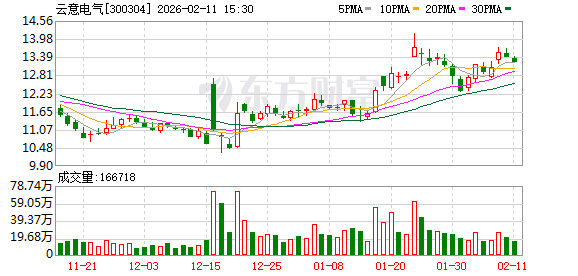
云意电气:目前业务暂不涉及人工智能AI相关产品
Mei Ri Jing Ji Xin Wen· 2026-02-11 07:32
Core Viewpoint - The company, Yunyi Electric (300304.SZ), currently does not have any products related to artificial intelligence (AI) as stated in a response to an investor inquiry on an interactive platform [1]. Group 1 - The company confirmed that its current business operations do not involve AI-related products [1].

大摩闭门会-市场巨震之后
2026-02-10 03:24
Summary of Conference Call Notes Company/Industry Involved - Focus on the Chinese economy, particularly fiscal and real estate policies, and their implications for various sectors including telecommunications, gaming, internet, and finance [1][2][3][4][5][6][7][8][9][10][11][12][13][14][15][16][17][18][19][20][21][22][23][24][25][26][27][28][29][30][31][32][33][34][35][36][37][38][39][40] Core Points and Arguments 1. **Contradictory Market Expectations**: There are conflicting expectations regarding China's fiscal and real estate policies, with concerns about potential tax increases versus hopes for significant real estate policy interventions [2][8][9][10][11][12][13][14][15][16][17][18][19][20][21][22][23][24][25][26][27][28][29][30][31][32][33][34][35][36][37][38][39][40] 2. **Fiscal Policy Outlook**: The fiscal policy for the year is expected to be moderate, with no significant tax increases anticipated for private enterprises, particularly in the gaming and internet sectors [3][4][5][6][7][8][9][10][11][12][13][14][15][16][17][18][19][20][21][22][23][24][25][26][27][28][29][30][31][32][33][34][35][36][37][38][39][40] 3. **Economic Growth and Deflation**: The current economic environment is characterized by weak domestic demand and deflationary pressures, which complicate fiscal policy decisions [5][6][7][8][9][10][11][12][13][14][15][16][17][18][19][20][21][22][23][24][25][26][27][28][29][30][31][32][33][34][35][36][37][38][39][40] 4. **Infrastructure Investment**: There is an expectation for increased infrastructure investment in the first half of the year, but overall fiscal stimulus may remain limited unless economic conditions worsen [5][6][7][8][9][10][11][12][13][14][15][16][17][18][19][20][21][22][23][24][25][26][27][28][29][30][31][32][33][34][35][36][37][38][39][40] 5. **Real Estate Policy**: Any potential real estate policy changes are likely to be marginal rather than aggressive, focusing on specific cities rather than broad measures [7][8][9][10][11][12][13][14][15][16][17][18][19][20][21][22][23][24][25][26][27][28][29][30][31][32][33][34][35][36][37][38][39][40] 6. **Global Economic Influences**: The recent appointment of Kevin Warsh to the Federal Reserve is expected to influence U.S. monetary policy, which may have implications for global liquidity and investment strategies [10][11][12][13][14][15][16][17][18][19][20][21][22][23][24][25][26][27][28][29][30][31][32][33][34][35][36][37][38][39][40] 7. **AI's Impact on Employment**: The rise of AI is anticipated to disrupt employment patterns, with varying effects across different sectors in the U.S. and China [11][12][13][14][15][16][17][18][19][20][21][22][23][24][25][26][27][28][29][30][31][32][33][34][35][36][37][38][39][40] 8. **Japan's Political Landscape**: The recent election results in Japan are expected to lead to more stable fiscal policies and increased government spending, particularly in defense and strategic industries [14][15][16][17][18][19][20][21][22][23][24][25][26][27][28][29][30][31][32][33][34][35][36][37][38][39][40] Other Important but Possibly Overlooked Content 1. **Market Sentiment**: Investor sentiment is currently cautious, reflecting concerns over fiscal tightening and potential tax increases, which could negatively impact private sector confidence [4][5][6][7][8][9][10][11][12][13][14][15][16][17][18][19][20][21][22][23][24][25][26][27][28][29][30][31][32][33][34][35][36][37][38][39][40] 2. **Long-term Investment Trends**: There is a growing trend of global investment funds reallocating towards Chinese assets, indicating a potential long-term positive outlook despite short-term volatility [17][18][19][20][21][22][23][24][25][26][27][28][29][30][31][32][33][34][35][36][37][38][39][40] 3. **Sector-Specific Adjustments**: Specific sectors such as telecommunications and renewable energy are experiencing tax adjustments that may not reflect broader fiscal policy trends [36][37][38][39][40]