
多式联运

Search documents
7月中国物流业景气指数为50.5% 大宗商品价格指数7月环比上涨0.5%
Ren Min Ri Bao· 2025-08-05 22:07
Group 1 - The China Logistics and Purchasing Federation reported that the logistics industry prosperity index for July is 50.5%, indicating continued expansion in logistics demand [1] - The business volume index is at 50.5%, remaining in the expansion range, with central and western regions exceeding the national level at 50.9% and 52.3% respectively, while the eastern region is at 50.3% [1] - The e-commerce express delivery sector shows a high business volume index of 69.3%, indicating strong growth [1] Group 2 - The new orders index for logistics companies has increased to 52.5%, reflecting a slight month-on-month rise of 0.1 percentage points [1] - The business activity expectation index remains above 55%, with high levels in the air transport, postal express, and multimodal transport sectors at 58.9%, 57.2%, and 52.3% respectively [1] - The China Logistics and Purchasing Federation also reported that the July bulk commodity price index is at 111.4 points, with a month-on-month increase of 0.5%, indicating a stable recovery in the bulk commodity market [2]
湖北:加快打造新时代多式联运“汉交所”
Zheng Quan Shi Bao Wang· 2025-08-02 05:05
Group 1 - The article highlights the strategic meeting chaired by Hubei's Vice Governor and Governor Li Dianxun, focusing on leveraging Hubei's transportation location, industrial foundation, and market space advantages [1] - The strategy aims to "reconstruct open channels and reshape the logistics system," emphasizing the positioning of "based in Hubei, relying on Wuhan, facing the central region, serving the nation, and linking overseas" [1] - The initiative includes the development of a new multi-modal transport hub, "Hanjiao," to optimize and efficiently allocate domestic and international logistics resources, thereby reducing logistics costs and improving efficiency [1] Group 2 - The plan aims to restore the historical significance of "goods arriving in Hankou" and accelerate the establishment of Hubei's new logistics network, referred to as "Jiuzhou Tong" [1] - The initiative is designed to better serve the national unified market and integrate into the global economic cycle [1]
中国多式联运行业动向观察及投资机遇研究报告2025-2031年
Sou Hu Cai Jing· 2025-07-28 15:16
Overview - The article discusses the significance and development of the multimodal transport industry, emphasizing its role in reducing costs and enhancing efficiency, as well as supporting national carbon neutrality and peak carbon goals [4][10]. Multimodal Transport Industry Definition and Importance - Multimodal transport is defined and categorized, highlighting its components and pricing mechanisms [3][4]. - The importance of multimodal transport is analyzed, focusing on cost reduction and efficiency improvement [4]. Global Multimodal Transport Industry Development - A review of the global multimodal transport industry's development history and current market size is provided, indicating a growing logistics market projected to reach several trillion dollars by 2025 [11]. - The regional distribution of the multimodal transport market is examined, with specific insights into the United States and Europe [4][11]. China's Multimodal Transport Industry - The development history of China's multimodal transport industry is outlined, along with existing challenges such as market environment optimization and technology standardization [5][10]. - The evaluation of multimodal transport demonstration projects in China is discussed, including the scale and criteria for these projects [5][10]. Infrastructure and Logistics Equipment - An analysis of China's infrastructure development in road, rail, and water transport is presented, detailing investment trends and construction progress [6][10]. - The demand for logistics equipment in multimodal transport is highlighted, with a focus on standardized transport units like containers and pallets [6][10]. Market Competition and Investment Strategies - The competitive landscape of China's multimodal transport industry is analyzed, including market concentration and key players [7][10]. - Investment strategies and financing conditions in the multimodal transport sector are reviewed, emphasizing the importance of funding sources and investment methods [7][10]. Future Outlook - The article forecasts the future of the multimodal transport industry in China, predicting an expansion in market demand and the evolution of development models [10]. - The impact of national policies and strategic goals on the multimodal transport industry is also discussed, particularly in relation to carbon neutrality initiatives [10].


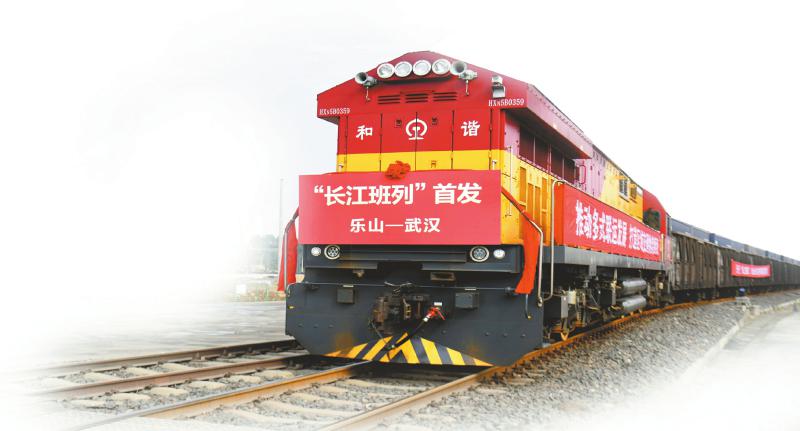
长江班列探索多式联运“一单制”——像“跟团旅行”一样 跟着行程单走
Si Chuan Ri Bao· 2025-07-15 00:20
Core Insights - The launch of the "Yangtze Class Train" has facilitated the transportation of over 200,000 tons of titanium concentrate to downstream manufacturers along the Yangtze Economic Belt [2][6] - The implementation of the "One Bill System" consolidates various transport modes into a single bill of lading, simplifying the logistics process for shippers [2][6] - The "One Box System" is being explored, which allows for transportation without opening or changing containers, aiming for efficiency [8] Policy Highlights - The Sichuan Provincial Government has issued a plan to reduce logistics costs, promoting the innovation of multimodal transport and encouraging companies to transition to multimodal operators [2][8] - The plan supports the establishment of public return box service points and the integration of port and railway resources to enhance operational efficiency [8][9] Operational Improvements - The transition from road-water transport to rail-water transport has significantly reduced the logistics cycle from an average of 22 days to 12 days, with costs decreasing by 10% to 20% [5][6] - The "One Bill System" has been shown to reduce costs by 20% to 30% and improve transport efficiency by over 30% compared to traditional methods [6][8] Future Developments - Sichuan aims to create more multimodal transport routes, leveraging the advantages of the Western Land-Sea New Corridor and the "Yangtze Class Train + Direct Sea" rail-water transport [9] - The focus is on addressing challenges in the "One Box System" to ensure full container returns, thereby minimizing additional costs [8]
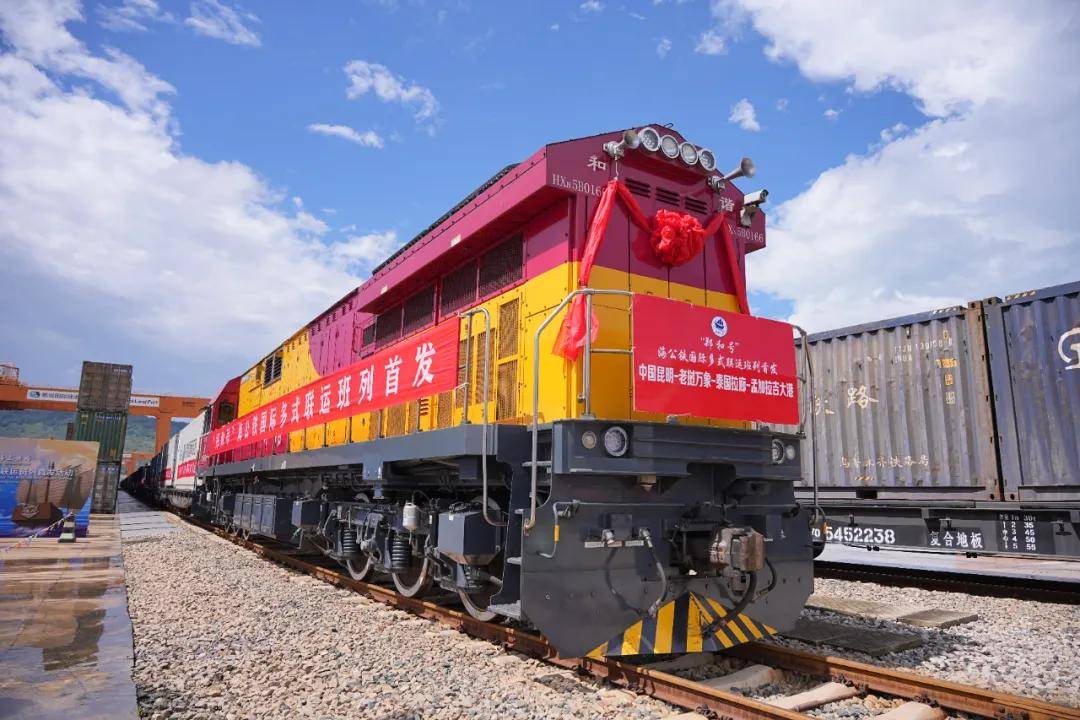
【扬帆新丝路,直通印度洋】“郑和号”海公铁国际多式联运班列首发活动在郑和故里晋宁顺利举行
Sou Hu Cai Jing· 2025-07-07 10:14
Core Viewpoint - The launch of the "Zheng He" international multimodal transport train marks a significant milestone in enhancing logistics efficiency and connectivity between China and Southeast Asia, facilitating the export of Yunnan's high-quality products to international markets [2][3]. Group 1: Launch Event - The "Zheng He" train was inaugurated on July 4, with the theme "Set Sail from Zheng He’s Hometown, Hoist the Sail on the Maritime Silk Road" at the Tengjun International Land Port in Kunming [1]. - The event was organized by various governmental bodies, including the Yunnan Provincial Department of Transportation and the Kunming Municipal Government, highlighting the collaborative effort in promoting logistics [1]. Group 2: Logistics and Transportation - The "Zheng He" train carries Yunnan specialty products such as vegetables, fertilizers, and feed, traveling from Kunming to Vientiane, Laos, and then to Laem Chabang Port in Thailand, ultimately reaching Chittagong, Bangladesh, in approximately 18 days [2]. - This new route significantly reduces travel time by over 17 days compared to traditional routes, enhancing logistics efficiency by approximately 50% [2]. Group 3: Innovations in Multimodal Transport - The launch of the "Zheng He" train introduces several innovations in the international multimodal transport sector, including the first-time use of sea containers on the China-Laos railway, implementing a comprehensive logistics solution with "one box to the end" and "one ticket to the destination" [3]. - The new rail-road-sea multimodal transport route from Yunnan to the Indian Ocean provides a valuable model for international logistics channels in South and Southeast Asia [3]. Group 4: Broader Context and Significance - The event is part of the 20th anniversary of the "China Maritime Day" activities in the Pearl River region, which also included forums and cultural exchanges, emphasizing the development of the shipping industry [6]. - The "Zheng He" train embodies the spirit of exploration and innovation, contributing to the high-quality development of international logistics cooperation under the Belt and Road Initiative [6].
基础设施连线成网 物流通道高效畅达
Liao Ning Ri Bao· 2025-07-03 01:21
Core Viewpoint - The transportation industry in Liaoning Province has received national recognition for its high-quality development, particularly in the implementation of a multi-modal transport system that enhances logistics efficiency and reduces costs [1][2]. Group 1: Multi-Modal Transport System Development - Liaoning Province has established a multi-modal transport system characterized by smooth facility connections, advanced equipment, efficient services, and comprehensive standards, contributing to the optimization of transportation structure and logistics cost reduction in Northeast China [1][2]. - The province has focused on five key areas: building comprehensive multi-modal transport corridors, enhancing equipment levels, innovating transport mechanisms, strengthening core competitiveness, and promoting bilateral openness to address infrastructure shortcomings and improve service integration [2][3]. Group 2: Infrastructure and Connectivity Enhancements - The construction of a "channel + hub + network" logistics system has been prioritized, resulting in improved connectivity and efficiency across various transport modes, including the completion of significant highways and the opening of over 200 container shipping routes [3][4]. - Liaoning has expanded its domestic and international air cargo routes to 433, significantly enhancing airport connectivity and logistics capabilities [3]. Group 3: Quality Development and Regional Collaboration - The province has created a high-quality development pilot program, leading to the establishment of various transport modes such as sea-rail intermodal transport and the China-Europe freight train, achieving a record high of 183.2 million standard containers in sea-rail intermodal transport by the end of 2024, marking a 15.1% increase year-on-year [4]. - Collaborative efforts with neighboring provinces have focused on building a resilient and efficient grain logistics corridor, achieving an average annual transfer of over 70 million tons of grain while maintaining low loss rates in railway and port operations [4].
河南开通第三条铁海直运线路 郑州至连云港货物“装上班列即出海”
He Nan Ri Bao· 2025-06-03 23:02
Core Insights - The launch of a new rail-sea direct transport route from Zhengzhou to Lianyungang port enhances the connectivity between the inland port and coastal exit points, marking the third such route from Zhengzhou [1] - This new logistics option, developed through collaboration between Central China Land-Sea International Multimodal Transport Zhengzhou Co., Ltd. and Lianyungang Port Group, aims to provide foreign trade enterprises with a stable, green, and efficient logistics solution [1] - The rail-sea direct transport model allows for automated customs clearance and seamless transitions, significantly improving logistics efficiency compared to traditional methods [1][2] Logistics Efficiency - The rail-sea direct transport model reduces costs by approximately 25% compared to the "road transport + sea transport" method [1] - It also shortens transportation time by 1 to 2 days compared to traditional rail-sea transport methods [1] - Since its implementation in April 2024, the model has facilitated the shipment of 36 batches of goods weighing over 1,150 tons to various countries, including Italy, Greece, and Thailand [1] Innovation in Open Mechanisms - The new model represents not only an optimization of logistics channels but also an innovation in open mechanisms, allowing Zhengzhou railway port to function with port capabilities [2] - The process involves a single declaration and release, enabling goods to be shipped directly upon loading onto the train [2]

郑州首票“中吉乌”铁公联运货物发车
He Nan Ri Bao· 2025-05-14 23:22
Core Points - The successful launch of the "China-Kyrgyzstan-Uzbekistan" rail-road intermodal transport route enhances the international logistics network of the China-Europe Railway Express (Zhengzhou) [1][2] - The new intermodal transport model combines the advantages of rail transport for long distances and large volumes with the flexibility of road transport, reducing logistics costs by approximately 30% compared to traditional road transport [1][2] - The logistics network in Henan province has expanded significantly, with 25 overseas direct stations and 8 entry-exit ports, covering over 40 countries and 140 cities, with more than 8,000 partners [1] - As of now, the total number of China-Europe Railway Express trains operated by the province has reached 15,700, placing it among the top in the country, with a year-on-year increase of 54% in the first four months of this year [1] Industry Insights - The opening of the new route strengthens the logistics network for the southbound corridor from Zhengzhou to Central Asia, creating a composite transportation method across the Eurasian continent [2] - The establishment of a "single order, single container" intermodal transport system by the Zhengzhou Port Group effectively reduces overall logistics costs and enhances economic efficiency, supporting Henan's role as a hub in domestic and international circulation [2]
罗多式联运发展挑战与机遇并存
Shang Wu Bu Wang Zhan· 2025-05-10 16:48
Core Insights - The Romanian Competition Council released a report analyzing the current state and challenges of multimodal transport in Romania, highlighting that only 27 out of 58 existing multimodal terminals are operational and only 2.3% of companies utilize multimodal transport [1] Group 1: Current State of Multimodal Transport - Romania has 58 multimodal terminals, with only 27 operational and a mere 2.3% of enterprises adopting multimodal transport methods [1] - The transportation structure shows that road transport accounts for 84.1%, rail transport for 11.1%, and multimodal transport for only 3.1%, while air transport remains minimal due to inadequate infrastructure and high costs [1] - In 2023, the total cargo volume for multimodal transport reached 2.5 million tons, with rail transport contributing 43.63% (1.1 million tons) and combined rail-road-sea transport accounting for 38.57% (approximately 1 million tons) [1] Group 2: Challenges and Recommendations - The main bottlenecks for multimodal transport development in Romania include insufficient infrastructure, lack of modern multimodal terminals, deficiencies in the logistics chain, high transfer costs, low transport efficiency, and decreased navigability of the Danube River [1] - Policy recommendations include expanding the electrification of the railway network, enhancing terminal handling capacity, optimizing railway network layout, modernizing the Constanța port, and upgrading the national freight company CFR Marfă's existing terminals [2] - The report emphasizes the need for systematic investment and strategic adjustments to leverage Romania's geographical advantages, aiming for multimodal transport to become a new pillar of the national economy [2]
粤港澳大湾区首条中欧班列电商快线开通
Nan Fang Ri Bao Wang Luo Ban· 2025-04-28 08:02
Group 1 - The launch of the China-Europe Railway Express (Shenzhen) Europe E-commerce Express Line enhances trade connections between the Guangdong-Hong Kong-Macao Greater Bay Area and European countries, providing new momentum for commerce [1] - The express line operates on a fixed schedule, ensuring strong stability, high safety, and large transport capacity, with plans for 1-2 trains per week to normalize operations [1] - Compared to traditional shipping methods, the China-Europe Railway Express offers higher efficiency and lower costs, catering to the needs of cross-border e-commerce with small batch sizes and strong timeliness [1] Group 2 - Shenzhen Customs has implemented a dedicated team to facilitate rapid customs clearance for the express line, ensuring efficient handling of customs procedures through a 24/7 appointment service [2] - Future efforts will focus on optimizing customs supervision processes and enhancing clearance efficiency to support the high-quality development of cross-border e-commerce [2]