智能可穿戴设备

Search documents
万元手表卖不动,Swatch甩锅给中国
36氪· 2025-07-23 13:15
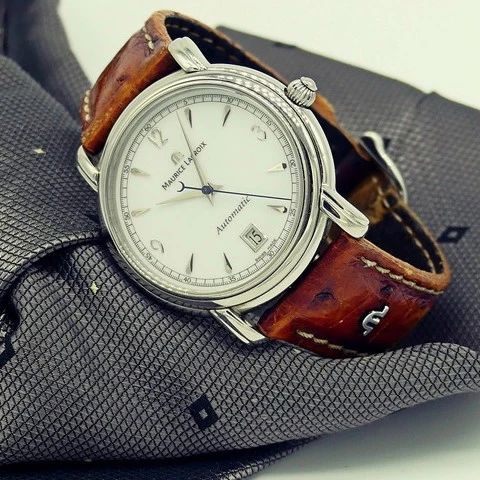
Core Viewpoint - The luxury watch market, particularly brands like Swatch, is experiencing significant challenges due to changing consumer preferences in China, shifting from status symbols to value investments [4][14][16]. Financial Performance - Swatch reported a sales revenue of 3.06 billion CHF in the first half of 2025, a decline of 11.2% compared to the previous year [4][5]. - Operating profit fell from 204 million CHF to 68 million CHF, with an operating margin of 2.2%, down from 5.9% [4][5]. - Net profit plummeted 88% to 17 million CHF, with a net margin of 0.6%, compared to 4.3% in the previous year [4][5]. Market Dynamics - The decline in sales is primarily attributed to the Chinese market, which saw a 30% drop in sales in 2024, despite accounting for 27% of total sales [6][8]. - The overall Swiss watch export value decreased by 0.1% in the first half of the year, with Asia experiencing a notable decline of 7.2%, largely driven by drops in mainland China and Hong Kong [8][9]. Consumer Behavior Shift - Chinese consumers are increasingly prioritizing value over status, leading to a decline in demand for luxury watches [14][16]. - The high-end watch market is facing pressure as the perception of luxury watches as "mobile assets" diminishes, with a focus shifting towards personal experience and emotional connection [16] . Competitive Landscape - The rise of smartwatches poses a significant threat to traditional watch brands like Swatch, with global shipments of wearable devices increasing by 10.5% in the first quarter of 2025 [19][20]. - Major players in the smartwatch market, such as Huawei and Xiaomi, are gaining market share, further challenging traditional luxury watch brands [21]. Strategic Responses - Swatch is attempting to leverage its luxury brand associations through collaborations with high-end brands like Omega and Blancpain to attract younger consumers [22]. - The company is also exploring technological enhancements, including AI-driven personalized watch designs, to remain competitive in the evolving market [22].

月内涨幅近400%,华米科技(NYSE:ZEPP)开启新一轮价值重估
Ge Long Hui· 2025-07-21 08:40
Core Viewpoint - The article highlights the significant turnaround of Huami Technology, transitioning from dependency on Xiaomi to establishing its own brand Amazfit, leading to renewed market interest and projected revenue growth of 30% year-on-year in Q2 2025 after three years of stagnation [1][2]. Group 1: Company Transformation - Huami Technology's journey began in 2014 as a partner in Xiaomi's ecosystem, achieving rapid growth through the Xiaomi Mi Band, but faced challenges due to over-reliance on Xiaomi, with revenue from Xiaomi products exceeding 70% for years [3]. - The company initiated a strategic shift towards developing its own brand, Amazfit, starting in 2015, which now accounts for 100% of its revenue as of Q1 2025, although the absolute revenue from this brand initially struggled to fill the gap left by the exit from Xiaomi [3][4]. Group 2: Product Strategy - Huami has adopted a multi-tiered product strategy, creating a clear product pyramid that includes a "light smart" series under 1000 CNY for the mass market, a "sports series" priced between 1000-2000 CNY for serious athletes, and a premium outdoor product line above 2000 CNY [4]. - This strategy has led to an increase in gross margin from 12.34% in 2015 to 38.46% in 2024, indicating improved profitability as the company scales [4]. Group 3: Market Positioning - Huami differentiates itself in the wearable market by focusing on "professionalism" and "full-scene adaptability," offering advanced health monitoring and dynamic tracking for various sports, which positions its products as essential tools rather than mere gadgets [5][6]. - The company has built a strong technical foundation over the past decade, leveraging vast user data for algorithm development and investing in proprietary chip technology to enhance device functionality [6]. Group 4: Competitive Landscape - Huami's flagship product, the T-Rex3, offers competitive features at a significantly lower price point compared to Garmin's Fenix 8, showcasing Huami's ability to deliver high-quality products at accessible prices [7]. - The company has established a global marketing strategy utilizing social media platforms to enhance brand visibility and credibility, including partnerships with professional athletes [6][8]. Group 5: Industry Outlook - The wearable device market is positioned as a critical component of the broader health ecosystem, facilitating proactive health management and connecting various stakeholders in the healthcare industry [12]. - Despite the potential for growth, the capital market has yet to fully recognize the transformative changes within Huami, as evidenced by its current market valuation of approximately 1.9 billion USD, significantly lower than competitors like Garmin [14][15][17].


趋势研判!2025年中国智能手环行业产业链、相关政策、出货量、重点企业及发展趋势分析:市场稳步扩长,技术突破与市场需求共振推动行业爆发[图]
Chan Ye Xin Xi Wang· 2025-07-08 01:55
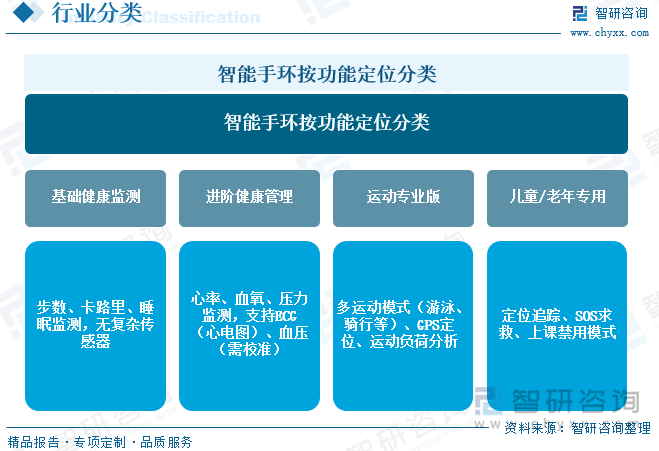
Core Viewpoint - The smart wristband industry is experiencing rapid growth driven by increasing health management awareness among consumers and technological advancements, with a shift from basic activity tracking to comprehensive health management platforms expected in the future [1][4][20]. Group 1: Industry Definition and Classification - Smart wristbands are wearable smart devices that integrate traditional hardware technology, new human-computer interaction technology, cloud application services, and big data [2][4]. - Wearable devices can be categorized into ear-worn devices, smartwatches, and wristbands, allowing users to track exercise, sleep, and dietary data in real-time [2]. Group 2: Current Development Status - The smart wristband market is expanding steadily, with global shipments expected to reach 37.29 million units in 2024, and approximately 17.99 million units in China [4]. - Projections for 2025 indicate global shipments could reach 42.8 million units, with China's shipments expected to be around 21.8 million units [4]. Group 3: Industry Chain - The upstream of the smart wristband industry includes hardware suppliers (chips, sensors, displays, batteries) and software/cloud service providers [6]. - The midstream involves the manufacturing of smart wristbands, while the downstream applications include health management, fitness, lifestyle assistance, and entertainment [6]. Group 4: Development Environment and Policies - National policies are increasingly supportive of the smart wristband industry, with initiatives like the "14th Five-Year Digital Health Plan" incorporating smart wristbands into family doctor service equipment lists [8][9]. - Upcoming regulations, such as the EU's MDR rules in 2024, are expected to raise industry entry barriers, prompting technological upgrades among companies [8]. Group 5: Competitive Landscape - The smart wristband market in China is highly concentrated, with Xiaomi and Huawei accounting for 85% of the market share [10]. - Other notable brands include Honor, Keep, Dido, and Leshi Medical, which are also significant players in the market [10]. Group 6: Key Companies - Xiaomi is recognized for its competitive pricing and innovative technology, making it a popular choice among consumers [11]. - Huawei maintains a leading position through continuous technological innovation and a diverse product lineup [16]. - Leshi Medical focuses on providing integrated solutions for chronic disease management and has established partnerships with various health industry clients [13][14]. Group 7: Future Trends - The smart wristband industry is expected to evolve from basic activity tracking to becoming AI health assistants, enhancing user experience and engagement [20]. - Companies are likely to leverage supply chain advantages to increase market share in regions like Southeast Asia and Latin America [20].


MetaRay-Ban/RokidGlasses/小米AI眼镜价格锚点在哪里?
Huajin Securities· 2025-06-29 13:48
Investment Rating - The report maintains a "Market Perform" rating for the consumer electronics industry [3]. Core Insights - The demand for smart wearable devices is increasing, driven by the rise of generative AI models, which is pushing AI audio glasses into a broader market. In the short term, smart interactive glasses are expected to replace headphone functions, leveraging glasses as a medium to enhance user experience and selling points [5][9]. - The report highlights the price positioning of various smart glasses, including Meta Ray-Ban, Rokid Glasses, and Xiaomi AI glasses, emphasizing their unique features and competitive pricing strategies [9][30]. Summary by Sections 1. Price Anchors for Smart Glasses - Meta Ray-Ban offers a base price of $230 for the New Wayfarer, with an additional $69 for features like headphones, camera, and AI capabilities, totaling $299 for the Meta Ray-Ban model [9]. - Rokid Glasses utilize a single-color waveguide imaging technology and are designed in collaboration with BOLON, featuring a compact design and advanced specifications [15][17]. - Xiaomi AI glasses differentiate themselves with electrochromic lenses, supporting rapid switching between transparent and sunglass modes, and are positioned as a "portable AI entry" [30][32]. 2. Market Review - The electronic industry saw a weekly increase of 4.61%, with the computer sector leading at 7.70% growth, while the oil and petrochemical sector experienced the largest decline at 2.07% [41][42]. 3. Industry High-Frequency Data Tracking - Monitor panel prices have stabilized, with no significant changes expected in mainstream specifications for June [53][54]. - The report indicates a potential decline in TV panel prices due to cooling demand, with expectations of price adjustments across various sizes [56].
“百镜大战”正燃 上下游携手共建产业生态
Zheng Quan Ri Bao Wang· 2025-06-26 14:06
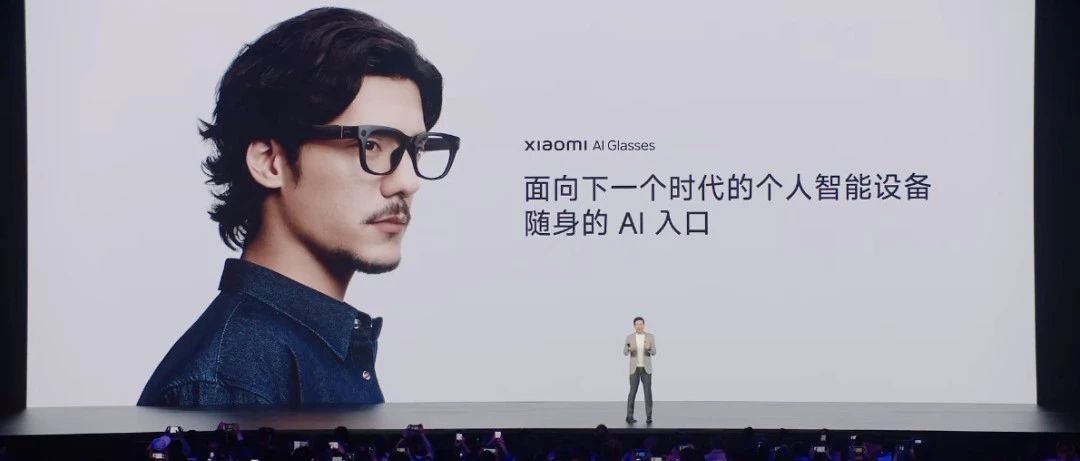
Core Insights - The AI glasses industry is experiencing rapid growth, with major tech companies and startups entering the market, leading to a competitive landscape referred to as the "Hundred Glasses War" [1][3] - Key trends in the AI glasses sector include accelerated product iteration, deeper technology integration, and market segmentation [1] - The introduction of innovative features in AI glasses, such as payment capabilities and immersive photography, is driving consumer interest and adoption [2][5] Industry Trends - The AI glasses market is at an explosive growth phase, characterized by the emergence of new products and functionalities, supported by advancements in AI models, optical displays, and storage technologies [1][4] - Companies are leveraging their existing supply chain advantages and brand influence to enter the AI glasses market, with mobile phone manufacturers being particularly well-positioned due to high supply chain overlap [2][3] Product Innovations - Xiaomi's AI glasses, weighing only 40g, serve as a personal AI interface, enabling features like video recording, live streaming, and payment processing through voice commands [1][2] - Rokid's AI glasses have gained attention for their payment functionality, allowing users to complete transactions without needing to interact with their smartphones [2] Collaborative Ecosystem - The development of AI glasses is supported by collaboration across various sectors of the supply chain, including AI model technology, storage solutions, and optical display innovations [3][4] - Companies like YunTianLiFei and Sanan Optoelectronics are actively working on integrating AI technologies with wearable devices, enhancing the functionality and market appeal of AI glasses [4][5] Market Potential - The AI glasses market is expected to expand rapidly, with potential applications in photography, voice interaction, real-time translation, and health monitoring, driven by ongoing exploration and innovation from upstream and downstream companies [5]
1999元起!雷军正式发布小米AI眼镜
新华网财经· 2025-06-26 13:34
Core Viewpoint - The release of Xiaomi's AI glasses marks a significant milestone in the maturity of the AI glasses industry, prompting increased interest and investment from various companies in the sector [1][9]. Industry Developments - Investors are increasingly focused on the AI glasses supply chain, with many companies revealing their involvement and technological advancements in this emerging field [2]. - Xiaomi's AI glasses are priced at 1999 yuan, showcasing a high cost-performance ratio, supported by deep collaboration across the chip, optics, and acoustics supply chains [4]. - Several companies in the "Mi Chain" ecosystem are actively collaborating with Xiaomi, providing components and software development for the AI glasses [6]. Company Progress - Baiwei Storage anticipates revenue of approximately 106 million yuan from AI glasses in 2024, with a projected growth of over 500% year-on-year in 2025 [7]. - GoerTek has a broad business layout in hardware development for smart glasses, indicating a strong competitive advantage in the market [7]. - Hengxuan Technology reported a significant increase in net profit, driven by the growth in the smart wearable market, with a 590.22% year-on-year increase in Q1 2025 [7]. Strategic Investments - Riju Optoelectronics plans to invest approximately 822 million yuan in a project to enhance its production capacity for functional films, which are essential for wearable applications [9]. - Luxshare Precision is expanding its business in the Android ecosystem, emphasizing the importance of smart glasses in its consumer electronics product line [11]. - Various companies, including DiAo Micro and Longqi Technology, are developing new products and expanding their offerings in the AI glasses market, with optimistic growth forecasts [11][12]. Product Launches - Thunderobot Technology launched AI smart glasses in March, integrating features like music playback, photography, and AI translation, aiming to enhance user experience through a comprehensive product ecosystem [13].
【中国青年报】我国科研人员在智能可穿戴设备研究领域获新进展
Zhong Guo Qing Nian Bao· 2025-06-06 01:09
Core Insights - Recent advancements in flexible thermoelectric devices based on silver selenide by Chinese researchers enhance energy supply for smart wearable electronics, indicating significant potential for large-scale applications [1][2] Group 1: Research Achievements - The research team from the Chinese Academy of Sciences developed high-performance flexible composite thermoelectric film materials using a chemical solution method combined with techniques like filtration and rapid hot pressing [2] - A novel three-dimensional flexible power generation device was created, consisting of 100 pairs of thermoelectric legs, utilizing a dome-shaped silicone structure to improve temperature difference and thermoelectric leg density [2] Group 2: Industry Implications - Traditional chemical batteries require regular replacement and maintenance, limiting the scalability of smart wearable devices; thermoelectric technology offers a safer and more environmentally friendly alternative by directly converting heat into electricity [1] - The successful application of thermoelectric conversion technology in flexible power generation devices can drive electronic devices such as watches and temperature and humidity sensors using the temperature difference between the environment and the human body [2]
数字产业新动能持续积聚,中国企业“走出去”步伐加快
Huan Qiu Wang· 2025-05-17 00:46
Group 1 - The core objective of the "Digital China Construction 2025 Action Plan" is to ensure that by the end of 2025, the added value of the core digital economy industries accounts for over 10% of GDP, and computing power exceeds 300 EFLOPS [1] - In 2024, the digital industry is projected to achieve a business revenue of 35 trillion yuan, representing a year-on-year growth of 5.5%, and a total profit of 2.7 trillion yuan, with a year-on-year increase of 3.5% [1] - In the first quarter of this year, the digital industry realized a business revenue of 8.5 trillion yuan, marking a year-on-year growth of 9.4%, with a growth rate increase of 4.4 percentage points compared to the same period last year [1] Group 2 - Analysts believe that the new momentum and advantages of the digital industry will continue to accumulate, contributing to stable economic growth and the cultivation of new productive forces across various sectors [1] - The digital economy is increasingly becoming a leading and supporting strategic industry for economic and social development, characterized by data-driven, innovation-led, open collaboration, and ecological development [1] - The development model of digital industry clusters is evolving, integrating new elements such as data, networks, and platforms, while upgrading towards digitalization, platformization, and ecological development [1] Group 3 - There is a growing collaboration between China and ASEAN in the AI sector, establishing a new model of "Chinese technology + ASEAN scenarios," which provides a solid foundation for the digital industry layout in ASEAN [2] - The investment and financing enthusiasm in emerging fields such as artificial intelligence and humanoid robots remains high, continuously injecting vitality into industrial development [5] - Digital enterprises are accelerating their internationalization, enhancing the global competitiveness of consumer electronics and actively exploring overseas markets [5]
Apple Watch,卖不动了
36氪· 2025-05-13 09:35
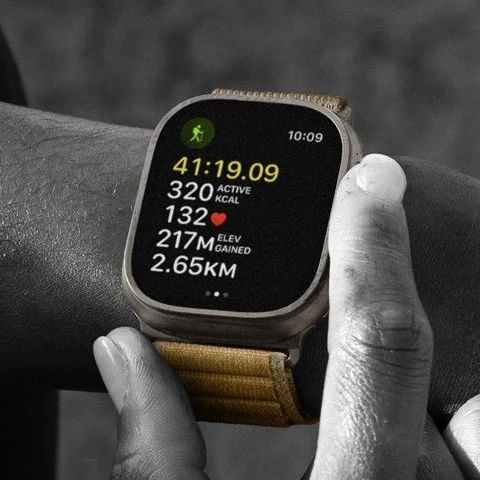
Core Viewpoint - Apple Watch has experienced a decline in global shipments for two consecutive years, with a 19% drop in 2024 and a 10% drop in 2023, indicating a significant downturn in its market performance [3][5]. Group 1: Shipment Performance - According to CounterPoint's report, Apple Watch's global shipment volume has decreased for five consecutive quarters, with notable declines in all major markets except India [5]. - The report highlights that the decline in shipments is not limited to a single region, as even in the U.S., Apple Watch sales have been disappointing [5]. Group 2: Reasons for Decline - The stagnation in sensor technology development is identified as a fundamental reason for the decline in Apple Watch's attractiveness, as the industry has not seen significant advancements in new health monitoring features [10][14]. - Apple's product strategy has been criticized for focusing on minor updates and cosmetic changes rather than substantial improvements, leading to a lack of compelling reasons for consumers to upgrade [10][12]. Group 3: Competitive Landscape - The rise of domestic high-end smartwatch brands has intensified competition, as these brands have improved their hardware and design, challenging Apple Watch's market position [16][19]. - Domestic brands like Huawei and OPPO have developed advanced health monitoring systems and software algorithms that allow them to offer features that Apple Watch has not yet implemented, further eroding Apple's market share [20][22]. Group 4: Future of Wearable Devices - The increasing importance of wearable devices in the AI era is noted, as they serve as natural entry points for AI interaction due to their proximity to users and ability to collect rich contextual data [25]. - The future role of smartwatches is expected to evolve, potentially becoming containers for AI, allowing seamless interaction across various devices, which may prompt Apple to respond to the competitive pressure from domestic brands [26][28].

只有小米还在保持增长,智能手环已然近黄昏
Sou Hu Cai Jing· 2025-04-14 01:06
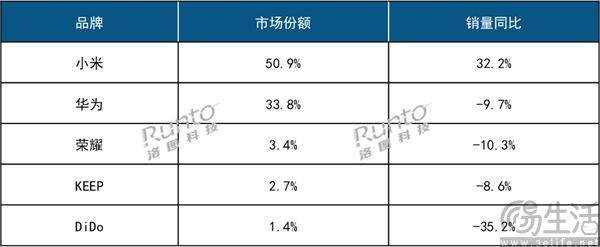
Core Insights - The smart wristband market in China is experiencing a decline, with only Xiaomi showing growth among the top five brands, while Huawei and Honor have seen significant sales drops of 9.7% and 10.3% respectively [1][2] - The overall market dynamics indicate a shift towards smartwatches, as consumer preferences evolve towards more complex health monitoring features [5][7] Market Performance - Xiaomi holds a market share of 50.9% with a year-on-year sales increase of 32.2%, while Huawei and Honor have market shares of 33.8% and 3.4% respectively, both experiencing declines [2] - Other brands like KEEP and DiDo also faced declines in sales, with DiDo seeing a drastic drop of 35.2% [2] Historical Context - The initial success of smart wristbands was driven by their affordability and functionality, allowing consumers to track fitness and receive notifications at a low price point [4] - The market peaked in Q3 2020 but has since been overtaken by smartwatches, which offer more advanced features [5] Product Limitations - Smart wristbands are limited in their sensor capabilities compared to smartwatches, which can include advanced health monitoring features [7] - The influx of low-cost white-label products has led to a price drop in the wristband market, complicating the competitive landscape for established brands [7][10] Competitive Landscape - The emergence of "light smartwatches," which offer more features than wristbands but at a lower price than full smartwatches, poses a significant threat to the wristband market [10][12] - These light smartwatches provide better aesthetics, longer battery life, and more functionalities, making them more appealing to consumers [12] Future Outlook - Despite the decline in the domestic market, there is potential for smart wristbands in international markets, particularly in regions like Africa, Southeast Asia, and Latin America, where demand for affordable wearable technology remains strong [14]