核能发电

Search documents
重大项目曝光,特朗普发声
Zheng Quan Shi Bao· 2025-10-28 22:41
Group 1 - Japan has unveiled a potential project list for a $550 billion investment mechanism in the U.S., with participating companies including SoftBank, Westinghouse Electric, GE Vernova, and Hitachi, covering sectors such as energy, artificial intelligence, and critical minerals [1][3] - The project list includes 21 projects with a total investment scale exceeding $400 billion, with energy projects dominating the list, including Westinghouse's AP1000 nuclear reactor and small modular reactor projects, each estimated at nearly $100 billion [3][4] - SoftBank is interested in a $25 billion large-scale power infrastructure development project, while other companies like Carrier and Panasonic are also involved in energy-related initiatives [3][4] Group 2 - The investment plan aims to enhance economic and security interests between the U.S. and Japan, focusing on sectors such as semiconductors, pharmaceuticals, metals, critical minerals, shipbuilding, energy, artificial intelligence, and quantum computing [4] - Japan's automotive manufacturers have reported a decline in sales in the U.S. market, with a 22.7% drop in automotive exports contributing to a 10.2% decrease in total exports to the U.S. in the first half of the fiscal year [5] - The U.S. has reduced tariffs on Japanese automobiles from 27.5% to 15% as part of a trade agreement, which is a core component of the investment plan [4]



美股牛市迎来超级催化剂! 日本赴美5500亿美元投资蓝图出炉 覆盖核能、AI与半导体等领域
Zhi Tong Cai Jing· 2025-10-28 10:06
Core Viewpoint - Japan has announced a significant investment plan of up to $550 billion in the U.S., covering various sectors including nuclear energy, AI, and semiconductors, which is expected to act as a major catalyst for the ongoing bull market in U.S. stocks [1][3]. Investment Overview - The investment plan includes potential projects from major Japanese companies such as SoftBank, Westinghouse, and Toshiba, with individual project investments ranging from $350 million to $100 billion [1][4]. - Energy-related projects, particularly in nuclear energy, are highlighted, with Westinghouse's AP1000 and small modular reactors (SMR) projects each valued at up to $100 billion [3][4]. Economic Implications - The investment is anticipated to boost U.S. economic growth and national security by focusing on sectors like semiconductors, pharmaceuticals, metals, critical minerals, shipbuilding, energy, AI, and quantum computing [3][5]. - The influx of Japanese investment is expected to enhance U.S. manufacturing capacity and employment, particularly in the semiconductor and AI infrastructure sectors [5]. Regulatory Framework - An investment committee will be established to oversee project selection, with the ability to increase tariffs if Japan does not contribute funding [5]. - The investment distribution mechanism involves creating special purpose vehicles (SPVs) for each selected project, with an initial 50/50 allocation, followed by a 90% (U.S.) to 10% (Japan) profit-sharing model [5].
谷歌(GOOGL.US)将采购新纪元能源(NEE.US) 重启核电站所为AI数据中心供电
Zhi Tong Cai Jing· 2025-10-27 23:25
Core Insights - New Era Energy (NEE.US) plans to restart the Duane Arnold Energy Center in Iowa, primarily to supply power to Google's (GOOGL.US) data center, with electricity expected to start flowing in 2029 [1][2] - The energy demand from large data centers is reshaping the energy industry, with tech companies favoring nuclear energy for its clean and continuous power supply [1] - The speed of the agreement between New Era Energy and Google highlights the strong demand for baseload and zero-emission power [1] Company Developments - New Era Energy has agreed to sell electricity from the Duane Arnold Energy Center to Google for 25 years and will acquire shares from minority stakeholders [2] - The company is also exploring new nuclear energy project developments with Google, having completed nearly 3,000 megawatts of energy projects together in the U.S. [2] - Following the announcement, New Era Energy's stock saw an after-hours increase of up to 3.5%, closing up 2.29% [2] Industry Trends - The trend of restarting decommissioned nuclear plants is viewed as a quicker solution to meet rising energy demands, although only a few plants are currently deemed feasible for restart [1] - Other companies, such as Constellation Energy (CEG.US) and Holtec International, are also working on restarting nuclear reactors in Pennsylvania and Michigan, respectively [1]


比稀土狠10倍!中国攥140万吨王牌,2030年电费或降为每度0.05元
Sou Hu Cai Jing· 2025-10-27 15:00
Core Insights - China holds a significant advantage in the global rare earth market, controlling 34%-38% of the resources and over 90% of the processing capabilities, making it difficult for other countries, especially the US, to establish their own production lines in a short time frame [1] - Thorium, previously considered a waste product from rare earth mining, is now recognized as a valuable energy resource, with China possessing 74% of the world's known thorium reserves, which is nearly double the proportion of rare earths [3] - The energy potential of thorium is substantial, with 1 ton of thorium capable of producing as much electricity as 350,000 tons of coal, and China's thorium reserves could sustain energy needs for over a thousand years [3][5] Thorium Technology and Applications - China has developed a unique 2 MW thorium-based molten salt reactor, which has been operational at full power since June of last year, marking a significant technological advancement in the field [5] - The thorium reactor technology is distinct from traditional nuclear power, requiring less water for cooling and allowing for continuous operation without the need for frequent shutdowns for fuel replacement, thus enhancing efficiency [5] - The application of thorium technology is extending to national defense, with indications that China's third aircraft carrier may utilize thorium-based molten salt reactor technology, providing a compact and powerful energy source [5] Economic and Environmental Impact - The introduction of thorium energy is expected to significantly reduce electricity costs for consumers and industries, with projections suggesting a drop to 0.05 yuan per kilowatt-hour by 2030 [7] - Transitioning to thorium could lead to substantial savings on energy imports, potentially saving the equivalent of building three Three Gorges Dams annually, thereby enhancing China's energy security [8] - The energy sector is poised for transformation, with plans for a 10 MW thorium power station in Wuwei, which could replace a significant portion of coal usage, contributing to carbon reduction goals [10] Future Prospects - Thorium is anticipated to revolutionize multiple industries, including energy, new energy vehicles, and shipping, with the potential to produce green hydrogen and reduce carbon emissions in maritime transport [10] - The shift from viewing thorium as waste to recognizing it as a strategic resource reflects China's commitment to long-term energy security and technological advancement [11][13]


德媒:冷却塔被拆,德国核能时代落幕
Huan Qiu Shi Bao· 2025-10-26 22:33
Core Points - The demolition of the cooling towers at Gundremmingen Nuclear Power Plant marks a significant transition for Germany towards phasing out nuclear energy [1][2] - The cooling towers, standing at 160 meters tall and made of 56,000 tons of reinforced concrete, were demolished using over 600 kilograms of explosives [1] - The Gundremmingen plant has historically contributed approximately 20 billion kilowatt-hours of electricity annually, accounting for a quarter of Bavaria's power generation [2] Group 1 - The demolition event attracted around 30,000 spectators, with a festive atmosphere including barbecues and live music [2] - Local residents expressed sadness over the loss of the iconic cooling towers, which have been a landmark for nearly 50 years [2] - RWE is preparing for the site's future use, with plans for a 700 megawatt-hour battery storage facility, which will be the largest in Germany [2] Group 2 - The dismantling of the cooling towers symbolizes the end of the nuclear era in Germany, as the country currently relies on coal and natural gas to meet its energy needs [2] - Germany's electricity generation is currently insufficient to meet domestic demand, necessitating electricity imports, including from France's nuclear power [2]
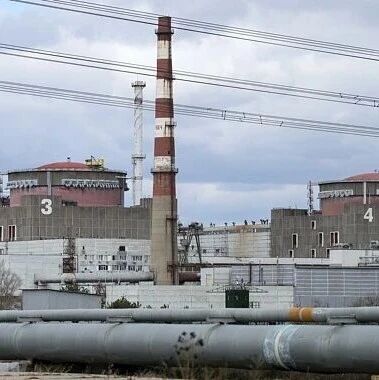
扎波罗热核电站:外部电力恢复运行
中国能源报· 2025-10-23 08:55
Group 1 - The external power supply lines of the Zaporizhzhia Nuclear Power Plant have been restored and are operational as of October 23 [1][3] - The external transmission lines were cut off on September 23, with both Russia and Ukraine blaming each other for the shelling that caused the disruption [3] - Repair work on the damaged external transmission lines resumed on October 18 after a four-week halt, following the establishment of a ceasefire zone to ensure safety during operations [3]
乌兹别克斯坦将迈向和平利用核能的自主发电阶段
Shang Wu Bu Wang Zhan· 2025-10-22 17:36
Core Viewpoint - Uzbekistan is transitioning towards autonomous power generation based on the peaceful use of nuclear energy, highlighting its significant role as a global uranium producer with approximately 4% of the world's reserves and an annual extraction of 3,500 tons [1] Group 1: Nuclear Energy Development - The first nuclear power plant project in collaboration with Russia's Rosatom is significant, involving the construction of two large VVER-1000 reactors (1,000 MW each) and two smaller RITM-200N reactors (55 MW each) in Jizzakh region [1] - This project aims to enhance the stability of the electricity grid, with large units providing predictable base power and smaller units ensuring flexible power adjustment during peak hours, as well as backup power during unstable solar and wind energy operations [1] Group 2: Education and Talent Development - Uzbekistan plans to establish a comprehensive nuclear talent training system covering education from primary to higher education levels to accelerate the development of skilled professionals in the nuclear sector [1]
2025年1-4月中国核能发电量产量为1584.9亿千瓦时 累计增长12.7%
Chan Ye Xin Xi Wang· 2025-10-15 01:19
Group 1 - The core viewpoint of the article highlights the growth of China's nuclear power generation, with a projected output of 411 billion kilowatt-hours in April 2025, representing a year-on-year increase of 12.4% [1] - From January to April 2025, the cumulative nuclear power generation in China reached 1,584.9 billion kilowatt-hours, showing a cumulative growth of 12.7% [1] Group 2 - The article lists several publicly listed companies in the nuclear energy sector, including China General Nuclear Power (003816), China National Nuclear Power (601985), and others [1] - It references a report by Zhiyan Consulting titled "Market Operation Pattern and Investment Strategy Analysis of China's Nuclear Power Generation Industry from 2025 to 2031" [1]





俄原子能电力公司:新沃罗涅日核电站遭无人机袭击但运行安全
Xin Hua She· 2025-10-07 14:31
Core Points - The Russian state nuclear energy company reported that a drone attack from Ukraine targeted the Novovoronezh nuclear power plant on the night of October 6, but operations were not affected and radiation levels remained normal [1] Group 1 - The drone attack occurred on October 6, 2023, and was directed at the Novovoronezh nuclear power plant [1] - The nuclear power plant's operations were not impacted by the attack, indicating resilience in its operational capacity [1] - Background radiation levels at the plant were reported to be normal following the incident, suggesting no immediate safety concerns [1]
欧洲最大核电站紧急停运,泽连斯基惊慌失措!断电一周难以忍受
Sou Hu Cai Jing· 2025-10-03 09:59
Core Points - The Zaporizhzhia Nuclear Power Plant, the largest in Europe, is currently disconnected from the power grid, marking the longest blackout since the onset of the Russia-Ukraine conflict [1][3] - Ukrainian President Zelensky described the situation as "critical," while the IAEA's Director General Grossi failed to restore power after urgent talks with Putin [3][5] Power Supply Disruption - The plant, which contributes approximately 20% of Ukraine's electricity, has been relying on emergency diesel generators since all reactors were shut down after being taken over by Russian forces in 2022 [3][5] - On September 23, the last external power line was severed due to artillery fire, leading to a complete power outage [3][5] - Ukraine's Energy Minister Hryshchuk accused Russian forces of being responsible for the power line damage, resulting in a blame game between the two sides [3][5] Nuclear Safety Concerns - The ongoing power outage poses significant risks to nuclear safety, as the plant's cooling systems require stable electricity to function [5][8] - As of September 30, the plant had been without external power for seven consecutive days, a record since the conflict began [5][6] - The IAEA has warned that the cooling systems' failure could lead to catastrophic consequences [9] Broader Energy Conflict - The energy conflict has escalated, with both sides targeting energy infrastructure to weaken each other's negotiating positions [9] - The shutdown of the Zaporizhzhia plant has severe implications for Ukraine's energy supply, which previously relied on it for 25% of its electricity [9] - The situation is exacerbated by the approaching winter, which may intensify the conflict and create a vicious cycle of power outages and artillery strikes [9]