乡村旅游

Search documents
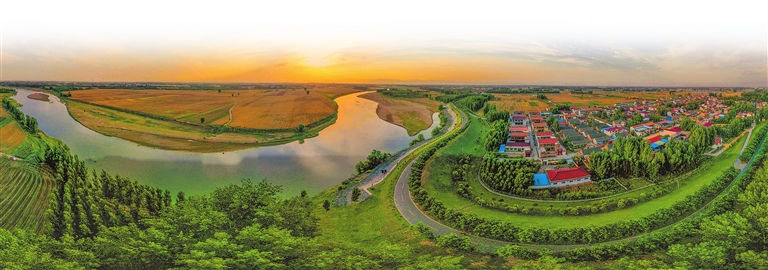
四水映绿 豫见两山丨一条河与万亩竹林的情缘
He Nan Ri Bao· 2025-08-10 23:45
Core Viewpoint - The article highlights the ecological and economic transformation of the Bo'ai County region, driven by the Dan River and the bamboo industry, showcasing a successful model of sustainable development and rural revitalization [2][11]. Economic Development - The bamboo industry in Bo'ai County has become a significant economic driver, with annual production value exceeding 10 million yuan in Fengzhuyuan Village, where bamboo processing techniques have been passed down through generations [5] - The average income from bamboo plantations has increased from approximately 200 yuan per mu in 2000 to over 1,000 yuan per mu in 2024, indicating a substantial rise in economic returns from bamboo cultivation [12] - The tourism sector has also flourished, with peak visitor numbers reaching around 10,000 daily during summer weekends, leading to the establishment of numerous homestays and agritourism businesses [8] Environmental Restoration - The Dan River, which had faced severe water flow issues since 2002, has seen successful restoration efforts, allowing it to flow year-round again, which is crucial for the local ecosystem and economy [10][11] - The water quality has improved significantly, with projections indicating that by 2025, the water quality will generally reach Class III, compared to Class IV and V levels observed before 2005 [12] - The region is home to over 100 animal species and 200 plant species, including the nationally protected golden leopard, highlighting the ecological diversity supported by the bamboo forests and the Dan River [12] Community Impact - The revitalization of the bamboo industry and tourism has led to increased employment opportunities, with 80 local residents benefiting from tourism-related jobs in Xizhanggan Village [11] - The average annual income for villagers in Xizhanggan has risen to approximately 28,000 yuan, reflecting a more than 75% increase compared to 2022 [11]

研学热为乡村游注入新动能(专家解读)
Ren Min Ri Bao· 2025-08-10 22:54
Core Insights - The article highlights the growing trend of educational tourism in rural China, emphasizing its role in transforming educational experiences for children and driving local economic growth [1][2][3] Industry Overview - The market size of China's educational tourism industry reached 146.9 billion yuan in 2023, with projections to grow to 242.2 billion yuan by 2026 [1] - Over 90% of administrative villages in China are now covered by 5G networks, enhancing accessibility to remote areas for tourists [1] Educational Experience - Rural areas provide unique, vibrant learning environments that cannot be replicated in urban settings, allowing youth to engage in hands-on activities like farming and cultural practices [2][3] - The shift from passive learning to active exploration and project-based learning in rural settings fosters independent thinking and teamwork among students [3] Economic Impact - Educational tourism is reshaping the traditional rural tourism model, which was primarily focused on sightseeing, by introducing a curriculum-based experience that enhances local resource utilization [3][4] - The integration of education, tourism, agriculture, and culture creates a multi-faceted economic model that promotes sustainable development and community prosperity [4] Cultural Exchange - Increasing participation of overseas youth in rural educational tourism provides a unique opportunity for cultural exchange and understanding of "real China," serving as a form of grassroots diplomacy [5][6] - Successful overseas educational bases can enhance the global cultural presence of rural China and attract international resources for rural revitalization [5][6] Infrastructure and Service Development - To accommodate global youth, rural areas must improve infrastructure, ensuring safety, hygiene, and multilingual services [6] - Cultural expression should be adapted to facilitate understanding and engagement, using relatable narratives to present local culture [6]
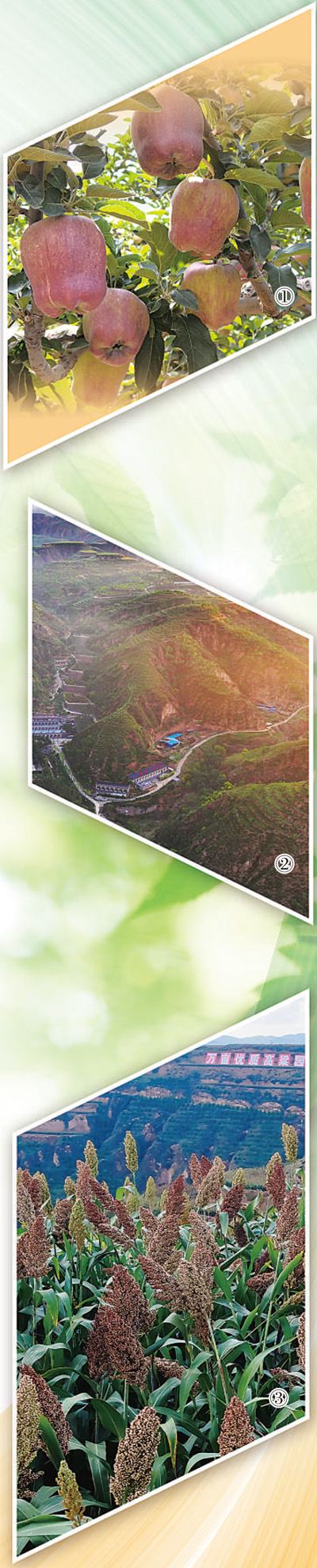
5年来黄河流域水土流失面积减少1.84万平方千米 改造黄土地 披绿又生金
Ren Min Ri Bao· 2025-08-10 22:50
Core Viewpoint - The news highlights the significant progress in soil and water conservation in the Yellow River Basin, emphasizing the transformation from barren land to green areas, which has led to ecological restoration and economic benefits for local communities [1][3][6]. Group 1: Soil and Water Conservation Achievements - As of the end of 2024, the vegetation area in the Yellow River Basin reached 541,300 square kilometers, with a soil and water conservation rate of 69.07% [1]. - Over the past five years, the area of soil erosion in the Yellow River Basin has decreased by 18,400 square kilometers [1]. - The soil and water conservation rate in Tianshui City increased from 75.80% at the end of 2020 to 78.01% by the end of 2024 [3]. Group 2: Economic Development through Ecological Restoration - In 2024, the sales of Huaniu apples in the Maiji District reached 640,000 tons, generating a revenue of 2.56 billion yuan [2]. - The village of Gaoxigou in Yulin City received over 100,000 tourists in 2024, showcasing the success of integrating agriculture with tourism [5]. - The average disposable income of villagers in Gaoxigou exceeded 25,000 yuan in 2024, reflecting the economic benefits of ecological improvements [5]. Group 3: Innovative Agricultural Practices - The introduction of smart agricultural technologies in the Huaniu apple base has led to a 90% rate of high-quality fruit production [2]. - In Yonghe County, the area of land treated for soil erosion reached 987.4 square kilometers, with the soil conservation rate increasing from 44.7% in 2020 to 48.3% in 2024 [9][10]. - The implementation of reverse slope terracing and mechanization in farming has resulted in an increase in average crop yield by over 300 jin per mu, with income rising by more than 500 yuan [10]. Group 4: Long-term Strategies and Research - The Suide Soil and Water Conservation Scientific Experiment Station has conducted over 600 specialized research projects, achieving more than 150 scientific results related to soil erosion and conservation [7]. - Shanxi Province has constructed 270 new sedimentation dams and treated over 700,000 mu of sloped farmland since the 14th Five-Year Plan, with a soil conservation rate reaching 65.5% [10]. - Future plans include enhancing soil conservation mechanisms and improving regulatory efficiency to further strengthen soil and water conservation efforts [10].
改造黄土地 披绿又生金
Ren Min Ri Bao· 2025-08-10 22:40
Core Viewpoint - The article highlights the significant progress in soil and water conservation in the Yellow River Basin, emphasizing the transformation of previously degraded areas into productive and ecologically sustainable regions through various agricultural and ecological initiatives [4][6][10]. Group 1: Soil and Water Conservation Achievements - As of the end of 2024, the Yellow River Basin has a vegetation area of 541,300 square kilometers and a soil and water conservation rate of 69.07% [4]. - Over the past five years, the area of soil erosion in the Yellow River Basin has decreased by 18,400 square kilometers, indicating effective environmental restoration efforts [4]. - The soil and water conservation rate in Tianshui City has improved from 75.80% at the end of 2020 to 78.01% by the end of 2024 [6]. Group 2: Agricultural Innovations - The introduction of smart agricultural technologies in the apple orchards of Tianshui has led to a 90% rate of high-quality fruit, with an average yield of over 7,000 pounds per acre [5]. - In 2024, the sales of Huaniu apples in the Tianshui area reached 640,000 tons, generating a revenue of 2.56 billion yuan [5]. - The transformation of fragmented farmland into mechanized terraced fields in Yonghe County has increased average yields by 300 pounds per acre, resulting in an additional income of over 500 yuan per acre [12]. Group 3: Ecological and Economic Development - The integration of tourism and agriculture in villages like Gao Xigou has led to over 100,000 visitors in 2024, significantly boosting local economies [8]. - The collective income of Gao Xigou village surpassed 800,000 yuan in 2024, with per capita disposable income exceeding 25,000 yuan [8]. - The implementation of a comprehensive water and soil conservation system has transformed the ecological landscape, leading to improved agricultural productivity and environmental sustainability [9][11].
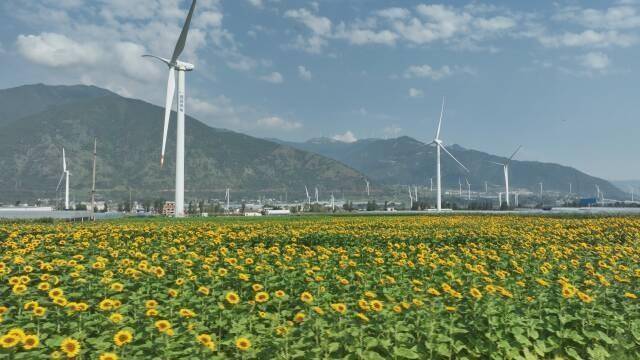
四川德昌:向日葵花海绽放
Sou Hu Cai Jing· 2025-08-08 17:39
Core Viewpoint - The sunflower field in Minzhu Village, Dechang County, Sichuan, has become a new popular tourist destination, attracting visitors with its stunning beauty and contributing to local economic development [1][5]. Group 1: Tourism and Visitor Experience - The sunflower field spans over 60 acres and is currently in full bloom, creating a vibrant golden landscape that draws tourists from various regions [1][5]. - Visitors describe the area as picturesque, with the sunflowers complementing the surrounding mountains and villages, enhancing the overall scenic experience [5]. - The average daily visitor count during the blooming season, which lasts from May to October, is approximately 200, with an entrance fee of 10 yuan per person [5]. Group 2: Economic Impact and Future Plans - The sunflower field is not only a visual attraction but also serves as a source of income for local villagers, referred to as the "wealth flower" [5]. - The management of the sunflower base aims to expand its planting area and develop sales channels for fresh sunflowers to cities like Kunming, thereby boosting local economic activities [5]. - There are plans to further enhance the economic ecosystem of Minzhu Village by promoting related businesses such as homestays and local delicacies [5].

北京市农业农村局局长彭利锋:深入实施“百千工程”打造乡村振兴首善示范
Bei Jing Ri Bao Ke Hu Duan· 2025-08-07 15:23
Core Viewpoint - The article emphasizes the implementation of the "Hundred Villages Demonstration, Thousand Villages Revitalization" project in Beijing, inspired by the "Ten Million Project" in Zhejiang, aiming to achieve agricultural modernization and rural revitalization through effective government and market collaboration [1][2]. Group 1: Planning and Development - Beijing is focusing on optimizing town and village layout planning to create livable and workable rural areas, enhancing the rural regions as a strategic support for the city [2][3]. - The city has completed land space planning for all 120 towns, categorizing villages into demonstration, enhancement, and consolidation types to clarify construction paths and priorities [3]. Group 2: Improving Living Conditions - The initiative aims to modernize rural living conditions, with actions targeting cleanliness, orderliness, and environmental improvement, achieving significant advancements in rural sanitation and infrastructure [4]. - By 2024, 95% of administrative villages and 97% of rural residents will have access to clean heating, with a notable improvement in the rural ecological environment [4]. Group 3: Cultural and Aesthetic Enhancement - Beijing is integrating traditional cultural elements with modern urban civilization to enhance the unique characteristics of rural areas, focusing on the preservation of cultural heritage while promoting modern aesthetics [5]. - The city is implementing micro-renovations in public spaces along major transportation routes to improve the overall village appearance [5]. Group 4: Industrial Development - The focus on industrial revitalization is crucial, with a projected per capita disposable income of 85,415 yuan and a strong demand for high-quality organic agricultural products and eco-tourism [6]. - The city is developing a modern rural industrial system that combines technology, multi-sector integration, and unique local characteristics [6][8]. Group 5: Innovation and Technology in Agriculture - Beijing is leveraging technological innovation to enhance agricultural productivity, establishing significant agricultural innovation platforms and focusing on independent research and development in key agricultural technologies [7]. - The city aims to create a robust agricultural technology ecosystem, with a projected sales revenue of 12.7 billion yuan for seed companies by 2024 [7]. Group 6: Market Dynamics and Investment - The "Hundred Villages Project" has led to the introduction of 55 supportive policies to optimize the rural business environment, attracting investments and enhancing local economic activities [11]. - The initiative has successfully mobilized over 4 billion yuan in industry development funds, supporting nearly 100 market entities in rural areas [11]. Group 7: Governance and Community Engagement - Strengthening grassroots party organizations is essential for effective rural governance, with significant improvements in the management of rural collective assets and community engagement [13]. - The city has implemented measures to enhance rural governance, ensuring stability and prosperity in rural communities [13]. Group 8: Cultural and Spiritual Development - The article highlights the importance of fostering a vibrant rural culture alongside material development, promoting traditional values and community spirit [14]. - Initiatives like the Beijing Farmers' Art Festival aim to showcase rural culture and enhance community engagement through artistic expression [14].
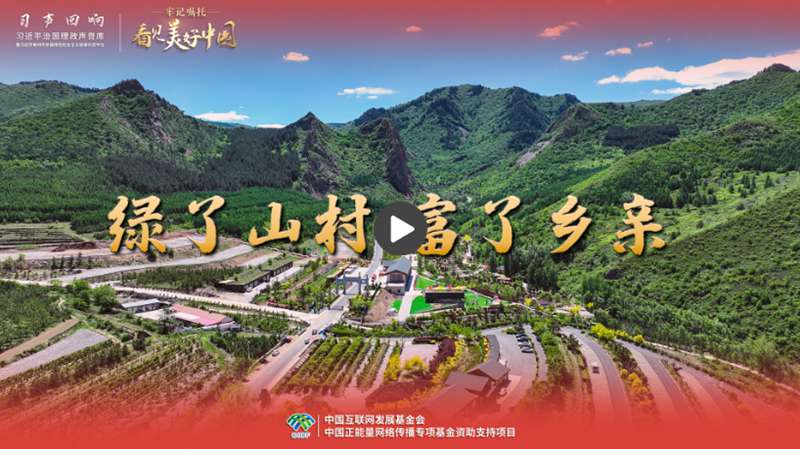
【牢记嘱托·看见美好中国】绿了山村 富了乡亲
Yang Guang Wang· 2025-08-07 12:02
Core Insights - The article highlights the transformation of Ma'anshan Village in Inner Mongolia through the development of the mountain grape industry and tourism, leading to increased income for local residents [4][5][8]. Industry Development - The establishment of a mountain grape cooperative and partnerships with wine enterprises have created a "planting + purchasing + processing" industrial chain, enhancing the sales channels for local grapes [5][6]. - Investment of 350 million yuan in a resort hotel aims to boost local tourism, integrating wedding, conference, and outdoor activities [5][6]. Economic Impact - Over half of the villagers are now engaged in mountain grape cultivation, with an average yield of about 3,000 jin (1,500 kg) per mu (0.067 hectares), generating approximately 6,000 yuan (around 850 USD) per mu [5][6]. - The average disposable income of villagers is expected to double by 2024 compared to 2019, indicating significant economic growth [8]. Employment Opportunities - The village has also developed a forest economy, with a 100-acre experimental base for cultivating mushrooms and other economic crops, providing additional employment for residents [6][8]. Tourism Growth - Local tourism has flourished, with villagers selling homemade products and crafts, contributing to the overall economic uplift and enhancing the community's quality of life [8][9].
青海加快推进乡村产业振兴——致富花开遍高原(活力中国调研行)
Ren Min Ri Bao· 2025-08-06 22:31
Core Viewpoint - The news highlights the comprehensive rural revitalization efforts in Qinghai Province, focusing on increasing farmers' income, promoting highland特色种业, and developing green organic agriculture to enhance local products' branding and marketability [1][3]. Group 1: Agricultural Development - Qinghai Province is implementing a three-year action plan for high-quality development of特色产业 in agriculture and animal husbandry, emphasizing quality improvement, volume expansion, supply chain enhancement, and efficiency increase [3]. - As of June 2024, the number of certified green food, organic agricultural products, and geographical indication products in Qinghai reached 1,298, with organic grassland monitoring covering 335 million acres [3]. Group 2: Technological Integration - The integration of technology in livestock farming has significantly improved the quality of藏羊, with over 98% of the breeding stock being high-quality varieties, and the introduction of advanced breeding techniques [2]. - The establishment of the祁连藏羊产业发展研究院 in 2024 aims to enhance the breeding and processing standards for藏羊, leading to increased market value through refined product offerings [2]. Group 3: Tourism and Economic Growth - The development of eco-tourism in边麻沟村 has transformed the local economy, with over 70 households participating in tourism-related activities, resulting in an average annual income exceeding 20,000 yuan per person [4]. - The门源回族自治县 has seen a surge in tourism due to its油菜花海, with daily visitors reaching over 10,000 during peak bloom, significantly boosting local businesses and creating job opportunities [5][6]. Group 4: Value Chain Expansion - The油菜籽 processing industry in门源县 has evolved from small-scale operations to a more mechanized and standardized approach, increasing annual production capacity from a few tons to over 1,000 tons, with revenue surpassing 20 million yuan [7]. - The total planting area for油菜 in门源县 has reached 289,500 acres, producing over 30,000 tons of菜籽油, contributing to a growing agricultural value chain that benefits local farmers [7].
嘹亮村歌唱响,游客闻“声”而来
Qi Lu Wan Bao· 2025-08-06 21:40
Core Viewpoint - The 2025 Laiyang Village Song Competition is not just a musical contest but a vibrant practice of the "Village Song + Cultural Tourism" model, significantly boosting rural tourism and related industries in Laiyang [2][8]. Group 1: Event Overview - The Laiyang Village Song Competition officially started on April 12, 2025, as part of Yantai's major cultural activities, running until October with multiple selection stages [4]. - The competition features participation from 18 towns and villages, showcasing local talent and fostering community engagement [5][6]. Group 2: Community Engagement - The event encourages broad participation from local residents, including farmers, drivers, and chefs, highlighting the enthusiasm of the community [6][7]. - The competition has led to the formation of community choirs, enhancing local pride and cultural expression [7]. Group 3: Economic Impact - The competition has driven a 15.6% increase in tourist numbers in 2024, with over 1.08 million additional visitors, and a 56.3% increase in tourist numbers in the first half of 2025 [9]. - Local businesses benefit from the event, with night market sales of prepared foods and cultural products increasing by 40% [9]. Group 4: Cultural and Tourism Integration - The Laiyang Village Song Competition integrates local agricultural products and cultural experiences, creating a new model for rural tourism development [8][9]. - The event is part of a broader strategy to enhance Laiyang's cultural identity and economic vitality, promoting it as a key cultural tourism destination [9].
全市农业农村领域消费活力不断增强
Qi Lu Wan Bao· 2025-08-06 21:05
Core Viewpoint - The city of Heze is actively promoting consumption in the agricultural sector through various initiatives aimed at enhancing consumer engagement and boosting local agricultural products [2][3][4]. Group 1: Increasing Income - The agricultural department is enhancing the connection between production and sales by organizing local agricultural enterprises to participate in major exhibitions, such as the "Good Products Shandong" event in Hong Kong, to promote high-quality agricultural products [2]. - Two local enterprises successfully entered JD Group through the "Good Products Shandong" initiative, highlighting the focus on developing local specialties and creating job opportunities for villagers [3]. Group 2: Improving Environment - The "Enjoy Heze. 2025 Spring Consumption Season" event is set up to showcase local agricultural products and modern agricultural equipment, making it easier for consumers to access and trust these products [4]. - A "Farm Machinery Consumer Rights Day" event was held to educate farmers about their rights and purchasing processes, thereby increasing their awareness and engagement in the market [4]. Group 3: Ensuring Supply - As of June, the total production of meat, eggs, and milk in the city reached 788,000 tons, a year-on-year increase of 13%, while the aquatic product output was 41,000 tons, up by 4.3% [6]. - A spring consumption promotion event was organized to integrate rural infrastructure and promote new industries such as rural tourism and leisure agriculture, which in turn supports the consumption in related sectors like dining and transportation [6].