
农产品种植

Search documents
“保险+期货”提升花生生产防范风险能力
Zheng Quan Ri Bao· 2025-06-15 14:17
Core Viewpoint - The "Insurance + Futures" project for peanuts in Lankao County serves as a strong compensation mechanism for peanut growers facing market price fluctuations, enhancing their confidence in planting [1][2][3] Group 1: Project Overview - The project was initiated in 2021 with the launch of peanut futures, aiming to provide dual protection against price and yield risks for farmers [1] - Since its pilot in 2022, the project has accumulated a total guarantee amount of 1.42 billion yuan and paid out nearly 20 million yuan in claims, covering 140,000 tons of peanuts and benefiting 48,000 farming households [1][2] Group 2: Financial Mechanism - In 2022, the project covered 90,400 acres of peanut planting, providing 160 million yuan in risk protection, with total claims reaching 7.2283 million yuan, benefiting 6,044 households [2] - The project employs a "trigger lock enhanced Asian option" model to improve payout probabilities while reducing option costs, maximizing risk hedging efficiency [2] Group 3: Government Support and Impact - The funding mechanism involves a cost-sharing model with 25% from provincial finance, 22.14% from county finance, and 10% from farmers, lowering the threshold for participation [2] - The project has effectively compensated farmers for losses, especially in the context of adverse weather conditions in 2024 [2] Group 4: Agricultural Development and Innovation - The project promotes the integration of "five good" practices (good land, good seeds, good opportunities, good methods, good systems) to enhance yield and extend the industrial chain into food processing and logistics [2] - The experience from Lankao County has been replicated in other peanut-producing areas in Henan, showcasing a model for financial innovation in rural revitalization [3]
玉米类市场周报:小麦政策收购提振,推动玉米同步上涨-20250613
Rui Da Qi Huo· 2025-06-13 10:12
1. Report Industry Investment Rating - No relevant information provided in the content 2. Core Views of the Report - The USDA's downward revision of the US corn ending stocks estimates for the 2024/25 and 2025/26 seasons is generally positive, but concerns about long - term import pressure remain due to good US corn good - to - excellent ratings and improved Sino - US trade relations. In the domestic market, the corn price is supported by factors such as slow sales in the Northeast, strong restocking demand from some processing enterprises, reduced market grain supply in the North China and Huanghuai regions, and the start of wheat procurement at the minimum purchase price in Henan [8]. - Corn starch prices are relatively strong due to reduced supply pressure from lower industry operating rates and support from firm corn prices, and the industry inventory has slightly declined [14]. 3. Summary by Directory 3.1. Weekly Highlights Summary Corn - **Strategy**: Short - term trading is recommended [9]. - **Market Review**: This week, the corn futures fluctuated and closed higher. The closing price of the main 2507 contract was 2378 yuan/ton, an increase of 38 yuan/ton from the previous week [10]. - **Market Outlook**: The USDA's downward revision of ending stocks estimates is positive, but there are concerns about import pressure. In the domestic market, the Northeast sales slow down, some processing enterprises restock, and the North China and Huanghuai regions see reduced grain supply. The start of wheat procurement at the minimum purchase price in Henan supports the corn market. The recent upward trend has slowed down [10]. Corn Starch - **Strategy**: Short - term participation is recommended [13]. - **Market Review**: Dalian corn starch futures fluctuated and closed higher. The closing price of the main 2507 contract was 2703 yuan/ton, an increase of 47 yuan/ton from the previous week [14]. - **Market Outlook**: Due to tight raw material supply in North China and continuous losses in production, the industry operating rate has dropped to a new low this year. With reduced supply pressure and firm corn prices, the spot price of corn starch is relatively good, and the inventory has slightly declined [14]. 3.2. Futures and Spot Market Futures Price and Position Changes - The corn futures July contract fluctuated upward this week, with a total position of 702,413 lots, a decrease of 261,592 lots from last week. The corn starch futures July contract also fluctuated upward, with a total position of 163,117 lots, a decrease of 49,450 lots from last week [20]. Top Twenty Net Position Changes - This week, the net position of the top twenty in corn futures was - 112,968, compared with - 86,788 last week, indicating an increase in net short positions. The net position of the top twenty in starch futures was - 8,482, compared with - 12,459 last week, indicating a decrease in net short positions [27]. Futures Warehouse Receipts - The registered warehouse receipts of yellow corn were 216,285 lots, and the registered warehouse receipts of corn starch were 24,237 lots [34]. Spot Price and Basis - As of June 12, 2025, the average spot price of corn was 2,406.27 yuan/ton, and the basis between the active July contract and the spot average price was 28 yuan/ton. The spot price of corn starch in Jilin was 2,820 yuan/ton, and in Shandong was 2,940 yuan/ton, remaining relatively stable this week. The basis between the July contract of corn starch and the spot price in Changchun, Jilin was 117 yuan/ton [39][43]. Futures Inter - monthly Spread - The 7 - 9 spread of corn was - 26 yuan/ton, at a medium level in the same period. The 7 - 9 spread of starch was - 79 yuan/ton, also at a medium level in the same period [49]. Futures Spread - The spread between the July contract of starch and corn was 325 yuan/ton. As of Thursday this week, the spread between Shandong corn and corn starch was 440 yuan/ton, an increase of 24 yuan/ton from last week [58]. Substitute Spread - As of June 12, 2025, the average spot price of wheat was 2,430.39 yuan/ton, and the average spot price of corn was 2,406.27 yuan/ton, with a wheat - corn spread of 24.12 yuan/ton. In the 24th week of 2025, the spread between cassava starch and corn starch changed little, with an average spread of 206 yuan/ton, a reduction of 33 yuan/ton from last week [64]. 3.3. Industrial Chain Situation Corn - **Supply - Port Inventory**: As of June 6, 2025, the domestic trade corn inventory in Guangdong Port was 101.6 tons, a decrease of 13.3 tons from last week, and the foreign trade inventory was 0.3 tons, unchanged from last week. The corn inventory in the four northern ports was 305.9 tons, a decrease of 25.2 tons week - on - week, and the shipping volume was 58 tons, a decrease of 7.7 tons week - on - week [53]. - **Supply - Spring Corn Growth**: No detailed information provided other than the topic about the growth and development of spring corn [66]. - **Supply - Monthly Import**: In April 2025, the total import volume of ordinary corn was 180,000 tons, a decrease of 1 million tons or 84.75% compared with the same period last year, and an increase of 100,000 tons compared with the previous month [72]. - **Supply - Feed Enterprise Inventory**: As of June 12, the average inventory of national feed enterprises was 33.48 days, a decrease of 1.87 days from last week, a month - on - month decrease of 5.29%, and a year - on - year increase of 6.79% [76]. - **Demand - Livestock Inventory**: As of the end of the first quarter of 2025, the pig inventory was 417.31 million, a year - on - year increase of 2.2%. At the end of April, the inventory of breeding sows was 40.38 million, a month - on - month decrease of 10,000, and a year - on - year increase of 1.3% [80]. - **Demand - Breeding Profit**: As of June 6, 2025, the breeding profit of self - bred and self - raised pigs was 33.83 yuan/head, and the breeding profit of purchased piglets was - 120.8 yuan/head [84]. - **Demand - Processing Profit**: As of June 12, 2025, the processing profit of corn starch in Jilin was - 96 yuan/ton, and the processing profit of corn alcohol in Henan was - 827 yuan/ton, in Jilin was - 596 yuan/ton, and in Heilongjiang was - 168 yuan/ton [89]. Corn Starch - **Supply - Enterprise Inventory**: As of June 11, 2025, the total corn inventory of 96 major corn processing enterprises in 12 regions was 4.651 million tons, a decrease of 0.06% [93]. - **Supply - Operating Rate and Inventory**: From June 5 - 11, 2025, the total national corn processing volume was 537,000 tons, a decrease of 14,800 tons from last week. The national corn starch output was 252,000 tons, a decrease of 15,800 tons from last week. The weekly operating rate was 48.71%, a decrease of 3.06% from last week. As of June 11, the total starch inventory of national corn starch enterprises was 1.36 million tons, a decrease of 44,000 tons from last week, a week - on - week decrease of 3.13%, a month - on - month decrease of 3.68%, and a year - on - year increase of 28.18% [97]. 3.4. Option Market Analysis - As of June 13, the implied volatility of the options corresponding to the main 2507 contract of corn was 8.9%, an increase of 0.66% from 8.24% last week. The implied volatility fluctuated and rebounded this week, being at a relatively high level compared to the 20 - day, 40 - day, and 60 - day historical volatilities [100].
【期货热点追踪】USDA干旱报告:美国大豆受干旱影响区域比例缩小,但此前美豆种植率低于市场预期,具体情况如何?
news flash· 2025-06-13 02:05
Core Insights - The USDA drought report indicates a reduction in the proportion of U.S. soybeans affected by drought conditions, although the soybean planting rate remains below market expectations [1] Group 1 - The area of U.S. soybeans impacted by drought has decreased [1] - Previous soybean planting rates were lower than market expectations [1]
美国农业部:将阿根廷2024/2025年度玉米产量预期维持5000万吨不变,市场预期为4993万吨;将巴西2024/2025年度玉米产量预期维持1.3亿吨不变,市场预期为1.3168亿吨。
news flash· 2025-06-12 16:04
Group 1 - The USDA maintains Argentina's corn production forecast for the 2024/2025 season at 50 million tons, while the market expectation is 49.93 million tons [1] - The USDA also keeps Brazil's corn production forecast for the 2024/2025 season at 130 million tons, compared to the market expectation of 131.68 million tons [1]
美国农业部:将阿根廷2024/2025年度大豆产量预期维持4900万吨不变,市场预期为4904万吨;将巴西2024/2025年度大豆产量预期维持1.69亿吨不变,市场预期为1.6927亿吨。
news flash· 2025-06-12 16:04
Group 1 - The USDA maintains Argentina's soybean production forecast for the 2024/2025 season at 49 million tons, while market expectations are slightly higher at 49.04 million tons [1] - The USDA also keeps Brazil's soybean production forecast for the 2024/2025 season unchanged at 169 million tons, compared to market expectations of 169.27 million tons [1]
美国农业部:将阿根廷2024/2025年度大豆产量预期维持4900万吨不变
news flash· 2025-06-12 16:03
智通财经6月13日电,美国农业部称,将阿根廷2024/2025年度大豆产量预期维持4900万吨不变,市场预 期为4904万吨;将巴西2024/2025年度大豆产量预期维持1.69亿吨不变,市场预期为1.6927亿吨;将阿根 廷2024/2025年度玉米产量预期维持5000万吨不变,市场预期为4993万吨;将巴西2024/2025年度玉米产 量预期维持1.3亿吨不变,市场预期为1.3168亿吨。 美国农业部:将阿根廷2024/2025年度大豆产量预期维持4900万吨不变 ...
永安期货天气早报-20250612
Yong An Qi Huo· 2025-06-12 05:23
研究中心农产品团队 2025/6/12 大豆玉米产区-美国 全国产区过往60天实际累计降水量及温度 天气早报 大豆玉米产区-美国 全国产区预测降水量 大豆玉米产区-美国 全国产区预测温度 大豆玉米产区-巴西 全国产区过往60天实际累计降水量及温度 大豆玉米产区-巴西 全国产区预测降水量 大豆玉米产区-巴西 全国产区预测温度 大豆产区-巴西 Mato Grosso (26%) Parana (15%) Rio Grande do Sul (14%) Goias Mato Grosso do Sul (8%) (10%) 分产区过往60天 实际累计降水量 大豆产区-巴西 Mato Grosso (26%) Parana (15%) Rio Grande do Sul (14%) 分产区预测降水 Goias (10%) Mato Grosso do Sul (8%) 降水量 大豆产区-巴西 分产区过往60天 实际温度 Mato Grosso (26%) Parana (15%) Rio Grande do Sul (14%) Goias Mato Grosso do Sul (8%) (10%) 大豆产区-巴西 M ...
卫星遥感监测及产量预估报告
Hua Tai Qi Huo· 2025-06-12 00:37
Report Summary 1. Report Industry Investment Rating No information provided in the given content. 2. Core Views of the Report - The production of key global agricultural products in May 2025 shows different trends. The yields of US soybeans, corn, and cotton are expected to be optimistic, with single - yield estimates higher than USDA expectations. The rapeseed growth in Canada and Australia is slow, and the Australian single - yield is lower than USDA expectations. The climate in Southeast Asian palm oil producing areas is stable, and the production is expected to be positive. The impact of recent extreme weather is limited [3]. 3. Summary by Relevant Catalogs Global Key Agricultural Product Yield Estimation - **Yield Estimation Varieties, Time Window, and Method** - The monitoring period is May, covering key agricultural products such as US soybeans, corn, cotton, Canadian rapeseed, Australian rapeseed, and Southeast Asian palm oil. The time - cycle includes 20 years of current and historical data from 2005 - 2025. Data sources include satellite remote sensing, meteorological data, and field observations, with 24 key indicators. A self - built yield model is constructed using multi - spectral and hyperspectral remote sensing data, combined with meteorological and historical yield data [7][8][13]. - **Yield Estimation Results** - US soybeans are expected to have a single - yield of over 52 bushels per acre, corn about 180.2 bushels per acre, and cotton 980 kg per hectare, all higher than USDA expectations. The single - yield of Australian rapeseed is 1.63 tons per hectare, lower than USDA expectations [3][14]. Global Key Agricultural Product Growth Monitoring - **Malaysian and Indonesian Palm Oil Producing Areas** - In May 2025, the vegetation index, precipitation, and temperature in palm oil producing areas are within the historical reasonable range. The vegetation index in each producing area is better than or close to the historical average. Precipitation shows regional differentiation, and temperature shows the characteristics of "mild in the east and slightly hot in the west". Only the subsequent precipitation supplement in Sumatra and local waterlogging in Kalimantan need attention [17][20][26]. - **US Soybean and Corn Producing Areas** - In May 2025, there are no extreme climate factors in the US soybean and corn producing areas, but there are significant regional differences. The vegetation growth in the central - western main producing areas is slightly weak, the Great Lakes region needs to be vigilant against the risk of waterlogging and low - temperature superposition, and the western plain area may have yield differentiation due to insufficient precipitation and mild low - temperature. The overall production is expected to be good [27][28][35]. - **US Cotton Producing Areas** - In May 2025, the growth environment of US cotton producing areas shows significant regional differences. The vegetation index in the southeastern producing areas is prominent, and the precipitation is "more in the east and less in the west". The southeast needs to prevent waterlogging, and the risk in the western arid areas is controllable. The temperature conditions are generally suitable [36][37][42]. - **Canadian Rapeseed Producing Areas** - No detailed growth status information is provided in the given content. - **Australian Rapeseed Producing Areas** - The growth progress of rapeseed in Australia is slow, and the single - yield of 1.63 tons per hectare is lower than USDA expectations [3][14]. Recent Extreme Weather Impact Analysis - **Analysis of Extreme Precipitation Impact in South American Argentina** - The extreme precipitation in Argentina in May did not cause large - scale waterlogging [3]. - **Analysis of Cold Wave Impact in European Rapeseed Producing Areas** - The spring cold wave in Europe in 2025 is milder than that in 2024, and the growth of rapeseed in the main producing areas is not significantly affected [3]. - **Analysis of Historical and Future Weather in US Producing Areas** - The precipitation distribution in the US from April to June is uneven, with more in the east and less in the central - west. In the next month, the overall precipitation is sufficient, with more in the central - west and south, and drier in Iowa. The risk of waterlogging is still a focus this year [3].
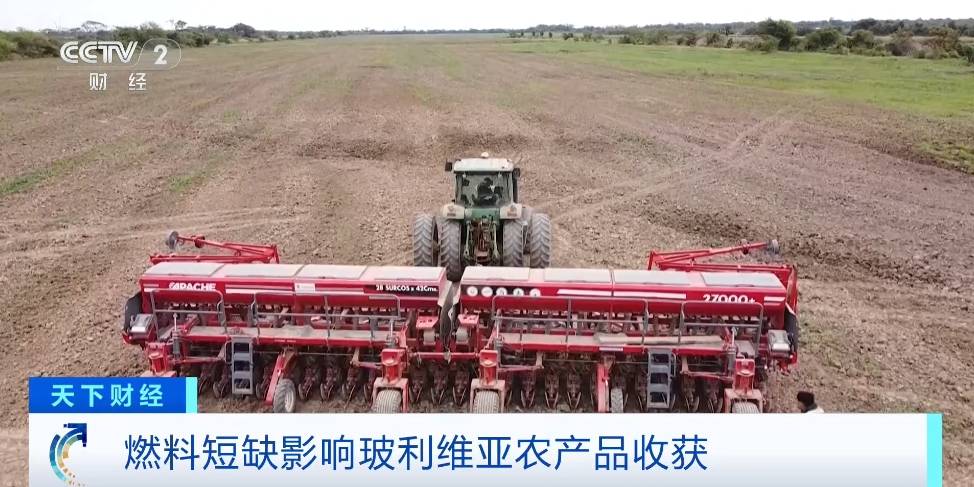
燃料短缺影响玻利维亚农产品收获,部分食品价格暴涨90%
Sou Hu Cai Jing· 2025-06-11 14:09
Group 1 - Bolivia is experiencing a severe fuel shortage due to insufficient domestic energy reserves and limited fuel imports, significantly impacting agricultural harvests and sales [1][7] - In the economic center of Santa Cruz, fuel shortages have persisted for five weeks, affecting farmers' ability to operate machinery for harvesting crops like sunflowers and chia seeds [3][5] - The decline in natural gas exports has led to rising expenditures on imported fuel, with foreign exchange reserves only covering six weeks of import needs [7] Group 2 - Long queues at gas stations across Bolivia have resulted in protests, with demonstrators blocking key city access points, further exacerbating the fuel shortage and disrupting food and fuel transportation [7] - The agricultural sector is incurring significant losses due to road blockades caused by protests, with daily losses estimated at $610,000 (approximately 4.38 million RMB) [7] - Bolivia's inflation rate reached 5.9% in the first four months of 2025, with essential food items like onions and tomatoes seeing price increases of around 90%, severely affecting the purchasing power of low-income households [9]


农产品日报:苹果套袋进入中后期,红枣长势较为正常-20250611
Hua Tai Qi Huo· 2025-06-11 03:41
农产品日报 | 2025-06-11 苹果套袋进入中后期,红枣长势较为正常 苹果观点 市场要闻与重要数据 期货方面,昨日收盘苹果2510合约7523元/吨,较前一日变动+37元/吨,幅度+0.49%。现货方面,山东栖霞80# 一 二级晚富士价格4.10元/斤,较前一日变动+0.00元/斤,现货基差AP10+677,较前一日变动-37;陕西洛川70# 以上 半商品晚富士价格4.80元/斤,较前一日变动+0.00元/斤,现货基差AP10+2077,较前一日变动-37。 近期市场资讯,苹果市场整体成交清淡,产区新季苹果套袋工作继续,库内货源交易氛围一般,产地包装发货不 快,客商多自行发货为主。西部产区客商货源找货热度不高,个别冷库货源出现水烂点等质量问题,持货商整体 惜售情绪减弱;山东产区大果及好果走货一般,部分乡镇价格小幅松动。销区市场市场走货一般,天气转热,瓜 类水果存在一定冲击。陕西洛川产区目前库内70#起步果农统货4.2-4.5元/斤,70#起步半商品4.5-5.0元/斤,以质论 价。 山东栖霞产区果农三级2.5-3元/斤,果农80#以上统货3-3.5元/斤,80#一二级条纹4.0-4.5元/斤,80#一二 ...