消费金融

Search documents
ESG评级冲上AA,陆金所还有难题要解
3 6 Ke· 2025-08-20 12:17
Core Viewpoint - Lufax Holdings (陆金所) has received an upgrade in its ESG rating from MSCI from A to AA, highlighting its significant performance in consumer rights protection and leading positions in privacy, data security, and human capital development within the industry [1] Group 1: Consumer Protection and Business Background - Lufax was established in 2011 as a subsidiary of Ping An, initially focusing on online wealth management and later entering the P2P lending market in 2012 [2] - The company quickly became a benchmark in the online lending industry, with transaction volumes surpassing one trillion yuan, second only to Ant Financial [2][4] - In 2014, Lufax's revenue surged from 1 billion yuan to 5 billion yuan, and by 2015, it had over 10 million registered users, solidifying its position as a leader in P2P lending [4][5] Group 2: Challenges and Consumer Complaints - Following the P2P lending crackdown in 2019, Lufax underwent significant restructuring, completing the exit from P2P by mid-2021 and shifting towards compliant lending practices [6] - Despite its successful transition, Lufax still faces challenges in consumer protection, with numerous complaints reported regarding high fees and customer harassment [7][10] Group 3: Financial Performance and Reporting Issues - As of June 30, 2025, Lufax's total outstanding loans decreased to 193.4 billion yuan, a 17.8% decline from the previous year, while consumer finance loans increased by 29.8% to 54.5 billion yuan [10] - The company is currently facing difficulties in reporting its annual results, having suspended trading on the Hong Kong Stock Exchange and delaying its annual report due to the dismissal of its auditor, PwC [12][14] Group 4: Management Changes - Frequent personnel changes have occurred since 2024, including the resignation of the CFO and other key executives, indicating a significant organizational restructuring [19][21] - The management adjustments are seen as a response to internal control needs and risk management, reflecting Ping An's intent to strengthen oversight of Lufax [21][22]


中银消费金融股权变更获批 中国银行增持股权至47.98%
Jing Ji Guan Cha Wang· 2025-08-20 03:43
批复表示,中银消费金融应严格遵照有关法律法规完成上述股权变更事宜。该公司应加强股权管理,进 一步优化股权结构,严格控制股东关联交易,完善公司治理与内部控制机制,防范和化解风险。 经济观察网 8月19日,国家金融监管管理总局发布关于中银消费金融有限公司变更股权的批复。同意中 国银行(601988)股份有限公司受让深圳市博德创新投资有限公司持有的该公司3.558%股权及北京红 杉盛远管理咨询有限公司持有的该公司1.617%股权。受让后,中国银行股份有限公司合计持有中银消 费金融47.98%股权。 ...

多方合力维护金融消费者权益
Jin Rong Shi Bao· 2025-08-20 02:38
其中,同业协作、联防联治的力量不容小觑。7月末,在上海的3家消费金融公司——尚诚消金、中银消 金和平安消金联合举办了2025年上海消费金融行业消费者权益保护联席会议,提升消保内控合规,深化 信息共享与协同共治,合力打击"黑灰产",健全消保联动工作机制。 金融消费者权益保护绝非监管部门或是从业机构的"独角戏",而应形成监管引导、机构主责、社会协同 以及消费者参与的共治格局。 消费金融机构作为金融服务的直接提供者,必须将消费者权益保护嵌入管理的全流程。从产品设计时的 合规审查,到服务过程中的信息透明,再到纠纷处理时的高效响应,每一环节都需坚守"以消费者为中 心"的底线。在业务办理环节,须严格履行告知义务,向消费者清晰说明贷款额度、利率、还款方式及 逾期后果等关键信息,杜绝误导性宣传或强制捆绑销售。在贷后管理中,要规范催收行为,杜绝暴力催 收、骚扰式催收等侵害消费者权益的做法,同时建立高效的投诉处理机制,及时回应并解决消费者的合 理诉求。 近期,宁夏回族自治区地方金融管理局集中取消7家助贷机构的涉金融事项经营资质,消费金融公司密 集披露助贷合作机构的详细名单……密集的监管动作与机构表态,释放出坚决整治消费金融领域乱 ...
平安消金更新合作机构名单,信用飞入围
Sou Hu Cai Jing· 2025-08-19 11:04
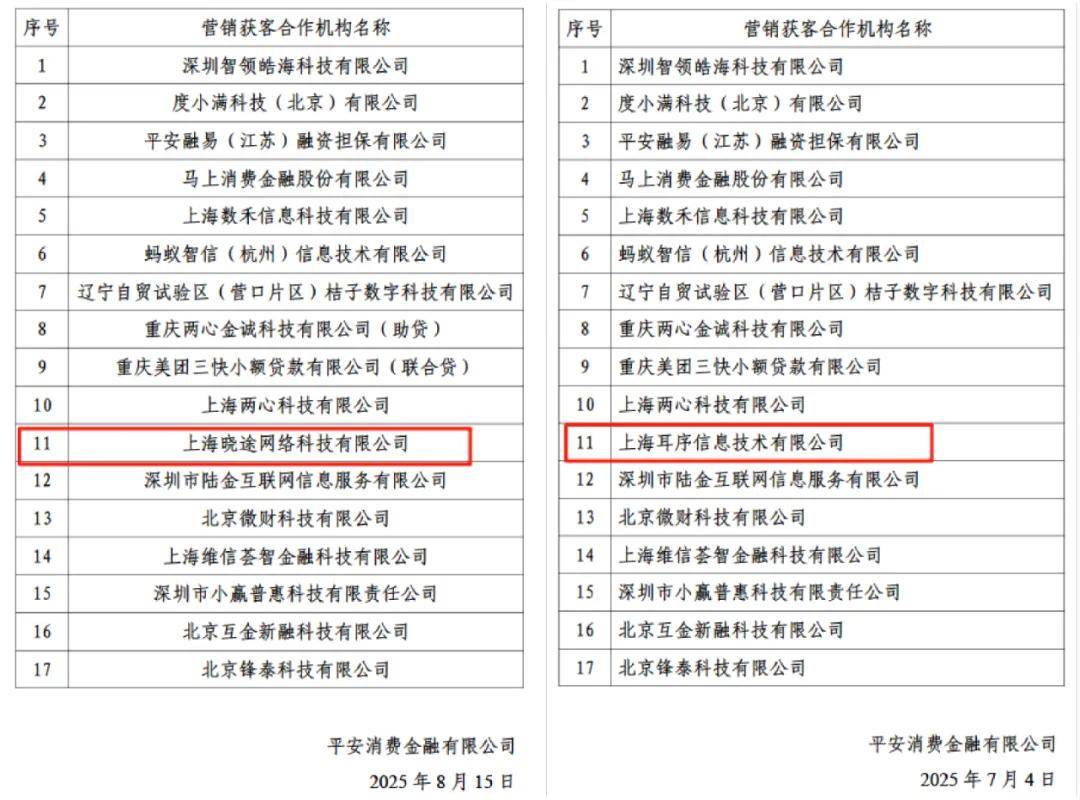
Core Insights - Ping An Consumer Finance has updated its list of partner marketing and credit enhancement service institutions, adding the well-known loan assistance platform, Xinyongfei [1] - Shanghai Xiaotu Network Technology Co., Ltd. has been added to the marketing acquisition list, while Shanghai Ersu Information Technology Co., Ltd. has been removed [1] - The marketing acquisition list highlights partnerships with Chongqing Liangxin Jincheng Technology Co., Ltd. for loan assistance and Chongqing Meituan Sankuai Small Loan Co., Ltd. for joint loans, both of which are affiliated with Meituan [1] - In the credit enhancement service institutions, Tianjin Xinfly Financing Guarantee Co., Ltd. has been added, which is a wholly-owned subsidiary of Shanghai Xiaotu [1] Marketing Acquisition Institutions - The updated list includes various institutions such as Shenzhen Zhiling Haohai Technology Co., Ltd., Du Xiaoman Technology (Beijing) Co., Ltd., and others [2] - Notable additions and removals include Shanghai Xiaotu Network Technology Co., Ltd. being added and Shanghai Ersu Information Technology Co., Ltd. being removed from the list [1][2] Credit Enhancement Service Institutions - The updated list of credit enhancement service institutions includes Tianjin Xinfly Financing Guarantee Co., Ltd. as a new addition [1][3] - Other institutions in the list include Ping An Rongyi (Jiangsu) Financing Guarantee Co., Ltd. and Shenzhen Zhongzhi Credit Financing Guarantee Co., Ltd. [3] Regulatory Context - The update aligns with the guidelines issued by the National Financial Regulatory Administration in April, which mandates that commercial banks manage platform operators and credit enhancement service institutions through a list system [4] - The regulation emphasizes that banks should not engage in cooperation with institutions outside the approved list for internet loan assistance business [4]
用好消费贷贴息应打好“组合拳”
经济观察报· 2025-08-19 10:31
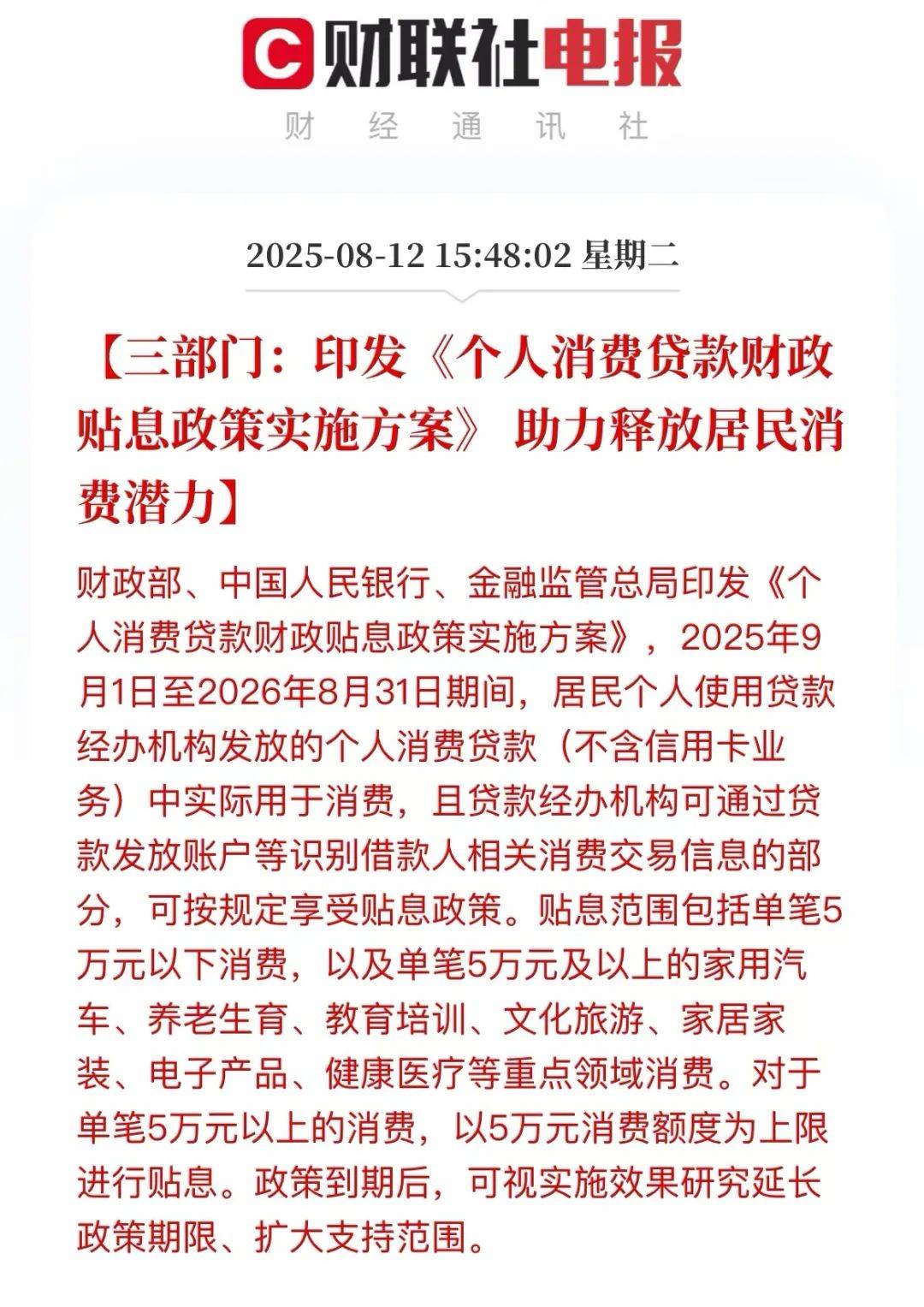
Core Viewpoint - The article discusses the challenges of boosting consumer spending in the context of debt deleveraging, suggesting that the consumer loan interest subsidy policy may not be sufficient on its own and that a multi-faceted approach is necessary to achieve desired outcomes [1][5]. Summary by Sections Consumer Loan Interest Subsidy Policy - On August 12, the Ministry of Finance and other departments issued the implementation plan for the personal consumer loan interest subsidy policy, which aims to reduce financing costs in the consumer sector [2]. - This policy represents a shift in fiscal policy towards more direct support for households and individuals, including initiatives like cash subsidies for childcare [2]. - The subsidy is limited in scope and should not be overinterpreted as a replacement for other consumer incentives, such as trade-in subsidies [2][3]. Relationship Between Consumer Loans and Spending - The relationship between consumer loans and retail consumption growth is complex, with evidence suggesting that increased consumer loans do not necessarily lead to higher consumption levels [3]. - Despite a significant reduction in average consumer loan interest rates from 6% to 3% since 2022, the growth rate of household consumer loans has declined [3]. Impact on Financial Institutions - The subsidy policy allows for a maximum interest reduction of 1 percentage point, potentially lowering consumer loan rates to 2% [4]. - This creates a competitive advantage for major banks and leading consumer finance companies, while smaller local banks may face challenges due to the lack of coverage under the policy [4]. - The policy is part of a broader set of measures aimed at stimulating consumption, including significant funds allocated for service consumption and other subsidies [4].

杭银消金致献巨力奋斗者——巨力职工专享夏日送清凉活动成功举办
Sou Hu Cai Jing· 2025-08-19 07:11
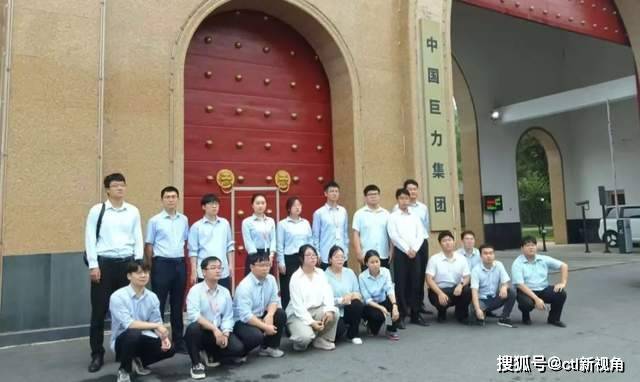
近日,巨力集团工会委员会、刘伶醉酿酒股份有限公司、杭银消费金融股份有限公司携手举办——"惠 泽巨力人·窖藏清凉夏"巨力职工专享夏日送清凉活动。 此次活动在巨力集团办公大楼西厅和刘伶醉新酒厂多功能厅同步开展,以金融知识赋能与品质美酒礼遇 双重关怀,向每一位坚守岗位的巨力人致以诚挚敬意,只要是巨力集团内部员工都可以免费参加。 巨力集团作为坚实桥梁,促成杭银消金与刘伶醉首次跨界协作,"金融+消费"生态共振,让关怀直达职 工生活场景,展现了杭银消金和刘伶醉以专业之力护航职工生活,以匠心之美礼赞奋斗人生的美好愿景 和双向奔赴。 本次活动覆盖了巨力集团旗下索具、刘伶醉、地产等各产业员工。 活动现场,杭银消金工作人员积极指导,热情服务,传递了"包容开放、普惠百姓"的品牌温度,每一位 员工都领到了刘伶醉美酒等专属福利。 ...
趣店上涨2.14%,报4.77美元/股,总市值7.88亿美元
Jin Rong Jie· 2025-08-18 14:00
Core Viewpoint - Qudian Inc. (QD) has experienced a stock price increase of 2.14%, reaching $4.77 per share, with a total market capitalization of $788 million as of August 18 [1] Financial Performance - As of June 30, 2025, Qudian's total revenue amounted to 29.279 million RMB, representing a year-over-year decrease of 73.18% [1] - The company's net profit attributable to shareholders was 462 million RMB, showing a significant year-over-year increase of 1664.4% [1] Company Overview - Qudian Inc. is a consumer-oriented technology company based in China, initially focused on providing lending solutions to consumers [1] - The company is currently exploring innovative consumer products and services, leveraging its technological advantages to meet the basic needs of Chinese consumers [1]

【Fintech 周报】消费贷款贴息落地;微信“分付”灰度上线“借款”功能;银行业“反内卷”持续升级
Tai Mei Ti A P P· 2025-08-18 08:39
Regulatory Dynamics - The Hong Kong Monetary Authority (HKMA) is adopting a strict and prudent approach to approving stablecoin issuer license applications, with only a few licenses to be granted initially [2] - As of the end of Q2 2025, China's banking sector showed resilience with total assets reaching 467.3 trillion yuan, a year-on-year increase of 7.9%, while the net interest margin stabilized at 1.42%, down 0.01 percentage points from Q1 [3] Industry Dynamics - The banking sector is undergoing a "de-involution" process, with regulations being implemented to standardize personal housing loan markets, including the prohibition of "rebate" practices in mortgage lending [4] - A new fiscal subsidy policy for personal consumption loans will be implemented starting September 1, 2025, with 19 banks and 4 consumer finance companies selected as eligible institutions [4] - Local state-owned assets have increased their stakes in private banks, with three cases reported, primarily due to the operational difficulties faced by original private shareholders [4] Company Dynamics - Minsheng Bank has terminated its fund distribution partnerships with third-party platforms "Yutong Life" and "Huawei Wallet" in response to new regulations [5] - Changshu Bank reported a 10% increase in revenue and a 13.5% increase in net profit for the first half of 2025, with investment income contributing significantly to its profits [5] - China Pacific Insurance announced plans to abolish its supervisory board, marking a significant governance change [6] - China Agricultural Reinsurance has appointed a new chairman, Li Youxiang, following the resignation of Zhao Yang [6] - Chengdu Bank has announced a leadership change, with Huang Jianjun taking over as chairman [7] - Ping An Insurance has increased its stake in China Pacific Insurance to 5.04% by purchasing shares worth 55.84 million HKD [8] - Zhaolian Consumer Finance reported a 13% decline in net profit for the first half of 2025, with total assets decreasing by 3.58% [8] - Tencent's financial technology segment saw a 10% revenue growth to 55.5 billion yuan in Q2 2025, driven by commercial payment and wealth management services [9]

苏州市领导在昆山调研服务业发展情况
Su Zhou Ri Bao· 2025-08-16 23:54
Core Viewpoint - The focus is on enhancing the service industry in Suzhou through innovation, market demand alignment, and strong support for enterprises, particularly in the context of integrating modern service and advanced manufacturing sectors [1][2]. Group 1: Service Industry Development - Emphasis on the construction of the "1840" service industry system in Suzhou, aiming for high-quality development and new momentum injection [1]. - The need to strengthen industrial planning and seize opportunities for expanding service industry openness, particularly through the integration of productive services with manufacturing [2]. Group 2: Innovation and Market Demand - A call for innovation-driven approaches, particularly in "industry innovation + cultural creativity," to elevate the service industry along the value chain [2]. - Focus on developing various economic sectors such as emotional economy, health economy, silver economy, pet economy, and event economy to stimulate consumer spending [2]. Group 3: Support for Enterprises - Recognition of the role of Taiwanese businesses in Suzhou's development, with a commitment to optimizing service guarantees for Taiwanese investors [1]. - The importance of addressing enterprises' needs for land, labor, and financing to create a favorable ecosystem for service industry growth [2].
消费大变革来了,抓住红利期!
Sou Hu Cai Jing· 2025-08-16 06:53
Core Viewpoint - The recent financial data from the central bank indicates a significant decline in consumer lending and a weak willingness among residents to leverage for consumption, reflecting a lack of confidence in the current and future economic conditions [1][3]. Group 1: Financial Data Overview - In July, new social financing amounted to 1.16 trillion yuan, a year-on-year increase of 389.3 billion yuan, which was below the market expectation of 1.41 trillion yuan [1]. - New RMB loans were negative at -50 billion yuan, marking the first negative figure since July 2005 [1]. - New resident loans were -489.3 billion yuan, a decrease of 279.3 billion yuan year-on-year, indicating a "double negative" state for the second time since April [1]. Group 2: Government Response - On July 31, the State Council announced the implementation of a personal consumption loan interest subsidy policy [5]. - A plan was issued on August 12, providing a 1% interest subsidy for personal consumption loans and loans for service industry operators, effective from September and lasting for one year [6]. - The subsidy will cover major state-owned banks and leading consumer finance companies, with the central government bearing 90% of the costs [6]. Group 3: Impact of Subsidy - The subsidy applies to single loans below 50,000 yuan and for key consumption areas such as automobiles, education, and healthcare, with a maximum subsidy of 50,000 yuan [8]. - Each individual can receive a maximum annual subsidy of 3,000 yuan, which corresponds to a cumulative consumption amount of 300,000 yuan [9]. - The 1% subsidy can significantly reduce the interest burden, effectively cutting one-third of the interest costs for consumers [10]. Group 4: Consumer Behavior Insights - Despite government efforts to stimulate consumption, there remains a reluctance among consumers to take on debt due to concerns about repayment [12][19]. - The article warns against excessive consumption and leveraging, emphasizing that consumer loans do not create wealth and can lead to financial struggles [14][23]. - Historical examples illustrate the dangers of over-leveraging for consumption, highlighting cases where individuals faced severe financial consequences due to high debt levels [20][21]. Group 5: Strategic Recommendations - The article suggests that consumers should utilize the low-interest loans to refinance existing high-interest debts rather than incurring new debts for consumption [25]. - It advocates for a strategic approach to personal finance, emphasizing the importance of saving and planning over impulsive spending [32][34].