文旅产业

Search documents
国家级课题落地青岛国际邮轮港区
Da Zhong Ri Bao· 2025-10-20 01:00
Core Insights - The Ministry of Culture and Tourism has officially approved the support for the Qingdao International Cruise Port Area to conduct a national-level major research project aimed at exploring the "Qingdao model" for cruise homeport consumption facility construction and scene enhancement, filling a research gap in the domestic sector [1] - The project focuses on "facility upgrades, diverse business formats, and seamless integration of scenes," promoting the transformation of the cruise homeport from a "transportation hub" to a "cultural tourism consumption landmark" [1] Industry Developments - Qingdao's cruise economy is showing strong momentum, with an expected reception of 71,000 passengers in 2024, ranking fifth nationwide; nearly 30 voyages are anticipated to operate in 2025 [1] - The industrial chain layout is accelerating, with the introduction of regional headquarters of cruise companies and listed cultural tourism enterprises [1] Infrastructure and Project Plans - The Qingdao International Cruise Port Area is undergoing rapid development, with 17 key projects, including "World Eye" and Container Tribe, planned to be fully operational by 2026, aiming to create a future experience center that integrates cultural tourism, arts, and coastal leisure [1] - With the improvement of supporting infrastructure such as subways and road networks, the port area is rapidly emerging as a modern international port city that integrates industry and lifestyle [1]
来河南邂逅一场深秋特制浪漫
He Nan Ri Bao· 2025-10-19 23:35
Group 1 - The Kaifeng Chrysanthemum Cultural Festival showcases 1.3 million pots of chrysanthemums, transforming the city into a golden sea of flowers, attracting numerous tourists [1] - Kaifeng, as one of the first national historical and cultural cities, has a rich history of chrysanthemum cultivation dating back to the Northern and Southern Dynasties, flourishing during the Tang and Song Dynasties [1] - The festival reflects the resilience of Kaifeng, a city that has endured natural disasters and wars, symbolizing the spirit of the local people [1] Group 2 - The Henan Museum features ancient artifacts like the Lianhe Fanghu and Jiahu bone flute, highlighting the region's historical significance and cultural heritage [2] - The Anyang Yin Ruins Museum offers an immersive experience through AR technology, allowing visitors to witness the legendary female military leader Fu Hao [2] - The "Only Henan · Drama Fantasy City" provides an interactive theatrical experience, breaking the boundaries between audience and performance, enhancing cultural engagement [2] Group 3 - Henan is actively promoting cultural prosperity and the integration of cultural and tourism industries, aiming to transform cultural resource advantages into developmental strengths [2] - The province's initiatives include the "One Yuan Lunch" program and free rain gear distribution at scenic spots, reflecting a sincere hospitality approach [3] - The blending of traditional and contemporary experiences in Henan invites visitors to explore the region's rich history and vibrant culture [3]
2025世界农业科技创新大会“一带一路”现代农业与文旅产业创新发展高峰论坛举行
Zhong Guo Jin Rong Xin Xi Wang· 2025-10-19 08:52
Core Viewpoint - The 2025 World Agricultural Technology Innovation Conference emphasizes the integration of industrial agriculture with advanced manufacturing and modern cultural tourism, aiming to promote the "Belt and Road" initiative and sustainable development in agriculture [1][3]. Group 1: Conference Highlights - The conference featured discussions on the implementation of industrial agriculture and the creation of industry clusters that combine agriculture, advanced manufacturing, and cultural tourism [1]. - Aladdin Group's chairman highlighted the company's efforts in integrating industrial agriculture with food processing, cold chain logistics, and robotics, aiming for a sustainable development model [3]. - The conference included keynote speeches from various experts on topics such as biotechnology's role in agricultural modernization and the challenges and opportunities facing Chinese agriculture [4]. Group 2: Initiatives and Awards - The "Lamp Award" was officially launched to recognize significant breakthroughs in industrial agriculture research, aimed at top scientists globally [4]. - Aladdin Group presented its strategic planning and industry layout for promoting modern agriculture in China during the "Aladdin Industrial Agriculture Release Conference" [5]. - The World Agricultural Technology Innovation Conference serves as a global platform for collaboration and innovation in agricultural systems, promoting interaction among government, industry, academia, and research [5].

平陆运河风物志㊾ | 此心安处是老街
Guang Xi Ri Bao· 2025-10-19 01:51
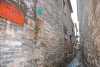
Core Insights - The article highlights the transformation of Qinzou Old Street into a vibrant cultural and tourism hub, showcasing its historical significance and modern revitalization efforts [4][9]. Summary by Sections Historical Significance - Qinzou Old Street, with its layout of "two vertical and seven horizontal" streets, spans approximately 300,000 square meters and reflects the historical evolution of the city from the Song Dynasty to the Republic of China [4]. - The area is a living representation of Qinzou's culture, blending Maritime Silk Road culture, hero culture, Lingnan culture, and Nixing pottery culture [4]. Revitalization Efforts - The revitalization project began in 2019 and reopened in 2021, featuring 12 cultural heritage sites and over 400 historical buildings, positioning it as a model for urban cultural tourism integration [4][9]. - Future plans include developing an ancient city market and a red culture experience park to further enhance the area's vibrancy [9]. Cultural Attractions - "One Meter Alley," a narrow street with historical significance, has become a popular photo spot for tourists, symbolizing community spirit and historical legacy [5][7]. - The area retains its traditional charm with various industry-themed streets, such as Iron Street and Old Rice Alley, which narrate the past prosperity of the region [9]. Local Businesses - Local businesses, such as "Old Alley: Long Yi," have emerged, offering a blend of private dining, book bar, and intangible cultural heritage displays, attracting art enthusiasts and tourists alike [8]. - The culinary scene is thriving, with diverse food offerings that enhance the street's appeal, contributing to its status as a major cluster for cultural and commercial integration [9].
GDP更新!我国50强城市排名出炉:西安增速12.21%,大连逆袭唐山,沈阳约4300亿!
Sou Hu Cai Jing· 2025-10-19 01:30
Core Insights - The new competitive landscape of China's top 50 cities by GDP in the first half of 2025 is shaped by national regional development strategies and urban industrial transformations, with cities like Xi'an, Dalian, and Shenyang showing significant growth and competitive dynamics [1][3][16] GDP Rankings and Growth Rates - Nine cities surpassed the trillion yuan GDP mark, with Shanghai (26,222.15 billion) and Beijing (25,029.2 billion) leading the list, followed by Shenzhen, Chongqing, and Guangzhou [3][4] - Xi'an achieved a remarkable growth rate of 12.21%, while other cities like Hangzhou (11.5%) and Shenyang (10.76%) also performed well; in contrast, Tianjin (3.09%) and Yulin (-0.55%) lagged behind [3][5] Xi'an's Economic Drivers - Xi'an's GDP reached 6,358.16 billion with a growth rate of 12.21%, benefiting from its strategic location as a national central city and the starting point of the Silk Road [8][9] - The city's economy is driven by "hard technology" and "cultural tourism," with high-tech industries accounting for over 55% of industrial output and tourism revenue growing over 20% [9][10] Dalian's Competitive Edge - Dalian's GDP was 4,647 billion with a growth rate of 9.01%, leveraging its coastal location as a Northeast Asia shipping hub [10][11] - The city has diversified its industrial base beyond steel, focusing on high-end equipment manufacturing and emerging industries like biomedicine, which saw growth rates exceeding 12% [10][11] Shenyang's Industrial Revival - Shenyang's GDP reached 4,293.23 billion with a growth rate of 10.76%, positioning itself as a benchmark for Northeast revitalization [13][15] - The city is enhancing its industrial foundation through upgrades in equipment manufacturing and digital economy sectors, supported by favorable policies and infrastructure improvements [13][15]

文物活化、非遗传承、文旅融合 多视角感知中华文脉在传承中创新、在开放中焕彩
Yang Shi Wang· 2025-10-18 08:43
Core Perspective - The article highlights the significant advancements in cultural heritage and tourism in China during the "14th Five-Year Plan" period, showcasing the integration of technology and cultural preservation efforts [1]. Group 1: Cultural Heritage and Technological Integration - Over 130,000 new cultural heritage sites have been discovered, and nearly 2,000 national protection units are undergoing restoration [1]. - The use of virtual reality (VR) technology at the Sanxingdui Museum allows visitors to experience archaeological sites, enhancing engagement with ancient artifacts [3][7]. - AI technology has been employed to reconstruct ancient artifacts, such as the 2.53-meter bronze bird-foot statue, by accurately matching and assembling fragments from different excavation sites [9]. Group 2: Cultural and Tourism Industry Growth - The cultural tourism industry in China has seen a revenue surge, exceeding 10 trillion yuan, with museums receiving nearly 1.5 billion visitors annually [1]. - The Sanxingdui Museum has introduced various creative cultural products, such as bags and keychains featuring bronze figures, making ancient culture more accessible and appealing to younger audiences [10][12]. - In Gansu, the "Digital Dunhuang" project aims to reunite lost artifacts through digital means, attracting nearly 30,000 visitors from 29 countries since its launch [21]. Group 3: Regional Cultural Developments - Tibet's cultural tourism sector has welcomed over 57 million visitors in the first eight months of 2025, marking an 11.3% increase year-on-year, with cultural industry output exceeding 10 billion yuan [28]. - The "Village T" fashion show in Guizhou has gained national attention, showcasing local ethnic cultures and significantly boosting sales of traditional handicrafts [38].

看!河南如何为城市发展探出新路
He Nan Ri Bao· 2025-10-17 23:16
Core Insights - The article discusses the transformation of urbanization in China over the past 40 years, highlighting the shift from rural to urban living and the implications for economic development and social change in regions like Henan [1][3]. Urban Development and Economic Growth - Approximately two-thirds of China's population now resides in urban areas, reflecting significant changes in living conditions and economic dynamics [1]. - Since the start of the 14th Five-Year Plan, Henan has added 2.87 million urban residents, bringing the total number of cities in the province to 38, with Zhengzhou emerging as a major urban center [3][5]. - The economic output of the Zhengzhou metropolitan area is projected to reach 2.53 trillion yuan in 2024, accounting for 39.7% of the province's total economic output [3]. Challenges and Strategic Shifts - Rapid urban growth has led to challenges such as environmental pollution, traffic congestion, and diverse public demands, necessitating a shift in urban development focus from quantity to quality [4]. - The Central Urban Work Conference has emphasized a strategic pivot in urban development, urging local governments to adapt their approaches to align with evolving circumstances [4]. Development Framework and Regional Strategy - Henan aims to establish a differentiated urban development strategy, avoiding a "one-size-fits-all" approach by leveraging its unique geographical and resource characteristics [5]. - The proposed development framework includes a primary city (Zhengzhou), two secondary cities (Luoyang and Nanyang), and a coordinated urban system that supports both large and small cities [5][6]. Innovation and Infrastructure - Nanyang is enhancing its economic landscape by fostering innovation among various business entities and improving its logistics network, which has seen a significant increase in A-level logistics companies [6]. - The region's GDP reached 238.98 billion yuan in the first half of the year, reflecting a year-on-year growth of 6.3% [6]. Sustainable Urban Development - The article emphasizes the need for urban development to be more sustainable and people-centered, focusing on improving public services, infrastructure, and community engagement [8]. - Initiatives include promoting smart living environments, enhancing urban safety, and creating world-class tourist destinations in cities like Zhengzhou, Kaifeng, Luoyang, and Anyang [8].
海外嘉宾点赞敦煌文旅产业守正创新
Ren Min Ri Bao Hai Wai Ban· 2025-10-17 00:55
Core Insights - The articles highlight the cultural and tourism potential of Dunhuang, emphasizing its historical significance and modern developments in the tourism sector [1][2] Group 1: Cultural Heritage and Innovation - Dunhuang is portrayed as a hub of cultural heritage, with initiatives aimed at revitalizing its historical assets through modern technology and artistic expression [1] - The Dunhuang Printing House combines traditional cultural elements with modern printing techniques, allowing visitors to engage with the heritage in innovative ways [1] - The "Dunhuang Wujie" art space exemplifies the successful integration of cultural IP with contemporary design, creating an immersive cultural experience [1] Group 2: Tourism and Economic Development - The Dunhuang Night Market has evolved into a comprehensive venue for food, shopping, entertainment, and culture, attracting both locals and tourists [2] - The market's success is attributed to stable security, effective municipal management, and a steady flow of visitors, which are essential for its vibrancy [2] - Events like the "Lively Dunhuang" performances and the "Ten Thousand Stars Concert" at Mingsha Mountain enhance the cultural tourism experience, blending ancient Silk Road heritage with modern entertainment [2]
辽宁省文旅推介展示活动在沈举行
Liao Ning Ri Bao· 2025-10-16 01:05
Core Viewpoint - The event "Seeing: A Different Liaoning" aims to promote Liaoning's cultural and tourism resources, showcasing its brand image to attract domestic and international visitors and investors [1] Group 1: Cultural Promotion - The event featured the "Thousand Miles Together Liaoning" cultural and artistic promotion, highlighting the charm of Liaoning's culture through performances such as the dances "Red Mountain" and "Thousand Miles" [1] - The initiative seeks to awaken the memory of Liaoning's civilization and outline a new chapter in the development of its cultural tourism [1] Group 2: Industry Integration - A special exhibition of Liaoning's cultural tourism industry was held, featuring seven major exhibition areas including cruise and yacht industry, low-altitude tourism, RV camping, ice and snow projects, animation and entertainment, hot spring industry, and sports tourism [1] - The event demonstrated the deep integration of Liaoning's cultural tourism industry with transportation, agriculture, industry, sports, health, and digital sectors, showcasing a multi-dimensional approach to development [1]
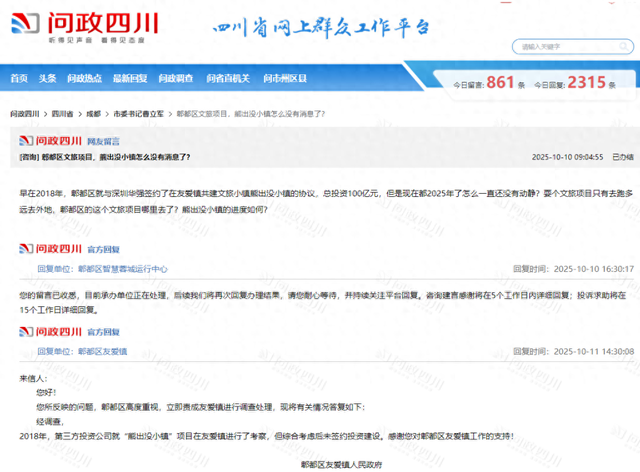
成都郫都区拟建“熊出没小镇”时隔7年没动静?回应:未签约投资建设
Xin Lang Cai Jing· 2025-10-15 02:47
Core Viewpoint - The Chengdu Pidu District's "Boonie Bears Town" project, initially announced in 2018 with a planned investment of 10 billion yuan, has not progressed due to the lack of a signed investment agreement with a third-party company [1][2]. Group 1: Project Background - In 2018, Chengdu's investment promotion event led to the signing of 28 projects with a total investment of 860.2 billion yuan, including the "Boonie Bears Town" project by Shenzhen Huaqiang Group, which was to be located in Pidu District's Youai Town [1]. - The project was intended to cover an area of 2,000 acres and include various facilities such as a cultural street, creative industry base, leisure commercial areas, and international community [1]. Group 2: Project Features - The "Boonie Bears Town" project was designed to integrate elements from the "Boonie Bears" animation IP with local cultural characteristics, aiming to create an immersive experience that combines culture, entertainment, leisure, tourism, and education [2]. - Planned features included leisure entertainment, cultural creativity, educational expansion, specialty dining, family experiences, and unique hotels [2]. Group 3: Related Developments - A related project, "Boonie Bears Happy Harbor," opened in Zhejiang's Linhai in early 2024, attracting over 1.1 million visitors within three months, becoming a popular tourist destination [2][4].