
家电

Search documents
昆明印发工作措施推动一季度经济良好开局
Xin Lang Cai Jing· 2026-02-04 22:38
Core Viewpoint - The Kunming Municipal Development and Reform Commission has issued the "Economic Good Start Work Measures for the First Quarter of 2026," focusing on enhancing consumption, stabilizing industrial growth, promoting key projects, and ensuring livelihood through various initiatives to lay a solid foundation for economic development in the year ahead [1] Group 1: Policy Implementation - Kunming will strengthen policy implementation by enhancing policy publicity and support for enterprises, including the introduction of measures to cultivate and manage "six up" enterprises and launching a series of agile policies to effectively assist enterprise growth [1] - Specific measures will be project-based, checklist-oriented, and detailed to ensure effective support for enterprise development [1] Group 2: Economic Growth Stabilization - The city aims to stabilize industrial growth, solidify the service sector, and maintain stability in real estate and construction through various initiatives, including accelerating the disbursement of provincial industrial growth policy funds and boosting market confidence [2] - Focus will be on new production and upgraded enterprises to ensure they are included in statistical reporting, alongside the implementation of several "good housing" projects [2] Group 3: Investment Promotion - Kunming plans to implement high-level project planning, secure funding, and drive investment growth in key sectors, with 78 industrial projects, including those from Ningde Times and YTO Express, set to commence in the first quarter [2] - The city will also advance urban village renovations and affordable housing projects to enhance investment stability [2] Group 4: Consumption and Trade Enhancement - Initiatives to boost consumption include a new round of trade-in programs for consumer goods, promoting cultural tourism and service consumption, and supporting the recovery of wholesale and retail sectors [2] - Specific actions include supporting trade-ins for automobiles and electronics, launching a "prize invoice" pilot program, and enhancing tourism experiences through various incentives [2] Group 5: Industry Attraction and Business Environment - Kunming will accelerate the transformation of investment results, actively attract industrial transfers, and continuously improve the business environment [3] - The city will implement a "10+N" industrial chain strategy and create a series of "Entrepreneur Day" events to foster a business-friendly atmosphere [3] Group 6: Livelihood and Risk Management - Measures to stabilize and expand employment, ensure basic livelihood security, and coordinate development and safety will be implemented [3] - Initiatives include launching entrepreneurship support policies, conducting job assistance activities, and ensuring adequate supply and stable prices for essential goods [3]
新国补落地首月相关产品销售超1500万台
Xin Lang Cai Jing· 2026-02-04 20:31
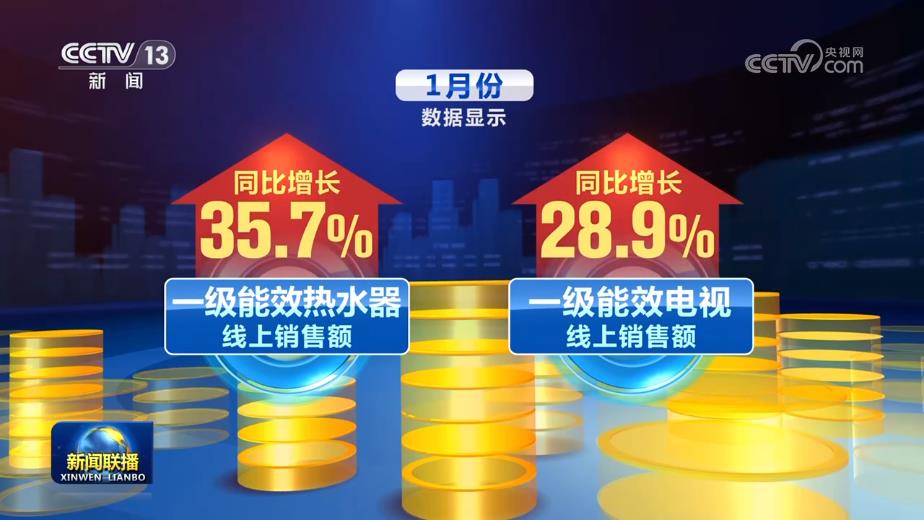
Core Insights - The implementation of the appliance trade-in and digital product subsidy policy has shown positive effects, with significant sales figures reported in January [1] Group 1: Sales Performance - In January, sales of six categories of home appliances and four categories of digital and smart products exceeded 15 million units, generating nearly 59 billion yuan in sales [1] - The trade-in program for home appliances resulted in 6.813 million units sold, driving sales of 29.71 billion yuan, while the purchase of new digital and smart products reached 9.115 million units, contributing 29.21 billion yuan in sales [1] - Offline sales for both home appliance trade-ins and new digital product purchases accounted for nearly 80% of total sales, showing a year-on-year growth of approximately 20% [1] Group 2: Policy Impact - The subsidy standard for home appliance trade-ins has been raised to first-level energy efficiency, accelerating the sales of high-performance appliances [1] - Online sales of first-level energy-efficient water heaters and televisions increased by 35.7% and 28.9% year-on-year, respectively [1] - The share of mid-to-high-end smartphone models in sales exceeded 70%, and smart glasses were included in the subsidy program for the first time, achieving sales of 7.197 million yuan [1] Group 3: Future Directions - The Ministry of Commerce plans to continue supporting the implementation of the trade-in and subsidy policies, focusing on enhancing support for offline retail and promoting the replacement of old products with new ones [1]
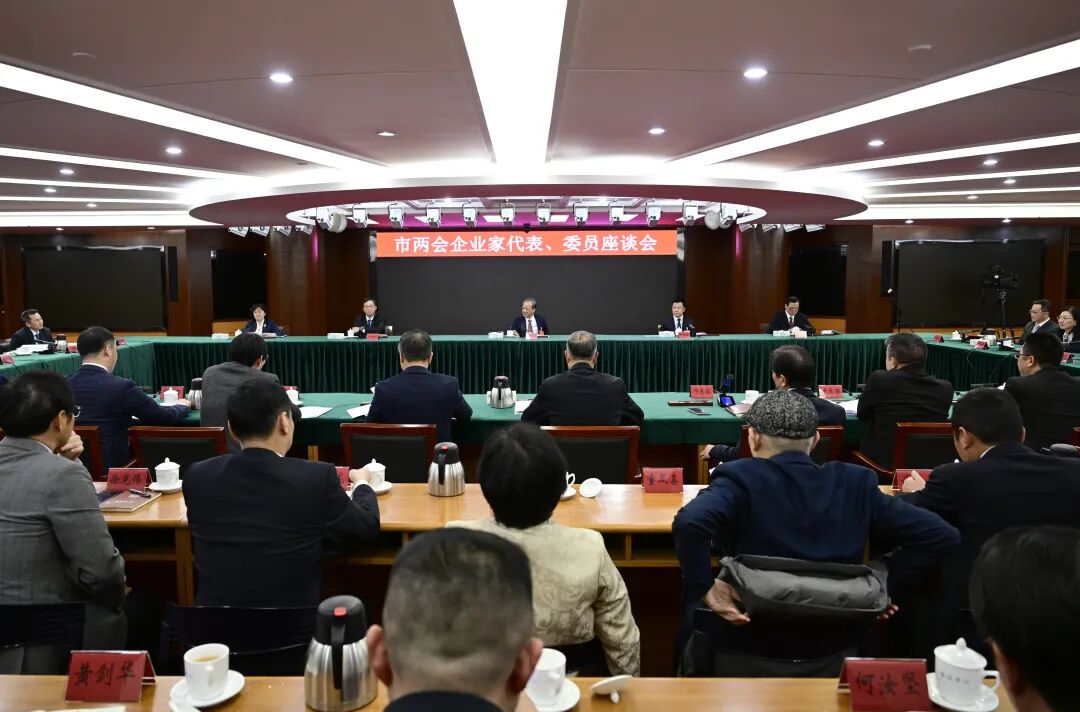
郭文海尹念红与市两会企业家代表、委员座谈:凝聚政企同心拼经济强大动力 以愚公移山之志攻坚克难争先进位
Xin Lang Cai Jing· 2026-02-04 17:28
Core Viewpoint - The meeting emphasized the importance of collaboration between government and enterprises to drive economic growth and ensure a strong start to the "14th Five-Year Plan" period [1][6]. Group 1: Government Support and Initiatives - The city government is committed to supporting traditional manufacturing industries, which are considered the foundation of the local economy, by promoting digital and intelligent transformation policies [5]. - The government encourages enterprises to leverage the "industrial transformation" policy to optimize and upgrade their operations, with a focus on sectors like lighting, furniture, home appliances, clothing, and hardware [5]. - The city plans to continue hosting promotional events, such as "Guangdong Goods Going Global," to enhance the visibility of local products and facilitate market expansion [5]. Group 2: Business Engagement and Feedback - Business leaders expressed their appreciation for the favorable business environment and efficient government workforce, sharing successful examples of collaboration between government and enterprises [3]. - Entrepreneurs are encouraged to submit leads for investment opportunities that align with their supply chains to assist in the city's high-quality development [3]. - The government is tasked with actively addressing business concerns and ensuring that all suggestions are acknowledged and acted upon [3][6]. Group 3: Future Goals and Economic Development - The city aims to create a first-class business environment that fosters innovation and growth, with a focus on overcoming challenges and achieving significant results in key areas such as industrial transformation and environmental management [6]. - The leadership calls for a collective effort from entrepreneurs and government to achieve the economic and social development goals set for the year, emphasizing the need for proactive market exploration and collaboration [6].

2025年A股1442家公司预亏,行业“亏损王”浮出
第一财经· 2026-02-04 14:59
Core Viewpoint - In the 2025 annual performance forecast disclosure for A-share listed companies, nearly half of the 2957 companies are expected to report losses, indicating a significant downturn in various sectors, particularly in real estate [5][6]. Group 1: Overall Performance Forecast - A total of 2957 A-share listed companies disclosed their performance forecasts, with 623 companies expecting profit increases and 378 expecting profit decreases [5][6]. - Among the companies, 1442 are expected to incur losses, accounting for 49% of those disclosing forecasts, while 1863 companies (63%) are either expecting losses or profit reductions [6]. - The provinces with the highest number of companies forecasting losses include Guangdong (257), Beijing (172), and Jiangsu (160) [7]. Group 2: Provincial Distribution of Losses - Hainan province has the highest loss ratio, with 44.44% of its companies (12 out of 27) expecting losses [9]. - Jilin and Qinghai follow with loss ratios of 41.67% and 40%, respectively [9]. - Other provinces with significant loss ratios include Liaoning (39.29%) and Xinjiang (37.10%) [9]. Group 3: Industry-Specific Losses - The IT services and software development sectors have the highest number of companies forecasting losses, with 60 companies each, followed by the real estate sector with 54 companies [11]. - Vanke A is identified as the "loss king" of A-shares, expecting a net profit loss of approximately 82 billion yuan due to declining project settlement scales and increased business risks [11][12]. - Other notable companies with high expected losses include China Fortune Land Development (160-240 billion yuan) and Greenland Holdings (160-190 billion yuan), both from the real estate sector [12]. Group 4: Notable Losses in Other Sectors - The retail sector's "loss king" is Meikailong, expecting a net profit loss between 150 billion and 225 billion yuan, primarily due to losses in investment properties [13]. - In the home appliance sector, Shenkangjia A anticipates a loss of 125.81 billion to 155.73 billion yuan, driven by increased impairment provisions and declining sales [13]. - The vaccine industry is also facing challenges, with Zhifei Biological Products forecasting a loss of 106.98 billion to 137.26 billion yuan due to decreased public willingness to receive vaccinations [13].






巴州税务全力保障以旧换新新政顺利实施
Sou Hu Cai Jing· 2026-02-04 14:02
Core Insights - The Xinjiang region has launched an upgraded subsidy policy for replacing old consumer goods, which has significantly boosted consumer enthusiasm in the Bayingolin Mongol Autonomous Prefecture [1][2] - The local tax authority is actively facilitating the implementation of this policy to ensure that consumers and businesses can effectively benefit from the subsidies [1] Group 1: Policy Implementation - The Xinjiang Uyghur Autonomous Region's Commerce Department announced the new subsidy policy on January 14, 2026, leading to a noticeable increase in foot traffic and sales in appliance, digital, and automotive markets [1] - The Bayingolin tax bureau has focused on optimizing service measures to ensure taxpayers understand the policy, can operate effectively, and enjoy the benefits [1] Group 2: Business Impact - Local businesses, such as the Yili County Haitong Trading Company, reported a significant increase in customer traffic and order volume since the launch of the national subsidy program [1] - The tax department has provided targeted guidance to businesses on tax-related matters, including subsidy applications and invoicing, to help them mitigate tax risks and ensure the effective release of subsidy benefits [1][2] Group 3: Consumer Response - Consumers have shown a marked increase in inquiries and purchases at sales outlets, indicating a positive response to the subsidy policy [2] - Business owners have expressed satisfaction with the increased sales and the support from tax authorities in navigating tax compliance, enhancing both consumer and merchant confidence [2]
A股2025亏损画像:1442家公司预亏 行业“亏损王”浮出
Di Yi Cai Jing· 2026-02-04 13:19
Core Viewpoint - Nearly half of the 2957 A-share listed companies that disclosed their 2025 annual performance forecasts are expected to incur losses, indicating a significant downturn in the market [1][2]. Provincial Distribution - The provinces with the highest proportion of companies expecting losses are Hainan (44.44%), Jilin (41.67%), and Qinghai (40%) [3][4]. - Guangdong has the highest number of companies expecting losses at 257, followed by Beijing (172), Jiangsu (160), and Zhejiang (133) [3]. Industry Analysis - The real estate sector is identified as the most affected, with Vanke A (000002.SZ) projected to be the "loss king" with an expected net profit loss of approximately 82 billion yuan [6][7]. - Other industries with significant losses include IT services, semiconductors, and chemical pharmaceuticals, with the number of companies expecting losses in these sectors ranging from 40 to 60 [6][8]. Notable Companies - Vanke A leads the losses in the real estate sector, followed by China Fortune Land Development (华夏幸福) with expected losses between 16 billion to 24 billion yuan, and Greenland Holdings (绿地控股) with losses estimated at 16 billion to 19 billion yuan [6][7]. - In the retail sector, M.K. Home (美凯龙) is projected to incur losses between 15 billion to 22.5 billion yuan, primarily due to investment property valuation losses [7]. - In the electronics sector, Deep Kangjia A (深康佳A) is expected to report losses of 12.58 billion to 15.57 billion yuan, attributed to increased impairment provisions and declining revenue [7]. Sector-Specific Losses - The photovoltaic industry is also facing challenges, with Tongwei Co. (通威股份) expected to incur losses of 9 billion to 10 billion yuan due to supply surplus and rising raw material costs [8]. - In the semiconductor sector, Wentai Technology (闻泰科技) anticipates losses of 9 billion to 13.5 billion yuan, influenced by significant investment losses and asset impairments [8].
A股2025亏损画像:1442家公司预亏,行业“亏损王”浮出
Di Yi Cai Jing· 2026-02-04 13:07
Core Viewpoint - Nearly half of the A-share listed companies are expected to report losses for the 2025 fiscal year, with significant regional and industry disparities in the distribution of these losses [2][3]. Group 1: Regional Distribution of Losses - A total of 2,957 A-share companies disclosed their performance forecasts, with 1,442 companies expected to incur losses, representing 49% of the total [3]. - Hainan, Jilin, and Qinghai have the highest proportions of companies forecasting losses, exceeding 40%, with Hainan at 44.44% [4][5]. - Guangdong has the highest number of loss-making companies at 257, followed by Beijing (172), Jiangsu (160), and Zhejiang (133) [4]. Group 2: Industry Analysis - The real estate sector is the most affected, producing the highest number of loss-making companies, including the "loss king" Vanke A, which is expected to report a loss of approximately 82 billion yuan [7][8]. - Other industries with significant losses include IT services, semiconductors, and chemical pharmaceuticals, with 60, 50, and 40-50 companies respectively forecasting losses [7]. - The top ten companies with the highest expected losses include five from the real estate sector, with notable losses from China Fortune Land Development and Greenland Holdings [7][8]. Group 3: Specific Company Losses - Vanke A's losses are attributed to a significant decline in project settlement scale and increased business risks, leading to credit and asset impairment provisions [7]. - Other major loss-makers include China Fortune Land Development, expected to lose between 16 billion to 24 billion yuan, and Greenland Holdings, with losses projected between 16 billion to 19 billion yuan [8]. - In the retail sector, M.K. Home is expected to report losses of 15 billion to 22.5 billion yuan due to investment property valuation losses [8]. - Semiconductor company Wentech Technology anticipates losses of 9 billion to 13.5 billion yuan, primarily due to significant investment losses and asset impairments [9].


每经热评丨中国品牌与澳网“碰杯” “借赛出海”尚需三重角色转变
Mei Ri Jing Ji Xin Wen· 2026-02-04 12:31
首先,要从"流量收割者"转变为"文化叙事者",摆脱单纯的流量依赖与浅层曝光。品牌需紧扣赛事所传 递的拼搏、优雅、精准、共赢等核心精神,结合自身的文化基因与品牌理念,创作专属的品牌内容,实 现赛事精神与品牌价值的同频共振。 其次,要从"资源购买者"转变为"生态共建者",超越单纯的权益购买,实现与赛事的双向赋能。事实 上,顶级国际赛事的核心魅力,在于其完善的生态体系与庞大的社群基础,品牌唯有主动融入这一生 态,为赛事及其社群创造增量价值,才能实现从"旁观者"到"参与者"、从"使用者"到"共建者"的升级。 最后,要从"合约合作方"转变为"价值深耕者",以长期主义思维,积累可延续、可增值的品牌资产。国 际化之路从来不是一蹴而就的,需要品牌坚守长期主义,将每一次赛事合作都视为品牌资产积累的重要 契机,让短期合作的影响力持续放大。 中国品牌"借赛出海"的核心,从来不是短期的曝光露脸,而是通过角色转变,实现品牌、文化与赛事生 态的深度融合。从"流量收割者"到"文化叙事者",是品牌传播的升维;从"资源购买者"到"生态共建 者",是合作模式的升级;从"合约合作方"到"价值深耕者",是发展思维的转变。 2月1日,2026年澳大利 ...
1月份消费品以旧换新相关商品销售额超925亿元
Yang Shi Wang· 2026-02-04 12:28
Core Insights - The core viewpoint of the article highlights the positive impact of the consumption upgrade policy, which has led to significant sales growth in various sectors, particularly in the home appliance and digital product markets [1] Group 1: Policy Impact - In January, the consumption upgrade policy benefited 16.13 million people, resulting in sales of 92.56 billion yuan in automobiles, home appliances, digital, and smart products [1] - The policy has been fully implemented by 2026, with effects gradually becoming evident [1] Group 2: Sales Growth - Offline sales of home appliances, digital, and smart products saw nearly 80% growth in January, with a year-on-year increase of approximately 20% [1] - The sales of energy-efficient water heaters and televisions online increased by 35.7% and 28.9% year-on-year, respectively [1] Group 3: Consumer Trends - Mid-to-high-end smartphone models accounted for over 70% of sales [1] - Smart glasses were included in the subsidy range for the first time this year, achieving sales of 7.197 million yuan [1] Group 4: Broader Economic Impact - The consumption upgrade policy has positively influenced offline retail development and has a strong driving effect on cross-scenario consumption, including leisure, transportation, and specialty dining [1]
海尔智家(06690)2月3日耗资约10.27万欧元回购5万股
智通财经网· 2026-02-04 10:40
智通财经APP讯,海尔智家(06690)公布,2026年2月3日耗资约10.27万欧元回购5万股股份。 ...
