
智能手机

Search documents
财经观察:德媒反思欧洲错过“黑灯工厂”时代
Huan Qiu Shi Bao· 2026-01-05 23:00
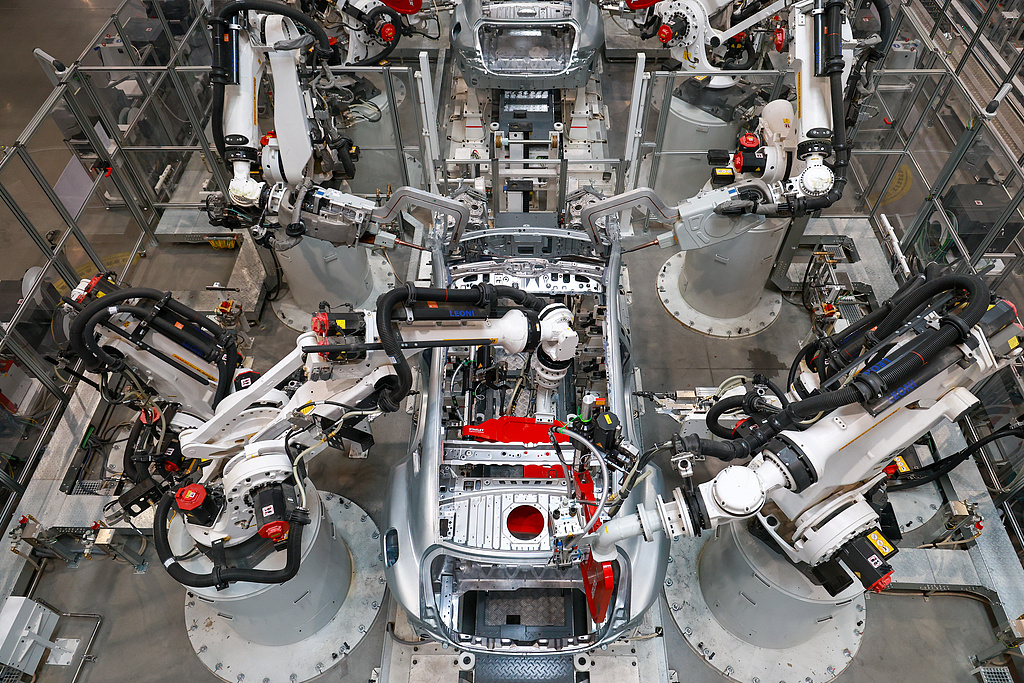
Core Viewpoint - The article highlights the urgent need for European policymakers to recognize and adapt to the transformative concept of "dark factories," which are highly automated and require minimal human intervention, as Europe risks falling behind in the global industrial landscape [1][6]. Group 1: Definition and Characteristics of "Dark Factories" - "Dark factories" refer to modern manufacturing facilities that operate almost entirely without human intervention, utilizing robots, sensors, AI systems, and digital twin technology for real-time coordination [3]. - These factories can run 24/7 without the need for traditional lighting, heating, or human shifts, significantly reducing operational costs while achieving quality standards that traditional manufacturing struggles to meet [3][4]. Group 2: Global Competition Landscape - The competition in the "dark factory" and smart manufacturing sector shows a clear divide: China has made significant advancements in technology application, particularly in electronics, automotive, and home appliances, supported by a large market and government backing [4]. - The U.S. leads in research and application, especially in high-precision manufacturing sectors like aerospace, while Europe has a strong foundation in automation technology but is lagging in practical application [4][5]. Group 3: Challenges Facing Europe - Europe has historically relied on outsourcing labor-intensive production to low-wage countries, but "dark factories" challenge this logic as production is now shifting towards locations with reasonable energy prices and stable regulatory environments [4][5]. - High energy costs, insufficient policy coordination, and societal concerns about unemployment hinder the widespread implementation of "dark factories" in Europe, which remains largely limited to pilot projects [5][9]. Group 4: Economic Implications and Future Outlook - The core advantages of "dark factories" include high energy efficiency and low operational costs, which are crucial for addressing Europe's energy crisis and labor shortages due to an aging population [7]. - The market for "dark factories" is projected to grow from $120 billion to nearly $200 billion by 2030, indicating a significant opportunity for industries that successfully implement automation [10]. Group 5: Strategic Recommendations for Europe - European policymakers and industry leaders are urged to support small, flexible automation enterprises that cater to local markets, rather than attempting to replicate China's large-scale industrial model [12]. - A cohesive political consensus and accelerated decision-making processes are essential for Europe to adapt to the new competitive landscape, which has shifted from labor cost competition to energy and automation collaboration [12].

三星今年将为8亿设备配备谷歌AI|直击CES
Xin Lang Ke Ji· 2026-01-05 20:28
Group 1 - Samsung plans to double the number of mobile devices equipped with Google Gemini AI to 800 million by 2026, marking a significant transformation in its AI strategy named "AX" [2] - As of the end of 2025, Samsung has deployed Gemini-supported AI features on approximately 400 million devices, indicating a rapid expansion in AI integration across its product lines [2] - The integration of Gemini into the Galaxy ecosystem is expected to provide Samsung with a competitive edge in the AI user market, potentially making it one of the most widely experienced AI models on smartphones globally [2] Group 2 - Samsung's ambitious plans face challenges, including a global memory chip shortage that may lead to increased prices for smartphones and other electronic products in 2026 [3] - The company aims to reclaim its leadership position in the smartphone market from Apple while also competing in the television and home appliance sectors [3] - Despite these challenges, Samsung plans to invest 125 trillion Korean won over the next five years in technology and robotics development to close the gap in autonomous AI capabilities with industry leaders [3]

大摩闭门会-邢自强-Laura-Wang-2026开年宏观策略谈-纪要
2026-01-05 15:43
Summary of Key Points from Conference Call Records Industry Overview - **Geopolitical Landscape**: The global geopolitical situation is evolving, with a continued depreciation of the US dollar expected. The Chinese yuan may experience a mild appreciation against the dollar, but potential impacts on exports and deflation should be monitored [1][2][5]. - **Chinese Technology Innovation**: China's technological capabilities are improving, particularly in AI-related hardware and software, as well as domestic computing power replacements. This trend is expected to attract both domestic and international investors, benefiting A-shares and Hong Kong IPO financing [1][2][8]. - **Consumer Stimulus Policies**: The government is implementing targeted consumer stimulus policies, with an estimated 300 billion RMB allocated for the first quarter, primarily aimed at durable consumer goods. If consumption and employment do not meet expectations, the stimulus may expand to include service sector consumption vouchers [1][2][3]. Real Estate Market - **Real Estate Relief Measures**: Relief measures in the real estate sector will focus on inventory reduction and mortgage interest rate subsidies. Initial trials will be conducted in select cities, with the potential for expansion based on effectiveness [3][4]. Fiscal Policy - **Fiscal Policy Focus**: The fiscal policy in the first half of the year will emphasize the early issuance of local special bonds, targeting urban renewal, underground infrastructure, green transformation, smart grid storage, and AI computing infrastructure. Mid-term fiscal spending may increase by approximately 0.5% of GDP (around 700 billion RMB) to support technology applications and real estate relief [4][11]. Economic Growth Projections - **GDP Growth Expectations**: The actual GDP growth for China in 2025 is projected to be around 4.8%, with exports maintaining a mid-to-high single-digit growth rate. However, nominal GDP growth is expected to be lower than actual GDP growth, reflecting cautious private sector performance [1][16][17]. Stock Market Outlook - **Stock Market Trends**: The outlook for the Chinese stock market in 2026 is relatively optimistic, despite some volatility at the end of 2025. The market's performance will depend on the continuation of macroeconomic trends and appropriate policy support [7][8][15]. - **Investor Sentiment**: Factors influencing the stock market include macroeconomic data, corporate earnings, liquidity conditions, market valuation levels, and changes in investor sentiment. Recent positive developments in the IPO market, particularly for GPU-related companies, have increased market activity [9][10]. Currency and Investment - **Renminbi Strength**: The recent strengthening of the renminbi is attributed to a trade surplus exceeding 1 trillion USD and the central bank's allowance for a moderate appreciation. However, the broader context of US dollar depreciation and geopolitical uncertainties remains significant [5][6][19]. - **Foreign Investment in Chinese Stocks**: The appreciation of the renminbi against the dollar is favorable for foreign investors in Chinese stocks, making RMB-denominated assets more attractive [13][14][15]. AI Hardware Market - **AI Hardware Development**: The future of the AI hardware sector is optimistic, with significant demand expected for AI semiconductors. The approval of NVIDIA's export of H200 chips to China is anticipated to positively impact the Chinese AI computing chip market [20][23]. Automotive Industry Trends - **Automotive Market Dynamics**: The automotive industry is expected to face challenges and opportunities in globalization. Exports are projected to increase by 12% by 2026, but there are risks associated with traditional vehicle exports and potential trade barriers in developed markets [25][27]. - **New Energy Vehicle Development**: Key focuses for new energy vehicle technology development include smart driving and AI integration, with expectations for significant penetration of advanced driving technologies by 2030 [28][29].
雷军恐惧流言日
36氪· 2026-01-05 13:35
Core Viewpoint - The article discusses Xiaomi's recent live stream led by Lei Jun, where he addressed various controversies and criticisms surrounding the company, particularly focusing on the impact of "black water armies" (organized online attacks) on his public persona and the company's reputation [4][5][30]. Group 1: Controversies and Responses - Lei Jun expressed his frustration over the negative impact of online attacks, stating that they have caused him significant psychological distress and made him cautious about his public statements [5][8]. - The live stream served as a platform for Lei Jun and the new PR head, Xu Jieyun, to clarify misconceptions, including the misinterpretation of the vehicle's performance claims and the company's policies [14][15]. - Lei Jun highlighted the organized nature of the online attacks, mentioning that a few individuals manipulate thousands of accounts to spread false information about Xiaomi [14][30]. Group 2: Product Performance and Sales - In 2025, Xiaomi delivered 410,000 vehicles, exceeding the initial target of 350,000, indicating strong sales performance despite the controversies [34]. - The Xiaomi YU7 has seen high demand, but the delivery timeline remains long, with reports of up to seven to eight months for customers [32]. - The SU7 Ultra faced a significant drop in monthly sales from thousands to below 100 units due to previous controversies, reflecting the potential long-term impact of negative publicity on sales [31]. Group 3: Future Goals and Strategies - Lei Jun set ambitious goals for 2026, aiming for 550,000 vehicle deliveries, which he considers a challenging yet achievable target [34]. - The company plans to address the issue of "small font marketing" practices, which have drawn criticism, by committing to changes in their marketing strategies [20]. - Xiaomi's management is focused on combating the influence of "black water armies" while also addressing deeper issues within the company to restore its public image [30].

Moto Edge 70 Ultra配置曝光:骁龙8 Gen 5+三摄+90W快充
Xin Lang Cai Jing· 2026-01-05 11:50
设备提供黑色与金色两种配色,机身尺寸为162.1毫米 ×76.4毫米×6.99毫米,重量为186克,并具备IP68、IP69 及MIL-STD-810H防护等级,具备出色的防尘防水与环 境耐受能力。 设备提供黑色与金色两种配色,机身尺寸为162.1毫米×76.4毫米×6.99毫米,重量为186克,并具备 IP68、IP69及MIL-STD-810H防护等级,具备出色的防尘防水与环境耐受能力。 正面搭载一块6.8英寸的Extreme AMOLED LTPO显示屏,分辨率为2780×1264,支持165Hz刷新率,峰 值亮度可达6200尼特,配备屏下超声波指纹识别技术。后置三摄系统由5000万像素主摄、5000万像素超 广角镜头以及5000万像素长焦镜头组成,成像能力全面提升。 音频方面,设备配备双立体声扬声器,支持杜比全景声与高解析度音频输出,带来沉浸式听觉体验。 核心性能上,手机搭载高通骁龙8 Gen 5处理器,搭配12GB或16GB的LPDDR5X运行内存,存储空间提 供256GB、512GB及1TB三种UFS 4.1规格可选。内置5200毫安时电池,支持90W有线快充、50W无线充 电以及10W反向充电功 ...
氪星晚报|人工智能公司加大力度挑战谷歌在浏览器市场的主导地位;字节“豆包”AI眼镜即将进入出货阶段,将分版本推出;2025年国家铁路运输总收入首次突破万亿
3 6 Ke· 2026-01-05 11:01
Group 1 - Samsung plans to deploy Google's Gemini AI on 800 million mobile devices by 2026, up from approximately 400 million devices last year [1] - Bilibili has launched its first AI-themed creation competition with a total prize pool exceeding 3 million yuan, featuring two categories: "Open Track" and "Three-Body Adaptation Track" [1] Group 2 - Kandi Technologies and Zhejiang University have established a joint research center focused on intelligent robotics, targeting the North American market for smart security inspection needs [2] Group 3 - Leading AI companies are intensifying efforts to challenge Google's dominance in the browser market, with OpenAI and Perplexity launching their own web browsers and Microsoft integrating AI tools into its Edge browser [3] - ZhiYuan Robotics has partnered with MiniMax to enhance voice interaction experiences for its robots, utilizing custom AI technology for personalized voice synthesis [3] Group 4 - Jindi Co. has signed a strategic cooperation framework agreement with Bosch Lai New Materials Technology to integrate their technological advantages in hydrogen energy components and electrode manufacturing [4] Group 5 - Bosch has secured a high-end cockpit project order from a global luxury brand, with expected sales in China nearing 10 billion yuan, set to begin production in 2027 [5] Group 6 - Dongfang Zirconium has announced a 300 million yuan investment to establish a production line for 10,000 tons of high-purity composite zirconia for new energy batteries [6][7] - Fulin Precision plans to invest 6 billion yuan in a project to produce 500,000 tons of high-end lithium iron phosphate for energy storage [8] Group 7 - Hawaiian Airlines has announced a $600 million investment plan over the next five years for airport facility upgrades and cabin renovations for its Airbus A330 fleet [9] - AI hardware company Looki has completed over $20 million in Series A financing, with plans to enhance talent development and product research [9] Group 8 - ByteDance's "Doubao" AI glasses are set to enter the shipping phase, developed in collaboration with Longqi Technology [10] Group 9 - Hainan has successfully exported fresh coconuts to Belarus, marking a significant step in agricultural trade with Belt and Road countries [11] Group 10 - Sichuan Province is accelerating the construction of large and super-large data centers as part of its digital economy innovation development plan [12]
小米Civi 5 Pro热卖中
Xin Lang Cai Jing· 2026-01-05 10:44
小米 Civi 5 Pro 5G手机现正热卖中,搭载强劲性能芯片与旗舰级影像系统,配备高清高刷曲面屏,支持 疾速充电和双模5G网络,轻薄设计手感舒适,拍照清晰流畅,满足日常娱乐与办公多重需求。 目前天猫精选活动售价2999元,立减500元,还可领取满2000减50元优惠券,叠加2000-200消费券及政 府补贴,下单1件实付低至1911.65元,更可使用淘金币额外抵扣164元,真正实现超值入手,品质旗舰 低价体验,机会不容错过。 小米 Civi 5 Pro 5G手机现正热卖中,搭载强劲性能芯片 与旗舰级影像系统,配备高清高刷曲面屏,支持疾速充 电和双模5G网络,轻薄设计手感舒适,拍照清晰流畅, 满足日常娱乐与办公多重需求。 目前天猫精选活动售价2999元,立减500元,还可领取满 2000减50元优惠券,叠加2000-200消费券及政府补贴, 下单1件实付低至1911.65元,更可使用淘金币额外抵扣 164元,真正实现超值入手,品质旗舰低价体验,机会不 容错过。 ...
真我Neo8官宣:骁龙8+潜望长焦+超声波指纹
Xin Lang Cai Jing· 2026-01-05 10:38
Core Viewpoint - The official announcement from Realme highlights the upcoming launch of the Realme Neo8, positioned as a "next-generation trendy gaming flagship" with significant upgrades in multiple core configurations [1][4]. Group 1: Product Design and Build - The new device features a significant enhancement in craftsmanship, with a full metal frame and glass back design, moving away from the commonly used plastic materials in its class, resulting in an overall upgrade in quality [3][4]. Group 2: Display and Performance - The Realme Neo8 is expected to come with a 6.78-inch 1.5K LTPS display, supporting a high refresh rate of 165Hz, utilizing a high-quality direct screen solution from Samsung, which enhances display smoothness and color performance [3][4]. - It will be powered by the fifth-generation Snapdragon 8 flagship platform, employing the same architecture and advanced manufacturing process as flagship processors, achieving an AnTuTu score of 3.58 million, aimed at delivering top-tier performance [3][4]. Group 3: Camera and Imaging - The device will feature a unique 50-megapixel periscope telephoto lens in its class, further expanding its photography capabilities [3][4]. Group 4: Security and User Experience - The Realme Neo8 will introduce 3D ultrasonic fingerprint recognition technology and support full specifications for waterproofing, enhancing daily usability and reliability [3][4]. Group 5: Battery and Power Management - The smartphone will be equipped with an 8000mAh battery, combined with an efficient power management system to meet the demands of heavy usage scenarios [3][4]. Group 6: Market Positioning - As the launch date approaches, the Realme Neo8 has demonstrated competitive advantages across multiple dimensions, positioning itself to play a significant role in the upcoming flagship competition [5].
一加Turbo 6V现身认证库,1月8日即将发布
Xin Lang Cai Jing· 2026-01-05 10:38
Core Insights - A new OnePlus model, likely named OnePlus Turbo 6V, has been identified in the telecom equipment terminal information database, indicating its upcoming launch [2][3] - The official unveiling of the Turbo 6 series is scheduled for January 8 at 19:00, featuring six color options [3][4] Product Specifications - The OnePlus Turbo 6V features dimensions of 162.46×77.45×8.65 mm and weighs approximately 215 grams [2][3] - It is equipped with a 6.78-inch AMOLED display with a resolution of 2772×1272, supporting 1.07 billion colors [2][3] - The camera setup includes a 16-megapixel front camera and a dual rear camera system with a 50-megapixel main camera and a 2-megapixel auxiliary camera [2][3] - The device has a built-in battery capacity of 8760 mAh and supports infrared remote control, Bluetooth connectivity, USB data transfer, and under-display fingerprint recognition [2][3] Color Options - The Turbo 6 series will offer three color options: Light Silver, Wilderness Green, and Solo Black for the Turbo 6, while the Turbo 6V will come in Fearless Blue, New Star White, and Solo Black [3][4] - The design style is characterized by a clean and unified aesthetic with simple and bright solid colors [4]
Redmi Turbo 5 Max发布在即:性能续航全面升级,2.5K价位新标杆
Xin Lang Cai Jing· 2026-01-05 10:38
Core Viewpoint - The upcoming launch of the REDMI Turbo 5 Max is positioned as a high-performance representative in the 2.5K price segment, emphasizing improvements in performance, battery life, and overall quality, with the slogan "Starting is Ending" indicating its competitive edge in the market [1][4]. Group 1 - The design of the official poster includes a reflection of "WIN" beneath "MAX," symbolizing the brand's determination to succeed in market competition [3][4]. - The new model will feature a metal frame, large screen with rounded corners, and will be powered by MediaTek's new Dimensity 8 or 9 series chips, optimized for performance [5]. - High-end versions are testing ultrasonic fingerprint recognition technology and will include the largest battery capacity available in the brand's lineup [5]. Group 2 - Starting from January 2026, multiple manufacturers are expected to launch new mid-range models, initiating a wave of product competition, including a model with a large battery and screen [5]. - The product series will include several enhancements such as 3D ultrasonic fingerprint recognition, metal frames, glass backs, flagship processors, high-watt fast charging technology, and symmetrical dual speakers, while maintaining a standard X-axis vibration motor [5]. - The imaging system will primarily rely on a large main camera for basic photography functions, targeting a level suitable for scanning [5].
