文旅产业

Search documents
文旅产业系列观察之二 双向赋能 “文旅 +”实现从“相加”到“相融”
Ren Min Wang· 2025-10-11 01:33
Core Insights - The "Cultural Tourism +" model is driving significant growth in consumer spending and travel, with a record 2.432 billion cross-regional trips made in China from October 1 to 8, marking a 6.2% year-on-year increase in daily average trips [1] - The Ministry of Culture and Tourism projects that by the first half of 2025, domestic tourism will reach 3.285 billion trips, with total spending hitting 3.15 trillion yuan [1] - The integration of "Cultural Tourism +" with various industries is reshaping consumer experiences, moving away from simple sightseeing to deeper cultural engagement and emotional value [2][3] Industry Trends - The rise of immersive experiences, such as theater festivals and sports events, is expanding the consumer landscape, showcasing the successful fusion of "Cultural Tourism + Performing Arts" and "Cultural Tourism + Sports" [2] - The concept of "Cultural Tourism +" is characterized by mutual empowerment, allowing various industries to incorporate cultural tourism elements, thus breaking down industry boundaries and reshaping the consumption ecosystem [2] - There is a shift in consumer demand from mere sightseeing to cultural appreciation, necessitating innovation in tourism products and services to maintain relevance and appeal [2][3] Recommendations for Sustained Growth - Emphasize local culture and identity to create unique and memorable experiences that resonate with visitors, ensuring the longevity of cultural tourism projects [2] - Focus on enhancing visitor experiences by developing engaging and content-rich consumption scenarios while continuously improving service quality [3] - Encourage ongoing innovation in new business models and products within the "Cultural Tourism +" framework to ensure sustained attractiveness of tourism destinations [3]
三亚丝路欢乐世界国庆主题活动收官 创文旅融合新范式
Zheng Quan Ri Bao Wang· 2025-10-10 11:21
Core Insights - The "Silk Road Adventure: Autumn Fantasy" National Day themed event in Sanya successfully showcased a new paradigm of "cultural tourism integration, technological empowerment, and industrial linkage" [1][2] - The event attracted a significant young audience, with 68% of visitors aged between 18 and 35, indicating a shift towards a younger demographic in cultural tourism [2] Group 1: Event Highlights - The event lasted for 8 days and became a prominent cultural tourism symbol in the Hainan Free Trade Port development [1] - The "Dunhuang Flying Apsaras meets Hainan Li Brocade" theme area was the most popular cultural spot during the National Day celebrations [1] - The Silk Road Sound Girl Group made a notable debut during the event, utilizing 8K ultra-high-definition projection technology in the "When Chang'an Meets Sanya" digital experience area [1] Group 2: Innovative Experiences - The Maritime Silk Road Market introduced an interactive "Taste Exploration" experience, allowing visitors to sample international delicacies such as Spanish ham and Thai mango rice [1] - The market area was decorated with Silk Road-themed decorations for the Mid-Autumn Festival, creating a festive atmosphere [1] - The event emphasized a "tastable cultural experience" through food, facilitating a dialogue between civilizations across time [1] Group 3: Future Paradigm - The integration of innovative formats like electronic music remixes of traditional songs and national comic IP tours has attracted a new generation to traditional culture [2] - Technological immersive experiences, such as 8K projection and AR treasure hunts, have become key drivers of visitor engagement [2] - Sanya Silk Road Happy World has evolved from merely a tourist attraction to a platform for cultural confidence, technological aesthetics, and youthful vitality, representing the future paradigm of the cultural tourism industry in the free trade port [2]
消费协作 | 2025上海百县百品消费协作活动走进上海乐高乐园
Sou Hu Cai Jing· 2025-10-10 10:41
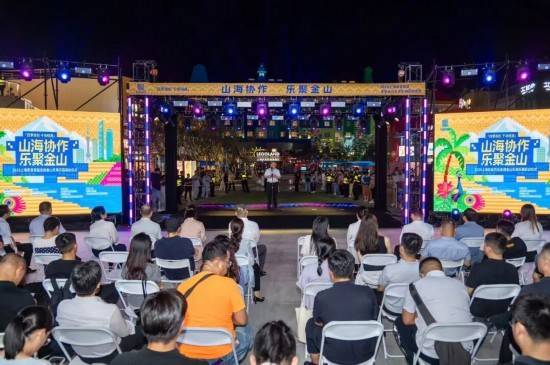
9月26日晚,山海协作 乐聚金山——2025"四季缤纷 千场相遇"上海百县百品走进上海乐高乐园启动仪式 在爱琴海·缤纷里举行。 此次活动由上海蔬菜集团有限公司(上海市消费帮扶工作平台)携手金山区政府合作交流办举办,旨在进 一步深化对口帮扶工作,打造"线上线下永不落幕展销会"布局,围绕"协作帮扶促消费、促就业、平台 企业助力乡村农文旅融合发展"等重点任务,将优质农特产品、非遗文创引入上海乐高乐园,让广大市 民游客近距离领略对口地区的物产和人文。 "帮扶渠道阵地正在转型,我们将充分借助上海乐高乐园等文旅IP的强大品牌效应和引流作用,继续深 化消费帮扶+农文旅融合发展。"上海蔬菜(集团)有限公司总裁孙燕敏表示,年内将继续遵循"大稳定、 小调整、延续性"原则,更新产品目录,同时,遴选申报主体推荐的产品也需完善联农带农和促进群众 增收的有效机制。 在百县百品市集上,各个特色展位整齐排列,陈列着云南建水紫陶、比顿咖啡、新疆生产建设兵团等优 质产品。市民们有的在展位前品尝现冲咖啡,有的则仔细挑选特色干货。 "我本身就是咖啡爱好者,知道云南咖啡很有名,本来想在网上买。这次正好有这样一个市集,就直接 带回家了。"市民王女士说, ...

假期8天狂揽游客超200万人次 电广传媒成湖南文旅“实力担当”
Zheng Quan Ri Bao· 2025-10-10 06:41
Group 1 - The tourism market in Hunan has shown remarkable performance during the National Day holiday, with nearly 40 million visitors and a total expenditure of 50.206 billion yuan, representing a year-on-year increase of 19.35% and 25.96% respectively [2] - Hunan Electric Media Co., Ltd. and its subsidiary Hunan Mango Cultural Tourism Investment Co., Ltd. have played a significant role in this success, receiving over 2 million visitors and generating approximately 30 million yuan in revenue during the holiday [2] - The "Three Xiang Star Action" by Electric Media has successfully established 10 projects across 8 cities in Hunan, creating a diverse product matrix that includes theme parks, high-end hotels, and cultural tourism complexes [2] Group 2 - Changsha World Park has entered its 3.0 era, launching new attractions such as the largest ocean dome cinema in the country, which cost 30 million yuan, and hosting a themed event that attracted around 80,000 visitors and generated over 12 million yuan in revenue [3] - The Saint Jue Fei Si Hotel achieved a high occupancy rate of 73% during the holiday, marking the highest level in three years, through various promotional activities [3] - The newly opened Huaihua Yushuwan Youth Square successfully attracted 650,000 visitors during its first National Day holiday, generating approximately 6 million yuan in revenue [3] Group 3 - The Xiangtan Wanlou Mango Youth Pier hosted a large-scale National Day event, attracting 428,000 visitors, while Hengyang Youth Dongzhou Island celebrated with cultural performances, significantly increasing visitor numbers [4] - The Wugang Yunshan National Forest Park, newly operated by Mango Cultural Tourism, welcomed nearly 10,000 visitors during the holiday with its immersive experience [4] - The Anhua Tea Horse Ancient Road hosted a themed event that attracted over 20,000 visitors and generated more than 2 million yuan in revenue [4] Group 4 - The Nanyue Mango Chenxi Inn offered a unique mountain retreat experience, achieving full occupancy for three days during the holiday [5] - Various cultural and tourism activities across multiple locations set new historical highs for visitor numbers during the National Day holiday [5] - The media's focus on Electric Media's attractions through special programming has effectively enhanced brand exposure and attracted more visitors [5]

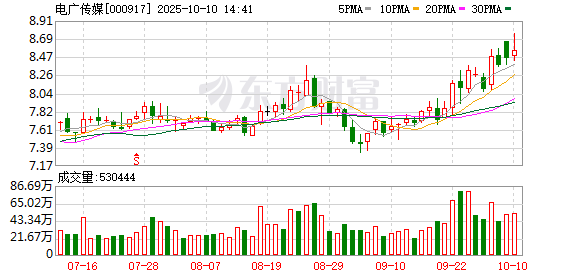
电广传媒国庆假期接待游客超200万人次
Zheng Quan Shi Bao Wang· 2025-10-10 04:36
Core Insights - The tourism market in Hunan province showed strong performance during the National Day holiday, with nearly 40 million visitors received, representing a year-on-year increase of 19.35% [1] - The company, Electric Broad Media, and its subsidiary Mango Cultural Tourism, received over 2 million visitors during the 8-day holiday period, generating approximately 30 million yuan in revenue [1][2] - The company's "Three Xiang Star Action" has established a product matrix covering theme parks, high-end hotels, cultural and commercial tourism complexes, and mountainous scenic spots across 10 projects in 8 cities [1] Group 1: Performance Metrics - During the holiday, Changsha World Window hosted the "Chinese Carnival: Mastery Showcase" event, attracting around 80,000 visitors and generating over 12 million yuan in revenue [1] - The Saint Jue Fei Si Hotel achieved full occupancy during the first four days of the holiday, with an average occupancy rate of 73%, marking a three-year high for the National Day holiday [1] - New projects performed well, with Huaihua Yushuwan Youth Square receiving 650,000 visitors and generating about 6 million yuan; Xiangtan Wanlou Mango Youth Wharf welcomed 428,000 visitors [1] Group 2: Strategic Developments - Electric Broad Media is leveraging a "media + cultural tourism" dual-driven approach to enhance its tourism business [2] - The company’s "New Cultural Tourism" strategy is focused on integrating culture with technology and tourism, exploring a unique development path of "media + tourism" [2] - In the first half of 2025, the company reported a rapid growth in its cultural tourism business, with a total of 4.12 million visitors received, a year-on-year increase of 97%, and achieved operating revenue of 1.968 billion yuan, up 9.45% [2]
人民时评:用人工智能打开文旅新空间
Ren Min Ri Bao· 2025-10-10 03:12
Core Insights - The integration of artificial intelligence in the cultural tourism industry is transforming traditional tourism into a more immersive, personalized, and interactive experience for visitors [1][2][3] Group 1: Technological Innovations - Innovative products such as 360-degree panoramic viewing, AR archaeological blind boxes, and robotic performers were showcased at the 2025 China Cultural Tourism Industry Expo, highlighting the shift towards technology-driven tourism experiences [1] - AI is being utilized to create immersive interactive scenarios, such as simulating historical lectures and VR experiences that allow visitors to engage with cultural heritage in a novel way [1] Group 2: Personalized Services - The development of AI-driven services, like the "Hang Xiao Yi" intelligent tourism assistant in Hangzhou, enables personalized information delivery and route planning based on individual tourist preferences, enhancing the overall visitor experience [2] - The introduction of digital guides in scenic areas has resulted in increased visitor engagement, with average stay times extending to 5 hours and secondary revenue growth of 30% [2] Group 3: Economic and Cultural Impact - The emphasis on AI in tourism aligns with national goals to enhance the tourism sector's contribution to economic development, improve living standards, and promote cultural prosperity [3] - By leveraging technology to improve service efficiency and product design, the cultural tourism industry can explore new growth opportunities and achieve a win-win scenario for economic and cultural development [3]
筑梦四十载 奋进向未来——广元建市四十年发展之变
Si Chuan Ri Bao· 2025-10-10 02:10
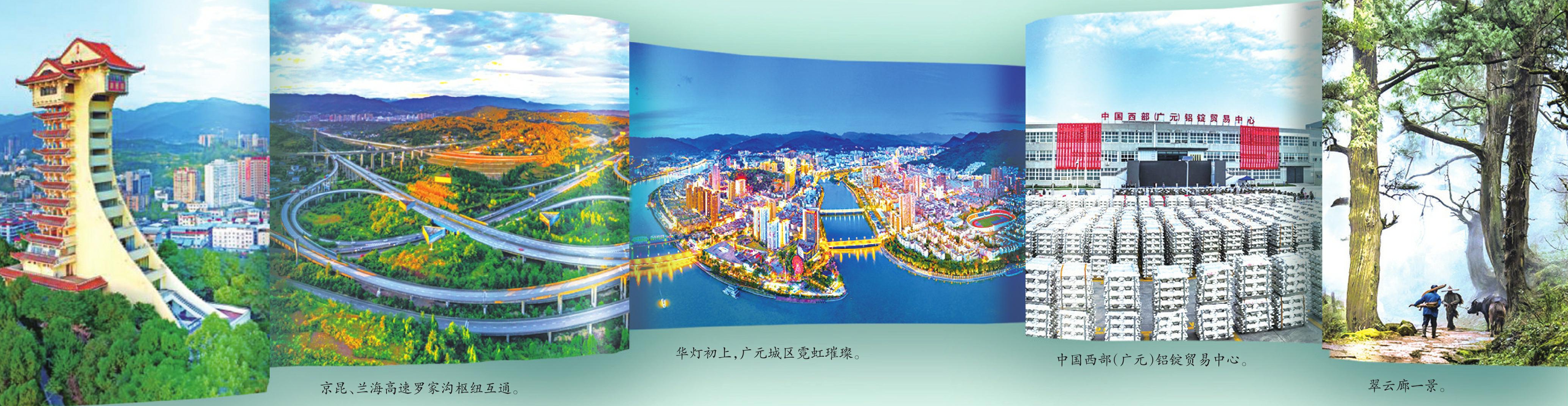
Core Viewpoint - The article highlights the significant development and transformation of Guangyuan over the past 40 years since its establishment as a city in 1985, showcasing its economic growth, infrastructure improvements, and cultural advancements. Economic Growth - Guangyuan's GDP has increased by 93.7 times since its establishment, with urban and rural residents' per capita disposable income growing by 58.2 times and 60.6 times respectively, indicating a historic leap in living standards [3][30]. - The city has signed a total of 597 investment projects in 2024, including the largest single investment project in the home furnishing industry, demonstrating a strong trend in attracting investments [14][15]. Infrastructure Development - Guangyuan has transformed its transportation network, evolving from limited access to a comprehensive system that includes highways, railways, and air routes, significantly enhancing connectivity [6][10]. - The city is developing a modern logistics service system, including a "Belt and Road" international freight train base and a multi-modal transport center, to leverage its geographical advantages for economic growth [8][12]. Industrial Transformation - Guangyuan is focusing on green development, particularly in the aluminum industry, with a production capacity of 61.5 million tons of electrolytic aluminum and 160 million tons of recycled aluminum, positioning itself as a key player in the green aluminum market [17][18]. - The city is also advancing its agricultural sector, establishing itself as a major producer of various agricultural products, including the world's largest red heart kiwi production base and the largest yellow tea production base in China [21][22]. Cultural and Environmental Enhancements - Guangyuan has developed its tourism industry significantly, with over 5.56 million visitors during the recent holiday period, reflecting its growing status as a cultural and tourist destination [20][30]. - The city has implemented extensive urban development projects, including the construction of green buildings and the establishment of eco-parks, enhancing the quality of life for residents and promoting a sustainable urban environment [23][24][29].
因地制宜放大地方文旅亮点
Jing Ji Ri Bao· 2025-10-09 22:19
Core Insights - The article highlights the rapid development of China's cultural and tourism industry, emphasizing the importance of local cultural resources and innovative strategies to drive economic growth [1][2][3] Group 1: Industry Growth and Economic Impact - The cultural industry is projected to achieve a revenue of 19.14 trillion yuan in 2024, marking a 37.7% increase from 2020 [1] - The number of large-scale cultural enterprises has reached 78,000, an increase of 13,000 since 2020 [1] - Domestic tourism saw 3.285 billion trips and total spending of 3.15 trillion yuan in the first half of the year [1] Group 2: Local Cultural Integration and Innovation - Various regions are leveraging their unique cultural heritage to create diverse tourism hotspots, such as Shanxi's integration of traditional culture with modern experiences [2] - Jiangsu province is focusing on water and culture to develop significant tourism routes, showcasing its unique cultural landscape [3] - There is a need for differentiated policy guidance to avoid homogenization in local tourism development [3] Group 3: Industry Collaboration and New Business Models - The article advocates for collaborative innovation across various industries to create composite cultural tourism products [4] - Qinghai province is implementing a "tourism+" model to integrate agriculture, industry, and commerce with tourism [4] - The shift from resource-driven to innovation-driven growth is essential for enhancing the value chain in the cultural industry [4] Group 4: Technological Empowerment - The article emphasizes the role of technology in enhancing the quality of local cultural tourism, advocating for digital infrastructure improvements [5] - Jiangxi province is utilizing digital tools to innovate tourism services, providing immersive experiences for visitors [5] - There is a call for the cultivation of interdisciplinary talent to boost technological innovation in the cultural tourism sector [5]
从“小城烟火”看地方文旅市场活力
Zhong Guo Zheng Quan Bao· 2025-10-09 20:53
Core Insights - Dandong has become a popular tourist destination, leveraging its unique geographical advantages and cultural resources to attract visitors [1][2] Tourism Growth - During the 2025 National Day and Mid-Autumn Festival holiday, Dandong received a 26.38% year-on-year increase in tourist numbers and a 49.04% increase in tourism revenue [1] - The tourism industry in Dandong encompasses various sectors including dining, accommodation, transportation, entertainment, and shopping, indicating a comprehensive economic model of "cultural tourism + various industries" [1] Cultural and Economic Impact - The local economy is benefiting from the booming tourism market, with an increase in local restaurants, hot spring hotels, and street food vendors emerging around popular attractions [2] - The Dandong Historical and Cultural Experience Center showcases local cuisine and creative products, enhancing the visitor experience and promoting local culture [2] Government and Financial Support - The Dandong government aims to establish a "high-quality cultural and tourism integration development demonstration area" by 2025, focusing on the dual-driven model of "cultural tourism + various industries" [3] - Financial institutions, such as the Industrial and Commercial Bank of China, are providing tailored financial services to local businesses, supporting their growth and modernization [2]
深圳迎文旅新地标:“全球最大室内滑雪中心”试运营
Mei Ri Jing Ji Xin Wen· 2025-10-09 12:49
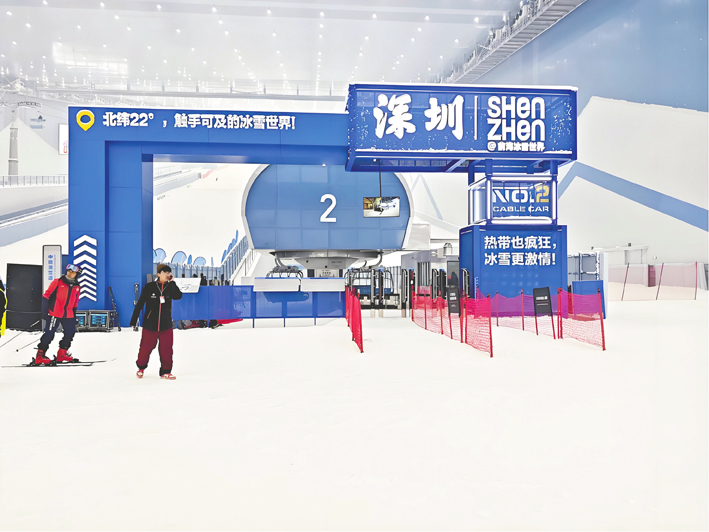
Core Viewpoint - The trial operation of Shenzhen Qianhai Huafa Ice and Snow World, certified as the "world's largest indoor ski center," reflects the rapid development of indoor ski resorts in China and the urgent attempts of leading real estate companies to transition into the "cultural tourism" sector [1][3][6]. Investment and Financial Aspects - The total investment for Shenzhen Qianhai Huafa Ice and Snow World is planned to reach 29.6 billion yuan, making it a benchmark in the domestic indoor ski resort sector, although the investment scale has changed due to government land acquisitions [3][4]. - To alleviate financial pressure, Huafa Co. plans to return seven undeveloped commercial plots to the government by July 2025, which is expected to recover approximately 4.405 billion yuan [4][5]. - The project is expected to generate annual revenue of 650 million yuan and a net profit of 130 million yuan once it reaches maturity [5]. Market Dynamics - The indoor ski market in China is rapidly expanding, with the number of operational indoor ski resorts increasing from 5 in the 2013 snow season to 66 in the 2024-2025 season, representing a growth of over 12 times [7]. - Indoor ski resorts account for 21.61% of total skiing visits in China, with an annual compound growth rate of 15.37%, surpassing the overall skiing visit growth rate of 12.87% [7]. Operational Challenges - Indoor ski resorts face high operational costs due to energy-intensive cooling systems and large operational teams, making cost control crucial while maintaining service quality [5][9]. - The pricing strategy for Shenzhen Qianhai Huafa Ice and Snow World is positioned in the high-end tier, with ticket prices starting at 348 yuan for a 3-hour pass on beginner slopes, reflecting the high investment [5][6]. Strategic Positioning - The project fills a significant gap in Shenzhen's large-scale ice and snow cultural tourism offerings and is seen as a vital development in the context of the Greater Bay Area's integration [7][8]. - Other real estate companies, such as Sunac China and Overseas Chinese Town, are also exploring the "real estate + cultural tourism" model, with Sunac having established a comprehensive system in the cultural tourism sector [8][9].