
农业种植

Search documents
八桂大地硕果满枝
Jin Rong Shi Bao· 2025-08-07 02:42
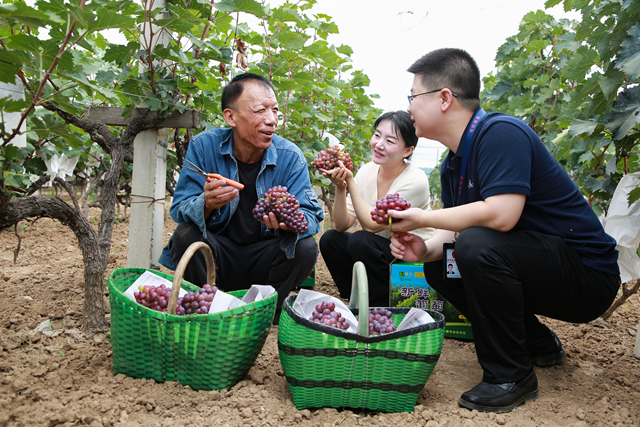
Core Viewpoint - Guangxi agricultural cooperative institutions are focusing on the agricultural season, providing financial support to ensure a successful harvest and promote the entire agricultural industry chain [1][5] Group 1: Financial Support and Agricultural Loans - As of the end of June, the agricultural loan balance of Guangxi's cooperative institutions reached 425.8 billion yuan, an increase of 10.8 billion yuan since the beginning of the year, with specialty industry loans amounting to 110.3 billion yuan [1] - The cooperative institutions have supported new agricultural operating entities, with loans to family farms and farmers' cooperatives totaling 28.5 billion yuan [5] - The Guangxi agricultural cooperative institutions have issued over 100 innovative "Xiao Ling Tu" credit products tailored to local specialty industries [5] Group 2: Case Studies of Successful Financial Support - A local grape grower received a 200,000 yuan loan from Pingguo Agricultural Cooperative Bank, resulting in a 10% increase in yield and an increase in sugar content from 15% to 18% [2] - Ling Shan Agricultural Credit Union provided a loan of over 400 yuan, which helped a food company expand its production and establish a complete industry chain for lychee, benefiting over 1,700 enterprises and farmers [3] - The Guizhou Agricultural Cooperative Bank has customized credit solutions like "vegetable loans" and "taro loans," with a total agricultural loan balance of 7.336 billion yuan, increasing by 197 million yuan since the beginning of the year [4] Group 3: Overall Impact on Agricultural Development - The financial support from Guangxi agricultural cooperative institutions is contributing to the revitalization of rural areas, enhancing local agricultural brands, and ensuring a bountiful harvest during the critical agricultural season [5] - The cooperative institutions are optimizing a comprehensive service network covering all levels from province to village, providing strong support for deepening agricultural development [5]
荔枝特快旅程 背后的金融力量
Jin Rong Shi Bao· 2025-08-07 02:34
Group 1 - The film "Lychee of Chang'an" highlights the transformation of lychee from a luxury item to a common fruit available to the public, showcasing the efficiency of modern logistics [1] - Postal Savings Bank leverages its integrated resources of logistics, finance, and e-commerce to support the lychee industry and related private enterprises, contributing to rural revitalization [1] - In Guangdong's Maoming, which produces 20% of the world's lychee, the cultivation area is approximately 1.4 million acres, with local companies like Bojian Agriculture selling around 75,000 pounds of lychee daily during peak season [1] Group 2 - Bojian Agriculture employs a meticulous packing method to preserve the freshness of lychee, shipping around 30,000 orders and 150,000 pounds daily, while facing financial pressures for operational upgrades [2] - Postal Savings Bank's Maoming branch has provided financial support that has increased Bojian Agriculture's revenue by over 1.5 million yuan and created over 300 jobs [2] - The bank has formed a specialized team to understand the financial needs of lychee farmers, offering comprehensive financial service packages and training programs for new farmers [2] Group 3 - The Yurun wholesale market in Northwest China is bustling with activity, where fresh lychee is sold within a day of harvest, thanks to financial support from Postal Savings Bank [3] - The bank's financial services team has increased visits to the wholesale market to provide tailored financial solutions, addressing the unique challenges of the lychee industry [3] - Postal Savings Bank has introduced innovative credit products like "Fruit Loan" to assist clients in overcoming funding challenges, with over 120 customers receiving financial support by mid-2025 [3]

气象学者魏科:我们已经身处危机时代,而不是在讨论一个遥远的未来
经济观察报· 2025-08-06 13:47
Core Viewpoint - Climate extremization has become a norm, with global warming leading to intensified rainfall and drought conditions in specific regions, resulting in sudden shifts between drought and flooding [1][3][8]. Group 1: Extreme Weather Events - Recent years have seen a significant increase in extreme weather events globally, with high temperatures, floods, and storms becoming more frequent and intense [5][6]. - In July, the average temperature in Henan Province reached 30.5°C, 3.2°C higher than the historical average, marking the hottest period in 64 years [2]. - Northern China experienced above-average rainfall, with Inner Mongolia recording the highest precipitation for this period since 1961 [2][3]. Group 2: Impact on Agriculture - Extreme weather is adversely affecting major grain-producing areas in China, with high temperatures and heavy rainfall impacting crop growth and increasing irrigation costs [3][14]. - The growth of winter wheat is particularly vulnerable to insufficient low-temperature periods, which can lead to premature ear formation and reduced yields [15]. - High temperatures can cause corn leaves to curl, affecting photosynthesis and increasing water requirements, thus raising irrigation costs for farmers [15]. Group 3: Future Projections and Preparedness - The ongoing climate crisis requires urgent action, with a need for five times the current effort to effectively address climate challenges [11]. - Transitioning to green renewable energy is essential, despite the associated costs, as it presents significant industrial opportunities while mitigating future disaster losses [11]. - The upcoming weather patterns indicate that northern regions may continue to face flooding, while southern areas will experience heightened drought conditions [12]. Group 4: Economic Implications - The volatility of agricultural prices due to extreme weather events is expected to persist, with "weather-related price hikes" becoming more common [16]. - Developing countries may be disproportionately affected by extreme climate events, leading to potential resource conflicts and social instability [17]. - Industries related to agriculture may need to adapt their insurance models and financial tools to better manage the risks associated with climate change [18]. Group 5: Urban Planning and Infrastructure - The concept of sponge cities is being emphasized, but their capacity to handle extreme rainfall is limited, necessitating additional strategies for flood management [19][20]. - Urban planning must evolve to incorporate designs that can effectively manage high temperatures and heavy rainfall, ensuring resilience against climate impacts [18][20].


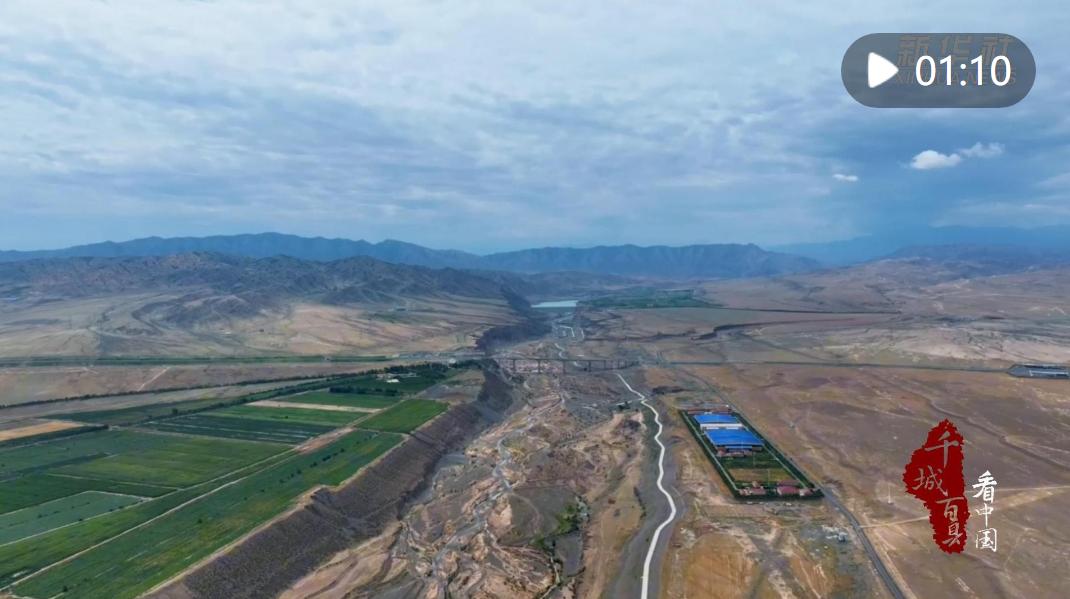
千城百县看中国丨新疆昌吉:数字赋能为农田灌溉添“智慧”
Xin Hua She· 2025-08-06 13:00
Core Insights - Xinjiang Changji Prefecture is focusing on high-quality agricultural development by integrating digital technology with farmland irrigation [2] - The implementation of smart agriculture management platforms and promotion of intelligent irrigation equipment aims to enhance irrigation efficiency and water resource utilization [2] Group 1: Digital Technology Integration - The local farmer Zhao Junqing can now easily manage precise drip irrigation for his cotton fields using a mobile app, ensuring a stable water supply of 365 cubic meters per acre [2] - The digitalization of irrigation has resolved previous issues of unstable water supply, allowing for consistent and high cotton yields [2] Group 2: Investment and Modernization - During the 14th Five-Year Plan period, Changji Prefecture invested 1.238 billion yuan in the modernization and renovation of 15 large and medium-sized irrigation areas [4] - The irrigation water utilization coefficient in the region is currently 0.666, with improvements made to an irrigation area of 2.38 million acres, maximizing the productivity of every drop of water [4]
41.8摄氏度 日本再创高温纪录
Xin Hua She· 2025-08-06 05:18
Core Viewpoint - Japan is experiencing unprecedented high temperatures, with a new record of 41.8 degrees Celsius recorded in Isesaki City, Gunma Prefecture, indicating a significant climate crisis impacting public health and agriculture [1] Temperature Records - The Japan Meteorological Agency reported that on August 5, Isesaki City recorded a temperature of 41.8 degrees Celsius, breaking the previous record of 41.2 degrees Celsius set on July 30 in Tamba City, Hyogo Prefecture [1] - Over ten locations in the Kanto region reached temperatures of 40 degrees Celsius, marking the highest number of such occurrences since records began [1] Health Impact - More than 53,000 people in Japan have sought medical attention due to high temperatures this summer, with 18 reported deaths in the past week [1] Historical Temperature Data - The average temperature in Japan for July has set a new historical record for three consecutive years, with this year's average being 2.89 degrees Celsius higher than the normal, the highest since records began in 1898 [1] Agricultural Concerns - Accompanying the high temperatures is a significant reduction in rainfall, with many regions experiencing less than half of the average precipitation for July [1] - The areas affected by high temperatures and low rainfall include key rice-producing regions, which are seeing adverse effects on rice growth [1] Government Response - Japan's Minister of Agriculture, Forestry and Fisheries, Koizumi Shinjiro, emphasized the need for urgent action to address the damage caused by high temperatures, with government support planned for pest control and drought resistance [1]
中国企业为何密集到海外去种地?
3 6 Ke· 2025-08-05 11:23
Core Insights - The phenomenon of Chinese agricultural enterprises "going abroad" to cultivate land is gaining attention amid globalization challenges and international supply chain restructuring [1][2] - Recent agreements, such as the $250 million investment by CITIC Construction in Angola to develop 100,000 hectares for corn and soybean cultivation, highlight China's strategic focus on food security and agricultural technology export [1][2] - The global agricultural investment trend reflects China's efforts to address its reliance on imported feed crops, particularly soybeans, and to reshape international food trade dynamics [1][2] Investment Strategies - China's overseas agricultural investments are primarily driven by national food security needs, particularly to mitigate the heavy reliance on imports for feed crops like soybeans and corn [1][2] - The investment in Angola represents an innovative approach to solving the "soybean dilemma," aiming to reduce dependence on American soybeans while establishing a complete agricultural value chain [2][5] - The strategic geographical distribution of Chinese agricultural investments includes significant projects in Africa, Central Asia, and South America, which helps to diversify geopolitical risks and optimize resource allocation [4][10] Technological and Operational Advantages - Chinese enterprises leverage advanced agricultural technologies and management practices in their overseas projects, significantly increasing productivity compared to traditional methods [5][7] - The integration of the entire agricultural value chain, from planting to processing and logistics, enhances product quality and economic efficiency, distinguishing Chinese investments from traditional international agricultural ventures [7][8] - The focus on sustainable development and local capacity building, such as profit-sharing agreements and technology transfer, positions Chinese agricultural investments as more ethically sound compared to historical precedents [8][9] Future Trends - The future of Chinese agricultural investments is expected to diversify geographically, extend into higher value-added segments of the supply chain, and increasingly rely on innovative technologies [10] - The commitment to improving global agricultural productivity and food distribution aligns with broader sustainable development goals, positioning China as a key player in global food security [10][11] - The evolving paradigm of international cooperation in agriculture emphasizes mutual benefits and sustainable development rather than exploitation, potentially paving new pathways for global food security governance [10][11]

重庆市新兴媒体广告企业商会会长何永中率队赴荣昌区考察交流
Sou Hu Cai Jing· 2025-08-05 01:00
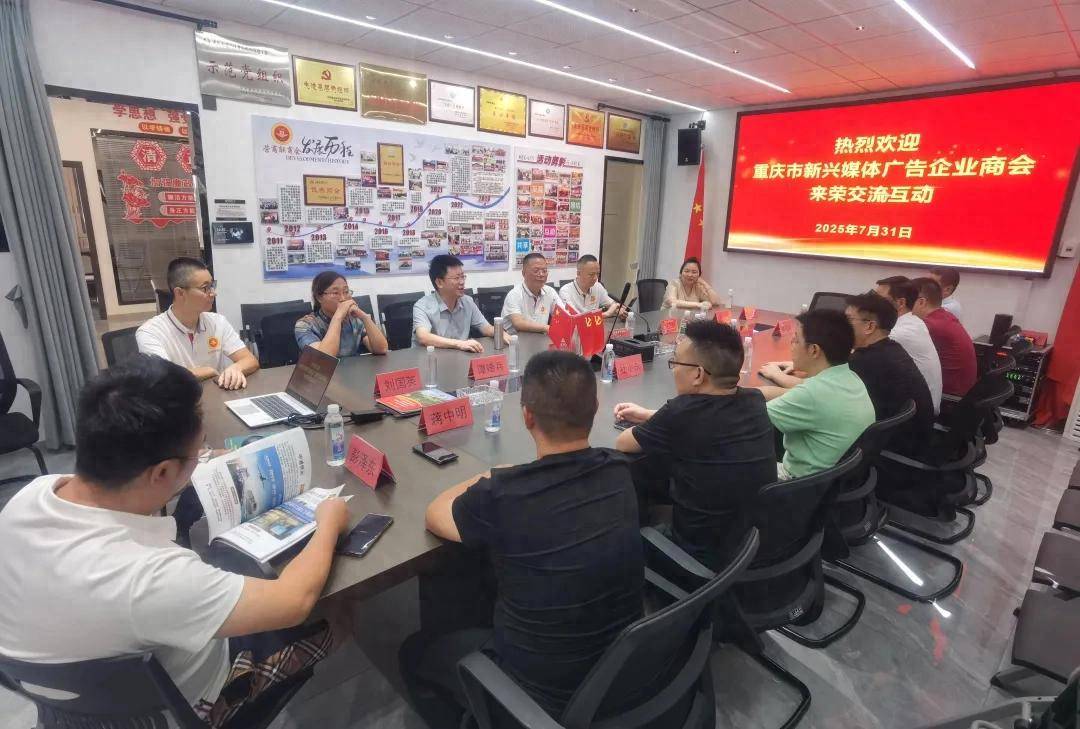
Group 1 - The core theme of the event was "Mutual Prosperity through Interconnection" aimed at enhancing regional business association cooperation and empowering high-quality enterprise development to assist rural revitalization [1][5] - The delegation visited various benchmark enterprises and industry bases in Rongchang District, including the Rongchang Summer Cloth Town and local food brands, to explore new models of collaborative development among business associations, industries, and culture [1][5] - The event included discussions on resource sharing and cross-industry cooperation, with a consensus on establishing a regular communication mechanism between the business associations of Chongqing and Rongchang [4][5] Group 2 - The delegation's first stop was the Rongchang Business Association, where they learned about its operational model focused on "serving members and linking resources" [2][4] - The event featured a discussion on how business associations can leverage the "Belt and Road" initiative to build international resource platforms and promote member enterprises to expand globally [4] - The delegation explored the integration of traditional craftsmanship with modern design and new media at the Rongchang Summer Cloth Town, emphasizing the importance of cultural heritage [5][10] Group 3 - The visit to local food brands highlighted the operational logic of transforming local snacks into popular IPs, discussing topics like "new media empowering time-honored brands" [5][10] - The establishment of the Ba Yu Automobile Club and the opening of the Tian Tian Che Bao Rongchang operation center marked a new beginning for the automotive service ecosystem in the region [8][9] - A strategic cooperation agreement was signed during the opening ceremony, indicating the commitment to provide comprehensive services to local car owners and create over a hundred job opportunities [9] Group 4 - The delegation conducted a field study on the "Sweet Dragon Bamboo Shoot" planting base, recognizing its potential as one of Rongchang's four treasures [10][12] - The event included a consumption support initiative where the delegation purchased local products, contributing over 3,000 yuan to local farmers [12] - The president of the new media business association emphasized the need for industry support and the role of business associations in rural revitalization through various marketing strategies [12] Group 5 - The two-day event served as a bridge for resource connection between Chongqing and Rongchang, showcasing the vibrant characteristics of Rongchang's economy and culture [1][5] - The president of the new media business association expressed optimism about future collaborations in brand empowerment, digital marketing, and rural revitalization [12]
为三农发展提供金融助力 大禹节水积极推动高端农产品与水利资产RWA
Zhong Guo Jin Rong Xin Xi Wang· 2025-08-04 01:44
Core Viewpoint - The company Dayu Water-saving is leveraging multi-party collaboration in the agricultural industry to promote the tokenization of high-end agricultural products and water assets, providing new financial support for agricultural development [1][3]. Group 1: Company Overview - Dayu Water-saving was listed on the Growth Enterprise Market in October 2009 and focuses on solving issues related to agriculture, rural areas, and water resources, establishing a complete digital water management ecosystem [1]. - The company has a global presence, with products and services spanning over 60 countries and regions [1]. Group 2: Technological Innovation - The chairman of Dayu Water-saving emphasized the critical role of technological innovation in agricultural development, highlighting the transformative potential of AI, robotics, and blockchain technologies [1]. - The company is exploring the application value of RWA in the circulation of agricultural assets to support the modernization of agriculture [1]. Group 3: Agricultural Initiatives - Dayu Water-saving's agricultural division collaborates with American company Driscoll's for high-end berry cultivation and engages in various high-value-added planting businesses, including peppers, potatoes, and processed tomatoes [1][2]. - The company has developed a fully automated data collection and intelligent irrigation system to support its agricultural operations, ensuring product quality and data-driven asset management [1]. Group 4: Strategic Partnerships - Dayu Water-saving has signed strategic cooperation agreements with Kosta Group and Zhongke Yuandian to focus on technology research and development in the blueberry industry and optimize facility agriculture [2]. - The collaboration aims to scale up blueberry cultivation and promote the application of intelligent harvesting robots in modern agriculture [2]. Group 5: RWA Development - The company has noted attempts in some regions to explore RWA for high-end agricultural products, viewing it as a significant step in combining agricultural assets with digital finance [3]. - Dayu Water-saving is actively researching and promoting the RWA path for high-end agricultural products and water assets, although it has not yet generated revenue from RWA activities [3].


河南郑州“惩治防”贯通激活内生动力得意之笔丨不断擦亮乡村振兴清廉底色
Zhong Yang Ji Wei Guo Jia Jian Wei Wang Zhan· 2025-08-03 23:49
Core Points - The focus of the Zhengzhou Municipal Commission for Discipline Inspection and Supervision is on supervising and ensuring the comprehensive revitalization of rural areas, particularly in the areas of industrial development and policy implementation [2][3][4] - The integration of digital tools for supervision has enhanced the transparency and efficiency of monitoring rural collective assets, allowing for real-time feedback and issue reporting by the community [5][6] - The establishment of a joint supervision mechanism involving various departments aims to strengthen the oversight of rural revitalization funds and projects, addressing issues of mismanagement and corruption [10][12] Group 1: Supervision and Governance - The Zhengzhou Municipal Commission has prioritized the supervision of rural revitalization, focusing on key areas such as project management and fund allocation [3][4] - A digital platform has been implemented to enhance the transparency of rural financial management, allowing residents to access information and report issues easily [5][6] - The commission has adopted a collaborative approach, integrating supervision with party-led governance to address bureaucratic inefficiencies and improve service delivery [6][10] Group 2: Financial Oversight and Accountability - The commission has established a "discipline-inspection, audit, and inspection" linkage mechanism to oversee the allocation and use of rural revitalization funds, ensuring accountability [6][10] - In 2024, the commission reported handling 911 cases related to rural revitalization, resulting in 467 disciplinary actions and the exposure of 54 typical cases of misconduct [10][12] - The commission has identified and rectified issues related to the management of collective assets, recovering significant amounts of misallocated funds [10][12] Group 3: Industrial Development and Community Engagement - The commission emphasizes the importance of industrial revitalization as a key component of rural development, focusing on creating sustainable economic opportunities for local communities [12][14] - Initiatives have been launched to enhance agricultural productivity and support local enterprises, leading to increased income for farmers and community members [12][14] - The integration of technology and community involvement in agricultural practices has resulted in improved efficiency and profitability for local agricultural projects [12][14]
邮储银行 护航荔枝产业全链条发展
Zheng Quan Ri Bao Zhi Sheng· 2025-08-03 15:10
Core Insights - Postal Savings Bank of China leverages its "four flows integration" resources to support the lychee industry, contributing to rural revitalization [1] Group 1: Financial Support and Services - The Postal Savings Bank of China provides a comprehensive financial service package to support lychee farmers and businesses, addressing their funding needs [3] - The bank's Maoming branch has issued loans totaling 863 million yuan to the lychee industry by June 2025, enhancing the financial ecosystem for local farmers [3] - A specific case highlights that a loan of 500,000 yuan enabled a farmer to build a cold storage facility, significantly improving both yield and income [4] Group 2: Operational Insights - Maoming City, a major lychee production area in Guangdong, has around 1.4 million acres dedicated to lychee cultivation, with one company selling approximately 75,000 pounds of lychee daily during peak season [2] - The bank's proactive approach includes direct engagement with farmers and businesses to understand their operational challenges and financial needs [2][3] - The bank collaborates with local agricultural authorities to train new farmers and promote rural e-commerce, with 560 individuals trained and 46 rural e-commerce leaders incubated [3] Group 3: Sales Channel Development - The Postal Savings Bank of China actively assists in expanding sales channels for lychee products by coordinating with local postal services to provide integrated logistics solutions [4] - The bank's efforts in combining financial services with e-commerce and logistics have facilitated the distribution of lychee products nationwide, benefiting local farmers [4]