服装

Search documents
在服装行业放缓周期中,运动品类为何仍能跑出高增长?
华尔街见闻· 2025-12-30 12:45
Core Insights - The apparel industry is transitioning from a focus on "quantitative expansion" to a need for sustainable growth that withstands structural scrutiny [1][4] - Consumer behavior is shifting towards valuing functionality, adaptability, and long-term value over mere novelty and emotional appeal [1][7] - Growth is no longer a universal benefit but a result that requires structural and capability-based approaches [8][9] Industry Trends - The apparel industry is entering a low-growth phase, with retail sales for clothing and textiles showing a modest year-on-year growth of around 3% from January to October 2025, slightly below the overall retail growth rate [5][10] - Certain niche segments are demonstrating resilience by maintaining higher-than-average performance through clear value propositions [2][10] Competitive Landscape - The differentiation within the industry is accelerating, with mass-market apparel facing pressure from price competition and inventory issues, while specialized segments with clear positioning are outperforming [7][10] - The professional sports segment is emerging as a key growth driver, with the domestic market for professional sports equipment projected to grow by 18.7% year-on-year in 2025, significantly outpacing the overall industry growth [10][11] Company Performance - Descente has emerged as a benchmark for growth within the professional sports segment, achieving a 61.1% year-on-year revenue increase in the first half of 2025, significantly surpassing the average growth rate of its segment [11][13] - The brand's growth is supported by a clear product structure, with skiing and golf categories contributing approximately 45%-50% and 25%-30% to its revenue, respectively [11][13] Consumer Engagement - Descente's high customer quality, with average transaction values between 3000-8000 yuan, and high repurchase rates contribute to sustainable growth [13][21] - The brand's flagship store, "Future City," exemplifies a new retail model that integrates immersive experiences to enhance consumer understanding and trust in the brand's professional capabilities [17][18] Growth Mechanism - The terminal capabilities of professional sports brands are evolving from mere sales points to critical components of growth, influencing efficiency and brand perception [16][21] - Descente's multi-channel strategy, including flagship stores and specialized outlets, enhances consumer engagement and reinforces brand value [20][21] Future Challenges - As the brand scales, maintaining the effectiveness of its professional ecosystem and balancing high-end positioning with broader market coverage will be crucial [29][30] - The competition in the professional sports sector is shifting from merely capturing market share to building a sustainable ecosystem around professionalism [29][30]


听劝!秋冬把羽绒服换成它试试!
凤凰网财经· 2025-12-30 12:43
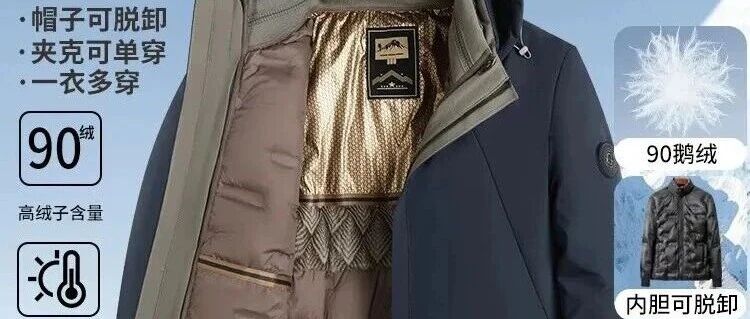
谁懂男士冬天穿羽绒服的痛? 要么 臃肿像裹棉被,要么保暖不够冻得打哆嗦 ,想要兼顾颜值和温度简直难如登天! 但男生又 讲究体面和气质 ,尤其在重要场合中, 衣品与人品,一件有质感的羽绒服,简直是行 走的"身份认证"。 首 先 是 版 型 ! 在 夹 克 的 版 型 上 加 入 鹅 绒 内 胆 , 拆 了 鹅 绒 内 胆 , 外 层 夹 克 可 单 穿 , 适 合 春 秋 天 气,安上内胆可以抵御寒风,轻盈又保暖。 其次是用料——它可是拥有 3倍保暖力 的狠角色! 点击下图即可购买 ▼ 高档90白鹅绒+后腰兔皮毛+15%绵羊毛 ,所有的保暖材质都融合在一件衣服了,暖得让人怀疑 人生。 所以这次,咱们直接拿下了国民男装品牌—— 【罗蒙90 白鹅绒冬季 加绒加厚羽绒服外套】 , 实现春秋冬三季穿搭,一件顶五件! 小编从 版型和用料上 分别给大家介绍下为何给大家推荐! 采用高品质90百鹅绒 作为纤维里的"尖子生",拥有着比鸭绒更强的保暖性! 鹅绒纤维长、绒朵大、蓬松度高 ,蓬松度比鸭绒整整高出50%,穿着更舒适更保暖。 兔毛毛质厚实细腻, 抓绒不掉毛 ; 大家都知道男人的腰最重要 !所以罗蒙在 腰部贴心添加了兔毛皮护 ...
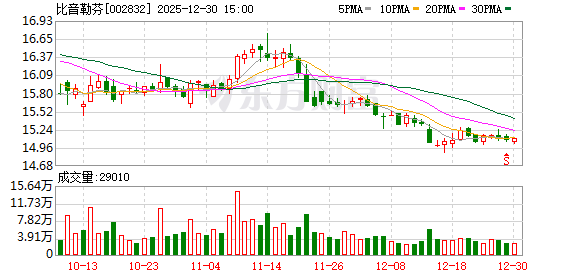
比音勒芬:公司在三亚、海口、儋州、万宁等城市设有线下门店
Mei Ri Jing Ji Xin Wen· 2025-12-30 11:37
Group 1 - The core viewpoint of the article is that the company, Biyin Lefen, has established offline stores in several cities in Hainan, including Sanya, Haikou, Danzhou, and Wanning, but the recent Hainan customs closure has no significant impact on the company's current operations [2] Group 2 - The company responded to an investor inquiry regarding its business activities in Hainan and the opportunities arising from the customs closure [2] - The company maintains a presence in Hainan through its physical stores, indicating a level of engagement with the local market [2] - Despite the presence in Hainan, the company asserts that the customs closure does not affect its current business operations [2]
“织”就时尚消费新场景!2026张槎品牌服装乐购节启幕
Nan Fang Du Shi Bao· 2025-12-30 11:21
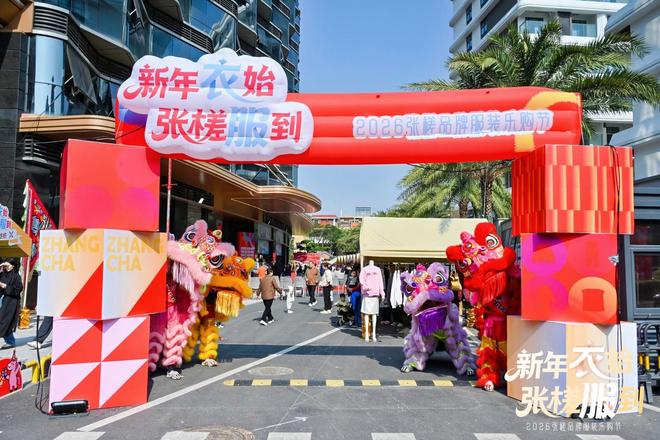
Core Viewpoint - The 2026 Zhangcha Brand Clothing Shopping Festival aims to integrate traditional industries with consumer markets, promoting high-quality development during the 14th Five-Year Plan period [1][5]. Group 1: Event Overview - The shopping festival, themed "New Year Clothing Begins, Zhangcha Fashion Arrives," officially opened on December 30, 2025, and will last until January 3, 2026 [1][3]. - The event features a brand clothing show showcasing the depth and innovation of the Zhangcha knitting industry, with 26 participating brands and over 60 industry representatives [3]. Group 2: Industry Development - Zhangcha has 37,000 market entities, 5,800 upstream and downstream enterprises, and an annual production capacity of 300 million garments, covering the entire textile industry chain [5]. - The local government aims to transform the knitting industry towards high-end, branded, and clustered development, leveraging the shopping festival as a starting point for the 14th Five-Year Plan [5]. Group 3: Collaborative Efforts - The Zhangcha knitting industry has a long history, evolving from a state-owned factory to the largest knitting industry cluster in China, supported by government and enterprise collaboration [6][8]. - Initiatives include the establishment of professional innovation and testing platforms, the introduction of a collective trademark, and the formation of a clothing industry college in partnership with Guangdong Vocational Technical College [8].

海澜之家与阿迪达斯携手共建“体育+”生态圈
Xin Lang Cai Jing· 2025-12-30 10:24
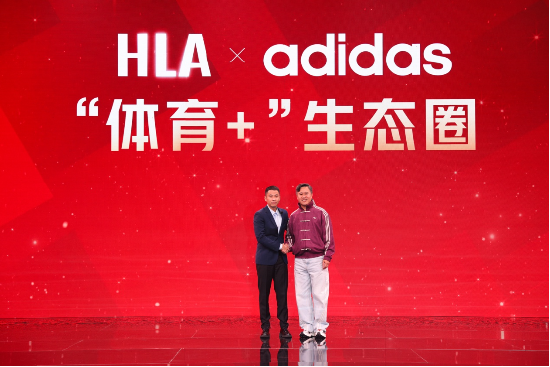
Core Insights - HLA and Adidas have announced an upgrade to their two-year channel cooperation, officially establishing the HLA × Adidas "Sports +" ecosystem [1][10] - The partnership aims to achieve resource complementarity, with HLA opening all-channel scenarios to help Adidas reach a broader consumer base, while Adidas injects professional sports technology and brand value to enhance HLA's competitive edge in the sports leisure category [3][13] Group 1: Ecosystem Development - The collaboration will focus on three main pillars: systematic upgrades to the "Lan Run Study Club," comprehensive upgrades to the "One More Gram of Warmth" public welfare IP, and the launch of the HLA x Adidas Year of the Horse Spring Festival commemorative sweatshirt [3][13] - By mid-2025, over 500 Adidas FCC stores are expected to be established across various provinces and cities in China, integrating both brands deeply into the retail landscape of second to fifth-tier cities [4][14] Group 2: Community and Social Responsibility - The "Lan Run Study Club" is set to become a key component of the ecosystem, providing a platform for runners to share and empower each other, with its core event, the HLA POW "King of Gods Challenge," attracting over 10,000 participants from 22 provinces and achieving over a million views in live broadcasts [5][6][15] - The "One More Gram of Warmth" public welfare initiative, which has reached over 30,000 students across 1,700 schools since its launch in 2014, will focus on providing sports support to children in remote areas, promoting equitable access to sports education [7][16] Group 3: Product Innovation - The HLA x Adidas Year of the Horse Spring Festival commemorative sweatshirt combines Chinese zodiac culture with international sports design, catering to year-end consumer demand and marking the first product collaboration within the "Sports +" ecosystem [8][17] - This product aims to convey a positive message of progress and vitality, reflecting a blend of cultural confidence and sports energy [8][17] Group 4: Strategic Implications - The partnership signifies a shift from traditional channel and product integration to a new phase of ecological integration that encompasses brand value, user engagement, and social responsibility [10][19] - The collaboration serves as a benchmark for the apparel and sports industry, demonstrating that leading brands can break through competitive stagnation by creating a new landscape that integrates user emotions, professional value, and social significance [11][19]


安奈儿:金祥远舵肆号增持1%
Xin Lang Cai Jing· 2025-12-30 10:16
Core Viewpoint - Anner announced that its controlling shareholder's concerted action party, Jin Xiangyuan, will increase its stake by purchasing 2,123,500 shares through centralized bidding, representing 1.00% of the company's total share capital [1] Group 1 - After the increase, Jin Xiangyuan will hold 4,188,200 shares, accounting for 1.97% of the total shares [1] - New Chuangyuan and its concerted action parties will collectively hold 31,952,600 shares, representing 15.00% of the total shares, reaching a 5% integer multiple [1] - This equity change will not result in a change of the controlling shareholder or actual controller [1]

顺差破1万亿美元,工业利润却在下滑:中国经济正在发生什么?
Sou Hu Cai Jing· 2025-12-30 10:01
Group 1 - The core viewpoint is that while the Chinese yuan has stabilized against the US dollar and trade surplus has exceeded $1 trillion, there are underlying issues such as declining industrial profits and pressure on traditional export sectors, indicating a structural transition in the economy [1][15][31] - The importance of the US as an export destination is decreasing, with ASEAN, the EU, Africa, and Latin America emerging as new growth sources for Chinese exports [7][8] - The current trade surplus is not a distortion but reflects a shift from low-cost goods to high-tech products and critical intermediate goods in the global supply chain [18][20] Group 2 - The decline in industrial profits, particularly in traditional export industries like textiles and footwear, contrasts sharply with the record trade surplus, highlighting the challenges faced by companies during this transition [17][21] - The structural changes in the economy are leading to a focus on profitability and upgrading rather than merely expanding through low prices, which is a significant shift from previous business models [24][27] - The profitability in high-tech sectors such as electronics and semiconductors is increasing, indicating a concentration of resources towards areas with long-term competitive advantages [26][29] Group 3 - The simultaneous occurrence of the yuan breaking 7, the trade surplus surpassing $1 trillion, and profit pressures reflects different facets of the same transformation, emphasizing China's critical position in global competition while acknowledging the exit of old growth models [31][33] - The focus should be on whether new growth drivers can develop quickly enough to fill the gap left by the decline of old drivers, as this transition is expected to be accompanied by discomfort and challenges [33]
海澜和阿迪,为什么越抱越紧了?
虎嗅APP· 2025-12-30 09:21
Core Viewpoint - The collaboration between HLA (海澜之家) and adidas marks a significant shift in their business strategies, moving from traditional sales channels to a deeper partnership that emphasizes brand co-creation and a shared vision for a "Sports+" ecosystem [2][14]. Group 1: Partnership Development - HLA and adidas have a history of collaboration dating back to 2022, when HLA's subsidiary established a brand called Sibozi, which became a channel partner for adidas in lower-tier cities [5][6]. - In 2024, HLA gained control of Sibozi and transitioned their partnership with adidas from simple sales to joint operations, indicating a deeper integration of their business models [6][9]. - The launch of the adidas FCC (Future City Concept) stores represents a key strategic initiative, with HLA managing store operations and adidas providing exclusive product lines aimed at affordability and mass appeal [7][9]. Group 2: Market Insights and Trends - The partnership is a response to the "Marathon Cycle," a term describing the surge in sports consumption as GDP per capita exceeds $5,000, reflecting a shift in consumer focus towards quality of life and health management [19][20]. - Both brands have effectively tapped into this cycle, with adidas leveraging high-profile marathon sponsorships and HLA enhancing its brand presence through substantial event sponsorships and consumer engagement [20][22]. Group 3: Consumer Engagement and Brand Strategy - HLA's strategy includes creating high-value experiences for consumers, such as providing premium race kits and engaging in community-driven events, which enhance brand loyalty and consumer trust [24][26]. - The collaboration aims to expand HLA's market reach from a traditional men's clothing brand to a comprehensive lifestyle brand catering to all age groups and fitness enthusiasts, supported by adidas's expertise in sports [25][30]. - HLA's community initiatives, like the "Lan Run Study Club," focus on fostering a sense of belonging and shared experiences among consumers, which is crucial in the current market landscape [28][30].

告别流量内卷:品牌要打一场“共识之战” | 知萌2026消费趋势
Sou Hu Wang· 2025-12-30 08:59
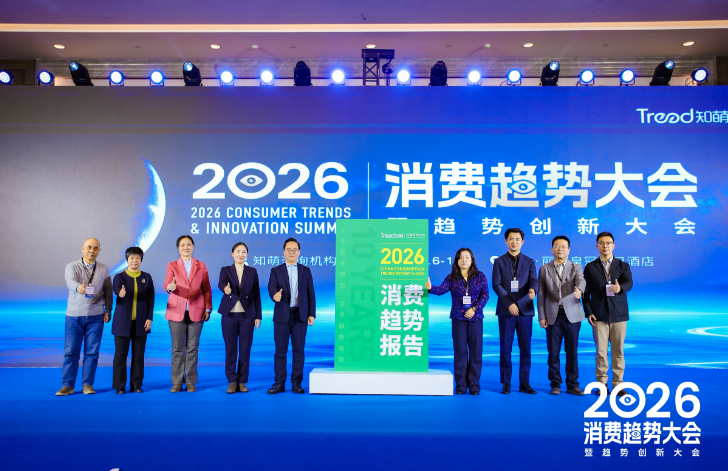
Core Insights - The 2026 Consumer Trends Conference hosted by Zhimeng in Beijing highlighted the evolution of consumer trends over the past decade and identified structural opportunities for brands in 2026 [1][3] - Zhimeng Consulting presented ten key consumer trends for 2026, emphasizing the shift from capturing attention to building public value consensus among consumers [5][8] Group 1: Consumer Trends - The ten consumer trends identified include: rational-emotional coexistence, quality calculation, spiritual nomadism, daily highlights, empathetic experiences, local trends, insiderism, health tuning, brand consensus, and AI scenario power [5] - Brands are urged to focus on creating public recognition and emotional resonance rather than merely competing for attention in a saturated market [5][10] Group 2: Market Dynamics - The market is experiencing an overload of choices, with over 20 million new consumer products introduced in 2024 alone, leading to a challenge for brands to differentiate themselves [8][10] - The proliferation of short video accounts and content has resulted in a noisy environment where consumers struggle to discern valuable information, leading to a sense of brand indifference [10][11] Group 3: Brand Consensus - Brand consensus is defined as a multi-layered process that includes cognitive consensus, value consensus, emotional consensus, and experiential consensus [12][13] - Cognitive consensus refers to the unique position a brand holds in consumers' minds, often encapsulated in a memorable phrase or symbol [13] - Value consensus focuses on the brand's value stance and lifestyle proposition, exemplified by brands like Bosideng, which connects its products to broader public values [15][17] - Emotional consensus is about the stable emotional experiences a brand evokes in consumers, often stemming from relatable stories or experiences [18][20] - Experiential consensus occurs when consumers instinctively associate a brand with specific situations, as demonstrated by Vivo's focus on concert photography [20][22] Group 4: Role of Centralized Media - Centralized platforms like Weibo are crucial for building brand consensus, as they facilitate public discussions and shared memories [25][28] - The process of creating brand consensus involves multiple stakeholders, including media, KOLs, and consumers, contributing to a collective understanding of the brand [26][28] - Successful brands become part of the social narrative, transcending individual marketing efforts to establish a lasting presence in consumers' minds [26][28]
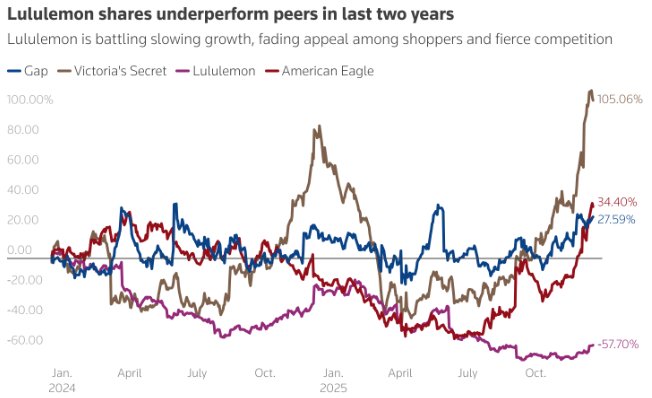
不满董事会战略频频失败,Lululemon(LULU.US)创始人发起代理权争夺战
Zhi Tong Cai Jing· 2025-12-30 08:34
Core Viewpoint - Chip Wilson, the founder of Lululemon Athletica, has initiated a proxy fight to nominate three independent directors to the company's board amid significant challenges, including a nearly 50% drop in stock price this year and intense competition from emerging brands like Alo Yoga and Vuori [1][4]. Group 1: Board Changes and CEO Transition - Wilson has nominated three candidates for the Lululemon board: Marc Maurer, former co-CEO of On Running; Laura Gentile, former CMO of ESPN; and Eric Hirshberg, former CEO of Activision Blizzard [4]. - In the interim, the board has appointed CFO Meghan Frank and CBO André Maestrini as co-CEOs while searching for a permanent successor to former CEO Calvin McDonald [4]. - Lululemon's board stated it will evaluate Wilson's nominations and has initiated a comprehensive CEO search process [5]. Group 2: Shareholder Concerns and Governance - Wilson expressed that the recent CEO transition reflects a third failure in board oversight and criticized the lack of a clear succession plan [5]. - Analysts suggest that adding three new board members could mitigate Wilson's ongoing criticism of the board, although only one nominee has direct experience in Lululemon's industry [5]. - Wilson holds 4.27% of Lululemon's shares and has previously called for a CEO with extensive product experience to restore the company's focus on product quality [7]. Group 3: Historical Context of Wilson's Involvement - Wilson has a history of pushing for board changes at Lululemon, having previously resigned from the board due to strategic conflicts and a public relations crisis in 2013 [7]. - In 2015, he avoided a proxy fight by selling a significant portion of his shares to a private equity firm in exchange for additional board seats [7].