
低空经济

Search documents
中国智造跃迁,硬科技创业需要“工程化”动能
2 1 Shi Ji Jing Ji Bao Dao· 2025-11-25 10:46
Core Insights - The demand for credible, verifiable, and deployable engineering capabilities is increasing as China's manufacturing industry transitions towards high-end and intelligent development [1][4] - SISPARK has partnered with MathWorks to support startups in AI, industrial, and medical sectors by providing toolchains and technical support [1][4] - The collaboration signifies a shift in SISPARK's service offerings, extending into the "tool layer" to meet the growing needs of high-tech startups [4] Industry Trends - The engineering capability gap is a hidden bottleneck for high-tech startups, which now primarily possess core technologies but lack funding, personnel, and market access [3] - The rise of embedded AI applications is anticipated to begin in 2026, highlighting the challenges of integrating AI into embedded systems, particularly regarding explainability and compliance [3][4] - The automotive industry serves as a case study for the shift towards self-innovation and R&D, driven by policy requirements for software self-research in key components [4] Emerging Sectors - Low-altitude economy and medical devices are identified as rapidly growing sectors, with the potential to rival the automotive industry in scale [5] - The humanoid robotics field is emerging as a new growth point, leveraging capabilities developed in the automotive sector for complex system modeling and simulation [5][6] - All these sectors are characterized by high safety and reliability requirements, emphasizing the need for stronger engineering capabilities as China's industry upgrades [6]

今年我国低空经济市场规模预计将达1.5万亿元 无人机物流、载人出行、低空旅游等多领域新业态迭出
Yang Guang Wang· 2025-11-25 07:25
Core Insights - The low-altitude economy market in China is projected to reach 1.5 trillion yuan by 2025, with potential to exceed 2 trillion yuan by 2030, driven by new business models in drone logistics, manned travel, and low-altitude tourism [1][2]. Industry Developments - Multiple regions in China are forming clusters in the low-altitude industry, fostering new business models in drone logistics, manned travel, and low-altitude tourism [2]. - As of now, there are 969 registered companies in the civil unmanned aerial vehicle product information system, with 3,191 registered products and over 478,000 drones [2]. Technological Innovations - Drones are being utilized for agricultural purposes, such as transporting harvested fruits, demonstrating efficiency by moving approximately 30,000 jin (15 tons) of oranges daily, which helps farmers reduce costs [1]. - Shared drone services are being introduced in tourist areas, allowing users to experience aerial views with minimal technical knowledge, enhancing accessibility to aerial sightseeing [1]. Regulatory Framework - The establishment of a comprehensive management service platform for low-altitude flights in Guangdong province aims to monitor the status, trajectory, weather, and airspace dynamics of flying vehicles [2][3]. - The development of low-altitude economy requires not only innovative scenarios but also systematic guarantees, including reforms in air traffic rules and safety management [3].
学习规划建议每日问答丨为什么要着力打造新兴支柱产业
Xin Hua Wang· 2025-11-25 05:49
Group 1 - The core idea emphasizes the importance of developing emerging pillar industries for the qualitative enhancement of the economy, which is crucial for meeting the evolving social contradictions in China [2] - The strategic emerging industries are characterized by high knowledge and technology intensity, low material resource consumption, significant growth potential, and comprehensive benefits, contributing to the improvement of economic development quality [2] - By 2025, the added value of strategic emerging industries is expected to account for over 17% of GDP, an increase of 5.3 percentage points compared to the end of the 13th Five-Year Plan, significantly contributing to high-quality economic development [2] Group 2 - The urgency of developing emerging pillar industries is highlighted due to challenges faced by key industries such as mining, metallurgy, and chemicals, which are experiencing supply-demand imbalances and low price levels [3] - Maintaining reasonable economic growth requires accelerating the development of emerging pillar industries to provide solid support for job expansion and income increase [3] Group 3 - The development of emerging pillar industries is crucial for advancing the modernization of the industrial system, as historical evidence shows that technological revolutions lead to the emergence of new industries [4] - Countries that seize opportunities during technological revolutions successfully modernize their industrial systems, while those that fail to do so risk losing international competitiveness [4] - The current technological revolution and industrial transformation present both opportunities and challenges for China's industrial development, necessitating the establishment of new emerging pillar industries such as new energy and aerospace [4]
云衢启章,鹏翼展卷——低空经济绘就万亿新图景
Zhong Guo Zheng Quan Bao· 2025-11-25 00:13
Core Viewpoint - The low-altitude economy in China is projected to reach a market size of 1.5 trillion yuan by 2025 and is expected to exceed 2 trillion yuan by 2030, indicating a strong growth trend in the industry [1] Group 1: Market Demand and Growth - The surge in orders reflects a high market demand, with Meituan's drone delivery surpassing 670,000 commercial orders by September 2025, and 150,000 orders in the first half of 2025 alone [2] - The industry anticipates that by 2035, the value of drone logistics in China could exceed 1 trillion yuan, with an average annual growth rate of around 20% [2] - Numerous low-altitude aircraft manufacturers have received substantial orders, with companies like Wolt and Yihang securing hundreds of aircraft orders and significant financing to support production [3][4] Group 2: Infrastructure and Safety - The development of the low-altitude economy requires a robust infrastructure network and comprehensive safety regulations to ensure smooth operations [1][6] - Safety is recognized as a top priority in the industry, with calls for unified regulatory systems to manage low-altitude flight activities effectively [7] - Companies are working towards creating a multi-network integration of air, sky, and ground services to enhance regulatory and service models for the low-altitude industry [8] Group 3: Policy Support and Strategic Development - The Chinese government predicts that the low-altitude economy will reach a market size of 3.5 trillion yuan by 2035, emphasizing the importance of policy support for industry stability [9] - The establishment of the Low Altitude Economic Development Department by the National Development and Reform Commission aims to formulate and implement strategies for the sector [10] - Local governments are increasingly incorporating low-altitude economic development into their work reports, indicating a multi-layered regulatory framework is being established [11]
丹徒高新区:“五向发力”构筑核心竞争优势
Zhen Jiang Ri Bao· 2025-11-24 23:25
Group 1 - The successful convening of the 20th Central Committee's Fourth Plenary Session provides fundamental guidance for the Danju High-tech Zone to promote high-quality development on a new journey [1] - The high-tech zone will focus on "high," "new," "digital," "green," and "safe" development orientations, aiming to enhance the integration of technological and industrial innovation [1] - The strategy includes strengthening high-end equipment manufacturing and new materials as pillar industries, optimizing the life and health sector, and planning for the development of low-altitude economy future industries [1] Group 2 - The initiative aims to accelerate the modernization of industrial chains and enhance competitive advantages for high-quality development [1] - The focus is on promoting "dual high coordination" by leveraging university research resources to establish provincial-level innovation platforms and high-quality R&D institutions [1] - There will be increased support for enterprises' intelligent upgrades and digital transformations, enhancing the information, digital, and intelligent levels of infrastructure [1] Group 3 - The commitment to green development includes guiding enterprises towards low-carbon transformations and advancing the construction of zero-carbon parks and factories [2] - The goal is to significantly reduce pollutant emissions and energy consumption within the parks, gradually forming a green manufacturing system [2] - The safety production governance system will be improved, with enhanced monitoring and emergency response mechanisms in key industries [2]
千帆竞发 共筑“天空之城”
Zhong Guo Zheng Quan Bao· 2025-11-24 20:13
Core Insights - The low-altitude economy has been recognized as a strategic emerging industry in China, leading to various local governments implementing policies to accelerate the formation of industrial clusters and attract upstream and downstream enterprises. Beijing - The "Beijing Action Plan for Promoting High-Quality Development of the Low-Altitude Economy (2024-2027)" aims for over 5,000 low-altitude economy-related enterprises by 2027, with an industry scale reaching 100 billion yuan [1] - The plan includes developing over 10 replicable application scenarios in areas such as emergency management, logistics, and urban commuting by 2027 [1] Shanghai - The "Shanghai Action Plan for High-Quality Development of the Low-Altitude Economy (2024-2027)" targets a core industry scale exceeding 50 billion yuan by 2027 [1] - The plan supports the establishment of over 10 leading enterprises in electric vertical takeoff and landing aircraft and aims to cultivate around 20 leading low-altitude service companies [1] Guangzhou - The "Guangzhou Implementation Plan for Low-Altitude Economy Development" projects an overall scale of approximately 150 billion yuan for the low-altitude economy by 2027 [1] - The plan emphasizes improvements in low-altitude airspace management and technological innovation, aiming for national leadership in these areas [1] Shenzhen - The "Shenzhen High-Quality Construction Plan for Low-Altitude Infrastructure (2024-2026)" aims to establish a low-altitude infrastructure system by the end of 2026, including 1 major scientific facility and 5 operational test zones [2] - The plan includes the construction of over 1,200 low-altitude takeoff and landing points and the opening of over 1,000 low-altitude commercial flight routes [2] Chongqing - The "Chongqing Action Plan for Promoting Low-Altitude Airspace Management Reform (2024-2027)" aims to establish a city air traffic management system supported by Beidou applications by 2027 [3] - The plan anticipates an annual growth of over 20% in the number of low-altitude aircraft and a 25% increase in flight hours and frequency [3] Zhejiang - The "Action Plan for Building a Strong Civil Aviation Province and Developing a High-Altitude Economy" aims to establish a low-altitude infrastructure network, including 20 general airports and over 150 public drone takeoff and landing sites by 2027 [4] - The plan focuses on developing low-altitude tourism routes and new consumption models, integrating low-altitude services with tourism and sports [4]
云衢启章,鹏翼展卷
Zhong Guo Zheng Quan Bao· 2025-11-24 20:13
Core Insights - The low-altitude economy in China is projected to reach a market size of 1.5 trillion yuan by 2025 and is expected to exceed 2 trillion yuan by 2030, indicating strong growth trends in the industry [1][7] - The development of low-altitude applications is rapidly expanding, with increasing orders, active financing, and technological advancements contributing to a vibrant market landscape [1][2] Market Demand and Orders - As of September 2025, Meituan's drone delivery service has completed over 670,000 commercial orders, with 150,000 orders in the first half of 2025 alone, highlighting the growing demand for drone logistics [1] - The industry anticipates over 140 new low-altitude logistics routes to be opened in 2024, with drone logistics revenue expected to surpass 1 trillion yuan by 2035, maintaining an annual growth rate of around 20% [1][2] Application Scenarios - Low-altitude economic applications are categorized into four main areas: production operations, transportation, cultural tourism experiences, and security [2] - The demand for low-altitude flying vehicles is increasing, with companies like Zero Gravity Aircraft and Yufeng Future securing significant orders for various aircraft models, indicating a robust market response [2][3] Safety and Infrastructure - Safety is emphasized as a critical priority for the healthy development of the low-altitude economy, with calls for comprehensive monitoring and regulatory systems to ensure safe operations [5][6] - The establishment of a new infrastructure and flight control system is necessary to support the smooth operation of low-altitude activities, with ongoing efforts to develop integrated solutions for urban air mobility [4][6] Policy Support - The Chinese government is actively promoting the low-altitude economy through strategic planning and policy initiatives, including the establishment of a dedicated department for low-altitude economic development [7][8] - Recent government measures encourage private investment in low-altitude infrastructure, aiming to foster a collaborative environment for industry growth [7][8]
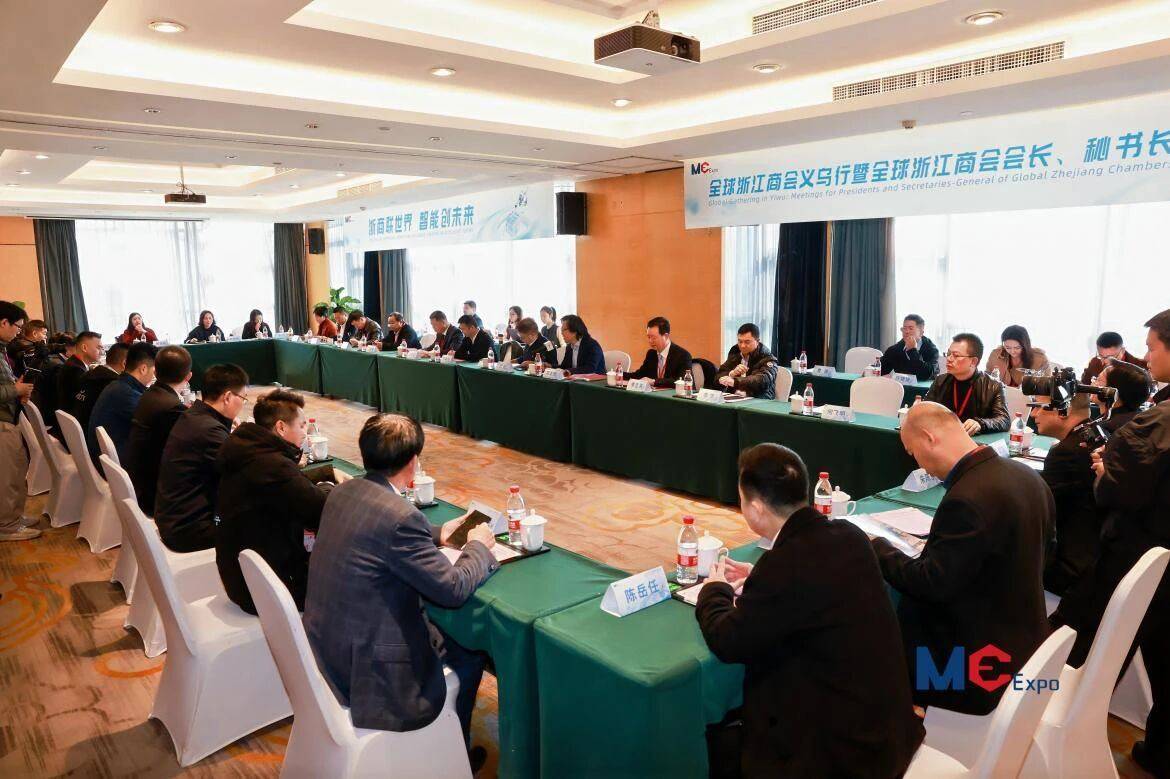
传承浙商精神 共筑全球合作——义乌行见证商会力量与发展初心
Sou Hu Cai Jing· 2025-11-24 11:47
Core Insights - The 2025 Yiwu International Intelligent Equipment Expo aims to connect global Zhejiang merchants and promote high-quality development in Yiwu through collaboration and resource sharing [1][3] - The event highlights Yiwu's transformation from a "small commodity city" to a "world-class supermarket," emphasizing its advancements in digital trade and logistics [3][4] Group 1: Event Overview - The event attracted international Zhejiang merchants from countries such as Singapore, Canada, and Kazakhstan, focusing on the theme "Zhejiang Merchants Connect the World, Intelligent Creation for the Future" [1] - The Yiwu city government presented its business environment, showcasing its modern industrial matrix and commitment to digital trade upgrades [3] Group 2: International Perspectives - Overseas Zhejiang merchants emphasized the importance of leveraging advanced products and technologies from Zhejiang to enhance global trade [4] - They called for better resource sharing and collaboration to promote Zhejiang manufacturing and Yiwu brands internationally [5] Group 3: Domestic Collaboration - Domestic Zhejiang merchants discussed strategies for regional cooperation and resource sharing to enhance Yiwu's trade advantages [6] - Various provincial representatives expressed their commitment to integrating local industries with Yiwu's global trade network [7] Group 4: Strategic Insights - Experts from the Zhejiang Development Research Institute highlighted the need for high-level openness and the expansion of digital service trade [8] - Recommendations included focusing on innovation, exploring new markets, and utilizing existing trade agreements to enhance competitiveness [8]

IDEA大会在深举行 多项低空前沿成果发布
Nan Fang Ri Bao Wang Luo Ban· 2025-11-24 08:46
Core Insights - The IDEA Conference held in Shenzhen on November 22 showcased advancements in the low-altitude economy, including the release of the OpenSILAS 2.0 system and the Low Altitude Economic Development White Paper 4.0 [1][2] Group 1: OpenSILAS 2.0 System - The OpenSILAS 2.0 system was introduced as a comprehensive management and service solution for low-altitude operations, addressing the complexities of urban environments and airspace [1] - The system enables full-cycle management and services across planning, operation, regulation, and service [1] Group 2: Low Altitude Economic Development White Paper 4.0 - The white paper discusses the technological development directions for communication, navigation, and monitoring in the low-altitude economy [1] - It recommends the establishment of a wide-area universal communication, navigation, and monitoring network to support the scalable operation of low-altitude flights [1] Group 3: Low Altitude Products - The conference featured innovative low-altitude products, including the "Height Box," which integrates multiple sensors for real-time data collection and cloud uploading [2] - The low-altitude integrated machine combines the core OpenSILAS system with various flight management and monitoring functions, allowing for independent deployment in secure network environments [2]
陈美宝:香港29个低空经济监管沙盒试点项目已获推动及落地 明年初推动“监管沙盒X”延展应用场境
智通财经网· 2025-11-24 07:24
在38个试点项目中,推动智慧空中旅游的5代新多媒体有限公司CEO陈家辉表示有意参与下一阶段监管 沙盒X试验,但首先要就民航处与保险公司就往后保险覆盖范围协调。他亦称,单一公司参与下一阶段 较复杂试验并不合理,因此他正寻找更多合作伙伴,包括关注大型载人飞行器或空管系统伙伴合作机 会。 智通财经APP获悉,低空经济"监管沙盒X"今日举行启动礼。香港运输及物流局局长陈美宝在致辞时 称,在首批38个监管沙盒试点中,有29个项目已获推动及落地,包括离岛物流配送、港铁(00066) 利用 隧道监察及检查、外墙清洁等用途。她续指出,于明年初起所推动的监管沙盒X代表延展至包括跨境或 载人物流配送、建构无人机设备产品认证等项目。她亦冀,明年年底前完成草拟《发展低空经济规划行 动纲领》。 生产力局首席数码总监黎少斌指出,作为政府发展低空经济工作组监管沙盒技术合作伙伴,已成功为超 过15个无人机应用试点项目提供安全运作及灵活测试环境等,监管沙盒X应用场境所需技术复杂,当局 续推动创新方案在实际环境中落地。 ...