天然气

Search documents
吉星新能源(03395.HK):董事会批准新建75千吨╱年液化天然气项目
Ge Long Hui· 2026-01-15 23:37
Core Viewpoint - The company is advancing its energy projects, including a 9.5 MW power generation project and a new liquefied natural gas (LNG) project, which aims to diversify its operations and enhance the value of its natural gas production [1] Group 1: Power Generation Project - The company received major regulatory approval from the Alberta Environment and Protected Areas (EPEA) for its natural gas power generation project on January 6, 2026, although the approved capacity was adjusted from 9.6 MW to 9.5 MW [1] - The company is continuing the application process for the remaining permits necessary for the project [1] Group 2: Liquefied Natural Gas Project - The board has approved the development of an LNG project with an annual production capacity of 75,000 tons [1] - Upon completion, the company will utilize its own natural gas production and existing pipeline systems to produce LNG, which will replace diesel fuel in local markets, including drilling and completion operations, truck fleets, and diesel power generation [1] - The company anticipates that the local LNG market will experience steady growth, supported by the increasing demand for reliable and cost-effective alternative fuels [1]
吉星新能源:9.6兆瓦天然气发电项目获监管批准及董事会批准新建75千吨╱年液化天然气项目
Zhi Tong Cai Jing· 2026-01-15 23:35
Core Viewpoint - Company announces progress on a 9.6 MW power project and discusses the feasibility of a new liquefied natural gas (LNG) project, with a recent regulatory approval for a 9.5 MW gas power project [1] Group 1: Project Updates - The board of directors will meet on January 12, 2026, to update on the 9.6 MW power project and discuss the new LNG project's feasibility [1] - The Alberta Environmental and Protected Areas (EPEA) has granted major regulatory approval for the gas power project on January 6, 2026, adjusting the approved capacity from 9.6 MW to 9.5 MW [1] Group 2: LNG Project Development - The board has approved the development of an LNG project with an annual production capacity of 75,000 tons [1] - The LNG project aims to utilize the company's own natural gas production and existing pipeline systems to replace diesel fuel in local markets, including drilling, completion operations, truck fleets, and diesel power generation [1] - The local LNG market is expected to grow steadily due to increasing demand for reliable and cost-effective alternative fuels [1] Group 3: Regulatory and Financial Considerations - The regulatory application process for the LNG project has been initiated, with project budget and milestone timelines to be announced when ready [1] - If the company fails to obtain all necessary approvals from relevant government agencies, both the 9.5 MW gas power project and the LNG project will not proceed [1]
吉星新能源(03395):9.6兆瓦天然气发电项目获监管批准及董事会批准新建75千吨╱年液化天然气项目
智通财经网· 2026-01-15 23:34
Core Viewpoint - The company, Jixing New Energy, is advancing its 9.6 MW power project and exploring the feasibility of a new liquefied natural gas (LNG) project, with significant regulatory approvals received for its natural gas power generation initiative [1] Group 1: Project Updates - The board of directors will meet on January 12, 2026, to discuss the progress of the 9.6 MW power project and the new LNG project [1] - The Alberta Environmental and Protected Areas (EPEA) has granted major regulatory approval for the natural gas power project on January 6, 2026, although the approved capacity has been adjusted to 9.5 MW [1] Group 2: LNG Project Development - The board has approved the development of an LNG project with an annual production capacity of 75,000 tons [1] - The LNG project aims to utilize the company's own natural gas production and existing pipeline systems to replace diesel fuel in local markets, including drilling, completion operations, truck fleets, and diesel power generation [1] - The local LNG market is expected to grow steadily due to increasing demand for reliable and cost-effective alternative fuels [1] Group 3: Regulatory and Financial Considerations - The regulatory application process for the LNG project has been initiated, with project budget and milestone timelines to be announced when ready [1] - If the company fails to obtain all necessary approvals from relevant government agencies, both the 9.5 MW natural gas power project and the LNG project will not proceed [1]
吉星新能源(03395) - 自愿性公告9.6兆瓦天然气发电项目监管批准及董事会批准新建75千吨╱年...
2026-01-15 23:25
香港交易及結算所有限公司與香港聯合交易所有限公司對本公告之內容概不負責,對其 準確性或完整性亦不發表任何聲明,並明確表示概不就因本公告全部或任何部分內容而 產生或因倚賴該等內容而引致之任何損失承擔任何責任。 JX Energy Ltd. (吉星新能源有限責任公司)* ( 根據阿爾伯塔法例註冊成立的有限責任公司) (股份代號:3395) 自願性公告 9.6兆瓦天然氣發電項目監管批准 及 董事會批准新建75千噸╱年液化天然氣項目 本公告乃由吉星新能源有限責任公司* (「本公司」)自願發佈。本公告旨在向本公司股東及 潛在投資者通報本公司最新業務發展。 董事會進一步批准開發一個年產量75千噸(千噸╱年)的液化天然氣項目。該項目竣工 後,本公司將能利用自有天然氣產量及現有管道集輸系統生產液化天然氣,用於替代本 地市場的柴油燃料,包括鑽井與完井作業、卡車車隊及柴油發電等領域。此舉預期將提 升公司天然氣產能的價值,並進一步多元化業務組合。本公司指出,在可靠且具成本效 益的替代燃料需求持續增長的支撐下,當地液化天然氣市場潛力可望穩健發展。 – 1 – 液化天然氣項目之監管申請程序已啟動,項目預算與里程碑時程將於準備就緒時公佈 ...
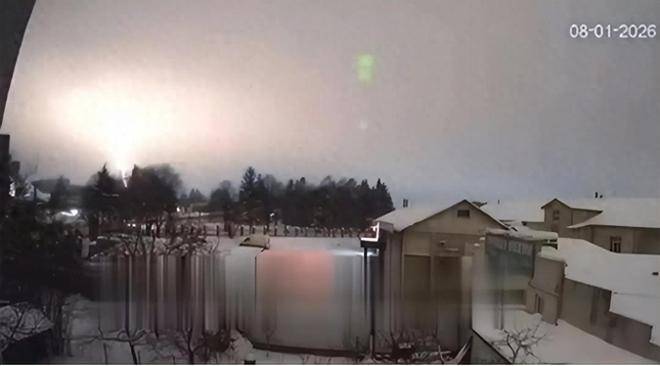
一声巨响炸掉50%天然气,欧洲最大储气库成火海,英法激怒普京的代价,现在才刚刚开始
Sou Hu Cai Jing· 2026-01-15 19:04
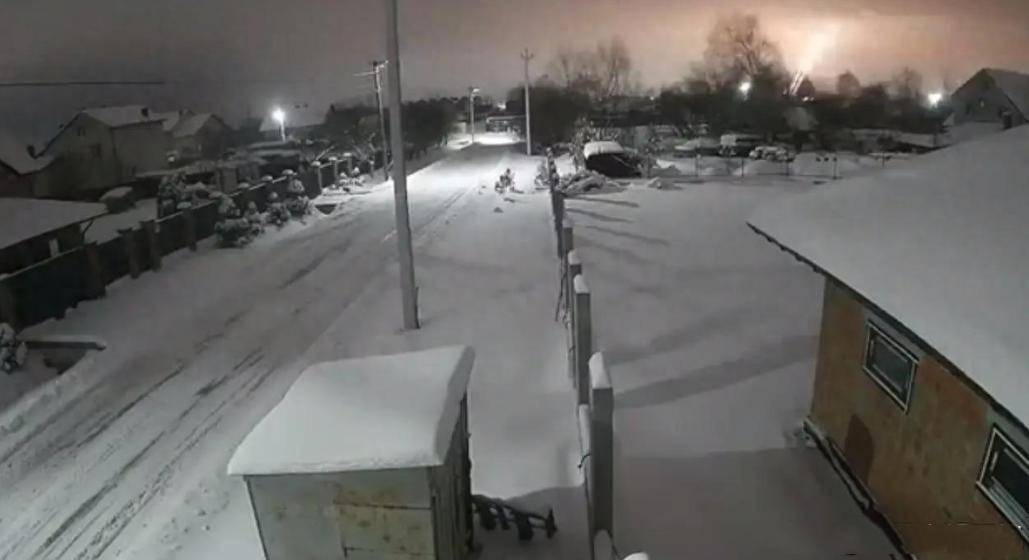
Group 1 - The core event involves a Russian missile strike on a major underground gas storage facility in Lviv, leading to a significant gas leak and fire, which highlights the vulnerability of Europe's energy supply during winter [1][3] - The attack is characterized as a "textbook asymmetric retaliation," targeting Europe's energy infrastructure rather than direct military assets, reflecting Russia's strategic response to Western military support for Ukraine [3][5] - The destruction of the gas storage facility poses severe implications for European energy security, affecting heating for civilians and operations in critical sectors like healthcare and manufacturing [5][7] Group 2 - Following the attack, emergency consultations were initiated among the US, UK, France, and Germany, revealing underlying national interests and the urgency of finding new energy suppliers [7] - The situation presents a dilemma for Europe: either purchase expensive US gas to appease domestic discontent or reconsider its hardline stance against Russia, both options indicating a heavy price for previous political decisions [7] - The incident underscores Russia's capability to disrupt European energy supplies, raising concerns about future attacks if Western nations continue their current policies towards Ukraine [7]

170亿方气库遭炸毁,北约防空形同虚设,普京直击要害断欧洲能源命脉
Sou Hu Cai Jing· 2026-01-15 12:59
Core Insights - The use of the "Oreshnik" missile by Russia marks a significant escalation in conventional strategic strike capabilities, demonstrating the ability to bypass existing Western defense systems [1][10][11] - The attack on the underground gas storage facility in Lviv, a critical energy hub for Europe, has profound implications for European energy security and market stability [3][5][8] Group 1: Missile Capabilities and Impact - The "Oreshnik" missile, capable of flying at speeds exceeding 10.53 Mach, can strike targets within minutes, rendering current defense systems nearly ineffective [1][10] - The missile's successful penetration of deep geological structures signifies a shift in Russia's military strategy, focusing on critical energy infrastructure rather than traditional military targets [3][12][17] Group 2: Energy Security Implications - The destroyed gas storage facility in Lviv holds over 17 billion cubic meters of gas, accounting for more than 52% of Ukraine's storage capacity, crucial for maintaining energy supply in Central Europe [5][8] - The attack has led to a 23% spike in TTF natural gas prices within 48 hours, indicating immediate market panic and potential long-term volatility in energy pricing [8][24] Group 3: Geopolitical Repercussions - The choice of target near the Polish border serves as a geopolitical provocation, challenging NATO's perceived security guarantees and highlighting vulnerabilities in collective defense mechanisms [8][12][19] - The incident has caused divisions within Europe regarding energy policy and defense strategies, with some countries advocating for increased military support for Ukraine while others push for energy independence [19][20] Group 4: Strategic Shifts in Warfare - Russia's approach reflects a transition from traditional territorial warfare to a strategy aimed at undermining the opponent's capacity to sustain conflict through targeted strikes on energy infrastructure [17][24][45] - The successful use of the "Oreshnik" missile may accelerate the development of hypersonic weapons globally, reshaping defense strategies and military preparedness in Europe and beyond [43][45]
不装了,普京的真正实力被严重低估,整个欧洲加起来都不是对手!
Sou Hu Cai Jing· 2026-01-15 12:59
Group 1: Russia's Resource Strength - Russia holds 28% of the world's natural gas reserves, 80 billion tons of oil (second globally), and 1,621 billion tons of coal (also second) [2] - By 2025, Russia is expected to extract 804 tons of gold and has 20% of the global rare earth reserves, which directly support its economy and military spending during the conflict [2] - Russia has 220 million hectares of arable land, with a projected grain output of 145 million tons by 2025, achieving a self-sufficiency rate of 155%, and is the world's second-largest wheat exporter [2] Group 2: Europe's Energy Dependency - Before 2022, the EU relied on Russia for 40% of its natural gas, 27% of its oil, and 46% of its coal [4] - Despite efforts to replace Russian gas with U.S. liquefied gas, by 2025, Russia is still expected to account for 13% of EU gas imports [4] - European electricity prices are four times higher than those in the U.S., leading to decreased factory operating rates and economic challenges [4] Group 3: Military Capabilities - Russia has inherited the Soviet military system, producing 5,750 tanks (second globally), 4,162 military aircraft (second), and 419 naval vessels (third) by 2025 [6] - In 2023, Russia produced 1,200 tanks, four times more than the U.S., and is capable of producing 300 drones weekly [6] - Russian defense spending is 9% of GDP, benefiting from low costs due to domestic energy and raw material availability [6] Group 4: European Military and Economic Challenges - European military production is struggling due to financial and energy constraints, leading to delays in expansion [8] - The internal conflicts within NATO and the European leadership hinder effective military support for Ukraine [10] - The ongoing energy crisis in Europe has resulted in a significant depletion of ammunition stocks and public protests against rising energy prices [12] Group 5: Russia's Strategic Position - Russia's resilience is highlighted by its ability to maintain economic stability despite sanctions, with oil and gas exports to China and India increasing [10] - The Russian economy is projected to grow at 1% in 2025, with stable fiscal conditions despite a slow growth rate [10] - Russia's strategic stability and resource availability position it favorably against a fragmented and struggling Europe [14]
截至2025年11月,阿曼天然气产量超过520亿立方米
Shang Wu Bu Wang Zhan· 2026-01-15 12:19
Core Viewpoint - Oman’s total natural gas production, including imports, is projected to reach approximately 52.136 billion cubic meters by the end of November 2025, reflecting a year-on-year growth of 0.6% [1] Group 1: Natural Gas Production and Consumption - As of the end of November 2025, natural gas consumption in Oman has also increased by 0.6%, reaching 52.136 billion cubic meters [1] - The volume of natural gas used for power generation has grown by 1.4%, amounting to 14.273 billion cubic meters [1] - Natural gas consumption in industrial zones has surged by 11.6%, while usage in industrial projects has decreased by 3.6% [1]
壳牌、埃克森美孚终止英国天然气资产原定出售计划
Ge Long Hui A P P· 2026-01-15 11:45
Group 1 - Shell and ExxonMobil have terminated their plans to sell UK natural gas assets, with Shell stating that the sale of North Sea assets did not meet certain conditions [1] - The decision reflects ongoing challenges in the energy sector, particularly regarding asset valuations and market conditions [1] - The termination of the sale plans may impact the companies' strategic positioning and future investment decisions in the UK market [1] Group 2 - The North Sea assets are significant for both companies, and their sale was anticipated to generate substantial revenue [1] - The move indicates a cautious approach by Shell and ExxonMobil in navigating the complexities of the current energy landscape [1] - This development may lead to a reevaluation of investment strategies in the UK natural gas sector by other industry players [1]


俄军炸毁欧洲最大能源设施,美英法德赶紧商量下一步
Sou Hu Cai Jing· 2026-01-15 09:34
Core Viewpoint - The destruction of the gas storage facility in Lviv by Russian forces using advanced hypersonic missiles signifies a strategic escalation in the conflict, impacting not only Ukraine but also the energy security of Europe as a whole [1][9][19]. Group 1: Attack Details - The Lviv gas storage facility held over 50% of Ukraine's total gas reserves, making it a critical component of the country's energy system and winter energy supply for several European cities [2][3]. - The military operation involved five hypersonic "Zircon" missiles, over 240 drone sorties, and 36 long-range auxiliary missiles, indicating a complex tactical approach aimed at suppressing enemy air defenses and destroying key infrastructure [3][5]. - The "Zircon" missiles utilize non-explosive kinetic warheads, capable of penetrating deep underground defenses, highlighting the effectiveness of Russia's military technology in this operation [5][7]. Group 2: Strategic Implications - The attack serves as a warning not only to Ukraine but also to Western decision-makers, indicating that the conflict's ramifications extend beyond regional borders and threaten the energy security of multiple European nations [9][11]. - The destruction of the gas facility has immediate consequences for over a million residents in Lviv, who now face severe winter conditions without heating or electricity, stressing the urgency of the humanitarian crisis [7][17]. - The interconnected nature of Europe's energy network means that disruptions in Ukraine can lead to widespread energy shortages in neighboring countries, complicating recovery efforts [11][21]. Group 3: Western Response and Challenges - In response to the crisis, leaders from the US, UK, France, and Germany convened to discuss strategies for addressing the energy shortfall and stabilizing the situation, revealing a shift in focus from military support to immediate humanitarian concerns [13][19]. - The attack has exposed divisions within Europe regarding the ongoing support for Ukraine, as the reality of energy shortages becomes a pressing issue for households across the continent [21][23]. - Russia's actions have forced Western nations to reconsider the costs of their support for Ukraine, as the consequences of the conflict are now being felt domestically [15][25].