
平台经济

Search documents
中国拟出台新规优化平台经济竞争生态
Zhong Guo Xin Wen Wang· 2025-11-15 05:01
Core Viewpoint - China is drafting new guidelines to optimize the competitive ecosystem of the platform economy, aiming to help platform operators identify and mitigate risks associated with the abuse of market dominance [1][2]. Group 1: Regulatory Framework - The State Administration for Market Regulation (SAMR) has released a draft titled "Antitrust Compliance Guidelines for Internet Platforms" for public consultation [1]. - The guidelines are intended to assist platform operators in accurately identifying, assessing, and preventing antitrust compliance risks, thereby clarifying behavioral boundaries and stabilizing market expectations [1]. Group 2: Market Dynamics - The rapid development of China's platform economy has led to significant risks of monopoly, as platform operators can influence competition through rules, data, algorithms, and technology [1]. - The guidelines emphasize that larger platform operators must regularly assess their market dominance to avoid engaging in anti-competitive practices [1]. Group 3: Specific Risks and Recommendations - The guidelines provide examples of potential monopolistic risks in various scenarios, including unfair pricing, below-cost sales, account bans, "choose one from two" practices, and differential treatment [2]. - SAMR aims to enhance the confidence of platform operators in fair competition, encouraging them to move away from low-level homogeneous competition and to unlock their potential for forward-looking research and development [2].
警示八大风险!市场监管总局重磅发布!
Ren Min Ri Bao· 2025-11-14 23:44
Core Viewpoint - The State Administration for Market Regulation has drafted the "Antitrust Compliance Guidelines for Internet Platforms (Draft for Comments)" to solicit public opinions, aiming to help platform operators identify and manage antitrust compliance risks effectively [1][2]. Group 1: Purpose and Nature of the Guidelines - The guidelines aim to promote innovation and healthy development in the platform economy by fostering a fair competitive market environment [2]. - The guidelines are non-binding and serve as a general reference for antitrust compliance, helping to reduce uncertainty costs for platform operators [2]. - The guidelines focus on enhancing the specificity and effectiveness of antitrust compliance management by summarizing regulatory enforcement experiences and identifying new types of monopolistic risks in eight scenarios [2][6]. Group 2: Identifying Monopolistic Agreement Risks - Platform operators are advised to avoid reaching monopolistic agreements during service provision or self-operated business activities [3]. - A basic analytical framework is provided for identifying monopolistic agreement risks, including assessing whether behaviors fall under prohibited conditions of the Antitrust Law [3][4]. - Specific behaviors that may constitute monopolistic agreements are detailed, guiding operators to prevent such risks [3]. Group 3: Identifying Abuse of Market Dominance Risks - Operators with significant market power should regularly assess their market dominance and avoid engaging in abusive behaviors [4][5]. - The guidelines outline factors to consider when determining market dominance, such as market share, competitive conditions, and dependency of other operators [5]. - Examples of abusive behaviors are provided, including unfair pricing and refusal to deal, to help operators understand and avoid such risks [5]. Group 4: Risk Management and Compliance - The guidelines encourage operators to establish a comprehensive risk management system, including risk assessment, reminders, prevention, and compliance rectification [7][9]. - Operators are advised to conduct risk assessments based on industry characteristics and market conditions, implementing a tiered management approach [7]. - The guidelines emphasize the importance of reviewing platform rules and algorithms to ensure compliance and mitigate risks [8]. Group 5: Establishing Compliance Mechanisms - Operators are encouraged to set up dedicated antitrust compliance management institutions and ensure effective implementation of compliance measures [9]. - The guidelines suggest creating a closed-loop risk management mechanism, including compliance reporting, training, and supervision [9].
警示八大风险!刚刚,市场监管总局重磅发布!
券商中国· 2025-11-14 23:38
Core Viewpoint - The article discusses the draft of the "Antitrust Compliance Guidelines for Internet Platforms" aimed at promoting fair competition and innovation within the platform economy, while providing a framework for platform operators to identify and mitigate antitrust compliance risks [1][2]. Summary by Sections Purpose and Nature of the Guidelines - The guidelines are designed to foster innovation and healthy development in the platform economy by ensuring a fair competitive environment [2]. - They serve as non-binding compliance guidelines to help platform operators reduce uncertainty costs and proactively manage antitrust risks [2]. Identifying Antitrust Agreement Risks - Platform operators are advised to avoid reaching antitrust agreements during service provision or self-operated business activities [3]. - A basic analytical framework is provided to help operators assess whether their actions fall under prohibited antitrust behaviors [3]. - Specific behaviors that may constitute horizontal or vertical antitrust agreements are detailed, along with examples to aid in risk identification [3]. Identifying Abuse of Market Dominance Risks - Operators with significant market power should regularly evaluate their market position to avoid engaging in abusive practices [4][5]. - The guidelines outline factors to consider when determining market dominance, including market share and competitive conditions [5]. - Examples of abusive behaviors, such as unfair pricing and refusal to deal, are provided to clarify compliance expectations [5]. Risk Examples - Eight specific antitrust risk scenarios are outlined, including algorithm collusion and unfair pricing practices, to help operators recognize potential compliance issues [6]. - These examples cover various operational aspects such as data transmission and service pricing, encouraging proactive risk assessments [6]. Strengthening Antitrust Compliance Risk Management - The guidelines encourage operators to establish a comprehensive risk management system that includes risk assessment, reminders, and prevention strategies [7][8]. - Operators are advised to conduct regular reviews of platform rules and algorithms to ensure compliance [8]. - Cooperation with antitrust investigations and timely submission of compliance rectification plans are emphasized [8]. Establishing Compliance Assurance Mechanisms - Operators are encouraged to create dedicated antitrust compliance management bodies and ensure they are adequately resourced [10]. - A closed-loop risk management mechanism is recommended, incorporating compliance reporting, training, and supervision [10].


市场监管总局:《指引》以促进平台经济创新和健康发展为出发点和落脚点
Zheng Quan Shi Bao Wang· 2025-11-14 23:36
Core Points - The State Administration for Market Regulation has drafted the "Antitrust Compliance Guidelines for Internet Platforms (Draft for Comments)" and is seeking public feedback until November 29, 2025 [1] - The guidelines aim to promote innovation and healthy development in the platform economy by establishing a fair competitive market environment [1] - The guidelines are non-binding and serve as general guidance for platform operators to manage antitrust compliance risks effectively [1] Group 1 - The guidelines are designed to address antitrust compliance risks specific to internet platforms, helping operators to enhance their compliance management [2] - The document emphasizes the importance of a fair competition environment to stimulate the internal motivation and innovative capabilities of business entities [1] - The guidelines include eight scenarios of new antitrust risks, encouraging platform operators to conduct thorough reviews of platform rules and algorithms [2]
为平台经营者反垄断合规提供指引 市场监管总局拟出台新规
Sou Hu Cai Jing· 2025-11-14 23:27
Core Viewpoint - The State Administration for Market Regulation (SAMR) is seeking public feedback on the draft "Antitrust Compliance Guidelines for Internet Platforms," aiming to provide clear behavioral guidelines for platform operators in response to the rapid development of the platform economy and its associated competition risks [1][2]. Group 1: Importance of Compliance - Compliance has become a key "pass" for companies to gain recognition in a dynamic market environment, with consumers increasingly willing to pay for quality services from compliant platforms [2]. - Employees prioritize rights protection, and a platform's compliance reputation directly affects its attractiveness to potential hires [2]. - Investors and partners prefer to collaborate with compliant companies to mitigate business risks associated with uncertainty [2]. Group 2: Antitrust Risks and Guidelines - The draft guidelines aim to address the prevalent antitrust risks in the platform economy, providing targeted and actionable compliance guidance for platform operators [2][3]. - Platform operators are advised to avoid reaching or facilitating monopolistic agreements during service provision or self-operated business activities [2][3]. - The guidelines encourage larger platform operators to regularly assess their market dominance and avoid abusing their market power [3]. Group 3: Examples of Compliance Risks - The draft outlines specific examples of antitrust compliance risks, including unfair pricing, below-cost sales, service bans, "choose one from two" practices, and "lowest price on the entire network" behaviors [3]. - These examples cover various operational aspects such as data transmission, algorithm application, service pricing, search ranking, recommendation display, traffic distribution, and subsidy offers [3]. - The guidelines are intended to help platform operators accurately identify, assess, and prevent antitrust compliance risks, promoting proactive self-regulation [3].
平台反垄断合规指引征求意见,八类风险场景获明确提示
Xin Jing Bao· 2025-11-14 23:24
Core Insights - The article discusses the introduction of the "Internet Platform Antitrust Compliance Guidelines (Draft for Comments)" aimed at refining antitrust regulations for platform economies, providing a clear roadmap for compliance [1][3][4] Regulatory Framework - The guidelines are part of a broader initiative to enhance fair competition and antitrust measures as outlined in the 20th National Congress and subsequent meetings, emphasizing the need for a structured regulatory approach to platform economies [3][10] - The guidelines are not legally binding but serve as a non-compulsory framework to help platform operators identify and mitigate antitrust compliance risks [1][4] Risk Identification - Eight typical risk scenarios are highlighted, including algorithm collusion, unfair pricing, and discriminatory treatment, which cover various operational aspects of platform businesses [4][7] - The guidelines encourage platform operators to conduct self-assessments based on these risk scenarios to prevent antitrust compliance issues [4][8] Compliance Principles - Four fundamental principles for antitrust compliance management are outlined: - Targeted approach based on industry and business model - Comprehensive coverage across all business areas and stages - Penetrative oversight across headquarters and subsidiaries - Continuous enforcement of compliance mechanisms [5][6] Risk Management - The guidelines advocate for a comprehensive risk management system that includes risk assessment, alerts, prevention, and compliance rectification [8][9] - Emphasis is placed on reviewing platform rules and utilizing technology for algorithm oversight to ensure compliance [9] Historical Context - The evolution of antitrust regulation in China's platform economy is traced from initial proposals in 2020 to the current guidelines, indicating a progressive enhancement of the regulatory framework [10][11][12]
反“内卷”根本在于强创新
Jing Ji Ri Bao· 2025-11-07 22:13
Group 1 - The core viewpoint emphasizes the importance of addressing "involution" competition to facilitate the construction of a unified national market, which is crucial for high-quality economic development over the next five years [1] - Recent efforts in combating "involution" competition have shown some success, with policies and regulations leading to a shift from low-level price competition to value competition in various sectors, improving market order and adjusting competitive landscapes [1] - The photovoltaic industry has seen a recovery in price transmission mechanisms due to government actions against below-cost sales, prompting industry restructuring and the exit of outdated capacities [1] Group 2 - Despite progress, challenges remain, such as local protectionism and market segmentation, with local governments still using hidden methods like tax rebates and low land sales to interfere with the market [2] - The governance of platform economies faces new challenges, including data misuse and algorithm collusion, indicating a need for enhanced regulatory measures [2] - There is a call for stronger innovation capabilities among enterprises and a more activated innovation ecosystem to effectively combat "involution" [2] Group 3 - Recommendations include improving policy regulations, enhancing policy coordination, and advancing the establishment of a unified national market, with a focus on standardizing market rules and regulatory enforcement [2] - The establishment of a cross-regional collaborative regulatory mechanism is suggested, along with a unified market supervision platform to share enterprise credit information and recognize enforcement standards [2] - The optimization of local government performance assessment systems is necessary to eliminate local protectionism and market fragmentation [2] Group 4 - Increased regulatory efforts in the platform economy are proposed, including detailed compliance guidelines and the establishment of a monitoring system using big data and AI to detect abnormal trading behaviors [3] - Encouragement for enterprises to shift resources from homogeneous production to core technology research and development is emphasized to create differentiated competitive advantages [3] - A comprehensive approach to protect the rights of flexible employment groups is recommended, including the standardization of platform employment relationships and the establishment of a unified service platform for flexible employment [3]
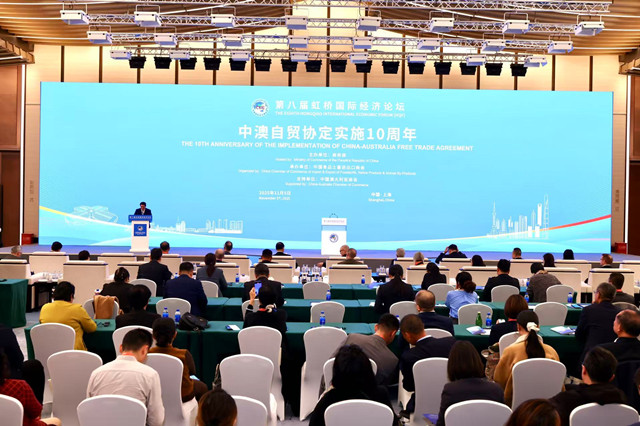
经贸合作成果丰硕,下一个10年中澳自贸协定如何“提质扩容”?
Di Yi Cai Jing· 2025-11-06 02:28
Core Viewpoint - The future of China-Australia cooperation must transition from traditional mineral and agricultural collaboration to a strategic joint development led by technology, especially as the China-Australia Free Trade Agreement (FTA) approaches its 10th anniversary in 2025 [1]. Group 1: Trade and Economic Cooperation - The China-Australia FTA is the first high-level FTA signed between China and a major developed country, serving as a significant milestone in bilateral relations [1]. - Over the past decade, the FTA has significantly boosted bilateral trade, with the trade volume reaching $211.27 billion in 2024, an increase of 85.6% compared to 2015 [5]. - China has maintained its position as Australia's largest trading partner for 16 consecutive years, with the Chinese market accounting for one-third of Australia's total exports [5]. - The FTA has facilitated a strong increase in Australian products in Chinese consumer markets, with 256 Australian companies participating in the recent China International Import Expo, marking a historical high [4]. Group 2: Future Directions and Opportunities - Future cooperation should focus on enhancing the FTA to meet evolving needs, ensuring it continues to serve both countries' enterprises and consumers effectively [7]. - There is a call for the FTA to evolve from traditional trade in agricultural and mineral products to include sectors such as digital economy, green technology, and new trade rules [8][9]. - The potential for collaboration in areas like clean energy, healthcare, and digital economy is highlighted as key opportunities for the next decade [8]. - The establishment of a robust framework for digital trade and cross-border data flow is essential, leveraging Australia's mature digital regulatory framework and China's extensive platform economy [9].
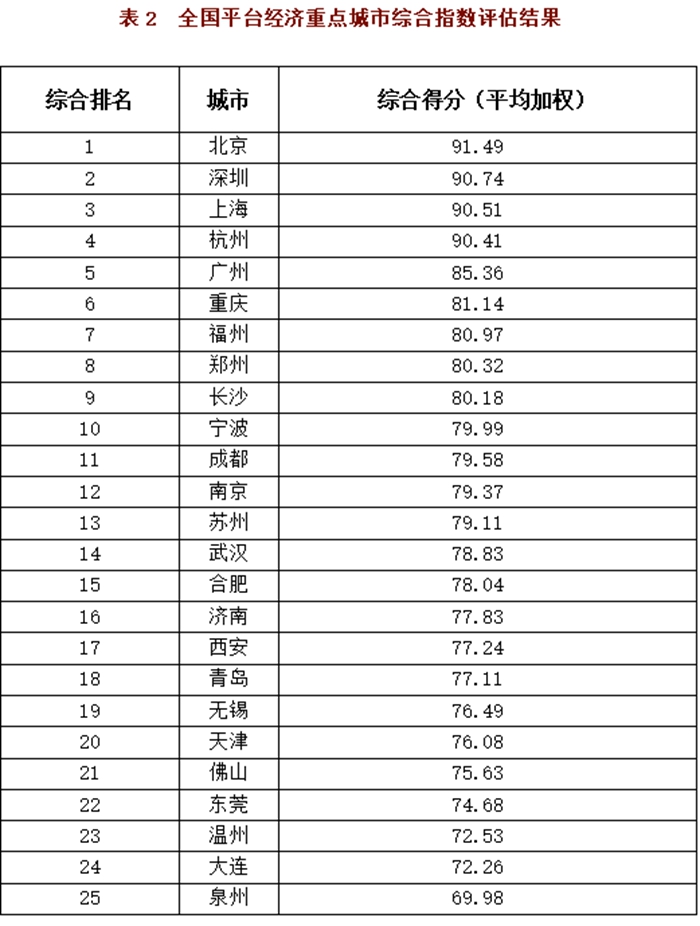
报告:北京、上海等四城构成平台经济“超强阵营”
Zhong Guo Xin Wen Wang· 2025-10-31 12:02
Core Insights - The report highlights that platform economy is a key engine for shaping the core competitiveness of digital China and driving high-quality economic development [1] - Beijing, Shenzhen, Shanghai, and Hangzhou form a "super strong camp" in platform economy development, leading in most indicators and ranking in the first tier [1] Summary by Categories Comprehensive Ranking - The report presents a comprehensive ranking of cities based on their platform economy scores, with Beijing leading at 91.49, followed by Shenzhen (90.74), Shanghai (90.51), and Hangzhou (90.41) [2] - Other notable cities include Guangzhou (85.36) and Chongqing (81.14), with a total of 25 cities evaluated [2] Infrastructure Development - Beijing, Shanghai, and Shenzhen rank in the top three for infrastructure, characterized by national computing power hub layout, low-latency networks, and intelligent port logistics, creating a hard-to-replicate "hard power" [2] - Hangzhou ranks fourth, showcasing its leading digital platform infrastructure and high penetration of e-commerce live streaming [2] Industry Development Potential - Shenzhen and Beijing exhibit absolute advantages in industrial scale, while Hangzhou and Fuzhou excel in industrial proportion, significantly contributing to local GDP [3] - Cities like Hefei and Changsha show strong growth rates, indicating emerging forces challenging traditional structures [3] Market Dynamics - Beijing leads in the number of platform enterprises and unicorn index, establishing a large cluster of market entities [3] - Hangzhou excels in market activity, with daily live e-commerce transactions exceeding 10 billion, indicating a thriving market [3] - Shanghai and Shenzhen create a healthy ecosystem characterized by "giant leadership + small and medium-sized collaboration" [3] Core Factors - Beijing ranks high in talent, capital, technology, and data, demonstrating perfect synergy of these elements and solidifying its position as a national innovation center [3] - Shenzhen and Hangzhou show outstanding performance in capital investment and technological innovation, while cities like Nanjing and Wuhan benefit from talent advantages [3] Evaluation Methodology - The report evaluates 25 key cities in platform economy based on five primary indicators and 18 secondary indicators, revealing a competitive landscape characterized by factor aggregation and distinct tiers [3]
科技创新孵育新兴业态
Jing Ji Ri Bao· 2025-10-29 22:19
Core Viewpoint - The article emphasizes the importance of combining an effective market with a proactive government, reflecting a deepened understanding of the socialist market economy in China [1] Group 1: Market Dynamics - The platform economy relies on the innovative vitality and endogenous motivation of business entities to precisely match supply and demand, leading to transformative changes in production and lifestyle [1] - Industry participants, exemplified by the small elephant supermarket, enhance supply chain digitalization and quality-price ratio to effectively meet consumer demands for "fresh and fast" products [1] Group 2: Technological Innovation - The company aims to continuously promote digital upgrades in service retail and commodity retail on both the demand and supply sides, guiding new supply through new demand and creating new demand through new supply [1] - The vast scale of the Chinese market nurtures technology, experience, and models that can deeply participate in industrial cooperation and division of labor in broader markets [1] Group 3: Future Outlook - The company is committed to fostering new business formats through technological innovation, contributing to the construction of a unified domestic market and expanding high-level openness [1] - Looking towards the "14th Five-Year Plan," private enterprises are expected to unite and strive for new opportunities in the market [1]