
新材料产业

Search documents
10家未盈利企业IPO排队中,后续走向如何?
Di Yi Cai Jing· 2025-05-27 14:15
Group 1 - The core viewpoint of the articles highlights the increasing attention on 10 unprofitable companies that are queuing for IPOs, with 9 applying for the Sci-Tech Innovation Board and 1 for the Beijing Stock Exchange [1][3] - Among the 10 companies, 6 have been waiting for over 2 years for their IPO applications to be processed, with Guangzhou Bibetter Pharmaceutical Co., Ltd. being the longest at nearly 3 years [1][3] - The regulatory environment is becoming more supportive of high-quality unprofitable tech companies seeking to go public, as indicated by recent statements from the China Securities Regulatory Commission [3][5] Group 2 - Out of the 10 companies, 7 are from the biotechnology sector, with 5 applying under the fifth set of standards for the Sci-Tech Innovation Board [2][5] - The fifth set of standards for the Sci-Tech Innovation Board does not impose revenue requirements but has a market capitalization requirement of at least 4 billion RMB [6][7] - The companies applying under the fifth set of standards include Bibetter, Hengrun Da Sheng, Sizhe Rui, Heyuan Biotechnology, and Beixin Life [7][8] Group 3 - Bibetter has not generated sales revenue as of the end of 2020 and reported a net loss of 188 million RMB in 2022 [4] - Hengrun Da Sheng also has not achieved main business revenue and reported a net loss of 284 million RMB for the fiscal year 2023 [4] - The IPO applications of other companies like Sizhe Rui and Heyuan Biotechnology were also accepted in 2022, indicating a trend of unprofitable companies seeking IPOs [4][5] Group 4 - The regulatory framework for unprofitable companies is still evolving, with a focus on those possessing key technologies and significant market potential [7][8] - The approval criteria for other tech sectors under the fifth set of standards remain unclear, particularly for industries outside of pharmaceuticals and medical devices [8]
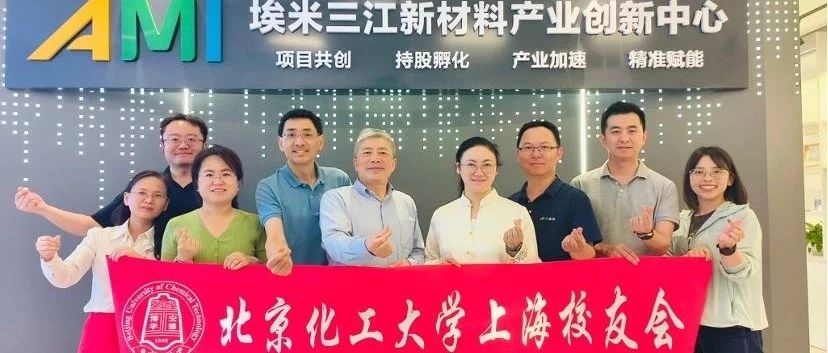
北京化工大学校友总会领导莅临埃米三江参观交流
AMI埃米空间· 2025-05-16 08:41
Core Viewpoint - The article highlights the collaboration between Beijing University of Chemical Technology alumni and the company Emi Sanjiang in promoting innovation and entrepreneurship within the new materials industry. Group 1: Company Development and Achievements - Emi Sanjiang has incubated multiple projects involving alumni from Beijing University of Chemical Technology, showcasing the active contributions of alumni in innovation and entrepreneurship [3]. - The company has successfully held six sessions of the "Emi Training Camp," attracting nearly 200 new materials enterprises, including notable alumni entrepreneurs [3]. - The training camp displayed the development achievements and unique exhibits of participating companies, reflecting the innovative vitality of alumni enterprises [3]. Group 2: Alumni Engagement and Support - Zhang Rui, a teacher from Beijing University of Chemical Technology, praised the achievements of alumni enterprises and recognized Emi Sanjiang's accomplishments in industry incubation and talent cultivation [5]. - The alumni association aims to strengthen the connection between alumni and the university, facilitating deeper cooperation between alumni enterprises like Emi Sanjiang and the school to support the development of the new materials industry [5]. - The association will continue to act as a bridge to promote collaboration and provide more resources and support for alumni innovation and entrepreneurship [5].

【咸阳】不断激活民营经济增长新动能
Shan Xi Ri Bao· 2025-05-13 22:55
Group 1 - The introduction of the first digital production line for Fu tea in Shaanxi has led to a significant improvement in product quality and overall business performance for Xi'an Jingwei Fu Tea Co., Ltd. [1] - Shaanxi has been actively promoting digital transformation in enterprises, resulting in the emergence of successful cases among private enterprises, with 540 private high-tech companies and 95 specialized and innovative small and medium-sized enterprises in the city [1] - The city is focusing on developing industrial clusters in electronic displays, high-end equipment manufacturing, biomedicine, and new synthetic materials to drive high-quality regional economic development [1] Group 2 - Shaanxi Kolong New Materials Technology Co., Ltd. is a key player in the province's industrial chain, specializing in the research, production, and sales of rubber and plastic new materials and coal auxiliary transportation equipment [2] - The company aims to establish an industrial chain alliance to promote the development of the hydraulic transmission industry chain and facilitate the clustering of upstream and downstream enterprises in coal-producing regions [2] - The local government is encouraging private enterprises to integrate into key industrial chains and is organizing various activities to support high-quality development and collaboration among businesses [2][3]
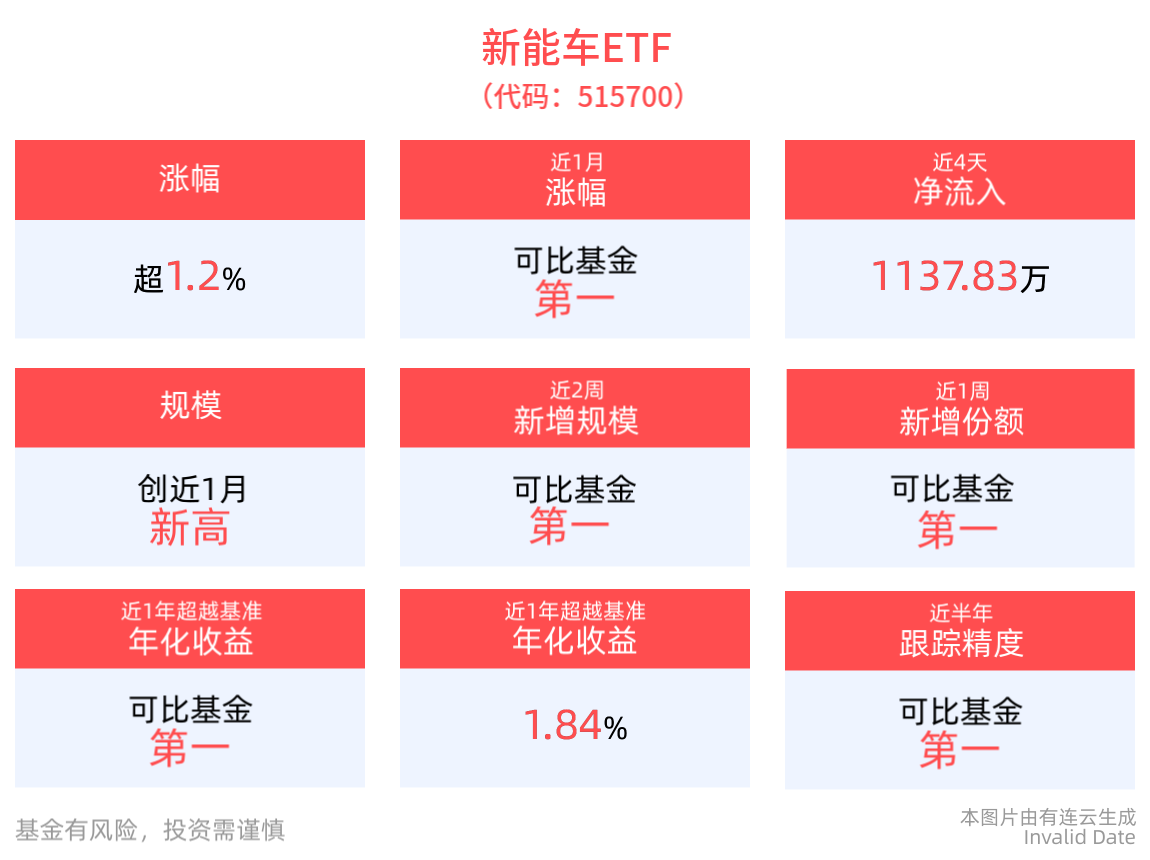
4月新能源乘用车市场零售90.5万辆同比增长33.9%,新能车ETF(515700)早盘涨超1%,光伏ETF基金(516180)涨超1.4%
Xin Lang Cai Jing· 2025-05-12 02:07
Group 1: New Energy Vehicle Industry - The China Securities New Energy Vehicle Industry Index (930997) rose by 1.22% as of May 12, 2025, with notable increases in constituent stocks such as Yinlun Co., Ltd. (002126) up 4.19% and Xiamen Tungsten Co., Ltd. (688778) up 4.08% [1] - In April, the retail sales of new energy passenger vehicles reached 905,000 units, a year-on-year increase of 33.9%, while the cumulative retail sales from January to April totaled 3.324 million units, growing by 35.7% [1] - The retail penetration rate of new energy vehicles in the domestic passenger car market reached 51.5% in April, an increase of 7 percentage points compared to the same period last year [1] - Guojin Securities noted that market competition is intensifying, leading to a decrease in the average selling price (ASP) per vehicle, but companies with strong cost reduction capabilities can still improve gross margins [1] Group 2: Photovoltaic Industry - The China Securities Photovoltaic Industry Index (931151) increased by 1.83% as of May 12, 2025, with significant gains in stocks like Sungrow Power Supply Co., Ltd. (300274) up 6.46% [3] - The Photovoltaic ETF Fund (516180) rose by 1.47%, with a recent price of 0.55 yuan [3] - The profitability of the photovoltaic industry has shown a significant decline, but it is expected that the bottom has been reached, with further deterioration in profitability being unlikely [3] Group 3: New Materials Industry - The China Securities New Materials Theme Index (H30597) rose by 1.11% as of May 12, 2025, with stocks like BETTERRY (835185) increasing by 7.46% [6] - SK On, a South Korean battery manufacturer, is advancing the development of solid-state batteries, claiming to have tripled the cycle life of lithium metal batteries [6] - Solid-state batteries are considered a revolutionary technology, offering significant advantages in safety and energy density compared to traditional lithium-ion batteries [6] Group 4: ETF Funds - The New Energy Vehicle ETF closely tracks the China Securities New Energy Vehicle Industry Index, which includes 50 representative companies in the new energy vehicle sector [7] - The Photovoltaic ETF Fund tracks the China Securities Photovoltaic Industry Index, selecting up to 50 representative companies in the photovoltaic industry [10] - The New Materials ETF Index Fund tracks the China Securities New Materials Theme Index, which includes 50 companies involved in advanced materials [13]

扬州广陵:广聚英才,激活产业发展新动能
Xin Hua Ri Bao· 2025-05-06 08:03
去年以来,扬州市广陵区聚焦"双城双区"战略,坚持产业、科技、人才"一体化"招引,推动科技创新和 产业创新融合发展。作为"双城双区"战略中广陵临港新区建设的先导区、核心区,李典镇紧扣"一流、 智造、绿色"的发展定位,坚持人才引领、科技赋能,不断深化"李遇英才"人才工作品牌,聚力打造产 业科创新生态。 广组萱 王培娟 曹正煜 强引领、建机制,不断凝聚工作合力。李典镇牢固树立"人才是第一资源"的理念,始终坚持党管人才原 则,贯彻落实人才工作主体责任,在全镇形成了由主要领导统筹、分管领导牵头、具体人员负责的人才 工作机制,确保人才工作有人管、有人抓、有人干;该镇建立人才培养网格化工作体系,举办"红链护 航"新材料产业链人才交流活动,新授"红领工匠"工作室4个、新材料产业人才工作室4个,在全镇全面 营造爱才敬才的环境氛围;该镇组团先后赴上海、西安、广州等地高校密集、产业对口的重点地区开 展"双招双引"活动40余次,近年来,先后引进各类高端人才12人,获批国家级、省级人才项目4个。 搭平台、链资源,助推产才融合发展。李典镇充分发挥科技镇长的桥梁纽带作用,成功承办了扬州人才 校园日中南大学专场活动,并在其中嵌入非遗技艺展示 ...
新材料如何与先进制造业深度融合?这场对接会上,新材料产学研“朋友圈”再扩容
Sou Hu Cai Jing· 2025-04-27 00:35
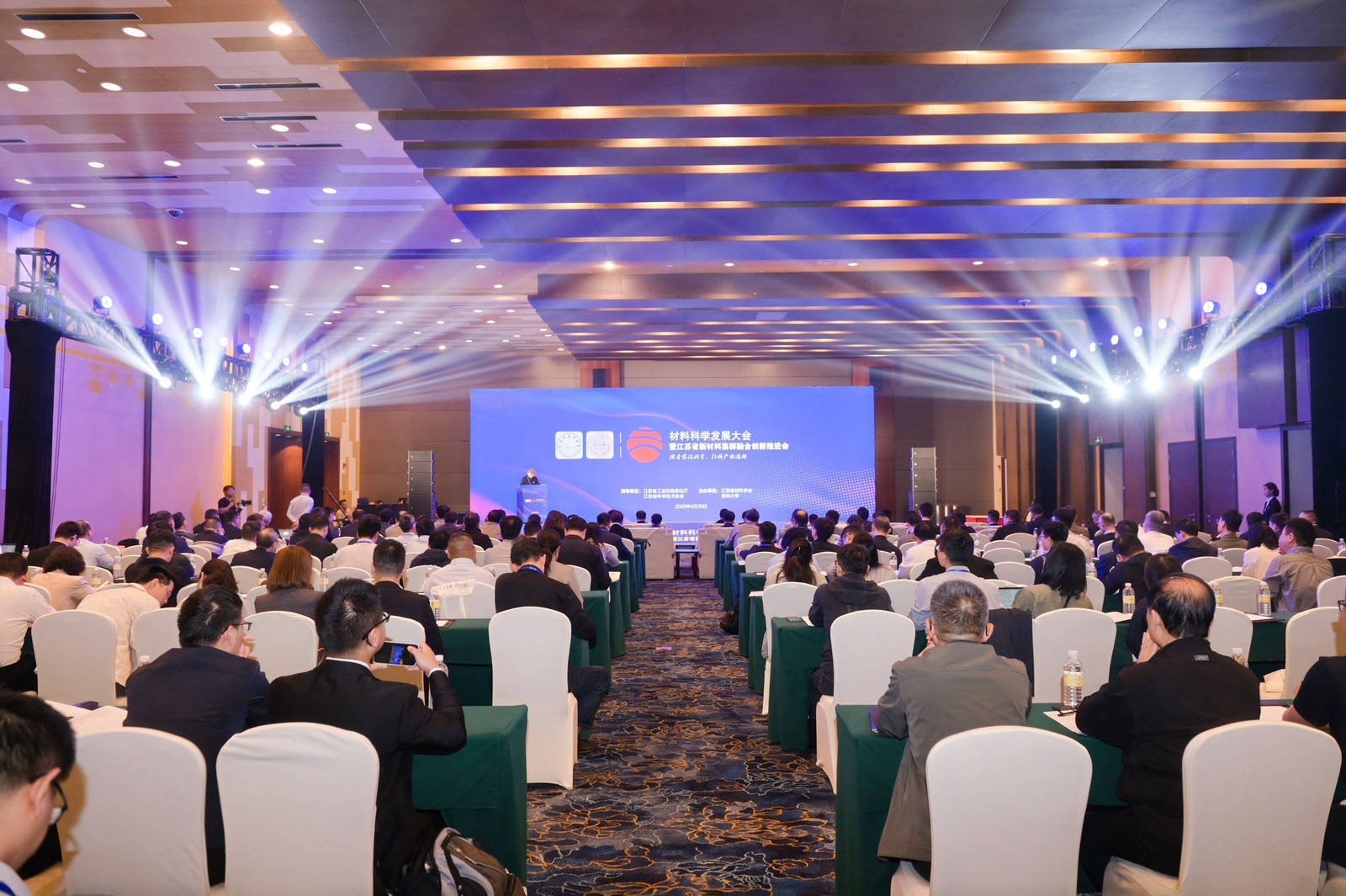
Group 1 - The new materials industry is a strategic and foundational sector, crucial for high-tech competition, highlighted by the recent event in Suzhou [1][3] - The event aimed to deepen collaborative innovation among industry, academia, and research institutions, with participation from numerous experts and enterprises [3] - Jiangsu Province has established two national manufacturing innovation centers for high-performance fibers and membrane materials, along with eight national recognized enterprise technology centers in various fields [3] Group 2 - A talent development alliance for the new materials cluster was officially launched, aiming to integrate industry, academia, and research to supply high-quality skilled talent and innovative teams [3] - The "Manufacturing Strong Province · Materials First" series of matching activities was initiated to encourage collaboration among key regions, institutions, and leading enterprises in the new materials sector [3] - Jiangsu's industrial policies related to the new materials industry were explained, along with details on national talent plans and local responses to national strategic deployments [3][4] Group 3 - The application scenarios for new materials are vast and rapidly evolving, with presentations on inorganic nanomaterials for tumor treatment and advancements in photovoltaic and OLED materials [4] - Challenges and technological bottlenecks in the optoelectronic materials industry were discussed, emphasizing the need for further research and development [4] - The Jiangsu Provincial Department of Industry and Information Technology will continue to support the new materials industry, optimizing the development ecosystem and promoting seamless integration of innovation and industry chains [4]
首次!四大直辖市,人口无一增长!
城市财经· 2025-04-02 03:42
Group 1 - The four major municipalities in China (Beijing, Shanghai, Tianjin, and Chongqing) are experiencing a population crisis in 2024, with no growth in their resident populations [2][7] - Beijing's resident population is projected to be 21.83 million by the end of 2024, a decrease of 26,000 from the previous year [3] - Shanghai's resident population is expected to be 24.80 million, with a reduction of 71,900, marking the largest decline among major cities [4] - Chongqing's population is forecasted to be 31.90 million, down by 9,600, following a significant drop of 219,100 in 2023, the highest in the country [5] - Tianjin's population remains stable at 13.64 million, showing no growth [6] Group 2 - The overall population growth in key cities has significantly slowed down, moving away from rapid growth patterns seen in the past [10] - Shenzhen and Guangzhou are currently leading in population growth, contrasting with the declines in the four major municipalities [9] - The average annual population increase for Shenzhen from 2010 to 2020 was over 700,000, while current growth has dropped to below 200,000 [11][12] - From 2021 to 2024, only the four major municipalities have shown negative population growth [14] Group 3 - Beijing and Shanghai are categorized as one type of municipality, while Tianjin and Chongqing are classified as another, with differing population dynamics [18] - The population decline in Beijing and Shanghai is attributed to self-imposed population caps, with Beijing actively relocating non-capital functions [19][20] - In contrast, Tianjin and Chongqing have implemented talent attraction initiatives, such as Tianjin's "Haihe Talent Plan," but still face population declines [23][24] Group 4 - Tianjin's population decline is primarily due to industrial adjustments, with a significant reliance on outdated industries [28][37] - The city's industrial structure is heavily weighted towards traditional sectors, with new industries contributing less than 20% to industrial profits [33] - The natural population decrease in Tianjin is exacerbated by a birth rate of 4.47‰ and a death rate of 7.04‰ in 2023, leading to a natural growth rate of -2.57‰ [39] Group 5 - Chongqing's population decline is influenced by a high rural population with low income levels, leading to a weak population competitiveness [51][59] - The city has a significant rural demographic, with 933,020 residents in rural areas as of 2022, contributing to out-migration [52][54] - Despite a population decrease, Chongqing's automotive industry saw a 26.7% increase in value added in 2023, indicating potential for economic growth [71]
「新材料」场景精选丨2025年Banglink第4期
创业邦· 2025-03-17 23:55
在能源结构转型与"双碳"目标加速落地的背景下,新材料产业正成为全球科技竞争的战略高地。从新能源电池到半导体散热,从3D打印到纳米技术,新材料的突 破性创新不仅重构了能源产业链的核心环节,更成为解决效率瓶颈、成本约束与可持续发展矛盾的关键抓手。随着资本市场对硬科技的持续加码,一批兼具技术 壁垒与商业化潜力的新材料企业正快速崛起,推动电力、交通、电子等领域的颠覆性变革。 2、规模化生产与成本博弈 新材料产业面临的核心挑战: 1、技术迭代压力 纳米材料、金属复合材料等前沿技术从实验室到量产面临工艺复杂、设备投资高的挑战,如硅基负极单炉电极氧化亚硅制备需突破全球唯一性技术壁垒。 新能源占比提升对材料性能提出更高要求。例如,全固态电池需突破硫化物电解质稳定性难题,硅基负极需解决膨胀率高、循环寿命短等瓶颈。 3、多场景协同适配 智能网联车: 动力电池回收利用 、 智能座舱 空天科技: 电动飞机eVTOL 、 智能工业无人机 、 商业航天 、 运载火箭 、 卫星物联网 能源科技: 新能源储能、 氢燃料电池、 CCUS&碳服务 生物医疗: ADC创新药 、 基因治疗&RNA药物 、 脑科学、 合成生物 、 AI制药 、 银发 ...
活动预告 | “新机遇 赢未来”—2025新材料企业出海沙龙之中东专场
AMI埃米空间· 2025-03-13 09:48
近年来,中国新材料产业在高端制造、新能源、绿色低碳等领域快速崛起,成为全球供应链 的重要参与者。 然而,面对国内产能调整、国际贸易环境的多变性,特别是美国政府加征关 税带来的外部压力,中国新材料企业正面临着前所未有的挑战。 中东地区国家,凭借丰富的 自然资源、万亿规模的基建蓝图以及经济转型的需求,正迅速从传统能源中心转型为全球价 值链的新高地,为中国企业提供了独一无二的全球化舞台。 本次沙龙旨在探讨在当下经济环境中,中国新材料企业如何有效识别并抓住中东地区市场的 发展机遇。活动将邀请拥有中东地区出海实战经验的校友代表、产业专家、企业CEO及投资 机构代表等,围绕中东地区经济环境、商业生态及产业上下游等情况展开深入交流,为校友 们提供宝贵的洞察与经验。 01 活动信息 02 活动组织 1、主办方: 上海埃米汇创新材料集团有限公司、 北京化工大学新材料校友会 1、主题: "新机遇 赢未来"——2025新材料企业出海沙龙之中东专场 2、时间: 2025年3月29日(周六),下午13:30-17:00 3、地点: 上海宝山互联宝地滨江园招商中心 4、由于场地容量有限,本次活动限额50人,根据报名先后顺序,先报先得。 ...