
海洋新能源

Search documents
海南:培育壮大海洋新兴产业,加快海洋油气矿产增储上产
Ge Long Hui· 2025-08-04 01:53
Core Viewpoint - Hainan Province aims to accelerate the development of a modern industrial system with distinctive advantages, focusing on high-quality development of the deep-sea industry and establishing a "smart manufacturing shared platform" as a breakthrough for industrialization [1] Group 1: Deep-Sea Industry Development - The plan emphasizes the need to cultivate and expand emerging marine industries, enhance oil and gas reserves, and develop key technologies for deep-sea oil and gas field exploration [1] - It includes initiatives for the production trial of natural gas hydrates in key sea areas and the evaluation of multi-gas extraction and multi-energy utilization potential [1] Group 2: Marine Renewable Energy - The strategy involves expanding the marine renewable energy sector, particularly through the planning of integrated demonstration projects for offshore wind power, hydrogen production, and methanol production [1] Group 3: Marine Engineering Equipment - Development of specialized marine engineering equipment industries is highlighted, with a focus on enhancing local production capabilities for high-value oil service products and deep-sea oil and gas equipment testing [1] Group 4: Technological Innovation - The plan aims to improve marine technological innovation capabilities, establishing Sanya Yazhou Bay Science and Technology City as a hub for deep-sea technology innovation and testing services [1] - By 2027, the deep-sea technology industry cluster in Sanya Yazhou Bay is projected to achieve an operating income exceeding 6 billion yuan [1]
海南:培育壮大海洋新兴产业 加快海洋油气矿产增储上产
news flash· 2025-08-04 01:41
Core Viewpoint - The Hainan Provincial Government has issued a three-year action plan (2025-2027) aimed at accelerating the development of a modern industrial system with unique advantages, focusing on high-quality development of the deep-sea industry [1] Group 1: Deep-Sea Industry Development - The plan emphasizes the need to align with national strategic demands and aims to create an intelligent manufacturing shared platform as a breakthrough for industrialization [1] - It aims to cultivate and expand emerging marine industries, enhance oil and gas reserves, and develop key technologies for deep-sea oil and gas field exploration [1] - The initiative includes the evaluation of potential for "multi-gas co-production and multi-energy utilization" in key areas and the promotion of pilot production for natural gas hydrates in important sea areas [1] Group 2: Marine Renewable Energy - The plan outlines the goal to expand the marine renewable energy sector, including the development of integrated demonstration projects for offshore wind power, hydrogen production, and methanol refueling [1] - It aims to develop specialized marine engineering equipment and enhance local production capabilities for high-value oil service products [1] Group 3: Technological Innovation and Economic Goals - The plan seeks to improve marine technological innovation capabilities and establish a "smart ocean" innovation hub and testing service platform [1] - By 2027, the revenue from the deep-sea technology industry cluster in Sanya Yazhou Bay is projected to exceed 6 billion yuan [1]
发展海洋经济 鼓足“蓝色动能”(议政)
Ren Min Ri Bao· 2025-07-23 22:11
Core Viewpoint - The article emphasizes the importance of promoting high-quality development of the marine economy in China, highlighting the need for top-level design, technological innovation, and ecological protection to support the country's goal of becoming a maritime power [6][7]. Policy Support and Economic Growth - The Shanghai Marine Industry Development Plan (2025-2035) aims for steady growth in marine production value and enhanced technological innovation by 2030 [7]. - Zhejiang's implementation of the marine economy doubling plan is accelerating the establishment of a modern marine industry system [7]. - There is a call for increased policy support and a multi-level financing mechanism to attract social capital into emerging marine sectors such as high-end marine equipment manufacturing and deep-sea resource development [8]. Technological Innovation and Industry Development - The marine economy is transitioning from resource dependence to innovation-driven development, with a focus on establishing a blue industry guidance fund to support technological innovation [8]. - The article discusses the significance of marine negative emissions technologies, including seawater alkalization and marine ranching, as key areas for international standardization and market development [8][9]. - The marine new industry added value is projected to grow by 7.2% in 2024, with breakthroughs in key technologies and equipment [9]. Strategic Development and Integration - Strengthening marine strategic scientific capabilities is crucial for the development of marine industries, with an emphasis on integrating modern technologies into traditional marine sectors [10][11]. - The article advocates for a comprehensive approach to marine spatial planning that considers environmental protection and resource optimization [12]. Ecological Protection and Carbon Sequestration - The article highlights ongoing marine ecological protection projects, which have restored approximately 400 kilometers of coastline and 31,000 hectares of coastal wetlands [12]. - There is a focus on enhancing marine carbon sequestration capabilities through targeted implementation strategies and research on marine negative emissions processes [12][13]. - Recommendations include establishing a marine carbon sequestration special fund and developing a unified carbon trading market to support marine carbon projects [13].

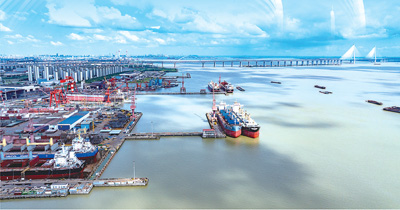
宁波再造“蓝色增长极”
21世纪经济报道· 2025-07-16 13:30
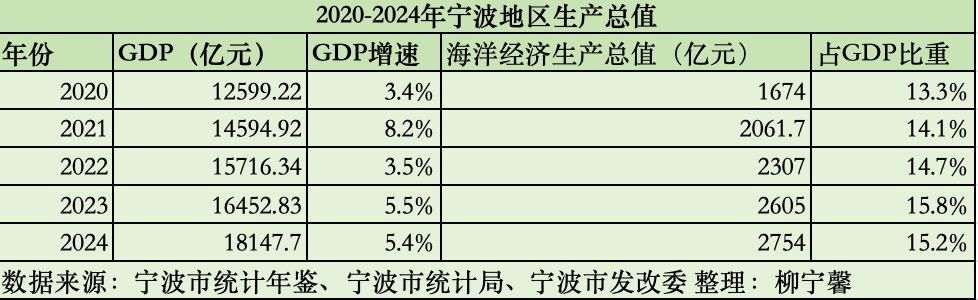
Core Viewpoint - Ningbo is positioning itself as a global marine center city, focusing on enhancing its marine economy and addressing existing weaknesses in its marine industry chain [2][15][19]. Group 1: Marine Economic Development - Ningbo's marine economy is projected to reach a production value of 2,754 billion in 2024, accounting for 15.2% of its GDP, which is significantly lower than that of Qingdao and Tianjin [13][14]. - The city aims to establish a modern marine industry system and promote marine technology innovation as part of its "14th Five-Year Plan" [3][15]. - The marine economy has shown consistent growth, with a 17-fold increase from 160 million in 2002 to 2,754 billion in 2024 [14]. Group 2: Port and Shipping Services - Ningbo Zhoushan Port has maintained its position as the world's busiest port for 16 consecutive years, with a cargo throughput of 1.377 billion tons in 2024 and container throughput of 3,930 thousand TEUs [6]. - The port is recognized as a major hub for bulk cargo and oil transfer, but it faces challenges in shipping service capabilities [8][9]. - Plans are in place to enhance shipping services, including the establishment of high-level shipping service clusters and digital platforms [10][11]. Group 3: Marine Industry Structure - Ningbo's modern marine industry includes key sectors such as green petrochemicals, marine logistics, and marine engineering equipment, with emerging industries like marine new materials and marine biotechnology [18][20]. - The city is focusing on upgrading its marine industry system and establishing a project database for significant marine industry projects [20][21]. - In 2024, the marine emerging industries are expected to contribute over 580 billion, with a growth rate exceeding 10% [20]. Group 4: Marine Technology Innovation - Ningbo's marine technology resources are currently dispersed, lacking a centralized platform for integration [22]. - The city plans to build a national key laboratory for marine materials and a comprehensive marine testing facility to enhance its research capabilities [23][25]. - There is a need for high-level talent in marine engineering, which is currently insufficient in local educational institutions [25].
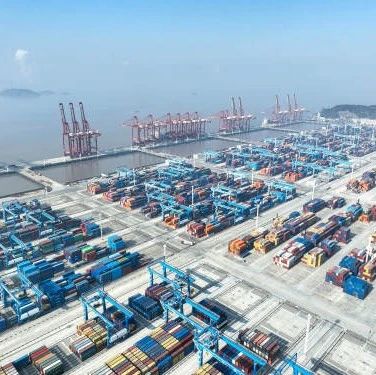
向海图强宁波补课,再造“蓝色增长极”
2 1 Shi Ji Jing Ji Bao Dao· 2025-07-16 09:58
Group 1: Port and Economic Overview - Ningbo Zhoushan Port is one of the busiest ports in the world, with over 300 shipping routes connecting to more than 600 ports in over 200 countries and regions [1] - The port is strategically located at the intersection of the north-south coastal areas and the Yangtze River, covering over 8,000 square kilometers of sea area and more than 1,500 kilometers of coastline [1] - In 2024, the total cargo throughput of Ningbo Zhoushan Port is expected to reach 1.377 billion tons, maintaining its position as the world's largest for 16 consecutive years, while container throughput is projected to be 3.93 million TEUs, ranking third globally [5] Group 2: Economic Growth and Marine Economy - The marine economy's GDP in Ningbo is projected to reach 275.4 billion yuan in 2024, accounting for 15.2% of the city's total GDP, showing a steady increase from previous years [10][2] - Ningbo's marine economy has grown significantly, with the marine GDP increasing from 16 billion yuan in 2002 to 2,800 billion yuan in 2024, marking a 17-fold increase [11] - Compared to other major coastal cities, Ningbo's marine economy still lags behind, with Qingdao and Tianjin's marine GDPs at 551.32 billion yuan and 565.95 billion yuan, respectively, accounting for 33% and 31.4% of their total GDPs in 2024 [12] Group 3: Challenges and Development Plans - Ningbo faces challenges in extending its marine industrial chain, with issues such as "big port, small shipping" and insufficient marine scientific innovation capabilities [3] - The city aims to enhance its marine economy through the "14th Five-Year Plan," which includes establishing a modern marine industry system and promoting marine technology innovation [15][16] - The government plans to implement nine major actions to double the marine economy's growth and establish two provincial-level marine economy platforms by 2025 [12] Group 4: Marine Industry and Innovation - Ningbo's modern marine industry includes key sectors such as green petrochemicals, marine logistics services, and marine engineering equipment [14] - The city is focusing on developing marine new materials and high-end marine equipment, with significant investments in marine technology innovation platforms [15][20] - The establishment of the National Marine Comprehensive Test Field in Ningbo aims to fill gaps in marine engineering materials research and enhance the local marine technology ecosystem [22] Group 5: Talent and Research Institutions - Ningbo has nearly 400 marine high-tech enterprises and 16 national-level champion enterprises, indicating a growing focus on marine technology [17] - The city is working to address the shortage of high-end talent in marine engineering, with plans to strengthen partnerships with leading domestic marine universities [22] - Key marine research institutions in Ningbo include Ningbo University and the Ningbo Institute of Materials Technology and Engineering, which are crucial for advancing marine technology and innovation [19][20]
浙江海洋大学贺义雄:浙江海洋经济差异化突围,需强化海洋科技创新与成果转化
Zhong Guo Jing Ying Bao· 2025-07-11 07:26
Core Viewpoint - The Chinese marine economy is set to surpass 10 trillion yuan in 2024, marking a new opportunity for development, with a focus on high-quality growth driven by innovation and technology [1]. Group 1: Marine Economy Development - The Central Financial Committee emphasized the need for high-quality development of the marine economy, highlighting the importance of enhancing independent innovation capabilities in marine technology [1]. - Various coastal provinces, including Guangdong, Shandong, and Hainan, are actively promoting marine economic development, creating benchmark examples [1]. - Zhejiang Province's marine production value reached 1,201.24 billion yuan in 2024, with a year-on-year growth of 6.5%, but still lags behind other coastal provinces in terms of marine technology innovation and research outcomes [1]. Group 2: Challenges and Shortcomings - Zhejiang Province's marine economy faces challenges such as unbalanced regional development, small scale of emerging marine industries, and insufficient innovation capabilities [2]. - The "14th Five-Year Plan" for marine economic development in Zhejiang identifies these issues and calls for strategies to enhance marine technology and innovation [2]. Group 3: Advantages of Zhejiang Province - Zhejiang Province benefits from strong policy support and strategic planning, with a comprehensive marine economic structure covering various sectors, including oil and gas, advanced equipment, logistics, and marine biotechnology [3][4]. - The province has a high level of openness and cooperation, enhancing its internationalization and injecting new vitality into high-quality development [4]. Group 4: Recommendations for Development - To further promote marine economic development, Zhejiang Province should focus on efficient allocation of resources, technology innovation, and upgrading traditional industries [5]. - Strengthening the environment for marine technology innovation and enhancing collaboration between research institutions and enterprises are crucial for improving technology transfer rates [7][8].
东营|东营:绿蓝交响 向海图强
Da Zhong Ri Bao· 2025-07-10 01:14
Core Viewpoint - Dongying is committed to high-quality and high-standard development of its marine economy, leveraging its natural advantages and focusing on ecological protection and restoration while promoting industrial transformation and upgrading [2][4][5]. Marine Economic Development - Dongying has over 460 kilometers of coastline and more than 6,000 square kilometers of marine area, rich in oil, gas, rock salt, and fishery resources, providing a natural advantage for marine economic development [2]. - The marine economy has become a strong "blue engine" for regional high-quality development, with ongoing actions to enhance the marine industry and build a modern marine industrial system [2][5]. Ecological Protection and Restoration - The city has initiated ecological water replenishment in the Yellow River Delta Nature Reserve, with a planned total replenishment volume of 150 million cubic meters [3]. - Since the 14th Five-Year Plan, Dongying has restored 4,537 hectares of coastal wetlands and implemented strict management of marine fishery resources, including a total of 6 billion aquatic seedlings released during this period [3][4]. Industrial Transformation and Upgrading - Dongying aims to accelerate the transformation of traditional marine industries and promote modern fishing practices, with a focus on ecological and sustainable development [7]. - The city is fostering new marine industries, including marine pharmaceuticals and bio-products, leveraging its rich marine biological resources [7]. Port Development and Logistics - Dongying Port has seen a significant reduction in average waiting time for vessels from 40.6 hours to 19.5 hours, enhancing operational efficiency [8]. - In 2024, the port's cargo throughput reached 91.15 million tons, a year-on-year increase of 26.4%, with ongoing efforts to develop a deep-water port and improve logistics infrastructure [9].
上海推动海洋新能源产业发展
Zhong Guo Hua Gong Bao· 2025-07-08 02:26
Core Points - The Shanghai Marine Industry Development Plan (2025-2035) emphasizes three main directions: leading industries, emerging industries, and future industries, focusing on ten development areas and five key tasks to build world-class industrial clusters [1] - The plan highlights the importance of supporting the research and application of new energy vessels and the low-carbon transformation of traditional ships, including the development of next-generation dual-fuel eco-friendly ships, liquid hydrogen transport vessels, and electric ships [1][2] Group 1: Shipbuilding and Marine Equipment - The plan calls for significant support for the research and application of new energy vessels and the low-carbon transformation of traditional ships [1] - It aims to accelerate the development of LNG, methanol, liquid ammonia, and hydrogen-powered vessels, as well as the development of green power systems [1] - The plan includes enhancing fuel supply service capabilities and expanding the service capacity for bonded fuel oil, LNG, and green methanol [1] Group 2: Marine Renewable Energy - The plan prioritizes the development of marine renewable energy, including offshore wind power, offshore photovoltaics, green methanol, and marine hydrogen energy [2] - It emphasizes the full industrial chain layout for green methanol, including production, storage, transportation, and supply [2] - The plan encourages the integration of offshore wind power with marine hydrogen energy and the exploration of new application models combining wind power generation and hydrogen storage [2]

每经热评︱推动海洋经济高质量发展 谱写海洋强国建设新篇章
Mei Ri Jing Ji Xin Wen· 2025-07-06 08:30
Group 1 - The global economic landscape is shifting towards the ocean, with the recent Central Financial Committee meeting emphasizing the importance of high-quality development in the marine economy [1] - The marine economy is a significant part of the national economy, showing strong growth, with a reported 5.7% year-on-year increase in marine GDP in Q1 of this year [1] - The government is prioritizing the development of the marine economy, aiming to establish national marine economic development demonstration zones by 2025 [1] Group 2 - Technological innovation is identified as the core driving force for the development of the marine economy, with a need to enhance independent innovation capabilities in marine technology [2] - Efficient collaboration and industrial upgrading are crucial for high-quality development, requiring improved policy guidance and coordination across sectors [2] - The integration of marine fisheries with land-based food processing is essential for extending industrial chains and increasing added value [2] Group 3 - Harmonious human-ocean relationships are fundamental for sustainable marine economic development, necessitating the protection of marine ecosystems [3] - The construction of a strong marine nation is a strategic task for national rejuvenation, requiring a focus on innovation, collaboration, industrial upgrading, and ecological friendliness [3] - A comprehensive resource allocation through top-level design is necessary to enhance the vitality of the marine economy and contribute to global marine economic development [3]
中央委员会第六次会议海洋经济政策解读:为何要强调“向海图强”?
Yin He Zheng Quan· 2025-07-03 13:58
Group 1: Strategic Importance of Marine Economy - The Central Financial Committee emphasized the marine economy's role in China's modernization, advocating for high-quality development along a "marine strong" path[5] - The meeting reiterated the importance of the marine economy following previous significant discussions, including the 20th Party Congress and the 2024 Central Economic Work Conference[7] - Five guiding principles were established to drive marine economic development: innovation, efficient collaboration, industrial upgrading, harmony between humans and the sea, and win-win cooperation[9] Group 2: Policy Framework and Focus Areas - Six key focus areas were identified for policy coordination: policy support, technological innovation, strengthening marine industries, planning for marine development, ecological protection, and global cooperation[10] - The marine economy's contribution to China's GDP is significant, with the marine service industry accounting for approximately 60% of the marine production value in 2024, which reached 10.54 trillion yuan, a 5.9% increase year-on-year[14][23] Group 3: Competitive Landscape and Opportunities - The global marine economy is characterized by differentiated competition, with countries like the US, Japan, and the EU leading in various sectors such as marine fisheries and renewable energy[16] - China's marine economy shows strong momentum, with the marine second industry accounting for 35% of the marine production value, and the marine engineering equipment manufacturing sector maintaining a global market share for seven consecutive years[23][24] - Investment opportunities are identified in marine technology, renewable energy, marine biology and medicine, and marine cultural tourism, with a focus on deep-sea materials and equipment[27][29] Group 4: Risks and Challenges - Risks include inadequate understanding of domestic and international policies and potential shortcomings in policy implementation[30]