绿色能源

Search documents
140万亿元!中国经济再上新台阶
Xin Hua Wang· 2026-01-19 10:42
Economic Growth - China's GDP is projected to exceed 140 trillion yuan by 2025, marking a significant milestone in the "14th Five-Year Plan" period with a series of economic achievements [1] - The contribution rate of China to global economic growth is expected to reach around 30%, positioning it as a stable and reliable driver of the world economy [1] Economic Resilience - China's agricultural output has stabilized at 1.4 trillion jin for two consecutive years, and the manufacturing value-added has maintained the world's top position for 16 years [2] - The service sector's contribution to GDP has increased to 57.7%, showcasing a robust economic foundation [2] - China is projected to maintain its status as the world's largest goods trading nation, with total import and export value expected to surpass 45 trillion yuan by 2025 [2] Innovation and Technology - China has entered the top ten in global innovation index rankings, with R&D expenditure intensity reaching 2.8%, surpassing the OECD average for the first time [3] - Significant advancements in technology are evident, with notable achievements in various sectors, including the successful launch of the "Tianwen-1" mission and the introduction of the first electromagnetic aircraft carrier [3] - The domestic sales of new energy vehicles have exceeded 50%, and production of civilian drones and industrial robots has increased by 37.3% and 28%, respectively [3] Consumer Market Dynamics - The total retail sales of consumer goods have surpassed 50 trillion yuan, reflecting a 3.7% increase from the previous year, with new retail models experiencing double-digit growth [4] - The per capita disposable income of residents has increased by 5.0%, and the urbanization rate has reached 67.89%, indicating positive progress in public services and living standards [4] - The economic foundation remains strong, with long-term positive trends expected to continue, demonstrating resilience against economic challenges [4]
科技硬实力、产业向新力、数字渗透力、绿色引领力 全“新”视角读懂“四力”含金量
Yang Shi Wang· 2026-01-19 09:47
Core Insights - The core keyword for China's economic development in 2025 is "new," focusing on innovation-driven growth, industrial upgrading, digital empowerment, and green transformation [1] Group 1: Technological Strength - In 2025, China's R&D expenditure reached 39,262 billion yuan, maintaining the second position globally [3] - China became the first country with over 5 million valid domestic invention patents and has led the world in PCT international patent applications for six consecutive years [3] - Significant technological advancements include the successful maiden flight of the "Nine Sky" drone, the launch of the Tianwen-2 mission, and the commissioning of the first electromagnetic catapult aircraft carrier [3] Group 2: Industrial Upgrading - The low-altitude economy is rapidly developing, with production of civil drones and industrial robots increasing by 37.3% and 28% respectively compared to the previous year [7] - The number of smart factories is steadily increasing, and industrial internet applications are covering 41 major industrial categories [7] - Continuous investment and expansion in high-end equipment, green energy, and smart manufacturing are yielding significant results [10] Group 3: Digital Empowerment - The value added by the digital product manufacturing industry grew by 9.3%, while the information transmission, software, and IT services sector increased by 11.1% [11] - New consumption models and scenarios are expanding rapidly, driving online retail sales up by 8.6% [11] - The construction of new infrastructure such as 5G, gigabit optical networks, and the Internet of Things is progressing smoothly [11][13] Group 4: Green Transformation - Clean energy generation from hydropower, nuclear power, wind, and solar sources increased by 8.8% compared to the previous year [14] - Production of green energy equipment and materials has seen rapid growth, with annual production and sales of new energy vehicles exceeding 16 million units [14] - Major energy-consuming industries like building materials, steel, and non-ferrous metals have significantly reduced energy consumption per unit of added value [14][16]

破局·立势·向未来 榆林民营企业赋能实体经济高质量发展
Zhong Guo Jing Ying Bao· 2026-01-19 08:41
李鹏涛建议,榆林市可以依托民营经济,从创始人品牌、企业品牌、区域品牌和产业品牌,以地标品 牌、商标品牌、质量品牌、劳务品牌、文旅品牌、工业品牌分类打造、形成榆林品牌矩阵。 张修前表示,榆林市工商联将继续发挥桥梁作用,搭建更多赋能平台,推动本土民营企业品牌价值与市 场竞争力同步提升。 "榆林是传播革命星火的红土地,是西北革命策源地、陕北革命的摇篮、党中央转战陕北的主要发生 地。"对外经济贸易大学中国国际品牌战略研究中心副主任李鹏涛表示,榆林是"绿色能源"产业高地, 塑造榆林"科创公共品牌"榆林新典范,以科创公共服务品牌、"双创"示范品牌、科创产业品牌生态体 系、科创品牌产业集群、科创品牌企业组团五个体系层级,建设榆林市具有影响力的中国科创集群品牌 经济典范品牌模式。 中经记者 王金龙 西安报道 榆林作为陕西省"双引擎发展"战略中的"北引擎"承担着陕西省能源安全与转型升级的重要使命。 而"双引擎"战略背后是榆林民营经济高质量发展正当时。"2026年,我们将继续推进振兴民营经济发展 的战略。"近日,在榆林市工商联与榆林市市场监督管理局联合主办、西安上君林光管理咨询有限公司 承办的"破局·立势·向未来——打造榆林民企 ...
虹口这支专业团队,为大楼披上可发电的“新甲”
Xin Lang Cai Jing· 2026-01-18 06:08
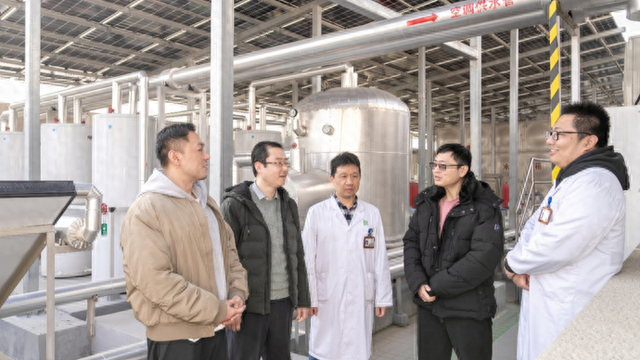
Core Insights - The article highlights the efforts of the Hongkou District Green Low-Carbon Service Task Force in successfully integrating photovoltaic panels on the rooftop of the Shanghai Integrated Traditional Chinese and Western Medicine Hospital, overcoming challenges posed by the building's height and existing equipment [3][4]. Group 1: Project Implementation - The task force collaborated with various entities, including the Shanghai Runtianlei New Energy Co., to ensure the photovoltaic components were seamlessly integrated with existing rooftop equipment, enhancing the project's wind resistance [3]. - The project transformed a previously deemed "unusable" rooftop into a functional energy-generating space, showcasing the task force's innovative approach to resource management and green energy solutions [3]. Group 2: Statistical Framework Development - Starting in 2024, Hongkou District will serve as a pilot area for green low-carbon services, necessitating the development of a precise statistical framework to measure the industry's growth [4]. - The task force, in collaboration with the Shanghai Energy Efficiency Center, created an industry map and statistical measurement system to reflect the local green low-carbon service industry, addressing challenges such as unclear statistical standards and data barriers [4]. - The initiative resulted in the establishment of the "Hongkou Code," a statistical framework that aligns with national standards while incorporating regional characteristics, gaining recognition from city-level authorities [4]. Group 3: Innovation and Ecosystem Development - The task force initiated the "Tianjiao Bay Cup" Green Low-Carbon Innovation and Entrepreneurship Competition to foster an entrepreneurial ecosystem and stimulate development within the sector [6]. - The competition facilitated connections between innovative companies and local projects, exemplified by Shanghai Lanjimi Technology Co., which proposed smart lighting solutions for an underground parking garage [6]. - The task force actively encourages green low-carbon enterprises to cluster in specialized parks, enhancing technological upgrades and supporting the growth of a vibrant green industry in Hongkou District [6]. Group 4: Industry Growth Metrics - Over the past two years, Hongkou District has seen the establishment of more than 50 new green low-carbon enterprises, with the industry scale approaching 800 billion yuan [7]. - The region has achieved a cumulative photovoltaic grid connection of over 20,000 kilowatts, indicating significant progress in renewable energy adoption [7].
国资锚定新质生产力 文科股份重塑国企上市公司价值释放路径
Jin Tou Wang· 2026-01-17 05:40
Core Insights - The article highlights the transformation of state-owned enterprises (SOEs) in China, particularly Guangdong Wenkai Green Technology Co., Ltd., which is leveraging state-owned credit and market mechanisms to unlock significant potential in the green energy sector [1] Business Iteration - The company has shifted from a traditional landscaping business to a "green industry comprehensive service provider," establishing a three-dimensional business system that includes ecological environment, green energy, and innovative services, aligning with national energy strategies during the 14th Five-Year Plan [2] Green Energy Growth - The green energy segment has become a core pillar for profit recovery, with the company focusing on distributed photovoltaics, energy storage, and new energy EPC projects, achieving a signed rooftop photovoltaic project capacity of 130 MW by November 2024, with an expected grid connection of 60 MW by year-end [3] Traditional Business Value Regeneration - The company has upgraded its client structure by moving away from high-risk real estate clients to focus on government platforms and Fortune 500 companies, successfully winning bids in urban renewal and ecological restoration, while also expanding into the Middle East market [4] State-Owned Capital Empowerment - The unique advantage of SOEs lies in their credit premium and resource integration capabilities, with Wenkai benefiting from the platform advantages of its controlling shareholder, Foshan Jianfa, which has a substantial asset scale and strong credit ratings, enhancing the company's financial resilience [5] Resource Coordination - The relocation of Wenkai to Foshan Shunde aims to strengthen business collaboration with Foshan Jianfa, allowing the company to prioritize local industrial park projects and effectively manage debt risks through innovative solutions [6] Forward-Looking Layout - The company is proactively entering cutting-edge fields such as virtual power plants and carbon trading, leveraging state-owned resources to establish long-term growth barriers, aligning with the needs of China's new power system [8] Business Synergy - The integration of ecological restoration and green energy businesses is creating a unique model that mitigates risks from industry fluctuations, providing multiple support for performance growth [9] Value Insights - The transformation of Wenkai offers three key insights for SOEs: strategic alignment with national goals, state capital empowerment for stability, and continuous innovation to expand value boundaries, indicating a potential window for value re-evaluation in SOEs amid energy transition [10]

华商能源公布未来五年(2026-2030年)战略指引,致力成为中国领先的绿色能源与装备服务商
Zhi Tong Cai Jing· 2026-01-16 12:01
Core Viewpoint - The company aims to develop a strategic guideline for the next five years (2026-2030) to promote strategic upgrades and achieve sustainable high-quality development, guided by national policies and the macroeconomic environment [1] Group 1: Development Goals - The company is committed to becoming a leading green energy and equipment service provider in China [2] Group 2: Overall Development Approach - Integrated Development: The company plans to achieve dual-driven and integrated development of green energy and equipment manufacturing, creating a comprehensive solution capability of "technology + equipment + services" [3] - Dual Circulation Pattern: The company aims to inject development momentum into the lifecycle services of green energy and equipment manufacturing through a global layout, ultimately establishing a dual circulation development pattern domestically and internationally [3] - Collaborative Win-Win: Leveraging the resources of China Merchants Group and its subsidiaries, the company seeks to achieve breakthroughs and cross-development, empowering high-quality development through new productive forces [3] Group 3: Business Line Composition - The company will focus on four major business segments: 1. Hydrogen-based energy, which will develop a green energy supply platform integrating technology, equipment, and services, while controlling upstream resources through supply chain integration and partnerships [4] 2. Marine equipment, which will provide integrated solutions centered on customer needs, focusing on low-carbon energy equipment and transitioning to offshore wind and marine development products [4] 3. Intelligent control technology, which will create comprehensive solutions in the industrial control field, driven by market demand and focusing on high-growth sectors [4] 4. Overseas business, which will establish a global network for policy insights, technology tracking, asset operation, market development, and talent cultivation [4] Group 4: Implementation and Compliance - The company will actively promote the implementation of the five-year strategic guideline to enhance operational efficiency and ensure sustainable growth, while adhering to legal regulations and maintaining a balance between innovation and compliance to create long-term value for shareholders and partners [4][5]
塔吉克斯坦专家:中国发展理念对世界发展影响深远
Xin Hua Wang· 2026-01-16 07:57
Group 1 - The article emphasizes confidence in China's economic prospects, highlighting its pragmatic development and shared growth philosophy as significant for global development [1][2] - China’s 14th Five-Year Plan marks the beginning of a new phase, with a focus on strategic guidance rather than mere project lists, indicating a steady progression based on established development logic [1] - The article notes China's achievements in green development, showcasing its leadership in global green energy with the largest solar and wind power bases [1] Group 2 - China's technological development is increasingly focused on harmonious interaction between people and technology, rather than solely maximizing efficiency, and it aims to share technological advancements with developing countries [2] - The transition of China's economy from high-speed growth to high-quality development emphasizes sustainability and long-term impacts, aligning with the global sustainable development agenda [2] - The Belt and Road Initiative has significantly benefited Central Asian countries, transforming the region from an "inland island" into a more integrated part of global trade, with China emerging as a key trade partner and investment source [2]
各地开年亮出先手棋 聚焦科技创新、营商环境等主题
Jing Ji Ri Bao· 2026-01-16 00:05
Core Insights - Multiple regions in China, including Shanghai, Liaoning, and Hubei, have held meetings at the beginning of 2026 to focus on developing new productive forces, strengthening business entities, and optimizing the business environment, indicating a strong commitment to high-quality development [1][2][3] Group 1: Meeting Themes and Objectives - Shanghai has prioritized optimizing the business environment for nine consecutive years, launching a plan with 26 specific measures to address issues like bidding and payment delays [2] - Liaoning's meeting focused on eight key areas for improving the business environment, establishing a closed-loop management mechanism to address violations [2] - Hubei's technology innovation conference emphasized becoming a hub for original innovation and talent, showcasing a commitment to innovation-driven high-quality development [2][4] Group 2: Strategic Focus and Implementation - The early timing of these meetings signals a strong urgency to seize opportunities and address challenges, with specific task lists and project outlines being established [3] - Regions are aligning their strategies with national priorities, focusing on systemic support for business development and innovation, moving from single-point policies to integrated systems [4][5] - Emphasis on enhancing the role of enterprises in innovation is a key direction set by the central economic work conference, with various regions implementing measures to support both private and state-owned enterprises [4][5] Group 3: Investment and Economic Growth - Major project construction is highlighted as a key driver for economic stability, with regions like Yunnan and Shenzhen planning significant investments in industrial projects [8] - Investment strategies are shifting towards green energy and circular economy projects, focusing on efficiency and sustainability [8] - The emphasis on high-quality development includes addressing financial risks and ensuring food and energy security, with specific measures being deployed across various regions [9] Group 4: Social Welfare and Development - Many regions are prioritizing social welfare projects, including employment, education, and healthcare, to ensure a safety net for citizens [9] - Initiatives in urban renewal and rural revitalization are being emphasized to enhance living standards and prevent poverty [9]
良乡大学城科技园范围将扩大
Xin Lang Cai Jing· 2026-01-14 19:42
Group 1: Economic Development Initiatives - Fangshan District aims to develop "green energy + new materials" as two major industrial engines to drive high-quality regional economic growth [1][2] - By 2025, the total industrial output value in Fangshan is expected to exceed 80 billion, with green energy and new materials contributing 22.5 billion and 18 billion respectively [2] - The district has gathered 91 green energy enterprises, achieving a production value of 22.5 billion, showcasing a growing industrial cluster effect [2] Group 2: Educational and Innovation Infrastructure - Fangshan plans to enhance the Liyang University Town as a hub for innovation and entrepreneurship, with a focus on building a national green energy technology transfer center [3] - The district has identified 473 technology achievements and successfully transformed 25 of them into practical applications, indicating a strong link between education and industry [3] - The construction of new campuses for Beijing University of Technology and Capital Normal University is underway, reinforcing the educational foundation in the area [3] Group 3: Cultural Heritage and Tourism Development - Fangshan is working on cultural landmarks, including the application for World Heritage status for the Liuli River site and the inclusion of the Yunju Temple's scriptures in the national heritage list [4] - The district has launched 20 cultural tourism experience routes and is continuously upgrading consumption scenarios to promote cultural and economic synergy [4] - The integration of cultural heritage with economic development aims to create a virtuous cycle that enhances both cultural soft power and regional economic strength [4]
45.47万亿元!2025年我国外贸规模再创新高
Shang Hai Zheng Quan Bao· 2026-01-14 17:51
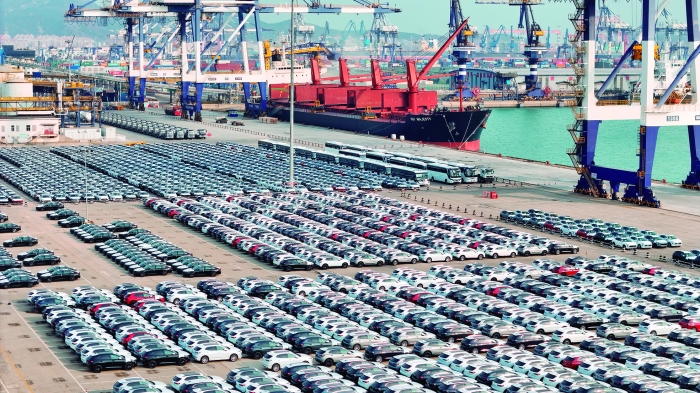
Core Insights - In 2025, China's total goods trade import and export value reached 45.47 trillion yuan, a year-on-year increase of 3.8%, marking a historical high and maintaining growth for nine consecutive years [2] - Exports amounted to 26.99 trillion yuan, up 6.1%, while imports reached 18.48 trillion yuan, increasing by 0.5% [2] - Despite global economic challenges, China's foreign trade demonstrated resilience and maintained its position as the world's largest goods trader [2] Trade Performance - High-tech product exports reached 5.25 trillion yuan, growing by 13.2%, contributing 2.4 percentage points to overall export growth [3] - Exports of specialized equipment, high-end machine tools, and industrial robots saw significant increases of 20.6%, 21.5%, and 48.7% respectively [3] - China became a net exporter of industrial robots, with exports surpassing imports [3] Green and High-Tech Products - Exports of lithium batteries and wind turbine generators grew by 26.2% and 48.7% respectively, reflecting a strong performance in green technology [4] - Electric motorcycles and bicycles saw an 18.1% increase in exports, while electric locomotives grew by 27.1% [4] - The export of industrial gas purification devices increased by 17.3%, showcasing China's contribution to global green transformation [4] Import Trends - Imports reached a record high of 18.48 trillion yuan, maintaining China's position as the world's second-largest import market for 17 consecutive years [4] - From June onwards, imports experienced seven consecutive months of year-on-year growth, with December's growth accelerating to 4.4% [4] Diversification of Trade Partners - China's trade diversification has become more pronounced, effectively mitigating external shocks [5] - Trade with over 60% of countries and regions across five continents saw growth, reducing reliance on a few major trading partners [5] - Trade with Belt and Road Initiative countries reached 23.6 trillion yuan, growing by 6.3%, which is higher than the overall foreign trade growth rate [5] Business Dynamics - Private enterprises played a crucial role in foreign trade, with exports and imports totaling 26.04 trillion yuan, a 7.1% increase [7] - Over 90% of surveyed multinational companies expressed intentions to continue investing in China, indicating strong foreign confidence in the market [7] - The establishment of the Hainan Free Trade Port has led to rapid growth in local foreign trade, with a 19.6% increase in trade value [7] Future Outlook - Experts predict that in 2026, China's foreign trade may exhibit a "stable quantity, improved quality" trend, driven by high-end equipment, green energy, and AI-related products [8] - The global trade environment is expected to improve, with increased demand anticipated due to monetary and fiscal easing [9] - China's competitive advantages across the entire industrial chain are expected to become more pronounced, particularly in markets like ASEAN and the EU [9]