长租公寓

Search documents
全国100个长租公寓“抗跌”板块曝光
3 6 Ke· 2025-08-07 02:19
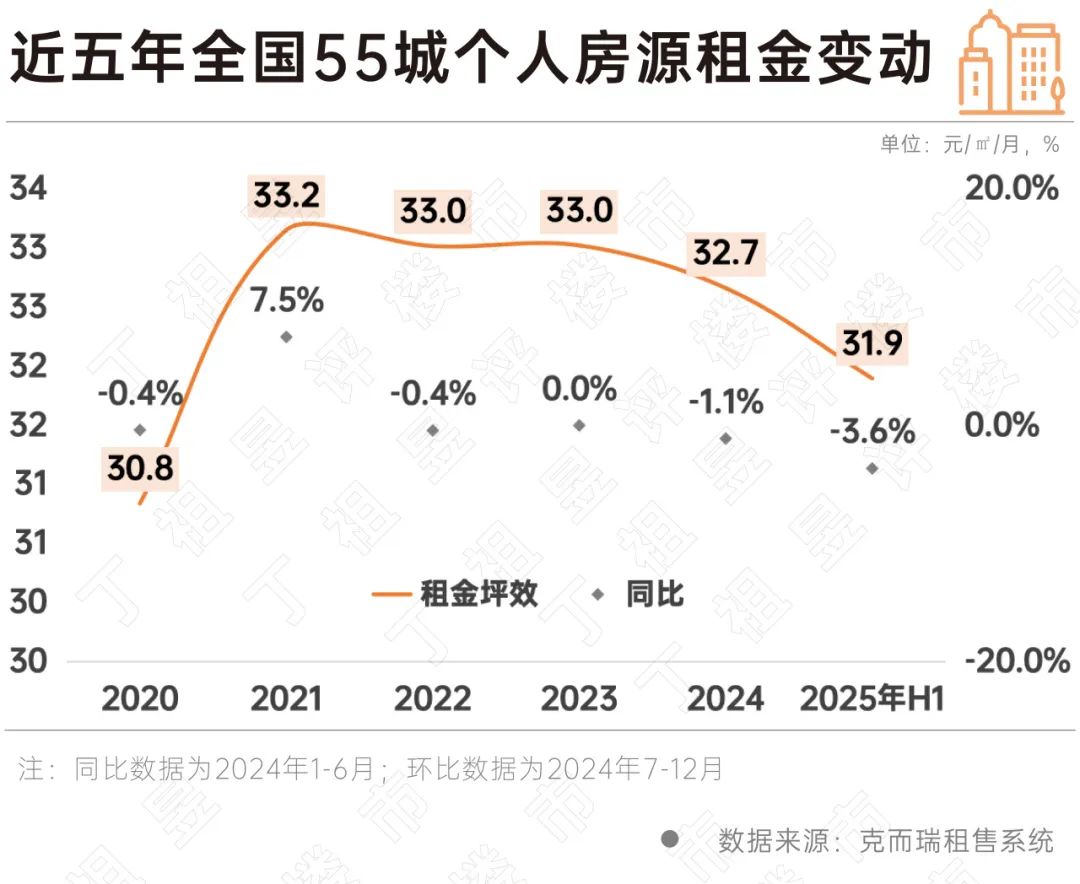
Core Insights - The long-term rental market is undergoing a new round of adjustments in the first half of 2025, with a notable decline in rental prices for personal housing across 55 cities in China, reflecting a 3.6% year-on-year decrease [1][2][8] - The continuous decline in personal housing rental prices since 2022 has not uniformly impacted centralized apartments, as city scale and market structure play crucial roles in the transmission effects [1][4][7] Rental Market Overview - In the first half of 2025, the average rental price for centralized apartments in the core eight cities was 101.14 yuan/㎡/month, showing a slight increase of 0.07% month-on-month but a decrease of 3.33% year-on-year [8][18] - The rental price for personal housing has been in decline for four consecutive years, with the current decline being more pronounced than in previous years [2][4] City-Specific Trends - There is a significant divergence in rental price trends among different cities. Major cities like Shanghai, Beijing, Shenzhen, Guangzhou, and Hangzhou have seen rental declines for centralized apartments that are less severe than those for personal housing, while cities like Chengdu, Wuhan, and Nanjing have experienced the opposite [4][7] - The rental price decline in cities with a high proportion of affordable rental housing, such as Shanghai and Chengdu, has been more pronounced, with declines ranging from 4% to 7% [8][17] Resilient Segments - Despite the overall downward trend, over a hundred segments in the core eight cities have seen rental prices rise against the market trend, indicating pockets of resilience within the centralized apartment market [14][18] - Key characteristics of these resilient segments include strong industrial clusters and population influx, which create stable rental demand and support rental price increases [18][19] Impact of Affordable Housing - The proportion of affordable rental housing significantly influences rental price declines, with cities like Shanghai having nearly 60% of their rental market composed of affordable housing, which has a direct impact on average market prices [8][17] - In contrast, cities with lower proportions of affordable housing, such as Nanjing and Beijing, have experienced smaller rental price fluctuations [8][18] Strategic Recommendations - For operators in high-capacity cities, it is crucial to develop differentiated operational models and enhance product and service offerings to maintain rental price stability [24] - In medium-sized cities, operators should consider transitioning to light-asset models and optimizing cost structures to mitigate the impact of personal housing price competition [24]

百瑞纪刘海文:聚焦产品创新与精细化运营,驱动持续增长
Sou Hu Cai Jing· 2025-08-06 16:04
Group 1 - The core viewpoint of the event was the innovation and refined operation practices in the long-term rental apartment sector, presented by Liu Haiwen, Vice President of Baijij Group [1] - Baijij Group's product matrix includes three major brands: Guiyue, Woqi, and Huashe, covering seven product series aimed at mid-to-high-end serviced apartments, white-collar apartments, and employee apartments [3] - The Woqi brand, as a star product line, has achieved an average occupancy rate of 94.5% during the stabilization period, with 80% of leases lasting over six months and an average renewal rate of 70% [3] Group 2 - Liu emphasized the importance of a holistic view in refined operations, covering all stages from market research to stable operation, with specific planning and standard actions required at each stage [5] - The Baizutong platform, developed by Baijij Group, connects over 6,000 intermediaries and facilitates more than 18,000 transactions annually, significantly enhancing project sales efficiency [5] - The focus on client development and integration, particularly with corporate and key clients, serves as a stabilizer for projects, while brand members and market-oriented C-end clients are primary sources of revenue enhancement [5] Group 3 - Baijij Group has achieved comprehensive digitalization of asset management through its self-built SaaS system, which features six key functions that enhance operational efficiency [6] - The SaaS system allows for unified asset management reporting across multiple business formats, effectively improving operational efficiency [6] - Real-time data monitoring and risk management strategies enabled by the SaaS system help in controlling risks and preventing losses for asset owners and projects [6] - The company aims to continue its strategy of balancing product innovation with refined operations to enhance brand premium and market competitiveness [6]

昆明首个市场化保租房即将推出,万科泊寓运营,预计明年入市
Nan Fang Du Shi Bao· 2025-08-06 09:31
Core Points - Kunming Anju Group has signed a market-oriented management agreement with Vanke Boyu for the operation of two affordable rental housing projects, marking the first pilot project of its kind in Kunming [1][2][3] Group 1: Project Details - The two projects managed by Vanke Boyu include 901 rental units located in Chenggong District and Panlong District, with a collaboration period of 10 years [1][2] - The projects are strategically located near industrial support areas, with the ASEAN Trade Port project offering 444 furnished apartments and the Chehang Tianxia project providing 457 furnished apartments, expected to enter the market in 2026 [2] Group 2: Vanke Boyu's Market Position - Vanke Boyu, established in 2016, has rapidly expanded to cover 29 key cities in China and achieved profitability in 2023, leading the industry in scale, insurance coverage, and operational efficiency [2][4] - In 2023, Vanke Boyu opened its first location in Kunming, with the Yicheng | Boyu·Zijin Center achieving full occupancy on the opening day, currently operating 1,500 units across two locations [2] Group 3: Industry Trends and Collaborations - The collaboration between Vanke Boyu and Anju Group represents a significant breakthrough in the market-oriented operation of affordable rental housing in Kunming, setting a practical example for partnerships between long-term rental agencies and state-owned enterprises [3] - Vanke Boyu has been actively involved in the development of affordable rental housing, with over 130,000 units included in this category by mid-2025, accounting for 65% of its total operational units, leading the market in this segment [4][5]

“非居改租”助楼市盘活资产业内期盼配套政策再进一步
Zheng Quan Shi Bao· 2025-07-31 18:21
Core Viewpoint - The newly released Housing Rental Regulations aim to increase the supply of rental housing through multiple channels, particularly focusing on the transformation of idle non-residential properties into rental housing, which has garnered significant market attention [1][2]. Group 1: Policy and Market Dynamics - The implementation of the new regulations is expected to enhance the economic viability and convenience of transforming idle non-residential properties into rental housing, thereby revitalizing existing assets and promoting healthy development in the real estate market [1][2]. - The regulations emphasize the need for market-oriented and professional housing rental enterprises, addressing the current issue of a rental market dominated by individual landlords [2][3]. - A recent survey indicated that a significant portion of long-term rental tenants prefer professionally managed apartments, highlighting a shift in demand towards higher quality rental options [2]. Group 2: Case Studies and Examples - The company "泊寓" has successfully transformed over 14,600 idle residential units in various cities, demonstrating effective models for revitalizing underutilized assets into affordable rental housing [3][4]. - The "环水泊寓·生态软件园" location in Shenzhen showcases a successful conversion of an office building into a fully rented long-term rental property, indicating the potential for similar transformations across the industry [4][6]. - The Dragon Lake Guan Yu brand has also adapted commercial spaces into long-term rental apartments, further illustrating the trend of repurposing existing properties to meet market demands [6][7]. Group 3: Challenges and Future Expectations - Despite the progress, challenges remain in the form of high renovation costs and complex approval processes for converting non-residential properties into rental housing [7][8]. - Industry experts anticipate that the new regulations will lead to streamlined compliance and approval processes, making it easier for companies to undertake such transformations [9]. - The expectation is that the government will provide clearer guidelines and support to facilitate the implementation of these regulations, enhancing the operational feasibility for housing rental enterprises [9].
现在“跨界”做长租公寓,晚不晚?
3 6 Ke· 2025-07-29 01:51
Core Insights - The long-term rental apartment market in China is experiencing significant disruption as companies like Xiaomi, Huawei, and emerging brands like Jump Sea Living enter the space, leveraging community culture and innovative marketing strategies to attract tenants [1][5][6] - These companies are not traditional rental operators but are tapping into unmet demands in the market, indicating a shift towards more personalized and community-oriented living spaces [5][12] Group 1: Company Strategies and Offerings - Jump Sea Living offers a unique rental experience by curating tenants through questionnaires to foster a community atmosphere, with amenities designed for social interaction [1][5] - Xiaomi's youth apartments in Beijing and Nanjing have seen rapid uptake, with over 700 reservations in a week for 2,658 units in Beijing, and all 566 units in Nanjing fully booked, highlighting the demand for affordable, well-equipped living spaces [2][3] - Huawei's talent apartments in Shanghai have also been quickly rented out, with over 5,000 units available exclusively for employees, priced between 2,000 to 3,000 yuan per month, which is competitive compared to the local market [4][5] Group 2: Market Dynamics and Trends - The entry of diverse players into the long-term rental market, including tech giants and traditional real estate firms, reflects a growing recognition of the market's potential, with a projected demand for over 12 million units by 2030 [11][12] - The market is becoming increasingly crowded, with various sectors such as jewelry, logistics, and finance also exploring opportunities in long-term rentals, indicating a trend towards diversification [6][10] - The shift towards a more sustainable and resilient rental ecosystem is evident, as companies focus on operational efficiency and customer experience rather than just rapid expansion [14][15] Group 3: Challenges and Considerations - Despite initial successes, companies face significant challenges in achieving profitability due to high operational costs, regulatory pressures, and the need for differentiated offerings to meet diverse tenant needs [11][12][18] - The long-term rental market is characterized by a need for high-quality service and management, which can be a challenge for new entrants lacking experience in real estate operations [17][18] - The evolving regulatory environment poses risks, as compliance with safety and housing standards becomes increasingly stringent, impacting operational viability [12][13]




地产观潮丨长租公寓市场持续扩容 房企迎来新机遇
Zheng Quan Shi Bao· 2025-07-23 15:23
Core Viewpoint - The implementation of the Housing Rental Regulations in September 2025 is expected to significantly impact the housing rental market by standardizing behaviors of relevant parties, enhancing regulatory mechanisms, and promoting a dual rental and purchase housing system, thereby creating new opportunities for real estate companies with long-term rental apartment businesses [1] Group 1: Market Dynamics - The long-term rental apartment market is transitioning towards rational development after a period of significant restructuring, with a notable change in market perception during recent years [2] - As of June 2025, the top 30 centralized long-term rental apartment companies have opened a total of 1.359 million units, reflecting a growth of 27,000 units since May [1] - Major companies like Vanke, Longfor, and Mofang Life lead the market with operational scales of 198,200, 123,000, and 84,000 units respectively [1] Group 2: Financial Performance - Longfor's rental income from its long-term rental apartments reached 2.65 billion yuan in 2024, marking a 4% year-on-year increase, with an occupancy rate of 95.3% [1] - The rental market in Shenzhen shows a stable rental rate, with occupancy rates generally above 85%, indicating a competitive environment among various rental options [2] Group 3: Investment Opportunities - The new regulations are expected to enhance rental stability, encouraging investment in the housing rental sector, including from real estate companies, which is beneficial for transitioning the industry from construction to operation [3] - The rental yield in key cities has seen a rebound, attracting long-term capital investments, with returns nearing the five-year fixed deposit rates [3] Group 4: Future Outlook - The housing rental market is moving from large-scale construction to improving existing stock, which raises the bar for long-term rental companies [4] - Future policy support is anticipated to strengthen the housing rental sector through financial and market development initiatives, optimizing supply and demand policies [4]
地产观潮丨长租公寓市场持续扩容,房企迎来新机遇
证券时报· 2025-07-23 15:10
Core Viewpoint - The implementation of the Housing Rental Regulations in September 2025 is expected to significantly impact the housing rental market by standardizing behaviors of relevant parties, enhancing regulatory mechanisms, and promoting a dual rental and purchase housing system, thereby creating new opportunities for real estate companies with long-term rental apartment businesses [1][5]. Group 1: Market Dynamics - The long-term rental apartment market has transitioned to rational development after a period of significant restructuring, with changing perceptions among market participants [2]. - As of June 2025, the top 30 centralized long-term rental apartment companies in China had a total of 1.359 million operational units, an increase of 27,000 units from May 2025, indicating robust growth in this sector [1]. - Major players like Vanke, Longfor, and Mofang Life lead the market with operational scales of 198,200, 123,000, and 84,000 units respectively, showcasing the competitive landscape [1]. Group 2: Financial Performance - Longfor's rental income from its long-term rental apartments reached 2.65 billion yuan in 2024, reflecting a year-on-year growth of 4%, with an occupancy rate of 95.3% [1]. - The rental market in Shenzhen has seen stable rental prices despite a competitive environment, with occupancy rates generally above 85% during the summer [3]. Group 3: Investment Opportunities - The new regulations are expected to enhance rental stability, encouraging investment in the housing rental sector, particularly from real estate companies, and facilitating a shift from construction to operation within the industry [5]. - The rental yield in key cities has improved, attracting long-term capital investments into the long-term rental apartment market, with some returns approaching the rates of five-year fixed deposits [3]. Group 4: Future Outlook - The housing rental market is moving towards a phase of quality improvement in existing stock rather than large-scale construction, which raises the bar for long-term rental companies [5]. - There is a potential for increased policy support for the housing rental sector, focusing on financial, market cultivation, and non-residential rental aspects, which could further enhance the development of the industry [5].
头部房企发力盘活存量资产 长租公寓市场持续扩容
Zheng Quan Ri Bao Zhi Sheng· 2025-07-11 16:41
Group 1: Market Overview - The centralized long-term rental apartment market continues to expand steadily, with the top 30 companies having a total of 1.359 million units opened by the end of June, an increase of 27,000 units from the end of May [1] - Leading companies include Vanke's "Boyu" brand with 198,200 units, Longfor's "Guanyu" brand with 123,000 units, and Magic Cube Life with 84,000 units [1] - The market expansion is supported by increases in opened units from real estate companies, local state-owned enterprises, and hotel-based rental companies [1] Group 2: Company Performance - Vanke's rental housing business reported revenue of 3.702 billion yuan, a year-on-year increase of 7%, with 40,600 new units added and a total of 261,400 units managed by the end of 2024 [2] - Vanke's occupancy rate stands at 95.6%, with a front-end GOP profit margin of 89.8%, maintaining industry-leading levels [2] - Longfor's rental income reached 2.65 billion yuan, a 4% increase, with an occupancy rate of 95.3% and a total of 124,000 units opened [2] Group 3: Financial Instruments and Market Dynamics - In June, the first successful expansion of a rental housing REIT in China raised over 900 million yuan for various infrastructure projects in Beijing [3] - Leading platforms have established replicable and scalable asset operation models through standardized products, efficient operations, and digital management tools [3] - Capital tools like REITs provide an efficient exit mechanism for the rental housing market [3]

小米青年公寓租金远低于周边水平、华为5000多套公寓基本出租,业内认为“将对长租公寓市场格局产生深远影响”
Mei Ri Jing Ji Xin Wen· 2025-07-08 12:53
Core Insights - Xiaomi's launch of the Youth Apartment initiative reflects a trend among tech giants and internet companies to provide benefits and retain talent [1][5] - The affordable rental prices of Xiaomi's apartments are significantly lower than the surrounding market rates, attracting a large number of applicants [2][3] Group 1: Xiaomi Youth Apartments - The Xiaomi Youth Apartments in Beijing and Nanjing have seen high demand, with over 700 reservations in Beijing and all units in Nanjing fully booked [1][2] - The apartments are priced between 1,699 to 1,999 yuan per month, with larger units reaching up to 3,399 yuan per month, making them competitive compared to local rental prices [2][3] - The initiative targets recent graduates and employees within three years of graduation, with a focus on providing affordable housing options [2][3] Group 2: Market Impact and Trends - The success of Xiaomi's Youth Apartments may encourage other tech companies to develop similar housing solutions, potentially reshaping the long-term rental market [3][5] - The rental prices of Xiaomi's apartments are notably lower than the average market rates, where similar-sized units typically rent for over 3,000 yuan per month [3] - The provision of affordable housing is seen as a strategy to enhance employee satisfaction and loyalty, positioning companies favorably in the competitive talent market [5]
年轻人的生活圈,能盘活商业地产吗?
虎嗅APP· 2025-07-06 09:34
Core Viewpoint - The article discusses the transformation of commercial real estate through the lens of living spaces, emphasizing the shift from hardware-centric value to emotional value production as a new currency in the industry [3][4]. Group 1: Market Trends - The emergence of new community living forms, such as co-living and digital nomad communities, reflects a shift in real estate logic, focusing more on social interaction and human connections rather than just physical space [6][8]. - The rental market is experiencing a downturn, with high rents not translating into desirable living conditions, leading to a decline in the usage of communal spaces [6][12]. - The article highlights the increasing popularity of flexible living arrangements, such as short-term rentals and community-driven spaces, as a response to changing consumer preferences [14][15]. Group 2: Business Strategies - Companies are adopting differentiated strategies to address vacancy pressures, such as flexible rental terms and community engagement initiatives [14]. - The integration of lifestyle elements into living spaces is becoming a key focus, with businesses exploring ways to create value beyond traditional rental income [13][15]. - The article notes that the market is evolving, with new players entering and existing companies rethinking their operational models to enhance user experience and engagement [14][15]. Group 3: Future Outlook - The article suggests that the market for long-term rentals will see significant opportunities by 2025, as borrowing costs decrease and real estate valuations stabilize [14]. - The potential for creating living environments that foster community and collaboration is highlighted as a critical factor for success in the evolving real estate landscape [15].