电信运营

Search documents
中国电信展示智能制造领域创新成果(附图片)
Xin Lang Cai Jing· 2025-11-25 00:08
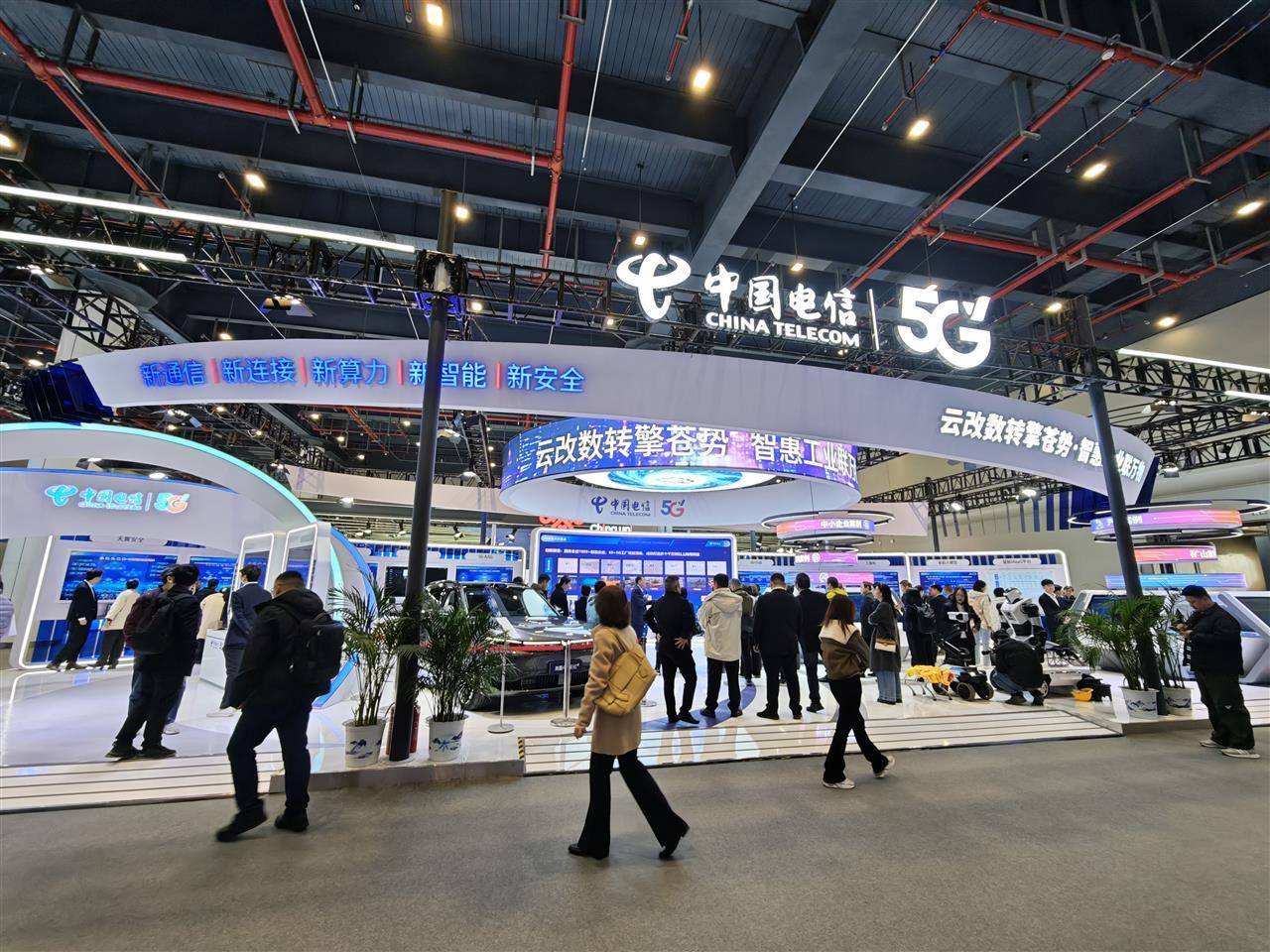
Core Insights - The 2025 China 5G+ Industrial Internet Conference opened in Wuhan, focusing on "Everything Connected, Intelligent Navigation" [2] - China Telecom showcased its innovative achievements in industrial digital transformation and smart manufacturing [2] Group 1: Technological Innovations - China Telecom presented its "Six Networks" industrial application achievements, which include mobile, broadband, IoT, satellite, visual, and computing networks, supporting diverse digital needs [2] - The company introduced advanced solutions such as industrial AI algorithm libraries and low-altitude economic platforms, highlighting its strong technical foundation in the 5G+ industrial internet sector [2] Group 2: AI and Data Capabilities - China Telecom developed a comprehensive large model technology system, the Starry Sky MaaS platform, which integrates services across the entire chain of computing, models, data, tools, and applications, catering to over 100 industry scenarios [2] - The Starry Sky Trusted Data Space aggregates an average of 1.6PB of multi-source data daily, providing high-quality data support for model training [2] Group 3: Industrial Internet Platforms - The "Yizhi Enterprise Procurement and Control Integration Platform" is designed to meet enterprise digital transformation needs, supporting over 300 industrial protocols and enabling flexible device access [3] - The "Yigong Cloud Industrial Internet Platform" targets small and medium-sized enterprises, offering low-cost, modular, and easily deployable digital solutions across 18 key industries [3] Group 4: Practical Applications - China Telecom showcased over 20 5G integrated application solutions in sectors such as energy, chemicals, automotive, and manufacturing, demonstrating its role in driving the intelligent upgrade of traditional industries [3] - Interactive experience zones featured robots and smart devices operating in simulated industrial environments, including a humanoid robot for automotive quality inspection using 5G deterministic networks [4] Group 5: Future Collaboration - China Telecom aims to continue its open cooperation philosophy, partnering with various stakeholders to advance the construction of a digital China and create a promising future for smart industries [4] - The conference included forums on satellite internet innovation, AI empowerment in industrial ecosystems, and collaboration across government, industry, academia, and research sectors [4]



中原证券晨会聚焦-20251125
Zhongyuan Securities· 2025-11-24 23:59
Core Insights - The report highlights the ongoing recovery in various industries, with a focus on the capital market's role in supporting economic growth and innovation [5][19][28] - The report emphasizes the importance of policy support and investment in emerging industries, particularly in technology and infrastructure [5][19][24] Domestic Market Performance - The Shanghai Composite Index closed at 3,836.77 with a slight increase of 0.05%, while the Shenzhen Component Index rose by 0.37% to 12,585.08 [3] - The average price-to-earnings (P/E) ratios for the Shanghai Composite and ChiNext are 15.77 and 46.14, respectively, indicating a favorable long-term investment environment [8][14] International Market Performance - The Dow Jones Industrial Average closed at 30,772.79, down 0.67%, while the S&P 500 and Nasdaq also experienced declines of 0.45% and 0.15% respectively [4] - The Hang Seng Index fell by 2.38% to 25,220.02, reflecting broader market challenges [4] Industry Strategies - The report outlines various industry strategies, including the focus on financing coordination and the continuation of industry prosperity [6][19] - The copper and aluminum sectors are highlighted for their strong demand and pricing stability, with copper prices expected to rise due to supply constraints and increased demand from green energy initiatives [20][21] - The AI and semiconductor industries are projected to experience significant growth, driven by advancements in technology and increased capital expenditure from cloud service providers [24][31] Financial Sector Insights - The securities industry is expected to maintain a strong performance, with a projected increase in equity financing and stable brokerage revenues [18][19] - The report notes that the first three quarters of 2025 saw a significant recovery in the performance of listed securities firms, with revenues up 42.55% year-on-year [17][18] Emerging Industries - The report indicates that the ice and snow industry in China is set to exceed 1 trillion yuan in scale, reflecting the growth potential in niche markets [5][8] - The focus on new energy vehicles and related infrastructure is expected to drive demand for lithium battery equipment, with significant investment opportunities identified [28][30] Investment Recommendations - The report recommends focusing on leading companies in the copper and aluminum sectors, as well as those involved in AI and semiconductor technologies, due to their strong growth prospects [20][24][31] - Specific companies highlighted for investment include Zijin Mining, Yunnan Aluminum, and leading AI firms such as Hikvision and Huya [20][24][36]
TELUS (NYSE:TU) Conference Transcript
2025-11-24 17:17
TELUS Conference Call Summary Company Overview - **Company**: TELUS (NYSE: TU) - **Date**: November 24, 2025 - **Speaker**: Doug French, CFO Key Points Industry and Competitive Landscape - TELUS focuses on three pillars: best networks, best products, and best customer service [4][5] - The competitive intensity in the mobile industry has eased since May, with a quieter Black Friday compared to previous years [7][8] - Pricing in Canada has decreased significantly, with rates down over 70% compared to initial asks, indicating a need for correction due to higher delivery costs [8][9] Financial Performance and Growth - Wireless Average Revenue Per User (ARPU) is showing slow and steady improvement, expected to continue into 2026, although still negative [12][13] - In Q3, TELUS added 40,000 internet subscribers, with growth evenly split between Eastern and Western Canada, and across business segments [16][17] - Fixed data revenue growth has slowed to 1%, primarily due to pressures in the business sector, while consumer internet revenue remains strong at over 6% [26][28] Fiber Deployment Strategy - TELUS is expanding fiber deployment into Eastern Canada, aligning with its capital intensity objectives [20][21] - The company aims to bundle internet services with existing wireless customers in the East, enhancing service offerings [24] AI and Digital Growth - TELUS aims to grow AI-enabling revenue from $800 million to $2 billion over the next few years, with significant contributions from TELUS Digital and B2B growth [31][32] - The company is leveraging its data centers for AI and compute services, with partnerships with NVIDIA and HP to enhance capabilities [33][34] Health Care and Monetization - TELUS Health is projected to grow significantly, with a valuation exceeding $5 billion, and potential partnerships to enhance commercial efficacy [40][41] - The integration of acquisitions is expected to yield synergies and improve profitability [40] Future Outlook - The company anticipates strong EBITDA growth driven by health care, technology, and digital initiatives, while managing ARPU challenges [44][48] - TELUS plans to monetize assets, including real estate and copper footprint, to support its deleveraging strategy and maintain dividend commitments [49][50] Capital Expenditure and Financial Strategy - TELUS maintains a capital intensity target of 10%, with a focus on efficient capital management and revenue generation from new investments [39][50] - The company is committed to reducing its Dividend Reinvestment Plan (DRIP) to zero by the end of 2027 [50] Additional Insights - TELUS is focused on improving customer service and reducing churn rates, with ongoing investments in digital and AI technologies [5][46] - The company is optimistic about the growth trajectory in health care and technology sectors, which are expected to contribute positively to overall performance [44][45]

通信行业年度策略:智启新质,算力互联破浪前行
Zhongyuan Securities· 2025-11-24 08:15
Core Insights - The report maintains a "stronger than market" investment rating for the communication industry, highlighting its growth potential and favorable valuation levels [1][5][12] - The communication industry index has shown significant performance, ranking second among 30 major industry indices with a 60.87% increase as of November 20, 2025 [12][14] - The report emphasizes the optimistic outlook for AI-related developments, particularly in AI computing and cloud services, which are expected to drive industry growth [4][5][45] Market Review and Industry Performance - In the first three quarters of 2025, the communication industry achieved a total revenue of CNY 19,753.67 billion, representing a year-on-year growth of 2.30%, while net profit reached CNY 1,886.40 billion, up 6.95% [18] - The overall gross margin for the communication industry was 28.45%, with a net margin of 10.19% for the first three quarters of 2025, indicating stable profitability [19] - The telecommunications operators segment reported a revenue of CNY 14,819.21 billion, growing by 0.57%, and a net profit of CNY 1,548.98 billion, increasing by 4.30% [35] Segment Performance - The optical communication segment (including optical modules, devices, and chips) saw a revenue of CNY 795.38 billion, a year-on-year increase of 56.14%, with net profit soaring by 116.86% [41] - The telecommunications equipment segment recorded a revenue of CNY 1,390.0 billion, growing by 11.2%, while the consumer electronics components segment also grew by 11.1% [21] - The cable segment achieved a revenue of CNY 464.54 billion, reflecting a growth of 6.99%, driven by increasing demand across multiple applications [46] Investment Recommendations - The report suggests focusing on companies within the optical module/device/chip sector, such as NewEase, Huagong Technology, and Guangxun Technology, due to their strong growth prospects [5][41] - For AI mobile phones, companies like Xunwei Communication and ZTE are highlighted as key players to watch [5][41] - The telecommunications operators, including China Mobile, China Telecom, and China Unicom, are recommended for their stable operations and high dividend yields [5][41]



高考考场为何还有信号? 通信业内:或未屏蔽5G 需更换设备
Mei Ri Jing Ji Xin Wen· 2025-11-24 07:52
"湖北考生拍题上传被取消考试资格"引起热议,网友质疑为何手机能带进考场,更加质疑手机信号屏蔽 器为何形同虚设。多位通信行业技术人士对《 每日经济新闻》记者表示,该考场信号屏蔽器或未升 级,导致未能屏蔽刚商用两年的5G手机信号,导致手机能正常访问网络,需要更换屏蔽设备。 每经记者|刘春山 每经编辑|文多 该业内人士同时向记者分析,该作弊考生使用的很可能是中国电信或中国联通的号卡,毕竟中国移动的 5G频段与4G频段更接近,被漏掉的可能性不太高。而中国电信和联通的5G频段远高于过去4G的主流频 段,确实存在被漏掉的可能。 此前主流网络4G的频谱的范围一般在1700MHz到2600MHz之间,比如中国移动的4G主要在 2320~2370MHz、2575~2635MHz两大频段,而中国电信则在1755~1785MHz、1850~1880MHz两大频 段,中国联通在1955~1980MHz、2145~2170MHz。 另外一位运营商技术人士对《每日经济新闻》记者表示,手机信号屏蔽器的工作原理是噪声堵塞,在特 定频段发出无意义的信号,压制正常的手机信号。屏蔽器一般不支持软件升级,考场要想屏蔽全部的 5G信号频段,建议更新设 ...
国际电信联盟发布5G/6G交互式物联多媒体通信国际标准
Ge Long Hui· 2025-11-24 04:47
Core Viewpoint - The International Telecommunication Union (ITU) has officially released an international standard for interactive multimedia communication in the 5G/6G era, led by China Mobile, marking it as the first global standard in the field of visual internet [1] Group 1 - The standard focuses on interactive multimedia communication for the 5G/6G era [1] - China Mobile played a leading role in the development of this international standard [1] - This standard is significant for the advancement of the visual internet sector [1]

国资委部署下半年国企改革重点 将推2到3家央企集团层面实施股权多元化
Mei Ri Jing Ji Xin Wen· 2025-11-24 04:09
Core Insights - The State-owned Assets Supervision and Administration Commission (SASAC) held a video conference to summarize the first half of the year and outline key tasks for the second half, emphasizing the continuous growth of state-owned enterprises (SOEs) and central enterprises (CEs) in revenue and profit [1] - In the first half of the year, the revenue of SOEs reached 25.7 trillion yuan, a year-on-year increase of 10.6%, while total profit amounted to 1.6509 trillion yuan, up 22.6% [1] - The meeting provided a detailed roadmap for the next steps in SOE reform, including mixed ownership reform, mergers and acquisitions, and market value management [1] Mixed Ownership Reform - Mixed ownership reform has become a key focus, with significant events occurring in the first half of the year, such as China Unicom's board nominations including executives from major private companies like Baidu, JD.com, Alibaba, and Tencent [2] - The railway sector also saw progress, with Tencent and Geely Holdings acquiring a 49% stake in a subsidiary of China Railway [4] - The SASAC plans to advance mixed ownership reform at the group level, with 2-3 central enterprises expected to implement diversified equity structures [4] Strategic Restructuring of Central Enterprises - The SASAC reported progress in the restructuring of central enterprises, including the merger of Wuhan University of Posts and Telecommunications and the China Academy of Telecommunications Technology to form a new entity focused on 5G technology [6][7] - The SASAC aims to promote strategic restructuring in five key sectors: equipment manufacturing, coal, electricity, telecommunications, and chemicals, concentrating state capital in strategic industries [7][8] Value Management and Shareholder Returns - SASAC emphasized the importance of value management to enhance shareholder returns, advocating for a focus on intrinsic value and the integration of quality assets [9] - The meeting outlined a roadmap for improving value management practices, including monitoring listed companies and encouraging mergers to enhance value [9][10] - The SASAC also suggested linking executive compensation to stock performance to align management interests with shareholder value [10]

全国过半用户用上百兆宽带 降费举措年内将全部落实
Mei Ri Jing Ji Xin Wen· 2025-11-24 04:09
Core Insights - The article discusses the significant advancements in China's telecommunications industry, particularly the implementation of policies aimed at reducing costs and increasing internet speeds for users [1][2][3]. Group 1: Policy Implementation - As of July 1, 2023, the three major telecom operators in China have eliminated domestic mobile data "roaming" fees, allowing users to enjoy nationwide data without additional charges [2][3]. - The average mobile data tariff has decreased by 46.2% compared to the end of 2017, reflecting the government's push for lower costs in the telecommunications sector [1][2]. - By the end of June 2023, 53.4% of users had internet speeds of 100 Mbps or higher, an increase of 13.5 percentage points since the beginning of the year [1]. Group 2: User Experience and Feedback - The effectiveness of the cost reduction measures will ultimately be assessed through user bills, which will provide a direct indication of the benefits experienced by consumers [3]. - The Ministry of Industry and Information Technology (MIIT) is closely monitoring user feedback to ensure that the implementation of the new policies meets consumer expectations and addresses any complaints [3]. Group 3: Future Developments - The cancellation of "roaming" fees and other cost-reduction measures are seen as preparatory steps for the upcoming 5G era, which is expected to significantly enhance network speeds and capacity [5]. - The commercial rollout of 5G is anticipated to begin in mid-2019, with expectations of increased data usage and the continuation of data speed limits due to finite network resources [5].


联合国报告指出—— 全球数字连接失衡问题依然突出
Jing Ji Ri Bao· 2025-11-23 23:12
Core Insights - The International Telecommunication Union's report highlights significant improvements in global digital connectivity, but persistent imbalances remain [1][2][3][4] Digital Connectivity Trends - Global internet usage is projected to reach 74% by 2025, equating to nearly 6 billion people, an increase of 3 percentage points from 2024, although the growth rate is slowing [1] - Approximately 2.2 billion people remain completely offline, primarily in low-income and rural areas, with internet penetration rates of only 34% and 38% in least developed and landlocked developing countries, respectively [1][2] Gender and Income Disparities - The gender gap in digital connectivity remains largely unchanged, with male internet usage at 77% and female at 71%, a 6 percentage point difference [2] - In low-income countries, the gap widens to 29% for men and 18% for women [2] - Internet penetration in high-income countries is 94%, compared to just 23% in low-income countries, a fourfold difference [2] Mobile Broadband Coverage - Global mobile broadband coverage has reached 96%, but the last 4% remains difficult to connect, with only a 6 percentage point increase since 2018 [1] - 5G network coverage exceeds 55% globally, but only 4% in low-income countries, with significant regional disparities [3] Pricing and Affordability Issues - Although mobile data costs have decreased, about one-third of economies have not met the target of mobile data costs being less than 2% of income [4] - In low-income countries, fixed broadband costs account for approximately 28% of income, while in high-income countries, this figure is around 1% [4] - The affordability of mobile broadband is a critical barrier to internet access in low-income regions, where mobile broadband costs represent 5.3% of income in Africa, exceeding the global average of 1.4% [4]
筑牢数字底座 赋能智能制造——中国电信亮相2025中国5G+工业互联网大会
Sou Hu Cai Jing· 2025-11-22 17:31
Core Viewpoint - China Telecom showcased its innovative achievements and practical experiences in industrial digital transformation and intelligent manufacturing at the 2025 China 5G + Industrial Internet Conference, emphasizing the importance of building a digital foundation to empower smart manufacturing [1][10]. Group 1: Industrial Applications - China Telecom presented the "Six Networks" industrial application results, which include mobile networks, broadband networks, IoT, satellite networks, video networks, and computing networks, supporting diverse digital needs from ground communication to satellite interconnectivity [3]. - The company highlighted its advanced capabilities in industrial AI, showcasing a comprehensive model technology system and the Xingchen MaaS platform, which integrates computing power, models, data, tools, and applications to meet the needs of over 100 industries [5]. Group 2: Digital Transformation Platforms - China Telecom displayed its self-developed industrial internet platforms, including the Yizhi Enterprise Procurement and Control Integration Platform, which is designed to meet enterprise digital transformation needs by enabling visual, manageable, and controllable production processes [5]. - The Yigong Cloud Industrial Internet Platform, tailored for small and medium-sized enterprises, offers low-cost, modular, and easily deployable digital solutions, covering 18 key industries and providing over 150 scenario-based solutions [6]. Group 3: Innovation and Collaboration - The company emphasized its commitment to open cooperation and collaboration with various partners to advance the construction of a digital China and create a better future for smart industries [10]. - During the conference, China Telecom hosted several forums focusing on satellite internet innovation applications, AI empowerment in industrial internet ecosystems, and financial technology collaboration, inviting guests from government, industry, academia, and research to discuss new opportunities in 5G and industrial internet [10].