
铜铝

Search documents
金属-会议-关注地缘扰动下的布局机会
2026-03-30 05:15
Summary of Key Points from Conference Call on Metal Sector Industry Overview - The metal sector is currently in an upward cycle, with short-term geopolitical disturbances providing opportunities for low-cost investments. The long-term logic is shifting from traditional cycles to being driven by new energy and AI [1][2]. Core Insights and Arguments - **Gold Market**: Long-term support for gold prices is driven by central bank purchases and issues related to U.S. Treasury bonds. A liquidity crisis is nearing its end, suggesting an increase in holdings of high-elasticity stocks like Zhongjin Gold and Shandong Gold [1][4]. - **Copper and Aluminum**: The recent price corrections for copper and aluminum are seen as sufficient, with AI and grid updates expected to elevate copper price levels. Geopolitical tensions in the Middle East threaten 4%-5% of global electrolytic aluminum capacity, indicating a fragile supply side [1][3]. - **Lithium Market**: Attention is drawn to Zimbabwe's export policy disruptions, which may lead to significant supply gaps in April. Recommended domestic resource stocks include Salt Lake Co. and Yongxing Materials [1][7]. - **Rare Earths**: The growth rate of rare earth quotas has dropped to single digits, with stricter control over gray production. Demand from robotics and low-altitude economies is expected to become a second growth driver, supporting price increases [1][3]. - **Steel Supply Gap**: The conflict in the Middle East has led to the shutdown of key Iranian steel mills, potentially creating a global supply gap of 34 million tons, which could benefit Chinese steel exports [1][3][28]. Additional Important Insights - **Uranium Market**: Long-term contracts for natural uranium are showing an upward trend, with prices rising. The supply-demand balance appears optimistic, with a significant price increase for tantalum due to geopolitical issues in the Democratic Republic of Congo [1][17][19]. - **Market Volatility**: The metal sector is experiencing significant volatility, primarily influenced by Middle Eastern geopolitical issues, which affect oil prices, inflation expectations, and monetary policy liquidity. Despite short-term disturbances, the upward cycle of the metal sector remains intact [2][3]. - **Investment Recommendations**: The report suggests focusing on growth-oriented or core resource products during low-price periods. If short-term tensions ease, liquidity may return, leading to a potential V-shaped recovery in the metal sector [2][4]. Specific Metal Sub-Sector Insights - **Industrial Metals**: Optimism is noted for copper and aluminum, with copper valued at approximately 10 times earnings and aluminum even lower [4]. - **Energy Metals**: The focus remains on lithium due to supply disruptions and long-term demand for new energy [4][7]. - **Precious Metals**: The long-term logic for gold remains intact, with current conditions suggesting a good time to increase holdings in gold and related stocks [4][6]. - **Steel Industry**: Recent data indicates a recovery in production and demand, with profitability improving among steel companies [26][27]. Conclusion - The metal sector is poised for growth driven by new energy and AI, despite short-term geopolitical risks. Investment strategies should focus on resilient companies and sectors that can capitalize on these trends while navigating the current volatility.
国信证券晨会纪要-20260305
Guoxin Securities· 2026-03-05 01:14
Macro and Strategy - The February PMI data indicates a decline in manufacturing activity, primarily due to the extended Spring Festival holiday, with new export orders showing a notable decrease, reflecting a cooling in external demand [7] - The rise in oil prices, driven by geopolitical tensions, is expected to push inflation higher, increasing the likelihood of a positive PPI in the first half of the year [7] - Attention is drawn to the upcoming National People's Congress meeting for policy direction, with a projected GDP growth target of 4.5%-5.0% for the year [7] Chemical Industry - The geopolitical tensions in the Middle East are expected to elevate the risk premium and transportation costs for oil, leading to a higher baseline price for crude oil [8] - The attack on Qatar's energy facilities has caused a surge in European natural gas prices, impacting the European chemical industry [8] - Domestic refining companies are less affected by the Iranian conflict due to ample crude oil inventories [8] - Recommended stocks include oil and gas producers such as China National Petroleum and China National Offshore Oil, as well as chemical companies like Sinochem International and Wanhua Chemical, which may benefit from rising energy prices [8] Metal Industry - The drag from the real estate sector on copper and aluminum demand has significantly reduced, with potential for demand growth if real estate data rebounds [9] - Emerging sectors such as new energy vehicles and electronic equipment continue to drive demand for copper and aluminum [9] - Some downstream sectors remain weak, but domestic demand policies are expected to boost related sectors [9] Company Analysis: Weixing Co., Ltd. - Weixing Co., Ltd. reported a revenue of 4.787 billion yuan for 2025, a year-on-year increase of 2.41%, while net profit decreased by 8.38% to 642 million yuan [13] - The fourth quarter showed a recovery in revenue growth, but profits were pressured by increased foreign exchange losses and rising depreciation [14] - The company is expected to benefit from a recovery in orders and a potential easing of negative impacts from tariffs and exchange rates in 2026 [14] Company Analysis: MINIMAX-WP - MINIMAX-WP reported a revenue of $79.04 million for 2025, a 159% year-on-year increase, driven by significant growth in AI-native products [16] - The adjusted loss rate narrowed significantly, with gross margin improving to 25% due to enhanced model efficiency and optimized infrastructure [16] - The company plans to focus on programming, office applications, and multi-modal content creation in 2026, anticipating rapid growth in token consumption [17][18]
未知机构:天风金属从今日港股有色板块大涨谈谈假期间有色行业需要更新的几件大事和最新观点-20260224
未知机构· 2026-02-24 02:40
Summary of Key Points from the Conference Call Industry Overview - The conference call discusses the non-ferrous metal sector, particularly focusing on precious metals, energy metals, strategic metals, and industrial metals, with a notable emphasis on the recent performance of the Hong Kong stock market's non-ferrous metal index, which rose by 4.51% on February 23, 2023 [1][1]. Core Insights and Arguments 1. **Market Outlook**: The company is optimistic about precious metals > energy metals > strategic metals = industrial metals, indicating a strong preference for investing in precious metals due to current market conditions [1][1]. 2. **Precious Metals Performance**: - Gold and precious metals showed the strongest performance, with notable increases in stock prices: Tongguan Gold +12%, Chifeng Gold +7%, Zijin Mining International +6%, and China National Gold +6% [1][1]. - Key drivers include geopolitical risks, gold price recovery, central bank purchases, and expectations of interest rate cuts [1][1]. 3. **Energy Metals**: Lithium stocks also performed well, with Ganfeng Lithium +8% and Tianqi Lithium +3%, driven by inventory depletion and positive demand expectations [1][1]. 4. **Base Metals**: Copper and aluminum stocks followed suit, with increases in companies like Minmetals Resources +6% and Jiangxi Copper +4%, supported by easing tariff disturbances and economic recovery expectations [1][1]. Important Developments 1. **U.S. Tariff Policy Changes**: - On February 20, 2023, the U.S. Supreme Court ruled against previous tariffs imposed by Trump, affecting approximately $170 billion in tariffs [1][1]. - A new temporary global tariff of 15% was introduced, effective February 24, 2023, which is expected to have a neutral impact on precious metals but a favorable effect on industrial metals [1][1]. 2. **Geopolitical Tensions**: The U.S.-Iran situation escalated, with potential sanctions and military actions discussed, which could increase demand for safe-haven assets like gold [1][1]. 3. **Copper Supply Adjustments**: Major mining companies like Glencore and Anglo American have revised their production guidance downward due to operational challenges, leading to a projected supply growth rate of only 2% for 2026 [4][4]. 4. **Lithium Demand Trends**: Lithium demand is expected to rise, with significant inventory reductions reported and new supply agreements indicating a tightening market [5][5]. Additional Noteworthy Information 1. **Aluminum Industry Updates**: - The Mozal aluminum plant is set to cease operations on March 15, 2026, which could significantly impact supply [6][6]. - Century Aluminum's Iceland plant is expected to resume operations ahead of schedule, potentially reducing projected production shortfalls for 2026 [7][7]. 2. **SPDR Gold Holdings**: SPDR gold holdings increased during the holiday period, reflecting a growing interest in gold as a safe-haven asset amid mixed economic data from the U.S. [5][5]. This summary encapsulates the key points discussed in the conference call, highlighting the current trends and future outlook for the non-ferrous metal industry.
未知机构:如何安抚我们受伤的心灵-20260202
未知机构· 2026-02-02 02:00
Summary of Conference Call Notes Industry or Company Involved - The discussion revolves around the broader financial market dynamics, particularly focusing on commodities such as gold, copper, and aluminum, as well as the implications of macroeconomic changes. Core Points and Arguments 1. **Market Volatility and Risk Perception** - The recent market drop is attributed to a natural correction following a period of rapid price increases, indicating that risks are often a result of prior gains [1][2] - The speaker emphasizes that understanding the reasons behind market movements is often retrospective and may not capture the underlying dynamics [2] 2. **Gold as a Safe Haven** - Gold is viewed as a critical asset in response to significant global changes, with the past six years showing only a 10% maximum adjustment in its price [3] - Central banks have increased their allocation to gold, while individual and institutional investors have reduced their holdings, as evidenced by the SPDR gold ETF not exceeding its March 2020 peak of 1200 tons [3] 3. **Future Price Movements** - The expectation is that as prices decline, both individuals and central banks will accelerate their investments in gold [4] - The speaker maintains that gold prices have no upper limit, projecting a gradual return to levels above $5000 [5] 4. **Copper and Aluminum Market Dynamics** - The supply constraints in copper and aluminum are highlighted, suggesting that their price centers will likely trend upwards [5] - The speaker notes that the timing of stock investments is crucial during periods of short-term emotional market reactions [5] 5. **Strategic Metals and Resource Valuation** - The importance of strategic metals like tin and nickel is emphasized, with a focus on their potential value in the coming years [8] - The discussion includes the need to evaluate companies based on their valuations relative to projected commodity prices, suggesting that if valuations remain below 15 times earnings, there is little cause for concern [8] 6. **Investment Strategy and Market Sentiment** - The speaker advises maintaining a stable emotional outlook and not reacting impulsively to market fluctuations, as this can lead to missed opportunities [8] - The current market phase is described as a "purging" stage, where only companies that truly benefit from rising commodity prices should be retained in investment portfolios [8] Other Important but Possibly Overlooked Content - The speaker reflects on the broader geopolitical landscape, suggesting that the current global order is under significant stress, which may influence investment strategies [4] - There is a call for investors to focus on core logic and valuations to navigate market uncertainties effectively [8] - The metaphor of a train needing to brake is used to illustrate the importance of timing in investment decisions, warning against jumping off the train during downturns [9]
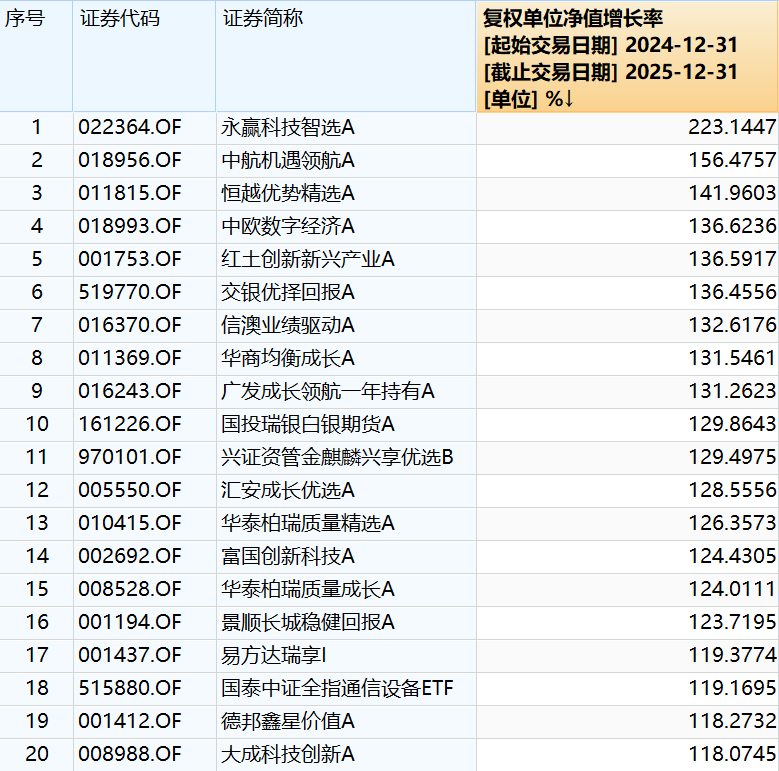
基金2025年四季报揭秘,“翻倍基”风格趋于谨慎,“易中天”遭集中减持
Xin Lang Cai Jing· 2026-01-22 08:11
Core Insights - The report highlights a significant expansion in the scale and positioning of equity funds as the 2025 quarterly reports are disclosed, with over 3,300 funds having completed their disclosures by January 21 [1] - More than 40% of actively managed equity funds reported positive returns for the quarter, outperforming benchmarks, driven by a structural market rally influenced by debt reduction policies, expectations of preventive interest rate cuts by the Federal Reserve, and marginal improvements in corporate earnings [1] - The technology and non-ferrous metals sectors led the market, contributing to substantial excess returns for funds heavily invested in these areas [1] Fund Performance and Trends - The fund managed by Ren Jie, Yongying Technology Smart Selection A, achieved a cumulative return of 233.29% for the year, with a total scale reaching 15.468 billion yuan, a quarter-on-quarter increase of 34.26% [2] - A total of 45 funds doubled their scale in a single quarter, with some "mini funds" experiencing scale increases exceeding 40 times, showcasing a typical characteristic of smaller funds being more agile [3] - The rapid scale increase of these funds is attributed to three common factors: small initial scale allowing for performance elasticity, concentrated industry allocation focusing on AI computing power, semiconductor equipment, and copper-aluminum sectors, and decisive actions by fund managers to quickly build positions at the onset of market rallies [3] Challenges and Adjustments - The significant scale growth poses management challenges, leading some funds to limit purchases to control rapid growth and avoid strategy capacity exceeding limits, which could dilute returns [4] - In terms of industry allocation, the technology sector remains the most consensus-driven core line among fund managers, with some funds reducing positions in previously high-performing stocks that have reached reasonable valuation levels, while increasing allocations to second-tier stocks and upstream equipment materials [5] Specific Fund Adjustments - For instance, Yongying Technology Smart Selection A reduced its stock position from 94.41% to 80.34%, a decrease of over 14 percentage points, showing caution towards the core stock "Yizhongtian" [5] - The fund manager Feng Ludan's China Europe Digital Economy also exhibited similar adjustments, slightly reducing stock positions while increasing holdings in Dongshan Precision and Shennan Circuit, and significantly reducing positions in Zhongji Xuchuang and Xinyi Sheng [6] Investment Strategy Insights - The report emphasizes the importance of analyzing "invisible heavy stocks" in quarterly reports, as the real insights may lie in the 11th to 20th largest holdings, which can indicate a shift in fund manager strategies [8] - Tracking changes in "institutional investor share ratios" can serve as a barometer for smart money, with significant increases indicating recognition from long-term funds, which can stabilize future fund redemptions and enhance net value stability [8] - The operational analysis section of the reports is crucial for understanding fund managers' strategies, with key phrases indicating recognition of misjudgments, warnings about current valuations, and adjustments in holdings [9]



债市基本面高频数据跟踪:2026年1月第2周:水泥价格再创新低
SINOLINK SECURITIES· 2026-01-14 15:18
Group 1: Economic Growth Production - Power plant daily consumption is higher than the same period last year. On January 13, the average daily consumption of 6 major power generation groups was 826,000 tons, a 2.7% decrease from January 6. On January 6, the daily consumption of power plants in eight southern provinces was 2.278 million tons, a 9.6% increase from December 30 [5][12]. - The blast furnace operating rate has generally recovered moderately. On January 9, the national blast furnace operating rate was 79.3%, a 0.4 - percentage - point increase from January 2; the capacity utilization rate was 86.1%, a 0.8 - percentage - point increase from January 2. However, the blast furnace operating rate of Tangshan steel mills decreased by 3.7 percentage points [5][16]. - The tire operating rate has declined for two consecutive weeks. On January 8, the operating rate of all - steel truck tires was 58.0%, a 0.1 - percentage - point decrease from January 1; the operating rate of semi - steel car tires was 65.9%, a 2.4 - percentage - point decrease from January 1 [5][18]. - The operating rate of looms in the Jiangsu and Zhejiang regions has continued to decline. On January 8, the operating rate of polyester filament in the Jiangsu and Zhejiang regions was 90.5%, a 0.4 - percentage - point increase from January 1, while the operating rate of downstream looms was 57.9%, a 1.7 - percentage - point decrease from January 8 [5][18]. Demand - The sales volume of new homes in 30 cities has weakened month - on - month. From January 1 - 13, the average daily sales area of commercial housing in 30 large and medium - sized cities was 152,000 square meters, a 44.9% decrease from the same period in December, a 41.8% decrease from January of last year, and a 40.8% decrease from January 2024 [5][23]. - The retail growth of the auto market is weak. In January, retail sales decreased by 32% year - on - year, and wholesale sales decreased by 40% year - on - year [5][26]. - Steel prices are oscillating strongly. On January 13, the prices of rebar, wire rod, hot - rolled coil, and cold - rolled coil changed by +0.6%, +1.3%, - 0.3%, and +0.1% respectively compared to January 6 [5][33]. - Cement prices have hit a new low. On January 13, the national cement price index decreased by 1.1% compared to January 6. The cement prices in the East China and Yangtze River regions decreased by 0.5% and 0.6% respectively, performing slightly better than the national average [5][34]. - The rebound strength of glass prices has increased. On January 13, the active futures contract price of glass was 1,119 yuan/ton, an 0.8% increase from January 6 [5][39]. - The container shipping freight rate index has shown a pattern of short - term decline and long - term increase. On January 9, the CCFI index increased by 4.2% compared to December 26, while the SCFI index decreased by 0.5% [5][43]. Group 2: Inflation CPI - The rebound strength of pork prices is weakening. On January 13, the average wholesale price of pork was 18.0 yuan/kg, a 0.3% increase from January 6. Since January, the average wholesale price of pork has increased by 2.0% month - on - month [5][47]. - The agricultural product price index has declined moderately. On January 13, the agricultural product wholesale price index decreased by 0.9% compared to January 6. Since January, the index has increased by 4.0% year - on - year but decreased by 0.6% month - on - month [5][52]. PPI - Oil prices have reached the highest level since October. On January 13, the spot prices of Brent and WTI crude oil were 68.8 and 61.2 dollars/barrel respectively, an 8.4% and 7.0% increase from January 6 [5][55]. - Copper and aluminum prices have continued to rise. On January 13, the prices of LME 3 - month copper and aluminum increased by 0.1% and 2.3% respectively compared to January 6. Since January, the prices of LME 3 - month copper and aluminum have increased by 10.4% and 7.0% month - on - month respectively [5][59]. - The domestic commodity index has changed from a decline to an increase month - on - month. On January 13, the Nanhua Industrial Products Index increased by 1.2% compared to January 6, while the CRB index decreased by 1.5% [5][59].
平安鑫利混合基金经理王华:全球双宽周期下 资源品与周期股迎来配置良机
Quan Jing Wang· 2026-01-07 08:37
Group 1 - The core viewpoint of the report is that the global economy is entering a dual easing cycle of fiscal and monetary policies in 2026, which will create new development opportunities for cyclical sectors [1] - The report highlights that developed countries are accelerating their re-industrialization processes through fiscal expansion, driven by trends in energy security and industrial chain security, which will support commodity prices [1] - Market expectations indicate that the Federal Reserve may implement 2 to 3 interest rate cuts in 2026, further promoting global monetary easing [1] Group 2 - The report emphasizes the potential for price increases in the copper and aluminum industries due to tight supply and steady demand growth, presenting good investment opportunities [1] - The long-term allocation value of precious metals, particularly gold, is highlighted as increasingly significant in the context of global instability and rising debt, reinforcing its role as a safe-haven asset [1] - The Chinese Central Economic Work Conference's focus on deepening supply-side reforms and price recovery is seen as a positive signal for the midstream cyclical sector, indicating a potential bottoming out and recovery space [2] Group 3 - The "anti-involution" policy constraints combined with demand-side support policies are expected to significantly improve the supply-demand dynamics in cyclical industries such as new energy and chemicals [2] - The acceleration of real estate sales is seen as reducing negative factors in the industry chain, suggesting a potential for recovery by the end of the year [2] - Overall, the cyclical sector in 2026 is anticipated to benefit from the dual expectations of "expansive fiscal" and "expansive monetary" policies globally, along with domestic policy support, providing numerous investment opportunities [2]
不用猜了!2026年A股确定性最高的三大机会与两大雷区,都在这里
Sou Hu Cai Jing· 2026-01-02 00:56
Market Overview - The total trading volume in 2025 exceeded 420 trillion yuan, averaging over 17 trillion yuan daily, indicating a highly active market [1] - The Shanghai Composite Index rose by 18.41% throughout the year, with six instances of surpassing the 4000-point mark, closing at 3968.84 points [1] - The ChiNext Index surged by 49.57%, reflecting a strong growth in the technology sector [1] Sector Performance - The non-ferrous metals sector experienced a remarkable increase of 94.73%, followed by the telecommunications sector with an 84.75% rise [1] - Other sectors such as electronics, power equipment, and machinery also saw gains exceeding 40% [1] - Conversely, the food and beverage sector declined by 9.69%, and the coal sector fell by 5.27% [1] Market Dynamics - The market is transitioning from a reliance on financial and real estate sectors to a focus on technology and high-end manufacturing, driven by a "technology revolution" and "resource revaluation" [1] - The driving forces behind the market include the AI industry chain explosion, improved corporate earnings, and stable investments from state-owned funds and insurance companies [1] 2026 Market Outlook - The market is expected to maintain a "slow bull" trend in 2026, with a shift in focus from "expectations" and "valuations" to "performance" and "profitability" [2] - A projected earnings growth rate for all A-share listed companies is anticipated to rebound to 5%-8% [2] - Key drivers for this growth include a potential global manufacturing cycle recovery and the maturation of emerging industries like AI and commercial aerospace [2] Valuation and Funding - The overall market valuation is around 22 times earnings, which is not considered cheap but is not viewed as a bubble in the context of historical and economic transformation [3] - Continuous inflow of funds is expected as residents shift investments from real estate and savings to the stock market, supported by significant insurance fund allocation and ETF purchases [3] Investment Strategy for 2026 - The market is expected to experience distinct phases throughout 2026, with a focus on technology growth sectors like AI and semiconductors in Q1, followed by performance verification in Q2 [4] - Q3 may see a balanced market style, with stable performance in consumer sectors, while Q4 will likely focus on high dividend stocks and stable earnings [4] Sector Opportunities - Structural opportunities exist in the consumer sector, particularly in essential consumption, which remains stable and offers high dividends [5] - The performance of discretionary consumption sectors will largely depend on supportive policies for real estate [5] Key Investment Themes - The primary investment themes for 2026 include: 1. Technology-driven opportunities, particularly in AI and commercial aerospace [6] 2. High-end manufacturing with a focus on robotics and global expansion [6] 3. Cyclical sectors benefiting from new demand, such as industrial metals and chemicals [6]
有色金属行业周报(20251222-20251226):宏观情绪与政策共振,金属价格持续上行-20251228
Huachuang Securities· 2025-12-28 10:13
Investment Rating - The report maintains a "Buy" recommendation for the non-ferrous metals industry, highlighting a positive outlook due to macroeconomic sentiment and policy resonance leading to rising metal prices [2]. Core Insights - The report emphasizes that the weakening US dollar, risk aversion, and tight supply-demand dynamics have significantly boosted precious metal prices, with gold reaching 1016 CNY per gram (+3.71% week-on-week), silver at 18308 CNY per kilogram (+19.07%), platinum at 2534.7 USD per ounce (+29.37%), and palladium at 2060.5 USD per ounce (+27.03%) [3]. - The report expresses a long-term bullish view on precious metals, citing sustained demand from central banks and industrial applications, particularly for silver, which has seen a historical price surge due to supply shortages and increased ETF demand [3]. - The report notes that the copper smelting profit margins are expected to be impacted by an oversupply of smelting capacity, prompting the government to encourage mergers and acquisitions to enhance bargaining power for imported copper concentrates [4]. - The report discusses the encouragement from the National Development and Reform Commission for large-scale mergers in the alumina industry, which has led to a slight rebound in alumina prices despite high inventory levels and anticipated price declines due to lower raw material costs [5]. - The copper-aluminum ratio has reached a new high, indicating potential for aluminum price elasticity and dividends, with expectations of sustained high profits in the electrolytic aluminum sector [6][11]. Summary by Sections Industrial Metals - Precious metals have seen significant price increases due to a combination of a weaker dollar, risk aversion, and tight supply-demand conditions [3]. - The report anticipates continued upward pressure on gold and silver prices, driven by investment demand and industrial applications [3]. Aluminum Industry - The report highlights the government's push for consolidation in the alumina sector, which may stabilize prices despite current oversupply conditions [5]. - The copper-aluminum price ratio indicates strong potential for aluminum price increases, supported by low global inventories and production constraints [6][11]. Copper Industry - The report indicates that the copper smelting sector faces challenges due to excess capacity, leading to calls for industry consolidation to improve competitiveness [4]. Precious Metals - The report recommends investment in precious metal stocks, including Zhongjin Gold and Chifeng Jilong Gold Mining, as well as silver and copper stocks, reflecting a positive outlook for these sectors [12].
有色金属行业周报:通胀放缓,商品价格继续上行-20251221
Huachuang Securities· 2025-12-21 11:35
Investment Rating - The report maintains a recommendation for the non-ferrous metals industry, indicating a positive outlook due to easing inflation and rising commodity prices [2]. Core Views - The report highlights that U.S. inflation data has exceeded market expectations, but the reliability of new inflation and employment data may be limited due to the recent government shutdown. Precious metal prices are expected to remain volatile, with continued demand for gold as a safe haven amid global economic uncertainties. Silver prices have recently surged past $65 per ounce, driven by industrial demand and supply constraints [3][4]. - The report notes that the annual long-term contract price for copper concentrate has been set at $0 per ton for 2026, indicating a significant reduction in smelting fees and increasing expectations for production cuts in copper smelting [3][4]. - The report emphasizes that overseas production cut expectations are strengthening, particularly with the announcement of maintenance shutdowns at major aluminum smelting facilities, which, combined with domestic inventory reductions, is expected to support aluminum prices [4]. Summary by Sections Industrial Metals - **View 1**: U.S. CPI and employment data may lack credibility, leading to volatile precious metal prices. Gold is expected to maintain its appeal as a safe-haven asset, while silver prices are supported by supply-demand imbalances [3]. - **View 2**: New copper concentrate long-term contract prices are set low, increasing expectations for smelting production cuts, which may support higher copper prices [3]. - **View 3**: Strengthening overseas production cut expectations and ongoing domestic inventory reductions are likely to push aluminum prices higher [4]. Company Insights - **Company Activity**: Luoyang Molybdenum plans to acquire South American gold mines, which is expected to enhance its gold production capacity significantly [10]. - **Stock Recommendations**: The report recommends stocks in the precious metals sector, including Zhongjin Gold and Chifeng Jilong Gold, as well as copper and aluminum stocks such as Zijin Mining and China Hongqiao [11]. New Energy Metals and Minor Metals - **Lithium Market**: The recovery progress of the Jiangxi lithium mine may be slower than expected, leading to upward pressure on lithium prices due to supply tightness [12]. - **Cobalt Prices**: Cobalt salt prices have been rising, supported by slow export approval processes in the Democratic Republic of Congo, which may lead to tighter supply conditions [13][14]. - **Company Activity**: Tianqi Lithium's expansion project is progressing, which will enhance its production capacity and improve profitability [15]. Aluminum Industry Data Tracking - **Production and Inventory**: The report tracks significant data on aluminum production, inventory levels, and profit margins, indicating a tightening supply situation that supports price stability [22][44].