
私募

Search documents
私募,密集出海
3 6 Ke· 2025-08-11 00:26
Core Viewpoint - The private equity industry is experiencing a resurgence in overseas expansion, with many firms obtaining Hong Kong's Type 9 license and attracting foreign institutional funds to invest in the A-share market [1][2]. Group 1: Market Dynamics - The number of private equity firms holding the Type 9 license has reached 87 as of July 21, 2023, including 58 subjective and 20 quantitative firms [2]. - International investors are increasingly interested in Chinese asset managers, with funds from regions like the Middle East and Europe being directed towards the Chinese market [2][3]. - The Chinese market's investment appeal is bolstered by supportive macroeconomic policies and emerging growth sectors such as advanced manufacturing and green technology [3][7]. Group 2: Role of Securities Firms - Chinese and foreign securities firms are actively competing in the private equity overseas business, providing services such as license applications, fundraising, and trading [1][4]. - Securities firms play a crucial role in the entire process of private equity overseas expansion, from recommending intermediaries for license applications to providing compliance and legal support [5][6]. - The demand for services related to private equity overseas expansion has significantly increased, leading to a noticeable uptick in business for securities firms [4][5]. Group 3: Opportunities and Challenges - The private equity industry faces both opportunities and challenges in overseas markets, including the need for international experience and the high operational costs associated with overseas expansion [7]. - While overseas markets offer lower interest rates and abundant financing resources, challenges such as obtaining licenses and higher operational costs remain significant hurdles [7]. - Understanding international investors' needs and clearly articulating investment strategies are essential for success in the overseas market [7].
募资端冷暖有别,私募寻求破局之道
Zhong Guo Zheng Quan Bao· 2025-08-11 00:12
Core Insights - The A-share market has shown signs of recovery this year, leading to improved performance for many private equity firms, yet fundraising remains challenging for some [1][3] - A structural divide is emerging in the private equity fundraising landscape, with only certain firms benefiting from the market's positive trends [1][6] Fundraising Challenges - Despite strong performance, firms like Tongxun Investment are struggling to attract new capital, with most inflows being passive due to previous market downturns [3][8] - Established firms like Chongyang Investment have successfully raised significant new funds, indicating a contrast in investor sentiment and trust [3][4] Investor Sentiment - Investors are becoming more cautious, focusing on long-term stability and risk management rather than short-term gains, reflecting a shift in mindset due to past market volatility [5][9] - The "scar effect" is prevalent, where investors are hesitant to commit funds due to previous negative experiences, leading to a more rigorous evaluation of fund managers [5][9] Trust Rebuilding - Rebuilding trust among investors is seen as a long-term process that requires collaboration between fund managers, sales channels, and investors [11][14] - Effective communication and transparency from fund managers are crucial for restoring investor confidence and ensuring sustainable performance [11][13] Strategic Adaptation - Firms are adapting their strategies to meet the evolving needs of investors, focusing on clear communication of investment logic and risk management [11][12] - The role of sales channels is shifting from mere product sales to providing comprehensive advisory services, emphasizing the importance of understanding client needs [13][14]
多家私募沦为违规债券发行通道 协助自融或返费 监管部门集体出手处罚
智通财经网· 2025-08-10 22:40
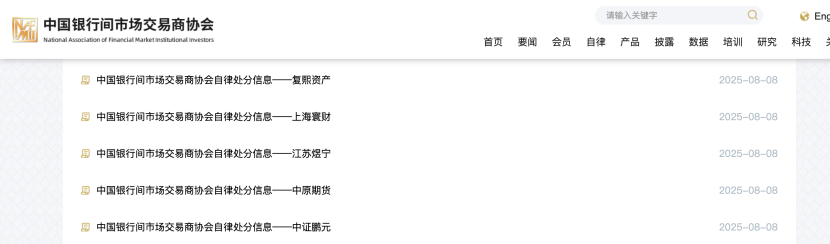
中国银行间交易商协会再度同时披露多份处分公告,私募又是处罚重点,一系列案例揭示了私募债券发行环节的违规 乱象。 8月8日,中国银行间交易商协会披露了5份自律处分信息,其中3份均面向私募机构。根据银行间债券市场相关自律规 定,经自律处分会议审议,上海复熙、江苏煜宁受到严重警告,上海寰财被予以警告。 | 中国银行间市场交易商协会 | | | | 请输入关键字 | | | Q | | 8 Eng | | --- | --- | --- | --- | --- | --- | --- | --- | --- | --- | | | 首页 | 要闻 | 会员 | 自律 产品 | 技露 | 数据 | 培训 | 研究 | 科技 = | | ■ 中国银行间市场交易商协会自律处分信息一 一复照资产 | | | | | | | 2025-08-08 | | | | 图 中国银行间市场交易商协会自律处分信息 -- 上海寰财 | | | | | | | 2025-08-08 | | | | 圆 中国银行间市场交易商协会自律处分信息一 一江苏煜宁 | | | | | | | 2025-08-08 | | | | 圆 中国银行间市场交易 ...

幻方量化员工卷入“亿元返佣”案 涉案人为市场总监,公司称为个人行为
Shen Zhen Shang Bao· 2025-08-10 22:40
Core Viewpoint - A major quantitative private equity firm in China, Huafang Quantitative, is embroiled in a commission rebate scandal involving a total amount of 118 million yuan, raising significant market attention due to its dual identity as the parent company of the DeepSeek model [1] Group 1: Incident Details - The scandal involves Huafang Quantitative's market director, Li Cheng, who allegedly colluded with a brokerage manager to fabricate broker identities, directing trades to a designated brokerage to exploit a commission rebate system [1] - Over a span of six years from 2018 to 2023, the scheme resulted in a total of 118 million yuan, with over 20 million yuan flowing directly to Li Cheng [1] - Several individuals involved in the case have been handed over to judicial authorities for further investigation [1] Group 2: Company Response - Huafang Quantitative stated that Li Cheng's actions were personal and not representative of the company's conduct [1] - The company emphasized that it was unaware of how the brokerage incentivized its sales personnel and maintains uniform commission rates across all partnerships, which are considered to be at a relatively low level in the industry [1] - Li Cheng is described as a regular market staff member rather than a senior executive, and the company is awaiting the results of the investigation [1] Group 3: Company Background - Huafang Quantitative is recognized as one of the leading quantitative private equity firms in China [1] - The company established a subsidiary, Deep Exploration Company, in April 2023 and plans to launch the DeepSeek model in January 2025 [1]
喜娜AI速递:昨夜今晨财经热点要闻|2025年8月11日
Sou Hu Cai Jing· 2025-08-10 22:15
Group 1 - Hubei Province has established the Brain-Computer Interface Industry Innovation Development Alliance, which aims to create a full-chain ecosystem and has released the first national pricing standard for brain-computer interface medical services [2] - The A-share market has seen a surge in brain-computer interface concept stocks due to favorable policies from seven departments and technological innovations [2] - The financing and securities balance in the A-share market has exceeded 2 trillion yuan for the first time in nearly a decade, indicating a significant increase in market activity [2] Group 2 - The average return of billion-level private equity funds has exceeded 16% this year, with a high positive return rate of 98%, indicating a recovery in the private equity issuance market [3] - Several companies in the A-share market have foreign ownership exceeding 24%, with foreign investors optimistic about the future performance of these stocks [3] - Baiguoyuan's chairman addressed concerns about high fruit prices, while the company's financial report indicated a decline in revenue and a shift from profit to loss [3] Group 3 - The U.S. labor statistics for July showed disappointing employment data, leading to controversy over the handling of economic data by the Trump administration [4] - The Federal Reserve's Vice Chair supports three interest rate cuts this year, with market expectations leaning towards a rate cut in September [5] - Industrial Fulian reported significant growth in revenue and net profit, with AI server revenue increasing by over 60% year-on-year, reflecting a strong demand for AI computing hardware [5]
产品净值回来了 客户的心却没回来 募资端冷暖有别 私募寻求破局之道
Zhong Guo Zheng Quan Bao· 2025-08-10 21:27
Core Insights - The A-share market has shown signs of recovery this year, leading to improved performance for many private equity firms, yet fundraising remains challenging for some [1][2] - There is a structural divergence in the private equity fundraising landscape, with only certain firms benefiting from the market's positive trends [5][7] Fundraising Challenges - Despite strong performance, firms like Tonghen Investment face difficulties in attracting new capital, with many investors still hesitant due to past market volatility [2][6] - The "trust deficit" among investors remains significant, as many are cautious and prefer to wait for net values to return to previous highs before committing funds [2][6] Investor Sentiment - Investors are becoming more discerning, focusing on long-term stability and risk management rather than short-term gains [4][7] - The "scar tissue effect" has led to a more cautious approach among investors, who now prioritize comprehensive evaluations of fund managers' capabilities [4][7] Successful Strategies - Firms like Reiyang Investment and Bisen Investment have successfully raised capital by demonstrating consistent performance and clear strategic logic [3][4] - Quantitative firms like Mengxi Investment have also seen growth by offering diverse strategies that appeal to various risk appetites [3] Trust Rebuilding - Rebuilding trust among investors is seen as a long-term effort requiring collaboration between fund managers, sales channels, and investors [8][10] - Effective communication and transparency in strategy and performance are essential for restoring investor confidence [8][10] Evolving Investment Approaches - Investors are increasingly seeking detailed insights into fund managers' strategies and performance metrics, reflecting a shift towards more informed decision-making [11] - The focus on risk adaptation and long-term investment strategies indicates a maturation in investor behavior [11]
募资端冷暖有别 私募寻求破局之道
Zhong Guo Zheng Quan Bao· 2025-08-10 21:05
Core Insights - The A-share market has shown signs of recovery this year, leading to improved performance for many private equity firms, yet fundraising remains challenging for some [1][2] - A structural divergence in fundraising is evident, with some firms experiencing significant inflows while others struggle despite strong performance [1][4] - Investor sentiment has shifted, with a focus on long-term stability and risk management rather than short-term gains [5][8] Fundraising Challenges - Despite a 70% return for the year, Tongxun Investment faces difficulties in attracting new capital, with most inflows being passive due to net value increases rather than active subscriptions [2][6] - The contrast is stark with firms like Chongyang Investment, which has successfully raised substantial new funds, indicating a more mature investor base [2][3] - The "scar effect" has led to cautious investor behavior, with many prioritizing stability and historical performance over potential high returns [4][5] Investor Sentiment - Investors are increasingly scrutinizing private equity managers, focusing on long-term performance, team stability, and risk control [5][7] - The shift in investor mindset reflects a desire for safety and predictability, with many now requiring detailed due diligence before committing funds [7][10] - The emphasis on transparency and clear communication from fund managers is becoming crucial in rebuilding trust [9][11] Trust Rebuilding - The rebuilding of trust among investors, fund managers, and sales channels is essential for addressing the fundraising challenges faced by the industry [9][11] - Effective communication and a focus on absolute returns are key strategies for private equity firms to regain investor confidence [9][10] - Sales channels are evolving from mere product sellers to professional advisors, emphasizing the importance of understanding client needs and providing comprehensive support [10][11]
私募,密集出海!
Zhong Guo Ji Jin Bao· 2025-08-10 15:29
Group 1 - The core viewpoint of the articles highlights the resurgence of private equity firms venturing overseas, driven by a recovering market and increasing interest from international investors in the Chinese market [1][2] - Several private equity firms have obtained the Hong Kong Type 9 license, with a total of 87 firms holding this license as of July 21 this year, including 58 subjective and 20 quantitative private equity firms [2] - International investors are showing significant demand for access to the Chinese stock market, prompting private equity firms to develop products tailored to these investors [3] Group 2 - Chinese private equity firms are expanding their global presence to diversify revenue sources and enhance their investment capabilities, with a focus on A-share investments [2][5] - Domestic and foreign brokerages are actively supporting private equity firms in their overseas endeavors, providing services such as license applications, fundraising, and compliance support [4][5] - The integration of overseas trading systems is crucial for quantitative private equity firms, which rely on high-quality market data and efficient trading infrastructure [6] Group 3 - The current environment presents both opportunities and challenges for private equity firms, including the need for international experience and the high operational costs associated with overseas markets [7] - The interest from high-net-worth individuals in China for diversified investments is increasing, while international investors are also keen on the Chinese market, creating a "dual outbound" dynamic [7] - Understanding international investors' needs and clearly articulating investment strategies are essential for private equity firms to succeed in the global market [7]

私募,密集出海!
中国基金报· 2025-08-10 15:24
Core Viewpoint - The private equity industry in China is experiencing a resurgence in overseas expansion, with many firms obtaining Hong Kong's Type 9 license and attracting foreign institutional funds to invest in the A-share market [2][4]. Group 1: Private Equity Overseas Expansion - Several quantitative private equity firms, such as Blackwing Asset, Qianhai Bopu Asset, and Pansong Asset, have obtained the Hong Kong Type 9 license, with a total of 87 firms holding this license as of July 21 this year [4]. - The current overseas fundraising by private equity is primarily directed towards the domestic A-share market, with most firms issuing overseas funds that mirror their A-share strategies [4]. - The interest of international investors in the Chinese market is increasing, leading to a "dual outbound" trend where both domestic and foreign investors seek opportunities [11]. Group 2: Product Development and Market Demand - Private equity firms are launching products tailored to international investors, such as long-only Cayman funds and market-neutral funds, to meet the demand for access to the Chinese stock market [5]. - Blackwing Asset is introducing quantitative CTA and index enhancement strategy products aimed at the Chinese market to fulfill global allocation needs [5]. - The attractiveness of the Chinese market is supported by favorable macroeconomic policies and the emergence of new growth engines in advanced manufacturing, green technology, and artificial intelligence [5]. Group 3: Role of Securities Firms - Chinese securities firms, including CITIC, CICC, Huatai, and GF Securities, are actively involved in supporting private equity firms in their overseas endeavors by providing services such as license applications, fundraising, and trading [7]. - The demand for services related to private equity's overseas expansion has significantly increased, with securities firms reporting a noticeable uptick in business activity compared to the previous year [7]. - Securities firms play a crucial role in the entire process of private equity's overseas expansion, from facilitating license applications to providing compliance and legal support [7][8]. Group 4: Opportunities and Challenges - The current environment presents good opportunities for private equity firms to expand overseas, driven by the diverse investment needs of high-net-worth individuals and increasing interest from foreign investors [11]. - However, challenges remain, including the scarcity of experienced investment and compliance personnel, high operational costs, and competitive pressures in international markets [11]. - Understanding international investors' needs and clearly articulating investment strategies are essential for private equity firms to succeed in the global market [11].

赚钱效应显现超九成百亿级私募年内实现正收益
Shang Hai Zheng Quan Bao· 2025-08-10 13:40
Group 1 - The core viewpoint is that over 90% of billion-level private equity firms have achieved positive returns this year, indicating a strong profit effect and increased capital inflow into the market [1][2] - As of the end of July, the average return for billion-level private equity firms with performance disclosures is over 16%, with a positive return ratio of 98% [2][3] - The number of billion-level private equity firms has increased to 90, reflecting an expanding tier of firms benefiting from structural market opportunities [1][2] Group 2 - Quantitative private equity firms are leading in performance, with an average return of 18.92% and a 100% positive return ratio, compared to 13.59% and 93.75% for subjective private equity firms [3] - The private equity issuance market has significantly rebounded, with 1,298 private equity securities investment funds registered in July, an 18% increase from the previous month [4] - Major billion-level private equity firms are maintaining aggressive positions and actively adjusting their portfolios to seize structural opportunities in the market [4][6] Group 3 - Companies are focusing on sectors such as technology, innovative pharmaceuticals, non-ferrous metals, new consumption, and non-bank financials, with a high portfolio allocation of over 80% [5][6] - The current market environment is expected to continue providing structural opportunities for Chinese equity assets, supported by increased capital inflow and ongoing policy effects [6]