
电影

Search documents
AI电影:技术重构生产,生态开启新篇
Soochow Securities international· 2025-12-31 11:20
Investment Rating - The industry investment rating is "Overweight," indicating that the industry index is expected to outperform the market by more than 5% in the next six months [5]. Core Insights - The AI film industry is entering a phase of large-scale implementation driven by technological convergence and policy support, with significant demand for cost reduction and efficiency improvements in the film sector [8]. - AI technology is deeply penetrating the entire film production process, leading to dual breakthroughs in cost reduction and content innovation [8]. - The industry faces both opportunities and challenges, with a need for sustainable development amidst the release of industrial value [8]. - A competitive landscape has emerged with multiple strong players focusing on technology, content, and ecosystem integration [8]. Summary by Sections A. Technological Path Convergence and Policy Support - AI video generation technology has evolved through three stages, currently dominated by the DiT (Diffusion Transformer) architecture, which addresses key issues like frame consistency and physical realism [13]. - Domestic models such as Kuaishou's Keling and ByteDance's Jidream have shown significant advancements, particularly in Chinese semantic understanding and local scene adaptation [17][20]. B. AI's Penetration Across the Film Industry Chain - AI tools enhance script creation and concept design, significantly reducing the time required for these processes [24]. - Virtual filming and digital human applications are optimizing production processes, reducing costs associated with physical sets and actor availability [27]. - Post-production efficiency is improved through AI-driven editing and special effects, with tools enabling high-quality output at lower costs [31]. C. Industry Logic Reconstruction - The positive impacts of AI include significant cost reductions, lowered creative barriers, and the emergence of new content forms like AI comics and interactive films [39]. - Challenges include copyright and compliance risks, content homogenization, and employment impacts due to reduced demand for traditional roles [40]. D. Competitive Landscape - The industry features a multi-strong player dynamic, with key players like OpenAI and Google leading in technology, while domestic companies like Kuaishou and ByteDance are rapidly catching up [42]. - Traditional film companies are increasingly adopting AI to enhance production efficiency, with firms like Huace Film and Light Media leveraging AI for content creation [42].




中国电影:公司在德国、西班牙等地的CINITY设备销售已完成相关收入确认
Mei Ri Jing Ji Xin Wen· 2025-12-31 09:56
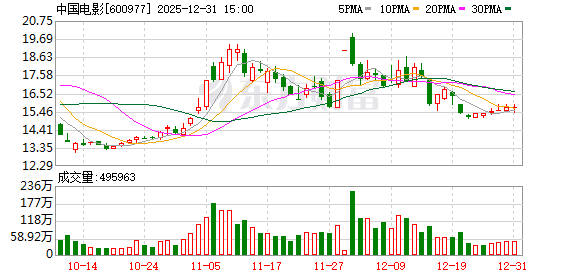
中国电影(600977.SH)12月31日在投资者互动平台表示,公司在德国、西班牙等地的CINITY设备销售 已完成相关收入确认。 (文章来源:每日经济新闻) 每经AI快讯,有投资者在投资者互动平台提问:了解到贵公司在德国、西班牙等有多个 CINITY 影厅待 建,请问这是否意味着贵公司在欧盟国家已有销售收入? ...


年终盘点|电影市场“大片依赖症”仍存,演出却能“带火一座城”
Di Yi Cai Jing· 2025-12-31 09:51
Group 1 - The Chinese film market is projected to achieve a box office of 51.6 billion yuan in 2025, with a significant contribution from the film "Nezha 2," which accounts for nearly 30% of the total box office [1][2] - The market is experiencing a "head effect," where a few blockbuster films dominate, while most films struggle to survive, leading to a stark contrast in performance [1][6] - The audience's viewing frequency has decreased despite an increase in total attendance, indicating a higher demand for quality content and a more cautious approach to viewing decisions [7] Group 2 - The live entertainment sector, including stand-up comedy and musicals, is growing rapidly, attracting younger audiences and diverting attention from traditional cinema [7][9] - The performance market is thriving, with a reported 19,700 music theater performances in 2025, a 15.04% increase from 2024, and ticket revenue reaching 1.807 billion yuan [8] - Concerts are becoming a significant driver of local tourism and consumption, with events like Jay Chou's concert in Wuhan generating over 1 billion yuan in tourism revenue [9][10]

A股2025年收官:上证指数11连阳
Jin Rong Shi Bao· 2025-12-31 09:17
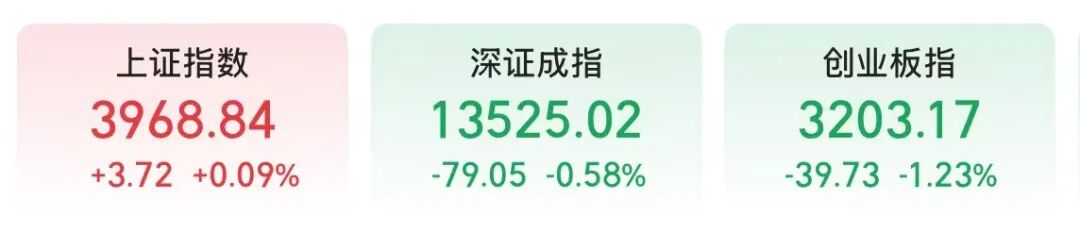
Market Performance - The Shanghai Composite Index closed at 3968.84 points on the last trading day of 2025, marking an 11-day consecutive rise with a slight increase of 0.09% [1] - For the entire year, the Shanghai Composite Index rose by 18.41%, the Shenzhen Component Index increased by 29.87%, and the ChiNext Index surged by 49.57% [1] Sector Performance - The cultural media and commercial aerospace sectors led the gains on the last trading day, with the cultural media sector rising by 3.11% and a net capital inflow of 95.93 billion yuan, while the commercial aerospace sector increased by 2.77% with a net inflow of 122.35 billion yuan [2] - The cultural media sector is expected to benefit from the upcoming three-day New Year holiday in 2026, which is anticipated to significantly boost consumption in the cultural and tourism sectors [2] - The film industry in China achieved a total box office of over 50 billion yuan in 2025, driven by popular films, and is expected to maintain high audience enthusiasm as the Spring Festival approaches [2] Aerospace Industry Insights - The successful launch of the Practice-29 satellite by the Long March 7 rocket at the Wenchang Space Launch Site has reignited market enthusiasm for the commercial aerospace sector [3] - The commercial aerospace sector has expanded into various primary industries, including machinery, automotive, and battery sectors, and is integrating new technologies such as photovoltaics [3] - Market attention towards the commercial aerospace sector is driven by policy support and developments in the industry chain, particularly in low-orbit satellite launches [3]
曹岩说说丨创作强、市场强、文化影响强 2025中国电影全产业链蓬勃发展
Yang Shi Xin Wen· 2025-12-31 06:48
2025年,是中国电影诞生120年。最新数据显示,截至目前,2025全年总票房近517亿元,总观影人次超12亿。据测算,今年电影全产业链的产值预计突破 8000亿元。在这份亮眼成绩单里,能看到中国电影的三个"强"。 创作能力强 不断创影史新高 第一是创作能力强。 全年上映的影片超过400部,题材丰富类型多元,在积极的政策鼓励和引导下,创作者们紧扣时代脉搏,坚定文化自信。 无论是《哪吒之魔童闹海》对传统故事的创新演绎,还是《浪浪山小妖怪》对水墨国风的生动呈现,都让中华优秀传统文化活了起来,经典IP焕发全新活 力。 文化影响力强 在银幕内外感受今日中国 围绕抗战胜利80周年的重要节点,《南京照相馆》《731》《东极岛》等一批影片,更是成为民族情感的重要载体,用影像铭记历史,传递正确的二战史 观。 与此同时,科技赋能电影创作成果显著,中国首部8K拍摄的太空题材电影《窗外是蓝星》,带观众沉浸式遨游浩瀚宇宙,故事有温度、画面有质感,这样 的创作能力,让中国电影实现了既有内涵又有颜值的高质量内容生产。 市场活力强 全产业链产值预计突破8000亿元 第二是市场活力强。 一方面,电影带动关联消费、促进经济增长作用明显。今年以 ...

贵州有“度”量!看2025年刷屏全国的贵州“符号”
Xin Lang Cai Jing· 2025-12-31 05:29
Group 1 - Guizhou is leveraging its cultural and tourism integration, particularly with the release of "Nezha 2" during the 2025 Spring Festival, attracting nationwide audiences to its IMAX-GT cinema [2] - The city has over 3,000 coffee shops, leading the nation in density, and has become known for its "Morning Coffee, Evening Craft Beer" lifestyle, injecting new vitality into the consumer market [7] - The completion of the Huajiang Grand Canyon Bridge in September 2025, with a main span of 1,420 meters and a height of 625 meters above water, has improved regional transportation and activated a new ecosystem for bridge tourism integration [15] Group 2 - Guizhou's computing power has significantly supported the production of films, with over 40% of the special effects in "Nezha 2" backed by local computing capabilities, which reached a scale of 92 Eflops by July 2025 [19] - The opening of the Panxing High-Speed Railway on November 28, 2025, marks Guizhou as the first province in Southwest China to achieve high-speed rail coverage for all administrative centers, benefiting 2.98 million people [23] - The various developments in Guizhou reflect a comprehensive approach to development, connecting urban and rural areas, tradition and modernity, and domestic and international perspectives, showcasing the province's vibrant future [27]

数读2025经济答卷 年轻人最爱的文旅消费方式被我找到了
Ren Min Wang· 2025-12-31 05:28
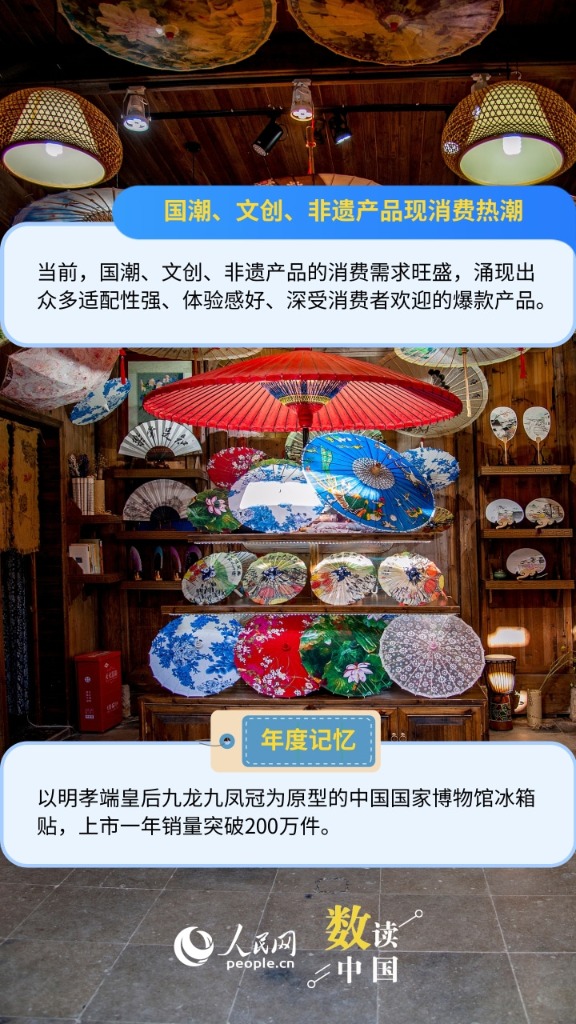
Group 1 - The article highlights the strong momentum of China's economic development, focusing on cultural and tourism consumption trends favored by young people as part of the "14th Five-Year Plan" [1] - There is a significant consumer demand for domestic products, cultural creations, and intangible cultural heritage items, leading to the emergence of popular products with strong adaptability and good experience [2] - The cultural consumption market is showing signs of vitality, with film screening sales revenue increasing by 19.1% year-on-year and revenue from artistic creation and performance rising by 15.6% in the first eleven months of 2025 [4] Group 2 - The film "Ne Zha" has achieved a cumulative box office of 15.91 billion yuan, ranking fifth in global box office history and setting multiple records [6] - Emotional value and social attribute consumption, represented by digital cultural services such as gaming and animation, are particularly favored by young consumers, with related sales revenue increasing by 16.5% year-on-year in the first eleven months of 2025 [8] - The increase in sports events has significantly boosted consumption, with retail sales of sports exhibition services growing by 29.7% and retail sales of sports goods and equipment increasing by 6.6% in the same period [14]
港股电影概念股多数上涨 大麦娱乐涨4.44%
Mei Ri Jing Ji Xin Wen· 2025-12-31 03:01
(文章来源:每日经济新闻) 每经AI快讯,港股电影概念股多数上涨,截至发稿,大麦娱乐(01060.HK)涨4.44%,报0.94港元;中国 星集团(00326.HK)涨4.42%,报2.6港元;猫眼娱乐(01896.HK)涨1.93%,报6.86港元。 ...
今年电影票房已突破500亿大关,春节档或成行业下一个催化剂
Jin Rong Jie· 2025-12-31 01:40
Group 1 - The total box office for the 2025 New Year period has reached 5.245 billion yuan, marking the second time in Chinese film history that the New Year box office has surpassed 5 billion yuan since 2017, and setting a new high for the same period in nearly eight years, boosting confidence in the film industry [1] - As of December 13, 2025, the total domestic box office has exceeded 50 billion yuan, reaching 50.003 billion yuan, with a total of 1.194 billion viewers [1] - Among the top ten films of the year, nine are domestic productions, with "Ne Zha" leading the box office at 15.446 billion yuan, ranking fifth in global box office history [1] Group 2 - The recovery of the film market is attributed to an increase in quality content supply, sustained viewer demand, and supportive policy environment, with content innovation and IP development being the core drivers of growth [2] - The recent government policies aimed at stimulating consumption are expected to benefit the film industry, which is a significant part of cultural entertainment [2] - Eight films are planned for release during the 2026 Spring Festival, which are anticipated to act as catalysts for the film industry [2]
中国电影开辟文化新航道 中国电影走进新西兰:银幕为桥 深化人文交流合作
Yang Shi Wang· 2025-12-31 00:12
Group 1 - The core viewpoint of the article emphasizes the role of Chinese cinema in enhancing cultural exchanges and cooperation with New Zealand, using film as a bridge for deeper human connections [2] Group 2 - The initiative of Chinese films entering New Zealand represents a strategic move to open new cultural pathways and promote mutual understanding between the two nations [2] - The collaboration aims to strengthen cultural ties and foster a greater appreciation of Chinese cinema among New Zealand audiences [2]