超市零售

Search documents
胖改红利下的盒马们,把区域商超逼到墙角
3 6 Ke· 2025-10-31 12:39
Core Insights - The article discusses the competitive landscape in the retail sector, particularly focusing on the aggressive expansion of Hema and its impact on traditional supermarkets like Jiajiayue and others [4][5][20]. Group 1: Hema's Expansion Strategy - Hema has been rapidly opening new stores, with plans to open at least 206 stores in 2025, 41.75% of which are located in second-tier and lower cities [10][16]. - The company is focusing on a dual business model with Hema Fresh and Super Hema, targeting different market segments and enhancing its presence in lower-tier cities [16][19]. - Hema's strategy includes leveraging existing commercial spaces left vacant by traditional supermarkets, allowing for quick market entry and brand recognition [19][20]. Group 2: Impact on Traditional Supermarkets - Traditional supermarkets are facing significant challenges, with at least 782 stores expected to close in 2024, and many companies reporting revenue declines [6][7]. - The entry of Hema has led to a notable drop in sales for some local supermarkets, with reports of declines exceeding 30% in certain areas [5][6]. - Regional supermarkets are responding by upgrading their offerings and enhancing their online presence to compete more effectively against Hema [22][23]. Group 3: Competitive Dynamics - The competition is not just about pricing but also involves different business models and operational systems, with traditional supermarkets relying on local supply chains and community ties [20][24]. - Hema's innovative product offerings and digital capabilities are seen as significant advantages over traditional supermarkets, which struggle with digital integration [21][26]. - The retail landscape is evolving into a multi-format battleground, with various new retail formats like membership stores and discount stores also expanding rapidly [25][26].

永辉超市(601933):关店动作接近结束 调改店占比即将过半
Xin Lang Cai Jing· 2025-10-31 12:29
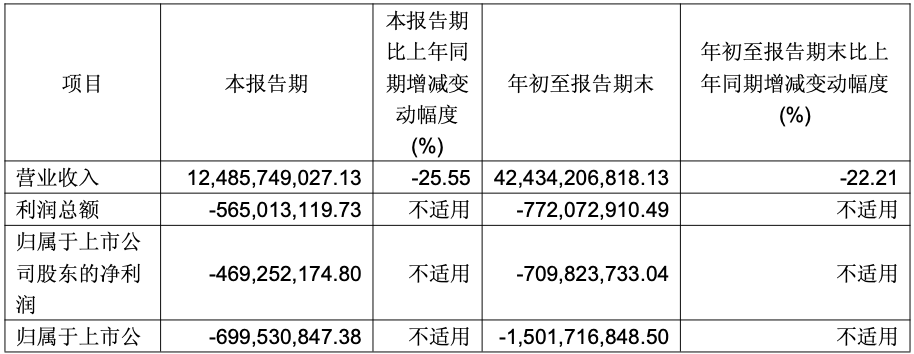
Core Insights - The company reported a significant decline in revenue and net profit for Q3 2025, with revenue at 12.486 billion yuan (-25.55%) and a net loss of 469 million yuan (-32.86%) [1] - Despite the revenue drop, the gross margin improved across various regions, indicating a potential for recovery in profitability [2] Revenue Analysis - Revenue for the first three quarters of 2025 totaled 42.434 billion yuan, down 22.21% year-on-year, with regional declines: East China (-31.18%), South China (-19.36%), West China (-17.28%), North China (-23.93%), and Central China (-4.04%) [2] - The decline in revenue is attributed to intense competition in the retail sector, changing consumer habits, and the company's strategic store closures and optimizations [2] Gross Margin Improvement - Despite the revenue decline, gross margins increased in all regions for Q3 2025, with East China up 1.36 percentage points, South China up 0.39 percentage points, West China up 0.28 percentage points, North China up 3.01 percentage points, and Central China up 2.4 percentage points [2] - The improvement in gross margin is expected to be driven by reduced loss rates from optimized stores and an increased proportion of high-margin processed foods [2] Store Optimization Strategy - The company closed 104 stores and opened 2 in Q3 2025, resulting in a loss of 612 million yuan from closures [2] - The average monthly store adjustments increased to 32 in Q3, up from 25 in Q2, with the total number of existing stores reduced to 450 and adjusted stores reaching 222, accounting for 49.33% of total stores [3] Profit Forecast and Valuation - Revenue projections for 2025-2027 are 58.766 billion yuan, 98.990 billion yuan, and 112.145 billion yuan, with year-on-year changes of -13.03%, +68.45%, and +13.29% respectively [4] - Expected net profits for the same period are -896 million yuan, 1.508 billion yuan, and 2.053 billion yuan, with a year-on-year change of -38.89%, N/A, and +36.15% respectively [4] - The current stock price corresponds to a PE ratio of N/A, 27.93x, and 20.51x for the respective years, maintaining a "buy" rating [4]

永辉超市(601933):关店动作接近结束,调改店占比即将过半
SINOLINK SECURITIES· 2025-10-31 09:48
Investment Rating - The report maintains a "Buy" rating for the company [5] Core Views - The company reported a revenue of 12.486 billion yuan in Q3 2025, a decrease of 25.55% year-on-year, with a net profit attributable to shareholders of -469 million yuan, down 32.86% [2] - Despite the revenue decline, gross margins improved across all regions, attributed to reduced loss rates from store adjustments and an increase in high-margin processed food sales [3] - The company closed 104 stores in Q3 2025, resulting in a loss of 612 million yuan, while the number of adjusted stores reached 222, accounting for 49.33% of total stores [4] Summary by Sections Performance Review - In Q3 2025, the company achieved a revenue of 12.486 billion yuan, a decline of 25.55%, and a net profit of -469 million yuan, a decrease of 32.86% [2] - The adjusted net profit was -700 million yuan, showing a slight improvement from -940 million yuan in Q2 [2] Operational Analysis - Revenue for the first three quarters of 2025 was 42.434 billion yuan, down 22.21%, with significant declines in various regions: East China (-31.18%), South China (-19.36%), West China (-17.28%), North China (-23.93%), and Central China (-4.04%) [3] - The decline in revenue was attributed to intense retail competition, changing consumer habits, and the company's strategic store closures [3] - Gross margins improved in Q3 2025 across all regions, with increases of 1.36 percentage points in East China, 0.39 in South China, 0.28 in West China, 3.01 in North China, and 2.4 in Central China [3] Store Adjustments - The company accelerated its store adjustment strategy, closing 104 stores and opening 2 in Q3 2025, with adjusted stores now making up nearly half of the total [4] - The average number of adjusted stores opened per month increased to 32, up from 25 in Q2 [4] Profit Forecast and Valuation - Revenue projections for 2025-2027 are 58.766 billion yuan, 98.990 billion yuan, and 112.145 billion yuan, with expected growth rates of -13.03%, +68.45%, and +13.29% respectively [5] - The forecasted net profit for 2025-2027 is -896 million yuan, 1.508 billion yuan, and 2.053 billion yuan, with growth rates of -38.89%, N/A, and +36.15% respectively [5]
学习胖东来效果未显!永辉超市前三季度净亏损7.1亿元
Shen Zhen Shang Bao· 2025-10-31 09:07
Core Insights - Yonghui Supermarket reported a revenue of 42.434 billion yuan for the first three quarters of 2025, a year-on-year decline of 22.21% [1][3] - The company experienced a net loss attributable to shareholders of 710 million yuan, which is a decrease of 632 million yuan compared to the same period last year [1][3] - The company has been facing challenges due to intense competition in the retail sector and changing consumer habits, leading to a decline in customer traffic and average transaction value [3][4] Financial Performance - For Q3 2025, the company reported a revenue of 12.486 billion yuan, down 25.55% year-on-year [2][3] - The total profit for the first three quarters was -772 million yuan, with a net profit attributable to shareholders of -710 million yuan [2][4] - The company’s gross margin declined in Q3 due to strategic changes in product structure and procurement during store renovations [4] Store Operations - As of the end of Q3, Yonghui Supermarket operated 450 stores, with 222 undergoing renovations since May 2024 [3] - The company has been closing underperforming stores as part of its optimization strategy, resulting in a loss of 612 million yuan from store closures in Q3 [4] Regulatory Issues - Yonghui Supermarket received a warning from the China Securities Regulatory Commission for failing to timely disclose changes in shareholding after reducing its stake in Hongqi Chain [4][5] - This marks the second regulatory concern for the company in 2023, following a previous notice regarding internal governance issues [5]
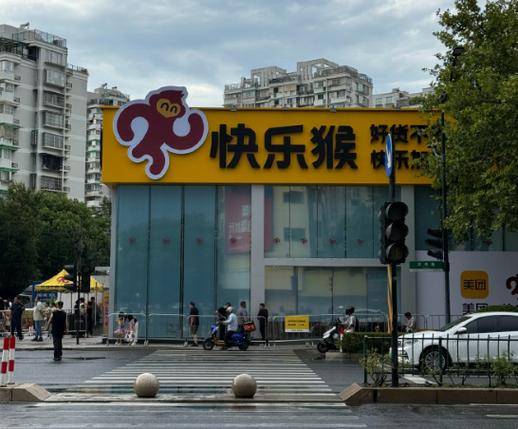
一线城市开启超市价格战,北京8点后6折清仓,上海的宝妈疯狂囤货
Sou Hu Cai Jing· 2025-10-31 08:39
Core Insights - Recent price wars have erupted among supermarkets in major cities, particularly in Beijing and Shanghai, driven by aggressive discount strategies from new entrants like Meituan's "Happy Monkey" and established players like Wumart [1][4][5] Group 1: Price War Dynamics - Meituan's "Happy Monkey" has initiated a tiered discount strategy, offering significant reductions such as 60% off on certain items, attracting customers eager to take advantage of the deals [1][4] - In Shanghai, supermarkets like Aoleqi have also slashed prices on imported meats by nearly 30%, leading to increased consumer purchases of these products [5][15] - The competition has intensified, with local residents actively sharing their shopping experiences and discounts in community groups, indicating a strong consumer engagement in the price war [3][4] Group 2: Competitive Strategies - "Happy Monkey" strategically opened stores in less competitive areas to avoid direct competition with established giants like Wumart, which has been rapidly expanding its discount store format [7][8] - Wumart has been proactive in opening new discount stores, with plans to increase its total to 25 by the end of the year, leveraging its existing infrastructure to minimize costs [8][11] - Wumart's cost-saving measures include reducing product variety and increasing the share of private label goods, allowing for lower prices and faster inventory turnover [12][11] Group 3: Market Trends and Future Outlook - The hard discount market in China is projected to exceed 200 billion yuan in 2024, with a current penetration rate of only 8%, indicating significant growth potential [14] - Major players like JD.com and Hema are also preparing to enter the hard discount space, suggesting a broader competitive landscape [14][16] - The success of hard discount models relies on high sales volume to maintain low prices, with companies like Wumart aiming for hundreds of stores to achieve economies of scale [15][16] Group 4: Consumer Behavior and Expectations - Consumers are increasingly focused on long-term value and quality, seeking not just low prices but also assurance of product freshness and service quality [18][19] - The ongoing price competition is expected to benefit consumers, as companies strive to balance affordability with quality to retain customer loyalty [18][19]
永辉超市重庆水木天地店焕新亮相
Sou Hu Cai Jing· 2025-10-31 08:05
Core Insights - Yonghui Supermarket has reopened its Shuimu Tiandi store in Chongqing, enhancing its urban layout and providing a better shopping experience for local residents [1] Group 1: Store Upgrade and Product Offering - The store's product system has been completely restructured, with a total of 8,500 items, 70% of which are newly introduced products, and the proportion of imported goods has increased to 12% [3] - The overall product structure now exceeds 80% of the product system of the well-known brand Pang Donglai, significantly improving product variety and quality [3] - A notable highlight of the upgrade is the increased proportion of freshly prepared items, enhancing the food experience for customers, with the bakery section introducing 95 new products and the deli section increasing to 356 items [3] Group 2: Local Market Commitment - The upgraded store has made significant improvements in shopping environment, personalized services, and employee benefits, reflecting the company's commitment to the local market [5] - The company aims to deepen its understanding of local consumer needs and continue to strengthen its brand presence in the southwestern market of China [5]

一天新增4家超盒算NB,社区平价超市加速拥抱南京
Yang Zi Wan Bao Wang· 2025-10-31 07:26
Core Insights - The article highlights the rapid expansion of the discount supermarket brand Super Box Count NB, which has opened four new stores in Nanjing, bringing its total to 20 stores in just six months [1] - Super Box Count NB has undergone a brand upgrade from Hema NB to Super Box Count NB, with a focus on affordable community supermarket offerings [1] Company Overview - Super Box Count NB is positioned as a benchmark for affordable community supermarkets in China, utilizing large-scale direct sourcing and customized private labels to reduce costs [1] - The stores are designed with lightweight packaging and a focus on efficiency, featuring products displayed directly from cartons and turnover bins [1] Product Offering - The stores cover an area of 600 to 800 square meters and offer a range of products across four main categories: fresh produce, ready-to-eat items, standard goods, and frozen products [1] - Approximately 1,500 products are available to cater to four core consumption scenarios: cooking at home, ready-to-eat meals, leisure, and daily household needs [1] Market Trends - The sales trends over the past six months indicate that Nanjing consumers are seeking both affordability and quality, as evidenced by popular items such as imported durians, fresh milk, and baked goods [3]
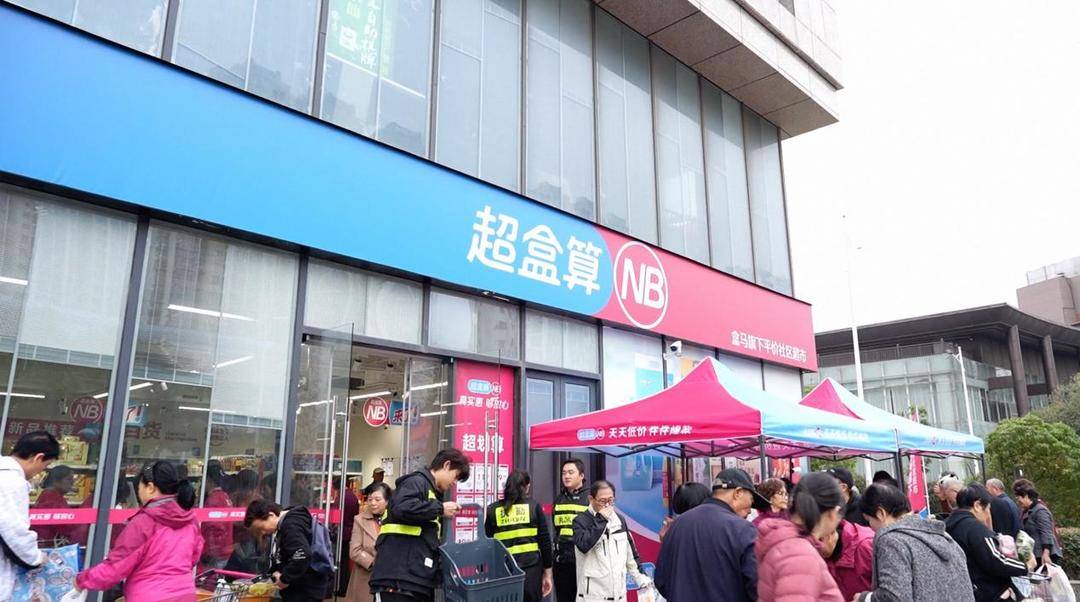
永辉超市前三季度净亏超7亿,完成调改门店222家
Xin Lang Cai Jing· 2025-10-31 03:17
Core Insights - Yonghui Supermarket reported a revenue of 42.434 billion yuan for the first three quarters, a year-on-year decline of 22.21%, and a net loss attributable to shareholders of approximately 710 million yuan, which is more than eight times the loss of 77.87 million yuan in the same period last year [1] - The decline in revenue is attributed to intense competition in the retail industry, changes in consumer habits, and a focus on optimizing store operations, which led to a decrease in both customer traffic and average transaction value [1] - The net profit decline is primarily due to the drop in revenue and gross margin, with the third quarter's gross margin affected by the company's strategy to optimize product structure and procurement during store renovations [1] Revenue and Profit Analysis - The company has closed 227 loss-making stores, which contributed to the revenue decline and increased net losses in the first half of the year [2] - As of September 30, the company had 450 operational stores, with 222 undergoing renovations, and has reported a recovery in same-store sales to positive growth after focusing on core renovated stores [1] Strategic Initiatives - Yonghui Supermarket has initiated a comprehensive restructuring based on the "Fat Donglai model," focusing on supply chain transformation, customer experience enhancement, and employee welfare [2] - The company announced a new positioning strategy "National Supermarket Quality Yonghui" and a "Product Centralization" strategy, aiming to launch a series of billion-level flagship products over the next three years [4] - The introduction of "Yonghui Custom" and the private label "Quality Yonghui" includes over 20 quality products across various categories, with 15 products generating over 100 million yuan in sales since their launch in October [4] Market Performance - As of October 31, Yonghui Supermarket's stock price increased by 0.43% to 4.66 yuan per share, with a market capitalization of 42.29 billion yuan [4]
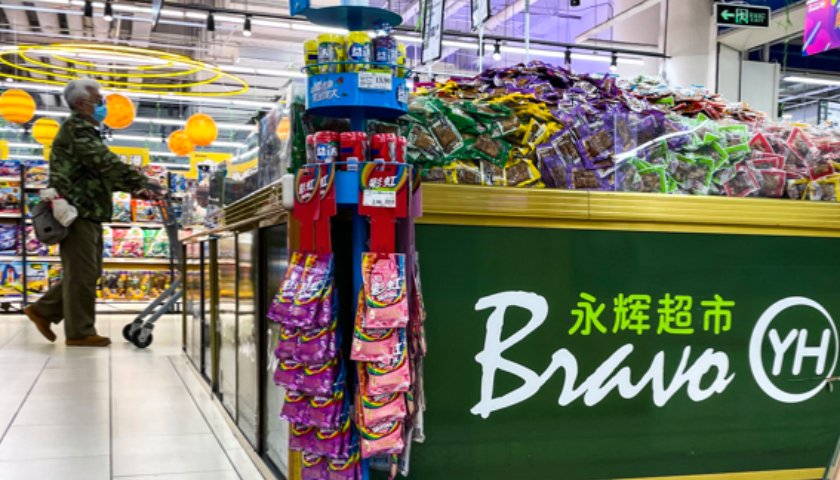
机构风向标 | 永辉超市(601933)2025年三季度已披露前十大机构持股比例合计下跌1.88个百分点
Xin Lang Cai Jing· 2025-10-31 02:29
Group 1 - YH Supermarket (601933.SH) reported its Q3 2025 results, with 27 institutional investors holding a total of 3.726 billion shares, representing 41.06% of the total share capital [1] - The top ten institutional investors collectively hold 40.58% of the shares, a decrease of 1.88 percentage points compared to the previous quarter [1] Group 2 - In the public fund sector, 12 funds increased their holdings, including Hua Bao Kang Consumer Mixed and Da Cheng Consumption Theme Mixed A, with a slight increase in the proportion of holdings [2] - One public fund, Da Cheng New Emerging Vitality Mixed A, reduced its holdings, reflecting a slight decrease in the proportion [2] - Four new public funds were disclosed this period, including Zhong Ou Jia Xuan Mixed A and Jia Shi Multi-Asset Bond A [2] - 190 public funds were not disclosed this period, including Southern CSI 500 ETF and Xing Quan Business Model Mixed (LOF) A [2] - One foreign fund, Hong Kong Central Clearing Limited, reduced its holdings, indicating a slight decrease in the proportion [2]
“对不起”!深圳一知名超市突发公告:即将停业!有人称昨晚还在买东西
Nan Fang Du Shi Bao· 2025-10-31 01:15
Core Viewpoint - Yonghui Supermarket is closing its Nanshan Raffles Plaza store due to poor business performance, with the closure effective from November 16, 2025. Customers can still use their shopping cards and membership points at other Yonghui locations until then [1]. Group 1: Store Closure and Performance - The Nanshan Raffles Plaza store will cease operations, and the closure is attributed to unsatisfactory business performance [1]. - The store has seen a decline in customer traffic, with reports indicating a relatively quiet shopping environment [5]. - Despite the closure, the store maintains a sufficient inventory and a clean shopping environment [6]. Group 2: Company Strategy and Financial Performance - Yonghui Supermarket has closed 227 stores in the first half of the year, with nearly 40% of its stores undergoing transformation [11]. - The company has been implementing a transformation strategy inspired by the "Pang Donglai model," aiming to recover from losses over the next 2 to 3 years [11][13]. - Financially, Yonghui reported a 20.73% year-on-year decline in revenue to 29.948 billion yuan, with a net loss of 241 million yuan in the first half of the year [15]. - As of June 30, 2024, Yonghui had 552 operational stores, having net reduced its store count by 223 compared to the end of 2024 [17].