Funds

Search documents
Allspring Closed-End Funds Declare Monthly Distributions
Prnewswire· 2025-10-31 12:31
Core Viewpoint - Allspring Income Opportunities Fund, Allspring Multi-Sector Income Fund, and Allspring Utilities and High Income Fund have announced their monthly distributions for October 2025, with specific amounts and changes noted for each fund [1][2]. Distribution Details - Allspring Income Opportunities Fund (EAD) will distribute $0.05357 per share monthly, unchanged from the prior distribution [2]. - Allspring Multi-Sector Income Fund (ERC) will distribute $0.07221 per share monthly, a decrease of $0.00002 from the previous distribution [2]. - Allspring Utilities and High Income Fund (ERH) will distribute $0.08325 per share monthly, an increase of $0.00034 from the prior distribution [2]. Important Dates - Declaration date for all funds is October 31, 2025 [2]. - Ex-dividend date and record date for all funds is November 13, 2025 [2]. - Payable date for all funds is December 1, 2025 [2]. Fund Objectives - Allspring Income Opportunities Fund aims for a high level of current income, with a secondary objective of capital appreciation [3]. - Allspring Multi-Sector Income Fund seeks a high level of current income while limiting exposure to domestic interest rate risk [3]. - Allspring Utilities and High Income Fund focuses on high current income and moderate capital growth, emphasizing tax-advantaged dividend income [4]. Distribution Plan - The funds operate under a managed distribution plan, providing monthly distributions at a minimum fixed annual rate of 8.00% for ERH and 8.75% for EAD and ERC, based on the average monthly net asset value (NAV) per share over the prior 12 months [2]. - Distributions may come from income, paid-in capital, or capital gains, and may not reflect the net return earned by the funds [2].


证监会、基金业协会重磅发布,公募重大改革落地
2 1 Shi Ji Jing Ji Bao Dao· 2025-10-31 12:28
Core Viewpoint - The China Securities Regulatory Commission (CSRC) has officially released a significant guideline for public fund reform, focusing on the performance benchmark for publicly offered securities investment funds, aiming to enhance the quality and transparency of the fund industry [1][4]. Group 1: Key Aspects of the Guideline - The guideline consists of 21 articles divided into six chapters, emphasizing the representation, constraint, evaluation, and management of performance benchmarks [2]. - Performance benchmarks must be representative and objective, ensuring that selected indices are reasonable and liquid, with clear responsibilities assigned to fund managers and custodians [2][4]. - The new regulations prohibit arbitrary adjustments to performance benchmarks due to short-term factors, requiring proper notification and adherence to procedures for any changes [2][4]. Group 2: Implementation and Transitional Arrangements - The CSRC has authorized the establishment of a benchmark element library by the fund industry association, categorizing benchmarks into two types to encourage standardized selection and usage [4]. - A one-year transition period is set for existing products that do not comply with the new guidelines, allowing fund managers to adjust benchmarks in line with legal documents and investment styles [4]. Group 3: Impact on Investors and Fund Management - The guideline aims to enhance investor experience by providing clear standards for evaluating funds and binding fund managers' investment behaviors, thus promoting a more transparent and professional fund industry [6][7]. - Fund managers are expected to align performance benchmarks with asset categories, investment strategies, and market segments, improving clarity and helping investors make informed decisions [6][8]. - The emphasis on performance benchmarks is anticipated to mitigate "style drift" in funds, ensuring that investment strategies remain consistent and predictable [7][8].
公募业绩比较基准指引、细则落地:强化基准作用 压实主体责任
2 1 Shi Ji Jing Ji Bao Dao· 2025-10-31 12:17
10月31日,中国证监会起草了《公开募集证券投资基金业绩比较基准指引(征求意见稿)》(以下简称 《指引》),并向社会公开征求意见。同时,基金业协会同步起草了《公开募集证券投资基金业绩比较 基准操作细则(征求意见稿)》,进一步明确业绩比较基准的选取展示、信息披露、风险控制、合规管 理等具体操作规范。 21世纪经济报道记者 黎雨辰 公募基金改革又一项重磅指引正式落地。 作为基金产品设计的核心要素,业绩比较基准贯穿基金投资运作全周期,是界定基金投资范围和风格的 重要指标,也是评估基金业绩的专业标尺。今年5月,证监会印发《推动公募基金高质量发展行动方 案》,对公募基金高质量发展提出系列改革任务,其中便特别强调,要强化业绩比较基准的约束作用, 并提到要制定公募基金业绩比较基准监管指引。 在多家业内机构看来,此次业绩比较基准指引及操作细则的出台,将有效规范基金管理人的投资行为, 加强公募基金行业服务居民财富管理需求的作用,提升投资者体验。 强化业绩基准作用 压实主体责任 据了解,此次《指引》共二十一条,分为总则、基准的规范、管理人的内部控制、基准的外部约束、监 督管理、附则等六章,主要内容如下: 一是突出业绩比较基准的表 ...
基金盈利了,卖还是留?一次性与分批赎回的关键抉择,收益差很多
Sou Hu Cai Jing· 2025-10-31 09:44
Core Insights - The article discusses the decision-making process for redeeming mutual funds, highlighting the differences between one-time and staggered redemptions, and how these choices can significantly impact returns [1][3]. Group 1: Understanding Regulations - The China Securities Regulatory Commission (CSRC) has set clear rules regarding redemption fees, which can greatly affect investor returns. The new regulations state that all redemption fees will go to the fund's assets, protecting long-term holders while maintaining penalties for short-term redemptions [3]. - A tiered fee structure has been established, where a 1.5% penalty applies for redemptions made within seven days, and fees may be waived for holdings over six months [3]. Group 2: Redemption Strategies - There are two main scenarios where one-time redemption is more advantageous: when immediate cash is needed or when a target return has been achieved, allowing investors to lock in profits [5]. - Staggered redemptions are recommended in volatile markets, as they can provide a balance between risk and reward. Data shows that investors using staggered redemptions can achieve an average return that is 12% higher than those who redeem all at once [6]. Group 3: Case Studies and Calculations - A comparison of redemption strategies using a hypothetical fund shows that staggered redemptions can yield significantly higher returns due to avoiding certain fees and capturing additional market gains [7][8]. - The example illustrates that staggered redemptions can result in a difference of 10,420 yuan in returns compared to a one-time redemption, emphasizing the financial benefits of this approach [8]. Group 4: Practical Guidelines - Investors are advised to follow a three-step process before redeeming funds: checking redemption fees and fund valuations, matching their situation to the appropriate redemption strategy, and avoiding common pitfalls such as opting for quick redemptions that incur additional fees [9].
Dividend Payers Up to 9.8% Offer Shelter as Investors Adjust to Fed Signals
Investing· 2025-10-31 09:27
Core Insights - The article provides a market analysis of three closed-end funds: John Hancock Preferred Income III, Nuveen Preferred Income Opportunities, and Cohen & Steers Limited Duration Preferred and Income [1] Group 1: Fund Performance - John Hancock Preferred Income III Closed Fund is highlighted for its performance metrics and investment strategy [1] - Nuveen Preferred Income Opportunities Closed Fund is analyzed for its yield and market positioning [1] - Cohen & Steers Limited Duration Preferred and Income Closed Fund is discussed in terms of its duration management and income generation capabilities [1] Group 2: Market Trends - The analysis reflects on the broader market trends affecting preferred income funds, including interest rate movements and investor sentiment [1] - The article notes the competitive landscape among these funds and their respective strategies to attract investors [1]


现在,我们怎么买指数基金赚稳稳的钱?
点拾投资· 2025-10-31 07:32
Core Viewpoint - The article emphasizes the importance of index investing for ordinary investors, particularly in the context of the Chinese A-share market, which is more volatile compared to the S&P 500. It suggests that a well-structured index fund strategy can help mitigate risks and achieve stable returns [3][4]. ETF Product Introduction - Warren Buffett recommends investing in the S&P 500 index fund for its cost-effectiveness and simplicity, cautioning against trying to time the market or select specific stocks [3]. - The article highlights the challenges faced by domestic investors in finding a suitable broad-based index similar to the S&P 500 due to the volatility of the A-share market [3]. Investment Strategy - The company has developed an all-weather index fund portfolio that adapts to the domestic market, allowing for easy one-click investment, currently available on JD Finance [4]. - The portfolio aims to achieve absolute returns through global asset allocation, focusing on high-quality assets while diversifying to smooth out volatility [6]. Portfolio Composition - The portfolio includes a mix of bonds, stocks, and currencies, with a focus on maintaining a controlled risk profile [7][9]. - The current holdings feature a significant allocation to bond assets, complemented by equity and commodity investments, ensuring diversification across different asset classes [14][16]. Performance Metrics - The portfolio has shown stable performance despite market fluctuations, achieving an absolute return since inception, with a recent one-month increase of 1.48% and a year-to-date increase of 6.79% [11][12]. - The strategy employs a quantitative approach to asset selection, aiming for risk parity across different asset classes, which helps in maintaining stability [10]. Future Outlook - The company remains optimistic about dividend-paying stocks and has allocated funds to both value and growth indices, including technology-focused investments [16]. - Gold is included in the portfolio as a hedge against inflation, reflecting its low correlation with other asset classes and its safe-haven characteristics [17]. Investment Accessibility - The portfolio is exclusively available on JD Finance, allowing investors to participate with a minimum investment of 200 yuan, and the company has committed to investing 2 million yuan in the fund within the year [19][20].

“基金主理人”拒绝“黑卡”,试点六年,基金投顾的痛点和机遇在哪里?
Xin Lang Cai Jing· 2025-10-31 00:08
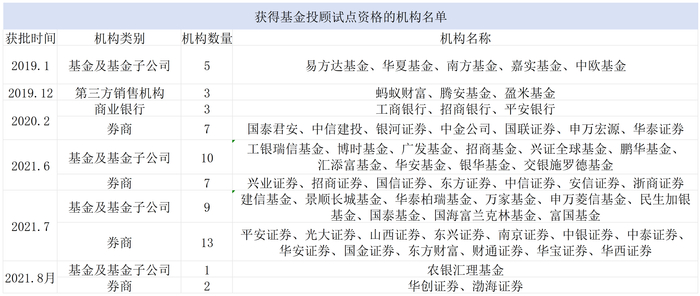
Core Viewpoint - The rise of "fund managers" among retail investors is challenging traditional fund advisory services, as these investors prefer to make their own investment decisions rather than relying on professional advice [1][2][3]. Group 1: Fund Manager Phenomenon - Retail investors, referred to as "fund managers," are increasingly taking control of their investments, often sharing their experiences and strategies online [1][2]. - A significant number of these investors have substantial assets, with some exceeding 1 million yuan in their fund accounts, allowing them access to professional advisory services [2][3]. - Many "fund managers" express skepticism towards fund advisors, questioning their ability to guarantee returns and preferring to manage their portfolios independently [3][4]. Group 2: Fund Advisory Services Development - As of August, the net asset value of public funds in China reached a record high of 36.25 trillion yuan, indicating a growing market for fund advisory services [2]. - The fund advisory business has been in a pilot phase since 2019, with the number of institutions involved increasing from 5 to 60 over six years, including various types of financial institutions [6][8]. - Despite the growth, challenges remain, such as underperformance of advisory portfolios during market downturns, leading to a poor experience for investors [10]. Group 3: Performance and Client Retention - Various financial institutions report differing scales of fund advisory business, with some like Huatai Securities showing a 16.36% growth in advisory assets year-over-year [8]. - Client retention rates vary, with some institutions reporting over 75% of clients reinvesting in advisory services, indicating a level of satisfaction among certain investor segments [7][9]. - The average duration of client engagement with advisory services is around 800 days, suggesting a commitment to long-term investment strategies [7][9]. Group 4: Challenges and Opportunities - The fund advisory sector faces challenges such as a lack of diverse investment products and a need for a shift from a "sell-side" mentality to a more client-focused approach [10][13]. - There is a call for fee reforms in the advisory sector to align costs with performance, potentially improving investor satisfaction and trust in advisory services [12][16]. - The integration of AI technologies in advisory services is being explored, with early results showing potential for enhancing efficiency and client engagement [15][16].
公募基金三季报披露
Mei Ri Shang Bao· 2025-10-30 23:44
Core Viewpoint - The recent third-quarter reports of public funds reveal a significant growth in the scale of public funds, driven primarily by the performance of "fixed income+" products and ETFs, amidst a backdrop of declining deposit rates and a strong stock market [2][4]. Fund Performance and Growth - By the end of Q3, the total scale of public funds reached 36.44 trillion yuan, an increase of 2.4 trillion yuan from the end of Q2, marking a new high [2]. - ETFs and "fixed income+" products contributed significantly to this growth, with ETFs increasing by 1.25 trillion yuan and "fixed income+" products by 522.38 billion yuan, together accounting for 73% of the scale increment [2]. - The average increase for "fixed income+" products in 2023 is approximately 4.8%, with top performers like Huazhong Zhiliang and Huashang Shuangyi achieving gains of 47.77% and 44.4%, respectively [4]. Market Dynamics - The growth in ETF scale is attributed to the upward movement of the A-share market and the influx of funds, as investors shifted their capital from bond funds, money market funds, and deposits to ETFs [2]. - "Fixed income+" products have also seen substantial growth, with a total scale of 2.47 trillion yuan by the end of Q3, reflecting a 522.38 billion yuan increase from Q2 [2][3]. Risk and Return Considerations - While many "fixed income+" products have performed well, some have experienced significant drawdowns, with certain funds like Huatai Baoxing Keren showing a drawdown exceeding 8% [5]. - The market outlook suggests a continued focus on balancing risk and return, with expectations of a weak recovery in the economy and a favorable environment for the bond market [6][7].
东方红资管邓朋或加盟华富基金任副总,强化渠道与权益业务
Hua Xia Shi Bao· 2025-10-30 12:40
Group 1 - The core point of the article is the significant personnel change at Huafu Fund, with the appointment of Deng Peng from Dongfanghong Asset Management as the new deputy general manager, aimed at addressing the company's shortcomings in equity products and optimizing channel layout [2][3]. - Huafu Fund, established in 2004, is one of the early public funds in the industry, with a typical brokerage-based shareholding structure, where Huazheng Securities holds 49% [3][4]. - Despite reaching a peak of 112.48 billion yuan at the end of 2023, Huafu Fund's net assets have fluctuated, standing at 103.05 billion yuan by the end of Q3 2025, significantly lagging behind competitors like Bank of China Fund and Huatai-PineBridge Fund, which have assets of 699.07 billion yuan and 779.66 billion yuan respectively [4][5]. Group 2 - Huafu Fund faces a serious imbalance in its product structure, with 82.4% of its total scale of 103.37 billion yuan concentrated in bond and money market funds, indicating a heavy reliance on fixed-income products [5][6]. - The fund's equity products, including stock and mixed funds, account for less than 18% of its total scale, highlighting a lack of active management capabilities [6][7]. - The performance of Huafu Fund's larger products has been underwhelming, with the top product yielding only 2.96% over the past year, contrasting sharply with smaller products that have shown strong performance, such as a fund with only 0.01 billion yuan in scale achieving a 70.18% return [7][8].

债市破局在即:央行国债买卖将恢复 机构抢券已拉开序幕
2 1 Shi Ji Jing Ji Bao Dao· 2025-10-30 12:31
Core Viewpoint - The bond market is experiencing a bullish trend following the announcement by the People's Bank of China (PBOC) to resume government bond trading operations, which is seen as a pivotal moment for the market [1][4]. Market Reaction - After the PBOC's announcement on October 27, bond yields fell across the board, with institutions actively purchasing bonds, particularly from funds and brokerages, while banks and insurance companies sold [3][7]. - By October 30, the market continued to show a "bullish" trend, although the rate of yield decline had narrowed [3][7]. Policy Background - The PBOC's resumption of bond trading is part of its open market operations aimed at adjusting market liquidity and enhancing the financial function of government bonds [4][5]. - The previous suspension of these operations was due to an imbalance in bond market supply and demand and accumulated market risks [5][6]. Future Expectations - The resumption of bond trading is expected to help coordinate with fiscal policy and mitigate potential market supply shocks from increased local government bond issuance in the fourth quarter and early next year [6][12]. - Analysts anticipate that the PBOC will optimize its bond trading operations to minimize market impact, focusing on short-term bonds while maintaining a stable liquidity environment [10][12]. Market Dynamics - The current market sentiment is cautious, with some institutions adopting a wait-and-see approach due to the unpredictable nature of the market [11][12]. - The focus is shifting towards practical issues such as the timing and method of the PBOC's bond purchases, with expectations of a gradual approach rather than aggressive buying [9][10].