
文化旅游

Search documents
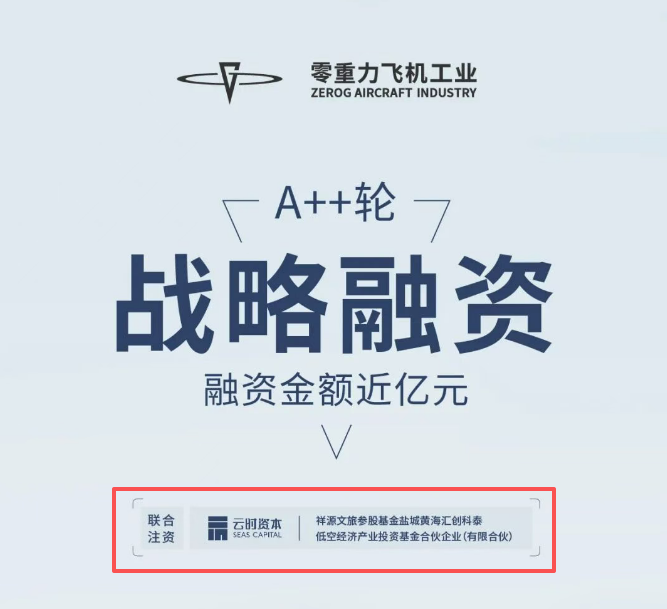
祥源文旅入局 零重力完成A++轮融资
Xin Lang Cai Jing· 2025-09-22 08:13
Core Viewpoint - Zero Gravity Aircraft Industry has successfully completed a new round of financing, marking its sixth round since establishment, with a focus on accelerating the development of low-altitude economy applications through the introduction of cultural tourism capital [1][3][5]. Financing Details - The recent A++ round strategic financing raised nearly 100 million yuan, with investments from Yunshi Capital and Xiangyuan Cultural Tourism Fund [1][4]. - This financing is notable as it is the first time cultural tourism capital has been introduced into Zero Gravity's funding structure [5][9]. Company Overview - Founded in March 2021 and headquartered in Hefei High-tech Zone, Zero Gravity focuses on the development of new energy aircraft, including electric fixed-wing aircraft and electric vertical take-off and landing (eVTOL) vehicles [3][4]. - The company is recognized as the first domestic eVTOL enterprise to develop three generations of aircraft models concurrently [3]. Product Development and Achievements - Zero Gravity has made significant progress in technology research and commercialization, with core products like the eCTOL RX1E-A and RX1E-S electric fixed-wing aircraft set for delivery this year [3][4]. - The multi-rotor eVTOL ZG-ONE has had its type certificate application accepted by the Civil Aviation Administration of China, and the tilt-rotor eVTOL ZG-T6 is preparing for test flights [3][4]. Future Plans - The financing will accelerate the production and delivery of the RX1E series, advance the airworthiness certification process for ZG-ONE, and promote the commercialization of green aviation flight camps [4][9]. - The partnership with Xiangyuan Cultural Tourism is expected to enhance Zero Gravity's strategic focus on integrating low-altitude services with cultural tourism, providing rich application scenarios and commercial orders [9].


四川推进社保卡“一卡通”建设,到2027年实现各类民生服务事项“应接尽接” 看病出行发资金一卡搞定
Si Chuan Ri Bao· 2025-09-22 06:46
Core Viewpoint - The Sichuan Provincial Government aims to accelerate the construction of a "one card" social security card system, facilitating its application across various sectors including public services, healthcare, transportation, cultural tourism, and financial disbursement by 2027 [1][2][4] Public Services - The social security card will serve as an effective identity credential for citizens to access public and government services, allowing for functions such as queuing and business processing at service halls [2] - The electronic social security card will enable users to log into the "Sichuan Digital Government Platform" for comprehensive access to all government services [2] Human Resources and Social Security - Employment subsidies and social security benefits will be integrated into the social security card, supporting functions related to work injury medical settlements and various employment services [2] Healthcare - The integration of the social security card with electronic health cards will allow for medical services such as appointment scheduling, hospitalization registration, and medication retrieval [2] Transportation - The social security card will facilitate public transport access through card swiping and QR code scanning, with potential discounts for users in certain areas [3] Cultural Tourism - The card will be used for entry verification at tourist attractions and cultural venues, serving as an identity credential for accessing museums and libraries [3] Financial Disbursement - Financial aid, social insurance benefits, and other subsidies will be prioritized for distribution through the social security card, while also allowing for traditional bank card channels [3] Other Services - The social security card will support various daily services such as utility payments, elder care services, and shopping, while encouraging insurance companies to utilize the card for claims [3] Implementation Strategy - The "one card" system will be incorporated into the digital government construction plan, with a focus on unified standards and enhanced cross-regional service capabilities [4]
2025西湖少年越野赛开赛
Hang Zhou Ri Bao· 2025-09-22 02:11
"比赛融合了西湖自然景观与人文底蕴,在越野跑中嵌入文化体验,兼具挑战性与趣味性。"杭州西 湖风景名胜区文化旅游创意发展有限公司相关负责人表示,"希望通过体育赛事与文化传承相结合的方 式,打造专属于青少年的户外运动品牌,推动全民健身与文旅融合发展。" 此次越野赛设置MINI组、儿童组和少年组3个组别,让不同年龄段的少儿解锁不一样的赛事体验。 总长约5.5公里的越野赛道,涵盖铺装路、土路、石阶、山野小径等多种地形,设有西湖非遗体验、诗 词互动游戏、与COSER(角色扮演者)"东坡学士"对诗等趣味体验点,以及医疗点、补给站等安全保 障点,让选手尽情奔跑感受自然、人文。"不仅锻炼了身体,还能让孩子在奔跑中感受西湖文化和东坡 精神,非常有意义。"一位家长表示。 此次"东坡学士"2025西湖少年越野赛,既是一场独属于少年儿童的体育赛事,更是一次弘扬拼搏精 神、传播千年文脉的新实践,精彩呈现"生态+体育+人文"的西湖文旅新场景。接下来,西湖景区文旅 将引入更多"有竞技有文化有体验"的赛事,创新打造"文旅体+"新业态新模式,培育文旅体消费增长 点。 近日,"东坡学士"2025西湖少年越野赛在杭州植物园燃情开赛,来自杭州、上海 ...

推动黄河流域高质量发展
Jing Ji Ri Bao· 2025-09-20 22:16
Group 1: Ecological Protection and High-Quality Development - The Yellow River Basin is a crucial ecological security barrier and an important area for population activities and economic development in China [1] - Since the implementation of the ecological protection and high-quality development strategy, the ecological environment quality in the Yellow River Basin has steadily improved, with notable highlights in energy and food security [1][2] - The 20th National Congress proposed optimizing the ecological protection and high-quality development mechanism in the Yellow River Basin [1] Group 2: Agricultural Development - The Yellow River Basin contributes significantly to national food security, accounting for 35% of the country's grain, 32% of meat, 40% of poultry eggs, and 49% of milk [2] - Grain production capacity in the Yellow River Basin has steadily increased, with grain output rising from 155 million tons in 2000 to 248 million tons in 2024 [2] - The area of high-standard farmland in the basin reached 45.07% of total arable land by 2024, with effective irrigation water utilization improving to 0.58 [2] Group 3: Agricultural Product Advantages - The construction of specialized agricultural product advantage zones has shown significant results, forming diversified agricultural product clusters along the Yellow River [3] - In 2023, Henan's high-gluten wheat area reached 15 million mu, accounting for nearly 30% of the national total [3] - Shanxi and Inner Mongolia's coarse grain industry cluster produced 6.8 million tons in 2023, representing 43% of the national total [3] Group 4: Green Agricultural Development - Efforts to reduce agricultural pollution and promote green fertilizers have led to a 90% coverage of soil testing and formula fertilization technology in Shandong [4] - The area of ecological agriculture demonstration zones exceeded 50, with carbon trading pilot areas covering over 1 million mu, achieving an annual carbon fixation of 2 million tons [4] Group 5: Industrial Development and Energy Transition - The Yellow River Basin is rich in natural resources, contributing approximately 80% of the country's raw coal output and one-third of the national oil and gas reserves [7][8] - The region has a high concentration of resource-based cities, with traditional industries like steel and chemical production dominating, leading to environmental sustainability challenges [8][9] - The transition to a low-carbon economy is underway, with significant investments in renewable energy, including a cumulative installed capacity of over 135 million kilowatts in Inner Mongolia by 2024 [10] Group 6: Ecological Restoration and Biodiversity - The water quality in the Yellow River Basin has improved significantly, with the main stream achieving Class II water quality for three consecutive years from 2022 to 2024 [13] - Water and soil erosion has been effectively controlled, with the area of soil erosion reduced from 450,000 square kilometers to 245,800 square kilometers [14] - Biodiversity is gradually recovering, with the number of bird species in the Yellow River Delta increasing from 187 to 373 [15] Group 7: Cultural and Tourism Development - The Yellow River Basin is rich in cultural heritage, with 15 world cultural heritage sites and a significant number of intangible cultural heritage projects [18][20] - The region is developing a cultural tourism belt, promoting various themed tourism routes and enhancing regional collaboration [22] - Innovative cultural IPs are being developed to enhance the domestic and international influence of Yellow River culture [23]
金融业解决服务消费堵点应积极主动作为
Guo Ji Jin Rong Bao· 2025-09-20 02:15
Core Viewpoint - The recent joint issuance of the "Several Policy Measures to Expand Service Consumption" by nine government departments aims to address the bottlenecks in service consumption through a coordinated multi-departmental approach, emphasizing the importance of financial support and collaboration among various sectors [1] Group 1: Policy Measures Overview - The policy measures include nineteen specific tasks across five areas: cultivating service consumption promotion platforms, enriching high-quality service supply, stimulating new service consumption growth, enhancing financial support, and improving statistical monitoring systems [1] - The financial sector is highlighted as a key participant in resolving service consumption bottlenecks, with a call for proactive engagement and integration of monetary, credit, and capital market policies [1] Group 2: Financial Sector Initiatives - Financial institutions are encouraged to expand high-quality financial service offerings to meet the unmet financial demands of the service consumption sector and residents, particularly in areas like elderly care, childcare, and cultural tourism [2] - The central bank's establishment of a 500 billion yuan service consumption and elderly re-loan fund is emphasized as a tool to incentivize financial institutions to increase support for sectors such as accommodation and entertainment [2] Group 3: Consumer Credit Support - There is a push to enhance support for consumer credit to stimulate resident consumption potential, with initiatives like tax refunds and consumption vouchers being highlighted [3] - The number of tax refund stores is projected to reach 10,000 by mid-2025, tripling from the end of 2024, with a 98% increase in tax refund sales [3] Group 4: Financial Product Optimization - Financial institutions are urged to continuously optimize financial products and services to provide diverse, high-quality consumption options, focusing on key consumption areas such as food, housing, and entertainment [4] - There is a call for increased support for various types of loans, including first loans, renewal loans, and credit loans, to enhance the financial backing for the consumption sector [4] Group 5: Risk Management and Compliance - Financial institutions are advised to improve credit structure and risk management to ensure precise financial services, avoiding extremes in credit work that could overlook risks [4] - The importance of regulatory measures to enhance compliance and prevent financial bottlenecks in service consumption is emphasized, promoting a virtuous cycle of demand upgrading, supply optimization, and consumption expansion [4]
陕文投集团多款“文旅+AI”创新研发应用亮相华为全联接大会
Huan Qiu Wang Zi Xun· 2025-09-19 23:36
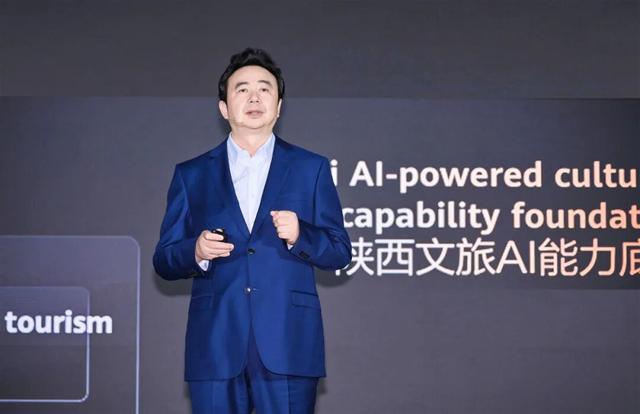
Core Insights - The event "Huawei Connect 2025" was held in Shanghai, where the Shaanxi Cultural Investment Group and Huawei announced the launch of several "Cultural Tourism + AI" innovative applications and the establishment of the first national "Cultural Tourism Artificial Intelligence Innovation Center Ecological Alliance" to promote the deep integration of cultural tourism and AI [1][3]. Group 1 - The Shaanxi Cultural Investment Group and Huawei have developed a high-quality dataset specific to Shaanxi's cultural tourism and a national-level trusted data space, training the "Boguang Cultural Tourism" large model to create an intelligent brain for the cultural tourism industry [3]. - Since September of the previous year, the two companies have closely collaborated to implement the "Artificial Intelligence + Cultural Tourism" strategy, establishing the first national "Cultural Tourism Artificial Intelligence Joint Innovation Center" [3][4]. - The focus is on building a comprehensive "Cultural Tourism + AI" technology innovation system, including a market-oriented, sustainable operation mechanism for research, incubation, application, and operation [3][4]. Group 2 - The cultural tourism industry is currently experiencing significant growth potential and market opportunities, entering a golden window period [4]. - The collaboration aims to create a national "Cultural Tourism + AI" industry hub, with five key areas of focus: building a technology innovation system, establishing application and ecological platforms, standardizing and productizing business model solutions, creating a talent training base, and implementing a cultural export strategy [4]. - The alliance includes multiple innovative entities such as Huawei Cloud, Xi'an Jiaotong University, China Mobile, and others, aiming for deeper cooperation in technology research and development, application promotion, talent cultivation, and cultural export [4].
城市24小时 | 增速回正,“外贸第一城”继续守位
Mei Ri Jing Ji Xin Wen· 2025-09-19 16:22
Core Insights - Shenzhen has regained its position as the "foreign trade capital" of China, surpassing Shanghai for the first time in ten years, with a total import and export volume of 2.96 trillion yuan in the first eight months of the year, reflecting a year-on-year growth of 0.3% [1][2][6] - The export value reached 1.79 trillion yuan, while imports totaled 1.17 trillion yuan, showing a significant increase of 9% [1] - The trade structure indicates that general trade accounted for 54.6% of Shenzhen's total trade, with a notable growth in bonded logistics and processing trade [1][9] Trade Partners and Growth - Shenzhen's trade with its top ten partners amounted to 2.31 trillion yuan, marking a growth of 2.8% and increasing its share of total trade to 78.1% [1] - Significant growth was observed in trade with Hong Kong (8.1%), Taiwan (20.8%), and Japan (14.8%) [1] Trade Composition - Private enterprises played a crucial role in Shenzhen's foreign trade, accounting for 69.6% of the total import and export value, with a total of 2.06 trillion yuan [9] - Foreign-invested enterprises also showed robust performance, with imports and exports reaching 788 billion yuan, a year-on-year increase of 11.6% [9] Product Categories - Mechanical and electrical products remain the backbone of Shenzhen's exports, totaling 1.35 trillion yuan, which is 75% of the total export value [9] - Notable growth was seen in the export of integrated circuits (40.2%) and lithium batteries (35.9%) [9] Import Dynamics - The import of mechanical and electrical products reached 949.16 billion yuan, growing by 12.5% and constituting 81.4% of total imports [9] - The import of integrated circuits alone was 519.68 billion yuan, reflecting an 18.8% increase [9] Comparative Analysis - Both Shenzhen and Shanghai have shown resilience in their foreign trade, with Shanghai's imports and exports growing by 4.5% in the same period [10] - The competition for the title of "foreign trade capital" remains uncertain as both cities adapt to changing external environments [10]

双节同欢,陈香有礼!来丽宫陈皮古道欢度国庆中秋嘉年华
Nan Fang Nong Cun Bao· 2025-09-19 14:33
Group 1 - The article highlights the festive atmosphere of the National Day and Mid-Autumn Festival, emphasizing the joy and celebration associated with these holidays [4][12][91] - It introduces the Chenpi Ancient Road as a prime destination for experiencing traditional culture and family bonding during the holidays [14][15][93] - Various immersive activities are offered, including handmade Chenpi production and themed installations, allowing visitors to engage with the cultural heritage [10][11][9] Group 2 - A series of special events are scheduled from October 1 to 6, including a non-heritage food fair featuring traditional crafts and local delicacies [30][31][36] - The "Chenpi+" ice cream event offers unique flavors such as Chenpi matcha and Chenpi strawberry, appealing to diverse taste preferences [26][28] - The article mentions a children's talent competition, showcasing various performances that highlight local artistic talents [17][20][22] Group 3 - The article promotes a Chenpi cultural exploration package, which includes visits to a cultural museum and hands-on activities like DIY projects [52][53][56] - A shopping festival is also part of the celebrations, encouraging visitors to purchase local products and enjoy discounts [76][45] - The overall experience aims to create lasting memories for families and individuals, enhancing the festive spirit of the holidays [16][93][91]

宁夏推出97项“双节”文旅活动 发放500万元消费券邀客畅游
Zhong Guo Xin Wen Wang· 2025-09-19 12:28
Core Viewpoint - Ningxia's cultural and tourism department is launching 97 themed activities with a budget of 21.5 million yuan to enhance local tourism experiences during the upcoming Mid-Autumn and National Day holidays [1][2]. Group 1: Activities and Funding - The initiative includes 8 major themes covering various tourism sectors such as desert exploration, cultural heritage, and rural tourism, aimed at meeting diverse visitor needs [1]. - A total of 2.15 million yuan is allocated for optimizing tourism consumption scenarios and improving services, with 500,000 yuan distributed as consumer vouchers to citizens and tourists [1]. Group 2: Integration and Brand Development - Ningxia is focusing on deepening the integration of culture and tourism through three main travel brands: "Travel with Performances," "Travel for Culinary Experiences," and "Travel with Sports Events" [1]. - Upcoming events include music festivals, star concerts, and desert marathons, which are expected to further activate tourism dynamics in the region [1]. Group 3: Consumer Incentives - The "Enjoy Ningxia in Autumn" consumer vouchers are a key highlight, directly subsidizing tourism spending across various sectors such as attractions, dining, and performances [1][2].
国庆去哪里?一场文旅品牌更新与供给之战即将打响
2 1 Shi Ji Jing Ji Bao Dao· 2025-09-19 12:14
(原标题:国庆去哪里?一场文旅品牌更新与供给之战即将打响) 南方财经记者吴佳霖 广州报道 最终,要实现的效果是: 喊得出口号,做得出成绩,能吸引游客,可联动产业。 近期,重庆、四川、海南等多地已更新或正在征集新的文旅品牌slogan,这意味着新一轮的文旅竞争拉 开大幕。 2025年国庆长假临近,你会因为一句文旅slogan而去旅游吗?比如"这么近那么美,周末到河北""爽爽贵 阳""知音湖北,遇见无处不在"等。 一个文旅品牌slogan的推出,其实是给出了消费者一句承诺:来到这里,你会拥有这样的体验。而如何 将这份抽象的承诺转化为具象的体验,进而激发文旅消费的增量,形成"一诺千金"的效果,考验的不仅 是文旅部门,更是一场涉及整个城市(区域)各个环节的联动。 传承与发展 2025年4月,拥有3700万粉丝的YouTube顶流网红"甲亢哥"(IShowSpeed)来到重庆,这里有轻轨穿楼 的"奇幻感",有麻辣火锅散发的"烟火味",也有重庆人民的随和亲切,以及山水相融的独特地域美学, 通过视频,甲亢哥向世界呈现着一个赛博朋克的魔幻之都、"8D"的重庆城。 而在那一个月内,重庆市文旅宣传品牌slogan的评选进入白热化 ...