
奢侈品零售

Search documents
第八届进博会首批279件展品从德国飞抵上海
Xin Hua Cai Jing· 2025-09-26 14:21
Core Viewpoint - The eighth China International Import Expo (CIIE) is set to take place from November 5 to 10 in Shanghai, with over 3,200 enterprises from more than 110 countries and regions confirmed to participate, covering an exhibition area of over 360,000 square meters [1] Group 1: Event Details - The first batch of exhibits for the CIIE arrived at Shanghai Pudong International Airport from Frankfurt, Germany, on September 26, consisting of 279 items including clothing, bags, and equestrian products, with several being global or regional debuts [1] - The exhibitor, Maybach Luxury Goods Asia Pacific Co., expanded its booth size from 36 square meters last year to 300 square meters this year, doubling the number of exhibits compared to the previous year [1] Group 2: Customs and Logistics - Shanghai Pudong International Airport Customs has established dedicated service windows and green channels for the CIIE, implementing convenient customs clearance measures such as appointment customs clearance and immediate inspection upon arrival [1] - The customs authority anticipates that exhibits will arrive in Shanghai through various transportation methods, including sea, air, and rail, and will further optimize customs supervision services to support global enterprises in accessing the Chinese market [1]
SKP“全球店王”争夺战
Hua Er Jie Jian Wen· 2025-09-23 10:07
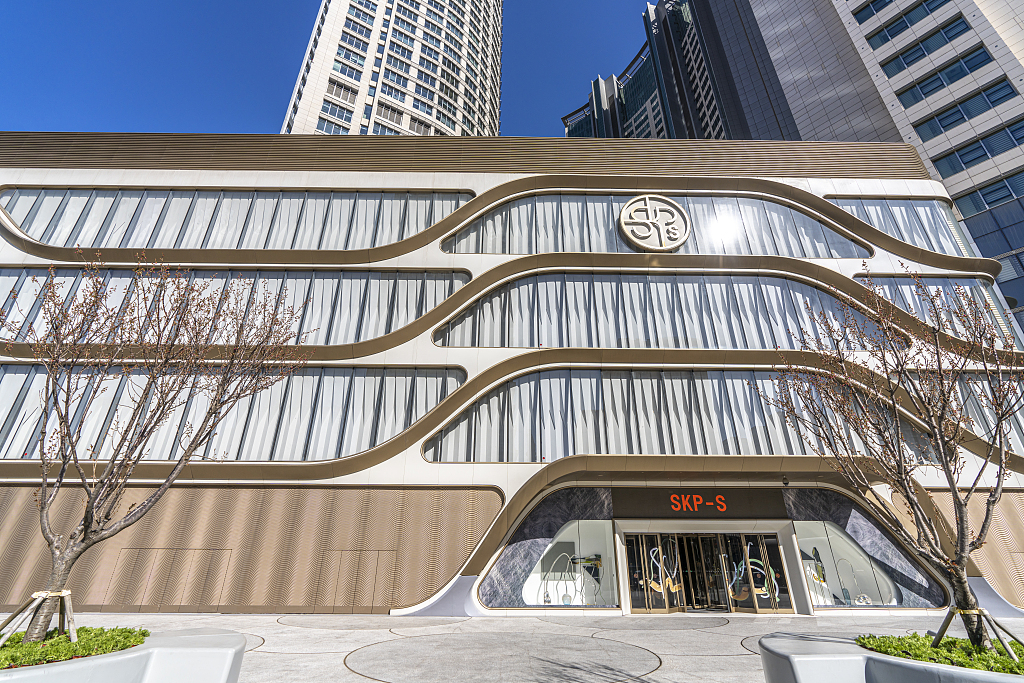
作者 | 王小娟 周智宇 编辑 | 张晓玲 过去十年,全球奢侈品商场零售额的王冠,属于中国。而王冠上的明珠,是北京SKP。它曾多次蝉联 "全球店王"的称号,年销售额超过200亿。 然而在2024年,南京德基摘走了"全球店王"桂冠。如今,借着一家冉冉升起的中国新品牌——老铺黄金,SKP誓要夺回失去的宝座。 最近,老铺黄金在北京SKP一层的独立门店正式开业,这是它在北京SKP的第三家店铺,类似于Hermès、CHANEL,打破了国际奢侈品牌长期垄 断一楼黄金位置的传统。 有投资机构人士告诉华尔街见闻,老铺黄金去年在SKP的销售额约为20亿,今年加上新店,估计能达到30-40亿,这将成为SKP争夺店王的关键选 项。 北京SKP这家知名高奢商场,正试图通过重押老铺黄金来重返"店王"之位。不过,"店王"之争不仅是销售额,也有了新的内涵,它不再是签下更 多国际大牌的竞赛、高奢商场招商的比拼,而是对中国消费者心理变迁的深刻洞察。 全球奢侈品市场正在加速进入一个新纪元。老铺黄金的出现,与其说是SKP的解药,不如说是递给所有高端商场的一张新考卷,而真正的考试, 才刚刚开始。 失落王座 在过去的很多年间,坐落在北京大望路的SKP ...

国际金融市场早知道:9月23日
Xin Hua Cai Jing· 2025-09-23 05:29
【资讯导读】 ·美联储官员发言一览: 圣路易斯联储总裁穆萨莱姆强调,目前利率水平已处于"略微紧缩与中性之间",未来进一步降息的空间 有限。 ·H-1B签证费暴涨引担忧美科技行业面临"地震" ·美媒:"经济停滞感"笼罩美国家庭 ·美国地方联储总裁认为进一步降息空间有限 ·法国在联合国宣布承认巴勒斯坦国 ·韩国总统:美方投资要求或引发韩国经济陷入危机 【市场资讯】 ·美国总统特朗普日前签署公告,将企业为H-1B签证申请人支付的费用从数千美元提高至10万美元,称 此举旨在确保美国引进的是高技能、无法被美国人替代的人才。签证费突然暴涨引发混乱,许多H-1B 签证持有者被迫取消出行计划,一些企业向员工发送紧急通知,建议他们在新政生效前返美并暂勿离 境。有分析人士指出,特朗普政府此举将对美国科技行业造成不小冲击。 ·美国《华盛顿邮报》21日刊文说,高昂的借贷成本、不断减少的就业机会以及日益加剧的经济和政治 不确定性,令"经济停滞感"笼罩许多美国家庭。 亚特兰大联储总裁博斯蒂克表示,他目前不支持进一步降息,因为"通胀已长时间维持在过高水平"。 美联储理事米兰表示,除非情况有变,否则将继续力促降息。 ·美国英伟达公司首席执行 ...
活力中国调研行丨从“投资中国”到“扎根中国”,在这里感受外资企业坚定信心
Xin Hua Wang· 2025-09-19 09:14
Core Insights - Foreign companies are increasingly committed to the Chinese market, transitioning from merely investing in China to establishing a deeper presence and integrating with local opportunities [1][5] - The Shanghai Lego Resort, the first of its kind in China, exemplifies the rapid development supported by the local government, highlighting the favorable business environment [1][3] - Numerous foreign investment projects have been launched in Shanghai this year, including Toyota's electric vehicle and battery R&D facility and Dassault Systèmes' first open innovation lab in China [3][4] Group 1: Foreign Investment Projects - The Shanghai Lego Resort opened in just 18 months, showcasing the efficiency and support from the local government [1][3] - Toyota is establishing a wholly-owned Lexus electric vehicle and battery R&D company in Shanghai, indicating strong foreign investment in the automotive sector [3] - Dassault Systèmes has set up its first open innovation lab in China, focusing on advanced manufacturing, new materials, and life sciences, aiming to empower local startups [3][4] Group 2: Business Growth and Opportunities - Dassault Systèmes has experienced over 22 times growth in its business in China over the past 20 years, with double-digit growth expected in the first half of 2025 [3][4] - The establishment of joint offices has enhanced legal service capabilities for Chinese companies expanding internationally, reflecting the evolving service trade landscape [4] - From January to July this year, Shanghai saw the establishment of 3,624 new foreign enterprises, a 3.1% increase year-on-year, with nearly 80,000 foreign companies currently operating in the city [4]

Gucci领跑闭店潮,奢侈品集体退守一线市场
3 6 Ke· 2025-09-18 01:10
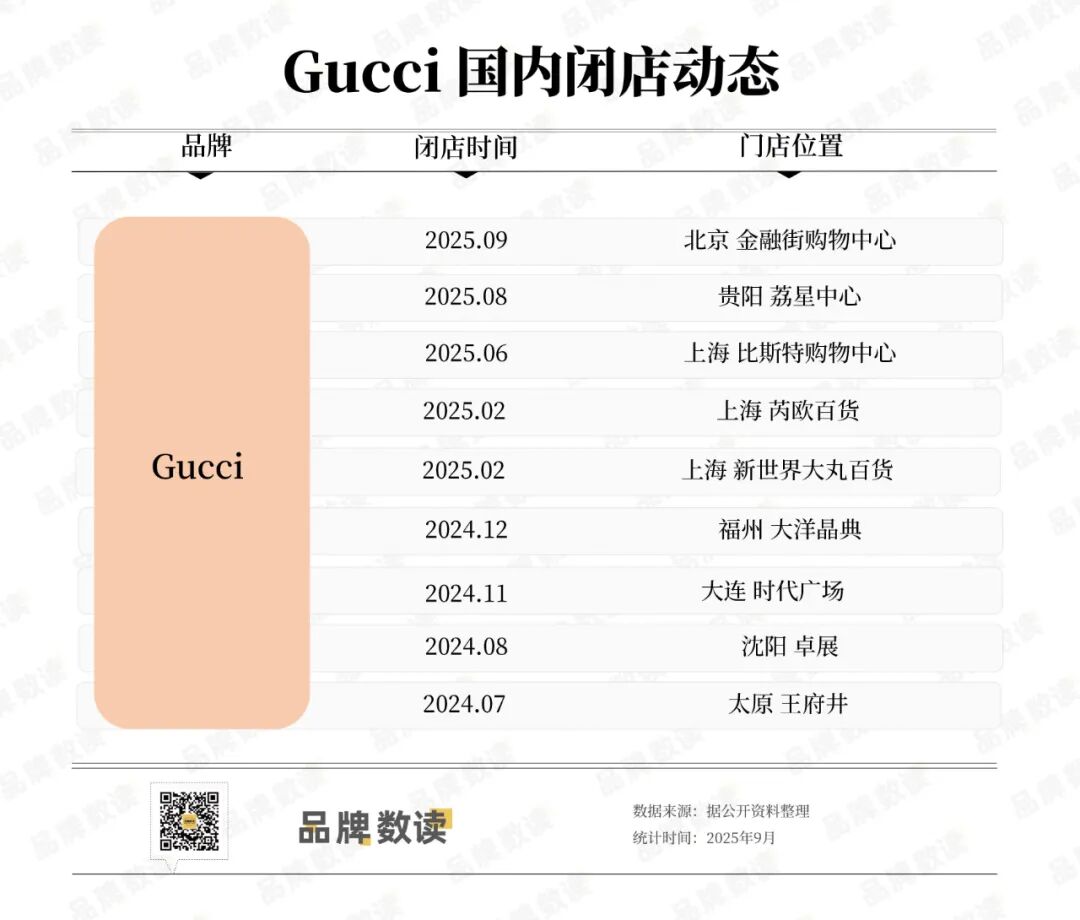
Core Insights - The new CEO of Kering, Luca de Meo, is prioritizing the resolution of issues surrounding Gucci, particularly following the imminent departure of Gucci's CEO, Stefano Cantino, after less than a year in office [1][2] - Gucci has faced significant challenges, with a 25% drop in revenue to €1.46 billion in Q2, marking a new low for the brand [1][2] - The luxury market is experiencing a downturn, with Kering's overall sales suffering due to Gucci's poor performance, leading to strategic and personnel changes within the company [9][10] Store Closures - Gucci has closed five stores in China this year, including locations in Beijing, Shanghai, and Guiyang, reflecting a broader trend of luxury brands retreating from lower-tier cities [1][4][13] - Kering's overall store count decreased by 41 stores in the first half of the year, with Gucci leading the closures, having shut down 18 stores [2][5] - The company plans to increase its store closure target for 2025 from 50 to 80, with Gucci expected to account for nearly half of these closures [5][10] Strategic Adjustments - Gucci's management is undergoing a strategic repositioning, focusing on reducing reliance on wholesale and outlet channels to restore its high-end brand image [5][15] - The brand's creative direction has been inconsistent since the departure of Alessandro Michele, with the new creative director, Demna, needing more time to redefine the brand's essence [8][9] - Kering is shifting its focus towards flagship stores in major cities, aiming to enhance brand exclusivity and consumer experience while reducing the number of smaller stores [17][18] Market Trends - The luxury market in China is contracting, with a 38% year-on-year decline in new store openings for luxury brands in the first half of 2025, particularly in non-first-tier cities [13] - Brands are increasingly concentrating their resources on flagship stores in major urban centers, as consumer behavior shifts towards experiential shopping [17][18] - The overall retail landscape is evolving, with luxury brands needing to adapt to changing consumer preferences and market conditions to maintain their appeal [17]
突发!740万客户数据遭泄漏,包括姓名、电话、住址、消费总额等,有人消费超60万元!巨头回应:信用卡、银行账户信息没事
Mei Ri Jing Ji Xin Wen· 2025-09-17 08:53
Core Insights - Kering Group, a global luxury goods giant, has experienced a data breach affecting several of its brands, including Gucci, Balenciaga, Alexander McQueen, and Yves Saint Laurent [1][2] - The breach, which began in June, involved unauthorized access to customer data, although sensitive financial information such as credit card and bank account details were not compromised [1][2] - The hacker group Shiny Hunters claimed to have stolen data linked to 7.4 million email addresses, with some customers spending over $60,000 [3] Company Summary - Kering Group confirmed the data breach and has reported that customer data including names, email addresses, phone numbers, addresses, and total spending at luxury stores were accessed [2][3] - The company has notified affected customers via email but has not disclosed the number of individuals impacted [2] - Kering's financial performance showed a decline in revenue for the first half of 2025, with total revenue at €7.587 billion, down 16% year-on-year, and net profit at €474 million, down 46% [3] Industry Context - The luxury goods sector has seen multiple data breaches this year, with brands like Dior, Cartier, and Louis Vuitton also reporting similar incidents [5][6][7] - Dior experienced a data breach in May, with unauthorized access to customer data including names, phone numbers, and sensitive consumption information [5] - Cartier confirmed a data leak in June, revealing customer names and email addresses but no financial data [6] - Louis Vuitton's Hong Kong subsidiary faced a breach affecting approximately 420,000 customers, with leaked information including names and shopping records [7]
奢侈品客户 被“盯上”!
Zhong Guo Ji Jin Bao· 2025-09-16 16:24
Core Viewpoint - Kering Group, the parent company of luxury brands such as Gucci and Balenciaga, has experienced a data breach affecting customer information, highlighting vulnerabilities in the luxury sector's data security [1][2]. Group 1: Data Breach Incident - The data breach at Kering Group began in June, with unauthorized access to customer data, including names, email addresses, phone numbers, and addresses, but not credit card or bank account information [2]. - The hacking group responsible, ShinyHunters, claimed to have stolen data linked to 7.4 million email addresses and has a history of targeting well-known platforms [2]. - Kering Group has reported the incident to affected customers and relevant authorities, enhancing IT security measures in response [2]. Group 2: Financial Performance - Kering Group's revenue for the first half of 2025 was €7.587 billion, a 16% decrease year-on-year, with net profit dropping 46% to €474 million [3]. - Sales for Gucci and Yves Saint Laurent also declined, while only brands like Bottega Veneta and Kering Beauté showed growth [3]. - The company closed 24 stores in the first half of the year, including 18 Gucci locations, with a total of 1,789 stores globally as of June 30 [3]. Group 3: Acquisition Plans - Kering Group has postponed its full acquisition of Valentino until 2028 due to concerns over debt [4]. Group 4: Industry-Wide Data Breaches - Several luxury brands have faced similar data breaches this year, including Dior, Cartier, and Louis Vuitton, indicating a broader issue within the luxury sector regarding customer data security [5][6]. - Dior reported unauthorized access to customer data, including sensitive information, leading to an administrative investigation [5]. - Cartier confirmed a data leak affecting global customers, while Louis Vuitton's Hong Kong subsidiary experienced a breach involving approximately 420,000 customers [6].
奢侈品客户,被“盯上”!
中国基金报· 2025-09-16 16:20
Core Viewpoint - Kering Group, the parent company of luxury brands such as Gucci and Balenciaga, has experienced a data breach affecting customer information, highlighting vulnerabilities in the luxury sector's data security [2][4]. Group 1: Data Breach Incident - The data breach at Kering Group began in June, with unauthorized access to customer data, including names, email addresses, phone numbers, and addresses, but not credit card or bank account information [4]. - The hacking group responsible, ShinyHunters, claimed to have stolen data linked to 7.4 million email addresses and has a history of targeting various platforms over the past five years [4]. - Kering Group has reported the incident to affected customers and relevant authorities, enhancing IT security measures in response [4]. Group 2: Financial Performance - Kering Group's revenue for the first half of 2025 was €7.587 billion, a 16% decrease year-on-year, with net profit dropping 46% to €474 million [6]. - The company closed 24 stores in the first half of the year, including 18 Gucci stores, with a total of 1,789 stores globally as of June 30 [6]. - Due to debt concerns, Kering Group has postponed the full acquisition of Valentino until 2028 [6]. Group 3: Broader Industry Context - Multiple luxury brands have faced data breaches this year, including Dior, Cartier, and Louis Vuitton, indicating a trend of increasing vulnerabilities in the luxury sector [8][9]. - Dior experienced a data breach in May, with unauthorized access to customer data, leading to an administrative investigation by local authorities [8]. - Cartier confirmed a data leak in June, affecting global customers, while Louis Vuitton reported a breach in July involving approximately 420,000 customers [9].
辛芷蕾封后,“押对宝”的香奈儿危机四伏?
新浪财经· 2025-09-07 08:11
Core Viewpoint - Chanel is facing significant challenges in the Chinese market, with declining revenues and increased layoffs, despite recent accolades for actress Xin Zhilei and ongoing collaborations that have generated substantial exposure for the brand [3][5][18]. Financial Performance - Chanel's total revenue for 2024 decreased by 5.3% to $18.7 billion, with net profit dropping by 28.2% to $3.4 billion [5][18]. - The Asia-Pacific market, which accounts for nearly half of Chanel's total revenue, saw a significant decline of 9.3%, totaling $9.233 billion [5][18]. - In contrast, competitors like Hermes and Prada reported growth, with Hermes achieving a 4.5% increase in global revenue and Prada experiencing a 17% rise, reaching €5.4 billion [5][18]. Layoffs and Workforce Changes - Chanel is reportedly increasing layoffs in China, with plans to reduce its workforce from approximately 460 to about 370 employees, representing a nearly 20% cut [6][8]. - The layoffs are affecting various levels of employees, including those with long-term contracts, and are primarily targeting high-salary positions in technical and digital departments [6][8]. Brand Image and Consumer Sentiment - Chanel has faced numerous negative incidents, including conflicts between staff and customers, which have damaged its brand reputation in China [10][11]. - Complaints regarding poor service and product quality have surged, with over 6,000 complaints filed against the brand on consumer platforms [4][11]. - Recent pricing controversies, such as the perceived unreasonable pricing of its powder products, have led to public backlash and accusations of exploiting consumers [13][18]. Market Position and Strategy - The luxury market in China is experiencing a slowdown, with consumers becoming more rational in their spending, contributing to Chanel's declining popularity [5][18]. - Analysts suggest that Chanel's reliance on classic products and frequent price increases without adequate value justification have alienated some consumers [17][18]. - The rise of domestic luxury brands and changing consumer preferences are further challenging Chanel's market position [17][18].
日元一路涨,住宿按人收税,去日本旅游还划算吗?
Hu Xiu· 2025-08-28 10:04
Group 1 - The core viewpoint of the articles highlights that Japan is implementing or planning to implement an "accommodation tax" in response to the surge in foreign tourists, which is putting pressure on local infrastructure [1][2][3] - Currently, 42 local governments in Japan have started or are planning to impose this accommodation tax, with over 90 local governments seriously considering it [2] - The tax rates are set at approximately 200 yen (about 10 RMB) per person per night for many areas, while some high-end accommodations may charge up to 1000 yen (about 49 RMB) or more per person per night [3] Group 2 - The increase in accommodation costs due to the new tax is leading some potential tourists, like a family from Guangzhou, to reconsider their travel plans to Japan in favor of domestic travel [3] - The Japanese government has already taken various measures to address issues related to overtourism, including considering the cancellation of tax-free shopping for foreign tourists and increasing departure taxes [3][16] - The rise in the yen's exchange rate has made purchasing luxury goods like LV less advantageous for tourists compared to previous years, with a 9% increase in the yen against the dollar since early 2025 [5][6] Group 3 - Japan's core Consumer Price Index (CPI) excluding fresh food rose by 3.1% year-on-year in July, marking an increase for eight consecutive months, with significant price hikes in food and accommodation [7] - Specific examples of price increases include a 30 yen rise in the price of a common rice product and a 400 yen increase for canned coffee, indicating a broader trend of rising living costs in Japan [8][9] - Despite the rising costs, the number of foreign tourists visiting Japan continues to grow, with 2024 projected to see 36.86 million visitors, a record high [11][13] Group 4 - The Japanese government is considering increasing the "International Tourist Tax" from 1000 yen (about 48.5 RMB) to between 3000 and 5000 yen (about 145.6 RMB to 242.7 RMB) per person [19] - A proposal suggests that increasing the departure tax could raise government revenue from 49 billion yen to approximately 250 billion yen (about 121.4 million RMB) [20] - While these measures aim to alleviate overtourism issues, there are concerns among local businesses that such policies could negatively impact Japan's tourism and retail sectors [20]