
生态治理

Search documents
荒山变“金山”
Ren Min Ri Bao· 2025-09-05 01:23
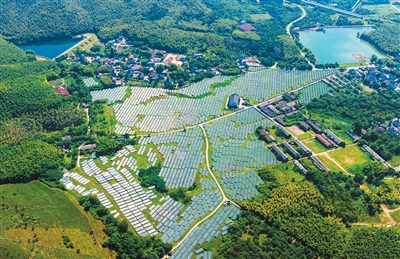
Core Viewpoint - The article highlights the successful implementation of green development initiatives in Changxing County, Huzhou City, Zhejiang Province, focusing on the transformation of abandoned mines into productive ecological and economic assets [2] Group 1: Green Development Initiatives - Changxing County has actively promoted the governance and utilization of abandoned mines, leading to ecological restoration and economic benefits [2] - Several former mining sites have been transformed into solar power stations, ecological parks, and industrial parks, showcasing a dual benefit of ecological and economic gains [2] Group 2: Visual Representation - The article features the Chang Guangdong Fengqiao Solar Power Station, which is depicted as a blue ocean amidst green mountains, symbolizing the harmony between technology and nature [2]

宿迁投入超130亿元建设“大湾区”
Xin Hua Ri Bao· 2025-09-02 21:18
Core Viewpoint - The city of Suqian has announced a three-year action plan for the construction of the "Beautiful Lake Bay" around Hongze Lake, with a total investment exceeding 13 billion yuan, focusing on six key areas to transform the region into a livable and high-quality development model area [1][2] Group 1 - The action plan includes a total investment of over 13 billion yuan and outlines 71 key projects [2] - The plan aims to leverage ecological advantages for development, as Suqian possesses nearly half of the shoreline resources of Hongze Lake [1] - The construction will cover three counties and ten townships, with a total area of 2,093 square kilometers [1] Group 2 - The six key areas of focus include: 1. Strengthening ecological governance of the lake bay area to establish a solid green ecological foundation 2. Promoting modern water network construction to enhance water safety capabilities 3. Fostering deep integration of culture, sports, and tourism to create a world-class ecological cultural tourism area along Hongze Lake 4. Coordinating urban and rural integration to build a new collaborative development pattern 5. Promoting the integration of the tertiary industry to create a leading area for rural revitalization 6. Constructing a collaborative transportation system to strengthen regional connectivity [2]
【活力中国调研行】从“沙进人退”到“路进沙退”:内蒙古穿沙公路的治沙智慧
Zhong Guo Xin Wen Wang· 2025-09-01 04:49
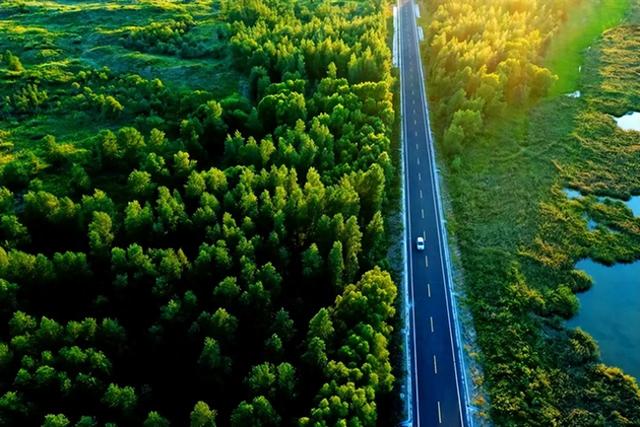
Core Viewpoint - The newly constructed Bayin-Pugebu Sand Crossing Road in Inner Mongolia's Ordos City is 16.81 kilometers long and serves as a significant ecological restoration and livelihood improvement project, creating a "green artery" for the region while achieving a win-win situation for ecological and economic benefits [1] Group 1 - The road divides continuous sand dunes, illustrating a new governance model of "road delineates areas, road determines sand control, road advances sand retreat, and road connects industries" [1] - The sand crossing road is becoming essential for local ecological restoration and improving the livelihoods of residents [1] - The project has successfully realized both ecological and economic benefits across Inner Mongolia [1]
活力中国调研行 | 内蒙古高质量发展三问
Nei Meng Gu Ri Bao· 2025-08-29 04:16
Group 1: Ecological Restoration and Development - The Chulu River Grassland has transformed from a barren land to a vibrant ecological area, integrating tourism, recreation, and ecological research, with over 30,000 acres restored since 2012 [3][5][9] - The ecological restoration efforts in the Khorchin Sandy Land have led to a vegetation coverage of 69.4% and the effective management of 13.2 million acres of desertified land [8][9] - Inner Mongolia's Daxing'anling forest area, covering 83,700 square kilometers, acts as a significant carbon sink, sequestering over 36 million tons of CO2 annually [9] Group 2: Renewable Energy Integration - The integration of wind and solar energy projects in Inner Mongolia has led to the development of a "grass-solar" model, improving the ecological environment while generating renewable energy [12][13] - The region has seen the establishment of large-scale wind and solar energy bases, contributing to the transformation of arid areas into productive energy landscapes [15][16] Group 3: Traditional Industry Transformation - The Baofeng Coal-based New Materials Company has invested 67.3 billion yuan to create the world's largest single-plant ethylene facility, producing 13.25 million tons of methanol and 5 million tons of ethylene annually [18][19] - Inner Mongolia is transitioning from a coal-dependent economy to a modern coal chemical industry, with a projected output value of over 100 billion yuan in 2024 [19][21] Group 4: Aluminum Industry Development - The city of Hohhot is transforming its aluminum industry from traditional high-energy and high-pollution practices to a green and intelligent model, focusing on high-performance aluminum alloys and advanced manufacturing [20][21] - The region aims to establish itself as "China's Green Electricity Aluminum City," with ongoing projects enhancing production capabilities and promoting vertical integration within the aluminum supply chain [20][21]
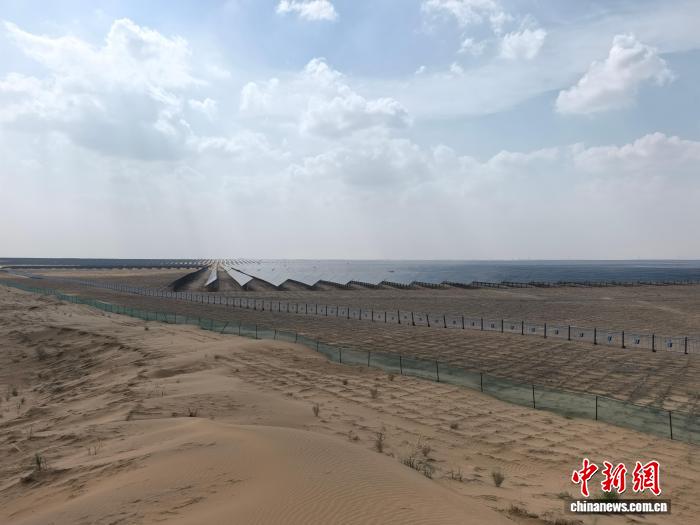
(活力中国调研行)内蒙古采煤深陷区“蝶变记”:光伏板下长出生态富民新图景
Zhong Guo Xin Wen Wang· 2025-08-29 04:16
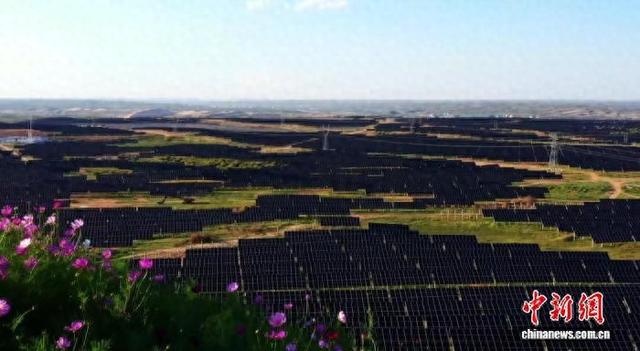
Core Viewpoint - The article highlights the transformation of a coal mining subsidence area in Inner Mongolia into a thriving ecological and economic zone through the implementation of a photovoltaic power generation and ecological restoration project, demonstrating a successful model for sustainable development in similar regions [1][5]. Group 1: Project Overview - The ecological restoration and photovoltaic power generation project began in 2018, covering 71,000 acres of subsidence land, with 42,000 acres prioritized for high-standard ecological restoration [3][5]. - The project has increased the vegetation coverage from 19% to over 60%, with the number of plant species rising to 103, turning previously barren land into productive resources [5]. Group 2: Economic Impact - Local villagers have benefited economically, with individuals earning between 50,000 to 60,000 yuan annually from participating in grass planting and maintenance activities [5]. - Approximately 450 households, or about 1,200 villagers, receive nearly 1,000 yuan each per year in land transfer fees, illustrating the project's positive impact on local livelihoods [5]. Group 3: Broader Implications - The "photovoltaic + ecological restoration" model is being replicated across Inner Mongolia, contributing to desertification control and ecological restoration in various regions [6][8]. - In 2024, Inner Mongolia aims to complete 19.54 million acres of desertification control, accounting for 45.8% of the national task for the "Three North" project [8]. - The synergy between clean energy production and ecological restoration creates a sustainable cycle, enhancing both environmental and economic outcomes [8].
文山绘就绿色发展新画卷
Zhong Guo Huan Jing Bao· 2025-08-28 01:46
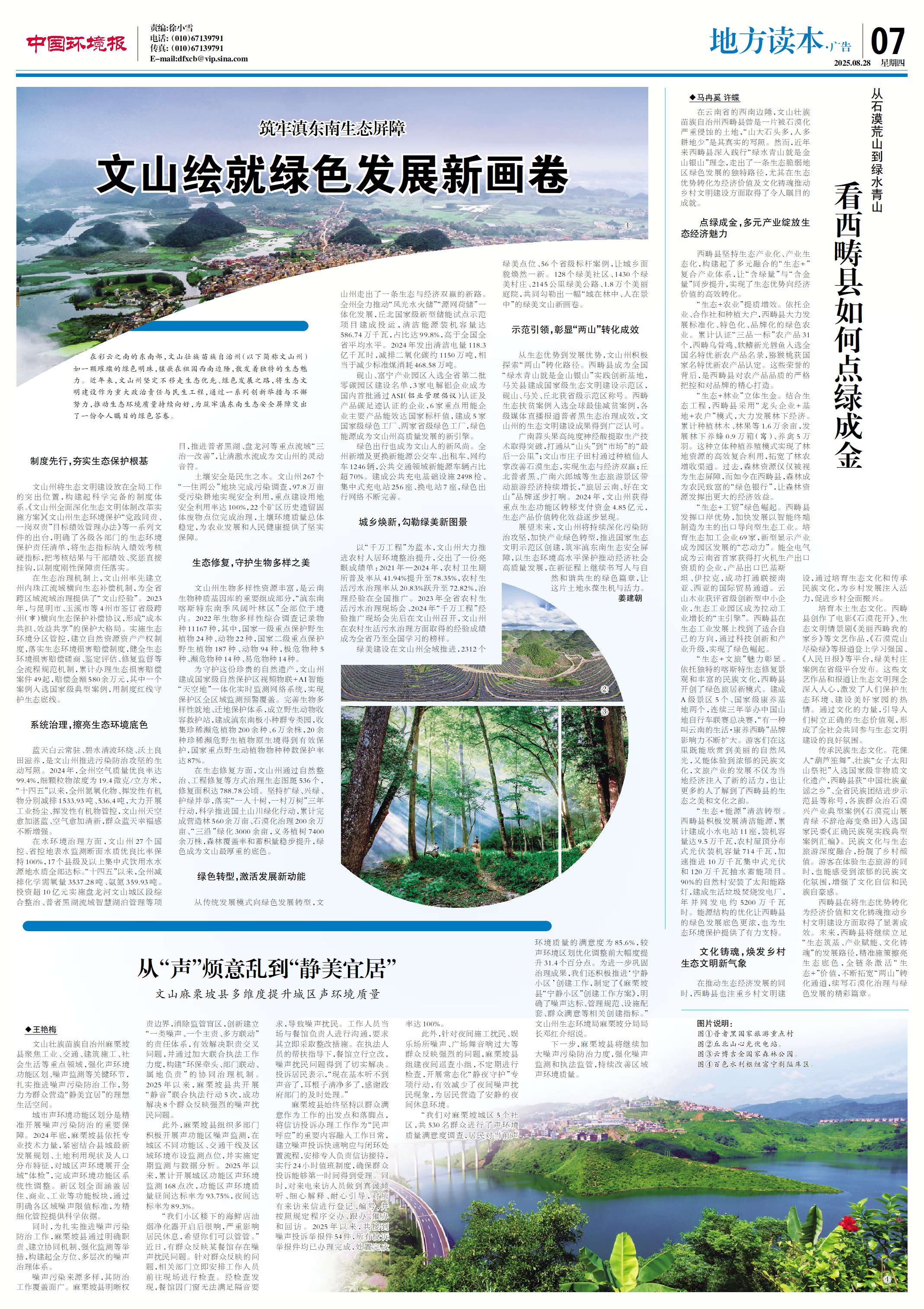
Core Viewpoint - Wenshan Prefecture is committed to ecological priority and green development, achieving significant improvements in environmental quality and establishing a robust ecological security barrier in southeastern Yunnan [2][30]. Institutional Framework - Wenshan has developed a comprehensive institutional framework for ecological civilization, including performance management methods that link ecological indicators to the performance evaluation of officials [3][16]. - The establishment of a horizontal ecological compensation mechanism within the Pearl River Basin has provided a model for cross-regional ecological governance in the province [3][18]. Environmental Protection and Restoration - The prefecture has completed pollution investigations on 267 plots, ensuring the safe utilization of 978,000 acres of contaminated farmland, with a 100% safety utilization rate for key construction land [4][22]. - Biodiversity surveys recorded 11,167 species, including numerous endangered plants and animals, highlighting the region's rich biological resources [5][23]. Pollution Control and Air Quality - In 2024, Wenshan achieved an air quality excellent rate of 99.4%, with fine particulate matter concentration at 19.4 micrograms per cubic meter [9][19]. - The prefecture has maintained a 100% excellent water quality rate for monitored water bodies and has implemented significant reductions in chemical oxygen demand and ammonia nitrogen [9][19]. Green Energy and Economic Development - Wenshan is transitioning to green development, with a clean energy installed capacity of 5.8674 million kilowatts, accounting for 99.8% of total capacity, and a projected clean electricity output of 11.83 billion kilowatt-hours in 2024 [25][28]. - The region has seen the establishment of several zero-carbon industrial parks and green factories, promoting sustainable economic growth [28][30]. Rural Environmental Improvement - The prefecture has significantly improved rural sanitation and wastewater treatment rates, with the rural sanitation rate increasing from 41.94% to 78.35% from 2021 to 2024 [7][29]. - Wenshan's green beautification efforts have resulted in numerous green community and village initiatives, enhancing the overall living environment [29][30]. Ecological Civilization and Recognition - Wenshan has been recognized for its ecological civilization initiatives, with several counties designated as national and provincial demonstration areas for ecological construction [30][32]. - The region's ecological governance achievements have gained widespread media attention, showcasing its successful practices in environmental management [30][32].
(活力中国调研行)绿进沙退的阿拉善答卷
Zhong Guo Xin Wen Wang· 2025-08-27 07:01
Core Viewpoint - The ecological restoration project in Alxa League, Inner Mongolia, has successfully transformed the "Yellow" landscape into "Green," significantly reducing sand erosion and improving local livelihoods [1][2][3]. Group 1: Ecological Restoration Efforts - The ecological restoration project at the "Yama Nose" area began in 2022 and is set to be completed in 2024, with significant challenges faced during the planting process [1]. - The vegetation coverage in the "Yama Nose" area has increased from less than 5% to over 35%, resulting in a reduction of 90,000 tons of sediment entering the Yellow River annually [1]. - Approximately 1,856 kilometers of desert forest and grassland borders have been established in Alxa League, increasing the forest coverage rate from 2.96% to 8.42% [2]. Group 2: Economic Impact on Local Communities - Local herders have begun participating in afforestation efforts, leading to improved living conditions and reduced sandstorms [2]. - Farmers and herders involved in the forestry industry have exceeded 30,000, with an average annual income increase of 30,000 to 50,000 RMB per household [3]. - The presence of construction teams has revitalized local businesses, including small restaurants and supermarkets, contributing to the economic growth of the region [3]. Group 3: Innovative Approaches in Sand Control - The Tengger "Shagao" New Energy Base utilizes innovative methods for sand control, including biodegradable sandbags made from cassava and corn starch, which help stabilize the area [2]. - The combination of solar panels and vegetation planting creates a dual benefit of energy generation and ecological restoration [2].
为全球绿色发展作出“上合贡献”
Ren Min Ri Bao· 2025-08-26 03:32
Group 1: Green Development Consensus - The Shanghai Cooperation Organization (SCO) member states share a consensus on protecting the ecological environment and promoting green development [1] - China has strengthened cooperation with other SCO member countries in the field of green development, contributing to sustainable economic and social development [1] Group 2: Ecological Cooperation and Innovations - A "Photovoltaic + Cotton Water and Fertilizer Integration" demonstration area has been established in Uzbekistan, significantly increasing cotton yields by over 200% through Chinese irrigation technology [2] - China and Uzbekistan have signed an ecological governance agreement to address the ecological crisis of the Aral Sea [2] - The China-Mongolia Desertification Prevention Cooperation Center is actively involved in Mongolia's "Billion Trees Plan" [2][3] Group 3: Renewable Energy Initiatives - The Akmolinsk Wind Power Project in Kazakhstan has a total installed capacity of 221 MW, providing 843 million kWh of green electricity annually, reducing CO2 emissions by 686,600 tons [4] - SCO countries contribute half of the global renewable energy installed capacity, with a total of 2.31 billion kW by the end of 2024, which is 14.5 times that at the organization's inception [4][5] Group 4: Biodiversity Protection - China is actively promoting biodiversity protection and has collaborated with SCO member states to protect species like the snow leopard [6] - The number of snow leopards in Pakistan is increasing due to cooperative efforts among SCO countries [6] Group 5: Coral and Marine Ecosystem Protection - Chinese enterprises have implemented innovative designs for artificial breakwaters in Sri Lanka, creating suitable conditions for coral growth and enhancing marine biodiversity [7] - The construction of the Hunutlu Power Plant in Turkey prioritized ecological protection, ensuring the natural breeding of endangered sea turtles [7] Group 6: Overall Green Cooperation - China and other SCO countries are collaborating on various green initiatives, including desertification prevention, clean energy cooperation, and rare species protection, to promote regional ecological improvement and global environmental governance [8]
为全球绿色发展作出“上合贡献”(弘扬“上海精神”:上合组织在行动)
Ren Min Ri Bao· 2025-08-25 21:50
Group 1: Green Development Consensus - The core viewpoint emphasizes that protecting the ecological environment and promoting green development is a consensus among Shanghai Cooperation Organization (SCO) member states [1] - China has strengthened cooperation with other SCO member countries in the field of green development, contributing to sustainable economic and social development [1] Group 2: Ecological Cooperation and Innovations - In Uzbekistan, a "photovoltaic + cotton water and fertilizer integration" demonstration area has been established, significantly increasing cotton yields by over 200% through Chinese technology [2] - The cooperation center for desertification prevention in Ningxia was established, showcasing China's achievements in sand control techniques, which are being shared with Kazakhstan [3] Group 3: Renewable Energy Initiatives - The Akmolinsk wind power project in Kazakhstan, with a total installed capacity of 221 MW, is expected to save 278,300 tons of standard coal and reduce CO2 emissions by 686,600 tons annually [4] - SCO countries contribute half of the global renewable energy installed capacity, with a total of 2.31 billion kW by the end of 2024, which is 14.5 times the capacity at the organization's inception [4][5] Group 4: Biodiversity Protection Efforts - China is actively promoting biodiversity protection and has collaborated with SCO member countries to protect species like the snow leopard, leading to a resurgence in their population [6] - Collaborative efforts in Sri Lanka and Turkey have focused on coral reef restoration and the protection of endangered species, demonstrating a commitment to ecological preservation [7] Group 5: Comprehensive Green Cooperation - The collaboration among SCO countries spans desertification prevention, clean energy cooperation, and rare species protection, aiming to enhance regional ecological improvement and global environmental governance [8]
蜀山秀水间的生态价值转化之道
Si Chuan Ri Bao· 2025-08-24 22:15
Core Viewpoint - The article emphasizes the successful implementation of the "Two Mountains" concept in Sichuan, showcasing a model that balances ecological protection with economic development, contributing to the construction of a beautiful China through local and global significance [1][8]. Group 1: Ecological Protection and Development - Sichuan has made significant strides in ecological reconstruction and protection, establishing itself as a key ecological barrier for the Yangtze and Yellow Rivers, with 14.80 million square kilometers designated as ecological protection red lines [2]. - The province has maintained water quality at Class II or above for eight consecutive years, demonstrating its commitment to ecological safety [2]. Group 2: Clean Energy Development - Sichuan is recognized as a national clean energy demonstration province, with a clean energy installed capacity of 130 million kilowatts, accounting for 88% of its total capacity, leading the nation in power generation [3]. - The establishment of the Yalong River basin as a comprehensive renewable energy demonstration base is set to create the world's largest green clean energy hub [3]. Group 3: Urban Development and Green Spaces - Chengdu, as the first park city demonstration area, has integrated the "Two Mountains" concept into urban planning, creating over 1,500 parks and achieving a forest coverage rate of 40.5% [4]. - The city has implemented innovative urban development strategies, enhancing ecological, cultural, and economic values through a park system [4]. Group 4: Green Prosperity in Ethnic Regions - Sichuan's ethnic regions are exploring sustainable development paths that integrate ecological protection with economic benefits, exemplified by projects like the "Photovoltaic + Assistance" model [5][6]. - The region has successfully created brands that enhance the value of local agricultural products, contributing to community wealth [5]. Group 5: Market Mechanisms for Ecological Value - The province has established a market mechanism for ecological product value realization, transitioning ecological resources from "priceless" to "valuable" through market-oriented reforms [6]. - Initiatives include the establishment of a 30 billion yuan green low-carbon industry fund and the first carbon-neutral green medium-term notes at the county level [6]. Group 6: Technological Innovation in Ecological Governance - Sichuan has developed a comprehensive technology-driven system for ecological governance, utilizing digital tools for resource management and monitoring [7]. - The implementation of advanced monitoring systems in the Giant Panda National Park exemplifies the integration of technology in ecological protection [7]. Group 7: Promotion of New Productive Forces - The province is fostering a modern industrial system focused on green low-carbon development, with initiatives in traditional industry transformation and the promotion of emerging sectors [8]. - Sichuan's efforts in green finance and talent development are aimed at enhancing the province's capacity for sustainable growth [8].