科技

Search documents
美股三大指数收盘涨跌不一,Circle涨超15%,中概指数跌1.08%
Ge Long Hui· 2026-03-03 00:03
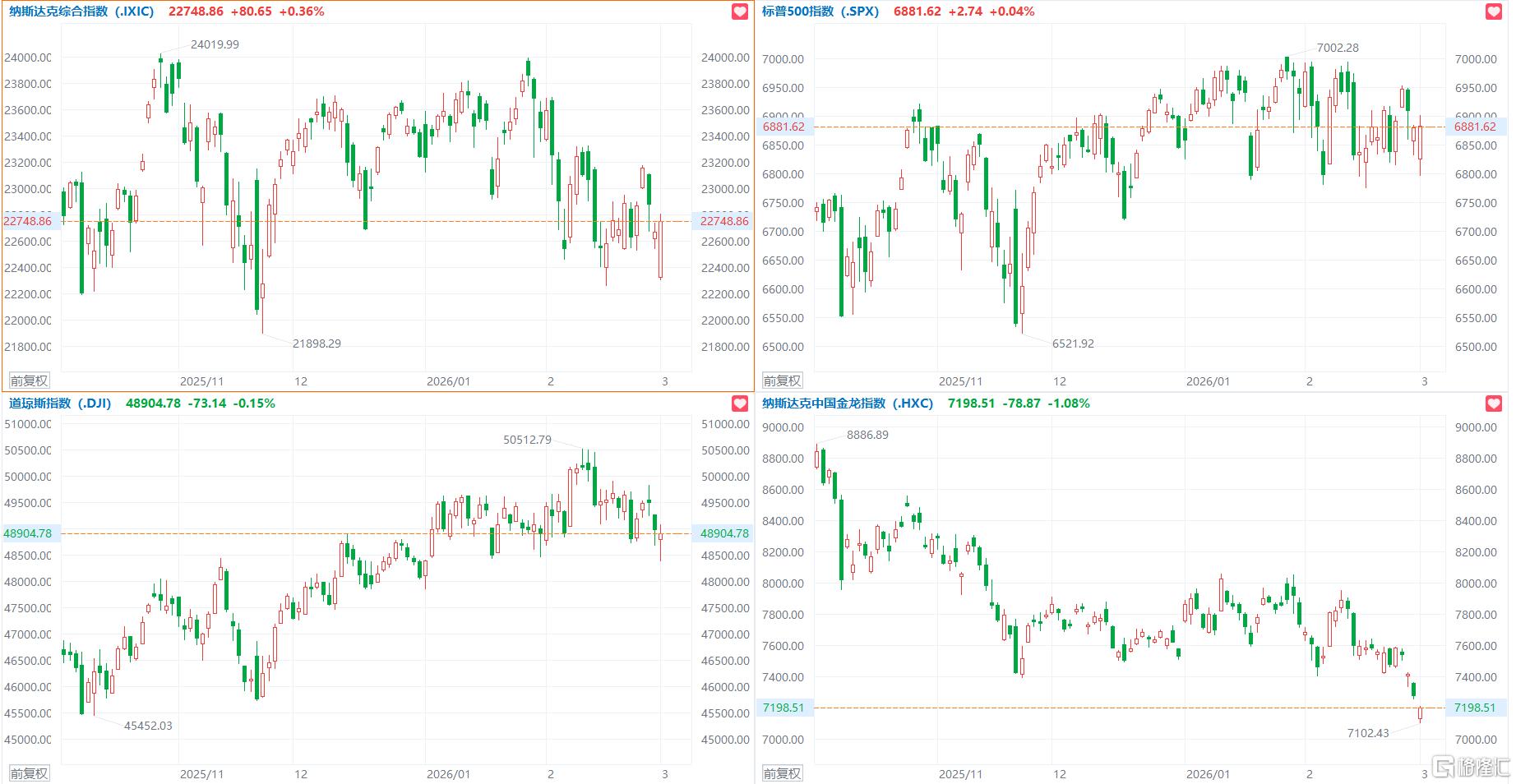
Market Performance - The three major U.S. stock indices closed mixed, with the Dow Jones Industrial Average down 0.15%, the S&P 500 up 0.04%, and the Nasdaq up 0.36% [1] - Large-cap tech stocks mostly rose, with Nvidia increasing by approximately 3%, Microsoft rising over 1%, and Apple, Tesla, Netflix, and Meta showing slight gains [1] - Google fell over 1%, while Intel and Amazon experienced slight declines [1] Cryptocurrency Stocks - U.S. cryptocurrency-related stocks saw significant gains, with Figure rising over 17%, Circle up over 15%, and Strategy increasing by over 6% [1] Chinese Stocks - The Nasdaq Golden Dragon China Index fell by 1.08%, with notable declines in popular Chinese stocks such as Kingsoft Cloud down 4.9%, Zai Lab and Xiaomi down 4.1%, and several others down up to 3.6% [1] - Conversely, JinkoSolar rose by 2.1%, Beike increased by 2.2%, BYD gained 5%, Qifu Technology rose by 5.8%, and Douyu increased by 7.2% [1]


历史首次!“三桶油”集体封板
格隆汇APP· 2026-03-02 10:13
Core Viewpoint - The article discusses the impact of the Middle East conflict on the Chinese stock market, highlighting significant movements in oil and related sectors, as well as the overall market sentiment and performance. Group 1: Market Performance - On Monday, the Shanghai Composite Index closed up 0.47%, with a trading volume reaching 30 trillion yuan [2] - The "three oil giants" in China all hit the daily limit for the first time in history due to the conflict [2] - Specific stocks like Zhonggang Petroleum, Baiqin Oil Services, and Shandong Molong saw intraday gains of 145%, 107%, and 116% respectively [4] Group 2: Sector Performance - Oil and gas, shipping, military, and precious metals sectors experienced a surge, while cultural media, software, and internet sectors declined [6] - The oil and gas extraction and service sector rose by 12.23%, precious metals by 10.69%, and military electronics by 3.23% [7] Group 3: Oil Price Dynamics - Brent crude oil opened at around $82, up nearly 13%, while WTI crude rose over 10% to $75 per barrel [8] - The closure of the Strait of Hormuz by the Iranian Revolutionary Guard has significantly impacted oil prices, as this strait is crucial for global oil transport [12][13] - Approximately 20%-30% of global oil consumption passes through the Strait, with China importing about 4.78 million barrels per day through this route, accounting for 43.5% of its total imports [14] Group 4: Future Implications - Goldman Sachs predicts that if the Strait remains closed for a month, the fair value of crude oil could rise by $15 per barrel [18] - The market's initial reaction to the conflict has been volatile, with oil prices fluctuating significantly within a short time frame [20][21] - As the situation evolves, the potential for a prolonged conflict appears to be decreasing, which may stabilize oil prices [24][25] Group 5: Impact on Chinese Assets - The article suggests that concerns over the stock market may be overstated, as the A-share market has shown resilience compared to global markets [33] - The Hong Kong stock market, being more sensitive to overseas liquidity changes, has experienced greater volatility and declines during geopolitical tensions [35] - The Hang Seng Technology Index has entered a technical bear market, reflecting broader market challenges [36]


太意外 | 谈股论金
水皮More· 2026-03-02 09:49
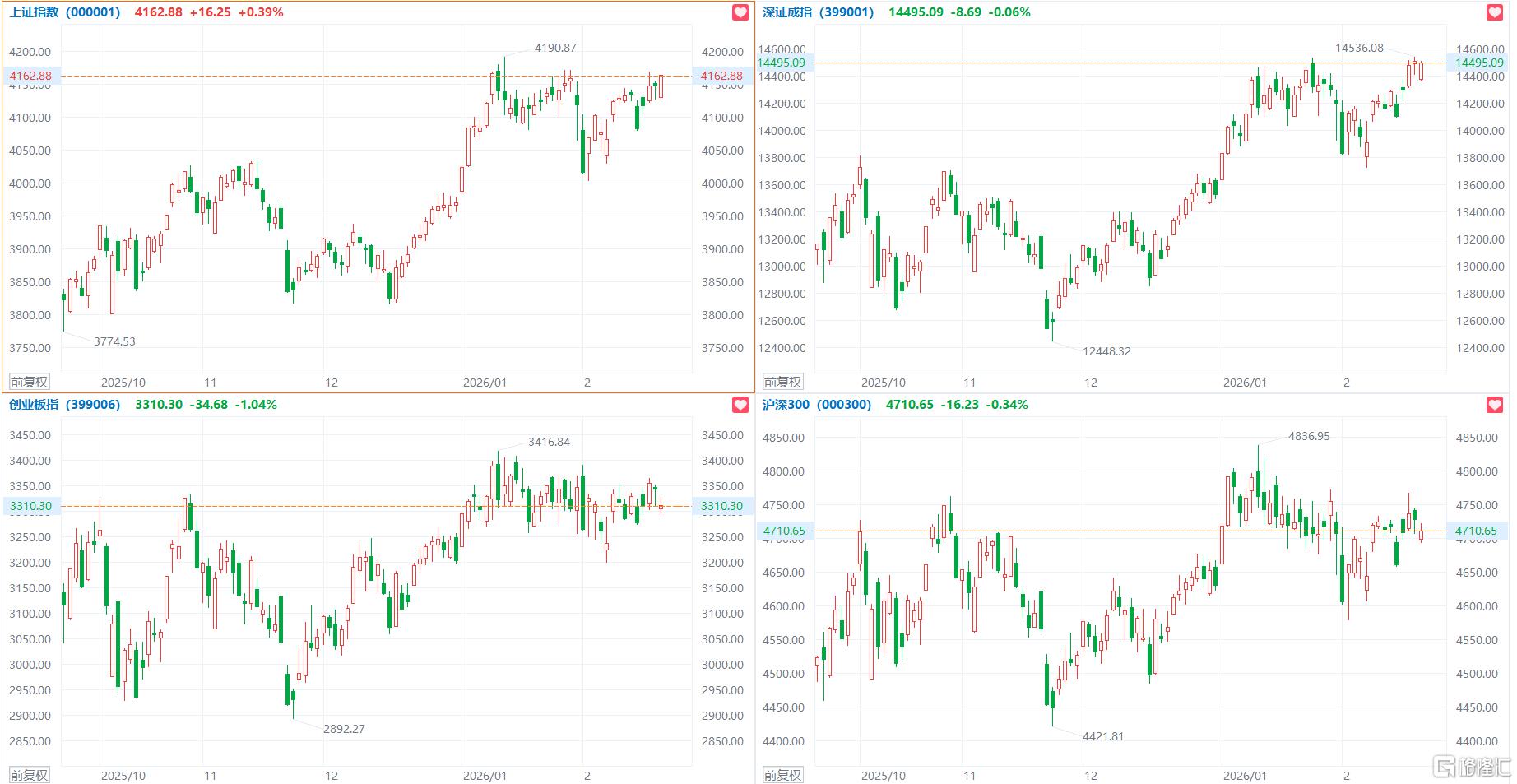
Market Overview - A-shares showed mixed performance today, with the Shanghai Composite Index rising by 0.47% to close at 4182.59 points, while the Shenzhen Component Index fell by 0.20% to 14465.79 points, and the ChiNext Index decreased by 0.49% to 3294.16 points [3][4] - The total trading volume in the Shanghai, Shenzhen, and Beijing markets reached 3.04 trillion yuan, a significant increase of 539.8 billion yuan compared to the previous trading day [3][4] Sector Performance - The oil and coal sectors were expected to rise significantly, and they did, with the "three major oil companies" collectively hitting the daily limit [4] - The market's upward trend was supported by banks and operators, contributing to the Shanghai Composite Index's unexpected performance [4] Individual Stock Movements - Approximately 1,000 stocks rose today, while around 4,000 stocks declined, indicating a reversal in market style and a potential shift from a previous broad-based rally [5] - Notable individual stock movements included BYD, which surged by 8% due to an upcoming press conference announcing breakthrough technology [6] External Factors - The recent U.S. attack on Iran was characterized as a "gray rhino" event, indicating it was anticipated rather than unexpected, contributing to market uncertainty [6] - The fluctuations in oil and precious metal futures prices reflected the complexity of the situation, with initial declines followed by recoveries [6] Capital Flows - There was a significant net inflow of 16.2 billion yuan from mainland investors into the Hong Kong market, indicating a clear trend of mainland capital seeking opportunities in Hong Kong stocks [8] - The performance of the Hang Seng Index and the Hang Seng Tech Index is expected to depend heavily on future capital movements [8]

基金经理研究系列报告之九十一:广发基金冯剑峰:深耕全球投资二十载,锤炼稳健成长能力圈
Shenwan Hongyuan Securities· 2026-03-02 09:15
1. Report Industry Investment Rating No relevant information provided. 2. Core Viewpoints of the Report - The report focuses on the in - depth analysis of Feng Jianfeng, a fund manager at GF Fund, with 20 years of global investment experience. His investment strategies are diverse, covering global growth, emerging markets, and theme - based investments. His ability to understand the investment logic and risk characteristics of global markets enables him to maintain a relatively stable asset - allocation ability across different macro - cycles and style rotations [72][73]. - Feng Jianfeng's representative products have shown strong performance, with high annual return win - rates compared to the MSCI World Index. His investment framework combines bottom - up stock selection and top - down industry analysis, and also takes portfolio construction into account [5][23][28]. 3. Summary According to the Table of Contents 3.1. GF Fund Feng Jianfeng: A Growth - Style Fund Manager with Two Decades of Global Investment Experience 3.1.1. Basic Information of the Fund Manager - Feng Jianfeng holds a master's degree in finance from Xiamen University, an MBA from the Ivey Business School of the University of Western Ontario, and is a CFA. He has 20 years of global investment experience. He has worked in several well - known asset management companies, including Burgundy, INVESCO, and Anjie International Asset Management. Currently, he is the director of GF International Equity and a fund manager in the international business department of GF Fund, managing the GF Global Technology Three - Month Regular Open - end Fund with a total scale of 1.053 billion yuan [3][10]. - His representative products during his tenure at Invesco include Invesco International Growth Fund, Invesco Global Select Equity Fund, etc. [12]. 3.1.2. Investment Framework: Centered on "GEMS" to Seek Global Growth Investment Opportunities - Investment philosophy: Focus on companies with stable future profit growth, looking for stocks that meet the requirements of "outstanding competitive advantages, large market space, and excellent management capabilities" to share the long - term growth of excellent enterprises [23]. - Investment framework: - Bottom - up stock selection: Combine quantitative and qualitative analysis. Use the "GEMS" framework, where "G" represents growth, "E" represents business model, "M" represents management, and "S" represents market sentiment [23]. - Top - down industry analysis: Pay attention to industries with sustainable and certain growth prospects and consider macro - environmental changes for risk management and trend judgment [28]. - Portfolio construction: Allocate 70% - 80% of the core positions to companies with real moats and growth potential, 10% or less to "super - growth stocks", and 10% - 20% to value stocks with fundamental catalysts [29]. 3.2. Performance and Investment Style Analysis of Representative Products 3.2.1. Invesco's Public Funds: Outperformed the MSCI World Index in 13 Years of Management - Long - term performance: Feng Jianfeng's Invesco International Growth Fund achieved a 202.28% return from 2010 to 2021, outperforming the MSCI World Index [32]. - Annual return win - rate: The annual absolute return win - rate of each product was over 75%, and the relative return win - rate compared to the MSCI World Index was also considerable. For example, Invesco International Growth Fund had a relative win - rate of 67%, and Invesco Developing Markets Class reached 75% [32]. 3.2.2. Invesco Global Select Equity Fund: Comprehensive Global Regional Allocation - 2015: The fund achieved a 17.91% return, significantly outperforming the MSCI World Index (- 4.26%). The allocation in North America, especially in the United States, performed well, and the allocation in China, Ireland, and Belgium also had good results [38][40]. - 2019: The fund achieved a 31.34% return, outperforming the MSCI World Index (24.05%). The stock - selection in the United States was excellent, with Microsoft and Visa achieving significant excess returns [41][45]. - Summary: Feng Jianfeng showed strong investment ability in North America, with excellent stock - selection and a high annual win - rate due to global asset allocation [46]. 3.2.3. Invesco International Growth Fund: Mainly Allocated to Regions Outside North America - 2014: The fund achieved a 13.99% return, significantly outperforming the MSCI World Index (2.10%). The positions in emerging markets such as China, South Korea, and Brazil contributed significant excess returns [49][50]. - 2015: Despite the global market volatility, the fund achieved an 18.93% return, outperforming the MSCI World Index (- 4.26%). The multi - regional allocation smoothed the risk and enhanced the return [53][56]. - 2020: The fund achieved a 25.56% return, outperforming the MSCI World Index (14.33%). By adjusting the regional allocation, it captured opportunities in East Asia [57][61]. - Summary: Feng Jianfeng had a wide investment circle, and the wide - range regional allocation and timely adjustment effectively smoothed the volatility and enhanced the return. The heavy - position stocks were stable and had good investment results [64][65]. 3.2.4. GF Global Technology Three - Month Regular Open - end Fund after Joining GF Fund - Product information: The fund was established in March 2021 and has been managed by Feng Jianfeng since September 2025. It mainly invests in global technology - themed listed companies, aiming to achieve investment returns exceeding the performance benchmark [67]. - Stock allocation: The fund is allocated in China, the United States, Japan, etc., with the highest allocation in the United States, followed by mainland China [67]. - Performance: The performance of heavy - position stocks was significantly differentiated, and the multi - regional allocation achieved a hedging effect. From September 26, 2025, to February 28, 2026, the fund's return was - 2.91%, between the Nasdaq and the Hang Seng Tech Index [70]. 3.3. Summary - Feng Jianfeng has rich experience in managing overseas asset management products. His investment strategies are diverse, and his investment circle is wide. He can understand the investment logic and risk characteristics of global markets and maintain a relatively stable asset - allocation ability [72][73]. - His products show a style of selecting global growth investments, focusing on the quality and value of individual stocks. After joining GF Fund, his in - charge product continues the style of balanced growth allocation [75].
大类资产配置全球跟踪2026年3月第1期:资产概览:中东紧张局势推升贵金属 原油价格
GUOTAI HAITONG SECURITIES· 2026-03-02 02:35
Asset Overview - The geopolitical tensions in the Middle East have driven up prices of precious metals and crude oil during the period from February 13 to February 27, with COMEX silver leading at a 19.8% increase, significantly outperforming gold at 5.0%[7] - Brent crude oil rose by 7.0% and WTI crude oil by 6.6% due to supply concerns stemming from the geopolitical situation[7] Equity Markets - The South Korean stock market has shown strong performance, with the KOSPI index increasing by 13.4%, marking a year-to-date gain of 48.2%[16] - Emerging markets have outperformed developed markets, with the MSCI global index rising by 1.3% during the same period[16] - A-shares performed well, with the Wind All A index up by 2.7%, and small-cap stocks like the CSI 500 and CSI 1000 both rising by 4.3%[16] Bond Markets - The Chinese bond market exhibited a "bear flattening" trend, with the yield curve shifting upward and the 10Y-2Y spread narrowing to 0.42%[24] - In the U.S., the bond market showed a "bull flattening" trend, with the yield curve moving downward and the 10Y-2Y spread also narrowing[24] Commodity and Currency Trends - The S&P 500 index increased by 0.6%, while the Dow Jones fell by 1.1% during the same period[16] - The U.S. dollar index rose by 0.8%, with the Chinese yuan appreciating by 0.8% against the dollar, while the Japanese yen depreciated by 2.2%[7] - The South China commodity index increased by 3.6%, with significant gains in precious metals and crude oil[7] Risk Indicators - The correlation between A-shares and Hong Kong stocks has slightly decreased from 0.73 to 0.72, while the correlation between U.S. stocks and Hong Kong stocks has increased from 0.33 to 0.37[7] - The report highlights potential risks including data timeliness, significant macroeconomic changes, and unexpected asset price movements[7]
中原期货晨会纪要-20260302
Zhong Yuan Qi Huo· 2026-03-02 02:34
1. Report Industry Investment Rating No relevant content provided. 2. Core Viewpoints of the Report - The conflict in the Middle East has escalated, affecting the financial markets in the region. The market impact on a global scale depends on potential changes in three key signals: US military mobilization, changes in the Iranian political situation, and the scope of conflict spillover. The general rule is that the safe - haven asset gold is better than the US dollar, long - term oil prices are still determined by supply and demand, the performance of the US stock market is directly related to the degree of US military intervention and the trend of the war situation, and there is no significant impact on Chinese assets [7][8]. - In the short term, the market style may switch from "policy expectation" to "performance realization". A - shares are likely to open lower due to the decline of US stock indices and geopolitical conflicts, but the medium - term upward trend remains unchanged [18][20]. 3. Summary by Relevant Catalogs 3.1 Chemical Industry - On March 2, 2026, among domestic chemical products, the prices of crude oil, fuel oil, plastic, PP, PTA, PVC, asphalt, methanol, and LPG rose, with fuel oil having the largest increase of 3.378%, while the prices of coking coal, coke, natural rubber, 20 - number rubber, ethylene glycol, styrene, glass, soda ash, pulp, and caustic soda declined, with coking coal having a decline of 1.417% [4]. 3.2 Agricultural Products - On March 2, 2026, among domestic agricultural products, the prices of soybean No. 1, rapeseed meal, white sugar, yellow corn, corn starch, and palm oil rose, with yellow corn having an increase of 0.932%, while the prices of soybean No. 2, soybean meal, eggs, cotton yarn declined, with soybean meal having a decline of 0.247% [4]. 3.3 Macro News - On February 28, Iranian Supreme Leader Khamenei was assassinated and killed. The Iranian government announced a 40 - day national mourning and will soon elect a new supreme leader. US President Trump said that the US military action against Iran may last about four weeks and that he has agreed to dialogue with the new Iranian leadership [7]. - Chinese Foreign Minister Wang Yi stated China's stance on the Iranian situation during a phone call with Russian Foreign Minister Lavrov: stop military actions immediately, return to dialogue and negotiation as soon as possible, and jointly oppose unilateral actions [7]. - This week, there are many major global market events, including the opening of the 2026 National Two Sessions, the release of China's February PMI, foreign exchange and gold reserve data, and new product launches by Apple and Alibaba [8]. - Many new - energy vehicle manufacturers released their February delivery data, and some offered car - buying discounts in March [9]. - The 15th meeting of the Standing Committee of the 14th National Committee of the Chinese People's Political Consultative Conference decided that the 4th session of the 14th National Committee of the CPPCC will be held in Beijing on March 4, 2026 [9]. 3.4 Morning Meeting Views on Major Products 3.4.1 Agricultural Products - White sugar: On February 27, the price of the main contract rose 0.74%. In the short term, the price center may move up further, but it is expected to fluctuate strongly, and attention should be paid to the upper pressure level and import policy changes [11]. - Corn: On February 27, the price of the main contract rose 0.77%. The short - term trend is high - level oscillation, but there is a risk of correction. Attention should be paid to the upper and lower support levels [11]. - Peanuts: On February 27, the price of the main contract fell slightly by 0.15%. The current price oscillates around the cost line. It is recommended to buy low and sell high in the 7850 - 8000 yuan range [11]. - Live pigs: The current overall supply exceeds demand, and the spot price is expected to remain weakly oscillating in the next 1 - 2 weeks. The futures market shows a pattern of near - term weakness and long - term strength, and the overall market remains in bottom - level oscillation [11]. - Eggs: The current national egg spot price is mainly stable. The near - term and long - term prices show a pattern of near - term strength and long - term weakness, with a large basis, suppressing the near - term prices, and the long - term prices remain oscillating after the decline [12]. - Red dates: After the Spring Festival, the market is slowly resuming. The spot price of red dates is temporarily stable, and the market is in bottom - level oscillation. It is recommended to buy low and sell high [12]. - Cotton: On February 27, the price of the main contract rose slightly by 0.29%. In the long - term, cotton prices are strongly supported by the expectation of supply tightening, but there is a risk of correction due to insufficient demand [12]. 3.4.2 Energy and Chemicals - Caustic soda: The fundamental situation of caustic soda remains in an oversupply pattern, and the near - term contracts may continue to be under pressure. Attention should be paid to the impact of supply - side disturbances on prices [12]. - Coking coal and coke: After the Spring Festival, the prices of coking coal and coke are under pressure, and the fundamentals are expected to continue in a weakly oscillating pattern. Attention should be paid to the linkage effect of rising energy prices due to the Middle East situation [12]. - Double - offset paper: The price of the main contract of double - offset paper is oscillating downward. The supply - side pressure persists, and the demand - side purchasing enthusiasm is still low. It is recommended to adopt a bearish strategy [12]. - Urea: The price of urea in the domestic spot market is running strongly. The demand in the agricultural peak season is supportive, but factors such as the release of stored goods and price - stabilizing policies may suppress the upward space. Attention should be paid to the 1750 - 1940 yuan/ton operating range [13]. 3.4.3 Non - ferrous Metals - Gold and silver: The prices of gold and silver are oscillating at high levels with large fluctuations. The increase in inflation pressure, policy uncertainty of the Federal Reserve, the increase in speculative net long positions, and the escalation of the Middle East situation have promoted the rise of precious metals [13]. - Copper and aluminum: The global macro - environment shows a pattern of weak balance and high volatility. The domestic social inventory of copper and aluminum is in a seasonal accumulation period. Attention should be paid to the recovery of downstream demand and supply - side risks due to the Middle East situation [13]. - Alumina: After the Spring Festival, the overall inventory of the domestic alumina market has decreased slightly, but the oversupply situation has not been fundamentally reversed. It is expected to remain at a low level and wait for new market drivers [15]. 3.4.4 Steel and Iron Alloys - Rebar and hot - rolled coil: After the Spring Festival, the inventory of the five major steel products continues to accumulate. Rebar still faces inventory accumulation pressure in the short term, while the demand for hot - rolled coil starts faster. The steel prices are expected to have limited downward space and upward rebound space. It is recommended to buy low and sell high in the specified price ranges [14]. - Ferroalloys: After the Spring Festival, the fundamentals of ferroalloys have not changed much. The supply has increased while the demand has decreased. From a macro perspective, the prices of commodities with high import dependence and external pricing power fluctuate more. In the short term, a bullish view on corrections is recommended, and industrial hedging should wait for better opportunities [14]. 3.4.5 Lithium Carbonate - On February 27, the price of the main contract of lithium carbonate rose 1.37%. The supply - demand pattern is tightening. It is recommended to consider buying on dips with a light position, but attention should be paid to the risk of sharp fluctuations due to insufficient market liquidity [14]. 3.4.6 Options and Finance - Stock index options: On February 27, the three major A - share indices showed different trends. The trading volume of options decreased, the open interest increased, and the implied volatility decreased. Trend investors should focus on arbitrage opportunities between varieties, and volatility investors can buy straddles to bet on increased volatility when the volatility drops significantly [16]. - Stock indices: Geopolitical risks have resurfaced. A - shares are likely to open lower, but the medium - term upward trend remains unchanged. Attention should be paid to the support of funds for a potential rebound [20]. - RMB: Since February, the RMB has continued its unilateral appreciation trend. The central bank's decision to reduce the foreign exchange risk reserve ratio for forward foreign exchange sales helps to weaken the expectation of unilateral RMB appreciation and maintain the stability of the RMB exchange rate [19].
资产配置周报:把握商品周期与科技赋能主线,关注油价变量
Donghai Securities· 2026-03-01 10:24
Global Market Overview - Global stock markets showed mixed performance, with the Nikkei 225 and A-shares leading gains; major commodity futures like gold, crude oil, copper, and aluminum saw slight increases[2] - The US dollar index decreased by 0.1%, while the offshore RMB appreciated by 0.52% against the dollar[2] Commodity Insights - Brent crude oil prices rose above $72 per barrel, nearing the highest level since July of the previous year, driven by geopolitical tensions[8] - The overall commodity price rebound this year has been particularly strong for precious metals, indicating a shift in demand from traditional infrastructure to computing power and new energy sectors[8] Domestic Equity Market - As of February 27, 2026, the average daily trading volume in the domestic equity market was 24,244 billion RMB, up from 20,946 billion RMB previously[19] - Among the 31 sectors tracked, 25 sectors saw gains, with steel (+12.27%), non-ferrous metals (+9.77%), and basic chemicals (+7.15%) leading the way; media (-5.10%) and retail (-1.64%) sectors experienced the largest declines[19] Interest Rates and Currency Trends - The 1-year Chinese government bond yield rose by 0.23 basis points to 1.3168%, while the 10-year yield fell by 1.46 basis points to 1.7753%[12] - The US 2-year Treasury yield decreased by 10 basis points to 3.38%, and the 10-year yield fell by 11 basis points to 3.97%[12] Risk Factors - Key risks include geopolitical tensions escalating, potential deviations in weekly fund positions, uncertainties in tariff policies, and the impact of domestic price declines[2]
从春节看中国人消费新趋势
Xin Lang Cai Jing· 2026-02-28 03:44
Group 1: Consumption Trends - The core focus of the articles is on the significant transformation in China's consumption structure, highlighting the rise of service-oriented consumption, technology-driven purchases, and the activation of the silver economy during the Spring Festival [1][2][3] - Young Chinese consumers are increasingly willing to spend on emotional value, leading to a surge in service-oriented consumption that aligns with the International Monetary Fund's recent assessment of China's economy [1][2] - The integration of technology into holiday celebrations, such as drone performances and AI greetings, indicates a shift in technology consumption from niche to mainstream, reflecting China's manufacturing strength and the potential for a robust domestic market [2] Group 2: Silver Economy - The silver economy in China is showing clear momentum, with travelers aged 50 and above making up 20% of those flying to Beijing during the Spring Festival, and the number of travelers aged 60 and above increasing by 1.6 times compared to the same period in 2025 [2] - The current scale of China's silver economy is approaching 10 trillion yuan, with projections suggesting it will reach 30 trillion yuan by 2035, driven by policies prioritizing smart elderly care, silver tourism, and lifelong education [2] - The demographic shift in China's population structure is not a barrier to growth but is becoming a new engine for social stability and long-term economic vitality [2]
美股三大指数集体收跌,高盛跌逾7%,英伟达跌超4%,中概指数跌1.81%
Ge Long Hui· 2026-02-28 00:42
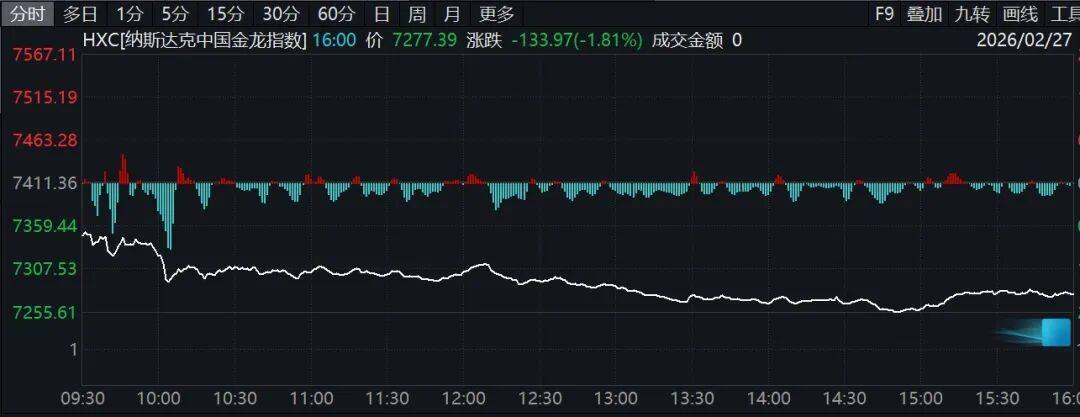
纳斯达克金龙中国指数收跌1.81%,报7277.39点。热门中概股里,蔚来收跌4%,阿里跌2.6%,新东方、理想、京东、文远知行、拼多多、小鹏、小米等跌 超1%,大全新能源涨0.6%,金山云涨7%。 美股三大指数集体收跌,道指跌1.05%,纳指跌0.92%,标普500指数跌0.43%。美国KBW银行指数跌近5%,创去年4月来最大单日跌幅。大型科技股多数下 跌,英伟达跌超4%,苹果跌逾3%,微软跌超2%,特斯拉、Meta跌超1%;奈飞涨超13%,创2023年10月以来最佳单日表现;谷歌涨超1%,亚马逊小幅上 涨。高盛跌逾7%,摩根士丹利跌超6%,富国银行、花旗集团跌超5%,美国银行跌超4%。戴尔科技涨约22%,创2024年3月份以来最大单日涨幅。Block涨 近17%,创2022年以来最大单日涨幅。 ...

美伊,大消息!黄金、白银、原油,集体大涨!美股下跌
Sou Hu Cai Jing· 2026-02-27 23:53
银行股下挫,高盛跌逾7%,摩根士丹利跌超6%,富国银行、花旗集团跌超5%,美国银行跌超4%。 来源:e公司官微 隔夜美股集体下挫。国际黄金、白银、原油,全线爆发。美伊,传出大消息。事关美联储,特朗普再度表态。 美股三大指数2月27日集体收跌,道指跌1.05%,纳指跌0.92%,标普500指数跌0.43%。 大型科技股多数下跌,英伟达跌超4%,苹果跌逾3%,微软跌超2%,特斯拉、Meta跌超1%;奈飞涨超13%,谷歌涨超1%,亚马逊小幅上涨。 特朗普还表示,希望达成一项"有意义的协议",并称在相关决策上已与多名共和党议员进行沟通。 另外,据媒体报道,特朗普表示,美联储主席鲍威尔很快就会离开美联储。 中概股方面,纳斯达克中国金龙指数收跌1.81%。阿特斯太阳能跌超11%,爱奇艺跌超6%,蔚来跌超4%,唯品会跌超3%;玉柴国际涨超8%,金山云涨逾 6%,网易有道涨逾2%。 2月27日国际金银双双大涨,现货黄金收涨1.75%,COMEX黄金期货涨1.64%。现货白银涨6.33%,COMEX白银期货涨7.67%。 国际油价27日大涨。截至当天收盘,纽约商品交易所4月交货的轻质原油期货价格上涨1.81美元,收于每桶67. ...