
科技金融

Search documents
央视财经频道《经济半小时》报道度小满用技术破解AI换脸诈骗难题
Zheng Quan Shi Bao Wang· 2025-10-27 02:48
Core Insights - The report focuses on the financial risks arising from the misuse of AI face-swapping technology, particularly in online lending systems, where criminals attempt to use synthetic facial information for fraud [1][2] - The financial technology company Du Xiaoman has developed specialized risk identification algorithms to combat AI face-swap fraud, providing a critical reference for the industry [1] Group 1: Company Initiatives - Du Xiaoman has created a risk identification algorithm that achieved a risk score exceeding 90 for a live authentication video, indicating a high likelihood of AI face-swap fraud [1] - The company demonstrated its advanced detection model, which can distinguish between real and synthetic faces, with a risk score threshold of 50; all synthetic faces tested scored above this threshold [1] - Du Xiaoman's Chief Technology Officer stated that the detection model is continuously upgraded to keep pace with evolving fraud techniques [1] Group 2: Industry Collaboration - To enhance technical defense capabilities, Du Xiaoman employs a "red-blue confrontation" model for training, simulating attacks and defenses against AI face-swapping [2] - The model's parameters have increased to a hundred billion level, significantly improving its capabilities compared to previous models that had only tens of millions of parameters [2] - In the past year, Du Xiaoman issued fraud alerts to 140,000 customers, successfully preventing over 3,000 fraud cases and potentially saving 180 million yuan in economic losses [2] - Industry experts recommend that financial institutions share information and technology to collectively combat AI face-swap fraud, ensuring timely updates on new fraud techniques [2]
财经深一度|增量扩面!债券市场“科技板”加速支持科技创新
Xin Hua She· 2025-10-25 08:39
Core Insights - The launch of the "Technology Board" in the bond market has accelerated the financing of technological innovation, with a total issuance of 1,167.267 billion yuan in technology innovation bonds from May 7 to the end of September [1] - The bond market's "Technology Board" facilitates the issuance of technology innovation bonds by financial institutions, technology companies, and equity investment institutions, indicating a significant breakthrough in supporting technological innovation [2] Group 1 - A total of 530 institutions have issued technology innovation bonds, with 319.67 billion yuan from 88 financial institutions and 847.597 billion yuan from 442 non-financial enterprises [1] - Approximately 280 entities in the interbank bond market have issued technology innovation bonds totaling 670 billion yuan, with nearly half of the technology companies issuing bonds with a maturity of three years or more [1][2] - The average coupon rate for technology innovation bonds issued by technology companies and equity investment institutions is around 2%, showcasing low financing costs and diverse issuer structures [1][2] Group 2 - The issuance of technology innovation bonds is driven by innovations in disclosure requirements, rating systems, risk-sharing mechanisms, and issuance processes [2] - The People's Bank of China and the China Securities Regulatory Commission have created risk-sharing tools for technology innovation bonds, providing low-cost re-lending funds to purchase these bonds [2] - The bond market is exploring new quantitative models for rating technology innovation bonds, incorporating key variables such as patent quality, R&D investment, and technology maturity into the rating functions [3] Group 3 - The positive outcomes of supporting technology companies through technology innovation bonds have been recognized, but further development requires continuous collaboration among various stakeholders [4] - Sustainable expansion of technology innovation bonds will depend on the ongoing role of policy tools, as well as the interaction between local governments, enterprises, investors, and intermediaries [4]
【世界投资者周】科技金融,为我们带来了什么?
Hua Xia Shi Bao· 2025-10-24 03:37
Core Insights - The article emphasizes the transformative impact of fintech on the financial industry, highlighting its role in enhancing convenience and efficiency in financial transactions and services [3][5]. Group 1: Evolution of Fintech - The development of fintech has been gradual, starting from the digitization of transaction records to the current integration of advanced technologies like blockchain, AI, big data, and cloud computing [5]. - Early advancements included the transition from paper-based records to electronic systems, significantly improving operational efficiency in the financial sector [5]. Group 2: Regional Development Patterns - The global fintech market exhibits diverse growth patterns, with regions like Europe and North America seeing a coexistence of competition and collaboration between fintech firms and traditional financial institutions [7]. - In Asia, fintech development is characterized by the deep integration of payment, e-commerce, and financial services, leveraging large user bases for rapid expansion [7]. Group 3: Challenges and Future Directions - Despite rapid growth, fintech faces challenges such as data privacy and security risks, as well as the lagging pace of regulatory updates compared to technological innovations [8]. - Future developments in fintech are expected to focus on three main areas: accelerated technology integration, inclusive financial services, and enhanced global regulatory coordination [8].


执笔共书科技金融大文章
Jin Rong Shi Bao· 2025-10-23 06:24
Core Insights - The article emphasizes the critical role of finance in driving technological innovation and industrial transformation, highlighting the interdependence of finance, technology, and industry throughout history [1] - A new wave of technological revolution is emerging, with fields such as artificial intelligence, life sciences, and quantum information becoming the main battleground for international competition [1] - The Chinese government prioritizes technology finance as a key component of its financial strategy, aiming to achieve high-level technological self-reliance and strength [1] Group 1 - The establishment of the Credit Market Department in 2024 aims to enhance the financial framework supporting technological innovation, collaborating with various sectors to create a comprehensive technology finance ecosystem [2] - Structural monetary policy tools like technology loans and re-loans for technological innovation are being utilized to direct financial resources towards innovation [2] - The capital market is increasingly supporting technological innovation, with platforms like the Sci-Tech Innovation Board and the Growth Enterprise Market facilitating the emergence of specialized enterprises [2] Group 2 - Challenges remain in meeting the financing needs of technology-based SMEs, particularly startups, indicating a need for increased investment and improved financial service adaptability [3] - Future reforms will focus on optimizing credit structures and exploring financing models tailored to the characteristics of technology SMEs [3] - The construction of a complementary financial service ecosystem is essential, promoting synergy between equity investment, bank credit, and policy support [3] Group 3 - The promotion and interpretation of technology finance policies are crucial, with initiatives like the "Technology Finance Special Edition" in the Financial Times serving as a platform for sharing experiences and insights [4] - The goal is to create a dialogue between policy and market, fostering collaboration in the technology finance sector [4] - The overarching mission is to support national rejuvenation and self-reliance through innovative financial practices in the new era [4]
中再资产李巍:从“长期资本”到“有为资本” 坚定“陪跑”科技创新全周期
2 1 Shi Ji Jing Ji Bao Dao· 2025-10-20 08:09
Core Viewpoint - The article emphasizes the critical role of insurance funds in supporting technological innovation as part of China's modernization efforts, highlighting the need for insurance capital to evolve from "long-term capital" to "patient capital" and ultimately to "capable capital" [1][2]. Group 1: Technological Innovation and Financial Support - The current economic phase in China is characterized by high-quality development, with a dual drive from traditional industry upgrades and emerging industry cultivation [2]. - The construction of a "technology-industry-finance" virtuous cycle is essential for enhancing financial services' capabilities and efficiency in supporting technological innovation [2][3]. - Insurance asset management institutions are forming a comprehensive financial service system that covers the entire lifecycle of technology companies, integrating various financial tools [3]. Group 2: Opportunities and Challenges in Supporting Technological Innovation - China's capital market system has been continuously improving, creating structural opportunities for investment in technology industries, particularly in hard technology and artificial intelligence [4]. - The development of technology finance is a key measure to implement financial strategies and address the "asset shortage" faced by insurance funds [4]. - Recent policies have enhanced the tolerance of insurance funds for short-term market fluctuations, promoting a "long money, long investment" environment [4]. Group 3: Strategic Initiatives and Investment Approaches - Insurance funds are encouraged to deepen industry chain research, optimize asset allocation, and strengthen active management to provide comprehensive services to leading technology companies [5][6]. - The focus is on core sectors such as hard technology, artificial intelligence, and healthcare, with a systematic approach to equity investment in technology innovation [7]. - As of June this year, the investment balance in the technology finance sector by Zhongcai Asset is nearly 20 billion yuan, with plans to further integrate finance with technology and industry [8].
科技金融全链条匹配:破解创新发展难题
Jin Rong Shi Bao· 2025-10-20 04:20
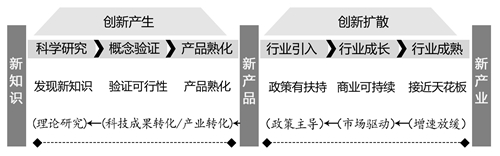
Core Insights - The central financial work conference in late October 2023 emphasized the importance of developing technology finance as a key strategy for financial institutions to promote the "technology-industry-finance" new triangular cycle [1] - Technology finance is crucial for financial institutions to achieve business transformation during the high-quality development phase [1] Summary by Sections Technology Innovation Stages - Technology innovation can be divided into two phases and six stages: "innovation generation" and "innovation diffusion," which include scientific research, concept validation, product maturation, industry introduction, industry growth, and industry maturity [2][3] - The "innovation generation" phase focuses on discovering new theories and developing new products, characterized by long investment cycles and uncertain outputs [1][2] - The "innovation diffusion" phase involves the introduction, growth, and maturity of industries, with shorter validation cycles and more predictable risks and returns [1][2] Funding Chain Matching - The funding chain must be clarified to match the innovation chain effectively, with different funding sources for research departments and enterprise sectors [9] - Research departments primarily rely on public budget allocations, while enterprises can access both internal and external financing [9][11] - The concept validation stage often faces funding shortages, leading to an "innovation valley of death," where many potentially viable research outcomes fail to transition into products [12][13] Funding Sources by Stages - In the scientific research stage, funding primarily comes from government budgets and large technology enterprises, with a total R&D expenditure of 33,357.1 billion yuan in 2023 [11] - The concept validation stage requires policy-based financial support to address the funding gap, as traditional funding sources do not adequately cover the unique risks involved [12][13] - The product maturation stage sees participation from large tech firms and startups, with suitable funding sources including policy-based finance and early-stage equity investments [14][15] - The industry introduction stage relies on commercial finance, including equity investments and bank loans, to support new product sales and market entry [17] - The industry growth stage benefits from commercial finance, with a focus on growth equity investments and bank loans to support expanding enterprises [18] - The industry maturity stage has abundant funding options, including IPOs and various debt financing tools, as the market stabilizes [19][20] Recommendations for Improvement - To enhance the technology finance system, it is recommended to increase fiscal support for scientific research, establish a national concept validation mechanism, and promote innovative procurement practices [23][24] - Encouraging government-led funds to invest in emerging industries and providing differentiated risk-sharing policies for small tech enterprises can facilitate industry transitions [24][25] - Optimizing the capital market and ensuring diverse exit channels will support the sustainable growth of technology enterprises in the maturity phase [25]
我国区域科技金融发展现状对比——基于资本极化效应的视角
Sou Hu Cai Jing· 2025-10-19 11:42
Core Viewpoint - The article discusses the significant regional disparities in the development of technology finance in China, emphasizing the need for a balanced allocation of financial resources to support technological innovation across different regions [3][11]. Group 1: Theoretical Analysis of Unbalanced Development - The concept of capital polarization refers to the tendency of economic factors to cluster in specific locations with advantages, leading to the formation of financial development poles [4][5]. - Capital polarization is characterized by spatial concentration, where central cities attract financial capital due to their economic, political, and cultural advantages, resulting in increased financial activity [5][7]. - The dynamic evolution of capital polarization involves multiple stages, including initial aggregation, accelerated aggregation, maturity and diffusion, and dynamic adjustment [9][10]. Group 2: Comparison of Regional Technology Finance Development - There are significant regional differences in the supply of technology finance capital, with central, western, and northeastern regions lagging behind the eastern region [13]. - The demand for technology finance is uneven, with a notable disparity in the number of technology-based enterprises between eastern and other regions [16][17]. - The analysis of technology finance policies reveals that while there is a wide range of policies at the central level, regional policies vary in effectiveness and focus [18][19]. Group 3: Reasons for Regional Polarization in Technology Finance - The "East Strong, West Weak" phenomenon in capital polarization is evident, with eastern regions gaining competitive advantages in technology finance [21][22]. - Differences in resource endowments, policy environments, and market scales contribute to the uneven distribution of capital, with eastern regions attracting more investment [23]. Group 4: Recommendations and Insights - To address the imbalance in technology finance, it is essential to create a favorable ecosystem through policies that encourage financial institutions to establish a presence in underdeveloped regions [25]. - Promoting the aggregation of quality technology projects in less developed areas can enhance regional competitiveness and attract investment [26]. - Innovating financial tools, such as supply chain finance and digital financial services, can improve financing efficiency for technology enterprises in less developed regions [27]. - Establishing collaborative mechanisms between eastern and western regions can facilitate resource sharing and support the development of technology finance [28].

力争科创领域在京新设基金规模超万亿元,北京详解科技金融发展“路线图”
Bei Jing Shang Bao· 2025-10-16 13:15
Core Points - Beijing's implementation plan aims to accelerate the development of a technology finance system to support high-level technological self-reliance and innovation by 2027, targeting over 1 trillion yuan in new fund establishment in the tech innovation sector [1][3][4] - The plan includes specific measures to address financing challenges in technology transfer and emphasizes the role of venture capital and equity investment in supporting technological innovation [3][4][5] - The plan outlines a comprehensive approach to enhance credit support for technology innovation, including product innovation and service layout improvements [5][6][7] Group 1: Long-term Capital and Investment - The plan sets a goal to introduce long-term and patient capital, with new fund establishment in the tech innovation sector expected to exceed 1 trillion yuan by the end of 2027 [3][4] - It aims to increase the balance of technology loans and loans to tech enterprises to over 5.5 trillion yuan and 2.5 trillion yuan respectively, with annual growth rates surpassing national and city averages [3][4] - The plan emphasizes the need for collaboration between national funds and local capital, and aims to establish a cooperative fund scale of no less than 50 billion yuan by 2027 [4] Group 2: Credit Support and Financial Services - The plan proposes a new evaluation model, "Zhongguancun Leading Points," to enhance credit support for tech enterprises by considering various innovation-related metrics [6][7] - It encourages banks to offer long-term "tech loans" and implement policies to avoid interruptions in funding for R&D projects [6][7] - The plan aims to optimize the cultivation mechanism for leading financial institutions and expand specialized tech credit service nodes in resource-rich areas [7][8] Group 3: Capital Market Innovations - The plan includes initiatives to strengthen Beijing's role as a technology finance hub, such as establishing a dedicated listing service for high-tech enterprises and creating a "Zhongguancun Technology Board" for bond financing [9][10] - It encourages high-quality overseas-listed companies to return to domestic markets and aims to enhance the liquidity of private equity and venture capital funds [9][10] - The plan also focuses on international financial cooperation and cross-border capital facilitation to extend Beijing's technology finance ecosystem globally [10][11]
事关北京加快构建科技金融体制,实施方案发布,共20条
Bei Jing Ri Bao Ke Hu Duan· 2025-10-16 03:32
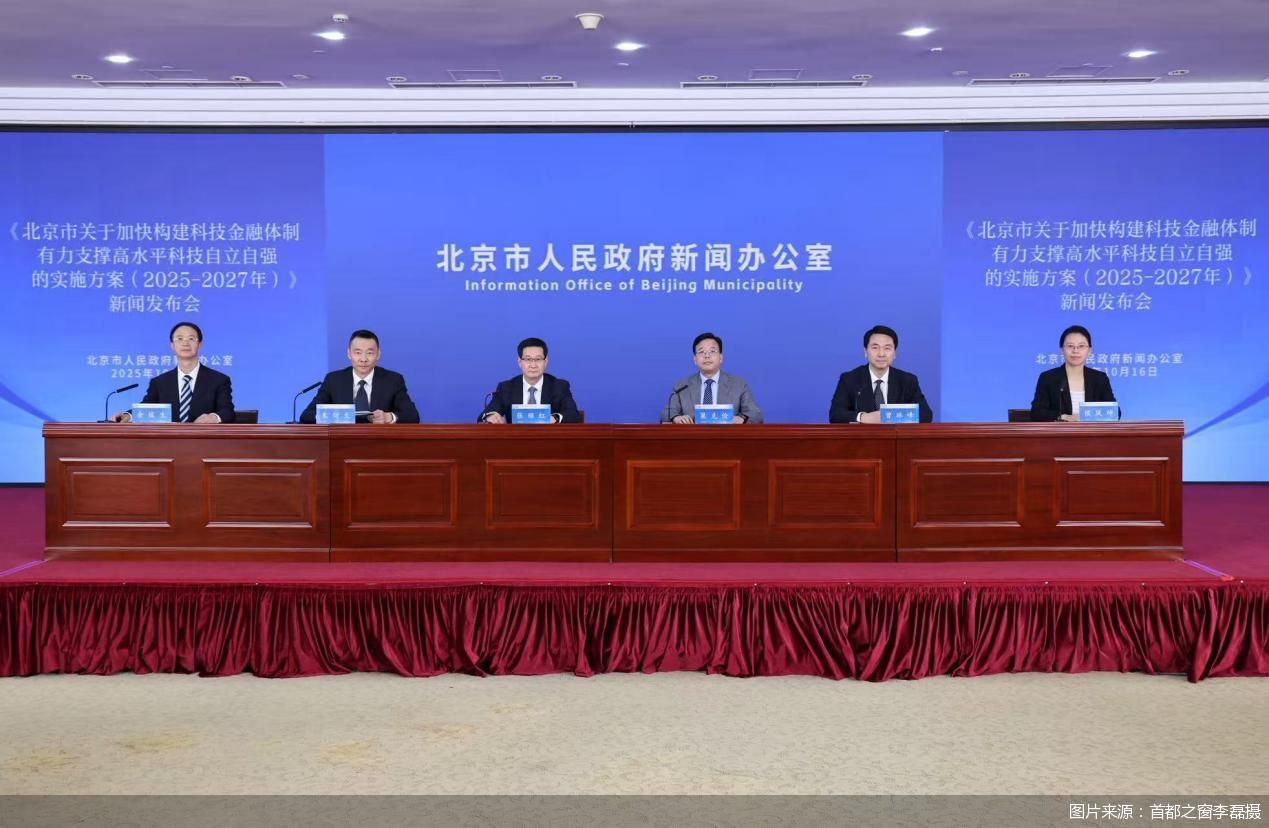
Core Viewpoint - Beijing's implementation plan aims to accelerate the construction of a technology finance system to support high-level technological self-reliance and strength from 2025 to 2027, aligning with national policies and local innovation goals [1][2]. Overall Goals - The plan targets the establishment of a comprehensive technology finance service system, enhancing financial services for national laboratories and leading technology enterprises, with a goal to exceed 10 trillion yuan in newly established funds by 2027 [3]. - By the end of 2027, the balance of technology loans and loans to technology enterprises is expected to surpass 5.5 trillion yuan and 2.5 trillion yuan respectively, with annual growth rates exceeding national and municipal averages [3]. Venture Capital Support - The plan emphasizes securing various national-level funds to be established in Beijing, enhancing financial support for major technological breakthroughs and original innovations [4]. - It aims to deepen pilot projects for financial asset investment companies, targeting a total cooperative fund scale of no less than 50 billion yuan by 2027 [5]. Monetary and Credit Support - The plan intends to leverage structural monetary policy tools to support technology innovation financing, aiming to mobilize no less than 100 billion yuan annually for related loans [7]. - It proposes optimizing evaluation models for technology enterprises to improve credit access and enhance the precision of financial services [7]. Capital Market Support - The initiative seeks to support high-quality technology enterprises in listing, utilizing capital market reforms to facilitate their growth and financing [10]. - It plans to establish a "Zhongguancun Technology Board" for issuing technology innovation bonds, enhancing the registration and issuance process [10]. Technology Insurance Role - The plan encourages the development of insurance products that cover the entire cycle of technological innovation, aiming to provide comprehensive risk protection for technology enterprises [12]. Fiscal Policy Guidance - It emphasizes the use of fiscal funds to amplify and guide technology finance, supporting financing guarantees for technology enterprises [13]. Open Innovation Ecosystem - The plan aims to enhance the convenience of cross-border fund usage and promote international cooperation in technology finance, encouraging foreign investment in local technology enterprises [14][15]. Organizational Implementation - The plan outlines a coordinated mechanism for implementing technology finance initiatives, establishing a comprehensive evaluation system for financial institutions' contributions to technological innovation [16][17].
北京计划到2027年底推动REITs发行规模居全国前列
Zhong Guo Xin Wen Wang· 2025-10-15 19:47
Core Points - Beijing aims to introduce over 1 trillion RMB in long-term and patient capital into the technology innovation sector by the end of 2027 [1] - The plan includes promoting technology innovation bonds, technology insurance, and the issuance of REITs, positioning Beijing as a leader in these areas nationally [1] - The initiative seeks to attract national venture capital guidance funds and enhance financial support for major technological breakthroughs and core technologies [1] Group 1 - The plan emphasizes support for high-quality technology companies to go public and encourages quality overseas-listed companies to return to domestic markets [1] - Beijing will leverage the Beijing Stock Exchange as a testing ground for reforms, providing tailored services for companies involved in significant technological challenges and breakthroughs [1] - The establishment of a "Zhongguancun Technology Bond" is proposed to facilitate the issuance of technology innovation bonds by various financial entities [2] Group 2 - The initiative promotes international cooperation in technology finance, encouraging foreign venture capital and private equity firms to establish branches in Beijing [2] - The plan aims to enhance collaboration between domestic and foreign financial institutions and to guide foreign capital to invest in Beijing's technology innovation sector [2] - There is a focus on cultivating international technology finance talent to support these initiatives [2]