
科研

Search documents
外国友人镜头里欣欣向荣的中国——“小家”热气腾腾 “大家”蒸蒸日上
Ren Min Ri Bao· 2026-01-13 05:15
Group 1 - The article emphasizes the importance of innovation in driving high-quality development in China's technology sector, highlighting the integration of scientific research and practical applications [2][5] - China's research environment is described as internationally leading, fostering innovation and exploration, which provides vast development opportunities for researchers [3] - The collaboration among government, enterprises, and universities is focused on addressing real-world problems, transforming cutting-edge research into practical solutions for everyday life [4] Group 2 - The article illustrates the positive impact of development in regions like Xinjiang, where local communities experience improved living standards and express hope for the future [6] - Cultural heritage is highlighted as a vital aspect of daily life in China, contributing to the spiritual well-being of its people and enhancing the recognition of Chinese civilization [11] - The successful hosting of the 9th Asian Winter Games in Harbin is noted as a significant event that showcases China's advancements in sports and technology, attracting global attention [12]

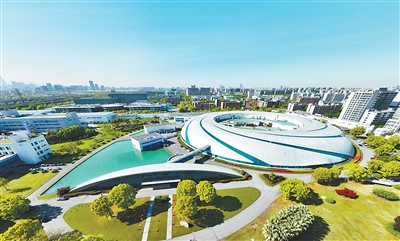
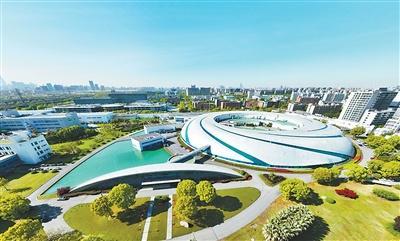
“小家”热气腾腾 “大家”蒸蒸日上(在中国·看中国)
Ren Min Wang· 2026-01-12 22:33
Group 1: Innovation and Development - China's technology industry is deeply integrated, with continuous innovation results emerging, supported by a leading research environment that encourages exploration and provides vast development space [2][4] - The Chinese government, enterprises, and universities are actively collaborating to transform cutting-edge research into practical solutions that address real-world problems, aiming to create a better future through scientific and technological innovation [4] Group 2: Cultural Heritage and Quality of Life - Cultural heritage in China is not only preserved but also integrated into daily life, enriching people's spiritual homes and enhancing their sense of identity and connection to civilization [11] - The successful hosting of the 9th Asian Winter Games in Harbin highlights China's growing prominence in winter sports and its ability to attract global attention through exciting events and advanced venues [13] Group 3: International Cooperation and Openness - China is committed to deepening connectivity and practical cooperation among member states of the Shanghai Cooperation Organization, effectively maintaining regional security and promoting common development [15] - The official launch of the Hainan Free Trade Port marks a new stage in China's openness, providing opportunities for growth and development for both local and international communities [16]
声动中国丨开局之年,愿望“上新”!听中国实干者新愿景
Yang Guang Wang· 2026-01-09 14:00
Group 1 - The year 2026 marks the beginning of the "15th Five-Year Plan," with various industry professionals expressing their hopes for the new year [2] - Individuals from diverse sectors, including community service, tourism, logistics, and advertising, are eager to contribute to their industries and improve their lives [2] - There is a collective aspiration for advancements in technology, cultural heritage storytelling, and the implementation of beneficial policies at the grassroots level [2] Group 2 - The emphasis is on unity and practical efforts to embark on a new journey towards high-quality development [3]
辽宁精准托举青年科技人才
Liao Ning Ri Bao· 2026-01-09 01:04
Core Viewpoint - The Liaoning Province Youth Science and Technology Talent Support Project aims to discover and support outstanding young scientific talents, providing them with resources and platforms to grow into future leaders in technology, thereby contributing to the high-quality development of Liaoning [1][2]. Group 1: Project Overview - The project has officially announced the first list of selected young scientific workers, including 100 individuals such as Wu Yiming from Northeast University, who is engaged in intelligent unmanned systems research [1]. - The program focuses on supporting young talents in traditional industry upgrades, emerging industry cultivation, and key industrial clusters in Liaoning [1]. Group 2: Support Mechanism - Each selected individual will receive a total funding of no less than 50,000 yuan over a two-year period, with the provincial science association providing 20,000 yuan to some participants [1]. - The project emphasizes "precise support" and "long-term service," offering personalized growth plans, mentorship, and opportunities for academic exchanges to help young talents achieve breakthroughs in research and collaboration [2].
中国科学院空天信息创新研究院广州园区一期主体结构封顶
Xin Lang Cai Jing· 2026-01-08 06:36
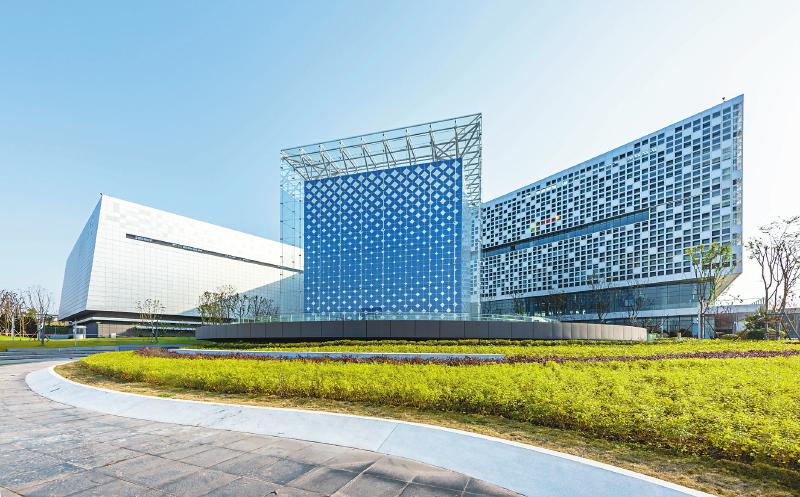
Core Viewpoint - The project aims to create an innovative complex that integrates high-level research, talent cultivation, and industrial incubation in the fields of aerospace, deep sea, and information technology [1] Group 1: Project Overview - The China Academy of Space Technology Innovation Research Institute Guangzhou Park project is located in Huangpu District, Guangzhou, with a total planned land area of approximately 58,000 square meters [1] - The first phase of the project has a total construction area of about 56,000 square meters [1] Group 2: Development Focus - The project is guided by the development direction of addressing global scientific frontiers and national strategic needs, focusing on aerospace, deep sea, and information fields [1] - It aims to cultivate high-end talent in optoelectronics and aerospace information [1] Group 3: Architectural Design - The park incorporates the Lingnan garden philosophy of "small within large" through architectural enclosure to create multiple inner courtyards [1] - Different building functions are distinguished by introducing electromagnetic spectrum progressive forms, using a color scheme of "technology gray" and "aerospace white" to define spatial layers [1] Group 4: Sustainability Initiatives - The park actively implements green building concepts through the collaboration of rooftop photovoltaics and vertical greening [1]
调整是“减”还是“增”?解码中科院南京分院撤销背后的江苏科创“新棋局”
Yang Zi Wan Bao Wang· 2026-01-06 12:00
Core Viewpoint - The recent organizational adjustment of the Chinese Academy of Sciences (CAS) is not a simple reduction but a strategic integration aimed at enhancing Jiangsu's innovation capabilities within the national framework [1][12]. Group 1: Organizational Changes - The CAS has reduced its regional branches from 12 to 9, with the Nanjing and Changchun branches being dissolved and integrated into the Shanghai and Shenyang branches respectively [2]. - The Nanjing branch, established in 1978, coordinated approximately 10 research institutions in Jiangsu and Jiangxi provinces, which will now be managed by the Shanghai branch [2][12]. - The administrative functions of the Nanjing branch will cease by October 2025, with its responsibilities transitioning to the Shanghai branch, which will now oversee a broader area including multiple provinces [2][12]. Group 2: Research Institutions and Capabilities - Key research institutions in Nanjing include the Purple Mountain Observatory, Nanjing Institute of Geology and Paleontology, Nanjing Institute of Soil Science, and Nanjing Institute of Geography and Lake Research, all of which maintain a leading position in their respective fields [3][4][5][6][12]. - New research institutions have been established in Nanjing's Qilin Science and Technology City, such as the Nanjing Software Technology Research Institute and the Nanjing Life Health Research Institute, indicating ongoing investment in innovative research capabilities [11][12]. Group 3: Strategic Implications - The integration of the Nanjing branch into the Shanghai branch is seen as a move to enhance resource allocation and collaboration within the Yangtze River Delta region, facilitating a more efficient innovation chain [14]. - Jiangsu's research capabilities will be better integrated into national technology projects, allowing for smoother access to large scientific facilities and databases, particularly in critical fields like quantum technology and artificial intelligence [14]. - Legislative support for innovation collaboration in the Yangtze River Delta has been established, providing a robust framework for the transformation of the research management system [14]. Group 4: Future Outlook - The ongoing personnel reforms within CAS aim to encourage cross-disciplinary expertise, breaking traditional boundaries and fostering innovation [15]. - The adjustment of the Nanjing branch signifies a transition from localized management to a model driven by national missions and regional collaboration, marking a new phase for Jiangsu's scientific and technological development [15].
四川天府新区:努力探索“双碳”目标引领下的高质量发展之路
Si Chuan Ri Bao· 2026-01-04 03:38
Core Viewpoint - The news highlights the efforts of Chengdu Tianfu New Area in promoting carbon neutrality through various initiatives, including the establishment of a three-dimensional carbon sequestration network and collaboration with multiple renewable energy units [5][9]. Group 1: Carbon Neutrality Initiatives - Chengdu Supercomputing Center has partnered with 43 renewable energy units, including State Grid, to conduct tests and business cooperation aimed at supporting carbon neutrality [9]. - The release of two key documents by the Central Committee and the State Council marks a shift from carbon neutrality goals to actionable plans, emphasizing the importance of specific actions in achieving carbon peak and neutrality [5]. - The Tianfu New Area is committed to integrating ecological value into urban development, adhering to the principles of "ecology first" and "green development" [5][12]. Group 2: Ecological Restoration and Innovation - The Xinglong Lake project exemplifies a nature-based solution for ecological restoration, creating a complex ecosystem that supports biodiversity and serves as a significant carbon sink [7][9]. - The Tianfu Yongxing Laboratory, focusing on "carbon neutrality+", aims to innovate in technology and industry related to carbon peak and neutrality, becoming a key support for the Chengdu-Chongqing economic circle [9][12]. - The architectural design of the Unicorn Island complex aims for energy efficiency, utilizing natural light and innovative structures to enhance sustainability [9]. Group 3: Urban Development and Low-Carbon Models - The Tianfu New Area utilizes 70.1% of blue-green space to create a low-carbon urban development model, linking ecological spaces with social and economic factors [11]. - The area is exploring high-quality development paths under the dual carbon goals, emphasizing the integration of ecological value into urban planning and industrial systems [12][13]. - The establishment of a green technology center aims to drive innovation in low-carbon technologies, focusing on clean energy and carbon capture [13].
十项重点举措加快专利转化运用
Zheng Zhou Ri Bao· 2026-01-04 01:01
Core Viewpoint - The Henan Provincial Government has issued an implementation plan to accelerate the transformation and application of patents, aiming to integrate intellectual property with the modern industrial system to drive high-quality development in the province [1][2]. Group 1: Patent Ownership Goals - By 2028, the province aims to have over 115,000 valid invention patents, with a high-value invention patent ownership rate of 4.2 per 10,000 people [2] - By 2030, the target increases to over 130,000 valid invention patents and 5.4 high-value invention patents per 10,000 people, along with the establishment of over 50 high-value patent cultivation centers and provincial-level intellectual property operation centers [2] Group 2: Bridging Intellectual Property and Industry - The implementation plan emphasizes creating a provincial integrated public service platform that includes a "patent business center + patent transformation trading market + specialized service support" to facilitate the sharing of resources and data [3] - The plan aims to connect patent resources with key industrial chains, encouraging the formation of industry intellectual property innovation alliances and patent pools to support industrial development [3] Group 3: High-Value Patent Commercialization - The plan promotes the establishment of high-value patent cultivation centers, encouraging collaboration among enterprises, universities, research institutions, and healthcare organizations to create a robust cultivation mechanism [4] - It focuses on nurturing high-value patents and patent combinations that can lead to high-quality industrial development, particularly in critical and "bottleneck" technology areas [4] - The plan also includes initiatives for high-value patent introduction projects, promoting the matching of enterprise needs with existing patents and research teams to accelerate the commercialization of high-value patents [4]
彰显中国自信!“数”看2025中国科技创新向极端条件迈进收获新突破
Yang Shi Wang· 2026-01-03 10:04
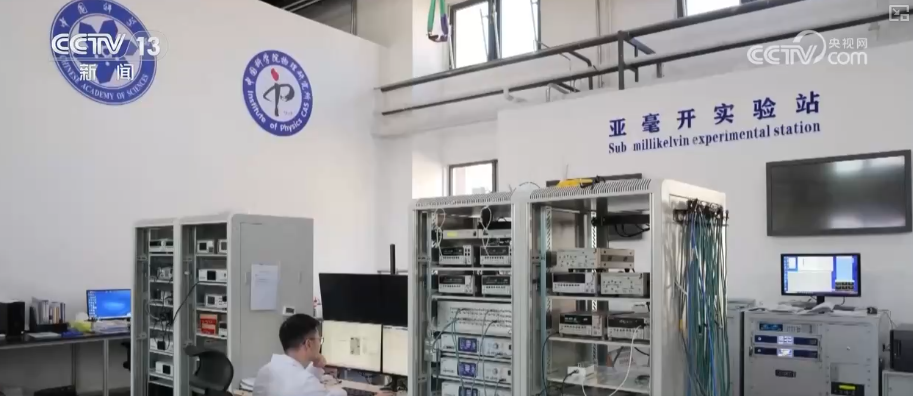
Core Insights - Extreme environments serve as a "touchstone" for technological innovation, enabling in-depth exploration of natural laws and the limits of life, thus driving scientific advancements and new technological breakthroughs [1] Group 1: Breakthroughs in Extreme Conditions - In February 2025, a comprehensive extreme conditions experimental facility was completed, capable of providing temperatures as low as 1 millikelvin, pressures exceeding 300 billion pascals, magnetic field strengths up to 26 teslas, and ultrafast light field pulse widths not exceeding 100 attoseconds, significantly enhancing China's capabilities in material science [2] - In September 2025, the world's largest supergravity centrifuge in Hangzhou was operational, achieving a maximum arm linear speed of 137 meters per second, generating 300 times Earth's gravity, and supporting a maximum load of 20 tons, simulating soil settlement over a century in a single day [4] - In 2025, China's first ice-capable manned deep-sea operation mother ship "Exploration No. 3" and the "Fighter" submersible successfully completed manned deep-sea missions in the Arctic, overcoming extreme conditions of -30°C and approximately 600 atmospheres [5][7] Group 2: Advances in Nuclear Fusion Research - The EAST (Experimental Advanced Superconducting Tokamak) achieved a world record of 100 million degrees Celsius and stable plasma operation for 1066 seconds in 2025, marking a significant leap from basic science to engineering practice in fusion energy research [8] - The EAST facility has conducted over 150,000 plasma operations since its inception in 2006, consistently setting new world records and maintaining international leadership in engineering and physics [15] - The construction of the next-generation fusion experimental device, BEST, is progressing, with plans to demonstrate fusion energy generation by 2030 [16][18] Group 3: Future Prospects in Extreme Condition Research - The establishment of advanced extreme condition experimental facilities is becoming a crucial paradigm in scientific research, aimed at discovering new materials, revealing new laws, and opening new applications [21] - China's focus on extreme conditions in deep-sea, high-altitude, and polar environments is expected to drive the development of multiple disciplines, exploring scientific questions related to material states, life behaviors, and cosmic evolution, thereby supporting innovations in new materials and energy sectors [23]
国家发展改革委解读当前经济热点:优化实施“两新”政策“两重”项目
Ren Min Ri Bao· 2026-01-03 09:07
Group 1 - The "Two New" policy will be optimized in terms of funding allocation, support scope, and implementation mechanisms for 2026 [2] - The policy aims to address issues such as inconsistent subsidies and fraudulent claims observed in 2025, with a focus on improving the execution of the policy [2] - The funding distribution will consider previous policy execution and audit findings, with increased oversight for regions with significant payment delays [2] Group 2 - The 2026 policy will expand support for equipment upgrades, particularly in the areas of public welfare, safety, and consumer infrastructure [3] - The project application process will be simplified, with most sectors having no investment threshold, while maintaining low thresholds in select areas to ensure project quality [3] - Enhanced supervision will be implemented to address enterprise concerns and improve the efficiency of fund utilization [3] Group 3 - A preliminary list of "Two Heavy" construction projects for 2026 has been issued, totaling approximately 295 billion yuan, focusing on urban infrastructure and public welfare [4] - The projects include 281 initiatives aimed at reducing logistics costs and enhancing urban underground networks, with a significant portion allocated to public sector investments [4] - The government aims to improve investment efficiency through various "soft construction" measures, including financing models and incentive mechanisms [4] Group 4 - The National Development and Reform Commission (NDRC) has approved multiple major infrastructure projects, with total investments exceeding 400 billion yuan, aimed at enhancing the modern infrastructure system [5] - These projects include transportation, water resources, energy facilities, and significant research platforms, contributing to a stable economic start for the 14th Five-Year Plan [5] Group 5 - The NDRC has initiated a campaign to eliminate local market access barriers, successfully identifying and rectifying over 2,300 regulations that violate higher legal standards [6][7] - The campaign has addressed various sectors, including second-hand vehicle trading and construction, ensuring fair market access for all enterprises [6][7] - Future efforts will focus on establishing supportive regulations for a unified national market and addressing obstacles that hinder market integration [8]