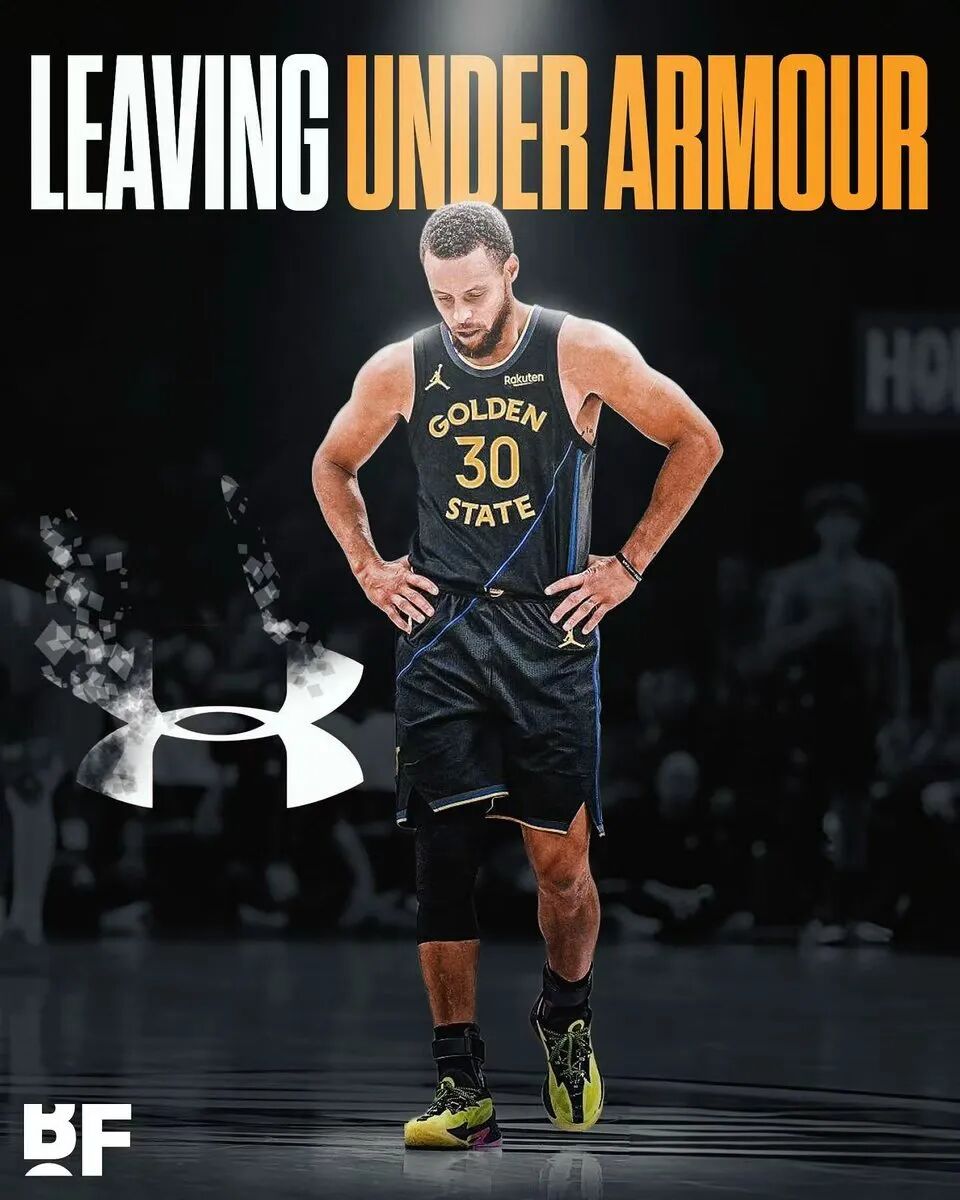
运动品牌

Search documents
失去库里的安德玛,能靠“卖商标”挽回中国消费者吗?
Guan Cha Zhe Wang· 2025-11-18 03:48
Core Viewpoint - Under Armour and Stephen Curry have officially ended their partnership after nearly 13 years, with Curry Brand set to operate independently, and Under Armour to incur a separation cost of $255 million [1][5][10]. Group 1: Partnership Background - The collaboration between Under Armour and Curry began in 2013 when Under Armour offered Curry a contract exceeding $4 million annually, positioning him as a core endorser [2][4]. - Curry's rise to stardom in 2015 significantly boosted Under Armour's sales, with his first signature shoe, Curry 1, generating $160 million in sales and increasing Under Armour's basketball shoe sales by 350% [4][5]. - By 2023, Curry was appointed president of Curry Brand, and a $750 million equity incentive was part of their agreement, indicating a strong partnership trajectory [4][5]. Group 2: Financial Performance and Market Challenges - Under Armour has faced significant financial challenges, with its market value plummeting and stock prices dropping approximately 40% since 2025, alongside consecutive quarters of declining sales [5][8]. - In the 2025 fiscal year, Under Armour reported a 9% revenue decline to $5.2 billion and a net loss of $201 million, marking a return to 2015 revenue levels [8][20]. - The basketball segment's revenue target for fiscal year 2026 is projected at only $100 million, a stark contrast to its previous heights [8][20]. Group 3: Strategic Shift Post-Separation - Under Armour's strategy is shifting towards focusing on core strengths and reducing reliance on high-profile endorsements, with a renewed emphasis on football and grassroots sports [13][14]. - The company plans to target the Asia-Pacific market, particularly China, as a key growth area, while also exploring outdoor and running segments [17][20]. - Under Armour's new approach includes partnerships with local companies for outdoor products, indicating a shift towards a more localized operational model [19][20].


中国严肃要求日方反思纠错,外交部:中日四个政治文件没有任何模糊、曲解的空间
Huan Qiu Shi Bao· 2025-11-17 22:36
Core Viewpoint - Japanese Prime Minister Fumio Kishida's recent remarks regarding Taiwan have sparked strong backlash from China, leading to significant declines in the Japanese stock market, particularly in sectors heavily reliant on Chinese tourism [1][4][6]. Economic Impact - The Tokyo stock market experienced a continuous decline, with many stocks in the retail, transportation, and tourism sectors dropping over 10% [1][5]. - If the number of Chinese tourists to Japan decreases significantly, Japan's GDP could be reduced by 0.36%, equating to an economic loss of approximately 2.2 trillion yen [1][6]. - Chinese tourists account for about 25% of all visitors to Japan, and any reduction in their travel intentions could have a substantial negative impact on the Japanese economy [4][6]. Market Reactions - The Nikkei 225 index fell by over 1% at the market's opening, with notable declines in airline stocks (down 5.8%), sportswear brands (down 6.6%), and department stores (down 12%) [5]. - Reports indicate that many reservations in Osaka, a city that typically hosts a large number of Chinese tourists, have been canceled, raising concerns among local businesses about potential long-term economic impacts [5]. Diplomatic Developments - Japan's Foreign Ministry is attempting to negotiate with China regarding Kishida's comments, with officials expressing concerns about the potential for reduced people-to-people exchanges between the two countries [2][3]. - The Japanese government has stated that it has lodged formal protests against China's response, emphasizing the need to maintain constructive bilateral relations [2][3]. Political Reactions - There is growing criticism within Japan regarding Kishida's statements, with some politicians warning that his remarks could lead to a "national crisis" for Japan, affecting trade and diplomatic relations with China [7]. - Analysts suggest that Kishida's comments reflect a broader strategic anxiety within Japan regarding its military posture and relations with China, indicating a potential shift towards a more aggressive stance [7].
日本这些产业仰仗中国
Di Yi Cai Jing Zi Xun· 2025-11-17 15:08
Core Viewpoint - The recent provocative remarks by Japanese politicians regarding Taiwan have negatively impacted Japanese retail and consumer goods companies, leading to significant stock price declines, particularly for Shiseido, which saw an 11% drop [2]. Automotive Industry - Japanese automotive brands, particularly Lexus, Toyota, and Subaru, are increasingly reliant on the Chinese market, with Lexus imports reaching 138,412 units in the first nine months of the year, a 4% increase, although overall imports have been declining over the past four years [2]. - The market share of Japanese automakers in China has decreased to 11.2% in 2024, down 3.2 percentage points from 2023, with Toyota's sales dropping by 6.9% to 1.776 million units, Honda's sales down 30.9% to 852,000 units, and Nissan's sales down 12.2% to 696,000 units, marking the lowest levels since 2008 [3]. - If political tensions continue, Japanese automotive exports and local sales in China are expected to be significantly affected, with a noted decline in competitiveness for Japanese brands [4]. Consumer Electronics and Appliances - Japan's exports of home appliances to China have sharply decreased, with only about 50,000 units exported annually, including 30,000 refrigerators and 20,000 washing machines [5]. - The value of home appliance imports from Japan has declined from $1.016 billion in 2022 to $785 million in 2023 and is projected to be $708 million in 2024, indicating a downward trend in demand [5]. Sportswear Industry - ASICS, a prominent Japanese sports brand, has experienced rapid growth in China, with projected sales of approximately 5 billion yuan in 2024 and a sales growth rate of nearly 30%, outpacing most other major markets [6]. Alcohol and Beverage Industry - Japan ranks fourth in the import of spirits to China, with a total value of $3.0737 million in the first eight months of 2025, primarily driven by whiskey imports, which saw a 41.9% increase [7]. - Japanese sake exports to China have significantly increased over the past decade, with exports to mainland China and Taiwan growing by 495.9% and 165.9%, respectively, indicating a strong market presence [7]. Tourism Industry - The number of Chinese tourists visiting Japan is projected to exceed 6.98 million in 2024, a 187.9% increase, with Chinese tourists accounting for 20%-25% of total visitors [8]. - Chinese tourists are the largest spenders in Japan, contributing 1.73 trillion yen to the economy, which is 21.3% of total foreign tourist spending [9]. - The potential decline in Chinese tourists due to political tensions could lead to an estimated economic loss of 2.2 trillion yen for Japan, equivalent to approximately 101.16 billion yuan [9].


日本这些产业仰仗中国
第一财经· 2025-11-17 14:35
Core Viewpoint - The article discusses the impact of recent provocative remarks by Japanese politicians on various Japanese industries, particularly those reliant on the Chinese market, leading to significant stock price declines and potential market share losses in sectors such as retail, automotive, and tourism [3][12]. Automotive Industry - Japanese automotive brands, including Lexus, Toyota, and Subaru, are increasingly dependent on the Chinese market, with Lexus imports reaching 138,412 units in the first nine months of the year, a 4% increase, but showing a declining trend over the past four years [3][4]. - Toyota's imports fell by 5% year-on-year, with total imports around 17,700 units from March to September [5]. - Nissan and its luxury brand Infiniti are experiencing poor sales, with monthly sales around 100 units in China [6]. - The market share of Japanese automakers in China has dropped to 11.2%, a decrease of 3.2 percentage points from 2023, with Toyota's sales down 6.9% to 1.776 million units, Honda down 30.9% to 852,000 units, and Nissan down 12.2% to 696,000 units [7][8]. Consumer Goods and Retail - Japanese retail and consumer goods companies, such as Shiseido, saw stock prices drop significantly, with Shiseido's stock falling by 11% due to the political climate [3]. - ASICS, a well-known Japanese sports brand, reported a sales scale of approximately 5 billion yuan in China for 2024, with a growth rate of nearly 30% [10]. Tourism and Alcohol Industry - The tourism sector is heavily impacted, with Chinese tourists accounting for a significant portion of visitors to Japan, contributing to a consumption expenditure of 1.73 trillion yen [12]. - Japanese whiskey imports to China increased by 41.9% in the first eight months of 2025, with a total import value of 24.36 million USD [11]. Home Appliances - Japanese home appliance exports to China have been declining, with imports dropping from 1.016 billion USD in 2022 to 708 million USD in 2024 [9].
日本汽车、家电边缘化,这些产业仰仗中国
Di Yi Cai Jing· 2025-11-17 13:30
Group 1: Japanese Automotive Industry in China - Japanese automotive brands are experiencing a decline in competitiveness in the Chinese market, with potential further market share shrinkage if the Japanese government does not correct its course [1][3] - The market share of Japanese automakers in China has dropped to 11.2% in 2024, a decrease of 3.2 percentage points from 2023, with major companies like Toyota, Honda, and Nissan facing significant sales declines [3] - Toyota's sales in China for 2024 are projected at 1.776 million units, down 6.9%, while Honda's sales have plummeted by 30.9% to approximately 852,000 units, marking the lowest level since 2014 [3] Group 2: Impact of Political Relations - The deterioration of Sino-Japanese political relations, influenced by provocative statements from Japanese politicians, is expected to adversely affect Japanese industries reliant on the Chinese market, including automotive, alcohol, and tourism [1][8] - Analysts suggest that if political tensions continue, Japanese automotive exports and local sales in China will be significantly impacted [3][4] Group 3: Japanese Consumer Goods and Retail - Japanese retail and consumer goods companies are seeing stock price declines due to their reliance on Chinese consumers, with Shiseido's stock dropping by 11% following political tensions [1] - The import of Japanese household appliances to China has been decreasing, with a drop from $1.016 billion in 2022 to an estimated $708 million in 2024 [5] Group 4: Japanese Alcohol and Tourism - Japan's whiskey imports to China have shown significant growth, with a 41.9% increase in import value in the first eight months of 2025, amounting to $2.436 million [6] - Chinese tourists are a major consumer of Japanese sake, with exports to China growing by 495.9% over the past decade, making China the largest export market for Japanese sake [7] Group 5: Economic Impact of Reduced Tourism - A significant reduction in Chinese tourists visiting Japan could lead to a 0.36% decrease in Japan's GDP, equating to an estimated economic loss of 2.2 trillion yen (approximately 101.16 billion yuan) [9]
安德玛不想给库里“打工”了
Xin Lang Cai Jing· 2025-11-17 10:32
Core Insights - Under Armour has decided to cut ties with its once lucrative Curry Brand, incurring a restructuring cost of $255 million, which includes termination compensation for Stephen Curry and operational costs [1][20] - The Curry Brand generated $1 billion in annual revenue, indicating its significance in the sports brand market [1] - The decision reflects a shift in the traditional sports business model, where brands are increasingly seen as operating entities for star athletes rather than the other way around [1] Historical Context - Under Armour's partnership with Curry began in 2013 after Nike underestimated Curry's potential during contract negotiations [3][4] - The collaboration proved successful, with Curry leading the Warriors to a championship and significantly boosting Under Armour's market presence and stock price [5][6] - In 2020, Under Armour established the Curry Brand, aiming to replicate the success of Nike's Jordan brand, with Curry taking on a more active role in brand management [6][7] Financial Implications - The lifetime contract signed in 2020 was valued at over $1 billion, with Curry receiving substantial cash and stock incentives [8][9] - However, Under Armour's stock price decline has led to a significant reduction in the value of Curry's stock options, impacting his overall earnings from the partnership [9][10] - Despite the financial struggles of Under Armour, Curry's personal brand continues to thrive, with projected earnings surpassing $159.6 million in the 2025 season [10] Market Challenges - Under Armour has faced declining revenues, particularly in North America, where it has lost market share to competitors like Nike and emerging brands [12][13] - The brand's performance in the Asia-Pacific region has also deteriorated, with a notable decline in the Chinese market, which was once a growth engine [14][15] - The company struggles with brand perception, being viewed as outdated and less appealing to younger consumers compared to local brands [16][18] Strategic Shift - Under Armour's decision to part ways with Curry is part of a broader strategy to refocus on core products and regain market competitiveness [20][21] - The company aims to launch new basketball products and improve its engagement with younger consumers to reverse its declining sales trend [21][22] - The evolving landscape of athlete-brand relationships highlights the increasing power of star athletes in negotiating terms that reflect their market value [22]
多家航司通知:涉及日本机票可免费退改;宇树科技IPO辅导完成;中央气象台发布寒潮蓝色预警!速冻模式要来了丨每经早参
Mei Ri Jing Ji Xin Wen· 2025-11-15 23:31
Group 1 - Multiple airlines, including Air China and China Southern Airlines, announced special handling plans for tickets related to Japan routes, allowing free refunds and changes for tickets with travel dates before December 31, 2023, under certain conditions [9][10] - Yushu Technology has completed its IPO counseling work, marking a significant step in its listing process, which is expected to enhance the financing and innovation capabilities of the industry [10][11] - The Central Meteorological Administration issued a blue alert for cold waves and strong winds, predicting a temperature drop of 6-10°C across most of central and eastern China from November 16 to 18, with some areas experiencing drops of 12-14°C [4][6] Group 2 - The release of the group standard "Automotive Data Export Security Assessment Method" fills a gap in the automotive industry's specific operational standards for data export security, providing clear guidance for companies looking to comply with regulations when expanding overseas [3] - Under Armour and basketball player Stephen Curry announced a strategic split regarding the Curry Brand, ending a nearly 13-year partnership, which reflects a shift in the sports brand's strategy and highlights the influence of sports stars [13][14] - A UK court ruled that BHP should be held accountable for the 2015 Brazilian tailings dam disaster, which has significant implications for environmental governance in the mining industry [15]

多家航司通知:涉及日本机票可免费退改;宇树科技IPO辅导完成;安德玛与库里分道扬镳;中央气象台发布寒潮蓝色预警!速冻模式要来了丨每经早参
Mei Ri Jing Ji Xin Wen· 2025-11-15 22:42
Group 1 - Shenzhou-22 spacecraft is set to launch with cargo, including food for astronauts and equipment for the space station [4] - The Ministry of Ecology and Environment has initiated a new round of environmental inspections in Beijing, Tianjin, and Hebei, involving eight inspection teams [4] - A new group standard for automotive data export safety assessment has been released, filling a gap in the industry and providing clear guidelines for companies [4] Group 2 - A cold wave and strong wind blue alert have been issued, with significant temperature drops expected across central and eastern China [5] - A primary school in Shanxi issued an apology after a controversial request for parents to fill out a "social resources" form [6] Group 3 - Multiple airlines have announced special handling procedures for tickets on routes to Japan, allowing free refunds and changes for eligible tickets [11] - Yushut Technology has completed its IPO counseling, marking a significant step in its listing process [12][13] - Douyin has removed low-priced Moutai listings, returning prices to normal and indicating potential regulatory scrutiny on third-party sellers [14] Group 4 - Citic Trust has put 160 properties of Baoneng Group up for public disposal, involving a total bad debt of 1.408 billion yuan [14] - Under Armour and Stephen Curry have ended their nearly 13-year partnership, indicating a strategic shift for the sports brand [16] - A UK court ruled that BHP should be held accountable for the 2015 Brazilian dam disaster, impacting the mining industry's environmental governance [17] - The US government has allowed negotiations for the sale of Russian oil company Lukoil's overseas assets to continue despite sanctions [18]

安德玛与库里分道扬镳
Mei Ri Jing Ji Xin Wen· 2025-11-15 14:45
Core Viewpoint - Under Armour and basketball player Stephen Curry have announced a strategic split regarding the Curry Brand, ending nearly 13 years of collaboration [1] Group 1 - The partnership between Under Armour and Stephen Curry has officially concluded [1] - The strategic separation involves the personal brand Curry Brand, which was developed during their collaboration [1]

放弃库里,安德玛断臂求生
3 6 Ke· 2025-11-14 11:57
Core Viewpoint - Under Armour has announced the separation from Stephen Curry and the Curry Brand, marking the end of a 12-year partnership that was once considered a model in sports business [1][3]. Group 1: Historical Context - The partnership between Curry and Under Armour began in 2013 when Curry left Nike, which failed to secure his contract renewal, allowing Under Armour to sign him for $4 million annually despite holding only 1% of the basketball shoe market at that time [5]. - The collaboration led to significant successes, including a 350% increase in basketball shoe sales in 2016, with estimates suggesting Curry could generate $14 billion in value for Under Armour [5][7]. Group 2: Current Developments - The separation comes as Under Armour faces financial difficulties, with stock prices plummeting from a peak of $53.78 to $4.66, attributed to overexpansion and strategic missteps [7][10]. - Under Armour's restructuring plan, initiated by founder Kevin Plank after a series of CEO changes, has incurred $103 million in restructuring and impairment costs, with revenues declining by 5% year-over-year [10][11]. Group 3: Strategic Implications - The decision to part ways with Curry is seen as a necessary step for Under Armour to refocus its strategy and resources, as the brand aims to return to its core strengths amid financial pressures [15][20]. - The company plans to maintain its presence in the basketball market, indicating that the Curry Brand's athletes will still be under contract with Under Armour [23]. Group 4: Future Outlook - Under Armour is expected to leverage emerging trends in the fitness industry, such as CrossFit and hybrid training, to regain market relevance and focus on its unique competitive advantages [20][21]. - The brand's long-term strategy will involve reducing inventory and maintaining price discipline while redefining its market positioning to ensure sustainable growth [15][23].