集成电路制造

Search documents
燕东微(688172):12吋持续扩产
China Post Securities· 2025-12-31 09:20
Investment Rating - The report assigns an "Accumulate" rating for the company, marking its first coverage [1][6]. Core Insights - The company is actively advancing its 12-inch production expansion, with revenue from manufacturing and services expected to reach 333 million and 288 million yuan respectively in the first half of 2025, reflecting year-on-year growth of 18.69% and a decline of 5.5% [3]. - The company is enhancing its silicon photonics layout, integrating resources from its 8/12-inch CMOS compatible process lines to establish a collaborative development system, achieving significant progress in mass production of silicon photonics technology [4]. - A stock incentive plan has been proposed, aiming to grant 35.09 million restricted shares to up to 300 individuals, with performance targets set for revenue and R&D expenditures from 2027 to 2029 [5]. Financial Projections - The company is projected to achieve revenues of 1.74 billion, 2.57 billion, and 3.43 billion yuan in 2025, 2026, and 2027 respectively, with net profits expected to be -160 million, -1.22 billion, and -1.73 billion yuan [6][10]. - The anticipated profit pressure is attributed to ongoing 12-inch expansion efforts and the associated depreciation from new equipment, with expectations for profit improvement as capacity is gradually released [6]. Stock Performance - The stock has shown a performance trend with fluctuations, indicating a potential recovery phase as the company progresses with its expansion plans [8].

中芯国际406亿重组整合核心业务 子公司获77亿美元增资优化财务结构
Chang Jiang Shang Bao· 2025-12-30 23:21
长江商报记者注意到,中芯北方是中芯国际旗下重要的12英寸晶圆代工厂。在当前资本市场为并购重组提供良好 环境以及国家大力支持半导体行业发展的背景下,通过本次重组,中芯国际将持有中芯北方100%股权,进而提高 上市公司资产质量、增强业务上的协同性。 同日,中芯国际披露另一家重要子公司增资扩股计划,包括中芯控股、国家集成电路基金三期、上海集成电路基 金二期等在内的投资方将向中芯南方集成电路制造有限公司(以下简称"中芯南方")增资77.78亿美元,以降低中 芯南方的资产负债率,构建集团更为稳健的财务结构。 拟收购中芯北方剩余49%股权 中芯国际重组中芯北方取得新进展。 长江商报消息 ●长江商报记者 徐佳 作为中国大陆集成电路制造领军企业,中芯国际(688981.SH、00981.HK)持续推进旗下核心业务整合与财务结 构优化。 12月29日晚间,中芯国际披露重组草案。公司拟作价406亿元,向国家集成电路基金等5名交易对手方购买中芯北 方集成电路制造(北京)有限公司(以下简称"中芯北方")49%股权。 截至2025年8月末,中芯北方资产总额452.83亿元,负债总额34.75亿元,归母净资产418.08亿元。 12月2 ...


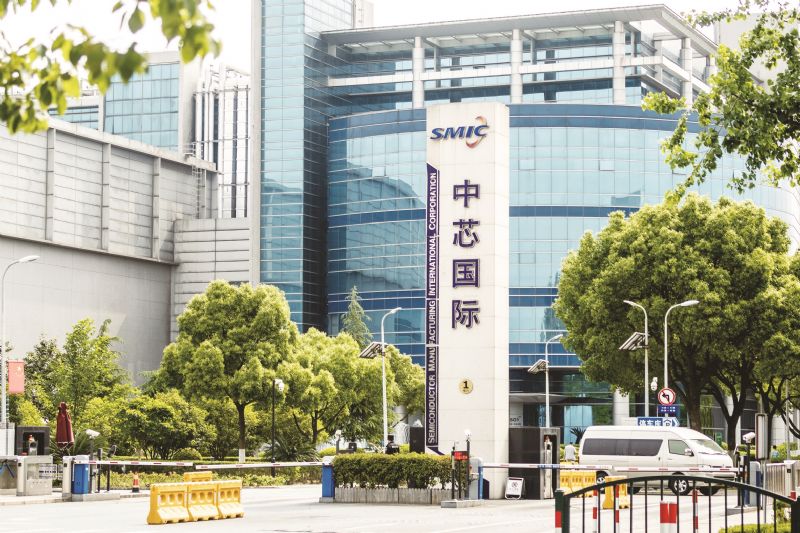
中芯国际重磅收购!
国芯网· 2025-12-30 12:42
Core Viewpoint - The article discusses the acquisition of a 49% stake in Zhongxin North by SMIC, emphasizing the strategic move to enhance its position in the semiconductor industry and the significance of this transaction for the domestic semiconductor sector [2]. Group 1: Acquisition Details - SMIC plans to acquire 49% of Zhongxin North for approximately 40.601 billion yuan, which will result in SMIC owning 100% of Zhongxin North [2]. - Zhongxin North, established in July 2013 with a registered capital of 4.8 billion USD, focuses on 12-inch wafer manufacturing with processes ranging from 65nm to 28nm [2]. - The company has initiated a 12-inch integrated circuit production line project, covering an area of about 286,000 square meters, with a planned monthly capacity of 70,000 12-inch wafers [2]. Group 2: Valuation and Financials - The equity book value of Zhongxin North is reported at 41.8 billion yuan, with an assessed value of 82.8 billion yuan, indicating a valuation increase of 41 billion yuan and a premium rate of 98.19% [2]. - SMIC also announced a new joint venture agreement with the National Integrated Circuit Fund and other investors, increasing the registered capital of Zhongxin South from 6.5 billion USD to approximately 10.0773 billion USD [2].
粤芯三期集成电路制造公司注册资本增至75亿元
Zheng Quan Ri Bao Wang· 2025-12-30 10:45
(编辑 李波) 本报讯 (记者袁传玺)天眼查App显示,近日,广州粤芯三期集成电路制造有限公司发生工商变更,注册资本由65亿元增 至75亿元。 ...
中芯国际(688981.SH):中芯南方注册资本将增至100.773亿美元
智通财经网· 2025-12-29 23:12
智通财经APP讯,中芯国际(688981.SH)发布公告,全资附属公司中芯控股与国家集成电路基金、国家 集成电路基金二期等订立新合资合同及新增资扩股协议,以修订前合资合同。据此,中芯南方注册资本 将由65亿美元增加至100.773亿美元。中芯控股、国家集成电路基金、国家集成电路基金二期、国家集 成电路基金三期、上海集成电路基金、上海集成电路基金二期、泰新鼎吉、先导集成电路基金将分别持 有中芯南方41.561%、9.392%、14.885%、8.361%、7.939%、11.253%、5.545%及1.063%股权。各方同 意,各增资方就本次增资向中芯南方现金出资合计77.780亿美元,其中,合计35.773亿美元计入中芯南 方注册资本,合计42.007亿美元计入中芯南方的资本公积。 ...
中芯国际(00981.HK):中芯南方注册资本增至100.77亿美元
Ge Long Hui· 2025-12-29 15:01
格隆汇12月29日丨中芯国际(00981.HK)公告,于2025年12月29日,中芯控股与国家集成电路基金、国家 集成电路基金二期、国家集成电路基金三期、上海集成电路基金、上海集成电路基金二期、泰新鼎吉及 先导集成电路基金订立新合资合同及新增资扩股协议,以修订前合资合同,据此:(i)中芯南方的注册资 本将由65亿美元增加至100.773亿美元;及(ii)中芯控股、国家集成电路基金、国家集成电路基金二期、 国家集成电路基金三期、上海集成电路基金、上海集成电路基金二期、泰新鼎吉、先导集成电路基金将 分别持有中芯南方41.561%、9.392%、14.885%、8.361%、7.939%、11.253%、5.545%及1.063%股权。 ...
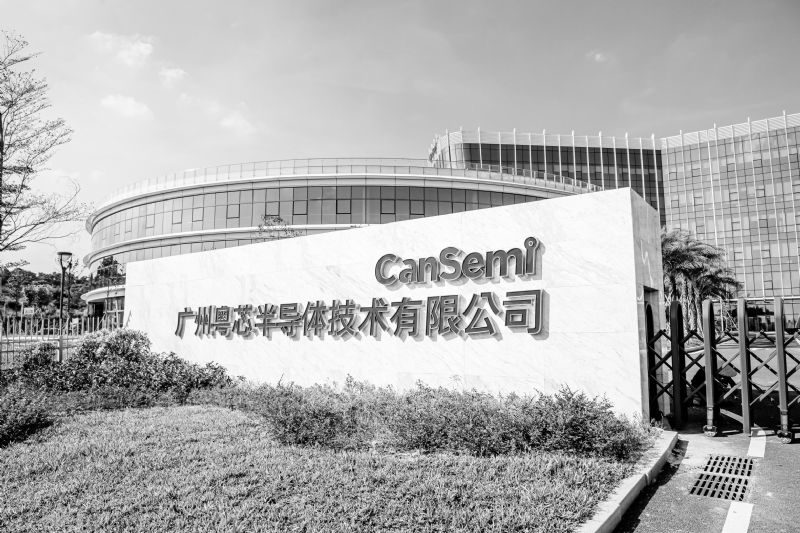
粤芯半导体负债率76%拟募75亿扩产 三年半亏64亿预期2029年盈利或落空
Chang Jiang Shang Bao· 2025-12-28 23:23
Core Viewpoint - Guangdong's first mass production 12-inch wafer foundry, Yuexin Semiconductor, is pushing for an IPO to raise funds for capacity expansion while facing multiple challenges including ongoing losses, high depreciation, concentrated customer base, and rising debt ratio [2][3] Financial Performance - From 2022 to mid-2025, Yuexin Semiconductor achieved a total revenue of 5.323 billion yuan, with a cumulative net loss of 6.414 billion yuan [4][5] - The company's depreciation expenses for machinery and equipment reached 5.528 billion yuan, while R&D expenses totaled 1.838 billion yuan during the same period [5][6] - The company expects to achieve overall profitability by 2029 [8] Capacity Expansion Plans - Yuexin Semiconductor plans to raise 7.5 billion yuan through an IPO to enhance production capacity, with a total planned capacity of 80,000 wafers per month across two factories [4][5] - Future plans include constructing a new production line with a capacity of 40,000 wafers per month, aiming for a total capacity of 120,000 wafers per month [5] Customer Concentration and Profitability - The top five customers accounted for a significant portion of revenue, with their combined income representing 65% to 67.82% of total revenue during the reporting periods [9] - The company's gross profit margin has been negative, with figures of -21.83%, -114.90%, -71.00%, and -57.01% over the same periods, compared to an average of 26.05% to 16.74% for comparable companies [9] Debt and Asset Management - As of mid-2025, the company's debt ratio reached 76.08%, significantly higher than the average of 33.88% for comparable listed companies [10] - Fixed assets and construction in progress accounted for 68.33% of total assets, indicating a heavy reliance on capital investments [10]
中芯国际跌0.80%,成交额49.38亿元,后市是否有机会?
Xin Lang Cai Jing· 2025-12-26 07:43
Core Viewpoint - SMIC (Semiconductor Manufacturing International Corporation) is experiencing a slight decline in stock price, with a market capitalization of approximately 976.85 billion yuan and a trading volume of 4.938 billion yuan on December 26 [1]. Group 1: Company Overview - SMIC is the largest integrated circuit manufacturing enterprise group in mainland China, known for its advanced technology and comprehensive support [3]. - The company's main business includes integrated circuit wafer foundry services based on various technology nodes and platforms, along with design services, IP support, and photomask manufacturing [3]. - As of September 30, 2025, SMIC achieved a revenue of 49.51 billion yuan, representing a year-on-year growth of 18.22%, and a net profit attributable to shareholders of 3.82 billion yuan, reflecting a 41.09% increase [7]. Group 2: Investment and Shareholding - The National Integrated Circuit Industry Investment Fund holds a 1.61% stake in SMIC, indicating government support for the company [2]. - As of September 30, 2025, the number of shareholders in SMIC increased to 336,200, with an average of 6,134 shares held per shareholder, a decrease of 25.41% from the previous period [7]. - Major shareholders include various ETFs, with notable reductions in holdings from several funds, indicating a shift in institutional investment [8][9]. Group 3: Market Activity - The stock has seen a net outflow of 505 million yuan from main funds today, with a continuous reduction in holdings over the past three days [4]. - The average trading cost of SMIC shares is 121.18 yuan, with the stock price approaching a resistance level of 125.50 yuan, suggesting potential volatility [6].
沪深交易所月内受理15宗IPO
Sou Hu Cai Jing· 2025-12-25 16:24
Core Viewpoint - The IPO acceptance process is accelerating as the year-end approaches, with a total of 19 IPO applications accepted in December, primarily by the Shanghai and Shenzhen stock exchanges, indicating a robust growth in the A-share market for new listings in 2025 [1][3][9]. Group 1: IPO Acceptance and Market Trends - From December 22 to 24, seven companies, including Boma Medical and Siyi Technology, had their IPO applications accepted, with the Shanghai Stock Exchange accepting three and the Shenzhen Stock Exchange four [3]. - As of December 24, the total number of IPOs accepted in December reached 19, with the Shanghai and Shenzhen exchanges accounting for nearly 80% of these [1][3]. - The A-share market is expected to see 114 new IPOs in 2025, representing a 14% increase compared to the previous year [1][9]. Group 2: Company Specifics and Financials - Among the newly accepted IPOs, four companies, including Yuanchip Semiconductor and Guoyi Quantum, are notable for their high-tech focus and are applying for listings despite reporting losses [6][7]. - Yuanchip Semiconductor aims to raise approximately 7.5 billion yuan, making it the largest fundraising among the new IPOs [4][6]. - Other companies with proposed fundraising over 1 billion yuan include Xinowei and Boma Medical, with Xinowei's fundraising amounting to 2.94 billion yuan [4]. Group 3: Market Dynamics and Future Outlook - The acceptance of IPOs from unprofitable companies is seen as a way to enrich the market structure and provide high-growth investment opportunities [7]. - The overall fundraising amount from new IPOs this year has significantly increased, with 111 new stocks raising approximately 125.32 billion yuan, compared to 67.35 billion yuan last year [9][10]. - Deloitte's report anticipates that by the end of 2025, the A-share market will see 114 companies listed, raising 129.6 billion yuan, with a focus on sectors prioritized in China's development plans [10][11].

A股预计全年上市114只新股
Bei Jing Shang Bao· 2025-12-25 16:02
Group 1 - The core viewpoint of the news is that the IPO acceptance rate is accelerating as the year-end approaches, with a total of 19 IPO applications accepted in December, primarily by the Shanghai and Shenzhen stock exchanges [1][3] - Among the newly accepted IPOs, four companies, including Yuexin Semiconductor and Guoyi Quantum, are notable for their high-tech focus and are applying for listings despite being in a loss position [1][6] - The total number of new IPOs expected for the year in the A-share market is 114, representing a 14% increase compared to the previous year [1][9] Group 2 - From December 1 to 24, the Shanghai and Shenzhen stock exchanges accepted 15 IPO applications, with the majority targeting the Growth Enterprise Market (GEM) [3][4] - Yuexin Semiconductor leads in proposed fundraising with approximately 7.5 billion yuan, focusing on providing 12-inch wafer foundry services [3][4] - Other companies with proposed fundraising exceeding 1 billion yuan include Xinovate and Boma Medical, with Xinovate's fundraising amounting to 2.94 billion yuan [4][6] Group 3 - The acceptance of IPOs for high-tech companies is supported by recent regulatory changes, allowing unprofitable companies to list on the STAR Market and GEM [6][7] - Yuexin Semiconductor reported significant losses, with a net profit of approximately -1.2 billion yuan for the first half of the year, and has accumulated undistributed losses of -8.936 billion yuan [7][8] - The overall fundraising amount for new IPOs in the A-share market has significantly increased, with 111 new stocks raising approximately 125.32 billion yuan this year, compared to 67.35 billion yuan last year [9][10]