
Online Food Delivery

Search documents
DoorDash, Kroger Expand Partnership to Offer Full Grocery Delivery from All 2,700 US Stores
Yahoo Finance· 2025-10-01 06:16
Group 1 - DoorDash is expanding its grocery delivery partnership with Kroger, making Kroger the largest grocer available on the DoorDash app [1][2] - The original partnership began in 2022, initially offering limited items such as sushi and flowers from select Kroger stores [2][3] - Starting October 1, DoorDash will provide delivery of Kroger's full grocery assortment from all 2,700 US stores [2][3] Group 2 - DoorDash launched grocery delivery in 2020 with several partners, including Fresh Thyme and Meijer, and previously partnered with Walmart until 2022 [3] - Kroger operates stores in 35 states and the District of Columbia under various brands, including Ralphs, Smith's, and Harris Teeter [3][4] - DoorDash serves as a commerce platform connecting merchants, consumers, and independent contractors both in the US and internationally [4]


Instacart Downgraded To Neutral At BTIG On Rising Competition
Financial Modeling Prep· 2025-09-30 15:35
Core Viewpoint - BTIG downgraded Instacart from Buy to Neutral due to increasing competitive pressures from larger rivals in the grocery delivery sector [1] Group 1: Competitive Landscape - Amazon has expanded its perishable grocery delivery service to 1,000 cities, intensifying competition for Instacart [1] - Instacart's retail partners have formed new deals with Amazon, DoorDash, and Uber, further increasing competitive challenges [1] - More than 25% of Instacart's gross order volume has shifted to competitors recently, indicating a significant loss of market share [1] Group 2: Financial Outlook - BTIG had previously adjusted its price target for Instacart, but recent competitive developments have raised concerns about the sustainability of its growth [2] - Analysts find it increasingly difficult to justify a double-digit EBITDA multiple for Instacart given the negative outlook [2]


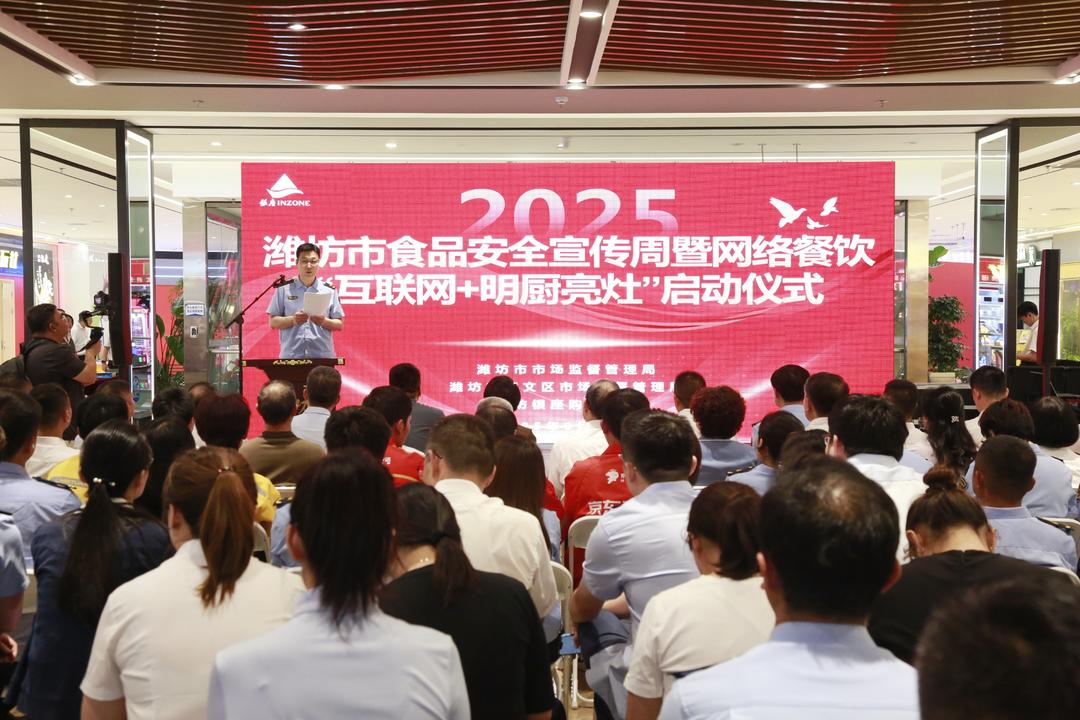
2025年潍坊市网络餐饮“互联网+明厨亮灶”试点工作正式启动
Qi Lu Wan Bao Wang· 2025-09-27 13:31
Core Points - The 2025 Weifang Food Safety Publicity Week and the "Internet + Bright Kitchen Bright Stove" pilot program were officially launched in the Yinzuo Mall of Kuiwen District on September 26 [1] - The theme of this year's Food Safety Publicity Week is "Upholding Virtue and Law, Sharing Food Safety," aiming to enhance the overall food safety governance level in Weifang [3] Group 1 - The event featured detailed explanations and popular science on food safety issues by staff from the Weifang Food and Drug Safety Office, distributing over 800 promotional materials [3] - A themed activity called "You Order, We Inspect" was organized, collecting 97 public inspection requests on-site [3] - Eight "Food Safety Sentinels" were appointed, with representatives from Meituan delivery platform, Yinzuo Mall, and delivery personnel expressing their commitment to promoting the "Internet + Bright Kitchen Bright Stove" initiative and the role of "Food Safety Sentinels" in social supervision [3] Group 2 - Over 120 representatives from various sectors, including food industry units, delivery platforms, media, consumers, and volunteers, participated in the event [4]
DoorDash, IBD Stock Of The Day, Battles For Grocery Market With Amazon, Uber, Instacart
Investors· 2025-09-26 21:31
Group 1 - DoorDash (DASH) is showing a bullish rebound, currently priced at $262.47, with a slight increase of 0.15% and a significant 52% rise in its stock performance [1] - The stock is finding support at the 21-day moving average and has a Composite Rating of 98 out of 99, indicating strong performance relative to its peers [1] - DoorDash is part of a positive chart pattern known as "Cup with Handle," which suggests potential for further price increases [1] Group 2 - Nvidia and other AI-related stocks are highlighted as leading stocks near buy points, indicating a focus on the artificial intelligence sector [2] - The market is experiencing a rebound, with several stocks, including Tesla and Marvell, also in focus for potential buy points [4] - Amazon is facing challenges, including a $2.5 billion settlement related to an FTC lawsuit, which may impact its stock performance [4]
超强台风桦加沙袭穗深,美团饿了么23日18时起暂停外卖服务
3 6 Ke· 2025-09-23 10:09
Core Viewpoint - The super typhoon "Haikui" is expected to severely impact Shenzhen and Guangzhou, leading to the suspension of delivery services by major platforms to ensure the safety of delivery personnel [1] Company Responses - Meituan has activated its special weather response plan and will suspend delivery services in Shenzhen starting from 6 PM on September 23 [1] - Taobao Shangu and Ele.me have also announced the suspension of order-taking and delivery services in Shenzhen from 6 PM on September 23, in accordance with local government announcements [1] Industry Impact - The super typhoon is projected to bring strong winds, heavy rain, and storm surges to Guangzhou from the night of September 23 to 25, prompting the city to implement a "five stoppages" policy (suspending classes, work, production, transportation, and business operations) to protect public safety [1]



美团客服回应“App崩了”:已全部恢复,可以正常下单
Sou Hu Cai Jing· 2025-09-22 11:01
Group 1 - The core issue was a temporary outage on Meituan's platform, causing users to experience difficulties accessing merchant details and placing orders, leading to the topic "Meituan crashed" trending on social media [1] - Meituan confirmed the platform experienced a brief disruption but has since fully recovered, allowing normal order placement [4] - On July 5, Meituan faced a similar service disruption due to a record-breaking order volume triggering a traffic control mechanism, which was later resolved [4] Group 2 - Meituan's revenue for Q2 2025 is projected to increase by 11.7% year-on-year, reaching RMB 91.8 billion, compared to RMB 82.3 billion in the same period of 2024 [4] - The operating profit of Meituan's core local commerce segment significantly declined to RMB 3.7 billion due to intense competition in the food delivery industry [4] - On July 24, Meituan launched the "Million Bright Kitchen" initiative, introducing features like "Food Safety Diary" and "Bright Kitchen" to provide real-time updates on kitchen environments to customers through images and live videos [4]
Midcap stocks fund managers kept buying for six months
BusinessLine· 2025-09-19 01:30
Market Overview - The Indian equity market has experienced significant volatility over the past year, with a notable rebound occurring in the last six months, particularly from March 2025, following a steep correction from the late-September 2024 peak [1] - During the six-month period ending September 17, 2025, the Nifty 50 Total Return Index (TRI) increased by 14%, while the Nifty Midcap 150 TRI and Nifty Smallcap 250 TRI rose by 21% and 24%, respectively [1] Mutual Fund Activity - The rebound in the market coincided with steady mutual fund inflows, with managers investing nearly ₹2.5 lakh crore into equities during the same period [2] - This influx of liquidity, combined with market volatility, provided active managers with opportunities to acquire quality stocks at attractive prices [2] Midcap Stock Selection - Active fund managers have consistently added specific midcap stocks to their portfolios over the past six months, focusing on those with significant increases in equity scheme participation from February to August 2025 [4] - The top three midcap stocks identified are Swiggy, One97 Communications, and IDFC First Bank [5] Individual Stock Performance - The number of active equity schemes holding Swiggy increased from 90 in February 2025 to 144 in August 2025, with new investments from HDFC Flexi Cap, Axis Midcap, and Nippon India Multi Cap [5] - One97 Communications, the parent company of Paytm, saw its active equity scheme count rise from 51 to 103 during the same period, with new entries from Motilal Oswal Large & Midcap, Canara Rob Mid Cap, and UTI Multi Asset Allocation [6] - IDFC First Bank experienced a significant increase in active schemes, rising from 9 in February 2025 to 48 in August 2025, with notable new investors including Sundaram Mid Cap, Franklin India Mid Cap, and Bandhan Value Fund [6]


Deliveroo founder Will Shu to step down as CEO after DoorDash takeover
CNBC· 2025-09-18 11:55
Core Viewpoint - Deliveroo CEO Will Shu will step down following the completion of the acquisition by U.S. rival DoorDash, which values Deliveroo at £2.9 billion ($4 billion) [1][2] Company Summary - Will Shu co-founded Deliveroo in 2013 with Greg Orlowski and has led the company since its inception [1] - The decision to step down comes after the announcement of DoorDash's acquisition deal in May [1] Industry Context - The acquisition by DoorDash signifies a consolidation trend in the food delivery industry, highlighting competitive dynamics between U.S. and U.K. platforms [1]

美团-关键要点 _ 在扩大的即时零售业务下捍卫外卖领导地位
2025-09-11 12:11
Summary of Meituan's Conference Call Company Overview - **Company**: Meituan (3690.HK) - **Event**: Asia Leaders Conference 2025 - **Date**: September 5, 2025 - **Focus**: Food delivery competitive landscape, Instashopping growth, AI strategies, and financial outlook Key Points Industry and Competitive Landscape - **Food Delivery Competition**: Increased competition since June-July has significantly impacted unit economics due to elevated subsidy levels and higher delivery costs [5][7] - **Market Share**: Meituan aims to maintain its GTV market share leadership in the meal category, focusing on core users and extensive merchant coverage [5][7] - **Order Volume Growth**: Forecasted order volume growth of 13% for 3Q25 and 11% for FY25E, driven by industry-wide subsidies [5][7] Financial Performance and Projections - **EBIT Loss**: Expected food delivery EBIT loss of -Rmb22 billion for 2025E due to user subsidies [5][7] - **Instashopping Growth**: Anticipated order volume growth of 31% for 2025E, with an EBIT loss of -Rmb1.7 billion due to investments [6][7] - **Revenue Growth**: Projected IHT revenue growth of 13% year-over-year for 3Q25, with a 15% growth estimate for 2025E [8][7] Strategic Initiatives - **Instashopping and Xiaoxiang Supermarket**: Long-term GTV targets reiterated for both models by 2030E [5][7] - **AI and New Initiatives**: Focus on AI applications and expansion of Keeta, with expected losses from new initiatives of -Rmb2.3 billion for 3Q25E [8][7] Risks and Challenges - **Downside Risks**: Potential risks include intensified competition, labor cost inflation, food safety concerns, and larger-than-expected investments in Keeta [8][7] - **In-store Competition**: Stable competitive landscape, but impacted by macro factors and food delivery competition affecting margins [8][7] Market Outlook - **Long-term Confidence**: Despite near-term profit pressures, confidence remains in Meituan's local services leadership and recovery in profitability by 2026-27E [7][8] - **Price Target**: Buy-rated with a 12-month price target of HK$144, representing an upside of 39.8% from the current price of HK$103 [11][7] Financial Metrics - **Market Capitalization**: HK$642.5 billion / $82.4 billion [11][7] - **Revenue Projections**: Expected revenue of Rmb 337.6 billion for 2024, growing to Rmb 438.9 billion by 2027 [11][7] - **EBITDA and EPS**: Projected EBITDA of Rmb 49.1 billion for 2024, with EPS expected to be Rmb 7.03 in 2024 [11][7] Conclusion Meituan is navigating a challenging competitive landscape in food delivery while focusing on growth in Instashopping and leveraging AI strategies. The company remains optimistic about its long-term market position and profitability recovery, despite facing significant near-term challenges and risks.

大众点评重启“品质外卖”,必吃榜、黑珍珠餐厅也能外卖到家了
Chang Sha Wan Bao· 2025-09-10 09:28
Core Insights - The relaunch of "Quality Takeaway" by Dazhong Dianping aims to meet new consumer demands and enhance the service by integrating resources from both Dazhong Dianping and Meituan [1][2] - The service now includes over one million high-rated dining merchants, providing a selection of quality takeaway options from top-rated restaurants, including those on the "Must-Eat List" and "Black Pearl" list [1][2] Summary by Sections Service Overview - Dazhong Dianping has restarted its "Quality Takeaway" service, which allows users to receive high-quality meals from top-rated restaurants within 30 minutes [1] - The service features over 1,400 restaurants from the 2025 "Must-Eat List," nearly 30 from the 2025 "Black Pearl" list, and around 1,500 high-star hotel restaurants [1] Consumer Engagement - The platform will distribute 25 million various types of "Quality Takeaway" consumption vouchers to encourage user orders [1] - The service will focus on recommending high-rated local shops and community restaurants, as well as providing takeaway vouchers for dine-in merchants to boost both online and offline sales [2] Data and Performance - Dazhong Dianping has established itself as a "rating standard" in the Chinese dining industry, leveraging user reviews and merchant ratings [2] - In the past year, the platform accumulated 363 million genuine reviews, with a daily average of "photo reviews" increasing by 11% year-on-year [2]