半导体

Search documents
黄仁勋最新发声,英伟达股价瞬间大涨
Di Yi Cai Jing Zi Xun· 2026-03-17 00:05
Core Viewpoint - NVIDIA's CEO Jensen Huang projected a significant increase in revenue from $500 billion to $1 trillion for the years 2025 to 2027, highlighting the company's strong growth trajectory in AI and cloud services [1] Group 1: Revenue Projections - Last year, NVIDIA anticipated $500 billion in orders from Blackwell and Rubin for the years 2025 to 2026 [1] - This year, the revenue projection has increased to $1 trillion for the years 2025 to 2027 [1] Group 2: Revenue Sources - NVIDIA's revenue from hyperscale cloud service providers accounts for 60% of its total revenue [1] - The remaining 40% of revenue is driven by widespread AI demand, which includes regional cloud, enterprise cloud, industrial AI, robotics, edge AI, and small servers [1] Group 3: Market Reaction - Following the announcement of these projections, NVIDIA's stock price surged over 4% [1]

黄仁勋最新发声,英伟达股价瞬间大涨
第一财经· 2026-03-17 00:00
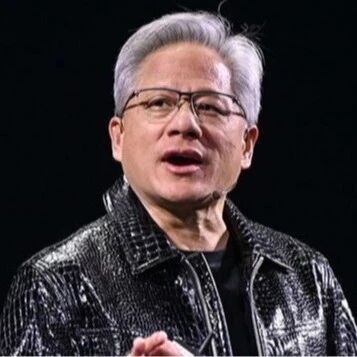
编辑 | 七三 在 英 伟 达 GTC 大 会 上 , 英 伟 达 CEO 黄 仁 勋 表 示 , 去 年 这 个 时 候 , 他 看 到 2025 年 至 2026 年 来 自 Blackwell和Rubin的5000亿美元订单收入,这是一笔巨大的收入。一年之后,他看到2025年至2027 年,收入将达到1万亿美元。2025年至今,成为英伟达新合作伙伴的包括Anthropic、MSL、Multiple OSS。英伟达来自超大规模云服务商的收入占比60%,还有40%来自无处不在的AI需求,包括区域 云、企业云、工业AI、机器人、边缘AI、小服务器等。演讲到这里时,英伟达股价瞬间涨超4%。 ...

黄仁勋GTC演讲全文:推理时代到来,2027营收至少万亿美元,龙虾就是新操作系统
华尔街见闻· 2026-03-16 23:55
Core Insights - The article discusses NVIDIA's transformation from a "chip company" to an "AI infrastructure and factory company," emphasizing the concept of "Token Factory Economics" as a driving force for future growth [2][5][13]. Group 1: Market Demand and Growth Projections - NVIDIA's CEO Huang Renxun projected a significant increase in AI computing demand, estimating at least $1 trillion by 2027, up from a previous estimate of $500 billion [6][65]. - The company anticipates that actual computing demand will exceed this projection, indicating a robust growth trajectory for AI infrastructure [10][11]. Group 2: AI Infrastructure and Token Production - Huang highlighted that modern data centers will evolve into "Token factories," focusing on the efficiency of token production as a key operational metric [74]. - The future pricing structure for tokens will include various tiers, with costs ranging from free to $150 per million tokens, reflecting the value of throughput and speed [16][75]. Group 3: Technological Advancements - The introduction of the Vera Rubin system, which achieved a 350-fold increase in token generation speed, showcases NVIDIA's commitment to cutting-edge technology [20][81]. - The integration of Groq technology aims to enhance inference performance, with a focus on optimizing the processing pipeline for AI workloads [77][79]. Group 4: Software and Ecosystem Development - The emergence of OpenClaw as a pivotal open-source project signifies a shift towards "Agent-as-a-Service" (AaaS), transforming how software companies operate [26][91]. - NVIDIA's collaboration with various enterprises to develop AI models and platforms indicates a strategic move to solidify its position in the AI ecosystem [96]. Group 5: Industry Impact and Future Outlook - The article emphasizes that the AI industry is experiencing unprecedented growth, with venture capital investments reaching $150 billion, marking a historic high [57]. - The anticipated shift towards AI-native companies will redefine industries, similar to past technological revolutions [58].

SK海力士将参加英伟达年度技术大会,展示其AI芯片领先地位
Xin Lang Cai Jing· 2026-03-16 23:43
Core Insights - SK Hynix will participate in NVIDIA's GTC 2026 conference in California, focusing on its leadership in AI memory chips [1][2] - The company will showcase its sixth-generation high bandwidth memory (HBM4) and its applications in NVIDIA's AI platform [1][2] - SK Hynix aims to reduce data bottlenecks and enhance AI training and inference performance on NVIDIA's platform [1][2] - The chairman of SK Group and the CEO of SK Hynix plan to meet with representatives from major companies, including NVIDIA, to explore business collaborations [1][2] - The company emphasizes that memory has become a core element in determining the architecture and performance of AI infrastructure [1][2] - SK Hynix intends to leverage its expertise in memory across the entire AI field, from data centers to edge applications, to shape the future of AI in collaboration with global partners [1][2]
黄仁勋放豪言:到2027年Blackwell和Rubin芯片至少创收1万亿美元!
美股IPO· 2026-03-16 23:32
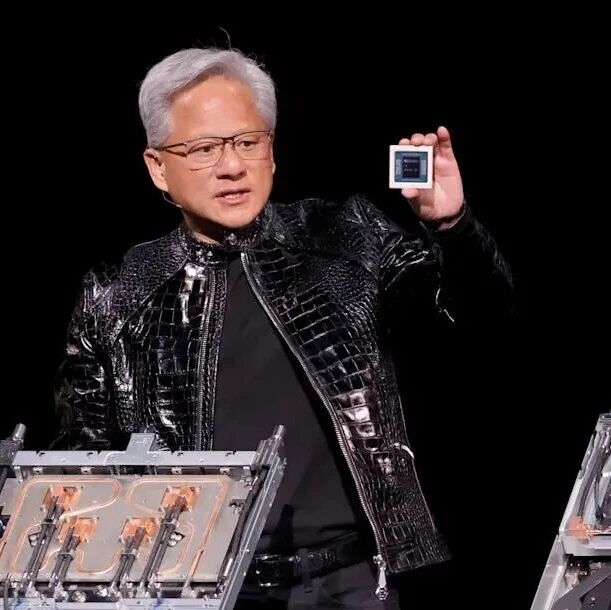
Core Viewpoint - Nvidia's CEO Jensen Huang has provided an aggressive growth forecast, predicting that the new AI chip architectures Blackwell and Rubin will generate at least $1 trillion in revenue by the end of 2027, significantly higher than the previous estimate of $500 billion for 2025-2026 [3][12]. Group 1: AI Infrastructure Demand - The demand for AI computing power has surged over the past two years, with Nvidia becoming a key hardware supplier in the AI infrastructure wave [5]. - Major tech companies, including Microsoft, Amazon, Alphabet, and Meta, are significant customers of Nvidia's data center GPUs [5]. - The global tech industry is expected to spend several hundred billion dollars on AI infrastructure in the coming years [6]. Group 2: Product Development and Market Position - Nvidia is rapidly iterating its chip architectures to maintain its leadership in AI acceleration computing [7]. - Blackwell is currently the most important AI computing platform for Nvidia, designed for large model training and inference, offering higher computing power and efficiency [8][10]. - The next-generation architecture, Rubin, is planned for release around 2026, aiming for significant improvements in computing power and energy efficiency [11]. Group 3: Market Implications - The $1 trillion revenue target reflects not only Nvidia's product demand but also the rapid expansion of the entire AI infrastructure market [12]. - Achieving this target would indicate sustained high growth in global tech companies' investments in AI servers, GPUs, and related systems [13]. - This expectation reinforces the view that the AI computing cycle is still in its early stages rather than nearing its end [14].
英伟达GTC大会全文:黄仁勋宣告推理时代到来,龙虾就是新操作系统!
美股IPO· 2026-03-16 23:32
Core Insights - Nvidia's CEO Jensen Huang positions the company as a builder of "AI factories," predicting a demand of at least $1 trillion by 2027 [1][29] - The concept of "Token factory economics" is introduced, emphasizing that performance per watt is central to commercial monetization [1][32] - Huang asserts that Agents will end traditional SaaS models, with "salary + Token budget" becoming the new workplace standard [1] Group 1: Nvidia's Strategic Vision - Nvidia's strategy is built on a vast installation base of CUDA-enabled GPUs, which has attracted developers and spurred breakthroughs in deep learning [7][9] - The company has established a significant presence in the cloud service market, with 60% of its business coming from major cloud providers [30] - Nvidia's CUDA architecture has evolved over 20 years, integrating into mainstream ecosystems and supporting a wide range of applications [6][10] Group 2: AI Factory and Token Generation - The AI factory model is transforming data centers from mere storage facilities to production hubs for Tokens, with Vera Rubin architecture expected to enhance revenue by approximately five times at each service level [46][62] - Token generation rates are projected to increase dramatically, with a potential rise from 22 million to 700 million in a two-year period [46] - The company has achieved significant breakthroughs in inference performance, with actual performance improvements reaching up to 50 times [31] Group 3: OpenClaw and Agentic Systems - OpenClaw is introduced as an operating system for Agentic systems, which will become essential for every company, similar to the need for Linux strategies in the past [50][52] - The transition from traditional IT models to Agentic as a Service (AaaS) is highlighted, emphasizing the need for companies to develop strategies around Agentic systems [53][54] - Nvidia is collaborating with top security experts to create a secure enterprise version of OpenClaw, named NemoClaw, to address security challenges in Agentic systems [54] Group 4: Physical AI and Robotics - Nvidia is actively involved in the physical AI and robotics sectors, with partnerships in autonomous driving and industrial robotics [60][61] - The company has announced collaborations with major automotive manufacturers to integrate its technology into RoboTaxi platforms, aiming for significant market penetration [60] - Innovations in AI-driven robotics are showcased, including a collaboration with Disney to develop a robot that adapts to real-world physics [61]
黄仁勋 GTC 2026 演讲实录:所有SaaS公司都将消失;Token成本全球最低;“龙虾”创造了历史;Feynman 架构已在路上
AI前线· 2026-03-16 23:30
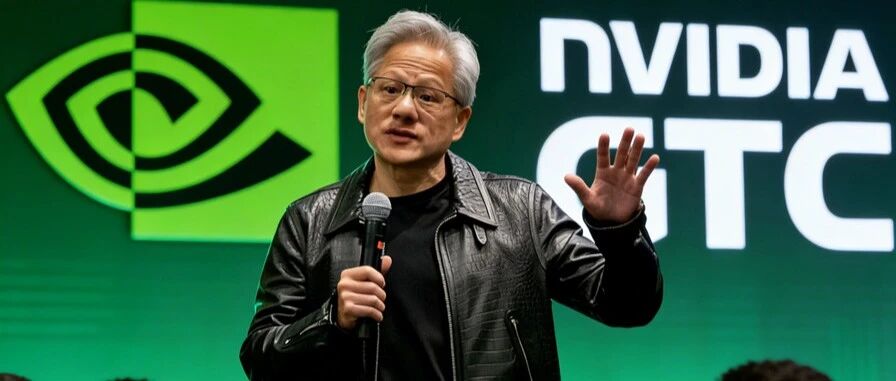
Core Insights - The article emphasizes that NVIDIA has evolved from a graphics card company to a comprehensive provider of AI infrastructure, positioning itself as a key player in the multi-trillion-dollar AI foundational era [2]. Group 1: CUDA and Ecosystem Development - Huang emphasized the significance of the CUDA architecture, which has been central to NVIDIA's business for 20 years, creating a vast ecosystem of tools and libraries that support AI development [3][4]. - The "flywheel effect" of CUDA's installation base accelerates growth by attracting developers, leading to new algorithms and breakthroughs, which in turn expand the market and ecosystem [6][7]. Group 2: Data Processing Transformation - Huang highlighted a structural transformation in global data processing, focusing on the acceleration of both structured and unstructured data, which is crucial for AI applications [8][10]. - NVIDIA has developed core software libraries, cuDF for structured data and cuVS for unstructured data, to support this transformation and enhance data processing capabilities [13]. Group 3: AI Industry Growth and Investment - The AI industry has seen unprecedented growth, with venture capital investments reaching $150 billion, driven by the demand for massive computational power [15]. - Huang predicts that the revenue from NVIDIA's AI systems could reach at least $1 trillion by 2027, supported by a tenfold increase in computational demand over the past two years [17]. Group 4: AI Infrastructure and Token Economy - NVIDIA's advancements in AI infrastructure, including the NVFP4 computing architecture, have significantly reduced token costs, making it the most efficient platform for AI applications [20][25]. - The role of data centers is shifting from storage and computation to becoming "AI factories" that produce tokens, which are becoming a new digital commodity [27]. Group 5: Vera Rubin Supercomputer - The introduction of the Vera Rubin supercomputer marks a significant advancement in AI computing, featuring a fully integrated system designed for agentic AI workloads [28][31]. - This platform includes cutting-edge technologies such as liquid cooling and high-speed NVLink interconnects, enhancing performance and deployment efficiency [33][35]. Group 6: OpenClaw and Software Development - Huang praised the OpenClaw project for its rapid growth and potential to revolutionize software development, likening its impact to that of Linux and Kubernetes [52][55]. - The introduction of NemoClaw, an enterprise-level architecture built on OpenClaw, aims to address security challenges associated with deploying intelligent systems in corporate environments [56][58]. Group 7: Open Model Ecosystem - NVIDIA is advancing an open model ecosystem with nearly 3 million models across various domains, emphasizing the importance of collaboration and continuous improvement in AI model capabilities [59][60]. - The establishment of the Nemotron Coalition aims to further develop foundational models and ensure they meet diverse industry needs [61].
英伟达:将与比亚迪、吉利等展开自动驾驶业务合作
Di Yi Cai Jing· 2026-03-16 23:29
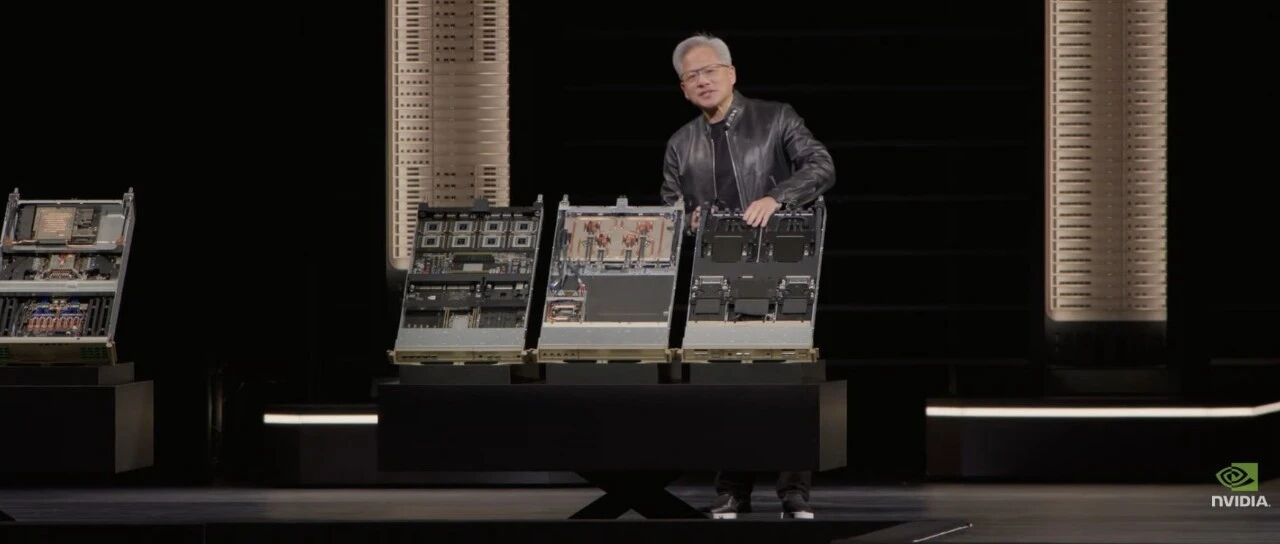
Core Insights - Nvidia announced an expansion of its autonomous vehicle development partnerships with Hyundai, Nissan, Isuzu, and Chinese automakers BYD and Geely [1] Group 1 - The new collaboration focuses on Nvidia's "Drive Hyperion" autonomous driving platform [1] - The system enables companies to develop and deploy Level 4 (L4) driver assistance and autonomous driving features [1] - These features allow for fully autonomous driving in predefined areas or conditions without human intervention [1]


黄仁勋推出英伟达版“小龙虾”NemoClaw:支持“一键安装”
Feng Huang Wang· 2026-03-16 23:28
Core Insights - NVIDIA has launched the new NemoClaw software stack aimed at providing a "one-click installation" experience for the OpenClaw AI platform [1] - Huang Renxun likened OpenClaw to the operating systems of personal computers, suggesting it will become the "operating system for personal AI" [1] Group 1: Product Features - NemoClaw allows seamless optimization for the OpenClaw platform, enabling easy deployment of NVIDIA's Nemotron model and the newly released OpenShell runtime environment [1] - The built-in OpenShell environment offers a sandbox for users to create their own high-performance secure AI assistants [1] Group 2: Technical Capabilities - The architecture of NemoClaw ensures data privacy and network security while allowing AI agents to flexibly call models, including local open-source models and cloud-based large models through a "privacy router" [2] - NemoClaw demonstrates strong hardware compatibility, supporting a range of devices from personal computers with GeForce RTX to professional workstations based on RTX PRO, as well as powerful DGX Station and the newly released DGX Spark AI supercomputers [2]
美股反弹,明星科技股普涨,美油大跌超5%
第一财经· 2026-03-16 23:20
Core Viewpoint - The article discusses the rebound of Wall Street driven by AI-related stocks amidst ongoing uncertainties from the Middle East conflict, leading to a decline in oil prices [3]. Group 1: Stock Market Performance - The Dow Jones Industrial Average rose by 387.94 points, a 0.83% increase, closing at 38,794.94 points [3]. - The Nasdaq Composite increased by 1.22%, closing at 22,374.18 points, while the S&P 500 gained 1.01%, ending at 6,699.38 points [3]. - Major tech stocks saw significant gains, with Nvidia up 1.65% following the announcement of NVIDIA DLSS 5 and projected orders reaching $1 trillion by 2027 [4]. - Meta Platforms increased by 2.33% as it plans to cut 20% of its workforce to offset high AI infrastructure costs [4]. - Tesla's stock rose by 1.11% after CEO Elon Musk announced the launch of the Terafab project for AI chip manufacturing [5]. - Other tech giants like Amazon, Microsoft, Apple, and Google also experienced gains, with Amazon up 1.96% and Microsoft up 1.11% [6]. Group 2: Sector Performance - The storage sector performed well, with Seagate, Micron Technology, and Western Digital all rising over 3%, driven by Micron's announcement of a new factory in Taiwan [7]. - The airline and cruise sectors strengthened due to falling oil prices, with Delta Airlines and Norwegian Cruise Line Holdings increasing by 3.5% and 5.1%, respectively [8]. Group 3: Oil Market and Economic Indicators - Oil prices declined, with U.S. crude futures closing at $93.50 per barrel, down $5.21 (5.28%), and Brent crude futures at $100.21 per barrel, down $2.93 (2.84%) [10]. - The article notes that the ongoing Middle East conflict and the potential passage of Iranian oil tankers through the Strait of Hormuz could impact global economic stability [9]. - Economic data showed a 0.2% increase in U.S. industrial output for February, slightly above the expected 0.1% [10].